Vertical platform lifts solve a specific accessibility problem: they move a wheelchair user and mobility device vertically where a ramp is impractical, but a full passenger elevator is unnecessary, too expensive, or architecturally disruptive. Within this category, the most important design choice is whether to install an enclosed vertical platform lift or an unenclosed vertical platform lift. That decision affects safety, code compliance, weather performance, maintenance, user comfort, and project cost. I have worked on lift-content projects where this distinction determined whether a school entrance remained compliant, whether a church could preserve historic stairs, and whether a homeowner avoided a six-figure elevator retrofit.
A vertical platform lift, often called a VPL, wheelchair lift, or porch lift, is a powered accessibility device that travels up and down a short vertical distance while carrying a passenger on a platform. In North America, most commercial and residential VPLs are governed by ASME A18.1, the Safety Standard for Platform Lifts and Stairway Chairlifts, along with applicable building codes, electrical codes, and local permitting requirements. Typical travel ranges are lower than elevators, and common applications include porches, stages, split levels, garages, deck access, and short-rise public entrances. The basic distinction is simple: unenclosed VPLs use an open platform with guards, gates, and safety sensors, while enclosed VPLs place the lifting platform within a hoistway or factory enclosure.
This choice matters because the right design is rarely the cheaper option on paper; it is the one that fits the travel height, use frequency, site conditions, and jurisdictional rules. An unenclosed VPL can be ideal for a low-rise indoor change in level where visibility and easy access matter most. An enclosed VPL can be the better answer outdoors, in unsupervised public settings, or where higher travel and stronger fall protection are required. For facility managers, architects, and homeowners researching vertical platform lifts, understanding enclosed versus unenclosed design upfront prevents redesigns, failed inspections, and accessibility solutions that technically work but are frustrating in daily use.
What enclosed and unenclosed vertical platform lifts actually mean
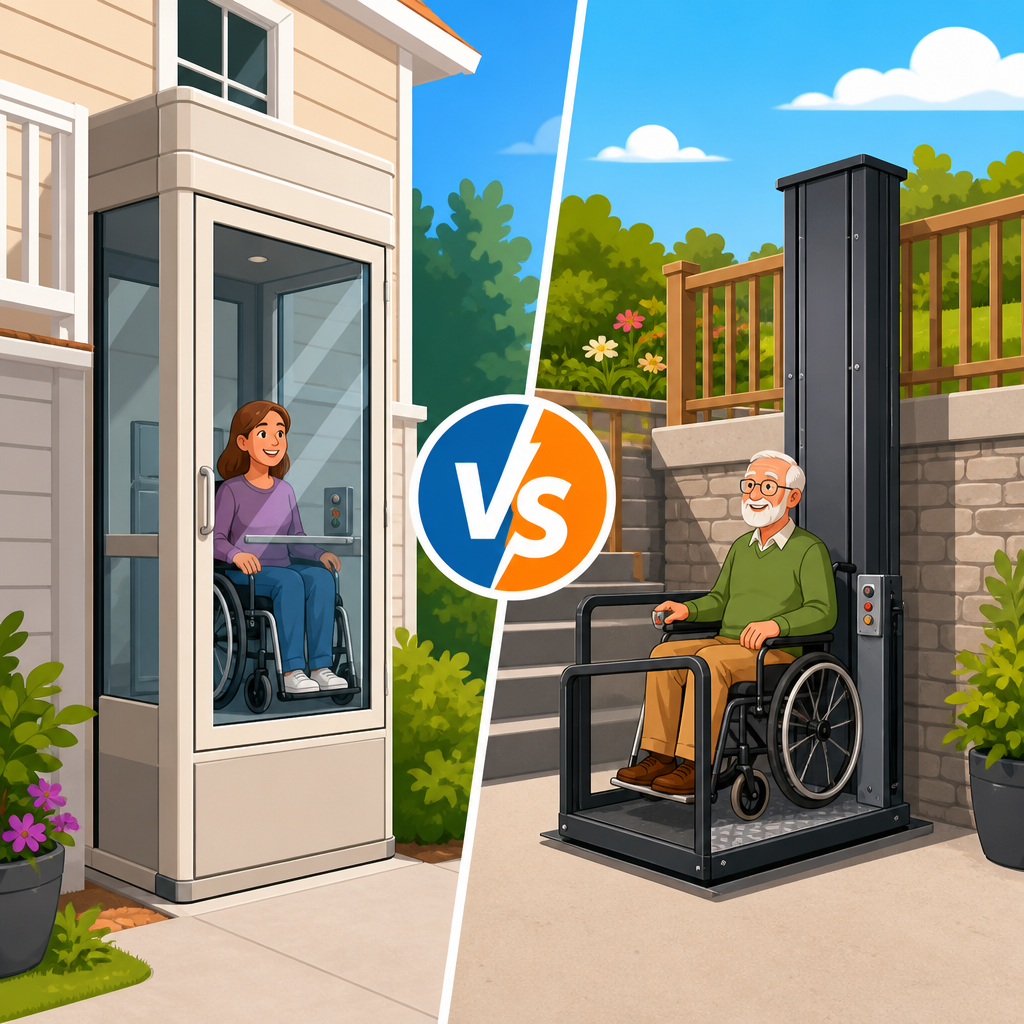
An unenclosed vertical platform lift is the more familiar open-style unit. It usually has a platform floor, side panels or guard walls, entry and exit gates, constant-pressure controls, and safety features such as under-platform obstruction sensors, emergency stop buttons, and interlocked gates. The rider remains visible throughout travel. These systems are commonly used for rises from a few inches to several feet, especially at porch entries, interior stage access, and church chancels. Manufacturers such as Bruno, Savaria, Harmar, and Garaventa offer unenclosed models for both residential and light commercial use, though exact capacities, dimensions, and allowable travel vary by model and jurisdiction.
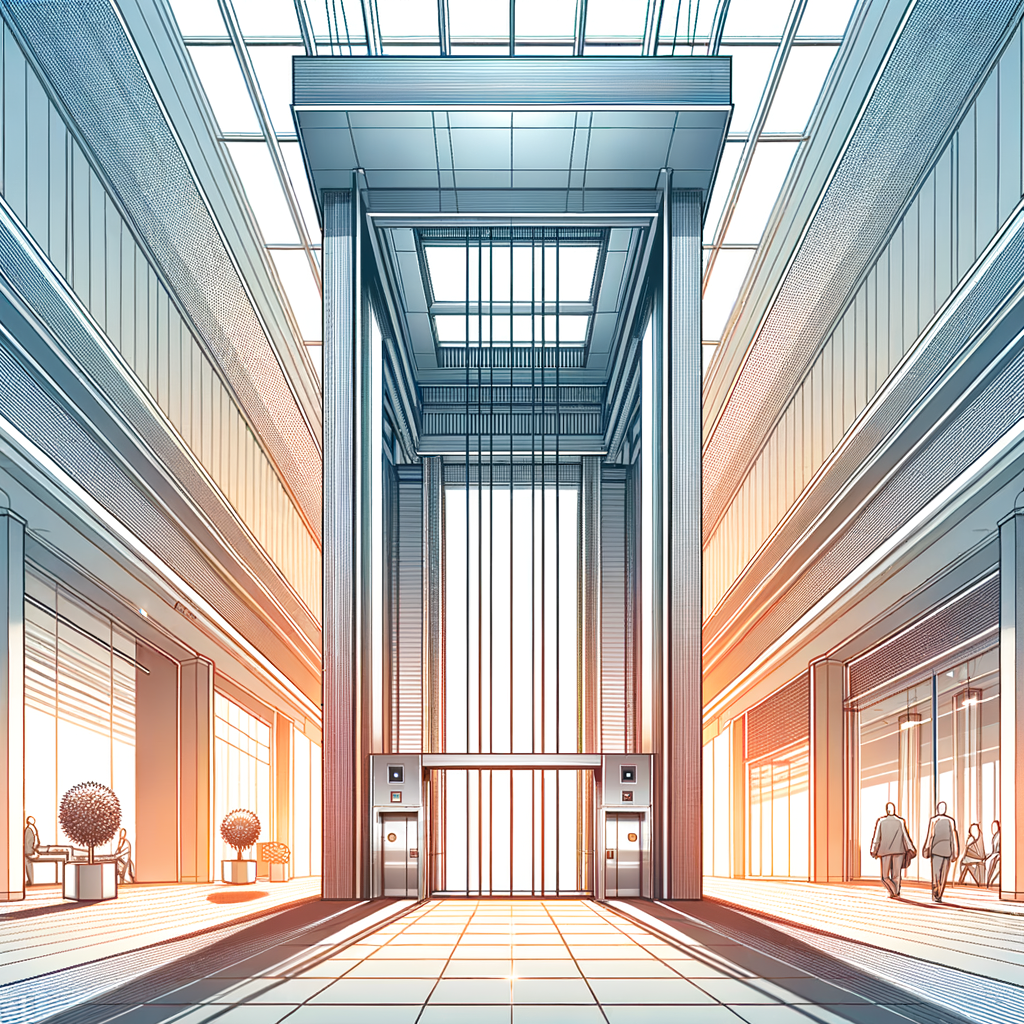
An enclosed vertical platform lift places the platform inside a defined enclosure. That enclosure may be site-built, such as a framed hoistway with doors at landings, or factory-provided, such as a self-contained shaft-like structure with panels and integrated gates or doors. The enclosure separates the rider and moving equipment from surrounding spaces. In practice, enclosed designs look and behave more like compact elevators, even though they remain platform lifts under the governing standard. They are often selected for greater travel, weather exposure, public use, vandal resistance, and projects where aesthetics or risk management favor a more controlled system.
The practical difference is not simply open versus closed. Enclosure changes the entire project scope. It affects structural support, electrical planning, pit or no-pit options, landing protection, door hardware, drainage, heating considerations in cold climates, and inspection sequencing. I have seen owners assume they were only upgrading the lift itself when the enclosure requirement also triggered architectural drawings, concrete modifications, and fire-safety coordination. That is why early definition of the lift type is critical at schematic design, not after a permit reviewer flags missing protective measures.
Code compliance, safety, and where each design fits best
The first question most buyers ask is which design is safer. The direct answer is that both can be safe when correctly specified, installed, and maintained, but they are safe in different ways and for different environments. Unenclosed VPLs rely heavily on gates, guard heights, platform barriers, sensor edges, and supervised use conditions. They are excellent where the travel is modest and the surrounding area is controlled. Enclosed VPLs add passive protection by physically restricting access to moving components and open shaft conditions. That added layer is especially valuable in schools, multifamily buildings, healthcare properties, and outdoor public entrances.
Code requirements vary by location, so there is no universal travel height at which one design always becomes mandatory. However, many jurisdictions become more restrictive as travel increases or as public access broadens. Some allow unenclosed lifts only up to certain rises or only where supervision is present. Others expect enclosures or hoistway protection for taller lifts, exterior applications, or installations exposed to adjacent walking surfaces. Because platform lift regulation draws from ASME A18.1 while interfacing with the International Building Code, ICC A117.1 accessibility provisions, state elevator programs, and local amendments, the permitting path must be confirmed before equipment is ordered.
Safety also extends beyond code minimums. In real use, enclosed lifts reduce the chance that a child reaches into the travel path, that wind-driven rain affects controls, or that snow accumulation blocks a landing. They can also improve rider confidence for people who feel exposed on an open platform. On the other hand, unenclosed lifts provide clear sightlines, feel less confining, and can be easier for an attendant to supervise. For a church stage used by one parishioner each week, open visibility may be ideal. For a public library exterior entrance used all day without staff nearby, enclosure is usually the more defensible design choice.
Cost, construction complexity, and long-term maintenance
Unenclosed vertical platform lifts usually have the lower upfront equipment and installation cost, but that headline is only partly true. If the site already has a level pad, adequate power, simple landings, and short travel, an unenclosed unit can be the fastest way to achieve accessibility. Residential projects commonly choose this route for deck access or garage entry because it avoids extensive structural work. Commercial projects also use unenclosed lifts for interior stage access or split-level circulation where aesthetics are secondary and supervision is available.
Enclosed lifts cost more because the project includes more than the machine. There may be a factory enclosure package, site-built walls, framed openings, doors, glazing, roofing, lighting, drainage, ventilation, and upgraded foundations. Weatherproof exterior applications often need corrosion-resistant finishes, heaters, sump solutions, and careful water management at thresholds. Still, enclosed does not always mean financially worse. On several projects, the enclosure allowed placement in a visible public area without constructing a larger vestibule or altering a historic stair in a way preservation boards would reject. In those cases, the more expensive lift reduced broader renovation costs.
Maintenance should be evaluated over ten to fifteen years, not just at purchase. Open lifts are simpler to access for service, but outdoor unenclosed models can take more abuse from rain, ice, ultraviolet exposure, and debris. Enclosed units protect components better, yet their doors, interlocks, and environmental systems add parts that require periodic adjustment. The most reliable ownership strategy is to compare service intervals, local dealer coverage, warranty terms, and parts availability. A low-price lift from a weak regional service network can become the most expensive option if downtime leaves a building noncompliant or forces staff-assisted alternative routes.
| Factor | Enclosed VPL | Unenclosed VPL |
|---|---|---|
| Best use case | Public, outdoor, higher-travel, unsupervised settings | Short-rise, indoor, supervised, budget-sensitive settings |
| Upfront cost | Higher equipment and construction cost | Lower initial cost in simple installations |
| Weather protection | Strong protection for riders and components | Limited; depends on canopy and exposure |
| User experience | More private, more secure, elevator-like feel | More open, visible, less confining |
| Code flexibility | Often easier for public-risk scenarios | More dependent on rise, supervision, and local rules |
| Maintenance profile | Protected machinery but more enclosure-related parts | Simpler system but more exposed to environment |
Performance in homes, schools, churches, and commercial buildings
Residential applications often favor unenclosed VPLs because the travel is short and the environment is controlled. A homeowner who needs to bridge 30 inches from driveway to porch usually benefits from an open-platform unit with simple call stations and folding ramps. It is faster to install than a residential elevator and less space-hungry than a long ramp built to accessibility slope requirements. However, when the lift serves a second-story deck, sits fully outdoors in a snowbelt, or must be used by multiple family members with varying comfort levels, an enclosed unit can become the better long-term solution.
Schools, colleges, and municipal buildings lean more often toward enclosed lifts because supervision cannot be guaranteed at every moment. Students test boundaries, backpacks catch on gates, and weather can turn exposed landings into slip hazards. In these settings, enclosure reduces risk and improves durability. I have seen districts reject open-platform options not because they were noncompliant, but because they anticipated misuse and maintenance calls. When a lift becomes part of a daily route for many users, administrators usually prioritize predictable operation over minimum first cost.
Churches and historic buildings present a unique balance of access, aesthetics, and preservation. Many sanctuaries use unenclosed lifts successfully for chancel access because the platform can be parked discreetly and finished to blend with millwork or railing. At the same time, a public entrance added to a landmark structure may require an enclosed system to handle weather and preserve existing masonry openings. Commercial buildings vary widely: a warehouse office may use an open VPL for a split level, while a medical clinic or multifamily property often benefits from enclosure because privacy, dignity, and unattended operation matter more.
How to choose the better design for your project
The better design is the one that matches six variables: travel height, indoor or outdoor location, level of public access, local code requirements, user profile, and budget across the full life cycle. Start with travel and location. If the lift is outdoors, exposed to wind and precipitation, and expected to operate year-round, enclosed should be the default option until proven otherwise. If it is indoors, under staff oversight, and serving a short rise, unenclosed deserves strong consideration. Next evaluate who uses it. Independent wheelchair users, seniors with limited stamina, caregivers, and building visitors all experience the ride differently, and that should inform the specification.
Then review the permitting environment before settling on a model. Ask the local authority having jurisdiction whether an unenclosed VPL is acceptable for the proposed rise and occupancy. Confirm platform size, load capacity, emergency operation, door or gate interlocks, and required clearances at landings. In parallel, assess practical site issues: Is there enough room for turning radius? Will snow pile at the lower landing? Can deliveries or carts strike the equipment? Does the project need backup lowering during a power outage? These questions often reveal that a technically acceptable design is not operationally resilient.
Finally, compare vendors on more than brochure features. Request submittals showing exact dimensions, pit depth if any, drive type, electrical requirements, and maintenance obligations. Review local references, not just national marketing claims. Ask how quickly a certified technician can respond, what parts are stocked regionally, and whether weather protection is included or optional. If you are building a content hub around vertical platform lifts, this is also the moment to branch into adjacent decisions such as VPL cost, outdoor wheelchair lift planning, platform sizes, lift safety features, and maintenance checklists. Those topics naturally extend from the enclosed versus unenclosed choice.
Enclosed versus unenclosed vertical platform lifts is not a cosmetic decision; it is the central design choice that shapes safety, compliance, usability, and total cost. Unenclosed VPLs are often the right answer for short-rise indoor applications where supervision is available, budgets are tighter, and users benefit from open visibility. Enclosed VPLs are often better for outdoor exposure, public settings, taller travel, and projects where risk reduction and rider confidence justify the added construction scope. Neither design is universally superior, but one will clearly fit your site better when you evaluate the full operating context rather than equipment price alone.
The most successful projects begin with a realistic assessment of environment, code, and daily use. Define who rides the lift, how often it will run, what weather it faces, and how quickly it must be serviceable if it fails. Confirm local requirements early, involve a qualified dealer or accessibility consultant, and compare proposals line by line. That disciplined process prevents expensive redesigns and produces an access solution people will actually trust and use. If you are planning a vertical platform lift project, use this page as your starting point, then map your next steps around code review, site conditions, and vendor capability.
Frequently Asked Questions
What is the main difference between an enclosed and an unenclosed vertical platform lift?
The core difference is how much of the lift travel path and passenger area is surrounded by permanent barriers. An enclosed vertical platform lift operates inside a full shaftway or self-contained enclosure, with walls, doors, and interlocks that separate the rider from the moving components and from the surrounding environment. An unenclosed vertical platform lift, by contrast, has an open platform with guard panels, gates, and safety sensors, but it does not place the rider inside a fully enclosed hoistway. Both designs perform the same basic job: they move a wheelchair user and mobility device vertically when a ramp is impractical and a conventional elevator would be excessive. However, the user experience, site requirements, and code implications can be very different.
In practical terms, enclosed lifts are often chosen when a project needs a more finished architectural appearance, stronger weather protection, greater perceived security, or compliance with conditions that call for a shafted or enclosed system. Unenclosed lifts are commonly selected for shorter rises, simpler installations, and locations where open access and lower construction impact are priorities. The “better” option is usually not about one design being universally superior. It comes down to where the lift is being installed, how high it must travel, who will use it, what the local code requires, and what level of protection and durability the owner wants over the long term.
Which design is generally safer: an enclosed or unenclosed vertical platform lift?
Both can be safe when they are properly specified, installed, and maintained, but enclosed vertical platform lifts usually offer a higher level of passive protection. Because the rider is surrounded by walls and accessed through interlocked doors, enclosed models better isolate users from pinch points, moving equipment, and accidental intrusion from others nearby. They also tend to provide greater peace of mind for caregivers, facility operators, and users who may feel more secure in a defined, protected travel space. In settings with high public traffic, unsupervised access, or exposure to harsh weather, that extra protection can be a meaningful advantage.
That said, unenclosed lifts are not “unsafe” by design. They are built with multiple safety features, including non-skid platforms, guard panels, obstruction sensors, emergency stop controls, gate interlocks, and constant-pressure controls on many models. For low-rise applications in controlled environments, they can provide safe and reliable access very effectively. The real issue is matching the safety profile of the lift to the risks of the site. A school, transit stop, multifamily exterior entry, or busy commercial building may justify the added protection of an enclosure. A private residence, small office, or interior stage access point with a limited rise may function well with an unenclosed lift. Safety is strongest when the lift type aligns with the environment, expected users, and applicable code requirements.
How do code compliance and project requirements affect the choice between enclosed and unenclosed lifts?
Code compliance is often the deciding factor, and it should be reviewed early in the planning process. Vertical platform lifts are governed by accessibility rules, building code provisions, and lift safety standards, but exactly what is allowed depends on jurisdiction, occupancy type, rise height, location, and intended use. In some cases, an unenclosed lift may be permitted only up to a certain travel distance or only in certain occupancies. In other situations, the local authority having jurisdiction may require an enclosed shaftway, rated construction, specific door configurations, overhead clearances, pit dimensions, or additional life-safety features. This is why the answer to “Which design is better?” often starts with “Which design is permitted here?”
Beyond legal compliance, project requirements can push the decision in one direction even when both options are technically allowed. For example, an outdoor installation in a freeze-thaw climate may strongly favor an enclosed unit for better equipment protection and user comfort. A historic building with limited structural alteration options may lean toward an unenclosed lift if it reduces disruption. A healthcare or senior living environment may prioritize a fully enclosed ride experience for user reassurance and controlled access. Because these variables affect cost, schedule, approvals, and long-term performance, the best practice is to involve the lift manufacturer or dealer, architect, contractor, and code officials before the design is finalized. Choosing based on first cost alone can create expensive redesigns later if the selected lift type does not satisfy the site conditions or code interpretation.
Are enclosed vertical platform lifts better for outdoor use and bad weather?
In many cases, yes. Enclosed vertical platform lifts are generally better suited for outdoor use because the enclosure helps protect both the passenger and the equipment from rain, wind, snow, ice, debris, and temperature extremes. That added protection can improve reliability, reduce exposure-related wear, and make the lift more comfortable to use year-round. Riders are less exposed during travel, controls are better shielded, and the overall system often presents a more durable solution for exterior entries where weather can otherwise create operational and maintenance challenges.
Unenclosed lifts can be used outdoors if they are specifically designed and rated for that purpose, but they tend to be more vulnerable to environmental conditions. Water intrusion, corrosion, platform icing, and wind exposure can all affect performance and service needs if the installation is not carefully planned. In mild climates or partially protected areas, an unenclosed exterior lift may still be a practical and cost-effective solution. But in harsher environments, owners often find that the apparent savings of an open design can be offset by greater maintenance demands, more weather-related downtime, and a less comfortable user experience. For exterior applications, it is important to think beyond the day of installation and consider how the lift will perform after years of seasonal exposure.
Which option is more cost-effective over time: enclosed or unenclosed vertical platform lifts?
Unenclosed vertical platform lifts are often less expensive upfront because they typically require less construction, fewer materials, and simpler integration into the building. If the rise is modest and the site is straightforward, an open design may offer a very efficient accessibility solution without the expense and footprint of an elevator or full shaft enclosure. For many small commercial and residential projects, that lower initial cost is exactly why unenclosed lifts are attractive.
Over the long term, however, cost-effectiveness depends on far more than purchase price. Enclosed lifts can offer better protection from misuse, weather, debris, and environmental wear, which may translate into better durability and fewer interruptions in service over time. They may also better support user satisfaction, reduce the likelihood of future modifications, and provide a more polished appearance that fits the overall property value. On the other hand, enclosed systems can involve higher construction costs, additional permitting complexity, and more architectural coordination at the start. The most cost-effective choice is the one that satisfies code, fits the site, serves users comfortably, and avoids avoidable maintenance or retrofit expenses later. In other words, the cheaper lift is not always the less expensive solution once lifecycle cost, reliability, and project risk are taken into account.