Outdoor stair lifts should be professionally inspected at least once a year, and in many homes they should be checked more often because weather, usage patterns, and safety risk all accelerate wear in ways indoor lifts do not face. An outdoor stair lift is a motorized seat, carriage, rail, and power system designed for exterior stairways, while a professional inspection is a scheduled service visit in which a trained technician evaluates mechanical, electrical, structural, and safety components against manufacturer guidance and real operating conditions. I recommend treating annual inspections as the baseline, not the ceiling, because I have seen units that looked fine from a distance but had hidden corrosion, weak batteries, or contaminated rack teeth that could have caused a shutdown on a cold morning. For homeowners, caregivers, and facility managers, this matters because an outdoor stair lift is not just convenience equipment; it is a mobility device that people may rely on daily for safe access to a porch, deck, garden path, or entry steps. Missing an inspection can turn a manageable maintenance issue into a costly breakdown, a preventable fall risk, or premature replacement of expensive parts.
The annual inspection question comes up constantly because buyers often assume that if a lift still runs, it is safe. That assumption is risky outdoors. Rain, salt air, pollen, dust, ultraviolet exposure, freeze-thaw cycles, and temperature swings put ongoing stress on batteries, wiring, seat materials, rail fasteners, limit switches, and charging contacts. Manufacturer manuals from established brands such as Bruno, Harmar, Acorn, and Stannah generally emphasize routine service, periodic checks, and prompt correction of abnormal operation, even though specific intervals can vary by model, climate, and usage. In practice, annual professional inspection is the standard starting point because it allows a technician to catch wear before it affects reliability. This hub explains what an annual inspection includes, when once a year is not enough, what warning signs mean you need service sooner, and how professional inspections fit into a complete outdoor stair lift maintenance plan. If you are deciding how often to schedule service, the short answer is yearly minimum, with semiannual or seasonal visits for harsher environments or heavier use.
Why annual inspections are the standard for outdoor stair lifts
Annual inspections are the standard because outdoor stair lifts operate in a harsher environment than indoor units, and many critical failures develop gradually rather than all at once. During service visits I have watched technicians uncover rust beginning under rail brackets, moisture intrusion near connectors, and battery capacity loss that the user had mistaken for normal slowing. A once-yearly inspection creates a structured opportunity to test the full system under controlled conditions, verify that safety devices engage correctly, and correct small issues before they become service calls or emergency stoppages. It also aligns with how preventive maintenance works in other accessibility systems: regular inspections reduce unplanned downtime, preserve safe operation, and extend useful life.
There is also a practical reason this interval works well for most homes. One year is long enough for environmental wear to appear, yet frequent enough for a technician to intervene before that wear causes secondary damage. For example, dirty or oxidized charging contacts can lead to incomplete charging, which then strains batteries and leaves the lift underpowered. Catching contact contamination at an annual visit is inexpensive; replacing neglected batteries after repeated undercharging costs more and may inconvenience the user. Similarly, slight looseness in mounting hardware can often be corrected quickly, while months of vibration can enlarge holes, misalign the rail, or alter ride quality. Annual inspection is the most efficient preventive interval for the average residential installation.
What a professional outdoor stair lift inspection should include
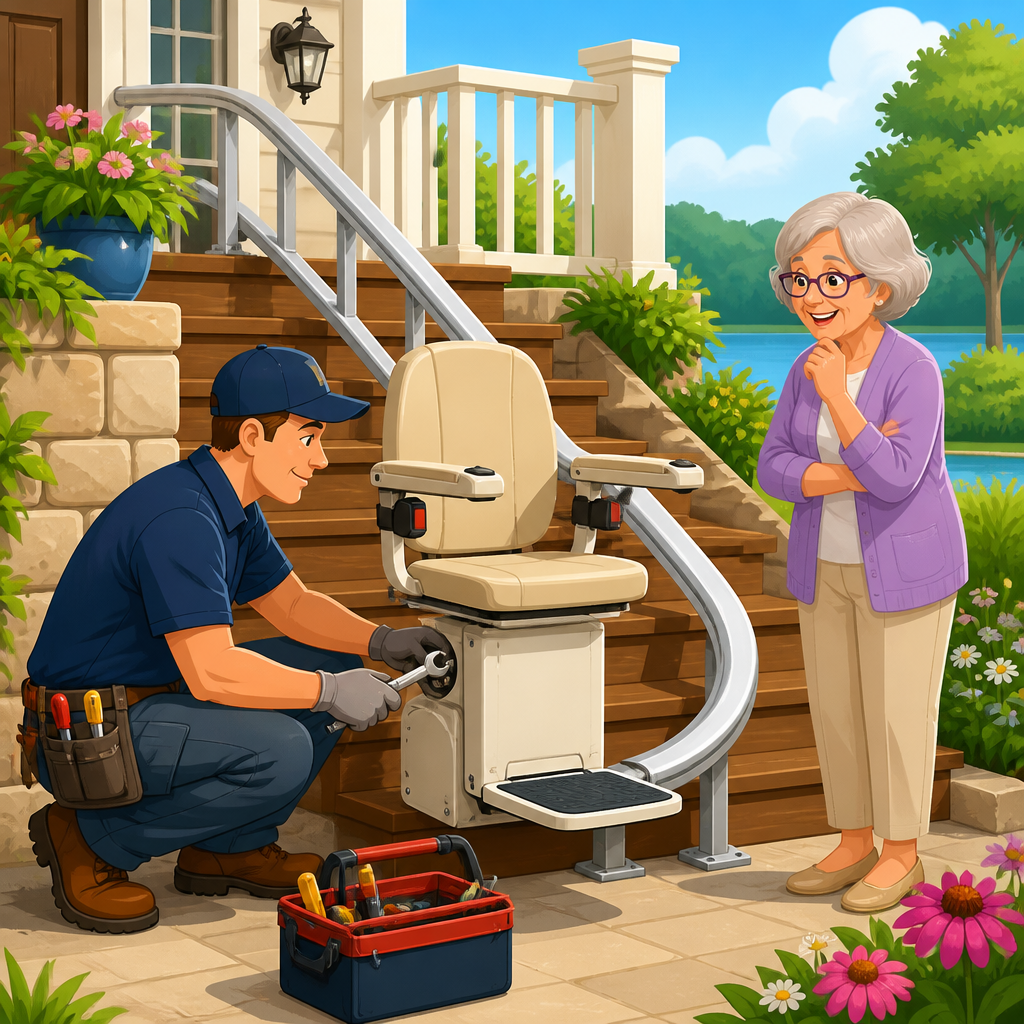
A proper outdoor stair lift inspection is much more than a quick ride test. A qualified technician should assess the rail, carriage, drive system, seat assembly, electrical system, charging system, batteries, controls, safety edges, limit functions, footrest, swivel operation, armrests, seat belt, call-send controls, and the overall condition of weather protection. The technician should also review how the unit starts, stops, levels, charges, and parks. On outdoor models, I expect special attention to corrosion, water intrusion, UV damage, seal condition, and debris accumulation, especially on exposed rails near landscaping or roads that are salted in winter. Good technicians document findings clearly and distinguish between routine cleaning, adjustments, part replacement, and urgent safety corrections.
Operational testing is central. The lift should travel smoothly without unusual noise, hesitation, vibration, or fault codes. Safety circuits should stop the unit when obstruction sensors are triggered, and the seat should lock securely in the riding position and at the upper dismount if the model swivels. Batteries should be tested for charging performance and hold, not just voltage at rest. Mounting points should be inspected for tightness and substrate condition because stairs, decking, and concrete pads can move over time. If the staircase itself is deteriorating, the safest rail in the world cannot compensate. A meaningful inspection evaluates the whole installation, not only the powered parts.
| Inspection area | What the technician checks | Why it matters outdoors |
|---|---|---|
| Rail and brackets | Alignment, fasteners, rust, debris, vibration | Moisture and temperature shifts can loosen hardware and encourage corrosion |
| Batteries and charger | Charge rate, contact cleanliness, battery health | Cold weather and oxidation reduce charging reliability |
| Safety devices | Footrest edges, overspeed and limit functions, seat interlocks | Outdoor dirt and water can interfere with sensors and switches |
| Seat and controls | Swivel lock, belt condition, armrests, call-send stations | UV exposure degrades plastics, vinyl, labels, and buttons |
| Weather protection | Covers, seals, drainage paths, enclosure condition | Poor protection speeds electrical and cosmetic deterioration |
When once a year is not enough
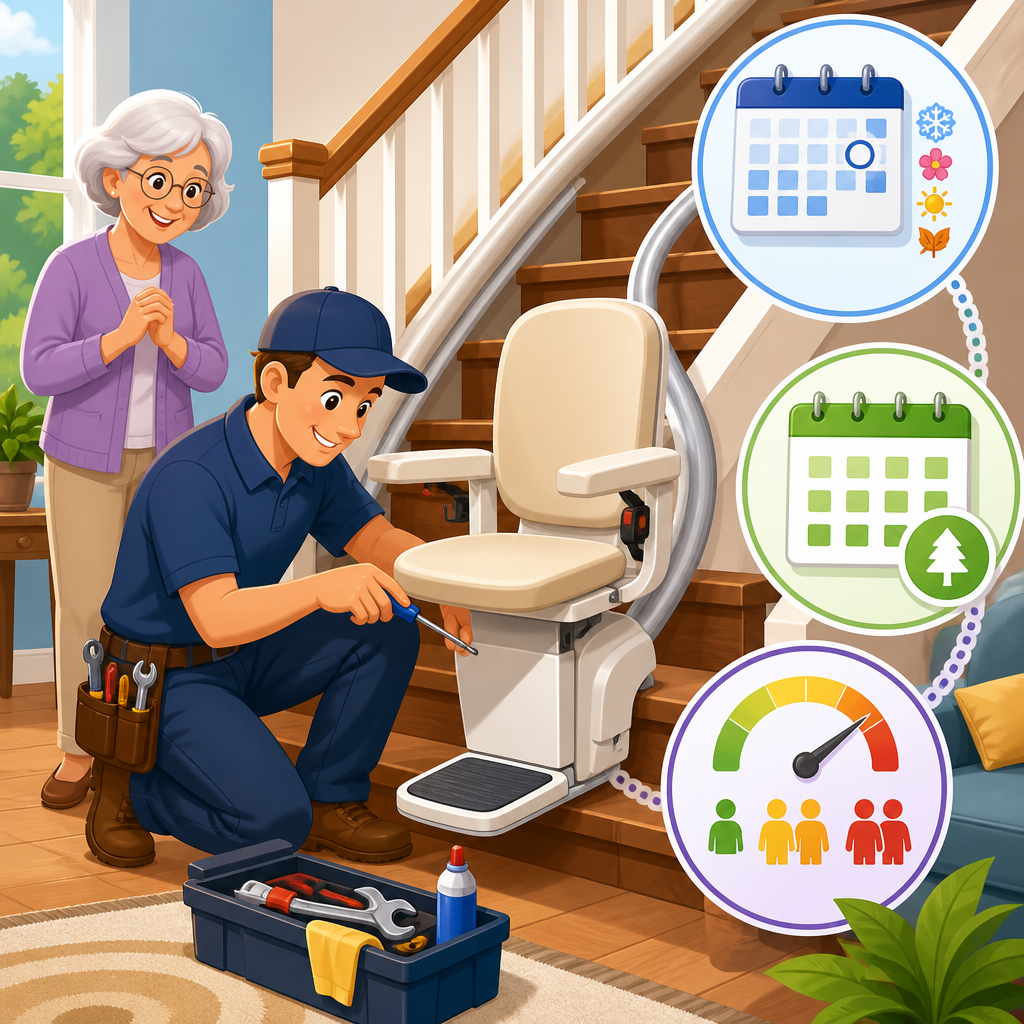
Annual inspections are the minimum for most outdoor stair lifts, but some situations justify service every six months or before and after severe weather seasons. If the lift is used several times a day by one or more users, if it serves as the primary entrance, or if the rider cannot safely manage stairs without it, more frequent inspections are sensible because the consequence of downtime is higher. I also advise shorter service intervals in coastal areas, where salt accelerates corrosion; in snowy regions, where deicing chemicals and freeze-thaw cycles are hard on metal and electrical contacts; and in wooded or dusty settings, where organic debris builds up around the track and charging points. Rental properties, multifamily buildings, and publicly accessed settings should be monitored even more closely because usage is less predictable and abuse is more common.
Another reason to shorten the interval is age. As a unit gets older, parts such as batteries, seals, switches, and vinyl surfaces become more vulnerable to failure. A stair lift that has already needed charger adjustments, recurring sensor cleaning, or repeated battery replacement often benefits from semiannual preventive service. The goal is not to overservice the unit but to match inspection frequency to operating risk. A newer lift under a covered porch in a mild climate may perform well with annual visits and user checks in between. An older open-exposure unit near the ocean may need spring and fall inspections to remain dependable. The right schedule is based on environment, load, use, and consequence of failure.
Warning signs that mean you should schedule an inspection sooner
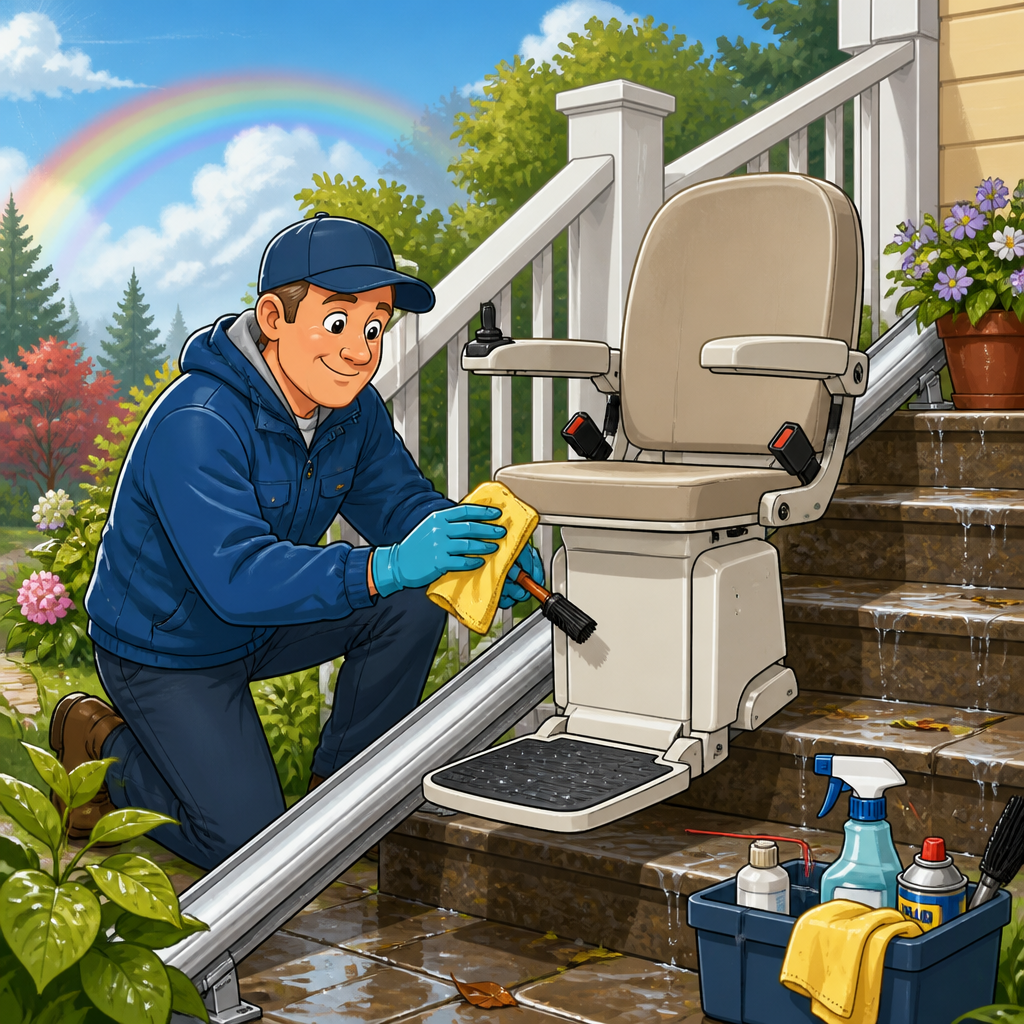
You should not wait for the annual date if the stair lift shows any change in performance or condition. Common warning signs include slow travel, jerky starts, beeping, intermittent operation, failure to charge consistently, visible rust, cracked covers, loose armrests, a seat that does not lock positively, unusual grinding sounds, or repeated stoppage at the same point on the rail. I tell homeowners to pay special attention after storms because driving rain and windborne debris can affect covers, connectors, and charging stations even when the lift still appears functional. Water stains, corrosion near terminals, or insect nesting around sheltered components are also reasons to call for service.
There are user-visible clues that seem minor but often point to bigger issues. For example, if the lift only works after being nudged slightly at a charge point, the contacts may be dirty, misaligned, or worn. If the ride feels rougher than usual, the rail may need cleaning, the gear rack may have contamination, or hardware may be loosening. If the seat fabric or vinyl is splitting, the weather barrier has likely been compromised elsewhere too. Prompt inspection matters because continued use during a developing fault can damage secondary components. A weak battery can stress the charger. Misalignment can wear drive parts. Ignoring small symptoms usually raises the eventual repair cost.
How annual inspections fit into a full maintenance plan
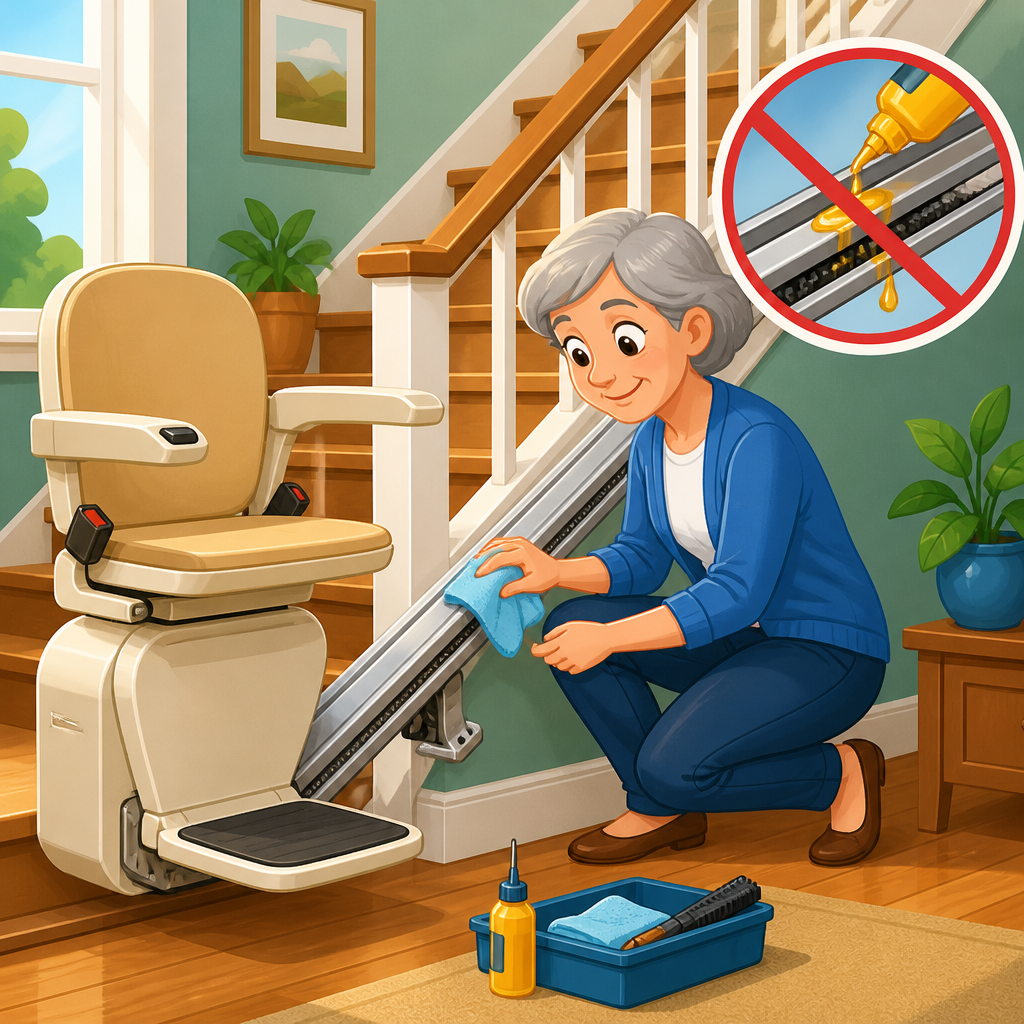
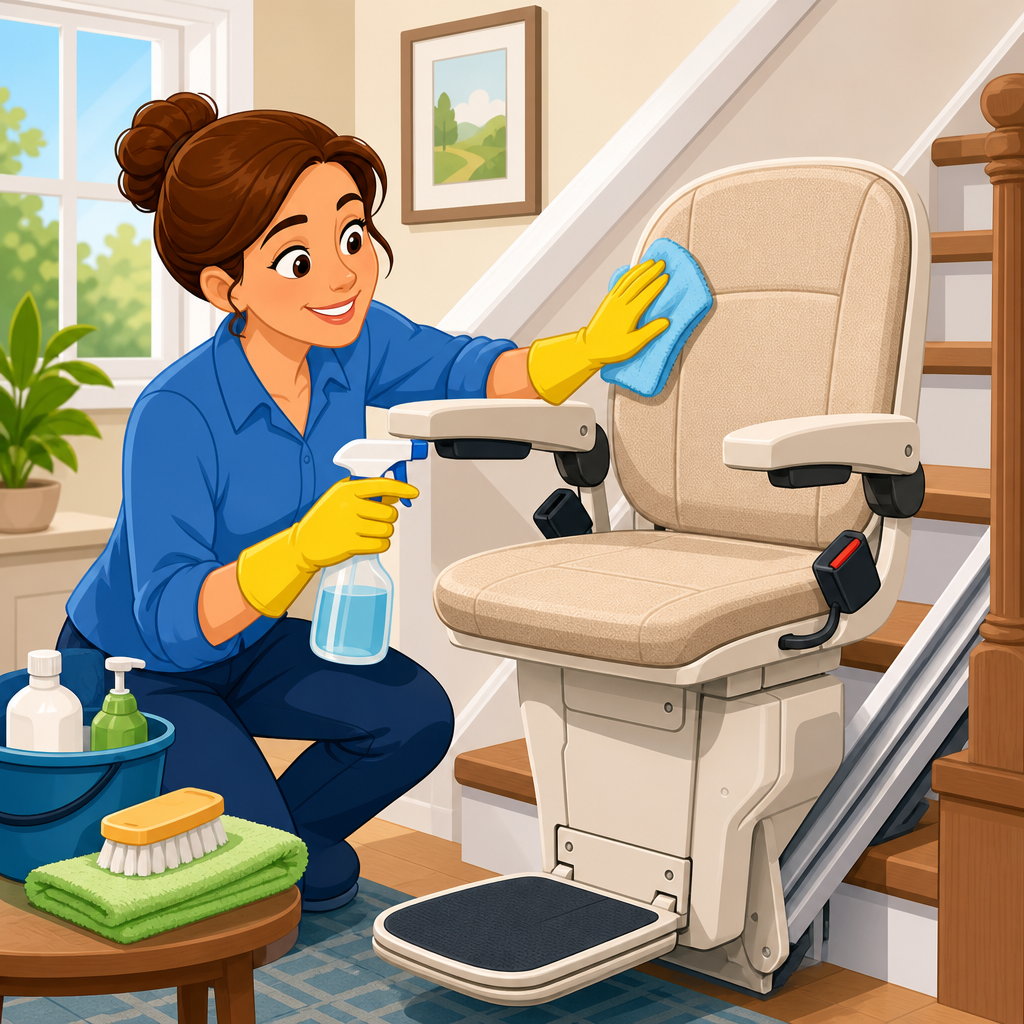
An annual inspection is the center of a broader maintenance plan, not a substitute for everyday care. Homeowners and caregivers should perform simple routine checks between service visits: keep the rail clear of leaves and dirt, ensure the weather cover is used when the unit is parked, look for obvious rust or loose parts, confirm the seat belt latches, and listen for changes in sound during travel. The owner’s manual should be the primary reference for what the user may clean or inspect and what should be left to a technician. Most manufacturers caution against unapproved lubricants or do-it-yourself disassembly because they can attract debris, damage components, or create safety hazards. Basic housekeeping supports reliability, but professional adjustment and testing remain essential.
Good maintenance planning also includes recordkeeping. Keep invoices, service reports, battery replacement dates, and notes about any faults or recurring symptoms. This history helps a technician diagnose patterns and helps owners decide whether continued repair is economical. I have found that homes with clear service records tend to have fewer surprise failures because small issues are tracked instead of forgotten. If your stair lift is under warranty or covered by a service agreement, documented annual inspections may also support coverage requirements. Planning ahead matters in seasonal climates too. Booking service before winter or before the rainy season can reduce the chance of discovering a problem on the first truly harsh day, when technicians are busiest and the lift is needed most.
Choosing the right service provider for annual inspections
The quality of the inspection depends heavily on the provider. Choose a company experienced with your lift’s brand and model, and ask whether its technicians regularly service outdoor units rather than indoor lifts alone. Outdoor systems have different failure patterns, and a technician should understand weatherproof housings, exposure-related corrosion, battery performance in temperature extremes, and the specific diagnostic procedures recommended by the manufacturer. Reputable providers usually perform a documented checklist, carry common replacement parts, and explain findings in plain language. They should test safety systems directly, not just ride the unit up and down and declare it fine.
Ask practical questions before booking. Does the company inspect rail anchoring and staircase condition? Does it clean and test charging contacts? Will it load-test batteries or evaluate battery health beyond a simple meter reading? Can it provide recommendations for service frequency based on your climate and use? Does it note which parts are worn now versus likely to need replacement within the next year? Clear answers are a good sign. If you are comparing plans, a preventive maintenance agreement can make sense for frequent-use lifts because it improves scheduling and reduces surprise costs. The best annual inspection is not merely a legalistic checkmark; it is a focused evaluation that keeps an essential accessibility device safe, dependable, and ready every day.
The key takeaway is straightforward: an outdoor stair lift should be professionally inspected at least once every year, and many installations warrant service every six months because weather, usage, and age increase mechanical and electrical risk. Annual inspections matter because they catch corrosion, battery weakness, loose hardware, charging faults, and safety-device problems before those issues interrupt access or create a hazard. A proper inspection is comprehensive, covering the rail, carriage, controls, charging system, structural mounting, and all safety features, not just whether the lift moves. Homeowners should also respond quickly to warning signs such as slow travel, unusual noise, inconsistent charging, or visible wear instead of waiting for the calendar date.
As the hub for annual inspections within maintenance, troubleshooting, and safety, this page gives you the decision framework: start with yearly service, increase frequency for harsh climates or heavy use, pair professional inspections with routine user checks, and work with a qualified provider who documents results. That approach protects reliability, extends equipment life, and supports the independence the stair lift was installed to provide in the first place. If your unit has not been inspected within the last year, schedule a professional outdoor stair lift inspection now and use the service visit to build a maintenance calendar that matches your environment and needs.
Frequently Asked Questions
How often should an outdoor stair lift be professionally inspected?
At minimum, an outdoor stair lift should be professionally inspected once a year. That yearly service visit gives a trained technician the chance to evaluate the lift’s mechanical parts, electrical system, rail alignment, mounting hardware, seat operation, safety sensors, and overall reliability before small issues turn into larger and more expensive problems. However, once-a-year service is only the baseline. Many outdoor stair lifts should be inspected more often because they operate in conditions that indoor lifts do not face, including rain, humidity, temperature swings, windblown debris, corrosion, and direct sun exposure. Those environmental factors can accelerate wear on moving parts, electrical connections, protective covers, and safety features.
In practice, a six-month inspection schedule is often the better choice for households with frequent daily use, coastal air, harsh winters, heavy pollen or leaf debris, or a lift that serves someone who depends on it every day for safe home access. If the stair lift is a critical mobility device, more frequent professional attention can reduce the chance of downtime and improve long-term safety. The best schedule is based on manufacturer guidance, the age of the unit, local climate, and how heavily the lift is used, but for most homeowners, the safest rule is to think “at least annually, and often more often outdoors.”
Why does an outdoor stair lift usually need inspections more often than an indoor stair lift?
An outdoor stair lift typically needs more frequent professional inspections because it is exposed to a much harsher operating environment. Even when a unit is built specifically for exterior use, weather still affects performance over time. Moisture can contribute to rust or corrosion, cold temperatures can influence battery efficiency and lubricants, heat and UV exposure can wear down plastics and seals, and dirt, sand, leaves, and insects can interfere with sensors, track areas, and moving parts. Indoor stair lifts are protected from most of these factors, so they generally experience slower wear.
There is also a safety difference. Outdoor stairs can become slippery, unevenly exposed, or obstructed by debris, which means the lift’s safety features must be working exactly as intended. A technician can check whether the carriage moves smoothly, whether limit switches and obstruction sensors respond correctly, whether the rail remains properly secured, and whether charging points and electrical components are staying dry and functioning properly. In other words, an outdoor stair lift has more external stressors and more opportunities for hidden wear, which is why a stricter inspection schedule is often recommended.
What does a professional outdoor stair lift inspection usually include?
A professional inspection is much more than a quick visual check. During a scheduled service visit, a qualified technician typically evaluates the full system to make sure the lift is safe, stable, and operating according to manufacturer standards. That usually includes examining the rail and its attachment points, testing the motor and drive system, checking the carriage movement, assessing the seat, armrests, footrest, swivel and folding functions, and confirming that the unit starts, stops, and travels smoothly without unusual noise or hesitation. The technician will also inspect batteries, charging contacts, wiring, switches, call/send controls, remote controls, and any backup power function.
Just as important, the inspection should include testing all safety-related features. That can involve seat belt condition, obstruction sensors, overspeed or braking systems where applicable, limit controls, and the overall structural integrity of the installation. For outdoor units, the technician may pay special attention to signs of moisture intrusion, corrosion, worn weather seals, cracked covers, dirt buildup, insect nesting, and UV damage. If adjustments, cleaning, lubrication, tightening, or minor part replacement are needed, those issues can often be addressed during service. A thorough inspection is designed to confirm not only that the stair lift still runs, but that it runs safely and reliably in real outdoor conditions.
What signs indicate an outdoor stair lift should be inspected sooner than scheduled?
Homeowners should arrange service sooner than the next routine inspection if the stair lift shows any change in performance, sound, or reliability. Common warning signs include jerky movement, slower travel, inconsistent charging, beeping or error signals, difficulty starting, stopping in the middle of the rail, unusual grinding or clicking sounds, or controls that do not respond consistently. You should also pay attention to visible issues such as rust, loose mounting hardware, cracked covers, frayed wiring, water intrusion, a damaged seat belt, or debris collecting in the rail area. Even if the lift is still operating, these symptoms can point to wear that should be professionally evaluated before it affects safety.
Weather events are another major reason to schedule an early inspection. After heavy rain, snow, ice, flooding, high winds, or extended freezing temperatures, an outdoor stair lift may need to be checked even if no obvious damage is visible. The same applies if the unit has been unused for a long period and is being placed back into regular service. If the lift is essential for a user’s daily mobility, it is better to be proactive than reactive. Any interruption in reliability can create a serious access problem, so early service is the safest response whenever something seems off.
Can regular maintenance and inspections help extend the life of an outdoor stair lift?
Yes, regular professional inspections and maintenance are among the best ways to extend the life of an outdoor stair lift. Like any motorized mobility equipment, the lift performs best when wear is identified early, adjustments are made on time, and components are kept clean, secure, and within proper operating condition. Annual or semiannual service can reduce strain on the motor and drive components, protect batteries and charging systems, catch corrosion before it spreads, and ensure that safety devices continue to function properly. Preventive care is usually far less costly and disruptive than waiting for a breakdown or major repair.
Inspections also support long-term safety and reliability for the person who depends on the lift. A stair lift may still appear to work even when certain components are beginning to fail, and that hidden wear can shorten equipment life if it goes unaddressed. Professional service helps preserve smooth operation, maintain correct alignment, and reduce the chance that environmental exposure will slowly damage the system. Homeowners can support that process by keeping the rail area clear, using any recommended protective cover, and following the manufacturer’s basic care instructions, but professional inspections remain the key step in protecting both the equipment and the user over time.