Stair lift seat interlocks are one of the most important built-in protections in modern stairlift safety systems because they stop the machine from moving when the seat is not in a safe operating position. In practical terms, a seat interlock is a switch, sensor, or electronic confirmation point tied to the seat base, swivel mechanism, folding frame, or seatback that must report a safe status before the drive system will run. If that signal is missing, the stair lift should not travel. For users, caregivers, and technicians, understanding this feature is essential because many unsafe stairlift incidents begin not with motor failure, but with improper seating, incomplete seat rotation, or folded components left out of position.
Over years of working around residential stair lifts, I have seen the same pattern repeatedly: owners focus on batteries, remotes, or rail cleanliness, while the interlocks quietly do the real safety work in the background. A stair lift can appear fully functional, with power on and charging normal, yet refuse to move because a seat interlock is doing exactly what it was designed to do. That refusal is not a nuisance; it is a preventive action. The system is blocking travel until the chair is locked forward, the seat is lowered, or the swivel is fully engaged. In homes where seniors transfer independently, this protection materially reduces the risk of riding sideways, standing during motion, or operating the lift with the chair partially folded.
This matters within the broader category of maintenance, troubleshooting, and safety because seat interlocks connect all three. They are a safety feature first, but they directly influence routine checks and they are a common source of no-start complaints. A useful way to define the term is simple: a stair lift seat interlock is any mechanism that verifies the seat assembly is in an approved position before travel is permitted. The approved position varies by model, but usually means seat down, swivel locked, armrests in usable position, and sometimes footrest alignment confirmed through related circuits. As the hub article for safety features explained, this guide shows how stair lift seat interlocks work, what they prevent, how to recognize a fault, and where they fit alongside other protections such as overspeed governors, obstruction sensors, keyed controls, and final limit switches.
Manufacturers design these systems around recognized safety expectations for powered lifting equipment, and reputable stairlift brands build in redundant shutdown logic rather than relying on user judgment alone. That is the real value of interlocks: they assume human error will happen. Whether a user sits down without fully lowering the chair, swivels the seat at the landing but does not let it lock back into travel position, or a caregiver folds the lift for storage and forgets one component, the interlock keeps a small mistake from becoming a dangerous ride. Understanding that principle helps homeowners maintain confidence in the equipment and helps buyers ask better questions when comparing models, especially in homes with frail users, narrow stairs, or multiple people sharing the device.
What stair lift seat interlocks do and how they work
A seat interlock acts as a permission device in the stair lift control circuit. The motor controller constantly checks a chain of safe-state inputs before energizing travel. If the seat interlock is open, the controller blocks movement even if the joystick, paddle, or arm control is pressed. On many straight stair lifts, this is implemented with a microswitch mounted near the swivel seat plate or under the hinged seat frame. On more advanced units, magnetic reed switches, Hall effect sensors, or encoded position switches may be used to verify exact seat status with greater durability and cleaner diagnostics.
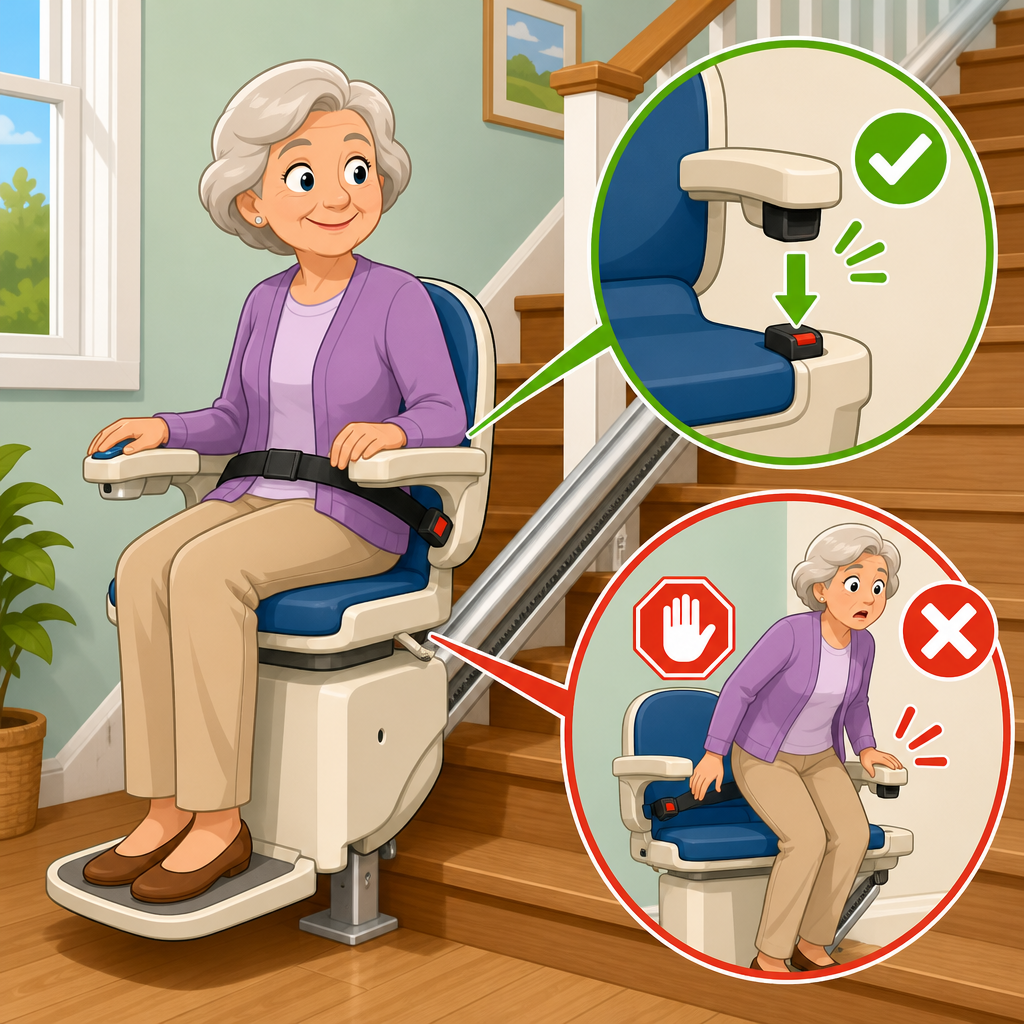
The most common arrangement involves the swivel seat lock. At the top landing, many stair lifts allow the seat to rotate away from the staircase so the user can get on or off facing the hallway instead of the drop. That convenience creates a hazard if the lift were allowed to move while the seat remained turned. To prevent that, the interlock will only close when the swivel returns to the forward travel position and the lock pin fully engages. If the seat is even slightly misaligned, the circuit stays open. Some brands also interlock the folded seat base, making sure the chair cannot be driven with the seat pan upright.
From a service perspective, the system is intentionally binary: safe or not safe. There is no partial approval. Either the seat is in the exact acceptable position or the machine remains stationary. This is why users sometimes report that the lift “worked yesterday” but “is dead today” even though lights and charge indicators are normal. A quarter-inch of incomplete swivel return can be enough to stop operation. That behavior is correct and should never be bypassed in regular use.
Unsafe conditions seat interlocks are designed to prevent
The primary danger seat interlocks prevent is travel while the rider is not properly oriented and supported. If a user attempted to ride with the chair rotated toward the landing, body weight would shift laterally instead of aligning with the rail. On steep staircases or curved rails, that side-loading increases the chance of instability during starts and stops. The interlock eliminates that possibility by denying motion before it begins.
Another risk is operation with the seat folded or partly lowered. On several compact models, the seat base and armrests fold to preserve walking space. Without an interlock, someone could mistakenly press the control while standing beside the unit, causing unexpected movement of a partially folded chair. That creates pinch hazards at the hinge points and can place mechanical stress on components not intended to bear travel loads in that position. By requiring the seat to be fully deployed, the interlock protects both people and hardware.
Interlocks also reduce transfer-related accidents at the top landing. The top of the stairs is where most stair lift safety design is concentrated because consequences are highest there. A properly functioning swivel interlock allows the user to rotate for a safer exit, but forces the seat to relock before descent. In effect, it separates transfer mode from travel mode. That clear separation is one of the smartest features in residential mobility equipment.
How seat interlocks fit with other stair lift safety features
Seat interlocks are only one layer in a well-designed stairlift safety system, but they work best when understood alongside the others. Obstruction sensors on the footrest and carriage stop the lift if it contacts an object on the stairs. Seat belts reduce the chance of sliding or pitching forward during motion. Final limit switches stop the lift at the ends of travel. Overspeed protection, often integrated into the transmission or governor assembly, halts the unit if it exceeds safe speed. Battery backup allows controlled operation during a power outage. Key switches or lockouts prevent unauthorized use.
What makes seat interlocks distinct is timing. Most of the safety devices above react during motion or at the travel endpoints. Seat interlocks act before motion starts. They are preventive rather than responsive. In risk-control terms, they remove the hazardous operating state instead of merely stopping it after detection. That is why technicians treat a failed interlock as a high-priority issue even when the lift can theoretically be made to run by forcing the seat into position. The interlock is protecting against an unsafe state that should not be available at all.
In many service manuals, interlocks are wired in series with armrest controls, overspeed resets, and charge contact logic so one failed safe-state signal can inhibit operation. This sometimes frustrates owners because different faults present the same symptom: no movement. Still, from a safety engineering standpoint, that conservative design is correct. It favors refusal to operate over uncertain operation.
Common seat interlock designs by stair lift type
Straight stair lifts usually have the simplest seat interlock arrangements because travel geometry is predictable. A single swivel lock switch at the top landing and a seat-down switch under the base are common. Curved stair lifts often add more precise seat position sensing because orientation and parking positions can vary. Heavy-duty stair lifts with larger seat frames may use stronger latch assemblies and more robust switch housings to manage higher user loads and repeated transfers.
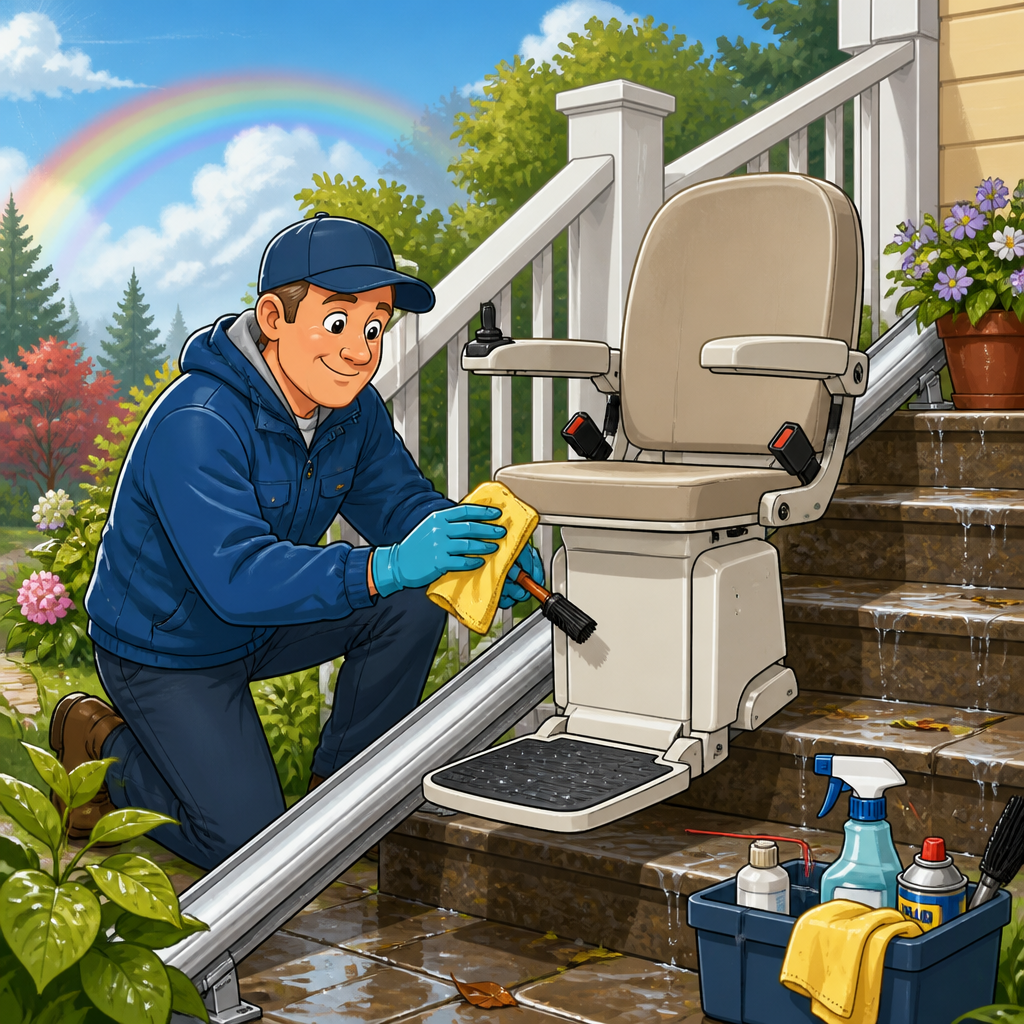
Outdoor stair lifts add another variable: weather exposure. Moisture, dust, temperature swings, and corrosion can affect switch reliability. That is why outdoor-rated models frequently use sealed connectors, gasketed switch compartments, and materials chosen for UV and moisture resistance. If an outdoor lift intermittently reports a seat fault, environmental contamination is a credible cause and should be checked before more invasive repairs.
Some premium models now integrate fault codes or indicator sequences that help identify whether the swivel seat, footrest, charging contacts, or safety edge is blocking operation. This diagnostic feedback reduces guesswork and prevents unnecessary part replacement. It also supports safer ownership because users can report a precise symptom to a dealer instead of assuming the lift has lost power.
| Component | What it verifies | Unsafe condition prevented | Typical symptom if open |
|---|---|---|---|
| Swivel seat interlock | Seat locked in travel position | Riding while seat is turned sideways | Power on, but lift will not move |
| Seat-down interlock | Seat base fully lowered | Travel with folded or partly deployed seat | Intermittent no-start after unfolding chair |
| Armrest or control position circuit | User control assembly available for operation | Accidental activation with folded controls | Call/send may work, rider control may not |
| Footrest-linked safety input | Related lower assembly aligned and safe | Movement with mispositioned lower frame | Beep or fault light, no travel |
Symptoms, troubleshooting, and maintenance best practices
The most common sign of a seat interlock issue is simple: the stair lift has electrical power but will not travel in either direction. Start by checking whether the seat is fully lowered and firmly locked facing the staircase. On a swivel model, rotate the chair slightly away and then return it until the latch audibly clicks. Do not slam it. A gentle but complete re-engagement is enough on most units. If the lift runs afterward, the issue was likely incomplete seat positioning rather than a failed part.
Other symptoms include intermittent operation, fault beeps after transferring at the top landing, or a lift that responds to a call/send station but not to the armrest control. In the field, I have found lint buildup, worn latch bushings, loose switch brackets, stretched cable harnesses under the seat, and oxidized connectors all capable of interrupting the interlock signal. None of those should be guessed at by an untrained owner with a jumper wire. Bypassing a safety circuit to “see if it works” creates a serious hazard and can expose the next user to a preventable fall.
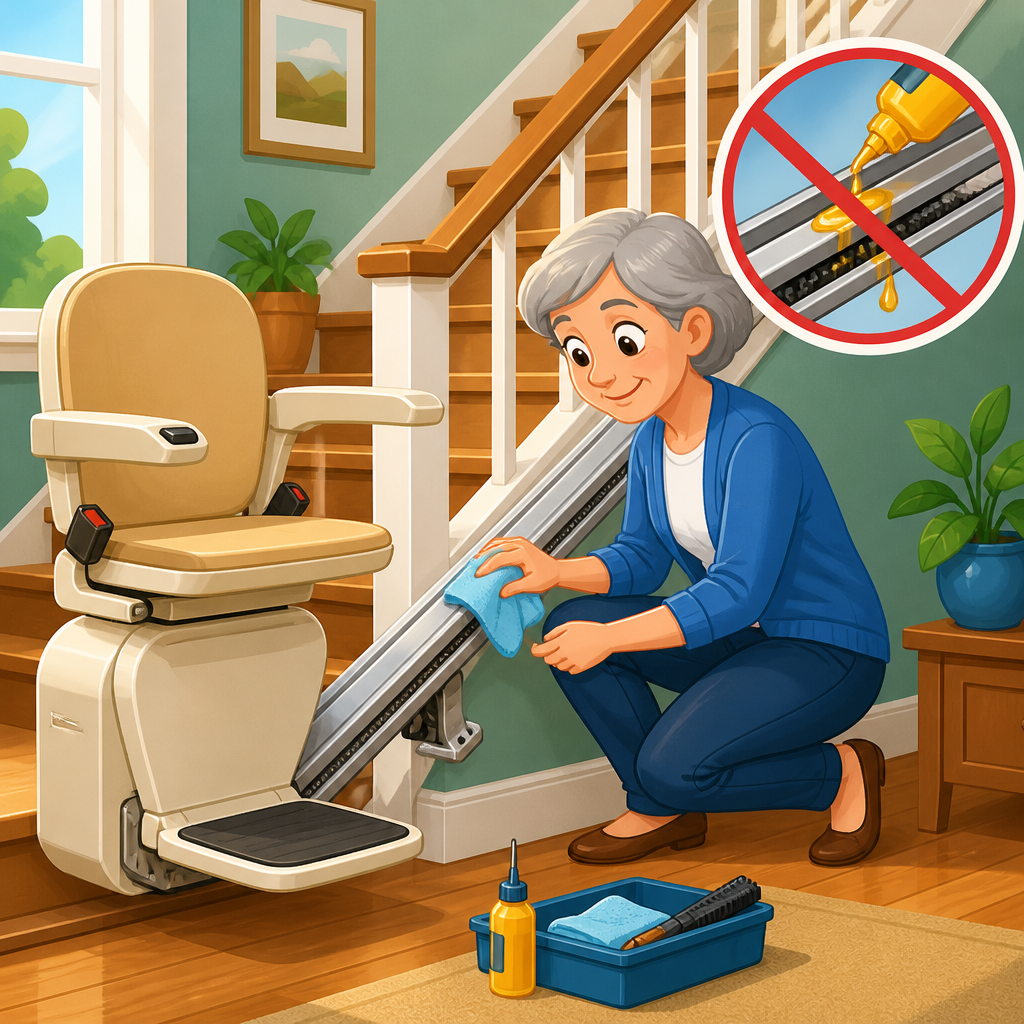
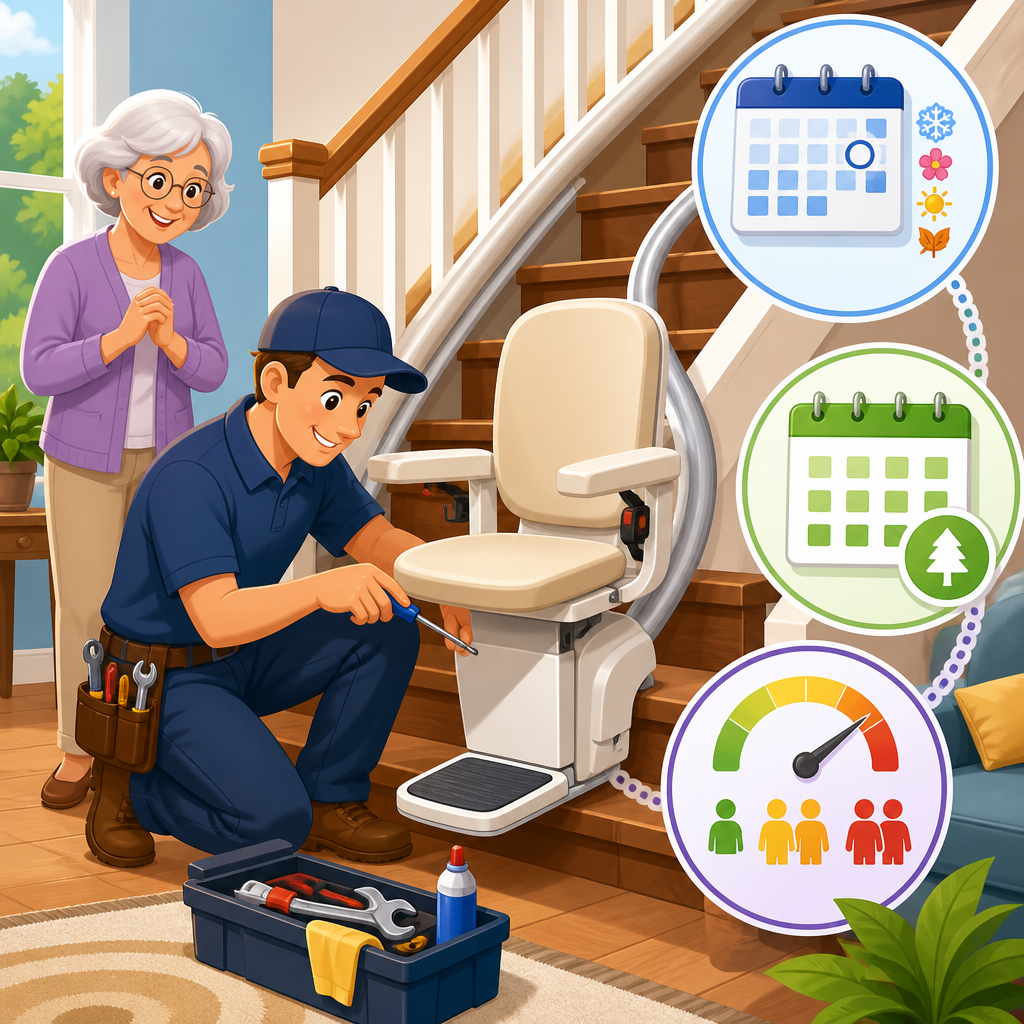
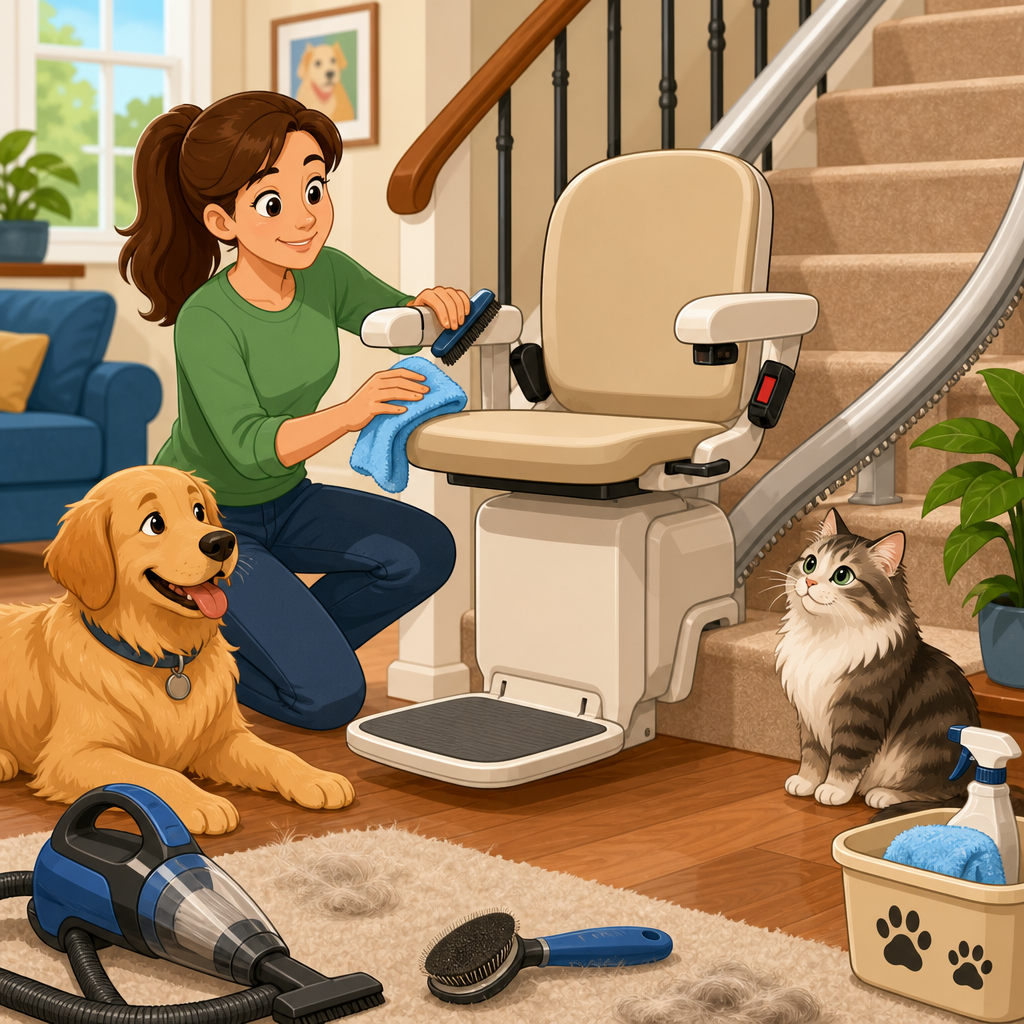
Good maintenance reduces these problems. Keep the seat hinges and swivel area clean, follow the manufacturer’s lubrication guidance, and have the lift inspected on the schedule recommended by the dealer. During service, a technician should verify positive seat latching, inspect switch alignment, test continuity through the interlock circuit, and confirm the controller recognizes the seat-safe state consistently. If the lift is used by a person with limited strength or dexterity, ask the dealer whether an automatic swivel option or easier-latch seat design is available, because hard-to-engage locks lead directly to user errors.
Buying, using, and explaining seat interlocks in real homes
When evaluating a stair lift, ask exactly how the seat interlock works, what positions are monitored, and how faults are communicated. A quality dealer should be able to demonstrate the lift refusing to move with the seat swiveled and then operating normally once the lock is engaged. That demonstration tells you more about real safety than a brochure ever will. It also reveals whether the controls are intuitive for the intended user.
In family homes, seat interlocks are especially valuable because different people interact with the lift differently. One user may ride daily, another may fold it away after each trip, and a caregiver may operate it remotely. The interlock creates a consistent rule regardless of who touched the chair last: if the seat is not safe, the lift does not move. That consistency reduces dependence on memory and habit, which is exactly what good safety design should do.
The central takeaway is straightforward. Stair lift seat interlocks prevent unsafe operation by verifying the chair is in a safe travel configuration before the motor can run. They stop movement when the seat is rotated, folded, mislatched, or otherwise out of position, and that prevention protects riders at the moment risk is highest. For homeowners, this means fewer dangerous mistakes. For technicians, it means a clear diagnostic checkpoint. For buyers, it means a feature worth prioritizing, not overlooking.
As the hub page for safety features explained, this topic connects naturally to seat belts, obstruction sensors, limit switches, overspeed systems, battery backup, and user controls. Understanding the interlock gives you a better framework for understanding all of them: safe stair lifts are designed to deny unsafe states, not just react to accidents. If you own a stair lift, test the seat’s normal locking action, review the manual, and schedule service if the chair ever hesitates to recognize its proper position. A safety feature is most valuable when everyone in the home understands what it is doing and respects why it is there.
Frequently Asked Questions
What is a stair lift seat interlock, and why is it so important?
A stair lift seat interlock is a built-in safety mechanism that prevents the lift from moving unless the seat is in a safe travel position. Depending on the stair lift model, this interlock may rely on a physical switch, an electronic sensor, or a confirmation signal connected to the seat base, swivel seat, folding arms, seatback, or footrest assembly. Its job is straightforward but critical: if the seat is not locked correctly, folded or positioned as required, or fully returned from a swivel transfer position, the drive system will not engage.
This matters because the seat is the rider’s primary support point during travel. If it is turned sideways, not fully locked, or partially folded, the user could be unstable as the stair lift starts moving. That creates a serious risk of slipping, twisting, or being carried in an unsafe posture on the stairs. The interlock helps eliminate that hazard before motion begins. In modern stair lift safety systems, seat interlocks are considered essential because they act as a fail-safe layer, stopping operation before a dangerous condition becomes an accident.
How does a seat interlock know whether the stair lift is safe to operate?
A seat interlock works by monitoring one or more specific seat positions that must be confirmed before the lift can travel. For example, on many units the seat must be fully rotated back into its forward-facing riding position after boarding or exiting. On others, the folding frame must be unfolded completely, the seatback properly aligned, or the locking mechanism fully engaged. When those parts reach the correct position, the interlock sends a “safe” signal to the control system. Only then will the motor respond to the user’s travel command.
If even one required position is not confirmed, the stair lift remains stopped. This is intentional and is one of the core strengths of the system. Rather than guessing whether the seat is secure, the lift requires a verified status from the interlock circuit. Some models communicate this through indicator lights, audible alerts, or diagnostic fault codes, while others simply refuse to move until the issue is corrected. This design helps protect users from accidental operation when the seat is still swiveled, partially folded, or otherwise not ready for safe travel.
What happens if the seat interlock is triggered or fails to detect a safe seat position?
If the seat interlock does not detect a safe seat position, the stair lift should not move. That is the expected and correct safety response. In many cases, the cause is something simple, such as the seat not being fully rotated back into place, the folding seat not fully lowered, or a locking latch not completely engaged. The system is designed to treat any missing or uncertain seat confirmation as unsafe, so it blocks travel until the condition is resolved.
If the problem is not related to seat positioning, the issue may involve the interlock switch itself, the wiring, the sensor connection, or a fault in the control board. From a safety perspective, a non-moving stair lift can be inconvenient, but it is far safer than allowing operation when the seat status is unknown. Users should avoid bypassing the interlock or forcing the lift to run. Instead, they should check the seat position carefully according to the manufacturer’s instructions and contact a qualified stair lift technician if the problem continues. A properly functioning interlock must always remain part of the operating safety chain.
Can a stair lift still be used if the seat is swiveled, folded, or not fully locked?
No, a properly functioning stair lift should not operate if the seat is swiveled away from its travel position, partially folded, or not fully locked. That is exactly what the seat interlock is designed to prevent. The swivel feature is useful at the top landing because it helps users get on and off the chair while facing away from the stairs, but once boarding is complete, the seat typically must be returned to its designated riding position and locked before the lift will move. The same principle applies to folding or hinged seat components.
This protection is especially important because even a small misalignment can affect rider stability. If the seat were angled incorrectly during travel, the user could shift sideways, lose balance, or be poorly supported while moving over the staircase. Interlocks reduce that risk by requiring the correct seat configuration before the motor is allowed to run. If a lift seems able to move while the seat is not properly positioned, that should be treated as a serious fault and inspected immediately by a trained professional.
How should homeowners maintain or troubleshoot stair lift seat interlocks safely?
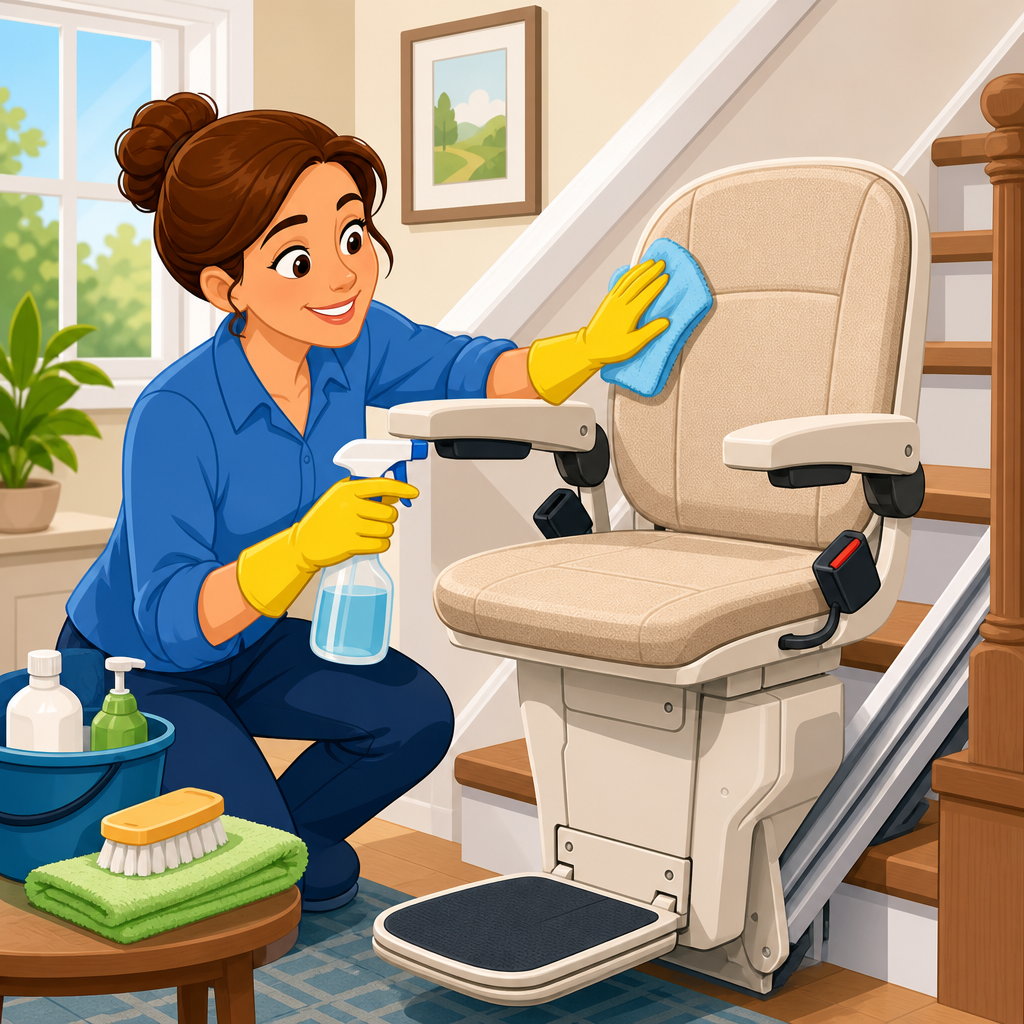
The best approach is routine observation, gentle cleaning, and prompt service when something does not seem right. Homeowners can check that the seat swivels and locks smoothly, that folding parts open and close fully, and that nothing is obstructing the seat base or latch areas. Dust, debris, or wear around the moving components can sometimes interfere with full engagement, so keeping the chair clean according to the manufacturer’s care instructions can help support reliable interlock performance. It is also wise to pay attention to changes such as hesitation, warning beeps, indicator lights, or a chair that suddenly refuses to travel.
What homeowners should not do is adjust, defeat, tape down, jumper, or bypass a seat interlock switch. Because the interlock directly prevents unsafe operation, any improvised repair can remove a major safety protection. If repositioning the seat carefully does not solve the issue, the safest next step is to schedule professional service. A qualified technician can test the switch or sensor, inspect the wiring, verify the seat locking mechanism, and confirm that the stair lift meets the manufacturer’s operating standards. In short, users can assist with basic checks, but diagnosis and repair of the interlock system should be left to trained stair lift service personnel.