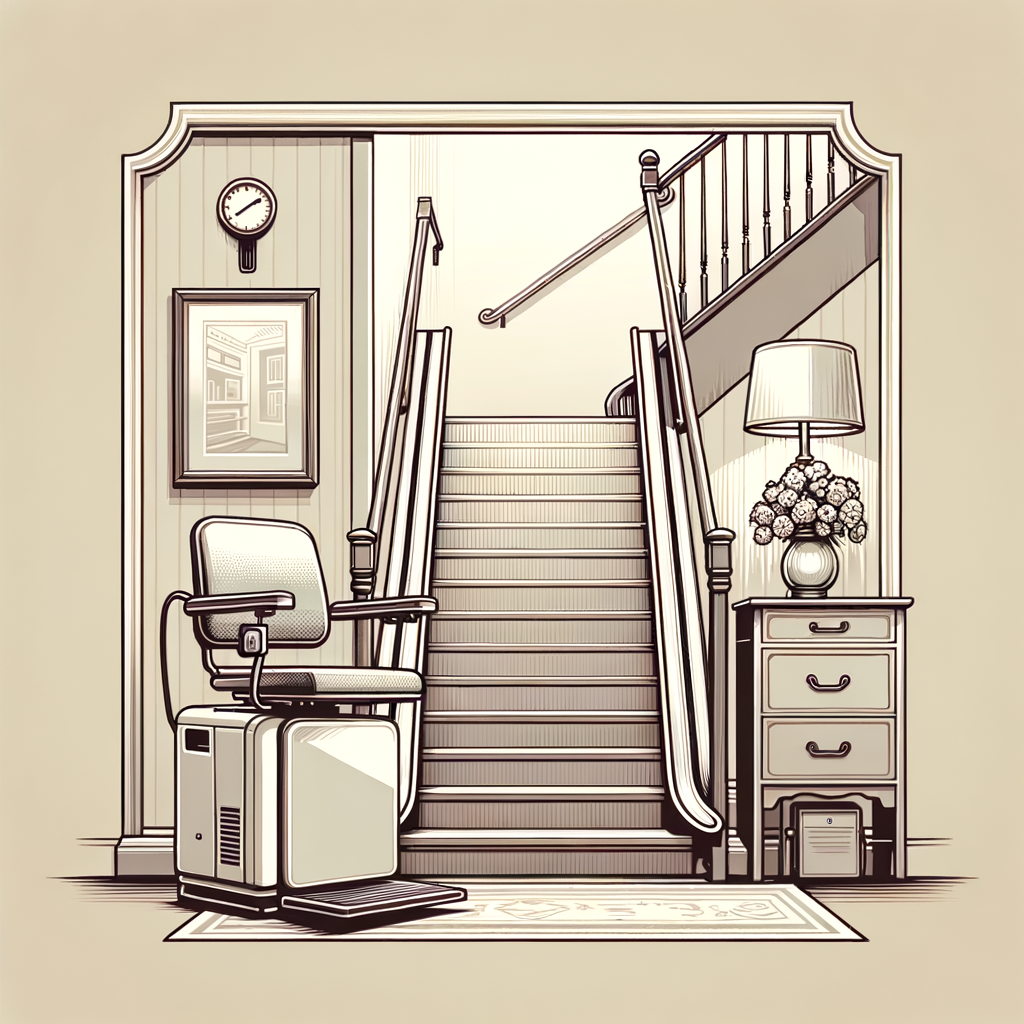
A power outage does not usually leave a chair lift user stranded in immediate danger, because most modern stair lifts are designed to keep working on battery power when household electricity fails. That simple answer matters because power cuts create understandable anxiety for people who rely on a lift for daily mobility, especially older adults, people recovering from surgery, and caregivers responsible for safe movement between floors. In practice, what happens to a chair lift during a power outage depends on the lift type, battery condition, charging setup, and where the unit is positioned when the electricity goes out.
In this guide, chair lift means a residential stair lift: a motorized seat that travels along a rail fixed to the stairs. It may be straight, curved, indoor, outdoor, standing, or heavy-duty, but the backup principles are similar across leading brands such as Bruno, Stannah, Harmar, Acorn, and Handicare. Most current models plug into household power only to keep onboard batteries charged. The batteries then drive the motor during both normal use and outages. A smaller group of older or specialized non-battery units depends directly on mains power and will stop until electricity returns. Knowing which system you have is the difference between confidence and confusion during an interruption.
This topic matters for more than convenience. A stair lift is often the primary accessibility device in a home, and a power failure can affect medication schedules, toileting, meals, sleep arrangements, and emergency exit planning. I have walked homeowners through outage concerns before installation and during service calls, and the biggest misconception is that the lift instantly becomes useless when the lights go out. Usually, the opposite is true: the user may still complete several trips. The practical question is not whether the lift can move at all, but how long it can operate safely, what warning signs appear, and what steps reduce the risk of being stuck between floors.
How a chair lift keeps moving when the power goes out
Most residential chair lifts use a DC drive system powered by sealed batteries housed in the base or carriage. The unit charges automatically whenever it is parked on charging contacts, charging strips, or a continuous charge rail, depending on design. During a blackout, the charger stops receiving household current, but the batteries remain available, so the lift usually operates normally for a limited number of trips. Many manufacturers state that a fully charged lift can complete multiple one-way rides after a power outage, though the exact number varies with user weight, stair length, ambient temperature, rail angle, and battery age.
In plain terms, if the batteries are healthy, the user typically notices little difference at first. The seat swivels as usual, the motor sounds normal, and the lift travels at the same slow, controlled speed. Some units beep or flash an indicator to show that mains power is absent. Others stay silent unless battery voltage drops. The charging system matters here. If a lift charges only at the top and bottom landings, parking midway for long periods during a blackout prevents recharging once power returns. Continuous charge systems are more forgiving, because the carriage can receive charge at many points along the rail.
Battery-backed stair lifts are common because they solve a core safety problem. They allow controlled movement to a landing instead of an abrupt stop on the stairs. This is especially important for users with balance issues, severe arthritis, Parkinson’s disease, or heart and lung conditions that make transferring off a stopped lift difficult. Industry practice strongly favors battery operation for residential installations, and that is why many installers describe household current as the charging source, not the real-time power source. If you want to know what happens to your specific chair lift during a power outage, start by asking one direct question: does the motor run from onboard batteries or directly from the wall?
What affects how many trips you can still make
The number of rides available during a blackout is never one universal figure. Battery capacity declines with age, usually over several years, and repeated deep discharge shortens life further. A newer pair of sealed lead-acid batteries in a straight indoor lift may support many trips, while older batteries in a long curved lift with a heavier user may deliver only a few. Cold weather reduces battery performance, which is one reason outdoor stair lifts require more careful outage planning in winter climates. Mechanical drag also matters. If the rail needs cleaning or the unit is overdue for service, power consumption rises.
Weight load is another direct factor. A lift carrying a 120-pound user generally uses less energy than one carrying a 300-pound user on a heavy-duty model. Stair geometry matters too. A long run with several curves requires more travel time and often more energy than a short straight staircase. Features such as powered swivel seats, powered footrests, and automatic folding rails also consume battery power, though the drive motor remains the main load. This does not mean users should avoid safety features; it means expectations should be realistic. Outage planning should be based on your actual setup, not a brochure estimate.
| Factor | Effect During Power Outage | Practical Guidance |
|---|---|---|
| Battery age | Older batteries provide fewer trips and slower recovery | Replace on schedule, often every 2 to 5 years depending on use and brand |
| Lift type | Curved and heavy-duty lifts may use more power per trip | Ask your dealer for outage trip estimates for your exact rail and seat model |
| User weight | Higher loads increase battery demand | Match the lift capacity to the primary user and avoid overloading |
| Charging method | Top/bottom charge points require correct parking position | Store the lift on its charge point whenever possible |
| Temperature | Cold weather reduces battery performance | Test outdoor units before winter and keep covers and components maintained |
| Maintenance condition | Dirty rails or worn parts can increase power draw | Follow annual service recommendations from the manufacturer |
What happens if the batteries are weak or dead
If the batteries are weak when the power fails, the lift may move only partway, refuse to start, or emit warning beeps before travel. On many models, onboard diagnostics detect low voltage and prevent operation rather than risk a stall between landings. This can frustrate users, but it is a protective design choice. A lift that starts and then loses power on the staircase creates a harder transfer problem than a lift that refuses movement from the start. In service work, low batteries are among the most common reasons homeowners think the lift itself has failed, when the real issue is that the charger was unplugged, a switch was off, or the unit was not parked on charge contacts.
Completely dead batteries usually mean the stair lift will not run during an outage, and in some cases it may not run even after power returns until the batteries recover enough charge. Most lifts use maintenance-free batteries similar in concept to those found in mobility scooters or alarm systems, but their lifespan is finite. Replacing them before failure is far cheaper and safer than waiting for a no-start event. Warning signs include slower travel, more frequent beeping, dim indicators, or the need to reposition the chair repeatedly before it will move. If you notice those symptoms, schedule service instead of assuming the lift will manage the next outage.
There is also an important distinction between battery condition and charger condition. A stair lift with good batteries but a failed charger may still operate for some time, then gradually lose capacity even while the home has normal electricity. Users often discover the problem only after several days, because the unit seems functional at first. Then the first blackout exposes the issue. That is why routine service checks include measuring charger output and battery voltage under load, not just verifying that the seat goes up and down once. For households where the lift is medically essential, those checks are not optional maintenance; they are continuity planning.
How different chair lift designs behave in an outage
Straight stair lifts are generally the simplest to predict during a blackout. They use one direct rail, have fewer moving parts, and are often easier on batteries than curved systems. Curved stair lifts, built for turns, intermediate landings, or complex staircases, usually have custom rails and may need slightly more energy per trip because of longer travel distance and added mechanical complexity. That does not make them unreliable. It simply means battery health matters more, and the margin for repeated trips during a prolonged outage may be smaller than with a short straight lift.
Outdoor chair lifts deserve separate attention. Exposure to heat, freezing temperatures, moisture, and airborne debris can shorten battery life and affect contacts or covers. Most reputable outdoor lifts are weather-resistant rather than weatherproof in the absolute sense, so protective covers and regular inspection still matter. In a winter outage, an outdoor lift may technically have battery reserve but still operate less efficiently because cold reduces available battery output. Users who rely on an exterior stair lift to enter or leave the home should build a stronger contingency plan than indoor users, including key access, alternate shelter, and battery replacement on a stricter schedule.
Standing and perch lifts, often chosen for narrow stairs, follow the same battery principles but introduce transfer considerations. If a power failure occurs while a user is already on the unit, maintaining balance is more demanding than on a seated model. Heavy-duty lifts, designed for higher weight capacities and wider seats, may draw more power but are usually equipped accordingly. Older AC-powered lifts are the true exception. These units run directly from household electricity and stop when it fails. If you have inherited a lift with uncertain age or documentation, check the model plate and manual now. During outages, design details are not trivia; they determine whether the device remains an accessibility aid or becomes a barrier.
Safe steps to take during a blackout
If the power goes out, the first priority is staying calm and using the lift deliberately. If the chair lift is battery-powered and functioning normally, make only necessary trips until electricity is restored. Avoid repeated convenience rides that drain reserve capacity. Park the chair at a landing, preferably on its charging point if power may return intermittently. Keep the seat belt fastened during travel, use armrests and footrest correctly, and do not attempt to get off except at a proper landing. If the unit gives low-battery alarms, stop nonessential use immediately and conserve the remaining capacity for the trip that matters most.
If the lift will not move, do not force switches, rock the chair, or try to push it by hand unless the manufacturer specifically provides a manual lowering or recovery procedure and you have been trained to use it. Many apparent outage failures are actually simple conditions: the seat is not locked in travel position, the armrest control is obstructed, the footrest safety edge is pressed against an object, or the swivel seat is not fully returned forward. Check indicator lights if your model has them. Then verify whether the home’s breaker tripped, whether the lift’s power switch is on, and whether the charger is plugged into a live outlet.
For households with a medically dependent user upstairs or downstairs, outage planning should be written, not assumed. Keep emergency phone numbers nearby. Store flashlights at both landings. Make sure at least one caregiver knows the lift model, dealer name, and any diagnostic beep meanings. If evacuation is a concern, discuss stair lift limitations with local emergency responders before a crisis. In homes where outages are frequent, a generator or battery backup system for the charger can be worthwhile, but it must be sized and installed correctly. The best safety step is simple: treat the stair lift as part of your home emergency plan, not as a separate appliance.
Maintenance, testing, and common user questions
The most effective way to prepare a chair lift for a power outage is preventive maintenance. Park the unit on its charge point every time. Listen for changes in sound. Schedule annual service, or more frequent visits if the lift sees heavy use. Technicians typically inspect charge contacts, test batteries under load, check seat and footrest safety circuits, verify final limits, and confirm that the rail is clean and properly lubricated only where the manufacturer allows. Homeowners should not apply random grease or spray products, because many rails are designed to stay dry and excess lubricant attracts dirt that increases drag.
Users often ask how long batteries last. In real homes, two to five years is a reasonable planning range, though usage patterns and environment can shorten or extend it. Another frequent question is whether a stair lift should be unplugged during storms. In most cases, no; keeping the charger active is necessary, though surge protection may be advisable if the manufacturer permits it. People also ask whether a lift can be run continuously during an extended outage. The honest answer is no. Battery-backed operation is a bridge, not an unlimited power source. Use should be prioritized until charging resumes.
The hub topic of practical user guidance comes down to one principle: know your lift before you need it. Confirm whether it is battery-powered, learn where it charges, replace batteries on schedule, and understand the warnings it gives when power is lost or reserve is low. Most chair lifts are engineered so a power outage is inconvenient rather than dangerous, but that result depends on maintenance and informed use. If you are shopping for a new lift, ask every dealer to explain outage behavior in writing for your exact model. If you already own one, test your emergency plan, update service records, and make battery readiness part of normal home safety.
Frequently Asked Questions
Will a chair lift stop working completely during a power outage?
Usually, no. Most modern chair lifts are battery-powered systems that continue to operate even when household electricity goes out. Under normal conditions, the lift stays plugged into a charging point or charging strip so the batteries remain topped up. If the home loses power, the lift typically switches to battery operation automatically, which means the user can still travel up or down the stairs without being stranded right away. This design is intentional, because stair lifts are built for people who depend on them for daily mobility and need a reliable way to move between floors during unexpected events.
That said, how well the lift performs during an outage depends on the condition of the batteries, the model of the lift, and whether the unit was charging properly before the outage began. If the batteries are healthy, most users can still make multiple trips. If the batteries are old, weak, or not holding a charge, the lift may slow down, beep, or stop sooner than expected. So while a power outage does not usually make a chair lift unusable immediately, the backup battery system is what makes that possible, and it needs to be maintained.
How long will a stair lift battery last if the electricity is out?
There is no single answer for every lift, but most stair lifts can complete several trips on battery power during an outage. In many cases, a fully charged battery will provide enough power for multiple up-and-down journeys rather than just one emergency ride. The exact number depends on factors such as the age of the battery, the length and steepness of the staircase, the user’s weight, and how often the lift is used while the power is out. A straight stair lift may place different demands on the battery than a curved model, and an older battery generally will not last as long as a new one.
It is also important to understand that the lift is not designed to run indefinitely without electricity. The battery backup is meant to provide continued mobility through short-term outages and allow safe movement when needed, not to replace regular charging for extended periods. If the outage lasts a long time, many manufacturers recommend limiting trips to those that are necessary. The best source for expected battery performance is the owner’s manual or installer, since each brand and model may have different specifications.
Is it dangerous to use a chair lift during a power outage?
In most situations, using a chair lift during a power outage is not inherently dangerous, especially if the lift is functioning on its backup batteries as intended. Modern stair lifts are designed with safety in mind and typically include features such as seat belts, obstruction sensors, swivel seats, and controlled starts and stops. These systems do not suddenly drop or slide down the rail just because the home loses power. For most users, the safer option is often to use the lift normally on battery power rather than attempt the stairs on foot, particularly if balance, strength, or recovery from surgery is a concern.
However, safety still depends on the condition of the equipment and proper use. Users should remain seated fully, wear the seat belt, keep feet on the footrest, and avoid overloading the lift. If the unit starts making unusual noises, displays warning lights, or seems unable to complete the trip smoothly, it is wise to stop using it and contact a service provider. During a prolonged outage, caregivers should also be mindful of battery conservation and plan essential trips carefully. A chair lift during a power outage is generally safe, but like any mobility device, it is safest when maintained properly and used according to manufacturer instructions.
What should you do if your chair lift will not move when the power goes out?
If a chair lift does not move during a power outage, the first step is not to panic. The issue may be something simple rather than a major failure. Check whether the lift is switched on, whether the seat is locked in the travel position, and whether the armrests and footrest are fully in place if your model requires that for operation. Make sure the seat belt is fastened if the lift has a safety interlock tied to it. Also look for any obvious obstruction on the stairs or rail, since many lifts have sensors that prevent movement if something is blocking the path.
If those basics do not solve the problem, the batteries may be weak or depleted, especially if the unit has not been charging correctly before the outage. Some lifts will beep or show an indicator light when battery power is low. In that case, it is best to contact the stair lift company or service technician for guidance. If the user is already seated on the lift between floors, stay calm and call for assistance rather than trying to get off unsafely on the staircase. Many providers offer service support for exactly this reason. In households where a stair lift is essential, it is a good idea to keep the installer’s phone number easily accessible and review the manual ahead of time so everyone knows the recommended steps in an outage.
How can you prepare a chair lift for future power outages?
The most effective way to prepare is to keep the lift in good working condition year-round. Regular maintenance helps ensure the batteries charge properly and are replaced before they become unreliable. Since the battery system is what keeps the lift operating during a blackout, preventive service matters more than many people realize. If the lift begins beeping, slowing down, or acting inconsistently, those can be early signs that the batteries or charging system need attention. Scheduling routine inspections with a qualified technician can help catch these issues before an outage exposes them.
It also helps to create a simple household plan. Keep the user manual in an easy-to-find place, save the service company’s contact information, and make sure family members or caregivers understand how the lift works during a power failure. If possible, park the lift at its designated charging point when not in use so the batteries stay fully charged. During storm seasons or in areas with unreliable electricity, some households also consider a whole-home backup power solution for broader peace of mind, though the stair lift itself typically relies on its own batteries first. Good preparation does not just protect equipment performance; it reduces anxiety and helps users feel confident that a power outage will not automatically turn into a mobility emergency.