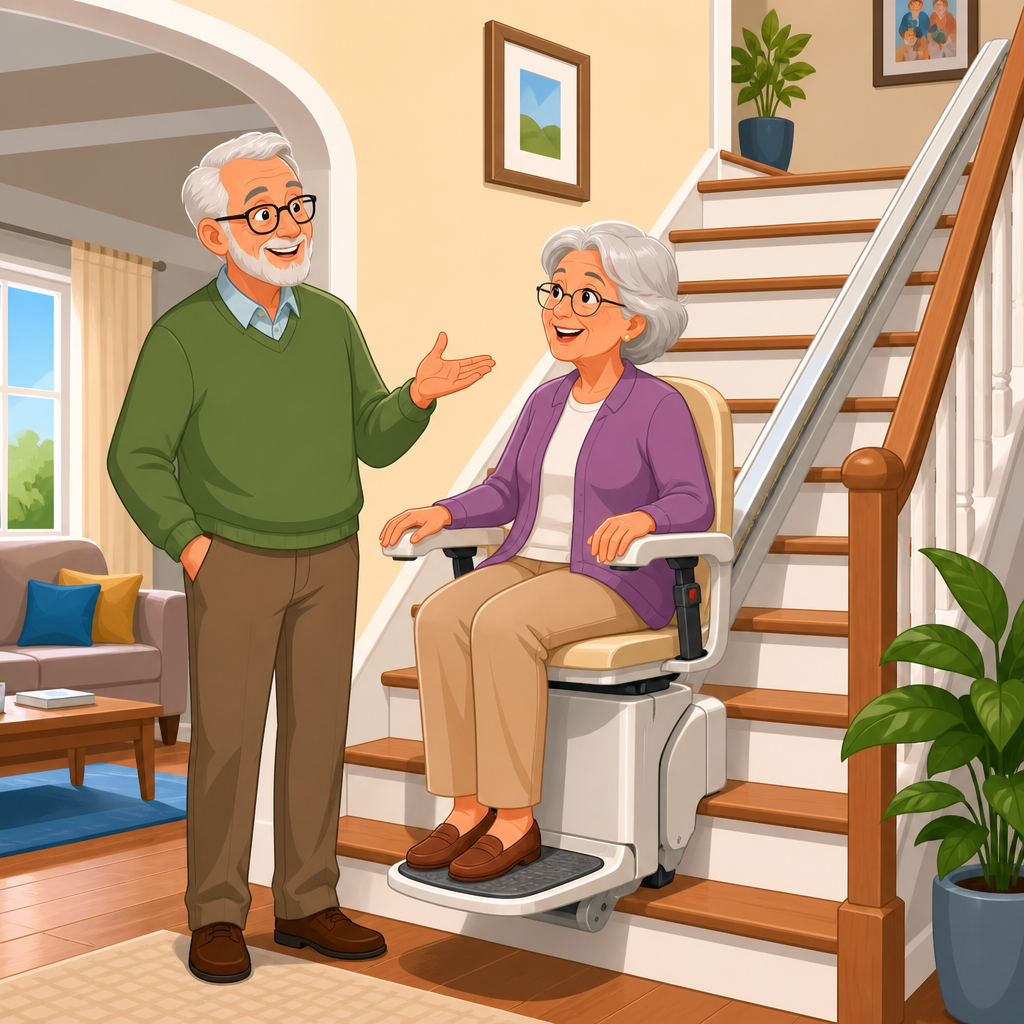
Can two people in the same home share one stair lift? In many households, the answer is yes, but only when the lift, the staircase, and the users’ mobility needs are assessed carefully. A stair lift is a motorized chair or perch mounted to a rail that carries one person up and down stairs. Sharing means more than taking turns. It includes matching seat dimensions, weight capacity, transfer ability, safety controls, and landing space to two different bodies and routines. In practice, I have seen shared use work very well for couples, aging siblings, and multigenerational families, but I have also seen installations fail because buyers assumed one standard chair would suit everyone.
This question matters because stair lifts are a major accessibility investment. According to pricing commonly quoted across the industry, a straight stair lift often costs several thousand dollars, while curved models can cost far more because the rail is custom built. Replacing a working lift later because a second user cannot sit safely is expensive and disruptive. The better approach is to plan for shared use from the start. That means understanding whether one rail can serve both users, when a powered swivel or heavy-duty model is necessary, and when separate accessibility solutions make more sense.
For most homes, one stair lift can serve two people if each user can board and exit safely, the lift’s rated capacity exceeds the heavier user with a reasonable margin, and the chair can be adjusted without creating daily frustration. The core issues are straightforward: fit, controls, safety, scheduling, and maintenance. This guide explains those issues in plain language so you can decide whether sharing a stair lift is practical in your home and what questions to ask before you buy.
When one stair lift can work for two users
One stair lift can usually be shared when both people use the same staircase, have similar enough transfer abilities, and can sit securely on the same seat style. The rail itself is not person-specific. It is simply the track fixed to the stairs. What determines shared suitability is the carriage and chair configuration, the rated load, and the usability of controls. In homes I have assessed, the easiest successful matches were spouses with mild to moderate mobility limitations who could both sit upright, place feet on the footrest, and tolerate the same seat height. They often needed only small adjustments to armrests or seatbelt position.
Shared use becomes more likely on straight staircases because straight lifts have standardized components and more model choices. Curved staircases can still support two users, but customization is tighter, and seat parking points matter more. If one person enters from a narrow hallway and the other from an open landing, the top and bottom overrun options must be planned so both can mount and dismount away from the stair edge. Call/send controls are also essential. They let one user send the chair to the other floor without climbing stairs to retrieve it.
Manufacturers such as Bruno, Handicare, Stannah, and Acorn all offer features that can support shared use, including folding seats, powered footrests, adjustable arm widths, and remote controls. The important point is that “shareable” does not mean universally comfortable. A compact seat that fits a narrow staircase may technically carry two people, yet still be hard for a taller user with limited hip flexion. Successful sharing depends on matching the product to actual bodies and movements, not simply checking that two names will use it.
The first safety checks to make before sharing
The first question is not whether two people want to share one stair lift. It is whether both can use it safely every day. Start with capacity. The lift must support the heavier user within the manufacturer’s published weight limit. Heavy-duty models may exceed standard capacities, but they often require wider stairs and more clearance. Never treat the rating as flexible. Motors, gearboxes, seat frames, and braking systems are tested for defined limits, and exceeding them is unsafe.
The second check is seating posture. Both users should be able to sit back fully, keep arms within the armrests, and place feet squarely on the footrest. Poor posture increases the risk of contact with the staircase, wall, or knees at bends and landings. Third, review transfer ability. Can each user step or pivot onto the seat without losing balance? A powered swivel seat at the top landing can be the deciding feature because it rotates the chair away from the staircase, reducing twisting during exit. Fourth, assess cognition and hand function. If one user cannot reliably fasten the belt, hold the control, or follow operating steps, supervision or a different solution may be needed.
Finally, inspect the staircase itself. Many installers follow minimum width guidance that varies by model, and local building expectations can affect planning. Narrow treads, radiators near the landing, or a door that opens into the stair path can complicate shared use. Safety sensors on the footrest and carriage help stop the lift if it meets an obstruction, but they do not replace careful space planning. A proper home survey should document all of these issues before anyone commits to an installation.
How to choose a model that fits both people
When two people share one stair lift, model selection should begin with the larger, less flexible, or less stable user. If the lift works safely for that person, smaller adjustments can often make it work for the other. Seat width, back height, arm spacing, and footrest depth matter more than buyers expect. For example, a petite user may prefer a lower seat height, but a taller user with painful knees may need a higher perch to stand up more easily. Some manufacturers offer limited seat height adjustment, while others rely more on standard geometry. Ask the dealer to demonstrate the exact model, not a similar one.
Power options also affect daily usability. Battery-powered stair lifts, which charge at points on the rail, are now standard in much of the market and continue working for several trips during a power outage. For two users, that battery backup is especially important because demand is higher. If one person uses the lift multiple times each morning and the other needs it later in the day, the chair must reliably return to a charging point when parked. Noise level, ride smoothness, and start-stop behavior should also be tested because one user may tolerate abrupt motion less well than the other.
| Feature | Why It Matters for Two Users | Practical Guidance |
|---|---|---|
| Weight capacity | Must safely accommodate the heavier user | Choose a model with headroom above actual body weight |
| Seat size | Needs to fit both bodies without unstable posture | Test the exact seat, not a brochure measurement |
| Powered swivel | Improves safer exit at the top landing | Prioritize if either user has limited trunk rotation |
| Call/send controls | Allows the chair to move between floors for each person | Install controls where both users can reach them easily |
| Folding footrest | Keeps the staircase clearer when parked | Helpful if one user can fold it and the other cannot |
| Battery backup | Reduces disruption during outages | Confirm charging points and expected trip capacity |
Common problems when household members share a stair lift
The most common problem is not mechanical failure. It is mismatch between users. One person may need the seat parked at the top, while the other expects it at the bottom. If the lift is left on the wrong floor and the second user cannot manage the stairs at all, a simple habit issue becomes a serious barrier. Call/send remotes solve much of this, but only if they are kept accessible and both people can operate them confidently. I recommend fixed wall controls plus handheld remotes, not one or the other.
Another frequent issue is transfer difficulty. A user may appear fine during a short showroom test but struggle at home because the landing is tighter, lighting is worse, or they approach the chair from a different angle. Seatbelts can become another sticking point. A standard lap belt may be manageable for one user and frustrating for another with arthritis or reduced grip strength. In those cases, the answer may be a different buckle style, more practice, or caregiver help rather than abandoning the idea of shared use altogether.
Maintenance and wear also matter. Two users generally mean more cycles, more battery charging, and more opportunities for accidental knocks to footrests or armrests. This does not make sharing a problem, but it does increase the value of routine service. Follow the manufacturer’s inspection interval and keep the rail clean and dry. If the lift starts beeping, jerking, or stopping unexpectedly, do not normalize it. Small faults are easier and cheaper to resolve before they strand a user on a landing.
Special situations: different body sizes, medical needs, and stair layouts
Large differences in body size are one of the clearest reasons to slow down and test carefully. A standard lift might fit a smaller user neatly but leave a broader user perched with pressure at the hips, while a heavy-duty model may be comfortable for the larger person yet place the smaller person in an awkward position where the armrests are too far apart. Some heavy-duty lifts also require a wider staircase, often limiting remaining walking space for others in the household. This is why measurements alone are not enough. An in-home trial seat or detailed fitting assessment is worth the time.
Medical conditions can also change the answer. Parkinsonian rigidity, stroke-related weakness, severe arthritis, vestibular disorders, or oxygen tubing each create specific transfer and seating challenges. If one user needs a perch-style lift because bending the knees is difficult, while the other needs a conventional seated chair for stability, one shared unit may not work. Likewise, if a user has rapidly changing mobility, today’s acceptable fit may not be suitable in six months. In those cases, discuss future progression openly with the dealer and, where relevant, the occupational therapist or physiotherapist.
Stair layout is the third major factor. Narrow turns, intermediate landings, low headroom, and doors near the top or bottom can restrict what models are viable. A hinged rail at the bottom may be needed to prevent the track from blocking a doorway, but that adds another moving part and operating step. On outdoor stairs, weather resistance becomes part of the shared-use equation because cushions, covers, and controls must remain manageable for both people. The right answer is not always one lift. Sometimes a stair lift for one user and a bedroom relocation or additional handrails for the other is the more practical plan.
Questions to ask before you buy or upgrade
Before signing anything, ask direct questions that reveal whether the dealer understands two-user households. Can both users test the exact model in person? What is the rated capacity, and does the seat geometry change on the heavy-duty version? Are there powered options for swivel, footrest, and folding rail? How many remote controls are included, and where will wall controls be placed? What happens during a power cut, and how many trips can the battery typically provide? Is there a service response target in your area, and which parts are commonly stocked locally?
Also ask about installation details that affect everyday life. When folded, how much stair width remains for walkers on foot? Where are the charging points, and must the chair be parked in a specific place? Can the upholstery and armrests be cleaned easily if one user has continence issues or uses topical medications that stain surfaces? If your home may later need other adaptations, ask whether the rail placement will interfere with future grab bars or doorway changes. Good dealers answer these questions clearly and measure patiently. Poor ones rush to a standard quote.
This page should also help you navigate related topics within chair lift types and designs. If you are comparing straight versus curved rails, evaluating heavy-duty stair lifts, deciding between seated and perch models, or reviewing powered hinge and swivel options, those narrower guides will help you go deeper. As a practical hub, the key takeaway is simple: sharing one stair lift is often possible, but only after both users, the staircase, and the operating routine have been assessed as one system.
A shared stair lift can be an excellent solution for the right household. It saves space, avoids duplicate equipment, and gives two people dependable access to the full home without major remodeling. The deciding factors are not marketing claims. They are safe transfers, correct capacity, seat fit, landing clearance, and easy controls. When those pieces line up, one lift can serve two users smoothly for years. When they do not, daily frustration or unsafe workarounds follow quickly.
The most reliable path is a joint assessment with both users present. Test the exact chair, review the staircase in detail, and plan for the heavier user, the less stable transfer, and the tighter landing. Include practical habits such as where the chair will be parked and who can use the remotes. Do not ignore future needs, especially if either person’s mobility is changing. Small feature choices, like a powered swivel or a different belt latch, often determine whether shared use feels effortless or exhausting.
If you are exploring chair lift types and designs for your home, use this article as your starting point for the practical questions. Then compare the relevant lift styles, safety features, and staircase configurations in more detail before buying. A careful assessment now can prevent costly changes later and ensure that both people use the stair lift with confidence every day.
Frequently Asked Questions
Can two people in the same home share one stair lift?
Yes, in many homes two people can share one stair lift, but the right answer depends on more than whether both people use the same staircase. A stair lift is designed to carry one rider at a time, so sharing usually means alternating use safely, not riding together. For that to work well, the lift has to suit both users’ body size, balance, transfer ability, and comfort needs. The seat width, arm position, footrest size, swivel function, and seat height all matter. If one person transfers easily and the other needs more support, the setup has to accommodate the person with the greater safety requirement.
The staircase itself also plays a major role. There must be enough landing space at the top and bottom for both users to get on and off safely, and the rail placement should not create a hazard for others in the home. Weight capacity is another key factor. Standard stair lifts often support a wide range of users, but if either person is near the upper limit, a heavy-duty model may be the safer choice. In short, sharing one stair lift is often possible, but it should follow a proper assessment of the equipment, the staircase, and both individuals’ daily mobility needs.
What features matter most when one stair lift will be used by two different people?
The most important features are the ones that affect safety, comfort, and ease of transfer for both users. Start with weight capacity, because the lift must safely support each person without operating near its limit. Next, consider the seat. A seat that is too narrow, too deep, or too high for one user can make transfers difficult, even if it works fine for the other. The same is true for armrests and footrests. If one person has shorter legs, reduced hip movement, or weaker balance, those details can make the difference between a smooth transfer and a risky one.
Safety controls are equally important in a shared-use situation. Seat belts should be easy for both users to fasten independently if possible. Swivel seats and locking positions at the landing can help both riders get off facing away from the stairs rather than twisting awkwardly. Call/send controls are especially useful when two people use the lift at different times, because one person can send the chair to the other end when finished. For some households, powered swivel seats or powered folding footrests are worth considering if one or both users have limited strength or flexibility. The best shared setup is not just functional on paper; it should be easy and predictable for both people to use every day.
Are there situations where two people should not share one stair lift?
Yes. Sharing is not always the safest or most practical choice. If the two users have very different physical needs, one stair lift may not serve them both well. For example, one person may need a larger seat, higher weight capacity, or additional postural support, while the other may need a lower seat height or simpler transfer position. In those cases, trying to make one lift fit both can compromise safety for one or both users. The same concern applies if one person can use a standard seated lift but the other needs a perch-style model because of limited knee or hip flexion.
Other limitations involve the staircase and the home routine. If the stairs are narrow, a standard installation may already be tight, and trying to adapt the unit for two very different users may create crowding at the landings. Timing can also matter. If both people need the lift frequently, especially during the night or around caregiving routines, one unit may become inconvenient or frustrating. Finally, if either person has cognitive impairment, very poor balance, or difficulty following the operating steps consistently, a professional should assess whether a shared stair lift is appropriate at all. In those cases, the safest plan may involve a different lift configuration, other accessibility equipment, or a broader home mobility solution.
How can a family make sharing a stair lift easier on a day-to-day basis?
Successful sharing usually comes down to routine, setup, and maintenance. One of the easiest improvements is using call/send controls so the chair can be brought to whichever floor needs it next. That prevents one person from being stranded waiting for the lift to return. It also helps to decide on a normal parking position for the chair when it is not in use, especially if the staircase is in a main traffic area. In some homes, parking it at the top keeps the lower hallway clear; in others, the bottom is more practical. The right choice depends on safety, space, and who uses it most often.
Families should also make sure both users are trained on the same operating steps every time: sit fully back, use the seat belt, keep feet on the footrest, and wait for the seat to lock into position before getting off. If one user needs caregiver assistance, that should be built into the routine rather than improvised. Regular servicing is particularly important when a lift is shared because higher use means more wear on batteries, controls, and moving parts. A stair lift that is used by two people can still be very dependable, but only if everyone in the home treats it as essential mobility equipment and keeps it maintained accordingly.
Should two users get a professional assessment before installing a shared stair lift?
Absolutely. A professional assessment is the best way to determine whether one stair lift can safely serve two people in the same home. An experienced stair lift provider, and in some cases an occupational therapist, can look at the staircase layout, measure the landings, review transfer ability, and compare the needs of both users side by side. That is important because many of the factors that affect safe use are easy to miss without a structured evaluation. A staircase may seem suitable until someone notices that the top landing does not allow one of the users to swivel and stand safely, or that the rail position limits hand placement during transfer.
An assessment also helps match the household to the right model and options. Rather than choosing the first lift that seems convenient, the installer can recommend seat dimensions, rail type, powered features, and capacity based on real-world use. That often prevents expensive mistakes and reduces the likelihood of needing modifications later. If both people are expected to rely on the lift daily, getting the setup right from the beginning is especially important. In most cases, the decision should not be based on whether two people can technically use the lift, but whether both people can use it safely, comfortably, and consistently over time.