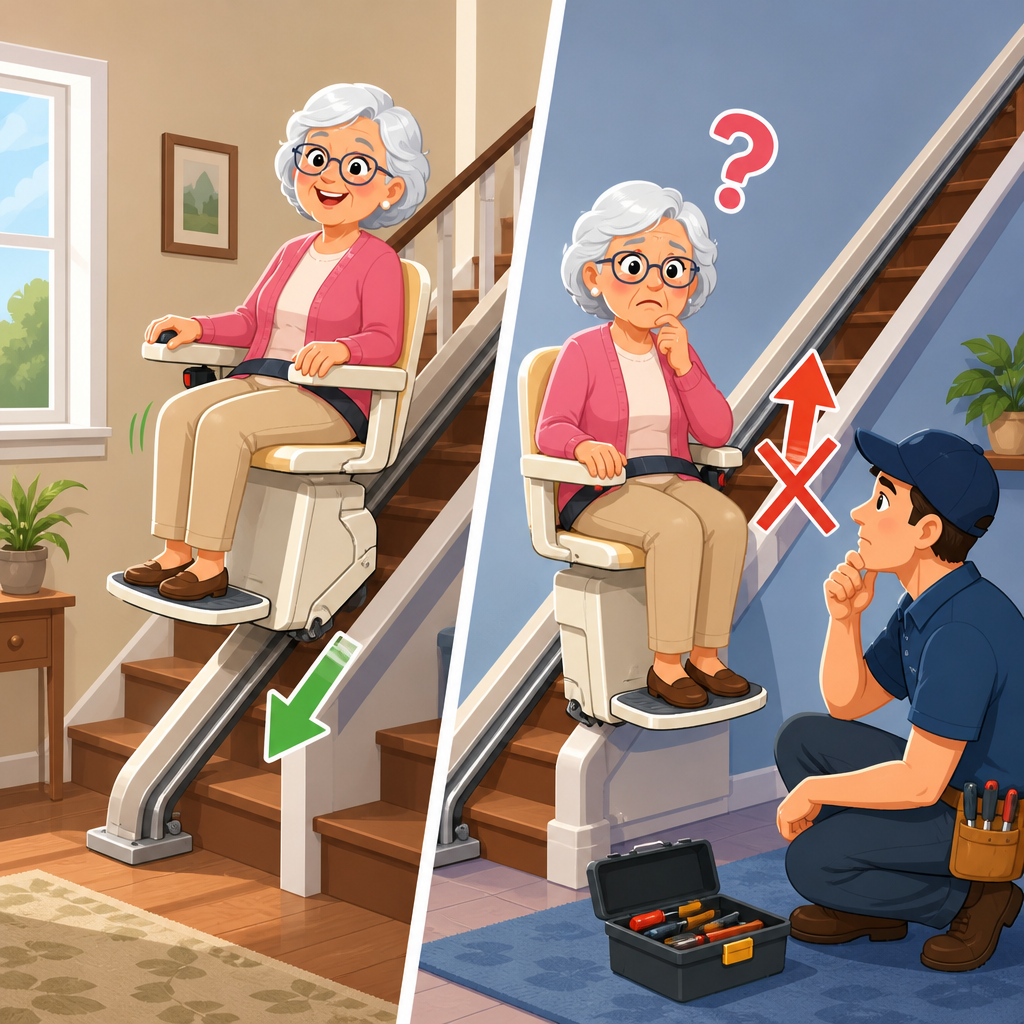
A stair lift that moves down but not up usually has a power, safety, drivetrain, or control problem, and the distinction matters because gravity helps the unit descend while upward travel demands full battery output, intact charging, and a correctly cleared safety circuit. In service visits, I have seen this exact complaint on straight and curved lifts from Bruno, Stannah, Harmar, Acorn, and Handicare, and the pattern is consistent: the chair seems normal until the user tries to ride upward, then it hesitates, beeps, stops, or does nothing at all. For homeowners, caregivers, and facility managers, this is more than an inconvenience. A one-direction failure can trap users on the lower floor, interrupt daily routines, and create real fall risk if someone tries to use the stairs instead. Understanding why a stair lift moves down but not up starts with understanding the system itself. Most modern residential units are battery-powered DC lifts that charge continuously from the rail. The motor, transmission, control board, key switch, arm controls, footrest sensors, seat swivel interlocks, charge contacts, and limit switches all have to agree before the lift can climb. Because downhill travel requires less torque, weak batteries or charging faults often show up first as poor or failed upward performance. This article serves as a practical hub for common issues and fixes within stair lift maintenance, troubleshooting, and safety, so you can identify the most likely cause, perform sensible user checks, and know when professional service is the correct next step.
Why a stair lift will go down but not up
The simplest answer is that going up requires more force than going down. A stair lift motor must overcome the combined weight of the user, chair, carriage, and drivetrain while climbing the rail. When descending, gravity reduces the load, so a lift with weak batteries, low voltage under load, contaminated charge points, or a dragging gearbox may still travel downward even though it cannot generate enough torque to rise. That is why technicians treat one-way operation as an important diagnostic clue rather than a random glitch.
Battery condition is the first place to look. Most stair lifts use sealed lead-acid batteries, commonly 12-volt batteries wired in series to create a 24-volt system, though exact specifications vary by brand. These batteries are designed for standby use and can degrade from age, heat, or repeated periods parked off charge. A lift may show lights, make sounds, and even move down normally while still lacking the amperage needed for uphill travel. In my experience, batteries often fail gradually: the ride becomes slower, the lift beeps when parked away from a charging point, and then upward trips become unreliable before stopping altogether.
Charging faults are nearly as common as battery failure. The charger may be working, but the carriage may not actually be receiving charge because of dirty charge strips, bent charging tabs, loose wiring, or a misaligned park position. On some models, the user can unknowingly leave the chair slightly off the charging contacts, especially if the unit stops just short of its upper or lower charge point. A digital multimeter can confirm charger output, but homeowners should generally limit themselves to visual checks and cleaning only where the manufacturer permits.
Safety circuits also cause uphill lockouts. Stair lifts are built with multiple interlocks so the unit cannot move when the seat is not locked in travel position, the armrest control is stuck, the footrest edge sensor is pressed, the chassis is contacting an obstruction, or a final limit switch is activated. A lift that goes down but not up may be encountering a rail obstruction, carpet edge, or overrun issue only in the upward direction. On curved rails, small alignment issues can present only at certain points on the track.
Less commonly, the cause is mechanical. Worn gears, a failing motor, brake problems, or excessive friction inside the transmission can reduce available climbing power. In rack-and-pinion systems, contamination on the geared rail or carriage area can contribute to jerky movement, though lubrication must follow manufacturer instructions because the wrong product can attract debris and worsen performance. Control boards can also fail in partial ways, allowing one direction but not the other if a relay, directional circuit, or harness connection is compromised.
Fast troubleshooting steps you can do safely
Start with the simplest checks that do not require opening covers or bypassing safeties. Confirm the unit is switched on, the key is inserted if your model uses one, and the seat is fully locked in the riding position. Many service calls end with a swivel-seat interlock reset. If the chair has been turned for dismounting at the top landing, it may feel aligned while still being a fraction short of the lock point that permits travel.
Next, check the footrest and carriage edges for obstructions. Small items cause frequent faults: rug corners, pet toys, dropped clothing, and hardened debris on the stairs. Because sensors stop the lift to prevent crushing hazards, even light pressure can interrupt upward travel. Also inspect whether the rail itself is clear and whether anything is contacting the chair during ascent, such as a wall-mounted handrail, a loose power cord, or a folding hinge section on the rail that did not fully deploy.
Look at the display, indicator lights, or audible beeps. Many current lifts provide fault codes or beep patterns that narrow the issue quickly. For example, a charging warning, seat fault, overspeed fault, or obstruction alert points in a very different direction than a silent no-response condition. Use the owner’s manual for your exact model because fault meanings are brand specific. If you no longer have the manual, most major manufacturers provide PDFs online through support pages or authorized dealers.
Then test the call-send stations. If the chair will travel upward when called from a landing control but not from the armrest, the problem may be the onboard directional switch rather than the motor or batteries. If neither control allows upward travel, the fault is more likely related to power, safety interlocks, or drive components. This comparison is useful because it separates user interface faults from carriage-level faults without exposing anyone to electrical risk.
Finally, verify the lift is charging at its parked position. If the unit has been sitting unused and now fails only on ascent, park it exactly where the manual specifies and leave it on charge. Some lifts recover enough after several hours to complete one trip, which strongly suggests battery weakness or charging misalignment. However, a recovered trip is not a true fix. Batteries that sag under load usually need replacement, and the charging fault that caused the discharge still needs correction.
Common causes and what each symptom usually means
Different symptoms point to different faults, and reading those clues correctly saves time and prevents unnecessary part replacement.
| Symptom | Most likely causes | What to do first |
|---|---|---|
| Moves down normally but stalls or stops going up | Weak batteries, poor charging, excess load, drivetrain drag | Park on charge, inspect charge points, review battery age |
| Beeps and will not go up | Low battery, seat not locked, obstruction sensor active, fault code condition | Read display or beep pattern, lock seat, clear footrest edges |
| Upward travel works from remote but not chair control | Faulty armrest switch, wiring issue in armrest or joystick | Test both controls, schedule control replacement if repeatable |
| Stops at the same spot only when going up | Rail obstruction, limit switch issue, charge strip alignment, track damage | Inspect that section of rail and surrounding stair area |
| Hums or clicks but does not climb | Battery voltage collapse, brake sticking, motor or gearbox problem | Discontinue use and arrange professional diagnosis |
| No response in upward direction only | Directional relay, control board fault, switch failure, interlock issue | Compare armrest and call-send operation, note any indicators |
Weak batteries remain the leading cause because they are consumable components. Many manufacturers and dealers recommend battery replacement roughly every three to five years, though heavy use, hot environments, or frequent power interruptions can shorten life. A battery can test near normal voltage at rest and still fail under load, which is why uphill stalling is such a classic sign. Professional load testing is more meaningful than a simple resting voltage reading.
Seat, footrest, and chassis safety edges are the next major category. These switches are intentionally sensitive. A slightly mispositioned footrest, a child’s toy, or even compacted dirt around a sensor edge can prevent motion. I have also seen upholstery wear or loose trim interfere with seat lock detection on older units. These are good examples of why careful cleaning and annual service are not optional if reliability matters.
Control faults tend to be directional and repeatable. If pressing down works every time but pressing up does not, the up contact in the joystick or rocker switch may be worn. Wireless remotes can create confusion too, especially when one wall control has a weak battery or lost pairing. In those cases, users often assume the lift failed, when the carriage is actually responding correctly to a different input device.
When to call for professional stair lift repair
Some issues are appropriate for user troubleshooting, but many are not. Call for professional stair lift repair if the unit smells hot, trips a breaker, shows persistent fault codes, makes grinding noises, stops abruptly under load, or requires repeated nudging to start uphill. These symptoms suggest electrical, brake, or gearbox problems that should not be explored without training. Stair lifts include high-current circuits, moving mechanical parts, and safety systems that must be tested to specification after repair.
A qualified technician should also handle battery replacement if the manufacturer requires disassembly beyond simple access panels, because incorrect polarity, loose terminals, or unsupported aftermarket batteries can damage the charger or control board. Reputable service providers use the exact amp-hour rating and terminal orientation specified by the manufacturer. They also confirm float charging voltage, carriage charging current, and contact pressure at the rail, which is where many repeat failures originate.
If the lift stops in the same place every time, ask the technician to inspect the rail alignment, final limits, charge strips, and gear rack condition at that specific point. Intermittent faults often become obvious during a loaded test ride with voltage readings taken under ascent. A good technician will document findings rather than guessing. In my own service workflow, I never sign off a one-direction complaint without verifying uphill travel several times with the proper load and confirming the chair parks on charge at both ends where applicable.
For users in multi-person households or public-facing settings such as churches and community buildings, rapid repair matters because backup access plans are often inadequate. If the stair lift is the primary accessibility device, consider asking your dealer about maintenance agreements, emergency response time, and availability of loaner solutions where practical. Downtime planning is part of safety, not an afterthought.
How to prevent one-direction stair lift problems
Preventive maintenance reduces most up-versus-down failures. Keep the unit parked on its designated charging point whenever it is not in use. Do not switch it off for long periods unless the manufacturer specifically recommends a storage procedure. If the home will be vacant, follow the manual’s instructions for extended shutdown; some models need periodic charging to protect battery life.
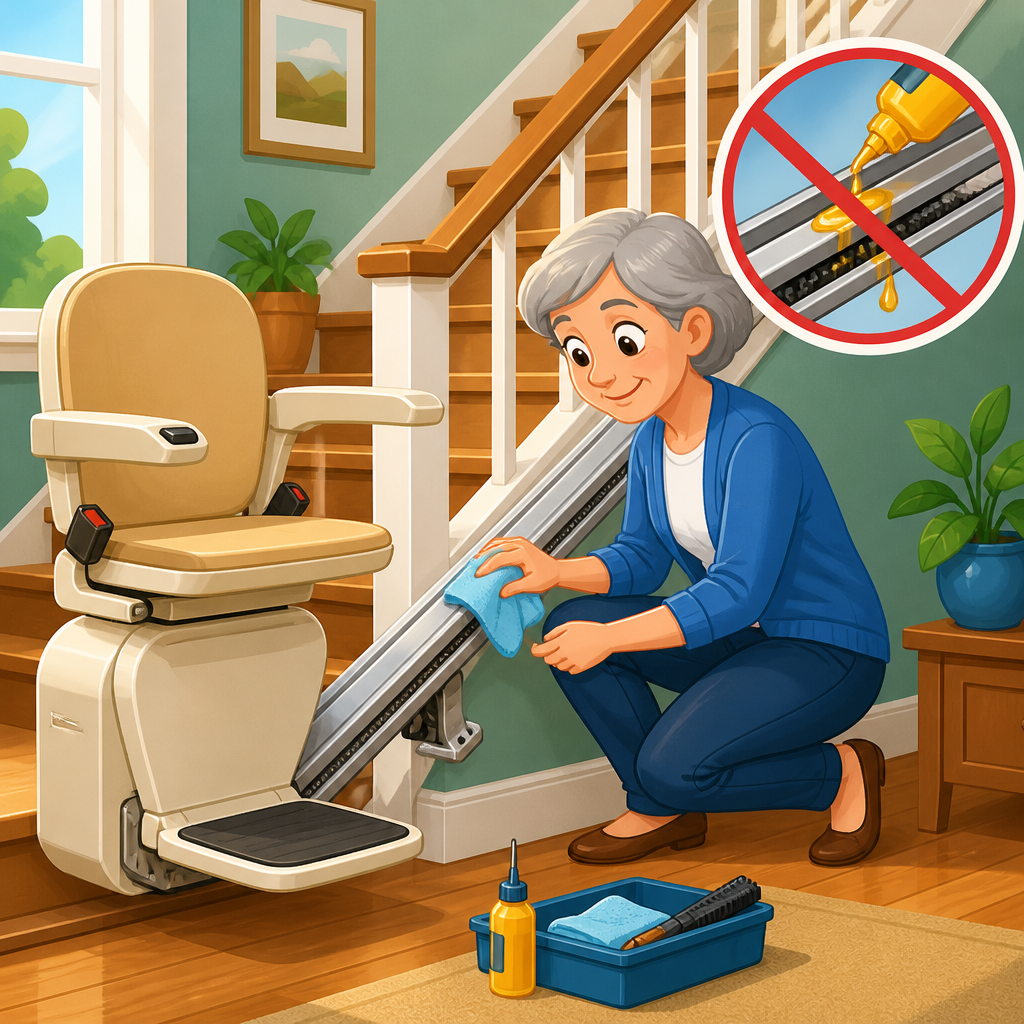
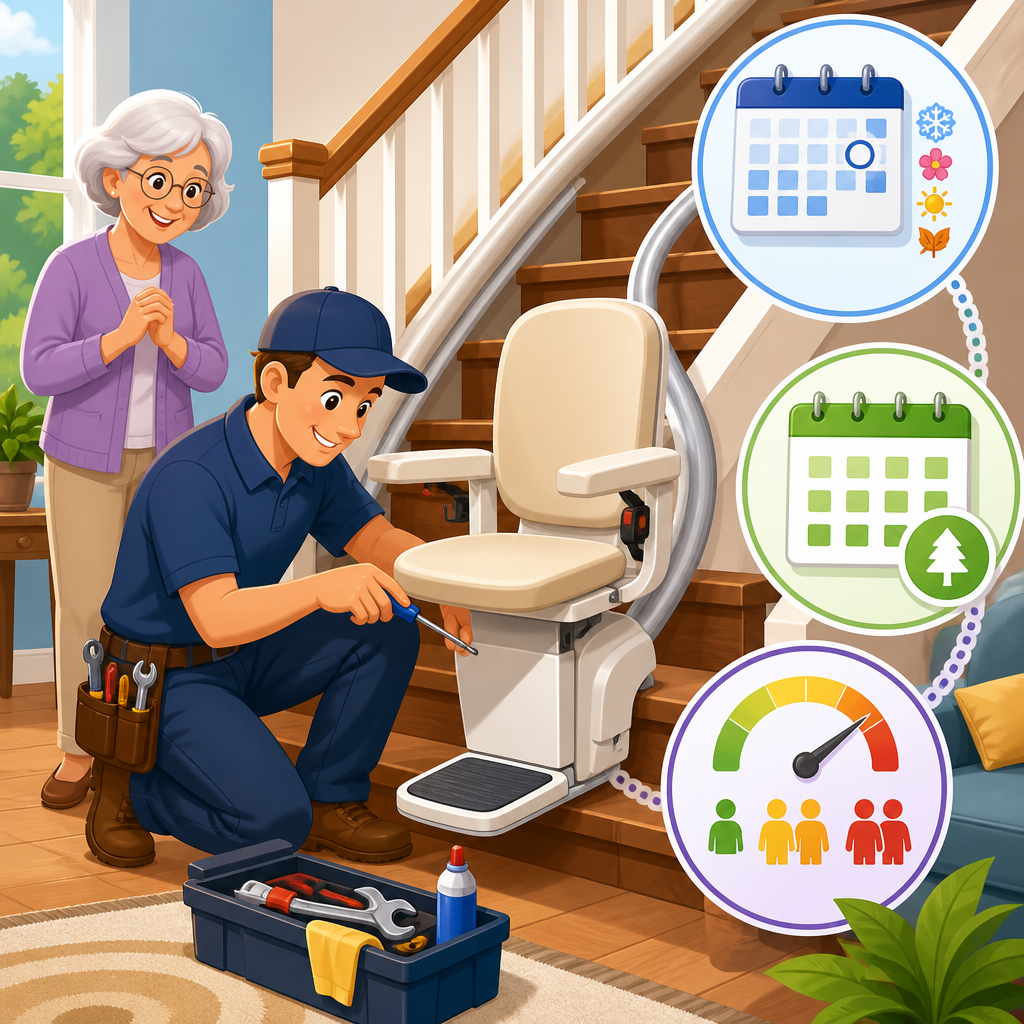
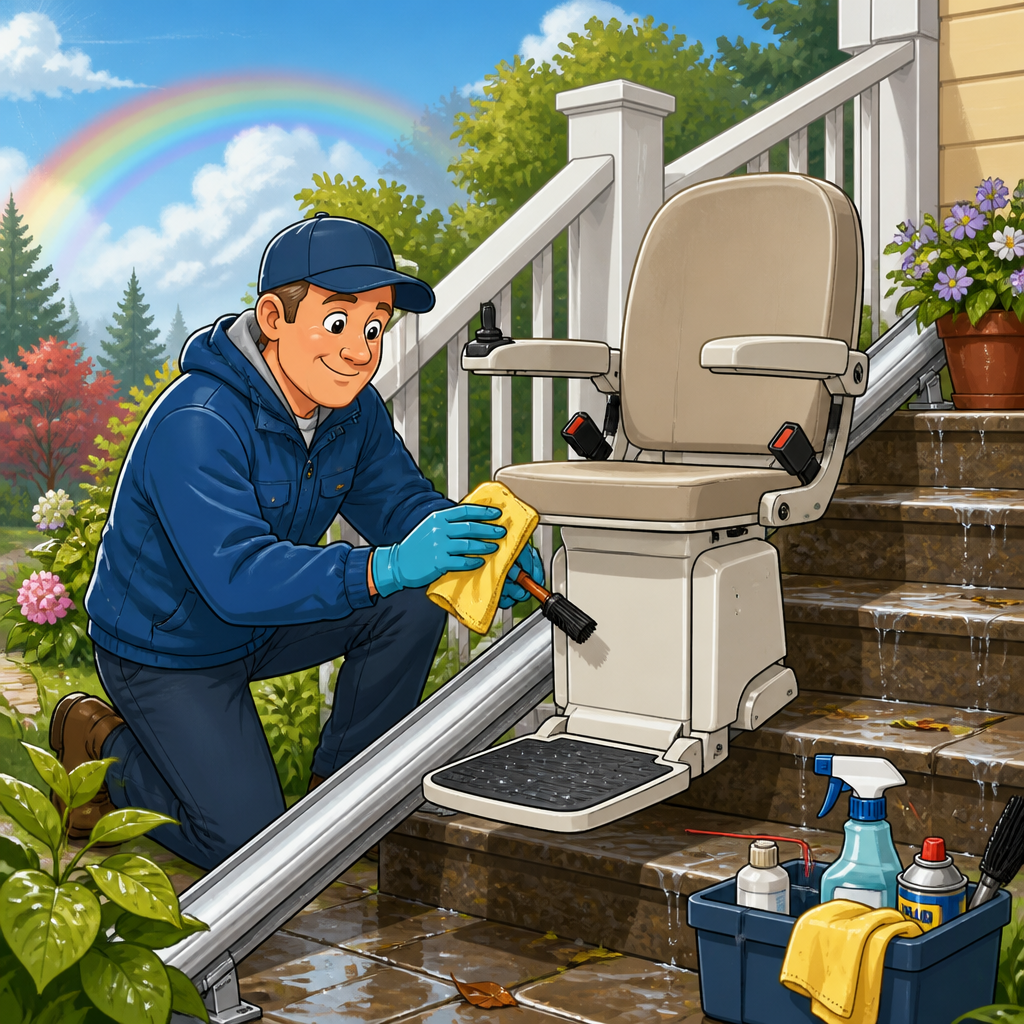
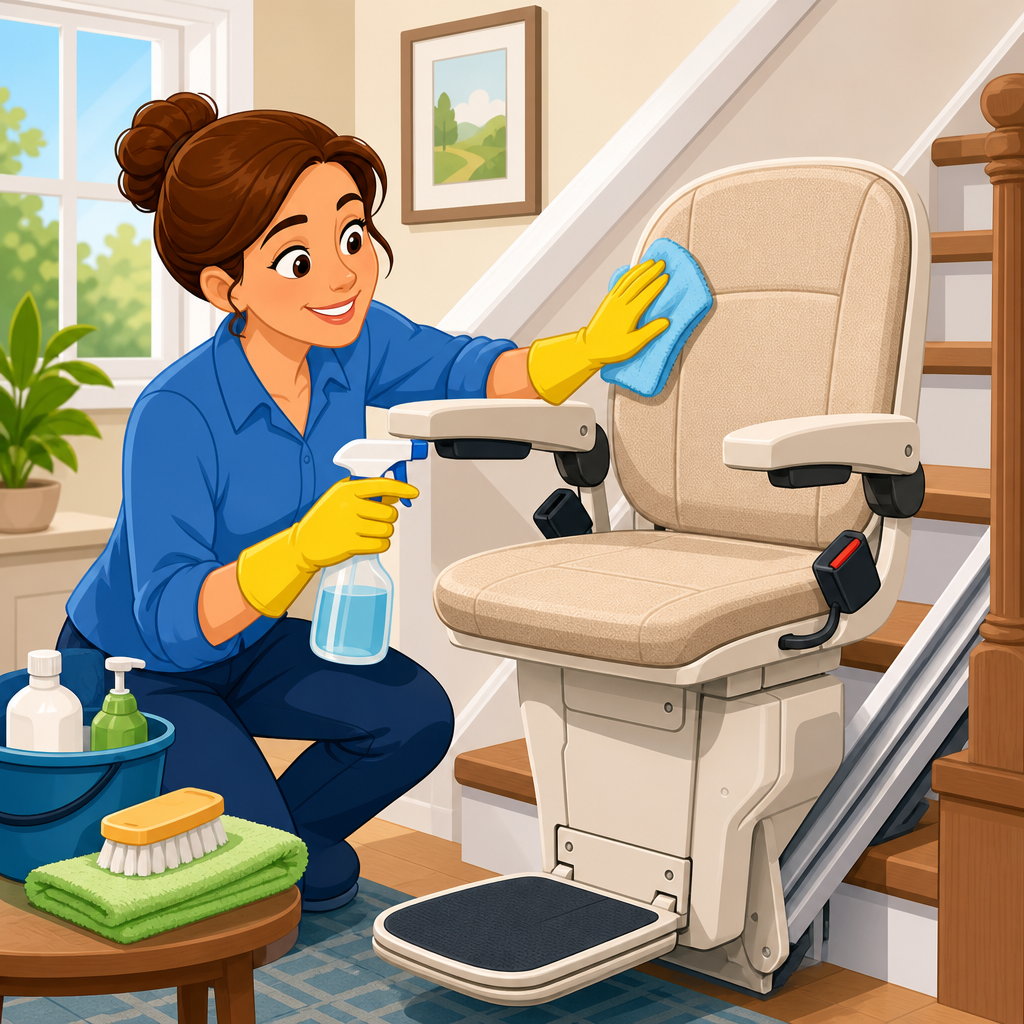
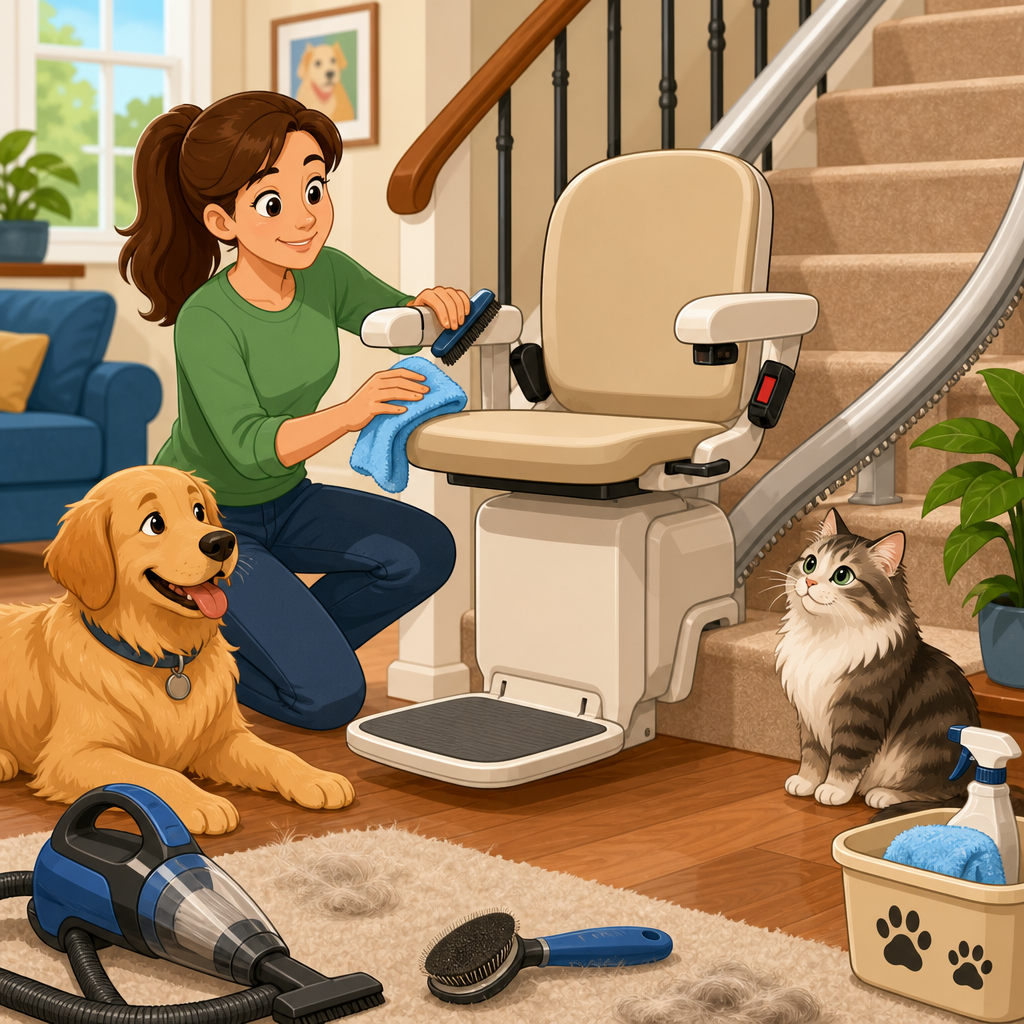
Clean the rail, footrest edges, and charge contact area with only the methods approved by the manufacturer. Avoid household lubricants unless the manual explicitly calls for them. Many rails and drive systems are designed to run dry or with specific factory-applied lubrication, and the wrong spray can attract dust or degrade plastic components. During annual service, ask for battery load testing, charger verification, fastener checks, seat swivel inspection, and safety-edge testing.
Pay attention to subtle changes. Slower uphill travel, extra beeping, failure to stop precisely on charge, or a need to hold the control longer than usual are early warnings. Addressing these signs before complete failure is cheaper and safer than waiting until the lift can no longer climb with a user aboard. If your batteries are beyond the typical service interval, proactive replacement is often wise.
This maintenance and troubleshooting hub should help you narrow the cause when a stair lift moves down but not up, but the main benefit is knowing which fixes are simple and which require expert hands. Start with safe checks: seat position, obstructions, controls, indicators, and charging alignment. Remember the core principle: if a lift can descend but not ascend, suspect battery strength, charging integrity, or an uphill-only safety or mechanical fault first. Use your owner’s manual, keep the rail and contacts clean, and schedule annual service from a qualified provider. If the problem repeats, do not rely on temporary recovery after charging. Arrange a proper diagnosis and repair so the lift remains dependable when it is needed most. If you manage this issue now, you reduce downtime, avoid unsafe stair use, and protect the long-term reliability of the equipment.
Frequently Asked Questions
Why does a stair lift move down normally but refuse to go up?
When a stair lift goes down but not up, the most common reason is that the unit can still descend with the help of gravity, but climbing upward requires the full system to be working correctly. Upward travel places a heavier demand on the batteries, charging circuit, motor, gearbox, directional controls, and safety switches. That is why this symptom is so important: it often points to a weakness that only shows up under load. In many cases, the batteries are partially discharged or aging, so the lift has enough power to coast downward but not enough torque to raise a rider. In other cases, the seat swivel lock, footrest edge sensor, carriage safety pan, armrest control, or remote call/send command may be preventing upward operation because the lift believes something is out of position or obstructed.
Another possibility is a charging issue. If the stair lift is not parking correctly on the charge points, or if the charger has failed, the batteries slowly weaken until upward travel becomes unreliable or stops altogether. Less commonly, the problem may involve the directional switch, wiring, limit circuits, motor brushes, final drive, or a control board fault. The reason technicians pay close attention to the “down but not up” complaint is that it narrows the diagnosis. It usually means the lift is not completely dead; instead, it has lost the extra electrical or mechanical capacity needed to climb. That difference helps guide the troubleshooting process and prevents random part replacement.
What should I check first before assuming the stair lift needs a repair?
Start with the simplest and safest checks. First, confirm the stair lift is fully parked on a charging point if your model charges at the top, bottom, or at specific contact locations along the rail. Many lifts from Bruno, Stannah, Harmar, Acorn, and Handicare rely on precise positioning to charge properly. If the carriage is slightly off the charge contacts, the batteries may not be receiving enough power. Next, verify that the main power supply to the charger is on. Check the wall outlet, any nearby switch, breaker, GFCI outlet, or power strip that may have been turned off or tripped. A stair lift can appear normal for a while on battery reserve, then suddenly lose upward performance when the charge drops.
After that, inspect all user-operated safety positions. Make sure the seat is locked in the normal travel position, the armrests are fully down if required by your model, and the footrest is unfolded properly. Look for anything pressing against the footrest edges or carriage safety surfaces, since a triggered obstruction sensor can stop movement in one direction. Also test both the armrest control and the wall-mounted or wireless call/send controls. If one control works and another does not, that helps isolate whether the problem is with the switch, remote, or main unit. Finally, listen and observe carefully. A clicking sound, dim status light, repeated beeping, or an error code on the display can provide valuable clues. These first checks solve a surprising number of service calls and can tell you whether the issue is likely power-related, safety-related, or mechanical.
Can weak batteries really cause a stair lift to go down but not up?
Yes, absolutely. Weak or failing batteries are one of the most common causes of a stair lift that descends but will not climb. Most modern stair lifts are battery-powered, even though they plug into household electricity through a charger. The wall power does not usually drive the lift directly; instead, it keeps the onboard batteries charged. As batteries age, they may still have enough voltage at rest to light indicators, sound normal, and even run the lift downhill, but they can collapse under the higher load required for uphill travel. That is why users are often surprised when the lift appears functional in every other way yet stalls, beeps, or simply refuses to move upward.
Battery failure may show up gradually or suddenly. You might notice slower starts, weaker performance with a rider, short travel before stopping, or intermittent operation depending on where the lift was last parked and charged. In many service situations, the charger is working, but the batteries can no longer hold enough capacity. In others, the batteries are not the root cause but have been damaged by chronic undercharging due to dirty charge contacts, a failed charger, loose wiring, or a switched outlet being turned off. If the lift is several years old and has not had batteries replaced recently, battery condition should be high on the suspect list. Because battery testing under load requires the right tools and process, this is often the point where professional service is worthwhile. Replacing batteries without correcting a charging fault can lead to the same problem coming back quickly.
Could a safety switch or sensor stop only upward travel?
Yes, and this is more common than many people realize. Stair lifts use several interlock and obstruction systems to prevent unsafe movement. Depending on the design, a sensor may block travel in one direction only, especially if the lift detects an obstacle, an unlocked seat, or an out-of-position component that would be more dangerous during ascent. For example, if the seat is slightly swiveled and not fully latched, some lifts will refuse operation altogether, while others may behave inconsistently depending on direction and control input. Likewise, a footrest edge sensor or carriage safety pan may be activated by carpet, debris, a bent cover, or a misaligned part, and that can stop the lift from traveling upward if the control board interprets the signal as a hazard.
The tricky part is that these issues do not always look dramatic. A seat can seem locked but be just shy of the correct position. A footrest can appear clear while a small object or damaged trim is still contacting a safety edge. A loose wire or failing microswitch may work intermittently, creating a frustrating pattern where the lift sometimes goes up and sometimes does not. If your stair lift has diagnostic lights or codes, they may indicate a seat lock, overspeed, armrest control, or safety circuit problem. Carefully unfolding the footrest, reseating the chair in its travel position, checking for debris, and trying the controls again can sometimes restore operation. However, if the safety circuit continues to interrupt upward travel, the underlying switch alignment, wiring, or sensor condition usually needs technician attention to ensure the unit remains safe as well as functional.
When should I stop troubleshooting and call a stair lift technician?
You should call a qualified technician if the basic checks do not restore operation, if the lift shows repeated fault codes, if it makes grinding or straining noises, or if it stops while occupied or under load. You should also stop troubleshooting immediately if you smell overheating, see damaged wiring, notice sparking at the charger or contacts, or suspect a mechanical drive problem. Upward travel failures can involve batteries and charging, but they can also point to worn gears, motor issues, brake problems, control board faults, or directional relay failures. Those are not good areas for trial-and-error repairs, especially on a mobility device that someone depends on for safe access between floors.
Professional service is also the right choice if the stair lift is older, has not been maintained in several years, or has developed a pattern of intermittent faults. A technician can load-test batteries, confirm charger output, inspect charge contact alignment, read diagnostic information, test safety circuits, and evaluate the drivetrain without bypassing protections. That matters because a stair lift that fails going up today may fail in other ways tomorrow if the root cause is not addressed. Brands such as Bruno, Stannah, Harmar, Acorn, and Handicare each have model-specific systems, and an experienced technician will know where those common failure points are. If someone in the home relies on the lift daily, prompt service is especially important so the issue does not turn into a complete loss of mobility access.