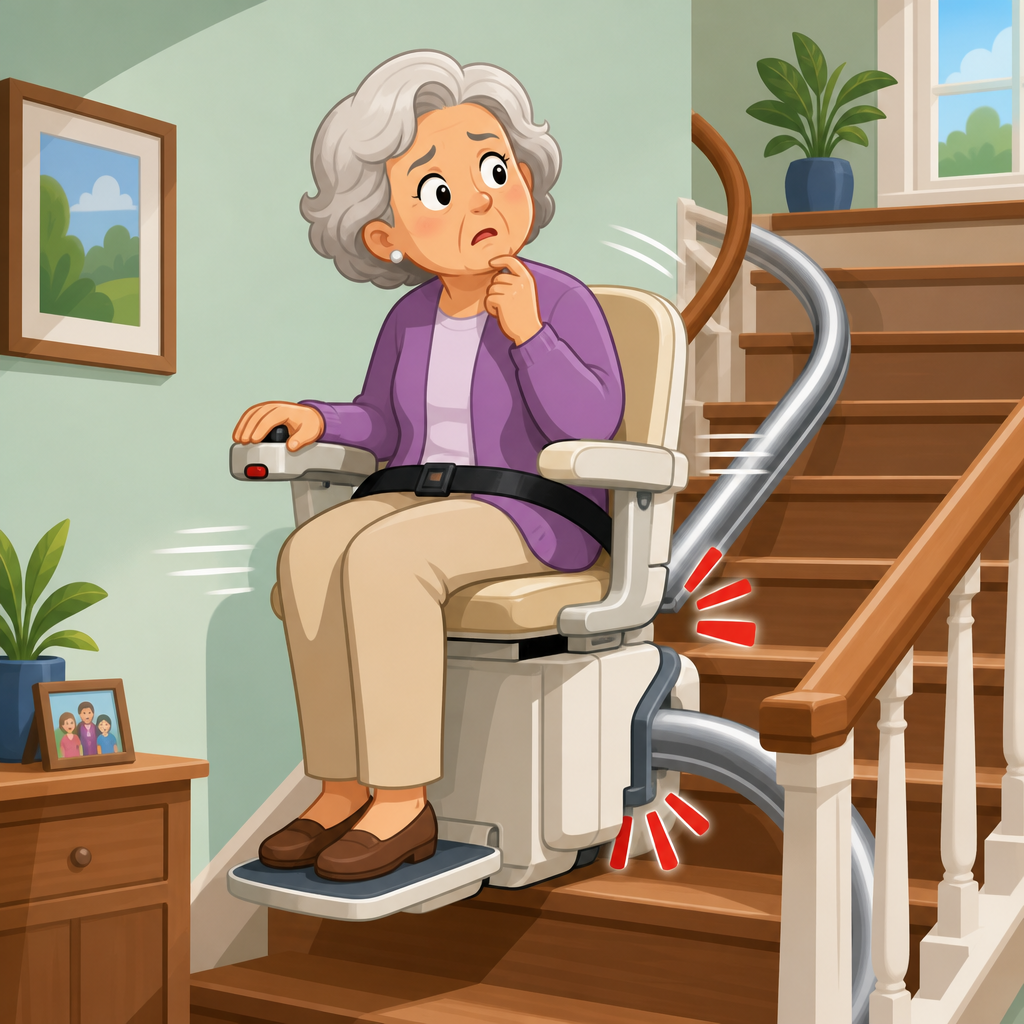
A stair lift that starts and stops while moving usually has a simple cause, but the symptom should never be ignored because intermittent travel affects safety, reliability, and confidence every time the chair is used. In service calls, I have found that people often describe the problem as jerking, hesitating, cutting out, beeping, or pausing and then restarting, yet those different descriptions usually point back to the same group of issues: power interruption, dirty contacts, seat or footrest safety switches, track obstructions, battery weakness, or drive system faults. A stair lift is a motorized chair that travels on a rail, powered either directly from household electricity or, more commonly, from onboard batteries that recharge at points on the track. Start-stop movement matters because the lift is designed for smooth, controlled travel; when that pattern changes, the unit is signaling that something in the control, charging, or safety circuit is not behaving normally. This article explains the common issues and fixes in plain terms, based on how modern lifts from brands such as Bruno, Stannah, Handicare, Harmar, and Acorn are typically built. It also serves as a practical hub for stair lift maintenance, troubleshooting, and safety decisions, so you can identify what is user-fixable, what requires cleaning or adjustment, and what should be left to a qualified technician before a minor interruption becomes a complete breakdown.
How a stair lift is supposed to move, and what start-stop travel usually means
Under normal conditions, a stair lift accelerates gently, travels at a constant limited speed, and slows smoothly at the charging point or end stop. It should not lurch, stall, or pulse during the run. Most modern models use a battery-powered DC motor, a gearbox, limit switches, charging contacts, a diagnostic board, and several safety edges or interlocks. If any required input drops out even briefly, the controller can stop the chair to prevent unsafe movement. When the signal returns, the lift may move again, creating the familiar stop-and-go pattern. That is why intermittent motion often means an electrical connection is unstable rather than a major mechanical failure.
The first distinction to make is whether the chair stops at the same location every time or at random points. If it always hesitates in one place, the rail may have dirt, a charging strip issue, a rack alignment problem, or a small obstruction. If it happens anywhere on the rail, look first at batteries, seat swivel locks, armrest controls, footrest edges, or wiring that flexes during travel. Stair lifts are conservative by design. A loose seat, misaligned footrest, or weak battery can all trigger stopping because the controller is built to fail safe rather than force motion through a fault.
Battery and charging problems are the most common cause
If you ask, “Why does my stair lift start and stop while moving?” the most common answer is weak batteries or inconsistent charging. Even though the lift plugs into house power, most residential units travel on battery power and recharge when parked at designated points. When batteries age, voltage drops faster under load. The chair may start normally, then pause as the motor draws current on an incline, then continue briefly once the load changes. I have seen lifts that still beep, light up, and respond to controls, yet stall halfway because the batteries have enough surface charge for electronics but not enough sustained capacity for travel.
Batteries typically last around three to five years, depending on use patterns, temperature, and whether the chair is regularly parked on charge. Signs of battery-related trouble include slower movement, warning beeps, reduced trips between charges, or failures after a power outage. A charging issue can mimic bad batteries. Dirty charge contacts, a switched outlet that has lost power, a tripped breaker, or a failed charger can leave healthy batteries undercharged. Use the manufacturer display or fault light guide if available. Confirm the outlet is live, the charger indicator shows normal status, and the chair is fully parked on a charge point. If the batteries are older and the symptom is intermittent stopping under motion, replacement is often the correct repair, not repeated resets.
Safety edges, seat locks, and control switches often interrupt travel
Every stair lift includes safety circuits intended to stop movement if something is out of position or an obstruction is detected. These are essential features, but they also create many of the stop-start complaints. The swivel seat at the top landing usually has a lock that must click fully into travel position. If the seat is only partly engaged, the chair may move a short distance and cut out when vibration breaks the contact. The same is true of folding armrests and footrests on some models. A rider may not notice that one component did not settle all the way after unfolding.
Footrest safety edges are another frequent culprit. They are designed to stop the lift if the footrest touches an object on the stairs. Dirt packed around the edge, a bent cover, a loose hinge, or pressure from carpet transition strips can trigger the switch intermittently. Armrest rocker switches or joystick controls can also wear internally; holding the control may feel normal, but the electrical contact can break momentarily as the chair moves. In practice, this means the chair stops unless pressure is applied in a very specific way. If the lift runs smoothly with a call-send control but hesitates with the armrest control, the switch itself becomes a strong suspect.
Track obstructions, dirty rails, and mechanical drag can create hesitation
Stair lifts do not ride on the stair treads; they travel along a rail with a geared or traction-based drive. Dust, pet hair, grit, and small objects can interfere with normal travel, especially near the gear rack or at overrun sections. A visible obstruction is easy to understand, but less obvious contamination matters too. Grease attracts debris, and debris increases drag. On geared systems, hardened buildup around the rack can make travel uneven. On hinged rail systems, alignment and latch position are especially important because even slight misalignment can interrupt movement or trigger a safety circuit.
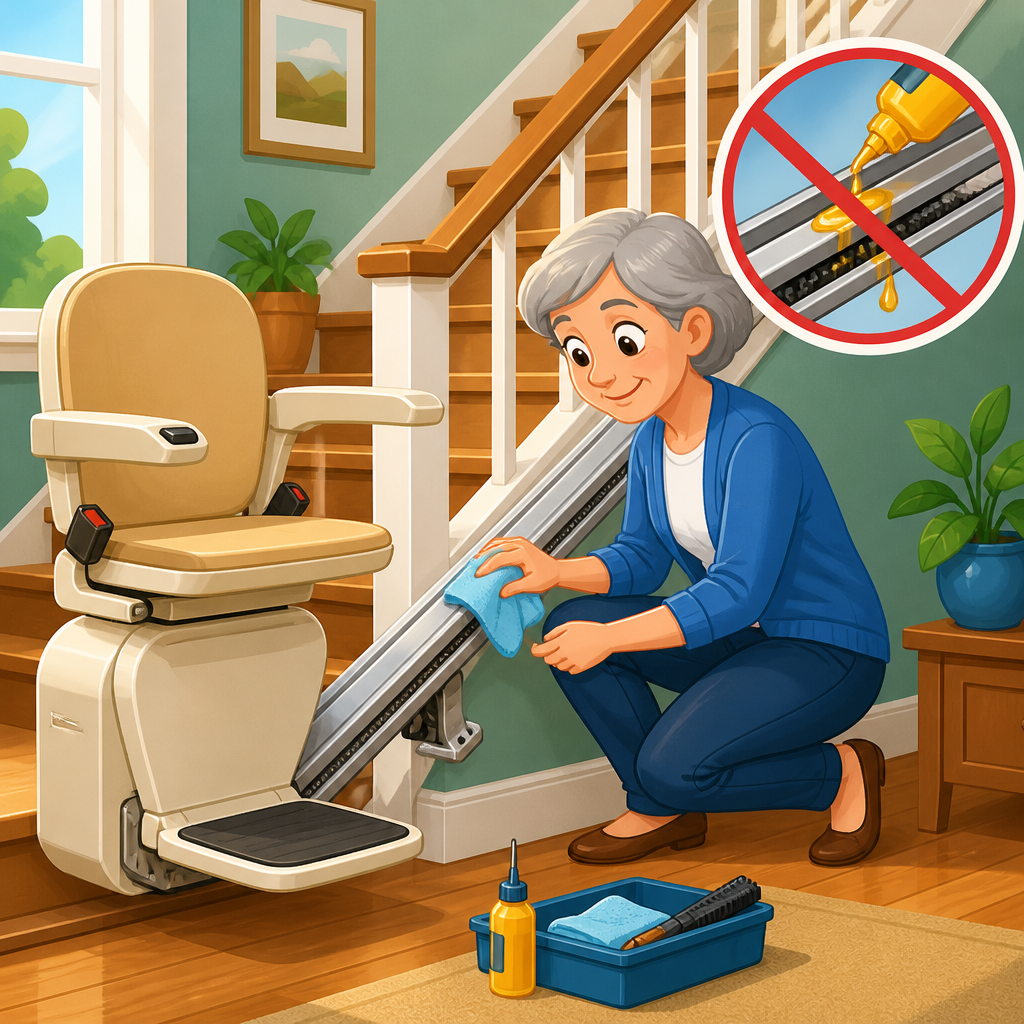
Users sometimes make the problem worse by applying household lubricants to the rail. That is usually a mistake unless the manufacturer specifically instructs it. Many stair lifts use a rack-and-pinion arrangement where the rail itself should be kept clean and dry, not coated with oil that catches dust. Mechanical hesitation can also come from worn rollers, gearbox problems, or rail brackets that have shifted slightly over time. These issues are less common than battery or switch faults, but they matter when the chair consistently jolts at the same point on the staircase or produces grinding, clicking, or vibration alongside the stopping behavior.
Quick checks you can do safely before calling for service
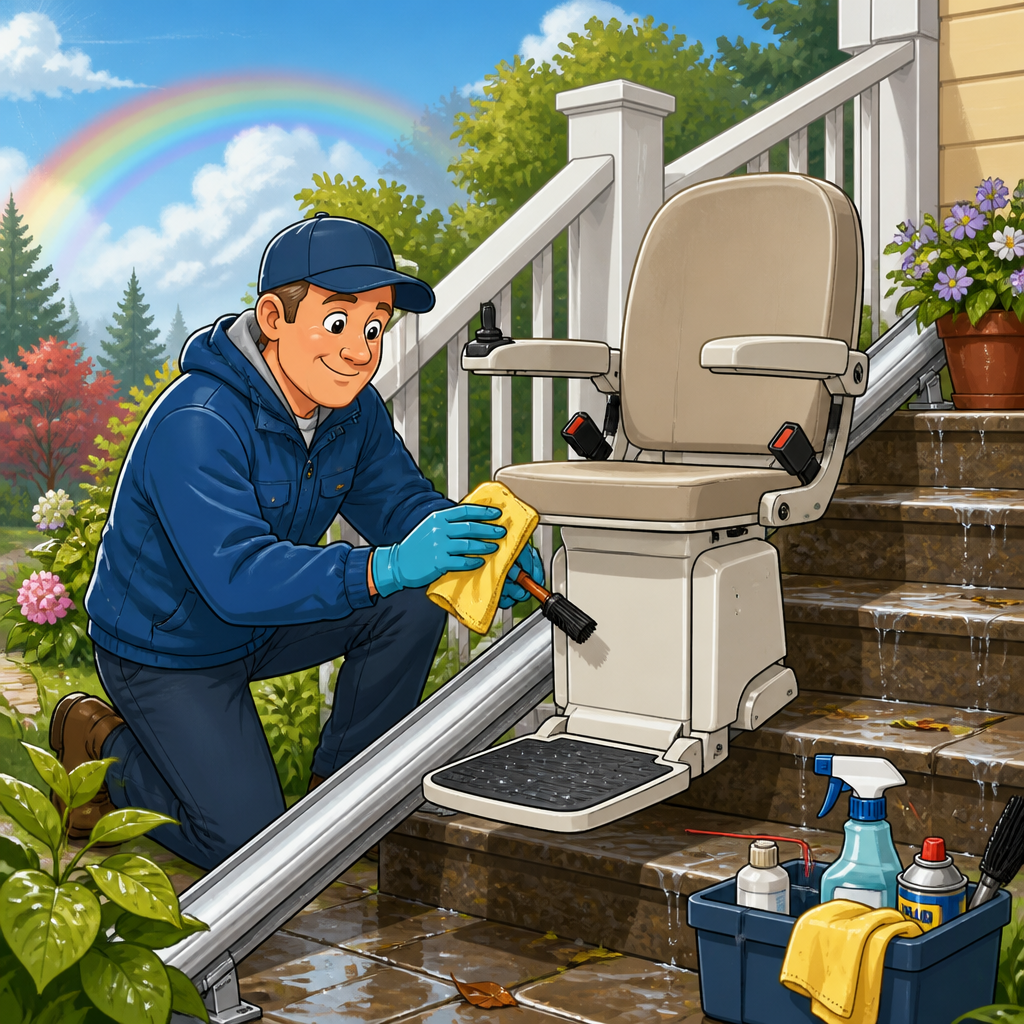
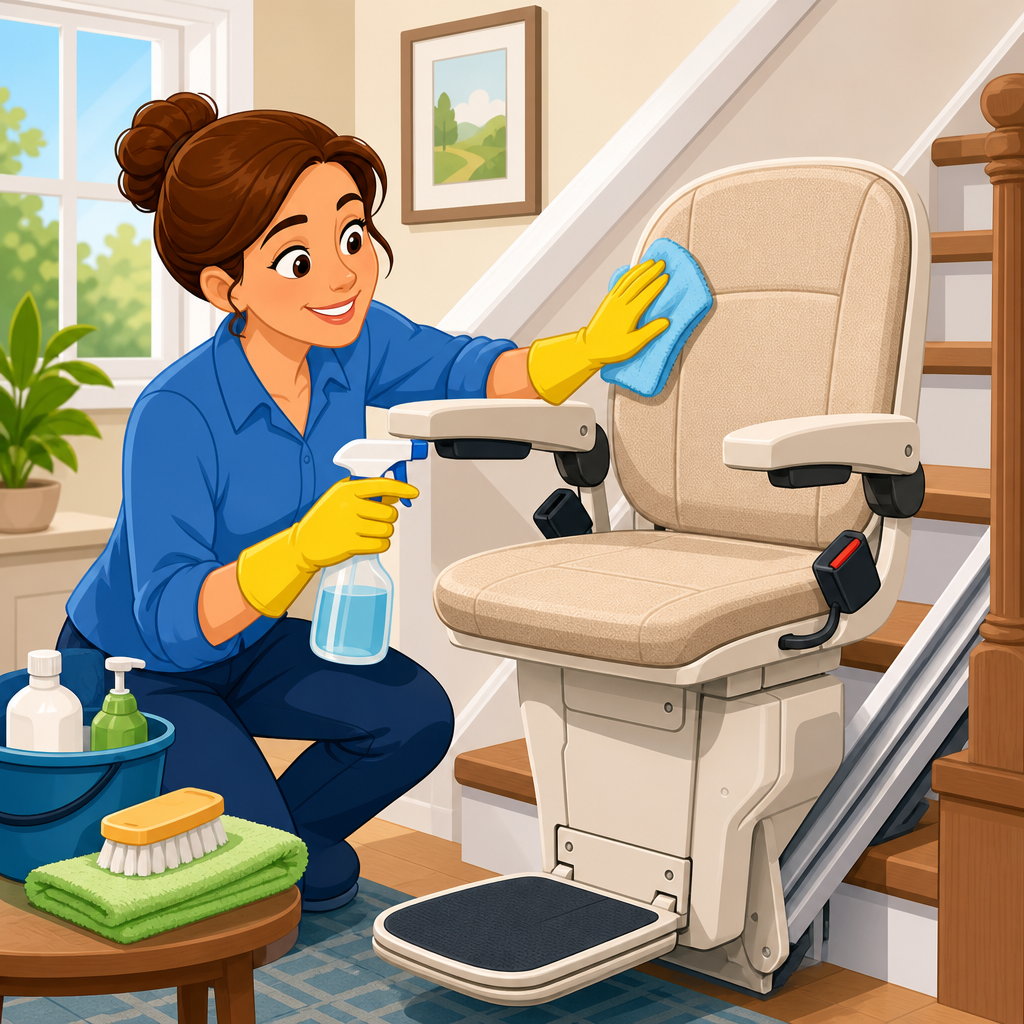
You can rule out several common issues without opening covers or bypassing safety systems. Start with the basics: make sure the seat is fully locked in the forward travel position, armrests and footrest are fully down if required, and the chair is parked correctly on a charging point when not in use. Look for obvious obstructions on the stairs, around the footrest, and along the rail. Wipe accessible charging contacts and exposed rail surfaces with a dry or slightly damp cloth if the manufacturer allows it, then dry them completely. Confirm the power outlet has not been switched off and the charger indicator is showing normal operation.
If your model has a diagnostic screen or fault code panel, note the code before resetting anything. That information helps a technician identify whether the issue involves charge level, limit switches, overspeed governor input, seat swivel interlock, or a safety edge circuit. Perform a controlled test with no rider if the manual allows it: send the chair up and down using the call-send controls and observe whether the stop happens in the same place each time. Do not continue repeated test runs if the chair jerks harshly, smells hot, or displays a persistent fault. Intermittent behavior can become a no-start condition quickly when batteries or contacts are failing.
| Symptom | Likely Cause | What You Can Check | Typical Fix |
|---|---|---|---|
| Stops under load on incline | Weak batteries or poor charging | Battery age, charger lights, parked position | Replace batteries, restore charging |
| Stops at same spot every trip | Rail obstruction, rack issue, contact problem | Inspect rail, listen for grinding, test no rider | Clean rail, adjust or service track components |
| Moves only when control is held a certain way | Worn armrest switch or loose wiring | Compare armrest control with call-send control | Replace switch, repair connection |
| Starts then stops after seat is turned | Seat swivel lock not engaged | Re-lock seat firmly in travel position | Adjust or replace interlock |
| Random stopping with beeps | Safety edge activation or low voltage | Check footrest edges and fault indicators | Clean edges, diagnose batteries or switches |
When the problem points to wiring, sensors, or the main control board
Some start-stop faults come from components that homeowners should not attempt to repair. Traveling cables flex every time the chair moves, so wire fatigue can develop inside insulation where it is not visible. A conductor may make contact in one position and open in another, producing seemingly random cutouts. Limit switches and position sensors can also drift out of adjustment. On units with powered swivel seats, powered hinges, or advanced diagnostic modules, communication faults between subsystems can interrupt motion even though the motor and batteries are fine.
The control board is another possibility, especially on older lifts exposed to moisture, voltage irregularities, or long periods without maintenance. Burned relays, cracked solder joints, or failing connectors can create intermittent stopping that resists simple cleaning or battery replacement. Technicians confirm these faults by checking charging voltage, battery load performance, continuity through safety circuits, and live behavior while the chair travels. They may use manufacturer service menus, multimeters, and load testers. Because these systems are safety-critical, replacing parts with generic substitutes or bypassing a switch is not an acceptable shortcut. Correct diagnosis protects both reliability and rider safety.
Preventive maintenance that reduces start-stop faults
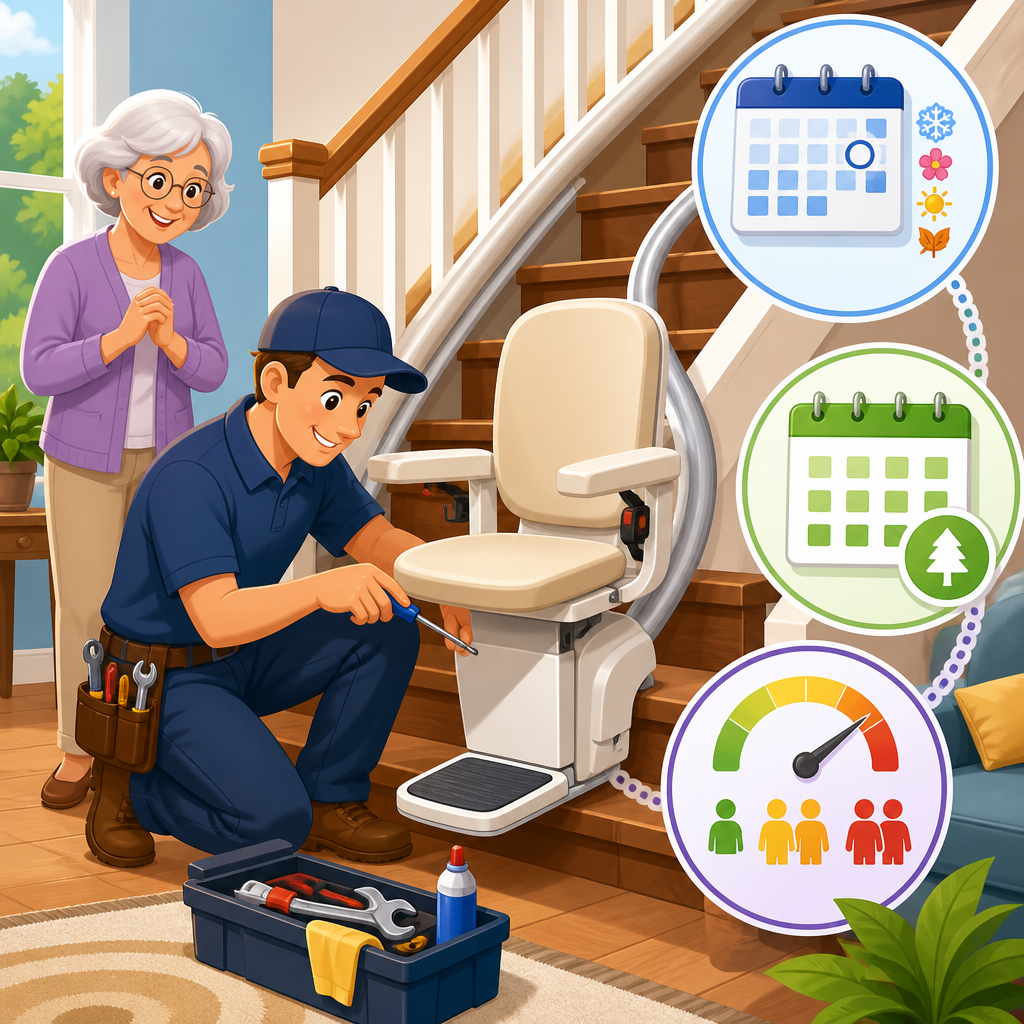
The best way to avoid intermittent stair lift motion is routine preventive care. In homes where I schedule annual service, lifts generally fail less often and batteries last longer because small issues are corrected before they cascade. A proper maintenance visit usually includes cleaning the rail and charge contacts, checking battery condition under load, inspecting gear rack wear, verifying seat and footrest interlocks, confirming proper charger output, tightening accessible fasteners, and reviewing fault history if the unit stores codes. Manufacturers differ, so the owner’s manual and service documentation should always take priority over generic advice.
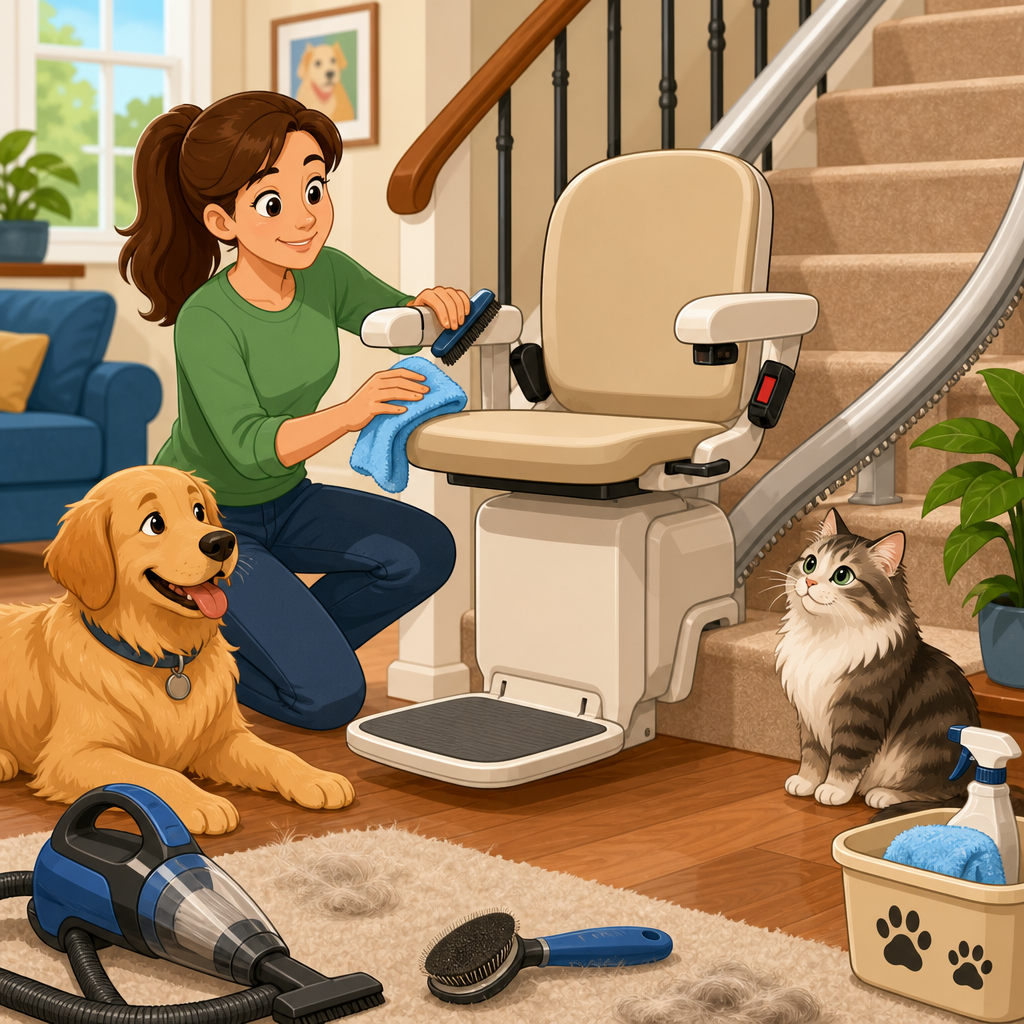
Homeowners can support reliability with a few habits. Always park the chair at a charging point. Keep the rail free of dust, pet hair, and clutter. Do not allow children to play with the controls, because repeated cycling and impacts can damage switches or covers. After vacuuming or moving furniture, make a quick visual check that nothing protrudes into the footrest path. If the house loses power for an extended period, limit unnecessary trips until charging is restored. Most important, do not ignore early symptoms. A single unexplained pause this week can become a stranded rider next week, and stair lift breakdowns tend to happen when the user can least manage the stairs without assistance.
When to call a professional immediately
Call for professional stair lift service right away if the chair stops abruptly with a rider on board, emits a burning smell, shows repeated fault codes, makes grinding noises, or fails to hold smooth speed. The same is true if the seat rocks, the rail appears loose, the hinged section does not align positively, or the unit will only run after wiggling a control. These symptoms suggest more than ordinary dust or a simple seating issue. They point to electrical, structural, or drive-train problems that should be evaluated under manufacturer procedures.
If your lift is still under warranty or covered by a service plan, use the authorized provider. Brand-specific parts, firmware behavior, and fault code meanings vary more than many owners expect. A Bruno diagnostic pattern is not identical to a Stannah or Handicare pattern, and battery specifications must match the charger and controller design. Ask the technician what failed, what was tested, and whether the repair addressed root cause or only the immediate symptom. That record is useful for future maintenance decisions and helps you recognize repeating issues.
A stair lift that starts and stops while moving is usually warning you about a battery, charging, safety switch, control, or track problem, not merely acting temperamental. The most common fixes are straightforward: restore charging, replace aged batteries, clean contacts, remove obstructions, or adjust a seat or footrest interlock. The important point is to diagnose the pattern rather than guess. Consistent stopping in one spot suggests a rail or position issue; random stopping suggests power, switch, or wiring faults. Safe troubleshooting begins with observation, basic checks, and the manual, then moves to qualified service when the problem involves electrical testing, adjustments, or replacement parts. As the hub for common stair lift issues and fixes, this guide should help you narrow the cause quickly and decide on the right next step. If your lift has begun hesitating, address it now, before intermittent motion turns into a full loss of mobility.
Frequently Asked Questions
Why does my stair lift start and stop while moving instead of traveling smoothly?
When a stair lift starts and stops during travel, the most common reason is an interruption somewhere in the safety or power circuit rather than a major mechanical failure. Many people describe the symptom differently—jerking, hesitating, pausing, cutting out, or beeping and restarting—but those descriptions often trace back to the same handful of causes. A weak or interrupted power supply, dirty charging contacts, a seat that is not fully locked into travel position, a footrest or carriage safety edge being lightly pressed, or a control issue can all cause the lift to stop momentarily and then continue.
Modern stair lifts are designed to stop whenever the system senses something is unsafe or out of position. That is a good thing from a protection standpoint, but it also means small issues can create very noticeable interruptions. For example, if the seat swivel is not fully clicked into place, the lift may move a short distance and then stop. If the rail contacts are dirty, battery power may drop off enough to cause hesitation. If there is pressure on a footrest safety switch from carpet, debris, or an object on the stairs, the chair may repeatedly cut out because it thinks it has met an obstruction.
Because intermittent movement affects safety, reliability, and user confidence, it should never be ignored. Even if the lift still “mostly works,” repeated stopping can indicate a problem that will become more frequent over time. A simple inspection often reveals the source, but if the issue continues after basic checks, the lift should be serviced by a qualified technician.
Can low batteries or a power problem make a stair lift jerk, pause, or beep during travel?
Yes, power-related issues are one of the most common reasons a stair lift will start and stop while moving. Most residential stair lifts run on batteries that are constantly recharged when the chair is parked at charging points on the rail. If household power to the charger is lost, the charger fails, or the batteries are aging and no longer holding a proper charge, the lift may still operate—but not consistently. That is when users often notice jerky travel, slowing, unexpected pauses, or warning beeps.
In practical terms, the lift may begin a trip normally and then hesitate as voltage drops under load. This can happen more often on longer staircases, when carrying a heavier user, or after the chair has been parked away from its charging point. Sometimes the problem is not the batteries themselves but the charging system: a switched outlet may have been turned off, a breaker may have tripped, the charger may be unplugged, or the charging contacts may be dirty enough that the batteries are not being replenished properly.
A good first step is to confirm the stair lift has power at the wall outlet and that any charger indicators are showing normal operation. Then check whether the lift has been parking correctly at the charge points. If the unit gives repeated low-battery warnings or struggles even after being fully parked and charged, battery replacement may be needed. Because weak batteries can mimic other faults, it is wise to have the charging voltage and battery condition tested professionally if the behavior continues.
Could dirty contacts, the seat, or the footrest be causing my stair lift to cut out?
Absolutely. These are among the most overlooked causes of intermittent stair lift movement, and they often produce the exact symptom people describe as start-stop operation. Stair lifts rely on several contact points and safety circuits working correctly at all times. If the charging contacts are dirty, corroded, or slightly misaligned, the batteries may not charge properly, which can lead to hesitation during travel. Even a small buildup of dust, oxidation, or pet hair can interfere with consistent electrical performance over time.
The seat and footrest are equally important. On many models, the seat must be fully lowered and locked, and any swivel mechanism must be firmly returned to the travel position before the lift will run normally. If the seat is only partly engaged, the lift may stop unexpectedly because the safety interlock opens. The same applies to the footrest and carriage edges, which are designed to stop the lift if they touch an obstacle. Something as simple as a rug edge, a dangling item, accumulated debris on the stairs, or pressure from a user’s shoe can trigger these switches and make the lift pause or restart repeatedly.
If your lift is acting up, inspect the seat position, armrests if applicable, and footrest area carefully. Make sure nothing is folded incorrectly or pressing against a safety edge. Look along the rail and around the charge points for dirt or obstructions. While basic cleaning and repositioning can help, avoid disassembling components or bypassing safety devices. Those systems are there to protect the rider, and if they are repeatedly activating without a clear reason, the lift should be checked by a technician.
Is it safe to keep using a stair lift that stops and restarts during travel?
It is not a symptom you should ignore. While a stair lift that starts and stops may still be able to complete a trip, intermittent travel means the unit is no longer operating as intended. That affects more than convenience. It can shake a user’s confidence, increase anxiety during use, and potentially create a hazardous situation for someone with limited balance, strength, or mobility. For many people, predictability is one of the most important parts of stair lift safety, and jerking or hesitation takes that away.
The level of risk depends on the cause. If the issue is a simple seat lock not fully engaged, correcting it may restore normal operation immediately. But if the underlying problem is failing batteries, a charger fault, dirty contacts, a damaged wiring connection, or a malfunctioning safety switch, continued use can lead to more frequent stoppages or complete failure. In some cases, the lift may stop mid-staircase and leave the user stranded until help arrives.
If the problem happens once, perform basic checks such as confirming the seat is locked, the footrest is clear, and the unit is properly charged. If it happens again, the safest approach is to limit use and arrange service as soon as possible. If the lift is stopping often, beeping repeatedly, or showing error lights, it is best not to rely on it until the fault is diagnosed. A stair lift is a mobility device, and when its operation becomes inconsistent, prompt attention is always the right call.
What should I check before calling for stair lift repair, and when do I need a technician?
Before calling for service, there are a few sensible checks you can do safely without taking anything apart. First, make sure the stair lift has power. Verify the charger is plugged in, the outlet is live, and no breaker has tripped. Next, park the chair fully at its normal charging position and let it charge if you suspect the batteries may be low. Then check that the seat is fully lowered and locked into its travel position, especially if it swivels at the top landing. Also inspect the footrest and the staircase itself for anything that could be touching a safety edge, such as debris, carpet bunching, toys, pet items, or pressure from footwear.
It is also helpful to pay attention to patterns. Does the lift stop in the same place every time, or randomly? Does it beep before stopping? Does it work better after charging? Does the issue happen only going up, only going down, or in both directions? Those details can help narrow the cause. A repeatable stop in one location can suggest a rail, contact, or track issue, while random cutouts may point more toward batteries, charger problems, loose connections, or a safety interlock.
You should call a technician if the problem persists after these basic checks, if the unit shows fault codes or warning lights, if the chair stops mid-travel more than once, or if anything seems loose, damaged, or overheated. A trained stair lift professional can test battery voltage under load, inspect charging contacts, verify safety circuits, and identify whether the issue is electrical, mechanical, or control-related. Because the symptom is intermittent, early service is often the best way to prevent a complete breakdown and restore safe, smooth, dependable operation.