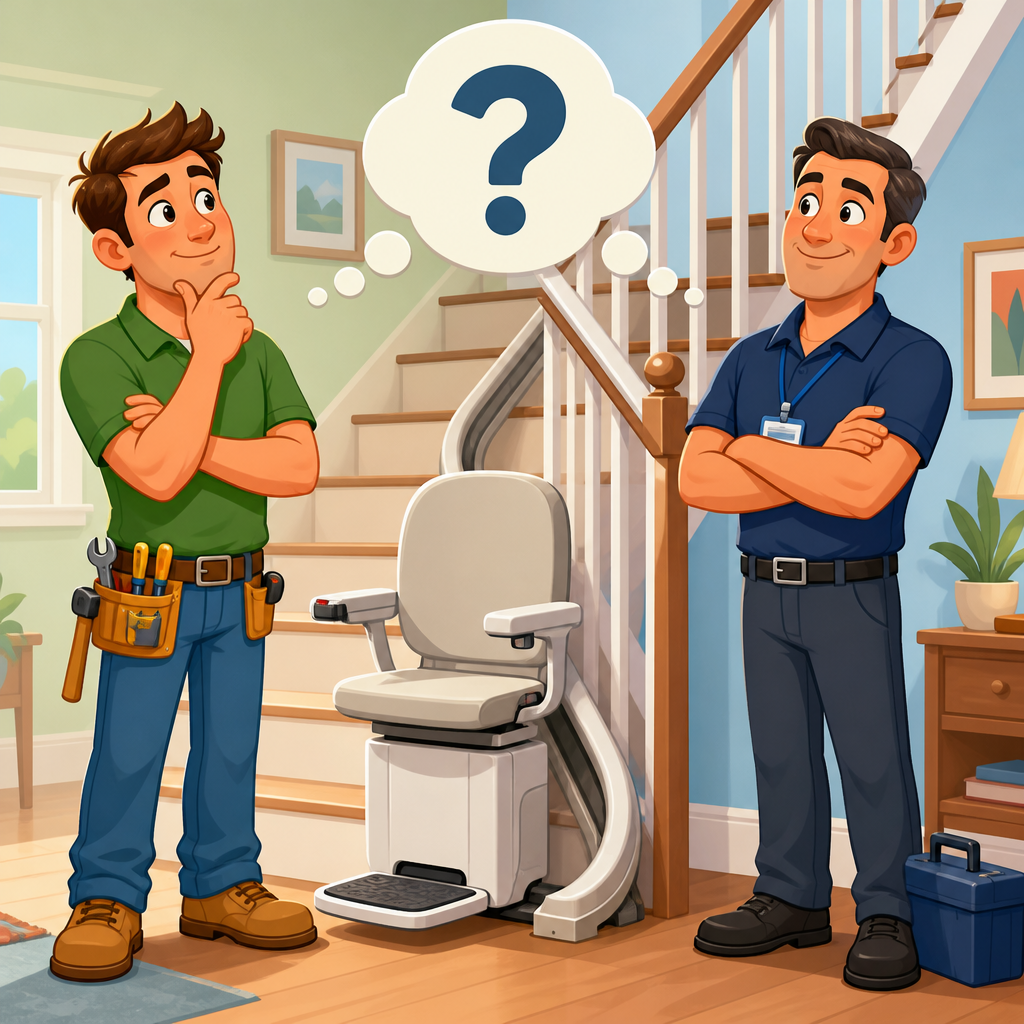
Choosing who should install a stair lift is not a minor home improvement decision; it is a safety decision that affects mobility, independence, and liability. Homeowners often ask whether a trusted handyman can handle the job or whether only a stair lift specialist should touch the rail, carriage, power supply, and final calibration. The short answer is that a handyman may be capable of some preparatory tasks, but full stair lift installation usually requires a specialist because the work combines structural mounting, electrical setup, manufacturer-specific programming, code awareness, and safety testing. That distinction matters because a stair lift is not just attached hardware. It is a motorized accessibility device designed to carry a person on stairs with controlled starts, stops, braking, and obstruction sensing.
In projects I have reviewed, the biggest mistakes happen when people treat stair lifts like simple railings or chair assemblies. They are neither. A straight stair lift runs on a fixed rail mounted to stair treads, while a curved stair lift follows turns, landings, or intermediate bends and is custom fabricated for the exact staircase geometry. Most units include a seat, footrest, transmission, battery, charger, call/send controls, limit switches, seat swivel lock, and overspeed governor or equivalent braking system. Installation is the process of positioning brackets, securing the rail, aligning charge points, commissioning the drive system, and verifying that every safety circuit works under load.
This topic matters because a poor installation can cause nuisance shutdowns at best and dangerous movement or track misalignment at worst. It also matters financially. Many manufacturers tie warranty coverage to authorized installation. Insurers, occupational therapists, and home accessibility consultants routinely recommend documented professional setup for that reason. If you are comparing professional installation vs DIY, think beyond the initial invoice. Consider fit, code compliance, service access, long-term reliability, and whether the person doing the work can diagnose charging faults, staircase irregularities, or rail tolerance issues before they become failures. For most households, a handyman can assist the project, but a specialist should lead or perform the actual stair lift installation.
What a stair lift installation actually involves
People underestimate the scope of stair lift installation because the finished product looks compact. In practice, the installer must first survey the staircase, measure tread depth, nosing profile, width, angle, top and bottom overrun requirements, landing clearance, and any obstructions such as radiators, trim, doors, or low walls. On curved models, measurements are often captured with photo mapping, digital surveying tools, or manufacturer templates because even small errors affect the custom rail fit. A handyman who is excellent at carpentry may still have no experience interpreting those rail geometry requirements.
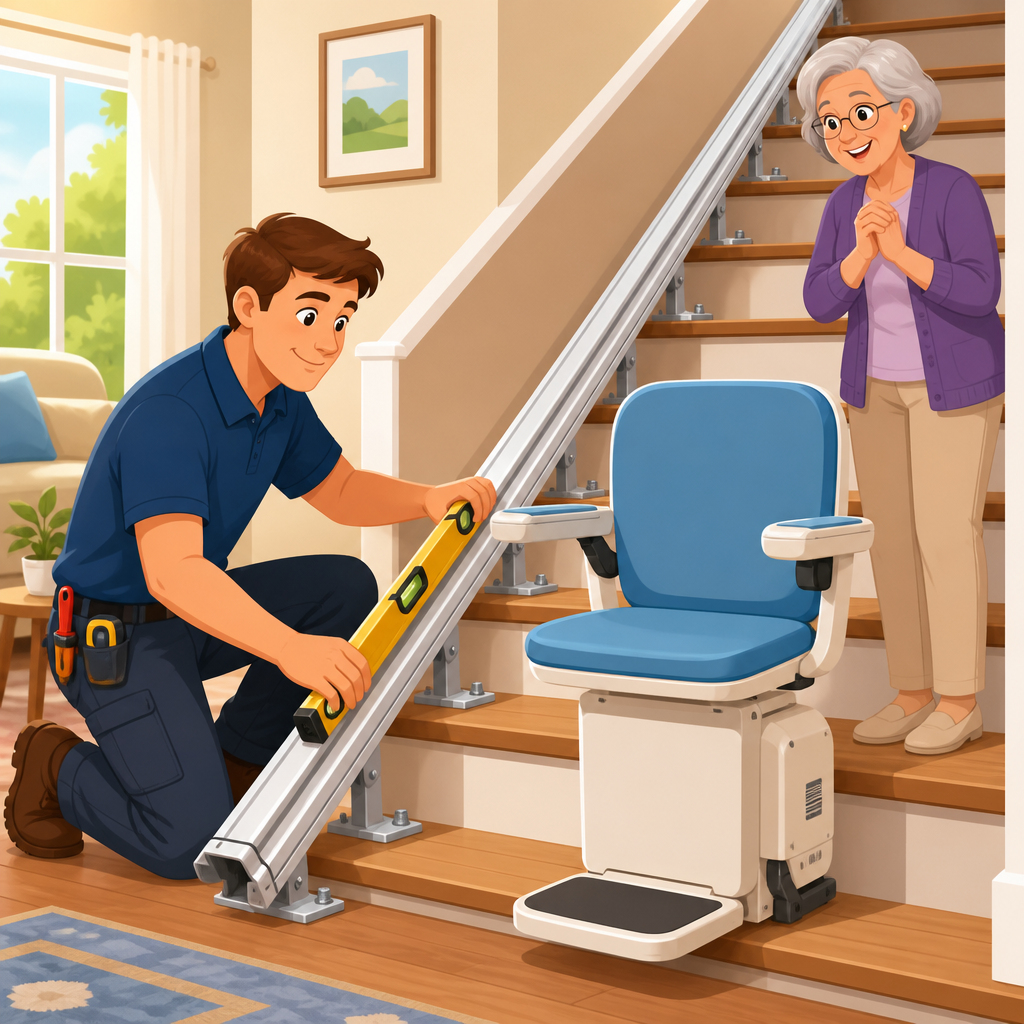
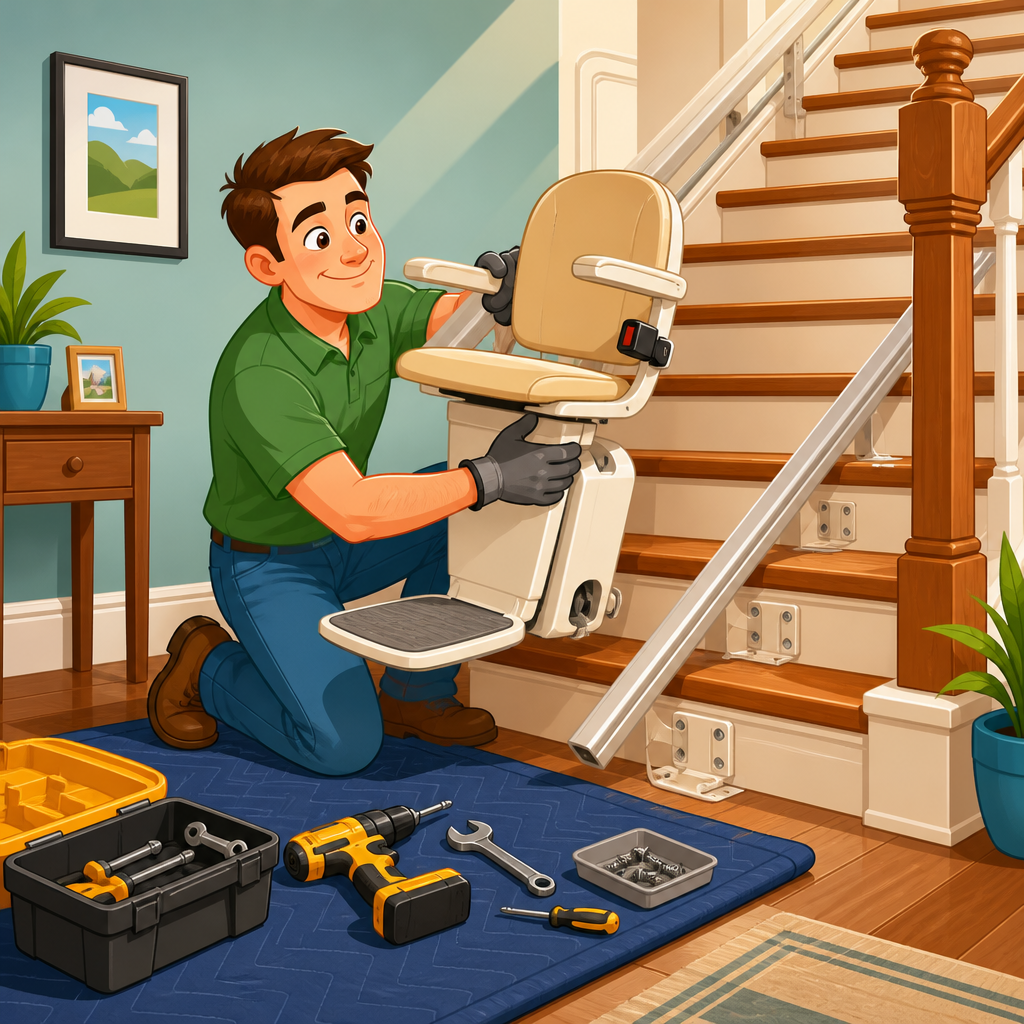
Next comes mounting. Most stair lifts attach to the stair treads, not the wall, which surprises many buyers. The brackets must be spaced according to the manufacturer’s engineering specifications and anchored to sound material. Installers then assemble rail sections, level and align them, mount the carriage, connect charging contacts, set travel limits, test seat rotation locks, and verify battery charging at park positions. Many units are battery powered with a nearby standard outlet feeding the charger; others may require dedicated considerations depending on the model and local electrical practice. The final step is commissioning: ride testing, obstruction sensor testing, manual lowering review, and user instruction.
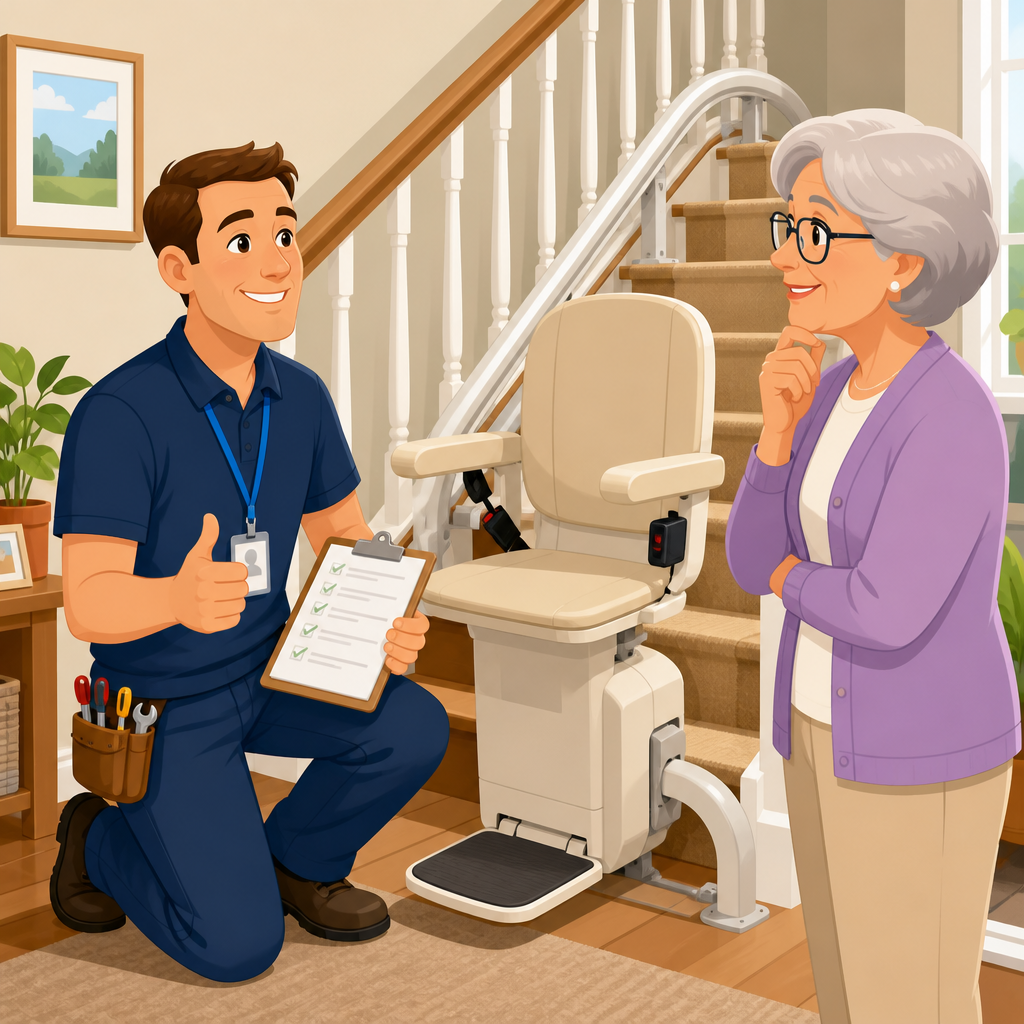
That final instruction piece is important. A qualified installer does not just bolt in equipment and leave. They show the user how to fold the seat and footrest, park the unit, use remote call/send controls, swivel safely at the landing, recognize beeps or fault indicators, and know when service is needed. In accessibility work, installation and training are part of the same job.
When a handyman may be appropriate
A handyman can be useful in limited, clearly defined situations. If the staircase needs minor preparation, such as tightening loose treads, trimming a baseboard that interferes with bracket placement, moving nearby furniture, repairing drywall damaged by previous fixtures, or installing a dedicated shelf or gate adjacent to the landing, a skilled handyman may be the right trade. In some homes, a handyman can also coordinate small related tasks after the stair lift is installed, such as patching holes from removed railings, adjusting door swings, or improving lighting on the landing.
There are also cases where a handyman with direct stair lift experience works under a dealer or mobility company as part of an installation crew. In that scenario, the label matters less than the training, authorization, and accountability. If the person has installed the exact brand repeatedly, follows the manufacturer manual, has access to technical support, and can document commissioning checks, they are functioning as a specialist even if their business card says handyman.
What usually does not make sense is hiring a general handyman with no stair lift track record to do the full install because the unit “looks straightforward.” Straight lifts are simpler than curved lifts, but they still rely on model-specific setup. Seat height, rail start position, charging strips, final limit cams, and diagnostic indicators are not universal. The skills overlap with carpentry and light electrical work, but the standards are closer to medical-adjacent durable equipment installation than to hanging a shelf.
Why a specialist is usually the safer choice
A stair lift specialist brings three things a general handyman often does not: product-specific training, access to parts and technical support, and responsibility for the system after installation. Those advantages matter immediately. Specialists know how different manufacturers handle rack alignment, footrest safety edges, battery charging contacts, and fault codes. They can spot staircase conditions that change the installation plan, such as bullnose bottom steps, inconsistent tread dimensions, weak repairs from prior remodeling, or landings that leave too little dismount space.
They also understand the standards environment around accessibility equipment. In the United States, reputable installers routinely work within manufacturer requirements and applicable residential electrical and safety expectations, and many reference ASME A18.1, the Safety Standard for Platform Lifts and Stairway Chairlifts, when discussing performance and installation practices. A homeowner does not need to memorize standards language, but the installer should be working from it. That is one reason dealers perform documented checklists after setup.
From a risk perspective, specialists reduce the chance of subtle but expensive problems: premature battery failure from poor charging contact alignment, rail noise from bracket stress, stop positions that leave the user awkwardly balanced at the landing, or seat swivel interference with nearby walls. I have seen professionally installed units corrected in under an hour because the technician recognized a known symptom pattern; the same issue would have left a DIY installer guessing between batteries, charger, board, or rail alignment.
| Installation factor | General handyman | Stair lift specialist |
|---|---|---|
| Basic carpentry and fastening | Usually strong | Strong |
| Brand-specific rail assembly | Varies widely | Routine task |
| Custom curved rail measurement | Rarely qualified | Standard service |
| Electrical and charging setup | Basic only | Model-specific knowledge |
| Safety circuit testing | Often limited | Required part of commissioning |
| Warranty protection | May void coverage | Usually preserved |
| Access to parts and tech support | Limited | Direct dealer channels |
| Long-term service responsibility | Inconsistent | Expected |
Professional installation vs DIY: the real tradeoffs
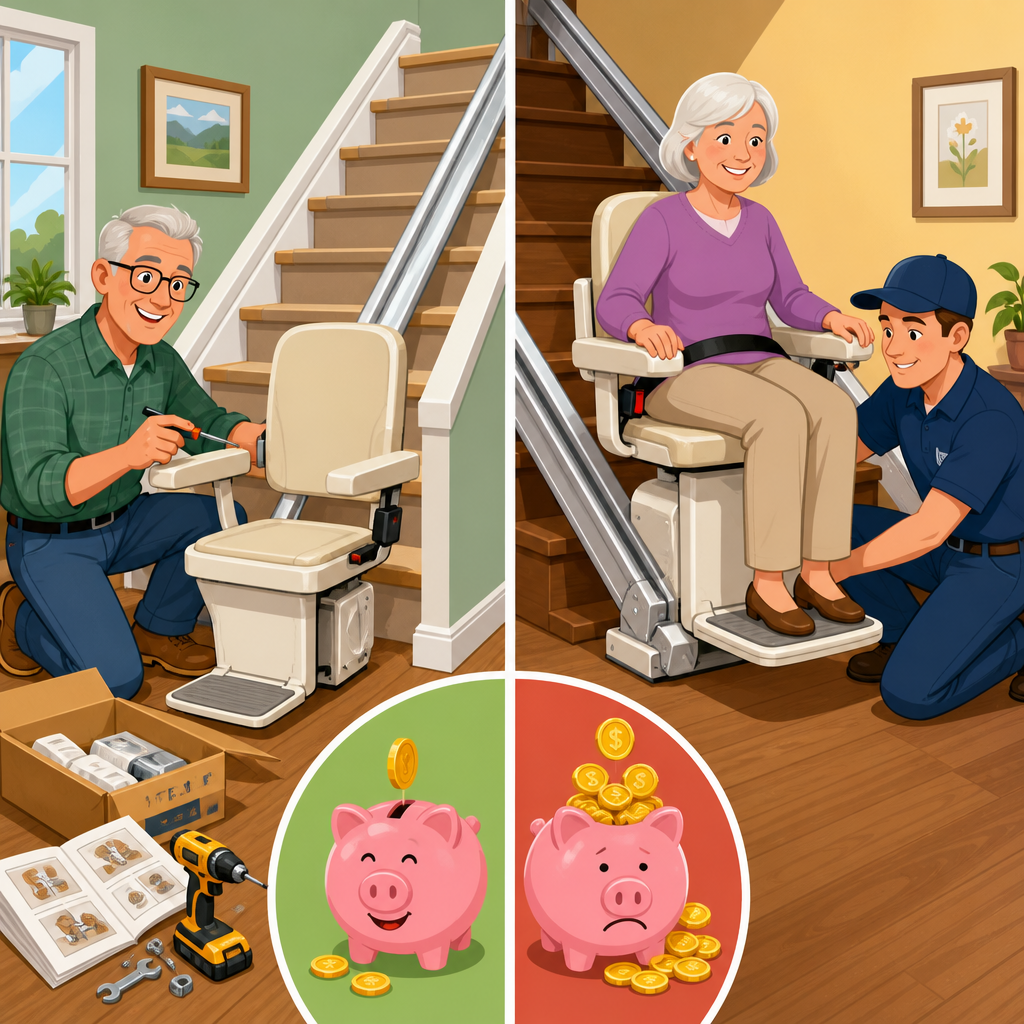
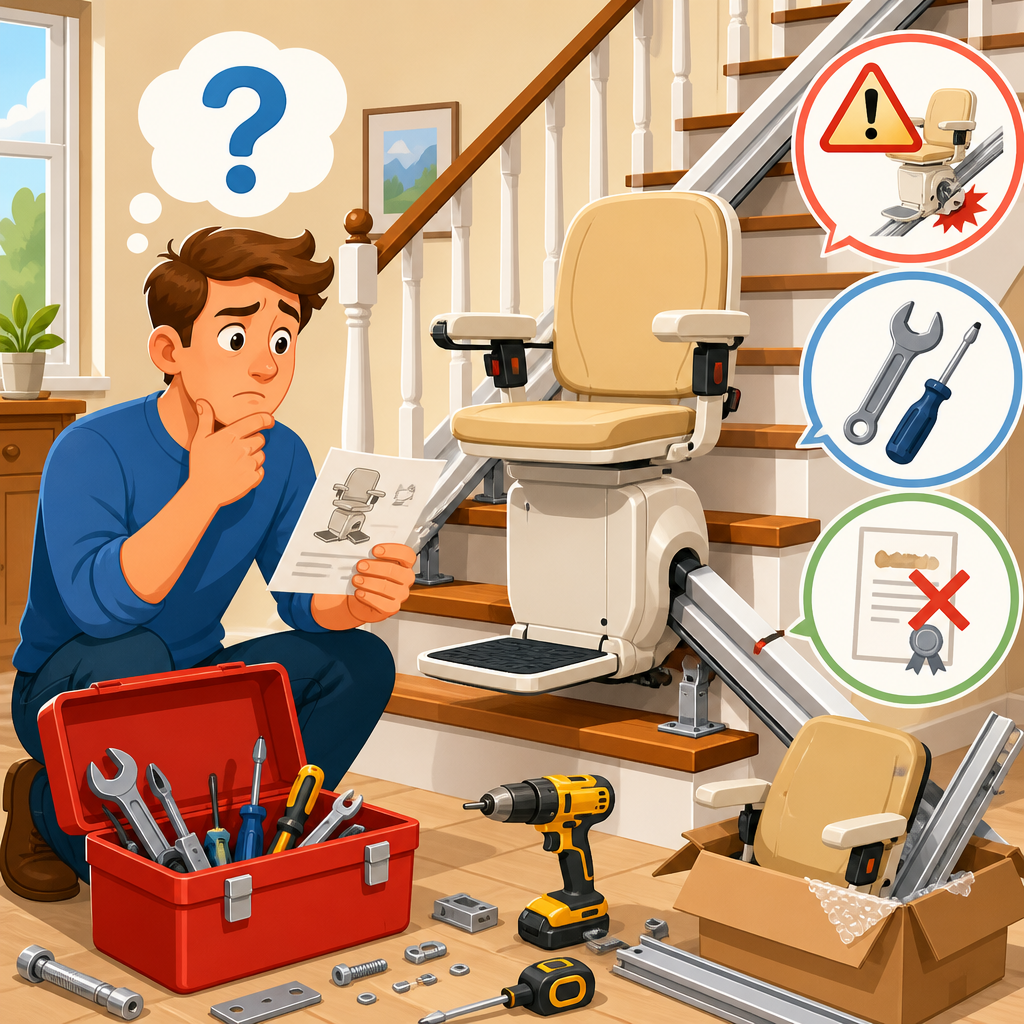
The appeal of DIY is obvious: lower labor cost and faster scheduling if you already have tools. For a mechanically confident homeowner, especially one installing a used straight stair lift in a simple staircase, the project can seem manageable. Some manufacturers even provide detailed manuals. But the hidden tradeoff is that cost savings disappear quickly if the rail is measured incorrectly, a bracket is repositioned multiple times, charging points are misaligned, or the unit needs service before it has ever been used reliably.
Professional installation costs more because it includes survey work, transport, assembly, adjustment, testing, user training, and often an initial service guarantee. On curved systems, professional installation is effectively mandatory because the rail is custom made from exact measurements. If those measurements are wrong, the rail may not fit at all. On straight lifts, the choice is more flexible, but warranty terms often still favor authorized installers. Brands such as Bruno, Harmar, Stannah, and Acorn commonly sell through dealer networks for that reason.
DIY also shifts liability. If a friend, tenant, or parent is injured using a self-installed unit, questions arise about assembly, maintenance, and whether the installer was competent. That concern is not theoretical in multigenerational homes. Families often buy stair lifts after a hospitalization or decline in balance, when the user is already vulnerable. In those cases, reliability matters more than squeezing out labor savings.
Questions to ask before you hire anyone
Whether you are considering a handyman or specialist, ask specific questions. How many stair lifts have you installed, and which brands? Are you authorized by the manufacturer or dealer? Who handles warranty claims? Will you measure the staircase yourself before ordering? What clearance is required when the seat, arms, and footrest are folded? How do you test obstruction sensors and charging points? Will you provide a written checklist or service record? Clear answers separate experienced installers from people learning on your staircase.
You should also ask about service after the job. Stair lifts need periodic attention even when reliable. Batteries eventually age out, seat switches can wear, and homes accumulate dust, pet hair, and vibration that affect moving equipment. A local specialist with stocked parts is worth more than a cheaper installer who disappears after the invoice is paid. Response time matters when the user depends on the lift daily.
Finally, discuss the staircase itself. Narrow stairs, hinged rails near doorways, top overrun needs, parking options, and weight capacity all affect model choice and installation complexity. A good installer explains those constraints in plain language and does not promise universal fit without a survey.
The best decision for most homes
For most homeowners, the right answer is simple: use a stair lift specialist for selection, measurement, installation, and commissioning, and use a handyman only for adjacent preparation or finish work. That approach gives you the safety and warranty protection of professional installation without wasting money on tasks outside the specialist’s scope. It also reflects how stair lifts actually function in the real world. They are accessibility devices with mechanical, electrical, and user-safety systems that need to work together every day, often for people who cannot afford a failure on the stairs.
If you are evaluating professional installation vs DIY for this “Installation & Setup” topic, treat this page as your starting point. The key benefit of hiring a specialist is not just convenience. It is a correctly fitted, tested, supportable system that protects the user and performs reliably over time. Before you buy, schedule an in-home assessment, ask detailed installation questions, and choose the provider who can document experience, training, and post-installation service.
Frequently Asked Questions
Can a handyman legally and safely install a stair lift, or do I need a specialist?
In most cases, you should hire a stair lift specialist for the actual installation. A handyman may be skilled in general household repairs, carpentry, and minor electrical work, but a stair lift is not just another home improvement project. It is a mobility device that must be mounted precisely, powered correctly, tested under load, and calibrated for safe everyday use. The system includes a rail, carriage, seat assembly, charging or power components, safety sensors, and final adjustment settings that directly affect how securely and smoothly the lift operates.
There is also the issue of local code requirements, manufacturer installation standards, and liability. Many stair lift manufacturers require installation by trained or authorized technicians in order to preserve the warranty. If a non-specialist installs the unit incorrectly and a failure occurs, the homeowner could face expensive repairs, denied warranty claims, insurance complications, or serious injury risk. A handyman may be perfectly qualified to help with related prep work, but when it comes to putting the lift into service, a specialist is generally the right and safest choice.
What parts of a stair lift project can a handyman handle?
A handyman can often assist with limited, non-specialized tasks around the installation, especially if those tasks do not involve the lift’s core mechanical or electrical setup. For example, a handyman may be able to clear obstructions along the staircase, reinforce nearby trim or wall finishes, patch surfaces after measurements are taken, improve lighting around the stairs, or install related accessibility items such as grab bars if they are qualified to do so. In some homes, a handyman may also help prepare an electrical outlet area or coordinate minor carpentry changes around the landing, provided this work complies with local rules and does not interfere with the lift system.
What a handyman should generally not do is independently mount the rail, wire the unit improperly, adjust the carriage, set travel limits, calibrate sensors, or certify that the stair lift is safe for use. Those tasks are central to the device’s operation and require product-specific training. A helpful way to think about it is this: a handyman can often support the project environment, but the specialist should handle the mobility equipment itself. That division protects both the homeowner and the person who will rely on the lift every day.
Why is stair lift installation considered more specialized than other home equipment installs?
Stair lift installation is specialized because the equipment is directly responsible for carrying a person up and down a staircase, often someone with reduced balance, strength, or mobility. That raises the stakes considerably. The installer must account for stair geometry, rail alignment, weight capacity, seat height, charging points, folding clearances, start and stop positions, swivel operation, obstruction sensors, and emergency functions. Even a small installation error can affect ride quality, create a tripping hazard, cause the lift to stop unexpectedly, or place excessive stress on components over time.
Unlike many ordinary fixtures, a stair lift also has to be matched carefully to the user and the home. Straight staircases are simpler than curved ones, but even straight lifts require precise mounting and testing. Curved stair lifts are even more technical because they involve custom rail fabrication, exact measurement, and detailed fitting at turns and landings. Specialists are trained not only to install the equipment, but also to assess whether the staircase, power source, and usage conditions are appropriate. That level of evaluation is what separates a true accessibility installation from a general repair job.
Will using a handyman instead of a specialist affect the warranty, insurance, or resale value of the stair lift?
Yes, it can. Many stair lift brands tie their warranty coverage to professional installation by an authorized dealer or trained technician. If a handyman installs the lift outside the manufacturer’s requirements, the company may refuse warranty service on parts, labor, or future adjustments. That can become costly very quickly, especially if the issue involves the motor, batteries, charging system, or safety electronics. Some providers also require proof of proper installation before honoring service agreements.
Insurance and liability are important concerns as well. If someone is injured because the lift was installed incorrectly, questions may arise about who performed the work, whether they were qualified, and whether the installation met applicable standards. Homeowners may find themselves in a difficult position if the work was done informally or without proper documentation. As for resale, a professionally installed stair lift with service records is easier to evaluate and may be more reassuring to future buyers or family members. Even if the lift is later removed, documented specialist installation reflects better overall risk management than a DIY or handyman-only approach.
How do I choose the right stair lift installer if I decide not to use a handyman for the full job?
Start by looking for a company or technician who specializes specifically in stair lifts or home accessibility equipment, not just general remodeling. Ask whether they install the brand you are considering, whether they are factory-trained or manufacturer-authorized, and whether they handle both installation and follow-up service. A qualified specialist should be able to evaluate your staircase, explain the difference between straight and curved lift options, discuss power requirements, review safety features, and provide a clear written scope of work. They should also be willing to answer questions about permits, code compliance, maintenance, and emergency service.
It is also wise to ask practical questions before signing anything: Who takes the measurements? Who performs the installation? Is the work subcontracted? What testing is done before handoff? Will the user receive instructions on safe operation? What happens if the lift needs adjustment after a few days of use? A strong installer will not treat the project like a simple product drop-off. They will treat it like a safety-critical mobility solution. That is exactly the mindset you want when the goal is preserving independence without compromising safety.