Choosing a stair lift installer is not just about getting a quote; it is about protecting mobility, safety, and long-term reliability in your home. A stair lift is a motorized chair or perch that travels along a rail attached to the staircase, helping people move between floors when stairs become painful, risky, or impossible. The installer is the company or technician responsible for surveying the staircase, specifying the right unit, fitting the rail, testing the system, and explaining safe operation. Those steps sound straightforward, but mistakes in measurement, mounting, electrical setup, or user training can turn a useful accessibility upgrade into a daily frustration.
I have seen projects where the equipment itself was perfectly reputable, yet the outcome suffered because the installer rushed the survey, glossed over maintenance, or failed to explain what would happen if the battery failed during a power outage. That is why the best hiring process starts with questions. Good questions reveal whether an installer understands straight stair lifts versus curved models, local code expectations, seat height and transfer needs, weight capacity limits, folding clearances, and service response times. They also uncover whether a homeowner is being pushed toward a one-size-fits-all solution when the staircase, user, and budget call for something more specific.
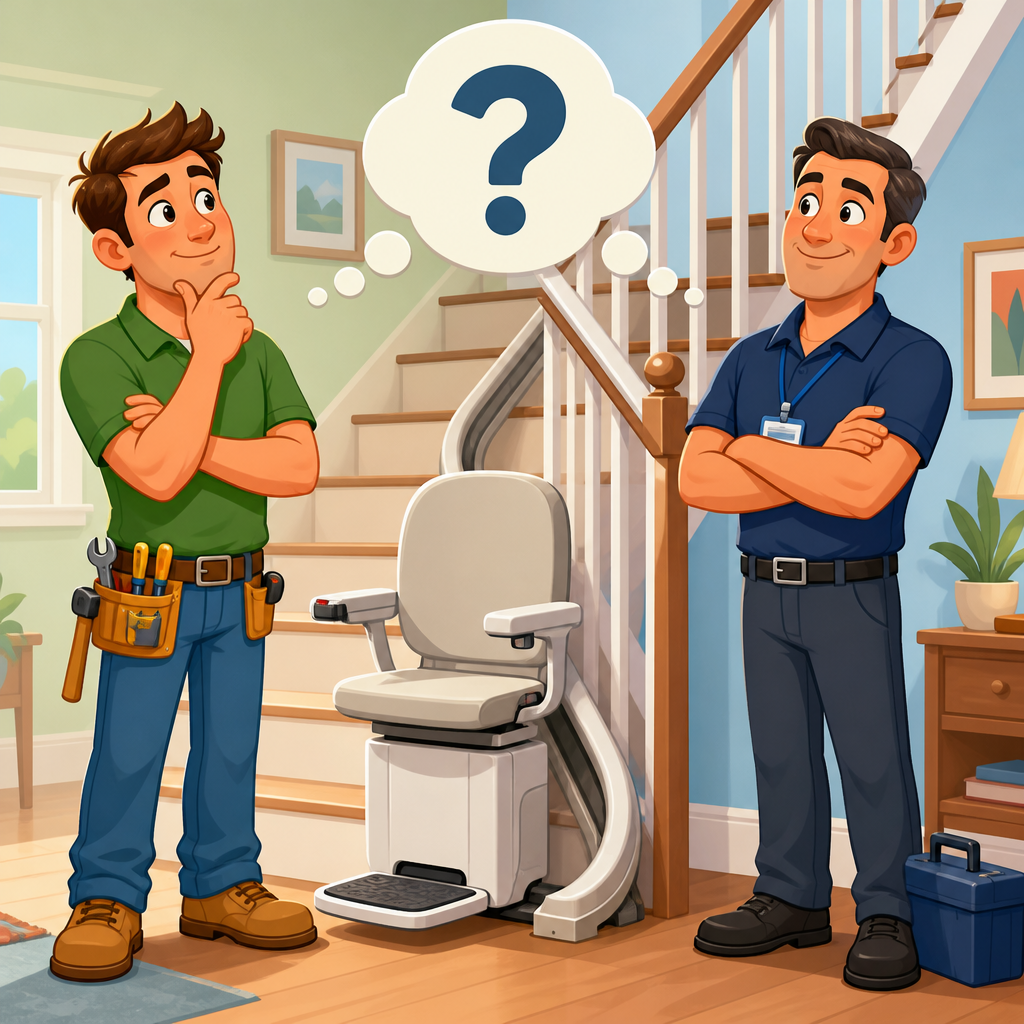
This topic matters even more when comparing professional installation vs DIY. Some stair lift kits are marketed as simpler, especially for straight staircases, and that can make a do-it-yourself approach look attractive. However, stair lifts are not like shelving or a television mount. They involve structural fastening, precise rail alignment, limit settings, battery charging points, obstruction sensors, and safe commissioning. For most households, the core decision is not only which brand to buy, but which installer can assess the home correctly and stand behind the work. The questions below will help you evaluate both the installer and the wisdom of professional installation versus doing it yourself.
Ask About Credentials, Brand Authorization, and Experience With Your Stair Type
The first question to ask is simple: What experience do you have installing stair lifts like mine? That wording matters because not all staircases are alike. A straight stair lift runs on a direct rail and is generally faster to specify and install. A curved stair lift is custom-built for landings, turns, spiral sections, or intermediate bends, and requires detailed measurement using photo mapping or digital surveying tools. Outdoor stair lifts add weatherproofing concerns, corrosion resistance, and drainage considerations. Heavy-duty models may require different seat sizes, reinforced mounting plans, and wider staircase clearance checks.
Ask whether the installer is factory-trained by the manufacturer and whether they are an authorized dealer for the brands they sell. Authorized dealers usually get access to technical bulletins, genuine replacement parts, software updates where applicable, and warranty support that independent resellers may not. Request examples of recent installs similar to yours. A seasoned installer should be able to explain how they handled narrow staircases, hinged rails near doorways, top-overrun sections for safer dismounting, or park positions that keep the chair out of the main walkway.
You should also ask if they carry general liability insurance and workers’ compensation coverage. If damage occurs to the staircase, wall, flooring, or electrical system, or if a technician is injured on site, those policies matter. Experience should also include user-specific assessment. An installer who asks about transfer strength, balance, arthritis, seatbelt use, and whether the rider uses a walker or wheelchair is usually taking the job seriously. A stair lift must fit the person as much as it fits the staircase.
Ask How the Home Survey Works and What Measurements Determine the Final Recommendation
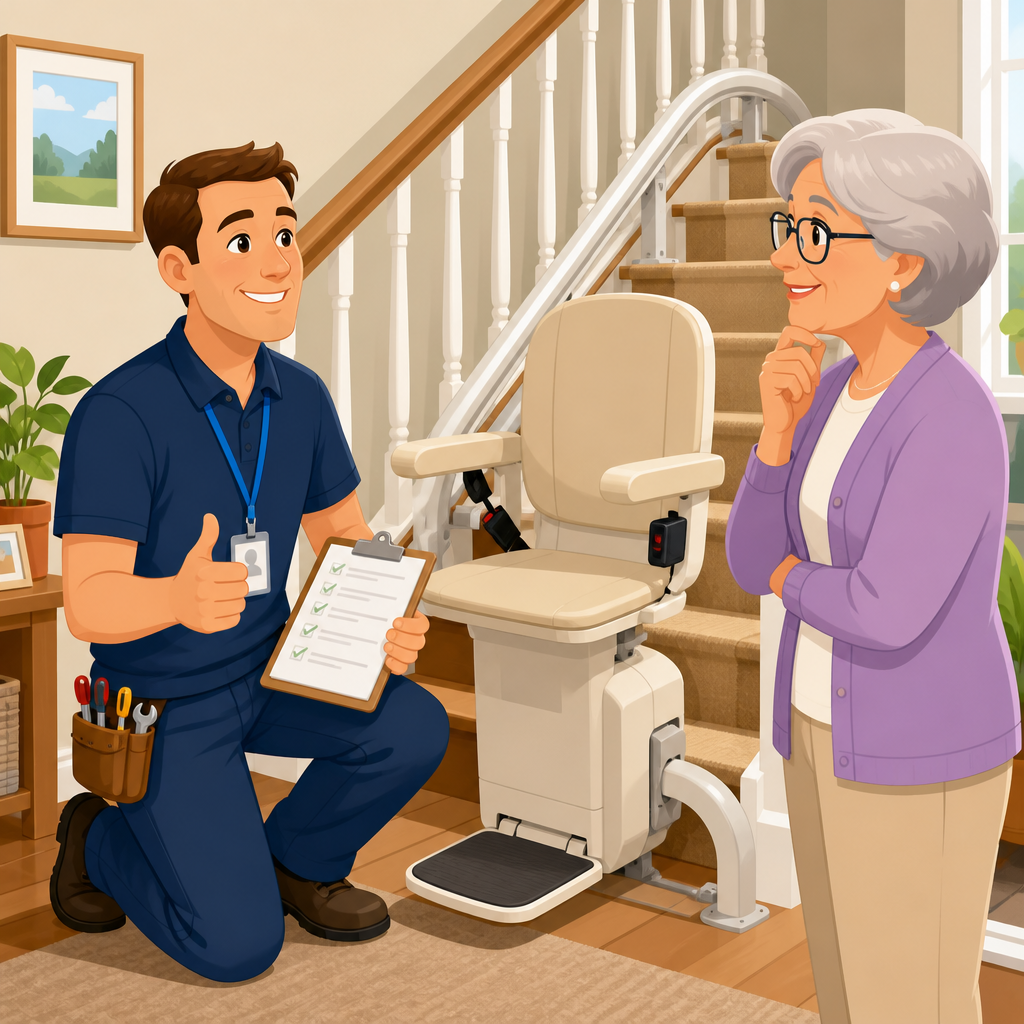
A proper survey is the foundation of a safe installation. Ask: What do you measure during the site visit, and will you check more than just stair length? A competent installer should assess staircase width, tread depth, nose profile, top and bottom landing space, nearby doors, handrail interference, headroom, power supply location, and whether folded components leave enough clear passage for other people using the stairs. They should also note whether the user approaches from the left or right, which side provides safer parking, and whether a powered swivel seat or powered footrest is needed.
For curved systems, ask whether the rail is custom fabricated from exact measurements and how errors are prevented. Established companies often use laser measurement systems, digital photography, or templating methods verified by a second review before production begins. Because curved rails are custom, mistakes can be expensive and delay the project for weeks. A careful survey also identifies trip hazards at the bottom landing, pinch points near trim or balusters, and whether an automatic hinge is needed so the rail does not block a doorway.
One of the biggest differences in professional installation vs DIY appears here. Homeowners may be able to measure overall stair length, but they often miss landing clearances, seat-to-wall offsets, and transfer geometry. In practice, those details determine whether the lift feels easy to use every day or awkward and unsafe. Ask the installer to walk you through their recommendation in plain language and show why one configuration is better than another.
Ask Directly About Professional Installation vs DIY, Including Safety, Warranty, and Hidden Costs
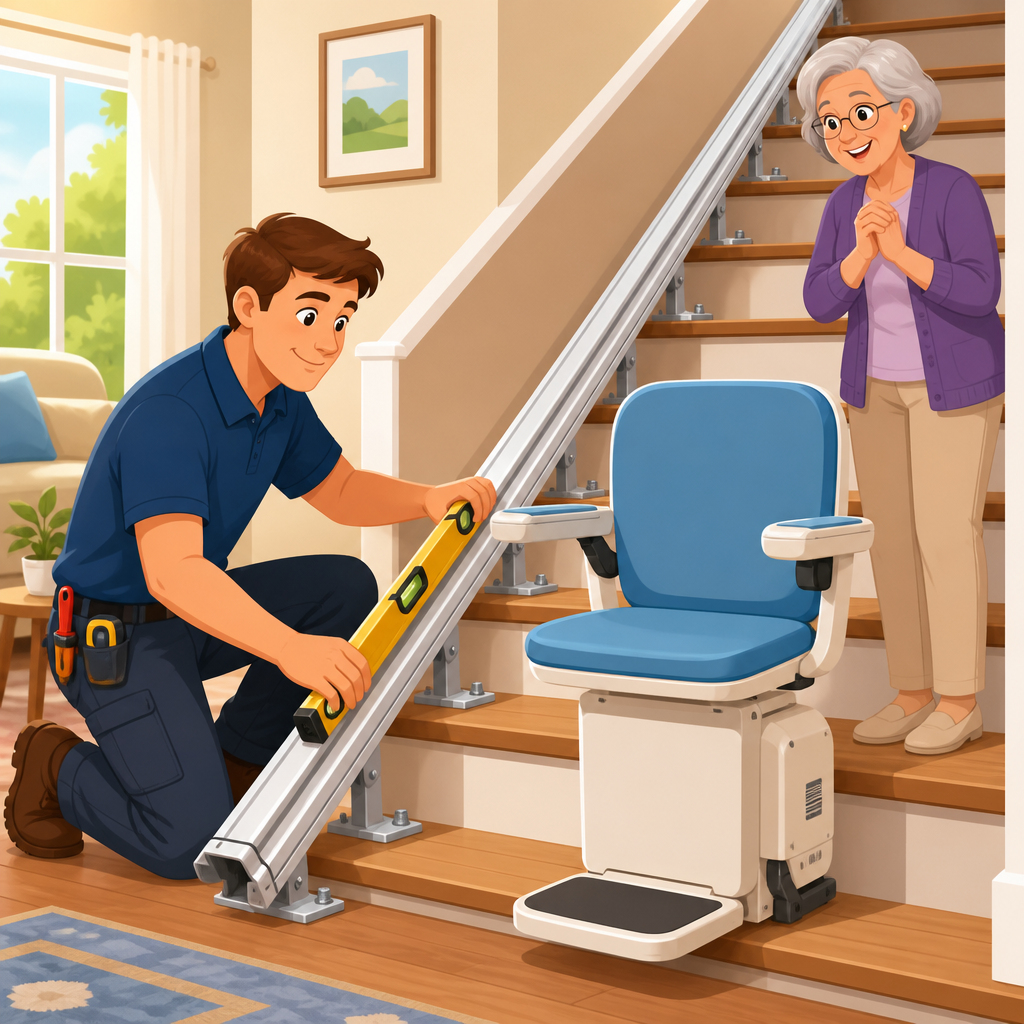
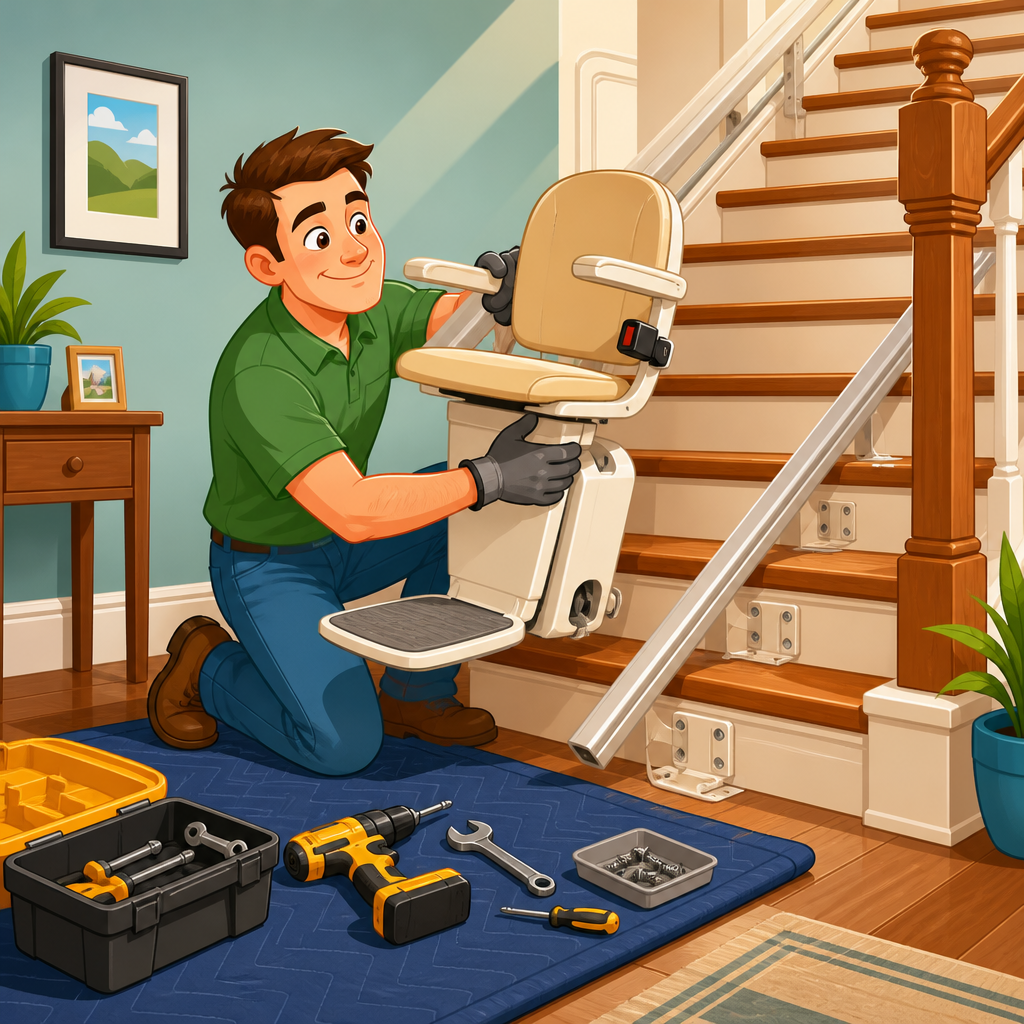
If you are considering doing the job yourself, bring it up openly: What are the real differences between professional installation and DIY for this model? A trustworthy installer should answer without scare tactics. Straight stair lifts are mechanically simpler than curved units, and some manufacturers design modular rails that reduce installation complexity. Even so, professional installation typically includes precise mounting to stair treads, rail leveling, final charge contact positioning, safety edge testing, travel limit adjustment, seat operation checks, and user instruction. Those steps are the difference between a lift that merely runs and one that operates safely every day.
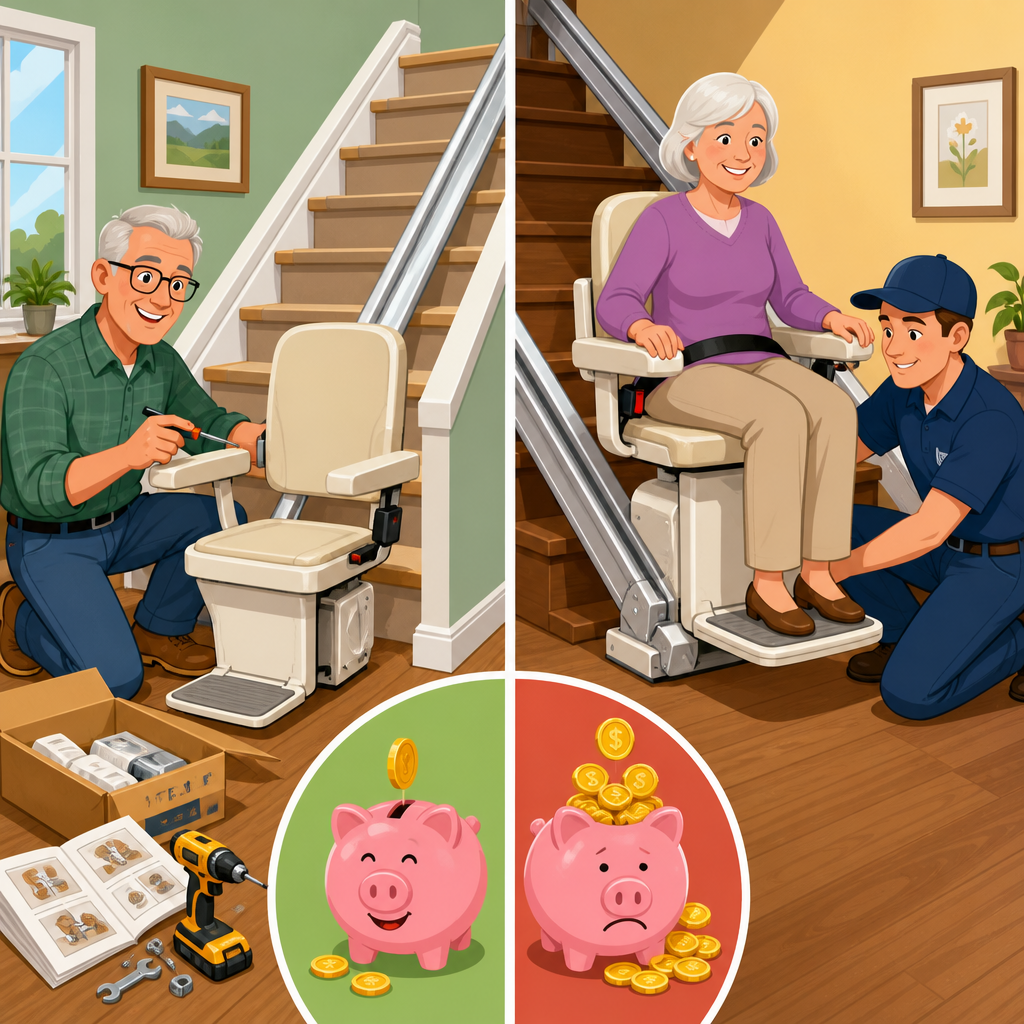
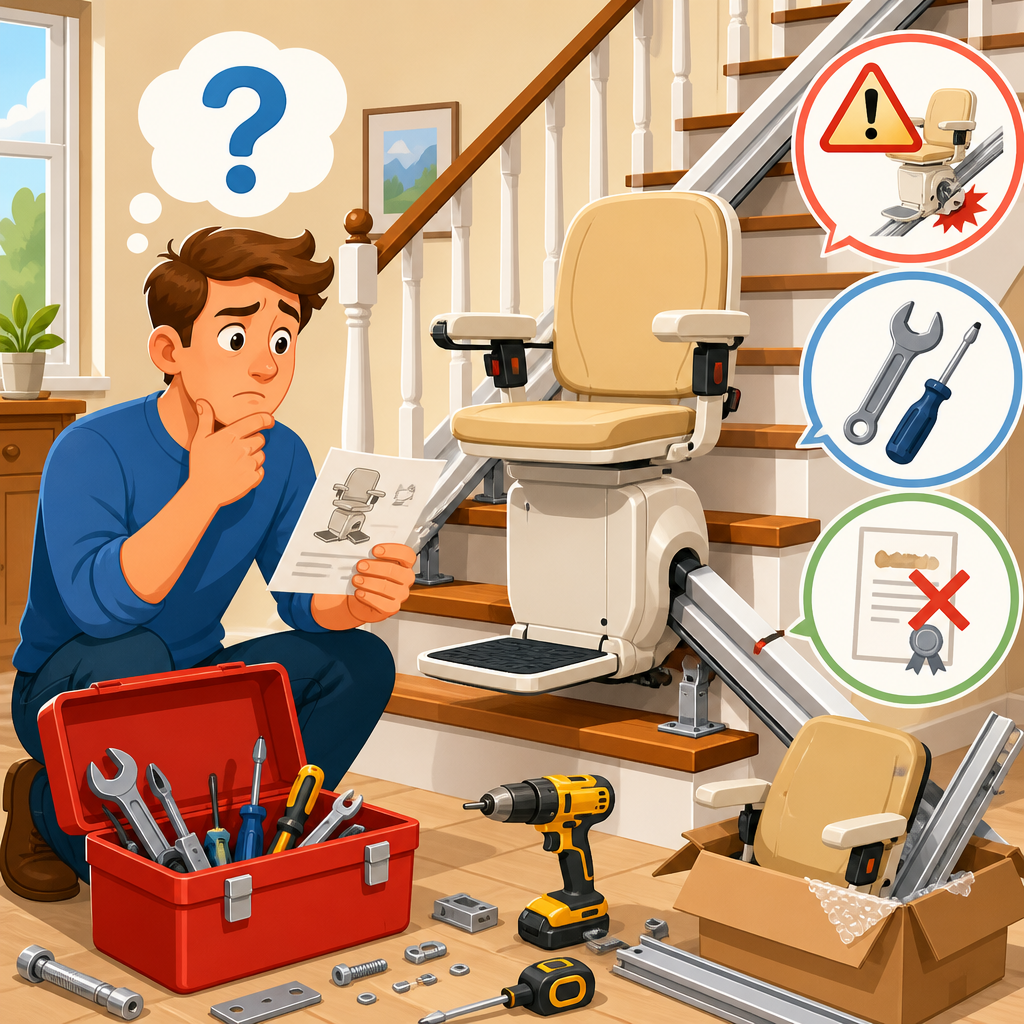
DIY usually looks cheaper at first because labor is removed, but hidden costs accumulate quickly. You may need specialty tools, additional brackets, upgraded electrical access, freight handling, disposal of packaging, and a second person for lifting and alignment. If measurements are wrong, return shipping or replacement components can erase the savings. Some manufacturers also limit warranties when the unit is not installed by an authorized technician, and many service companies prioritize units they sold and fitted themselves. That means a future repair could take longer or cost more.
There are cases where technically skilled homeowners still choose DIY, particularly with reconditioned straight stair lifts in simple layouts. But for curved lifts, outdoor systems, or homes with tight clearances and complex transfer needs, professional installation is the standard recommendation. Ask the installer to specify what risks they are reducing by handling the job. If they can explain commissioning procedures, battery charging setup, obstruction sensor testing, and post-install adjustments clearly, you are speaking with a serious provider.
Ask What Is Included in the Quote, What Is Excluded, and How Timelines Are Managed
A stair lift quote should be detailed enough that you can compare companies line by line. Ask for a written proposal showing the unit model, rail type, weight capacity, seat style, power options, warranty term, labor, delivery, permits if required, removal of packaging, and user training. Clarify whether the price includes a new unit, a refurbished unit, or a rental. Rental stair lifts can make sense for short-term recovery after surgery, but they are usually limited to straight stairs and may have setup and removal fees that change the total value.
Also ask what is excluded. Common exclusions include electrical work beyond a standard outlet, carpentry to modify trim, wall repairs, permit fees in some jurisdictions, expedited shipping, and future service visits. For curved lifts, ask how long manufacturing takes after the survey is approved. Lead times vary widely by brand and custom rail complexity. During busy periods, a curved unit can take several weeks from measurement to installation, while a straight model may be installed within days if stock is available.
Use the comparison points below when reviewing proposals from multiple installers.
| Question | Why It Matters | Strong Answer |
|---|---|---|
| Is the quote itemized? | Prevents surprise charges and makes comparisons possible | Lists equipment, labor, warranty, service terms, and optional upgrades separately |
| Is the installer authorized for this brand? | Affects warranty support and parts access | Provides proof of authorization and factory training |
| What is the response time for repairs? | Downtime can trap a user on one level | Defines service windows, emergency callout policy, and local technician coverage |
| Who handles maintenance? | Stair lifts need periodic inspection and adjustment | Offers service plans with battery, charger, and safety check details |
| What happens if measurements are wrong? | Critical on curved custom rails | Explains quality control and responsibility for correction |
Ask About Safety Testing, Codes, Service Support, and Life After Installation
Before hiring, ask exactly how the installer verifies safety on installation day. A complete answer should include checking seat swivel locks, seatbelt function, charging points, final stop positions, overspeed or transmission behavior where relevant, footrest and carriage obstruction sensors, call-send controls, folding action, and smooth travel under load. The technician should demonstrate the lift with the primary user present and confirm they can get on, ride, and get off comfortably at both levels.
Ask whether the product meets recognized safety standards, such as ASME A18.1 in the United States for platform lifts and stairway chairlifts, and whether local code or permit rules apply in your area. Not every residential stair lift installation requires the same permitting process, but a professional installer should know when inspections, landlord approval, homeowners association notice, or electrical review is relevant. If they dismiss standards or say codes never matter, that is a warning sign.
Service support is equally important. Batteries typically charge continuously at designated points and still need replacement over time, often every few years depending on use and environment. Ask who provides battery replacement, annual maintenance, and emergency repairs. Find out whether technicians stock common parts locally. In my experience, the best installers treat installation as the start of a service relationship, not the end of a sale.
Finally, ask what happens if needs change. Can the seat be repositioned? Can a hinge be added later? Is buyback, relocation, or removal available if the home is sold? These questions matter because mobility needs evolve. A strong installer will answer candidly, explain tradeoffs, and help you choose between professional installation vs DIY based on safety, complexity, and long-term support rather than price alone.
The best stair lift installer is the one who can answer your questions clearly, document everything in writing, and match the equipment to the user and the staircase without shortcuts. Start with the essentials: credentials, brand authorization, insurance, staircase-specific experience, and a thorough home survey. Then move to the practical details that often determine satisfaction later, including what the quote covers, how long the project will take, who services the lift, and how warranty support works.
When weighing professional installation vs DIY, the key issue is not whether a stair lift can sometimes be assembled by a capable homeowner. The real issue is whether the installation will be measured accurately, mounted correctly, tested fully, and supported over time. For a straight stair lift in a simple setting, DIY may appear workable, but even then, warranty limitations, safety calibration, and future service access can offset the savings. For curved, outdoor, heavy-duty, or medically complex situations, professional installation is usually the safer and more economical decision over the life of the equipment.
If you are hiring now, use this article as your checklist. Ask each installer the same questions, compare answers side by side, and request written confirmation of anything important. A stair lift should make daily life easier from the first ride onward. Choose an installer who proves they can deliver that result, then schedule a survey and move forward with confidence.
Frequently Asked Questions
What qualifications and experience should a stair lift installer have before you hire them?
One of the most important questions to ask is how long the installer has been fitting stair lifts and whether they regularly work with the specific type of staircase you have. A qualified installer should be able to explain their experience with straight stair lifts, curved stair lifts, narrow staircases, multi-landing layouts, and any special accessibility needs. Experience matters because every home is different, and proper installation affects not just comfort, but also safety, reliability, and how well the lift performs over time.
You should also ask whether the installer is licensed or otherwise authorized to perform this type of work in your area, and whether they carry liability insurance. Insurance is especially important because it protects both you and the installer if there is accidental damage or injury during the project. It is also wise to ask if the company uses in-house technicians or subcontractors. In-house installers often provide more consistent workmanship and accountability, while subcontracting is not necessarily a problem but should be disclosed clearly so you know who is responsible for the installation and any follow-up service.
A reputable installer should be comfortable discussing training, manufacturer certifications, and familiarity with the models they recommend. If they are an authorized dealer or approved installer for a certain brand, that can be a positive sign because it often means they have received product-specific training. Finally, ask for references, examples of recent installations, or reviews from customers with similar homes and mobility needs. A strong installer will welcome these questions and answer them directly, because they understand that stair lift installation is a safety-critical service, not just a simple home upgrade.
How will the installer determine which stair lift is right for your home and mobility needs?
A trustworthy stair lift installer should begin with a detailed in-home assessment rather than giving a one-size-fits-all recommendation over the phone. During that survey, they should measure the staircase carefully, look at the width, angle, landings, obstructions, power supply options, and the overall condition of the stairs. They should also ask about the user’s mobility, balance, transfer ability, height, weight, and whether the person will be using a seated chair lift or may need a perch-style model. This is a critical conversation because the “right” stair lift depends on both the physical staircase and the person who will rely on it every day.
You should ask the installer to explain why they are recommending a particular model and whether there are other suitable options. For example, some homes need a straight rail system, while others require a custom curved rail designed to fit bends or intermediate landings. Some users may benefit from a powered swivel seat, folding footrest, or higher weight capacity. The installer should be able to describe these features in plain language and explain how each one affects ease of use, comfort, and safety.
This is also a good time to ask whether the recommended lift leaves enough space for other people to use the staircase, whether the seat, armrests, and footrest fold away, and whether any doorways or hallways at the top or bottom of the stairs could create hazards. A skilled installer will think beyond the product itself and focus on how the lift will function in your daily routine. If they rush the assessment or seem more interested in making a quick sale than understanding the user’s needs, that is a sign to keep looking.
What safety features, testing steps, and installation standards should you ask about?
Because a stair lift is a mobility and safety device, you should ask very specific questions about how the installer handles safety from start to finish. Begin by asking what built-in safety features are included with the recommended model. Most quality stair lifts include a seat belt, obstruction sensors, a locking swivel seat, call/send controls, and a footrest designed to stop the lift if it detects something on the stairs. The installer should explain how each feature works and why it matters for everyday use.
It is equally important to ask how the installer secures the rail and whether it is attached to the staircase itself rather than the wall. In many homes, stair lift rails are mounted to the stair treads, which helps preserve structural stability and often avoids unnecessary wall modifications. The installer should also explain what electrical setup the lift requires, whether it uses a battery with charging points, and what happens during a power outage. Most modern stair lifts continue to operate on battery power for a period of time, and that is a useful detail to confirm before making a decision.
Before hiring, ask what testing is performed after installation. A professional installer should test travel in both directions, safety sensors, seat swivel locks, charging function, start and stop performance, and overall ride smoothness. They should also provide a full demonstration so the user knows how to get on and off safely, operate the controls, fold the lift when not in use, and respond if the unit stops unexpectedly. A careful installer will never treat the job as finished until the lift has been tested thoroughly and the user feels confident operating it.
What should you ask about warranties, maintenance, repairs, and ongoing support?
A stair lift is not a purchase you want to think about only on installation day. It is a long-term mobility solution, so you should ask exactly what happens after the lift is in place. Start with the warranty. Ask what parts are covered, whether labor is included, how long the coverage lasts, and whether there are different warranty periods for the motor, batteries, rail, and electronics. Some homeowners assume everything is covered for the same length of time, but that is not always true.
You should also ask who handles repairs if something goes wrong. Will the installer’s own service team come out, or will you be referred to the manufacturer or another third party? Ask about emergency service availability, typical response times, and whether support is available on weekends or after hours. If the stair lift is essential for someone who cannot safely manage stairs without it, repair speed is not a minor issue. It can affect day-to-day independence and even create serious access problems inside the home.
Maintenance is another key topic. Ask whether regular servicing is recommended, how often the lift should be inspected, what routine upkeep the homeowner is expected to perform, and whether the company offers maintenance plans. A reliable installer should explain things like battery replacement schedules, track cleaning, and periodic safety checks in a straightforward way. The goal is to hire a company that will still be helpful after the sale, not one that disappears once the invoice is paid.
What costs, timelines, and contract details should you clarify before agreeing to the installation?
Before hiring any stair lift installer, ask for a detailed written quote that clearly breaks down all expected costs. That should include the stair lift unit, rail, installation labor, custom work if needed, electrical adjustments if applicable, warranty information, and any ongoing service charges. If your staircase requires a curved rail or special features, those costs should be spelled out clearly. This helps you compare quotes accurately and reduces the chance of unpleasant surprises later.
You should also ask how long the process will take from survey to installation. Straight stair lifts can often be installed more quickly, while curved systems may require custom manufacturing and a longer lead time. A good installer should give you a realistic schedule and explain any factors that could affect it. If mobility needs are urgent, it is worth asking whether temporary solutions, rental options, or faster-availability models exist.
Finally, review the contract carefully and ask questions about payment terms, deposit requirements, cancellation policies, return rules, and what happens if the installer discovers an issue during installation that changes the scope of work. Make sure you understand whether the quote is fixed, whether permits are needed, and whether removal or disposal of an old unit is included if you are replacing an existing stair lift. A professional installer should be transparent, patient, and willing to put every important detail in writing. That level of clarity is often a strong indicator of how they will handle the entire project.