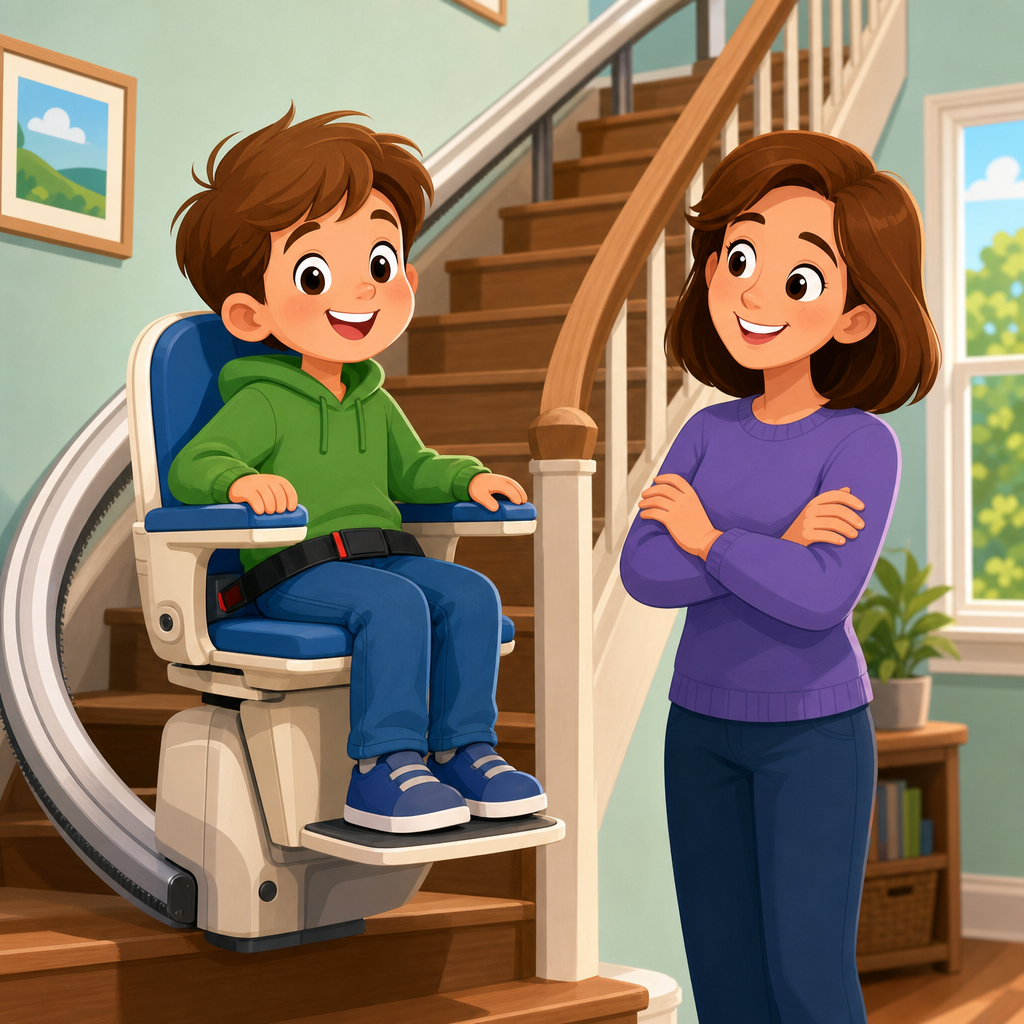
Children can use chair lifts safely, but only when the lift, staircase, supervision plan, and household rules are matched to a child’s age, size, judgment, and mobility needs. In practice, safety is not a yes-or-no issue. It depends on whether the chair lift is being used as medical mobility equipment, occasional family support, or simple convenience, and whether the installation follows the manufacturer’s instructions and local code requirements. When I assess home lift use with families, the first questions are always the same: who will ride, who will supervise, what hazards exist on the stairs, and what behaviors can reasonably be expected from the child. Those answers shape the right guidance.
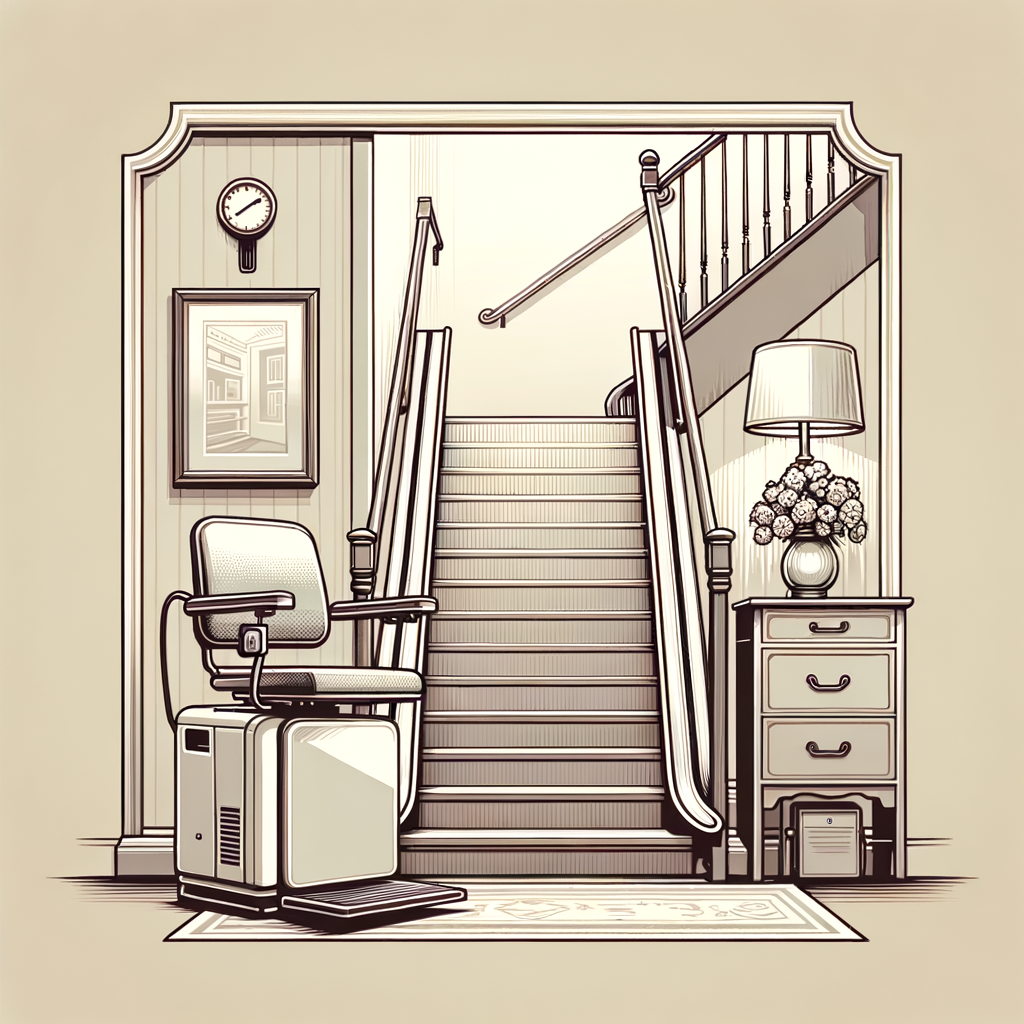
A chair lift, also called a stair lift, is a powered seat that travels along a rail fixed to the staircase. Standard residential models typically include a seat belt, armrests, footrest safety edges, swivel seat at the landing, call-send controls, and obstruction sensors. Some models are straight, while others are custom built for curved stairs with turns or intermediate landings. For children, these design details matter because small bodies fit equipment differently than adults do. A seat that feels stable to a grandparent may leave a young child poorly positioned, unable to reach the footrest, or tempted to twist sideways during travel.
This matters because falls on stairs are common household injuries, and families often look at a chair lift as a safer alternative. In many cases, that is true. A child with cerebral palsy, muscular dystrophy, spina bifida, a temporary leg injury, or severe fatigue may be much safer on a properly selected and supervised stair lift than walking the stairs. At the same time, a chair lift is not a toy and not a substitute for barriers, gates, or active supervision for toddlers. The safest answer is specific: children can use chair lifts safely when the lift is appropriate for pediatric use, the child can sit and remain positioned correctly, and adults enforce clear operating rules every time.
What determines whether a child can ride safely?
The most important safety factors are age, body size, trunk control, ability to follow instructions, and whether an adult is present. Manufacturers usually design residential stair lifts around adult dimensions and user weights, so there is rarely a universal minimum age printed as a simple rule. Instead, installers and clinicians look at fit and function. Can the child sit fully back in the seat? Does the seat belt rest across the pelvis rather than the abdomen or neck? Can the child keep hands on the armrests and feet on the footrest for the whole trip? If any answer is no, the risk rises sharply.
Supervision is equally important. A school-age child with good balance and judgment may use a lift independently after training, especially when the lift is prescribed for a mobility condition. A preschool child should not. Young children are more likely to fidget, lean, try to touch the wall or rail, or stand before the seat has fully swiveled and locked at the landing. In home visits, I have seen near misses caused not by equipment failure, but by impatience at the top step. Safe use depends on calm, repeatable habits, not just hardware.
The staircase environment matters too. Narrow stairs, heavy foot traffic, pets, loose objects on steps, and poor lighting all add risk. If the home has multiple children, the family must think beyond the rider. Siblings may be tempted to play with call-send controls, ride together, or place toys on the stairs. A chair lift reduces one risk while potentially creating another if household routines are not updated. That is why a full safety plan should address the rider, other children, and the physical staircase as one system.
Which chair lift features matter most for child safety?
For children, the best stair lift safety features are a secure seat belt, reliable swivel-seat locking, obstruction sensors on the carriage and footrest, smooth start-stop motion, and controls that can be restricted when needed. A seat belt is nonnegotiable. Most lifts use a simple lap belt, which is adequate only if it lies low across the hips and the child remains upright. If a child has poor trunk control, involuntary movement, or positioning challenges, the family should ask the dealer and the prescribing clinician whether another seating solution is needed. A standard stair lift may not be the right product in those cases.
The footrest deserves more attention than it usually gets. Small children often cannot place their feet flat on it comfortably, which can make them slide forward or twist. Powered footrests and folding rails can reduce bending hazards for caregivers, but they do not solve poor fit. Similarly, powered swivel seats can make transfers easier at the top landing, yet the locking mechanism must engage fully before the child stands. Any lift used by children should also have diagnostic status indicators, battery backup for power outages, and easy-to-reach stop controls for the supervising adult.
Reputable brands such as Bruno, Stannah, Handicare, Harmar, and Acorn commonly offer the core features families ask about, but specific configurations differ by model and staircase. The best product is not the one with the longest feature list; it is the one that fits the stairs correctly, is installed by a qualified technician, and can be used consistently without workarounds. If a family is improvising with cushions, booster devices, or altered straps, the equipment is probably not suitable. Proper fit and predictable operation always outweigh convenience.
When is a chair lift appropriate, and when is it not?
A chair lift is appropriate when a child can sit securely, tolerate the seated position, and use the lift in a controlled routine with supervision matched to ability. It often works well for children with temporary injuries, postoperative restrictions, joint pain, weakness, or chronic neuromuscular conditions that make stair climbing unsafe or exhausting. It can also reduce caregiver lifting and lower the chance of a parent falling while carrying a child on stairs. In homes with long or steep staircases, this benefit is substantial and immediate.
It may not be appropriate for toddlers, impulsive children, children who cannot maintain sitting posture, or children whose medical needs require more support than a standard stair lift provides. It is also the wrong choice if the landing space is tight enough to make transfers unsafe, or if the staircase serves as a primary emergency exit and the parked chair obstructs passage. Some families assume a larger seat or higher weight capacity means greater safety for a child. Usually the opposite is true: oversized seating can worsen positioning and increase sliding.
For some households, a platform lift, home elevator, transfer aid, or bedroom relocation to the main floor is safer than a chair lift. If a child uses a wheelchair full time, repeated transfers onto a stair lift can be tiring and risky. In those situations, accessibility planning should consider the whole journey, not just the stairs. A physical therapist, occupational therapist, or complex rehab specialist can help compare options objectively. The right answer is the one that preserves safety, dignity, and realistic daily use over months and years, not just during the first week after installation.
Practical rules families should follow every day
Families need simple rules that are enforced every time. First, only one rider at a time. Second, always use the seat belt. Third, feet stay on the footrest and hands stay inside the chair. Fourth, no riding without adult permission, and for younger children, no riding without an adult present. Fifth, the rider stands only after the seat has reached the landing, stopped completely, swiveled as designed, and locked into transfer position. These rules sound basic, but consistency prevents most avoidable incidents.
Daily checks should become routine. Before use, glance at the rail and stairs for toys, laundry, pet bowls, or loose items. Confirm the seat is fully unfolded and the footrest is down. Listen for abnormal noise during travel, because grinding, jerking, or inconsistent stopping can indicate a maintenance issue. After use, park the chair where it does not obstruct the stairs or create a trip hazard. If the controls are wireless, keep them out of reach of children who treat buttons as entertainment.
Training should be deliberate rather than casual. I recommend a first-week script: buckle, sit back, feet up, hands in, wait for stop, swivel, stand. Repeat it every trip until the child can explain it back. For children with anxiety, a supervised practice ride while the lift is stationary and another at low-distraction times can reduce fear. For children with cognitive differences, visual reminder cards at the top and bottom landings work well. Families who treat the chair lift like any other medical or mobility device usually get the safest long-term results.
| Question | Best guidance | Why it matters |
|---|---|---|
| Can a toddler ride alone? | No | Toddlers lack judgment, stable positioning, and impulse control |
| Should a child always use the seat belt? | Yes | It reduces sliding, twisting, and standing before arrival |
| Can two siblings ride together? | No | Residential lifts are designed for one seated rider only |
| Is supervision still needed if the child has used it before? | Often yes | Familiarity can lead to risky shortcuts and play behavior |
| Can a chair lift replace a stair gate? | No | The lift does not stop unsupervised access to the staircase |
Common questions about installation, maintenance, and emergencies
Parents often ask whether installation itself changes stair safety for other family members. The answer is yes, and planning matters. The rail reduces usable stair width, and folded seats still project into the stair space. A qualified installer should measure clearance carefully, verify that the parked chair does not block door swing or landings, and explain how others will pass safely. In many jurisdictions, code compliance and egress considerations are especially important on narrow stairs. A rushed installation creates long-term daily risk.
Maintenance is not optional. Stair lifts should be serviced according to the manufacturer’s schedule, typically with periodic inspection of batteries, charge points, seat swivel locks, safety edges, and rail alignment. Families should test call-send controls and basic operation regularly, but they should not perform unauthorized repairs. If a child reports that the ride feels rough or stops unexpectedly, treat that as useful information, not imagination. Children often notice subtle changes before adults do because they are seated lower and feel vibration differently.
Power outages are another common concern. Most residential stair lifts use rechargeable batteries, so they continue working for a limited number of trips when household power is out. Families should know exactly how many cycles their model can provide and what low-battery alerts sound like. Emergency planning should include who assists the child if the lift stops mid-stair, how to contact service, and whether the child can wait calmly in place. If the child has a condition that makes any interruption dangerous, a chair lift may not provide adequate resilience on its own.
How this hub connects the wider chair lift guidance families need
This topic sits at the center of practical chair lift decision-making because child safety touches every related question about chair lift types and designs. Families comparing straight versus curved stair lifts need to know how turns, parking positions, and rail placement affect supervision. Those exploring outdoor chair lifts must account for weather, slip risk, and more variable controls. Questions about seat size, powered options, folding rails, upholstery, and weight capacity all become more important when the user is smaller, still developing, or likely to need supervision.
Cost and funding questions also connect here. Insurance coverage for residential stair lifts is limited in many cases, although waivers, state programs, veterans’ benefits, charitable grants, or health-related flexible spending arrangements may help some families. Because pediatric use cases can be temporary, families should compare purchase, rental, and refurbished options carefully, but they should not compromise on installation quality or service access. A cheaper lift from an unproven seller is rarely a bargain if parts, maintenance, and safety support are uncertain.
The most useful way to use this hub is to treat it as a starting point for detailed decisions: which lift type fits the staircase, which features improve child safety, what daily rules are necessary, and when another accessibility solution is the better choice. If your household includes a child who may use a stair lift, involve the installer, the child’s clinician, and the daily caregivers early. A chair lift can be a highly safe, life-improving tool for children when chosen carefully, fitted correctly, and used with disciplined routines. Review your staircase, ask direct safety questions, and build a plan before the first ride.
Frequently Asked Questions
Can children use chair lifts safely at home?
Yes, children can use chair lifts safely at home, but only when the equipment and the household plan are appropriate for that specific child. The most important point is that chair lift safety is not a simple yes-or-no decision. A child’s age, height, weight, balance, judgment, ability to follow directions, and medical needs all matter. A lift that is safe for a teenager with a physical disability who uses it every day under a clear routine may not be safe for a younger child who sees it as something fun to ride. Safety also depends on whether the lift itself is properly sized, professionally installed, maintained according to the manufacturer’s schedule, and used on a staircase that allows safe boarding and exiting at both landings.
In many homes, the safest approach is to treat the chair lift as mobility equipment rather than as a convenience device or a toy. That means adults set clear rules about who may use it, when it may be used, and whether supervision is required. Families should also consider whether the child can sit all the way back in the seat, keep feet on the footrest, use the seat belt correctly, and remain still throughout the ride. If the answer to any of those questions is no, the child likely needs direct assistance or should not use the lift independently. When these factors are matched carefully, a chair lift can be a practical and safe way to help a child navigate stairs.
What age can a child start using a chair lift?
There is no universal minimum age that applies to every child and every chair lift. Age alone is not a reliable safety measure. What matters more is whether the child is physically large enough to fit the seat correctly and developmentally ready to use the lift as intended. A child should be able to sit securely without slouching or sliding, tolerate the movement of the lift without panic or impulsive behavior, understand simple safety rules, and avoid leaning, twisting, or trying to get off before the lift has fully stopped. Some children can do this at a younger age with close supervision, while others may need much more time and hands-on assistance.
For children who use a chair lift because of a medical condition or mobility limitation, the decision should ideally involve the prescribing clinician, therapist, equipment provider, and caregivers. They can help determine whether the lift is suitable, whether transfer assistance is needed, and whether additional safety steps should be built into the routine. For children without a medical need, families should be especially cautious about allowing routine use simply for convenience. If a child is too small for the seat, unable to fasten the belt properly, or unlikely to follow instructions consistently, independent use is not appropriate. The best standard is readiness, not age alone.
Do children need adult supervision when using a chair lift?
In most cases, yes, at least initially and often on an ongoing basis depending on the child. Adult supervision is one of the most effective ways to reduce risk, especially for younger children or children who have inconsistent judgment, sensory challenges, or difficulty following multi-step directions. Supervision allows an adult to help with safe transfers onto the seat, ensure the seat belt is positioned correctly, confirm clothing and backpacks are clear of moving parts, and watch the child during travel to make sure they stay seated properly. It also helps prevent risky behaviors such as playing with the controls, riding with siblings, or treating the lift like entertainment.
Some older children and teens may be able to use a chair lift independently, but that should only happen after the family has confirmed they can do so safely every time. A good supervision plan is specific. It should answer questions like: Does an adult need to be present at both ends of the staircase? Is the child allowed to call the lift independently? What happens if the lift stops? Is there ever a reason for a second child to ride along? Families should avoid vague rules and instead use consistent expectations. Even when a child becomes independent, periodic check-ins are wise, because growth, medical changes, medications, fatigue, and routine changes can all affect safe use over time.
What chair lift features help keep children safer?
Several chair lift features can improve safety, but they only help when the child can use them correctly and the equipment is maintained in good working order. At a minimum, families should look for a reliable seat belt or harness appropriate to the model, safety sensors that stop the lift if it meets an obstruction, a stable footrest, easy-to-use controls, and a seat design that fits the child well enough to support upright sitting. Swivel seats with locking positions can also be helpful at the top landing because they allow safer exit away from the staircase. Call/send controls may be useful too, but in households with young children they should be managed carefully so the lift is not activated as a toy.
Just as important as features is the overall installation environment. The staircase should have adequate clearance, safe landing space, and no loose rugs, clutter, or obstacles near the boarding area. The lift should be installed exactly according to the manufacturer’s instructions and local building or electrical code requirements. Families should also ask about battery backup, emergency stop procedures, weight limits, maintenance intervals, and how the child’s size affects seating position. If the child has a disability, special seating or transfer considerations may apply. No safety feature replaces training and supervision, but the right combination of equipment, setup, and family routines can make chair lift use significantly safer for children.
What household rules should families set for children using a chair lift?
Families should create simple, non-negotiable rules and review them often. The most important rules usually include: only approved users may ride, only one person rides at a time unless the manufacturer specifically allows otherwise, the seat belt must be used every trip, feet stay on the footrest, hands stay inside the chair, and no one gets on or off until the lift has stopped completely at the landing. Children should also be told clearly that a chair lift is not for play. No racing, no repeated up-and-down rides for fun, no pressing buttons out of curiosity, and no allowing friends or siblings to experiment with it. These rules should be the same every day so the child learns that lift use is part of a safety routine.
It also helps to establish adult procedures, not just child rules. For example, adults may decide that younger children can only use the lift with direct supervision, that school bags or loose blankets must be removed before riding, and that the staircase and landings must stay clear at all times. Families should have a plan for power outages, equipment malfunctions, and emergency contact numbers. Regular maintenance should be scheduled, and any unusual sounds, jerking, sensor issues, or belt problems should be addressed immediately rather than ignored. When households combine clear rules, age-appropriate supervision, proper installation, and regular servicing, children are much more likely to use chair lifts safely and consistently.