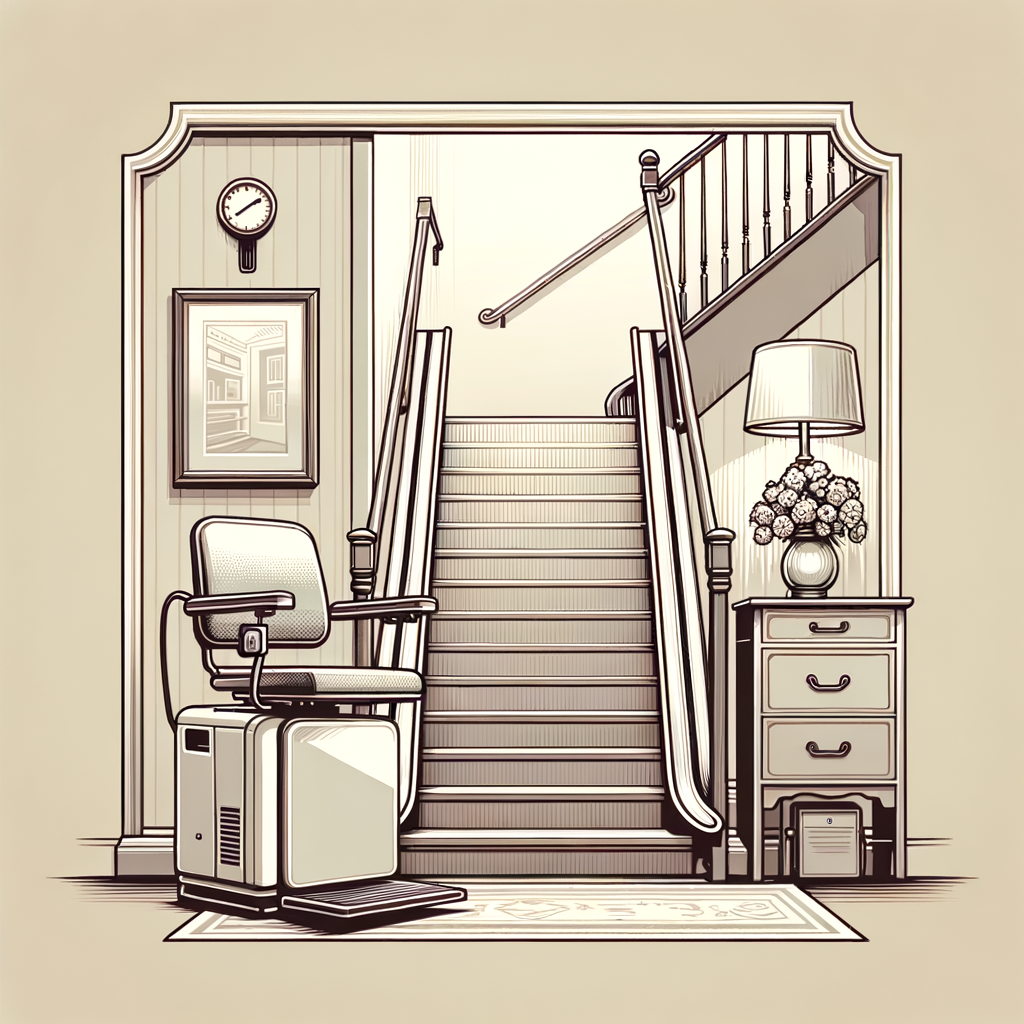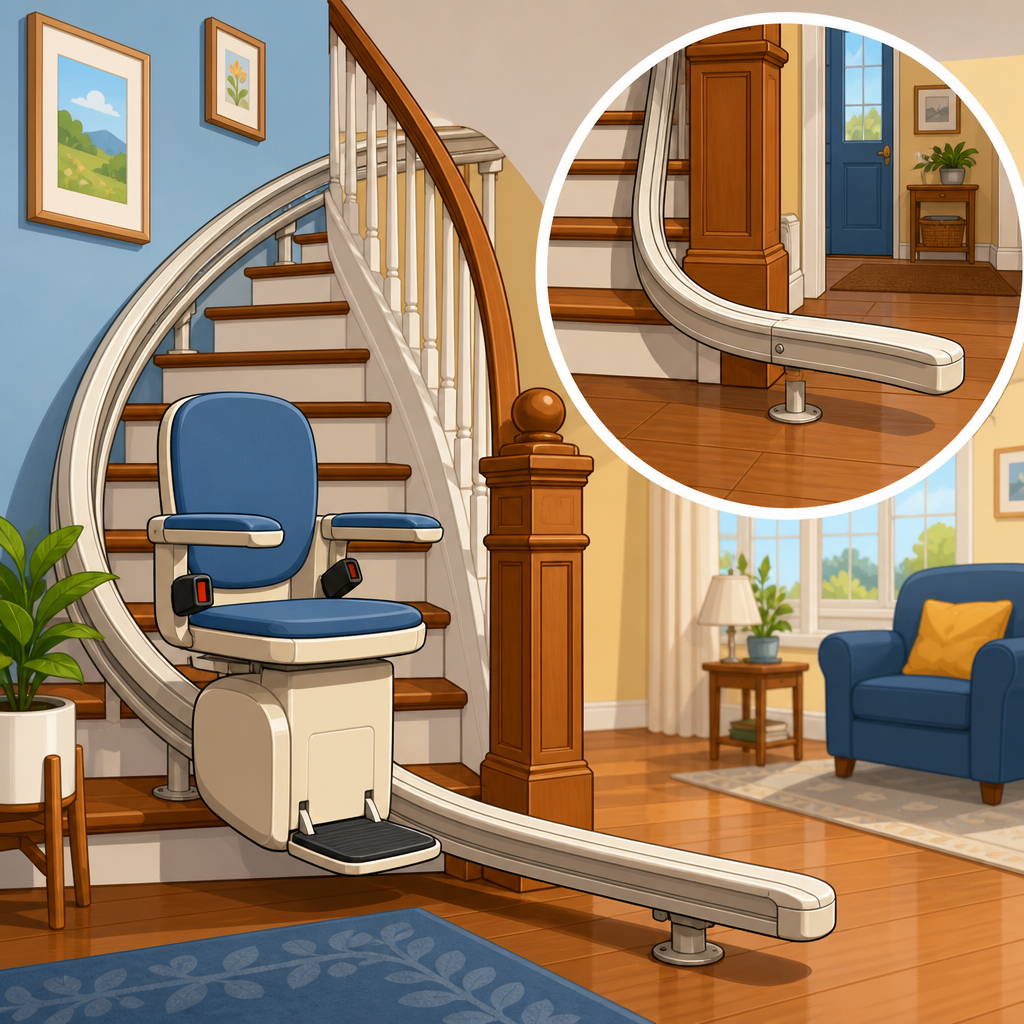
Custom stair lift parking curves and rail overruns solve a practical problem that many homeowners discover only after measuring the staircase: the best stair lift is not just one that climbs safely, but one that parks where the chair, footrest, and user create the least obstruction. In the chair lift types and designs category, these features sit within custom and hybrid designs because they adapt a standard powered chair to unusual entries, narrow halls, door swings, or busy landings. A parking curve is a shaped extension that guides the chair away from the main stair line, usually around a corner, wall return, or hallway edge, while a rail overrun is a straight or gently extended section that carries the seat beyond the top or bottom step. Both features matter because falls often happen during mounting and dismounting, not during travel itself, and a well-planned parking position reduces that risk while also improving daily usability.
I have worked on stair lift assessments where the base model technically fit the stairs, yet the installation would have blocked a front door, clipped a radiator, or forced the rider to stand up on the top step. In those cases, custom stair lift parking curves and rail overruns turned a marginal design into a safe one. The key terms are straightforward. A top overrun extends the rail onto the landing so the rider gets on and off away from the stair edge. A bottom overrun moves the chair clear of the first tread, often to protect circulation space or a nearby doorway. A parking curve goes further by bending the rail into a side area, creating a dedicated parked position. Hybrid designs combine standard drive components, seats, and controls with site-specific rail geometry, keeping costs lower than a fully bespoke curved system while solving layout problems a stock straight lift cannot.
These options matter because homes are rarely ideal test boxes. Existing trim, newel posts, inward-opening doors, shallow top landings, and preferences about appearance all affect whether a lift feels helpful or intrusive. Buyers often ask one direct question: when do custom stair lift parking curves and rail overruns actually help enough to justify their added complexity? The answer is simple. They help when parking location affects safety, access, or comfort more than travel itself. If the rider would otherwise step off near an exposed stair edge, if the chair would block a primary route, or if the folded lift still interferes with others, an overrun or parking curve is often the right answer. If the staircase has generous landings and low traffic, a standard end point may be sufficient. Good design starts with user transfer safety, then checks household traffic flow, then addresses storage, aesthetics, and service access.
What Parking Curves and Rail Overruns Actually Do
A stair lift rail is more than a track; it sets the exact geometry of loading, travel, and parking. On most straight lifts, the rail begins near the bottom riser and ends near the top riser, with optional overruns at either end. A rail overrun extends beyond the stairs, creating a safer transfer zone. Manufacturers such as Bruno, Handicare, Harmar, and Stannah offer top and bottom overruns in different lengths depending on seat size, swivel range, and charging point position. The safest installations place at least one charging point where the chair normally parks, because batteries perform best when routinely topped up and users are less likely to leave the lift in an inconvenient location.
A parking curve is different because it changes direction. Instead of ending in line with the staircase, the rail bends onto a landing, into a hallway niche, or around a corner. This is common on curved or modular systems, but it also appears in hybrid designs that use standard carriage components on custom-fabricated rails. In practice, this means the chair can be sent away with a call/send remote and parked where it is less visible, less obstructive, and easier to board. For households with multiple users, this can be a major quality-of-life improvement because the stairs remain more open when the seat is folded. It also helps caregivers who need clear landing space for transfers, walkers, or turning.
The benefit is not universal. Every extension adds rail length, mounting requirements, and setup time. Longer rails can increase price, and curved sections usually cost more than straight sections because they require customized fabrication or modular fittings. That said, the value is measurable when compared with the alternatives. If a top overrun prevents dismounting on a narrow top step, it directly reduces exposure to one of the highest-risk moments in the trip. If a bottom overrun moves the chair away from an entry door, it can prevent collisions, trapped access, and daily frustration. Good installers do not treat these additions as upgrades for their own sake; they use them to solve a defined problem.
When a Top Overrun Helps Most
A top overrun is most useful when the upper landing is shallow, the rider has limited balance, or the seat must swivel away from the staircase before standing. Building conditions vary, but the principle is consistent: the farther the transfer point is from the top nosing, the safer the exit tends to be. On many lifts, the seat locks in a swivel position at the top so the user stands onto the landing rather than toward the stair void. If the rail stops too close to the edge, that swivel may still leave the user uncomfortably near the drop. Extending the rail onto the landing creates a true transfer platform.
I have seen top overruns make the biggest difference in older homes where the staircase ends directly beside a bedroom hall or bathroom door. Without the extension, the rider must rise beside the first upper tread and pivot quickly. With the extension, the chair moves forward enough for a controlled stand using armrests or a nearby wall grab point. This is especially helpful for riders with Parkinsonian movement, post-stroke weakness, or reduced confidence after a fall. Occupational therapists frequently emphasize transfer quality over travel speed, and this is one of the clearest examples of that principle in stair lift design.
Top overruns also help in shared homes where another person needs unobstructed access to the stairs. Some systems allow a hinged rail or compact overrun to reduce protrusion, but the core decision is whether the top landing can support a safe mount and dismount. If not, the extension is justified. A common mistake is assuming that because the user can physically stand, they do not need extra landing space. In reality, cane placement, walker reach, and the direction of the seat swivel matter just as much as raw strength. The best assessments model the user’s real movement pattern, not an idealized one.
When a Bottom Overrun or Parking Curve Helps Most
A bottom overrun helps when the lower staircase entry is busy, narrow, or connected to a door. In many houses, the first tread begins just inside a front entrance, near a hallway turn, or close to a room opening. Even folded, the footrest and carriage can intrude into the path. Extending the rail can move the parked chair clear of the bottom step so another person can start up the staircase safely. It can also allow the rider to board from a more stable floor area rather than the first rise, which matters for anyone with reduced knee control or poor depth perception.
A parking curve becomes the better choice when a straight extension still leaves the chair in the way. For example, if the bottom of the stairs opens into a corridor leading to the kitchen, a curved parking section can guide the chair to one side, leaving the main walkway open. In one installation I reviewed, a standard bottom overrun would have parked the seat directly in front of a coat closet. A short custom curve tucked the folded chair behind the newel line, preserving both access and appearance. That is the kind of real-world win custom and hybrid designs are built for.
Parking curves are also valuable when users want the lift out of sight. Many families dislike having a chair visible from the front door or main living space. A call/send remote lets the user send the seat to a side parking area, where it charges without dominating the room. This can be more than an aesthetic preference. In dementia care, predictable clear pathways reduce confusion; in multigenerational homes, a less prominent lift can reduce resistance from family members who still use the stairs on foot. The design goal is to support mobility without making the staircase feel unusable for everyone else.
| Situation | Best Option | Main Benefit | Typical Tradeoff |
|---|---|---|---|
| Shallow top landing | Top overrun | Safer dismount away from stair edge | More rail on landing |
| Doorway at bottom of stairs | Bottom overrun | Keeps chair clear of door swing | Longer rail length |
| Busy hallway beside staircase | Parking curve | Moves folded chair out of main traffic path | Higher fabrication cost |
| Visible stairs in living area | Parking curve with remote send | Improves appearance and room usability | Needs suitable side parking space |
| User transfers with walker | Top overrun or bottom overrun | More level floor area for setup | May require careful charger placement |
How Custom and Hybrid Designs Are Planned
Custom and hybrid stair lift designs begin with a site survey, not a catalog. Installers measure stair pitch, tread depth, width, landing dimensions, headroom, obstructions, power location, and door swings. They also assess the rider’s body size, transfer side, dominant hand, and ability to swivel, lean, and stand. This user-centered detail is what determines whether custom stair lift parking curves and rail overruns help. A technically possible path is not enough; the solution must be comfortable on an ordinary day when the user is tired, carrying oxygen tubing, or wearing a winter coat.
Hybrid design usually means using standardized seats, carriage drives, remotes, and safety edges on a rail adapted to the staircase. This approach can control costs and service complexity because replacement parts remain common even when the rail shape is unique. Modular curved rails are another middle path. Rather than fabricating every bend from scratch, some manufacturers use pre-engineered segments that can be configured to fit many homes. The advantage is faster production and easier adjustment; the limitation is that very tight or unusual spaces may still require bespoke work.
Good planning also accounts for maintenance. Charging contacts must align reliably at the chosen park points. Hinged sections, if used near doorways, need enough clearance and straightforward operation. The rail must be mounted so that wall trim, banisters, and skirt boards do not create rubbing or access issues. In my experience, the most successful installations are the ones where the user practices several transfers before final handover. That reveals whether the proposed overrun length truly helps or whether a slightly different parking angle would be better.
Costs, Limitations, and Decision Criteria
Cost rises with complexity, but complexity is not the same as value. Straight lifts are generally the least expensive, while curved rails and custom parking sections add surveying, fabrication, and installation labor. Exact pricing varies by region and brand, yet the economic logic stays constant: pay for customization when it materially improves safety, access, or daily function. If a standard rail already allows safe transfer and does not obstruct circulation, an added curve may be unnecessary. If customization prevents a risky top-step exit or keeps the only hallway route open, it is money well spent.
There are limitations. A parking curve needs actual space to curve into. Some landings are too tight, some door swings too dominant, and some stair widths too constrained for the desired parked position. Overruns can also conflict with furnishings, radiators, or codes related to egress in certain settings. Residential stair lifts are typically installed on the treads rather than the wall, but that does not eliminate the need to preserve practical use of the staircase for others. A reputable provider should be candid when a requested parking location is not feasible.
The best decision criteria are simple. First, can the user get on and off on a stable, level area away from stair edges? Second, when folded and parked, does the lift preserve safe passage for other household members? Third, does the chosen design support charging, service access, and everyday convenience? If the answer to any of these is no with a standard layout, custom stair lift parking curves and rail overruns are likely to help. As a hub within custom and hybrid chair lift types and designs, this topic connects directly to deeper decisions about curved rails, hinged rails, heavy-duty seats, outdoor adaptations, and transfer-oriented accessories. Understanding the parking geometry often clarifies the whole purchase.
Custom stair lift parking curves and rail overruns help when they turn a merely compatible stair lift into one that is genuinely safe and easy to live with. The strongest cases are shallow top landings, obstructed lower entries, busy hallways, visible living spaces, and any situation where the user needs more stable room to transfer. A top overrun moves dismounting away from the stair edge. A bottom overrun clears the first step and nearby doors. A parking curve goes further by tucking the chair into a side area, improving both circulation and appearance.
The main benefit is not luxury; it is fit. In custom and hybrid designs, the rail geometry is what adapts the lift to the home rather than forcing the home to tolerate an awkward endpoint. That usually leads to better daily use, fewer compromises for other residents, and safer boarding and exit for the rider. The tradeoff is added cost and planning, which is why these features should be selected for a specific reason, not as automatic upgrades.
If you are comparing chair lift types and designs, start by evaluating where the chair will park and where the rider will stand up, not just how the lift travels on the stairs. Measure the landings, note every door swing, and ask the provider to demonstrate the transfer path in plain terms. Then explore the related custom and hybrid design options that connect to this hub so you can choose a stair lift layout that works in the real home you have.
Frequently Asked Questions
What is the difference between a stair lift parking curve and a rail overrun?
A stair lift parking curve is a custom bend built into the rail so the chair can travel away from the main line of the staircase and park in a less obstructive location. Instead of stopping directly at the top or bottom step, the rail curves around a hallway edge, away from a doorway, or toward a wall so the chair, footrest, and user are positioned where they interfere less with everyday traffic. This is especially helpful in homes with narrow corridors, door swings near the staircase, or busy landings where a parked chair would otherwise become a constant obstacle.
A rail overrun, by comparison, is an extension of the rail beyond the top or bottom stair. It may be straight or integrated into a custom design, but its main purpose is to move the user onto a safer, more stable area before they get on or off the chair. In practical terms, an overrun allows the seat to stop away from the edge of the stairs, reducing the risk of a fall if balance is lost during transfer. Some overruns also help with parking, but that is not always their primary function.
In many installations, the two concepts work together. A lift may use an overrun to carry the rider past the last step and then continue into a parking curve so the chair tucks out of the main walking path. The best choice depends on the layout of the staircase, nearby doors, wall clearances, and how the household uses the space every day. A professional assessment is important because what looks like a small rail change can significantly improve both safety and convenience.
When do custom parking curves and rail overruns help the most?
These features help most when a standard stop point leaves the chair in an awkward or hazardous place. A very common example is a staircase that ends near a front door, interior hallway, or room entrance. If the stair lift parks in line with the stairs, the footrest or seat may block the walkway, interfere with the door swing, or make the landing feel cramped. In that situation, a parking curve can move the chair to the side so the area remains more open when the lift is not in use.
They are also valuable in homes with narrow top landings or limited bottom-floor clearance. Some staircases technically have enough room for a lift to travel, but not enough room for a user to safely mount, swivel, stand, and step away without feeling squeezed. A rail overrun can place the chair on a flatter, safer section beyond the stair edge, while a custom curve can position the chair where transfer is more comfortable and less rushed. That difference can be especially meaningful for users with balance concerns, walkers, or limited leg strength.
Busy family homes benefit as well. In houses where multiple people use the stairs and nearby hallway throughout the day, where shoes or coats collect at the bottom landing, or where the staircase is close to an active doorway, good parking placement becomes more than a convenience. It becomes part of making the home function normally. Rather than accepting a lift that is always “in the way,” a custom or hybrid design can make the equipment easier to live with long term.
Do these features improve safety, or are they mainly about convenience?
They improve both, and in many cases the line between safety and convenience is smaller than homeowners expect. From a safety standpoint, a rail overrun can allow the rider to board and exit farther from the staircase edge, which lowers the risk of falling toward the steps during transfers. That is one of the clearest safety benefits. If the user becomes dizzy, missteps, or needs extra time to stand, having that additional landing space matters.
Parking curves can also support safer use by reducing obstruction in high-traffic areas. A chair left at the base of the stairs can create a tripping hazard for others in the home, particularly if the footrest projects into a walkway. Moving the parked chair away from the natural path of travel can make the entire area safer for family members, visitors, and caregivers. In homes where a door might strike the chair or where the chair blocks a handrail or access to a nearby room, custom parking placement can resolve multiple safety conflicts at once.
Convenience is still a major part of the value. A lift that parks neatly is easier to live with, less visually intrusive, and less likely to become a daily annoyance. That matters because equipment that fits smoothly into the home environment is more likely to be used consistently and correctly. In other words, convenience supports safe behavior. If the chair is easy to call, easy to park, and does not create friction for the rest of the household, the stair lift tends to become a practical mobility solution rather than an inconvenient compromise.
Will a custom parking curve or overrun work on any staircase?
Not on every staircase, but they can be adapted to a surprisingly wide range of layouts. Whether a custom solution will work depends on measurements, clearances, structural mounting points, landing size, nearby walls, door locations, and the turning radius needed for the chair and rail. Straight staircases can sometimes use straightforward overruns, while curved, angled, or unusually constrained spaces may call for fully custom rail sections or hybrid designs that combine standard lift components with specially built rail geometry.
The biggest limitation is physical space. A parking curve needs enough room to bend the rail and place the chair without creating a new obstruction somewhere else. Likewise, an overrun needs enough runout beyond the steps to be useful and safe. Installers also evaluate whether the folded seat, arms, and footrest will still leave acceptable walking clearance when parked. In some homes, a powered folding rail, a different side of installation, or an alternate parking position may be a better answer than a fixed curve.
This is why on-site assessment is so important. Two staircases that look similar at first glance may require completely different solutions once door swing, trim depth, radiator placement, or the user’s transfer needs are considered. A qualified stair lift provider will not just ask whether the lift can fit on the stairs. They will also study where the rider will get on and off, where the chair should rest when not in use, and how to preserve traffic flow for everyone else in the home.
Are custom stair lift parking curves and rail overruns worth the extra cost?
For many homeowners, yes, because these features address the real-world usability of the stair lift, not just the basic ability to travel up and down. A standard installation may appear less expensive at first, but if the parked chair blocks a hallway, crowds a doorway, or makes transfers uncomfortable, the lift may never feel like a good long-term fit. Spending more for a custom parking solution can prevent daily frustration and make the equipment genuinely practical for the household.
The value is often strongest when the staircase sits in a highly visible or heavily used area. If the bottom of the stairs opens into a main entry, a narrow hall, or a shared family space, the ability to park the chair out of the way can preserve function and appearance in a way that a standard stop cannot. Likewise, if an overrun creates a much safer transfer point, the added investment may be justified simply by reducing fall risk and improving confidence for the user.
It is best to think in terms of overall fit rather than accessory pricing alone. The right question is not just, “How much does the custom rail add?” but, “What problem does it solve every single day?” If the answer is better clearance, safer boarding, fewer obstructions, and easier use for both the rider and everyone else in the home, then a parking curve or overrun is often money well spent. An experienced dealer can walk through those tradeoffs and explain whether a custom or hybrid design is truly necessary for your staircase.