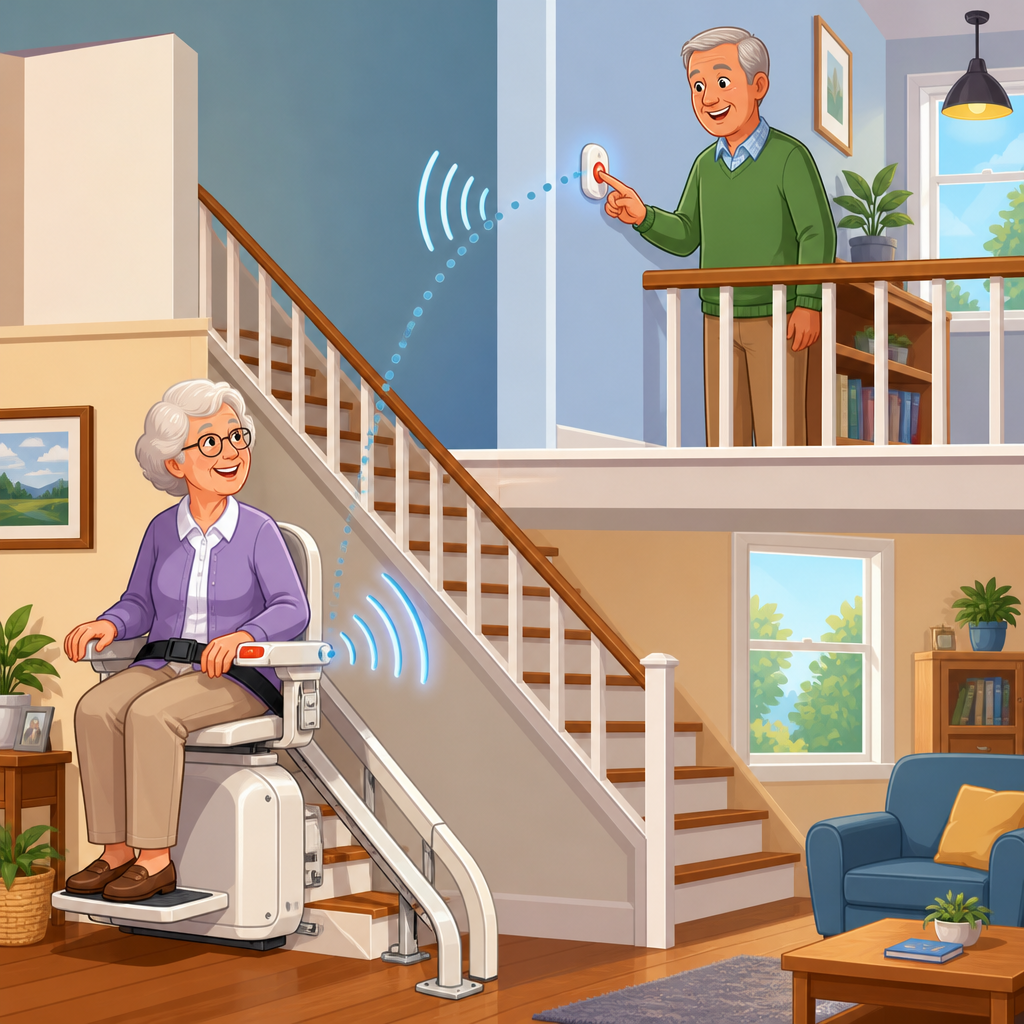
Stair lift call-send controls let a user move the chair to another floor without sitting in it, a simple function that becomes essential in homes where more than one person uses the lift or where the chair must be parked out of the main living space. In practice, this feature solves three common problems: one user leaves the lift upstairs, another needs it downstairs, and caregivers want to position the chair before a transfer. Because the lift moves without a rider, however, the system must rely entirely on built-in safeguards rather than human balance or judgment. That is why understanding how stair lift call-send controls work safely from another floor matters for owners, family members, installers, and anyone responsible for maintenance.
A call control brings the chair toward you. A send control moves it away to the opposite landing. Depending on brand and model, the control may be wall mounted, handheld, wireless, or integrated into an armrest station. The underlying logic is similar across major manufacturers such as Bruno, Stannah, Acorn, Harmar, and Handicare: a low-voltage command is sent to the lift, the lift verifies that safe operating conditions are met, and only then does the drive system move along the rail. If any safety edge, limit switch, seat interlock, or charging contact reports a problem, motion stops or never starts.
I have seen call-send controls reduce daily frustration dramatically, especially in multi-user households, but I have also seen avoidable faults caused by weak batteries, damaged remotes, blocked footrests, and misunderstandings about swivel-seat locks. Safety features explained in plain language help owners troubleshoot responsibly and know when to stop and call for service. This hub article covers the full safety framework behind call-send operation: control types, movement logic, sensors, obstruction protection, battery and power behavior, user best practices, routine maintenance, and the limits of DIY diagnosis. It also points readers toward the broader maintenance, troubleshooting, and safety issues that connect to this feature.
What Happens When You Press Call or Send
When a user presses and holds a call-send button, the command does not directly power the motor like a simple light switch. Instead, the control circuit tells the stair lift’s onboard controller that travel is requested in a specific direction. The controller checks a chain of conditions, often called a safety circuit. This typically includes seat position, swivel lock status, armrest position on some models, footrest and carriage safety edges, upper and lower final limits, overspeed monitoring, and battery status. If every required input is correct, the controller energizes the motor and brake system and the chair begins to move.
Most residential stair lifts use constant-pressure controls. That means the button must be held continuously for travel to continue. If the user releases it, the chair stops. This design reduces unintended movement and is one of the most important protections built into call-send operation. It also helps when troubleshooting: if the lift moves a short distance and stops, technicians can often narrow the issue to a charging point, intermittent safety edge, or rail contact problem rather than a failed drive.
Another key detail is speed. Stair lifts travel slowly, commonly around 15 to 20 feet per minute, because controlled motion is safer for boarding, dismounting, and obstacle detection. During call-send travel, the chair may fold against the wall or remain partially open depending on design and user habits. On models with automatic folding rails or powered seat functions, the lift may also verify those positions before moving, especially near a doorway or hallway at the lower landing.
Core Safety Features That Protect Unoccupied Movement
The safest stair lift call-send systems rely on redundant protections rather than one single switch. Obstruction sensors are the first line most owners notice. Safety edges on the footrest and carriage detect contact with an object on the stairs, such as a shoe, pet toy, vacuum cord, or dropped laundry basket. If pressure is applied to the edge, the lift stops immediately. On better-maintained units, these edges respond with very light contact, but dirt buildup, damaged trim, or misalignment can reduce sensitivity and should be addressed promptly.
Seat-related interlocks matter just as much. Many lifts will not move unless the seat is locked in the travel position. At the top landing, the seat may swivel for safer exit away from the stairs. If it is left turned, the call-send command is ignored until the seat clicks back into line. This is not an inconvenience; it prevents the chair from traveling with the seat sideways, which could create clearance problems on the staircase.
Limit switches stop travel at the ends of the rail. Standard limits tell the lift where normal travel should stop for boarding. Final limit switches act as backup protection if the primary stop point is missed. Overspeed governors or electronic speed monitoring provide another layer. If the chair moves faster than designed, the system applies braking. On rack-and-pinion stair lifts, which are common in home installations, the transmission and braking assembly are engineered so the chair cannot free-fall down the rail during ordinary faults. That mechanical reality is important and often misunderstood by users who worry that a power loss could send the chair sliding.
Wireless Remotes, Wall Controls, and Signal Security
Call-send controls come in two main forms: wired wall stations and wireless remotes. Wired stations are simple, dependable, and not affected by radio interference, though they require installed cabling and fixed locations. Wireless controls are more flexible and are now common because they avoid extra wiring and let users carry the control like a small remote. In either case, the command signal is low voltage and separate from the motor’s drive power.
Modern wireless controls usually use coded radio signals rather than generic infrared. Radio frequency remotes work without line-of-sight, which is helpful when the staircase turns or when the user is standing beyond the rail. Better systems pair the remote to the lift so that random household devices do not trigger motion. In the field, failed wireless call-send operation is often traced to weak coin-cell batteries, accidental deprogramming after board replacement, or a damaged button membrane rather than a problem with the drive unit itself.
Security in this context means preventing unintended activation, not stopping sophisticated hacking. The practical protections are straightforward: dedicated pairing, short operating range, and constant-pressure travel. If a remote button sticks, the chair still should not continue moving indefinitely once the command stream stops or a limit is reached. Households with children should keep loose remotes out of reach, because even safe systems can be misused. A child repeatedly sending the chair back and forth increases wear and creates unnecessary risk around moving parts.
Common Safety Components and What They Do
| Component | Safety role during call-send use | Typical symptom if faulty |
|---|---|---|
| Footrest safety edge | Stops the lift if the footplate meets an obstacle on the stairs | Lift stops immediately or will not start from either landing |
| Carriage side sensors | Detect contact between the body of the lift and an obstruction | Intermittent stopping on one section of rail |
| Seat swivel interlock | Prevents movement unless the seat is locked in travel position | Chair powers on but ignores call-send commands |
| Upper and lower limit switches | Stop the chair at the correct boarding points | Chair stops short, overruns, or fails to leave a landing |
| Final limit switch | Backup stop if the primary limit fails | Lift shuts down near rail end and requires service reset |
| Battery and charger contacts | Provide power and maintain charge at parked positions | Beeping, slow travel, or no movement after sitting unused |
| Overspeed governor or monitoring circuit | Applies braking if travel exceeds design speed | Rare fault; lift may lock out and require technician inspection |
Battery Power, Charging Points, and Why Parking Position Matters
Most modern residential stair lifts are battery powered even though they plug into household electricity. The wall outlet runs a charger; the charger keeps onboard batteries topped up; the batteries run the lift. This design allows the chair to keep operating during a household power outage for a limited number of trips, often enough for normal short-term needs if the batteries are healthy. It also makes call-send operation smoother because the motor draws from batteries instead of directly from house current.
Charging usually happens only at specific points on the rail, commonly at one or both landings. That is why many manuals instruct owners to leave the chair parked at a charging station when not in use. If someone sends the lift away and it stops off-charge because of an obstruction, partially pressed button, dirty contacts, or a stalled transfer, the batteries may slowly discharge. Then the next user thinks the remote has failed, when the real issue is that the unit was left off its charge point.
In service visits, battery-related complaints often present as safety complaints. The user says the call button does nothing, the chair beeps, or the lift starts then stops. Weak batteries can trigger undervoltage conditions that mimic sensor faults. Dirty charge strips, loose power packs, or tripped outlet interrupters can do the same. A simple rule helps: if call-send reliability changes after the lift has been parked away from a landing, check charging status before assuming a control failure.
Safe Use at the Top and Bottom Landings
Landings are where most real risk exists, not the middle of the staircase. The purpose of many call-send safety features is to ensure the chair arrives in a predictable, board-ready position. At the top landing, a swivel seat lets the rider dismount onto the floor instead of toward the stairs. During remote operation, that swivel must return to travel lock. At the bottom landing, some homes use a hinged rail to keep a doorway clear. Before call-send movement, the system may need confirmation that the hinged section is fully lowered and latched.
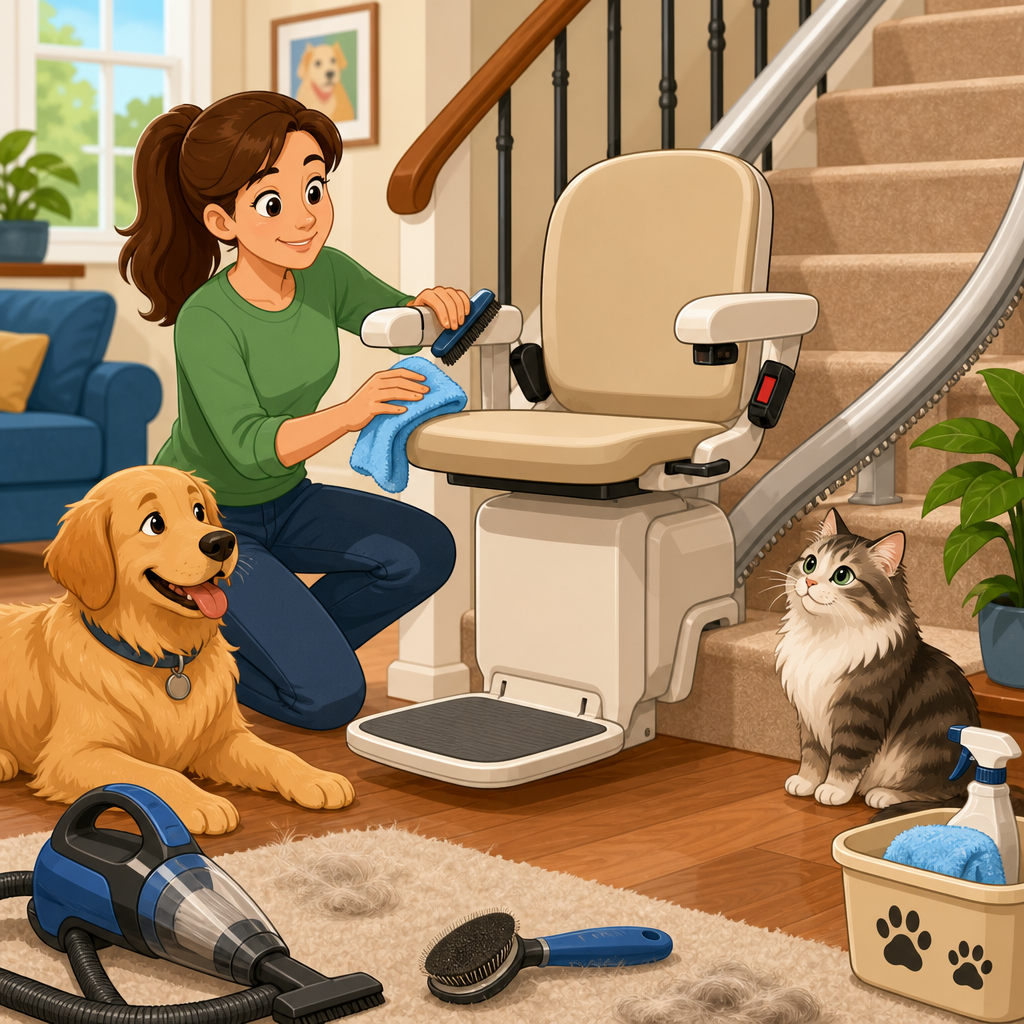
Users should stand clear of the moving chair and rail path while calling or sending. This sounds obvious, yet I have seen people lean over the track to grab the seat as it approaches, particularly on narrow stairs. It is safer to let the chair stop fully, then unfold the seat, armrests, and footrest if they were left up. In homes with pets, the bottom landing deserves special attention because small animals often rest near warm motors or in sunlit hallway spots where the footrest will travel.
For caregivers, the safest workflow is consistent: verify the path is clear, bring the lift to the user, confirm the seat is locked and the footrest area is unobstructed, complete the transfer, and then ride rather than sending an occupied chair remotely. Call-send is for moving the chair, not the person. That distinction should be explicit in every household safety routine.
Maintenance and Troubleshooting That Preserve Safety
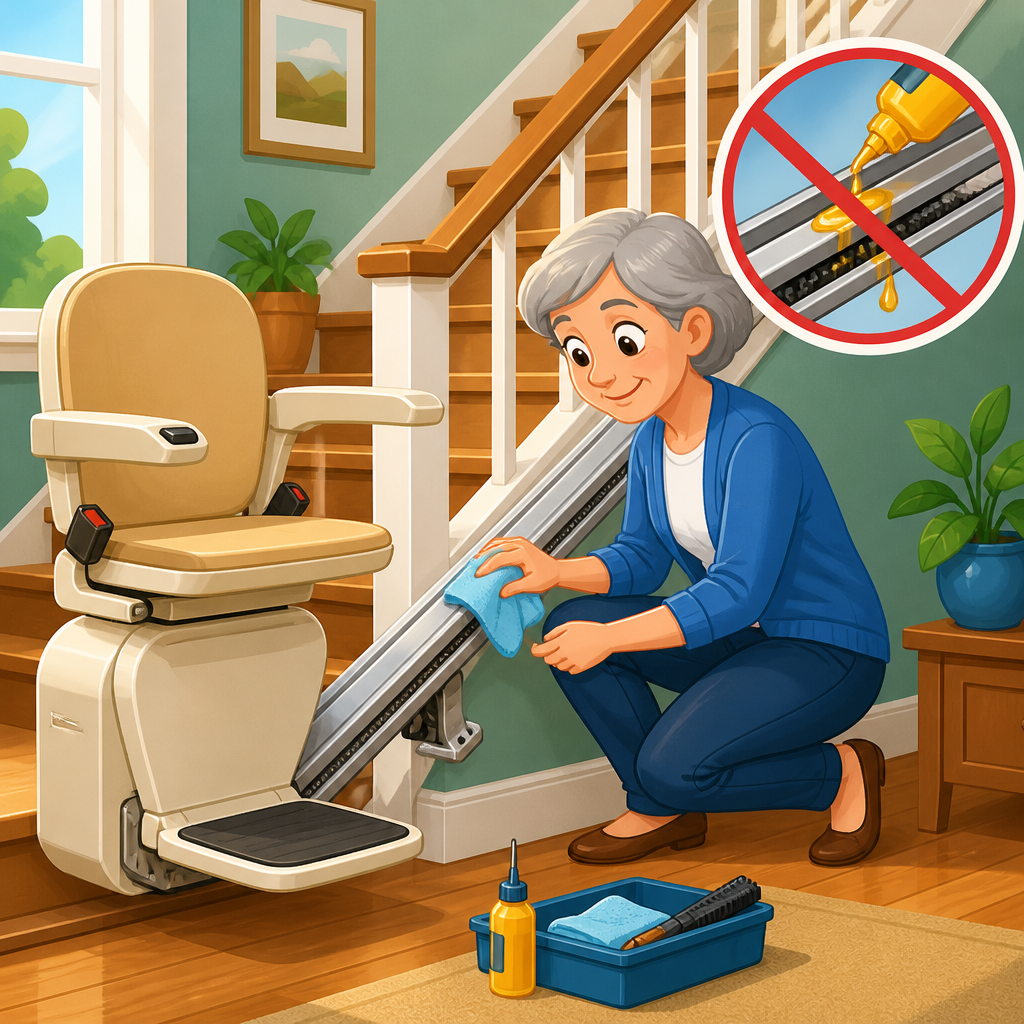
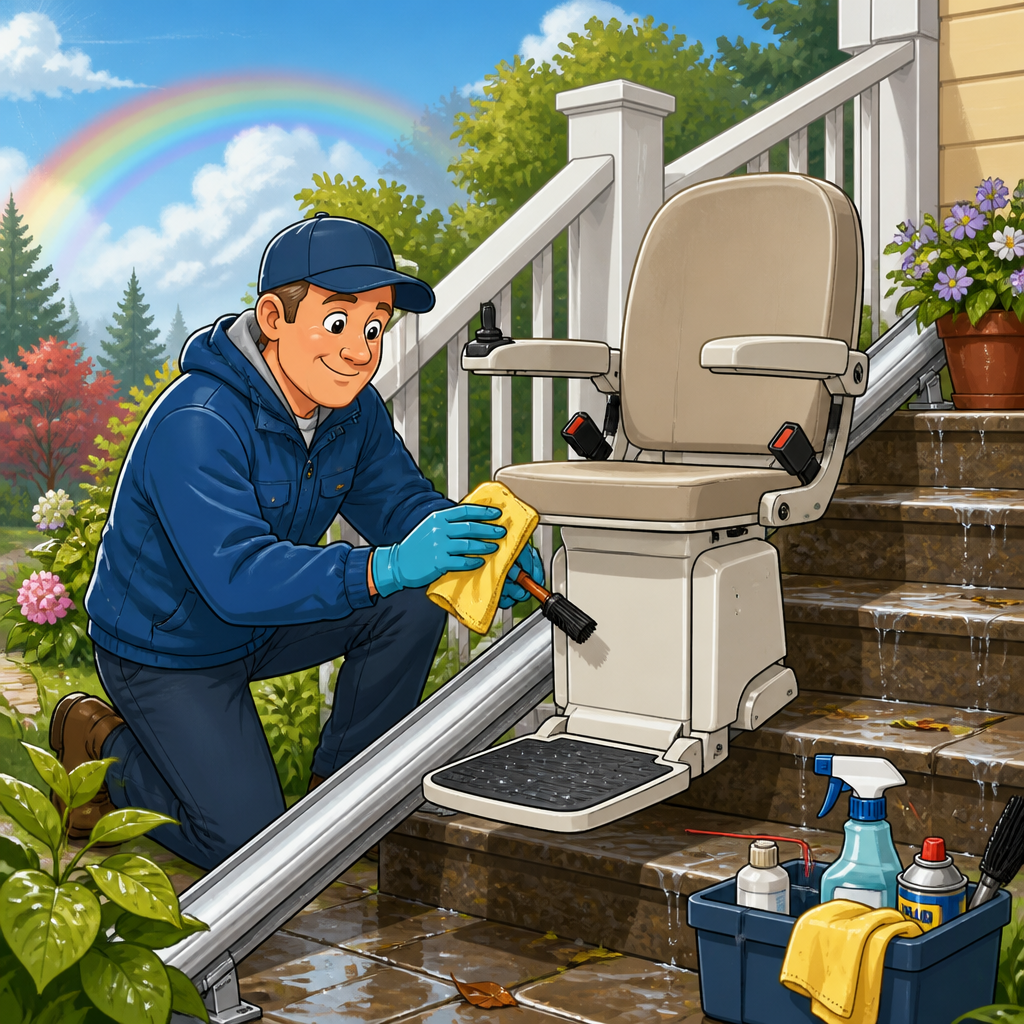
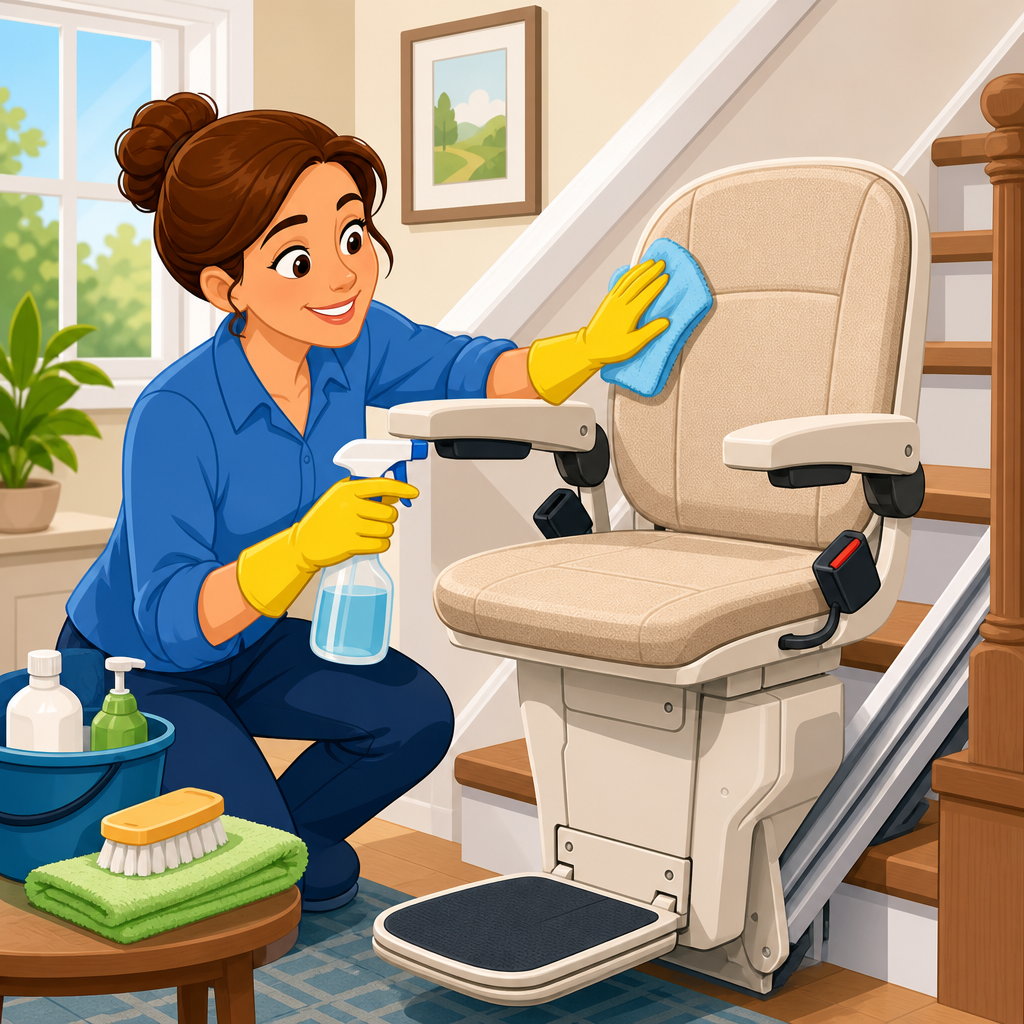
Reliable call-send operation depends on routine inspection more than most owners realize. Keep the rail clean and dry, but never grease it unless the manufacturer specifically requires a certain lubricant at a certain point. Many modern lifts use a geared drive on a rack or strip and do not want household oils collecting dust. Wipe exposed charge contacts carefully, check that remotes respond consistently, and test obstruction edges gently according to the manual. If the lift has diagnostic lights or fault codes, record them before resetting power.
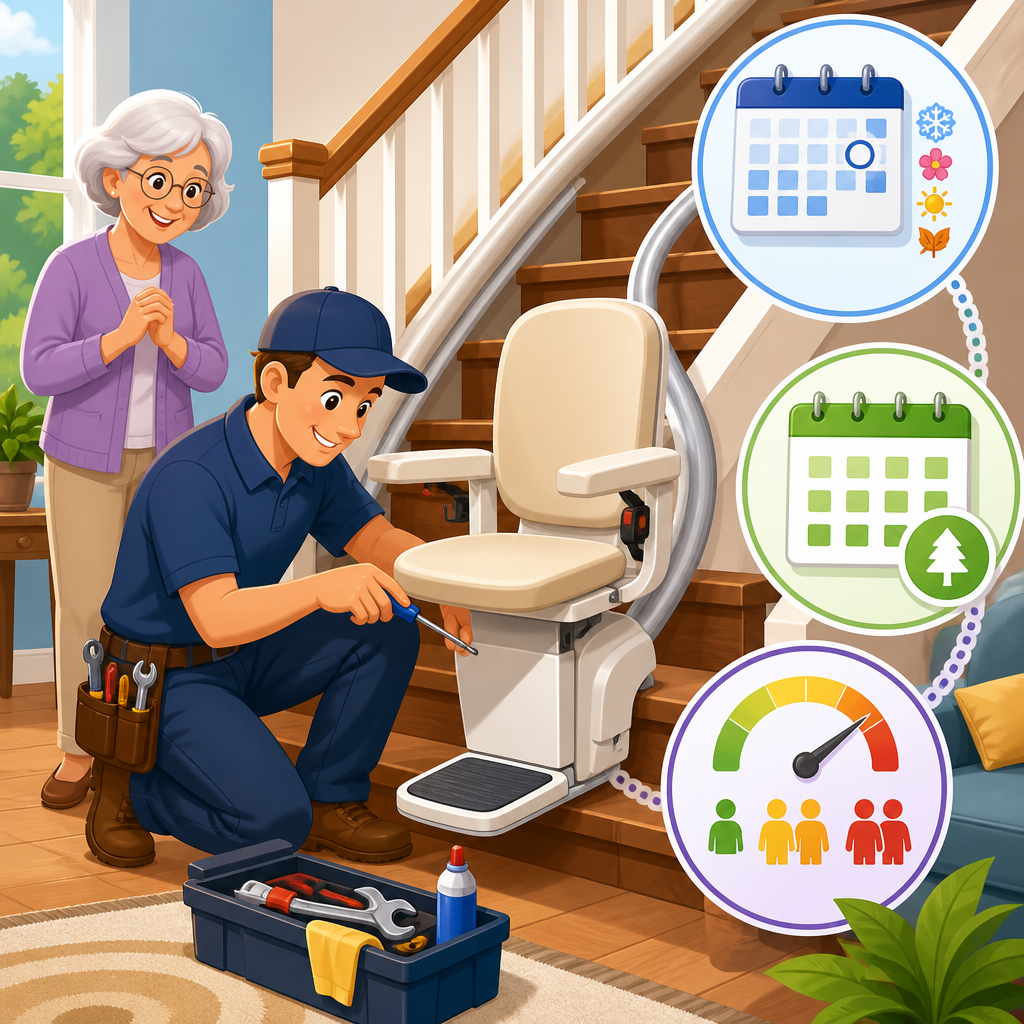
Several problems deserve professional service rather than home experimentation: repeated stopping in the same spot, visible cable damage, unusual grinding, battery swelling, brake faults, loose seat movement, and any situation where the lift bypasses an expected interlock. Owners should also schedule preventive maintenance at the interval recommended by the manufacturer or dealer, commonly once a year for typical residential use, sometimes more for high-cycle households. During a proper service visit, a technician checks travel limits, battery voltage under load, charger output, gear wear, seat switches, remote pairing, and rail alignment.
This hub page connects naturally to related topics under maintenance, troubleshooting, and safety: battery replacement timing, charger failures, beeping fault meanings, seat and swivel switch issues, footrest sensor testing, power hinge troubleshooting, and what to do after a household electrical outage. Understanding the safety features behind call-send controls gives readers a framework for all of those subjects.
Stair lift call-send controls are safe because they are not just remote buttons; they are part of a layered system that checks conditions before movement, monitors the chair during travel, and stops operation when something is wrong. The key protections are constant-pressure controls, seat and swivel interlocks, obstruction sensors, travel limits, battery and charging safeguards, and dependable braking. Together, these features make it practical to move a stair lift from another floor without a rider while keeping risk low.
For homeowners, the main takeaway is simple: treat call-send convenience as a safety feature that works best when the lift is maintained, charged, and used consistently. Keep the rail clear, park the chair on charge, replace remote batteries promptly, and do not ignore beeps or intermittent stops. For family members and caregivers, establish a clear landing routine so every user knows how the chair should be positioned before boarding. Small habits prevent most service calls and many avoidable hazards.
If your stair lift does not respond correctly to call-send commands, resists movement, or behaves differently than usual, stop using it until you identify the cause or have it inspected by a qualified technician. Review your owner’s manual, test only the basic checks the manufacturer permits, and schedule preventive service if it has been overdue. A well-maintained stair lift should answer a remote call predictably, stop precisely, and protect the user even when the chair is moving empty from another floor.
Frequently Asked Questions
What are stair lift call-send controls, and what do they actually do?
Stair lift call-send controls are simple devices that let you move the stair lift chair from one landing to the other without anyone sitting on it. In everyday use, that means a person downstairs can call the lift to their level, or someone upstairs can send it away after using it so the chair is parked out of sight. This function is especially useful in households where multiple people share the lift, where a caregiver is helping with transfers, or where the chair would otherwise block a hallway, doorway, or main living area.
Most systems use wall-mounted controls, handheld remotes, or both. When the button is pressed, the lift receives the command and travels along the rail in the requested direction. Although this sounds straightforward, the design behind it is intentionally safety-focused. Because the lift may be moving with no rider to supervise it, manufacturers build in safeguards that help prevent unintended operation, reduce collision risk, and make sure the lift responds only when conditions are normal and safe.
In short, call-send controls are not a separate accessory performing a different job from the stair lift itself. They are an integrated convenience and safety feature that improves access, coordination, and day-to-day usability. For many users, they quickly become one of the most important parts of owning a stair lift because they make the equipment available exactly where it is needed, when it is needed.
How can a stair lift move safely when nobody is sitting in it?
Stair lift call-send operation is made safe through a combination of low-speed travel, constant-pressure controls, onboard sensors, and automatic stopping systems. Unlike a person riding the chair and making real-time observations, an unattended moving lift has to rely on engineered protections. That is why reputable stair lifts are designed to travel at controlled speeds and stop immediately if the system detects a problem or obstruction along the route.
One of the most important protections is the obstruction or pressure sensor system, often located on the footrest and carriage. If the lift encounters an object on the stairs, along the rail, or at a landing, these sensors are intended to stop movement before the chair can continue pressing forward. This is a critical feature for homes where pets, shoes, baskets, or other everyday items may occasionally be left near the staircase. In many models, the lift will not resume travel until the obstacle is removed and the control is activated again.
Many units also use constant-pressure operation for call-send commands, meaning the button may need to be held continuously while the lift is traveling. This adds an extra layer of control because the movement stops when the button is released. Depending on the model, wireless controls may also be coded to the lift to reduce the chance of interference. Combined with seat position requirements, charging contact alignment, limit switches at each end of the rail, and battery-powered operation that remains stable even during a power outage, these systems are specifically designed so the chair can be moved remotely without compromising safety.
What safety features are involved in call-send controls specifically?
Call-send controls depend on several safety features working together rather than a single “remote safety” mechanism. First, the lift itself typically has final limit switches that define where the chair must stop at the top and bottom landings. These prevent overtravel and help ensure the chair parks in the correct position. Second, many lifts require that the seat, armrests, or footrest be in the proper travel configuration before the system will operate normally. This helps reduce the chance that part of the chair could catch on surrounding walls, trim, or objects during movement.
Another major component is the obstruction detection system. Safety edges or pressure-sensitive surfaces are commonly built into the footrest and carriage. If the chair meets resistance while moving, the lift is designed to cut power to the drive and stop. This is particularly important during call-send use because there may be no one on the chair to notice something in the path. The ability to stop quickly is not just a convenience feature; it is central to making remote travel practical in a real home environment.
Reliable communication is also part of safe operation. Wired wall switches or coded wireless remotes are intended to send clear directional commands to the lift. In higher-quality systems, the controls are purpose-built for the specific lift model, which helps maintain dependable performance. In addition, many stair lifts include lockable power switches or keys so unauthorized users, especially children, cannot operate the unit casually. When you put all of these elements together—travel limits, obstruction sensors, proper chair positioning, controlled speed, and restricted access—you get a call-send system that is designed to be both convenient and predictably safe.
Who benefits most from stair lift call-send controls in a shared home?
Call-send controls are especially valuable in homes where more than one person depends on the stair lift, but their usefulness goes beyond simply sharing equipment. A common example is when one user rides the lift upstairs and leaves it there, while another person later needs the chair downstairs. Without call-send controls, someone would have to return the lift manually or physically go to the other floor to retrieve it, which defeats much of the lift’s purpose. With the controls in place, the second user can bring the chair to their level independently.
Caregivers also benefit significantly. Before assisting with a transfer, a caregiver can position the chair at the appropriate landing so the user does not have to wait or stand unnecessarily. This can reduce awkward movement and help make boarding more organized and predictable. In homes where timing matters—for example, morning routines, medication schedules, or mobility assistance after bathing—being able to place the lift where it is needed can make a noticeable difference in safety and efficiency.
There is also a practical household benefit unrelated to mobility itself: parking the chair out of the main living space. In some homes, the bottom landing opens into an entryway, hallway, or family room where the parked chair may feel intrusive. Sending it to the opposite landing can keep walkways clearer and preserve the room’s appearance. For that reason, even households with a single primary stair lift user often consider call-send controls essential rather than optional. They improve independence, reduce delays, and help the lift fit more naturally into daily life.
What should homeowners do to keep call-send controls working safely and reliably?
Safe, reliable call-send operation starts with proper installation and continues with regular maintenance and smart daily habits. Homeowners should make sure the stair lift is installed by a qualified professional who follows the manufacturer’s setup requirements for the rail, charging points, controls, and safety systems. After installation, everyone who will use the lift should be shown exactly how the call-send function works, including whether the control must be pressed continuously, how the chair should be parked, and what to do if the lift stops unexpectedly.
It is also important to keep the staircase and landings clear. Because the chair may travel without a rider, users should make a habit of checking that there are no shoes, laundry baskets, pet items, or other objects in the path. Remotes and wall controls should be used only as intended, and children should not be allowed to play with them. If the model includes a key switch or lockout feature, using it can add another layer of control when appropriate. Homeowners should also avoid trying to bypass sensors or force the lift to move if it has stopped for safety reasons.
Routine service is equally important. Batteries, charging contacts, remotes, and safety edges should be inspected according to the manufacturer’s schedule. If the call-send controls become intermittent, the chair hesitates, or the lift stops more often than usual, that is a sign the system should be checked by a trained technician. Well-maintained stair lifts are generally very dependable, but like any mobility equipment, they perform best when small issues are addressed early. Consistent maintenance, proper user training, and a clear stairway are the key steps that keep call-send controls functioning safely from another floor.