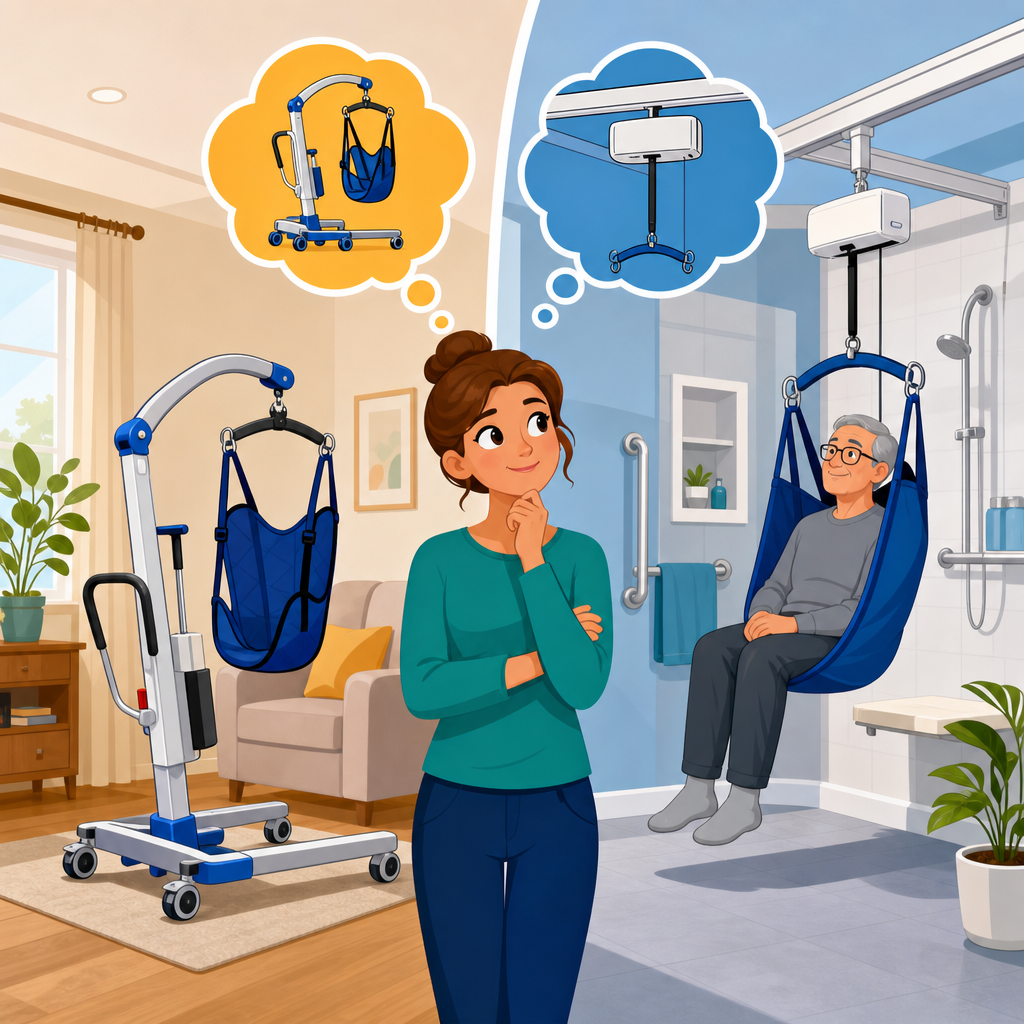
Choosing between portable and permanent lifts starts with understanding a simple truth: the best lift is not the one with the most features, but the one that matches the user, the building, and the way mobility needs change over time. In the chair lift types and designs category, this decision shapes safety, comfort, budget, installation complexity, and long-term independence. A portable lift is a mobility device designed to be moved, folded, rolled, or repositioned as needed rather than fixed permanently to a staircase, wall, or floor structure. A permanent lift is installed in a dedicated location, usually anchored to a stair system or structural surface, and intended for daily, repeated use in the same place. I have worked with families comparing these options after hospital discharge, during aging-in-place remodels, and when temporary injuries suddenly made stairs impossible. The same question appears every time: should you buy flexibility now or invest in a long-term accessibility solution? The answer depends on user strength, transfer ability, caregiver support, travel frequency, property restrictions, and how likely the condition is to progress. This matters because the wrong choice can create avoidable risk. A portable device may be affordable and convenient, yet still fail if the user cannot safely transfer into it. A permanent system may deliver excellent reliability, yet become an unnecessary expense if the need lasts only a few months. Portable lifts deserve special attention because they cover several different products, from lightweight stair climbing chairs used with caregiver assistance to mobile patient lifts and compact transfer devices. They are often grouped together casually, but their use cases are very different. Understanding those differences is the fastest way to choose correctly.
What Portable Lifts Include and Where They Fit Best
Portable lifts are best defined by mobility and temporary deployment, not by one single mechanism. In practice, this category includes portable stair climbing chairs, folding transfer lifts, mobile patient lifts with casters, battery-powered sit-to-stand devices, and travel-friendly lifting aids designed to go in a vehicle or move room to room. Some are intended specifically for stairs. Others are designed for level surfaces but are considered portable because they can be repositioned. In chair lift planning, the most relevant portable option is the stair climbing chair, a device that allows a caregiver to move a seated passenger up or down stairs using tracks, powered treads, or controlled wheel systems. Brands and designs vary, but the operational principle is consistent: the lift is brought to the user instead of being fixed to the staircase.
Portable lifts fit best when the environment is not stable enough for permanent installation or when the user’s needs are still being assessed. I commonly recommend them during post-surgical recovery, after a stroke when prognosis is still unclear, in rental properties where drilling is restricted, and for families who split time between multiple homes. They also matter in emergency planning. A building may have an elevator for daily use, yet still need a portable evacuation chair for stair descent during power loss or fire alarm conditions. This is one reason facilities managers treat portable stair chairs as a separate safety tool rather than a substitute for a residential stair lift.
The strongest advantage of portable lifts is flexibility. A stair climbing chair can serve several staircases rather than one track. A mobile patient lift can help with bed, toilet, and chair transfers in different rooms. If the user travels, the device may go with them. That flexibility often reduces immediate cost and avoids construction. The tradeoff is that portable lifts usually depend more heavily on caregiver technique, battery management, storage space, and repeated setup. They are rarely a true hands-free solution for an independent user.
How Permanent Lifts Differ in Safety, Performance, and Daily Use
Permanent lifts include straight stair lifts, curved stair lifts, platform lifts, and other fixed accessibility systems installed for repeated use in a dedicated location. A chair lift mounted to stair treads or a rail provides a predictable path, integrated safety sensors, seat belts, call stations, and constant readiness. In homes with one daily staircase barrier, a permanent stair lift is usually the most practical long-term answer because it minimizes transfer complexity and reduces reliance on another person. Once installed correctly, operation becomes simple: sit, fasten the belt, use the control, and ride.
From a safety standpoint, permanent lifts usually outperform portable alternatives for routine independent use. The rail is fixed, the slope is known, the seat geometry is consistent, and modern units include obstruction sensors, swivel seats, footrests, overspeed governors, battery backup, and charging points at rail ends. Reputable manufacturers design to established safety expectations, and installers evaluate stair width, landing clearance, headroom, and weight capacity before approval. In contrast, a portable stair climbing chair may work very well, but only when the stair dimensions, user weight, center of gravity, and caregiver handling all align.
Performance also differs in frequency of use. If someone will ride several times a day for years, permanent installation generally delivers better usability and lower physical strain for everyone involved. Portable lifts can absolutely be durable, but they are more operationally demanding. They must be unfolded, positioned, charged, and guided correctly each time. For a spouse in their seventies assisting another spouse, that difference is decisive. I have seen families begin with a portable unit because the purchase felt reversible, then switch to a permanent stair lift once they realized the burden of repeated manual handling.
Key Decision Factors: User Ability, Stair Design, Time Horizon, and Budget
The cleanest way to choose between portable and permanent lifts is to evaluate four variables in order: user ability, staircase design, expected duration of need, and full-life cost. User ability comes first because every other feature is irrelevant if transfers are unsafe. Can the person sit upright without support? Can they tolerate knee flexion? Can they follow instructions? Do they panic on stairs? Are they partially weight-bearing or fully dependent? A portable stair chair often works for a cooperative passenger with adequate trunk control and a trained helper. A fixed stair lift suits a user who can transfer on and off the seat with limited assistance. A full mobile patient lift may be required if standing transfers are not safe at all.
Stair design is the second filter. Straight staircases are easiest for permanent chair lifts and typically less expensive than curved configurations. Narrow stairs, multiple landings, spiral geometry, and exterior exposure can eliminate some options or raise cost sharply. Portable stair climbing chairs can sometimes handle staircases where a permanent track would be difficult, but only if tread depth, landing space, and turning radius permit safe operation. The device specifications must match the built environment exactly. I always tell clients to measure twice and then confirm with the manufacturer or dealer, because a small mismatch in landing clearance can make a portable device unusable.
Duration of need changes the economics. For a six-week recovery, renting or buying a portable solution may be sensible. For progressive conditions such as Parkinson’s disease, multiple sclerosis, or severe osteoarthritis, a permanent lift usually becomes more cost-effective because it is used constantly. Budget should include not just purchase price, but accessories, batteries, maintenance, service response time, training, and resale value. A cheap device that sits unused because it is hard to operate is not affordable in any meaningful sense.
Portable Lift Comparison: Common Types, Best Uses, and Limits
| Portable lift type | Best use | Main advantage | Key limitation |
|---|---|---|---|
| Portable stair climbing chair | Moving a seated person up or down stairs with caregiver help | No rail installation; can serve multiple staircases | Usually not independent; requires training and landing space |
| Mobile patient lift | Bed, chair, or toileting transfers on level floors | Handles higher assistance needs safely | Not designed to travel on stairs |
| Sit-to-stand lift | Assisting users who can bear some weight | Supports active participation in transfers | Unsuitable for fully dependent users |
| Folding transfer lift | Travel, temporary setups, small homes | Easier storage and transport | Lower capacity or fewer positioning options in some models |
| Evacuation chair | Emergency stair descent | Critical for disaster planning and multi-story buildings | Not a daily accessibility substitute |
This comparison shows why “portable lift” can be misleading if treated as one product. A mobile patient lift from Invacare, Joerns, or Drive DeVilbiss solves transfer problems in a bedroom, but it does not replace a stair lift. A powered stair chair from a specialist mobility brand may solve stair access, but it still requires a capable operator. An evacuation chair fulfills life-safety requirements, yet should not be marketed as routine mobility equipment. Matching the product to the exact mobility task is the central buying rule.
When Portable Lifts Are the Better Choice
Portable lifts are the better choice when flexibility outweighs automation. That typically happens in six scenarios. First, the mobility need is temporary, such as recovery after joint replacement or injury. Second, the user moves between locations, including travel, seasonal homes, or shared caregiving arrangements. Third, the property cannot accept a permanent installation because of lease restrictions, historic preservation concerns, or pending renovation. Fourth, one device must cover several users or staircases. Fifth, emergency preparedness is part of the goal. Sixth, the family needs time to observe how a condition progresses before committing to a fixed system.
They also make sense when a permanent stair lift would not be used often enough to justify installation. Consider an older parent visiting adult children for holidays. A portable stair climbing chair may allow safe access during visits without changing the house permanently. Another example is a rehabilitation period following spinal surgery. During the first phase, caregivers may use a portable transfer lift on the main floor and a stair chair only for medical appointments or necessary level changes. Once function improves, the equipment can be sold, stored, or reassigned.
The limitation is that good outcomes depend on process. Portable lifts require competency checks, battery discipline, and realistic expectations. If no caregiver can safely maneuver the device, the theoretical savings disappear. In my experience, the best portable lift purchases happen when the family has already practiced transfers with a therapist, confirmed space measurements, and chosen a model with support, parts availability, and clear training materials.
When Permanent Lifts Are Worth the Investment
Permanent lifts are worth the investment when stairs are a daily barrier and the user needs predictable, repeatable access with minimal setup. If someone intends to age in place, a fixed stair lift often becomes the centerpiece of the home accessibility plan. It allows continued use of bedrooms, bathrooms, and laundry areas without relocating the entire living arrangement to one floor. For users with chronic conditions, the reduction in fatigue and fall risk can be immediate. Caregivers benefit too, because they no longer have to assist on stairs manually.
Permanent lifts are also preferable when independence is the priority. A user who can transfer onto the chair but cannot manage a portable stair device alone will usually gain much more from a fixed rail system. This is especially true for narrow routines repeated every day, such as morning bathroom access or evening bedroom access. Another advantage is resale and serviceability within established dealer networks. Major stair lift brands commonly offer local installation, maintenance plans, diagnostic support, and replacement parts over many years.
The main constraints are cost, property suitability, and commitment. Curved stair lifts are significantly more expensive than straight models because the rail is custom fabricated to staircase geometry. Exterior installations need weather-resistant components. Some homes still require additional modifications at landings or transfer points. Even so, if the need is ongoing and the layout will not change, permanent lifts usually provide the most reliable return on investment.
How to Make the Final Choice and Avoid Common Buying Mistakes
The most reliable buying process is straightforward. Start with a clinical assessment from an occupational therapist or qualified mobility professional. Then document the actual tasks: stair ascent, descent, bed transfer, toilet transfer, vehicle loading, or emergency evacuation. Measure stair width, tread depth, landing length, door swing, and storage area. Confirm user weight, seated height, trunk stability, and transfer method. Ask whether the equipment must support independent use or assisted use. Only after those steps should you compare brands and prices.
The biggest mistakes are choosing by category labels alone, ignoring caregiver burden, and underestimating progression. Buyers also overlook charging habits, replacement battery cost, and service access in rural areas. Another common error is assuming a portable stair device is safer because it avoids installation. In reality, safety depends on fit, training, and frequency of use. Permanent stair lifts should be installed by qualified technicians, while portable devices should come with hands-on instruction and manufacturer-approved operating procedures. For this portable lifts hub, that is the core lesson: portability is an advantage only when it matches the real use case. If your goal is adaptable access across changing spaces, a portable lift may be the smartest option. If your goal is simple daily independence on one staircase, a permanent lift is usually the better choice. Compare your needs honestly, request a professional assessment, and use that evidence to choose with confidence.
Frequently Asked Questions
1. What is the main difference between a portable lift and a permanent lift?
The main difference is how the lift is installed and used over time. A portable lift is designed to be moved, repositioned, folded, rolled, or transported when needed. It is not permanently attached to the home or building structure in the same way a fixed system is. A permanent lift, by contrast, is installed in a dedicated location and becomes part of the property’s accessibility setup. This could include stair lifts, vertical platform lifts, or other mounted mobility solutions intended for long-term daily use.
That distinction affects almost every practical decision. Portable lifts are often attractive for people who need flexibility, live in temporary housing, travel often, or want a lower-commitment option while mobility needs are still changing. Permanent lifts usually offer greater stability, smoother operation, higher convenience for regular use, and a more customized fit for a specific staircase, entryway, or floor transition. In many cases, the best choice comes down to whether the user needs adaptability or a dedicated long-term accessibility solution.
It is also important to think beyond the product itself. A lift should match the user’s physical abilities, the layout of the building, caregiver involvement, and likely future mobility changes. Someone recovering from surgery may benefit from a portable option during a short-term period, while a person managing a progressive condition may be better served by a permanent lift that supports independence day after day. In other words, the right lift is not simply the most advanced model; it is the one that best aligns with real-life use.
2. How do I know whether a portable lift is the better choice for my situation?
A portable lift is often the better choice when flexibility is the top priority. If the user does not need the same lift in the same place every day, portability can be a major advantage. This is especially true in rental homes, multi-use spaces, temporary rehabilitation situations, or households where the lift may need to serve more than one area. Portable models can also make sense when a family wants to avoid structural modifications or is not yet ready to invest in a permanent installation.
Portable lifts can be useful for changing circumstances. If a person’s mobility needs are still being assessed, a moveable option may provide support now without locking the household into a long-term setup too early. They may also be easier to bring into settings where permanent construction is not possible, such as short-term residences, vacation properties, or shared family homes. For some users, the ability to store the unit when not in use is another practical benefit, particularly in homes where space is limited.
That said, portable does not automatically mean easier in every respect. Some portable lifts require more hands-on setup, positioning, charging, or caregiver assistance. They may not deliver the same seamless daily convenience as a fixed system, particularly for users who need frequent transfers or independent operation. Before choosing a portable model, it helps to ask realistic questions: Who will move it? How often will it be used? Does the user have the strength, balance, and coordination to use it safely? Is the floor plan suitable for maneuvering it where needed? If those answers support flexibility over permanence, a portable lift may be the right fit.
3. When is a permanent lift usually the smarter long-term investment?
A permanent lift is usually the smarter long-term investment when mobility needs are ongoing, predictable, and closely tied to a specific part of the home or building. If a person uses the stairs multiple times a day, needs reliable access between floors, or wants a more effortless daily routine, a fixed lift often delivers better long-term value. Although the upfront cost may be higher, permanent systems are typically designed for repeated everyday use and can reduce physical strain, improve safety, and support greater independence over many years.
Permanent lifts are also often the better option when the home is expected to remain the user’s primary residence. In that situation, customizing the lift to the staircase, landing, entryway, or elevation change can make a meaningful difference in comfort and usability. A properly installed permanent system may offer smoother starts and stops, better weight capacity, integrated safety features, and controls positioned specifically for the user. This level of fit can be especially important for older adults, individuals with significant mobility limitations, or people whose conditions are expected to progress.
Another reason permanent lifts can make financial sense is that they may reduce the need for repeated short-term solutions. A family that cycles through temporary equipment, makes partial workarounds, or depends heavily on caregiver assistance may eventually spend more than they would have on a durable installed lift. In addition, a permanent system may contribute to aging in place by making the home safer and more accessible without requiring a move. The smartest long-term investment is not always the cheapest at the start; it is the option that continues to meet the user’s needs reliably, comfortably, and safely over time.
4. What safety and installation factors should I compare before making a decision?
Safety and installation should be central to the decision, because a lift that is convenient but poorly matched to the building or user can create serious problems. Start by evaluating the physical environment. Consider stair width, landing size, doorway clearances, floor surfaces, available power supply, and whether the structure can accommodate a permanent installation. Portable lifts need enough room to be positioned and operated safely, while permanent lifts require a proper mounting location and professional assessment to ensure code compliance and dependable performance.
Next, compare the safety features of each option. Important features may include seat belts or harnesses, emergency stop controls, backup battery systems, obstruction sensors, locking mechanisms, anti-slip platforms, swivel seats, and easy-to-reach controls. The right features depend on the user’s strength, balance, cognition, and transfer ability. For example, someone who can sit steadily and operate controls independently may have different needs than someone who requires caregiver assistance for every transfer. A safe lift is one that supports the user’s actual abilities, not one that assumes a higher level of independence than the person has.
Installation complexity also matters because it affects cost, timing, and long-term reliability. Permanent lifts usually require professional installation and may involve measuring, customization, electrical planning, and periodic maintenance. Portable lifts may seem simpler, but they still need proper setup and user training to avoid misuse. It is wise to consult a qualified dealer, installer, occupational therapist, or accessibility specialist before making a final decision. A thorough evaluation can help identify issues that are easy to overlook, such as turning radius, transfer space, emergency access, or how the lift will function if the user’s condition changes. In accessibility decisions, safety is not a small detail; it is the foundation of everything else.
5. How should budget, future needs, and independence influence the final choice?
Budget matters, but it should be viewed in the broader context of future needs and quality of life. A lower-cost lift can be appealing, especially if the need is temporary or uncertain, but the least expensive option is not always the most economical in the long run. Consider not only the purchase price, but also installation costs, maintenance, repairs, battery replacement, caregiver time, and whether the lift may need to be replaced as needs evolve. A lift that works well for six months but becomes limiting after a year may not be the strongest value.
Future needs deserve serious attention because mobility rarely stays exactly the same forever. If the user’s condition is expected to improve, a portable lift may offer enough support without overcommitting. If mobility is likely to decline, a permanent lift may provide a more stable path toward continued independence. Think about how the person moves today, how they may move in one to three years, and whether they are likely to need more support with transfers, standing, balance, or stair use. Planning ahead can help avoid repeated purchases and reduce disruptions later.
Independence is often the deciding factor. The right lift should help the user move more safely and confidently with as little unnecessary assistance as possible. For some people, independence means having a portable device that can go where they go. For others, it means pressing a button and using a permanent lift every day without needing someone to reposition equipment or supervise each step. When comparing options, ask which solution will best preserve dignity, safety, comfort, and routine over time. The best decision is usually the one that supports both present needs and future stability, while fitting realistically within the home environment and budget.