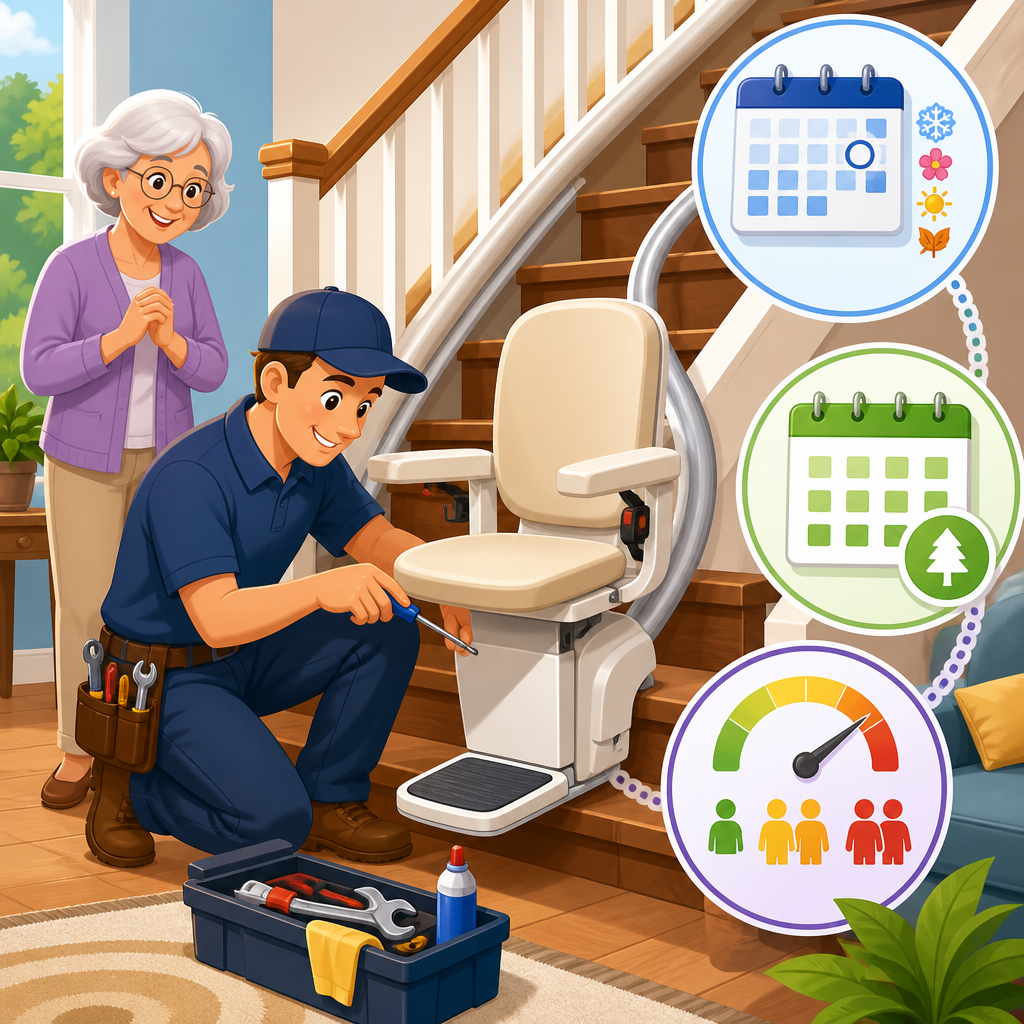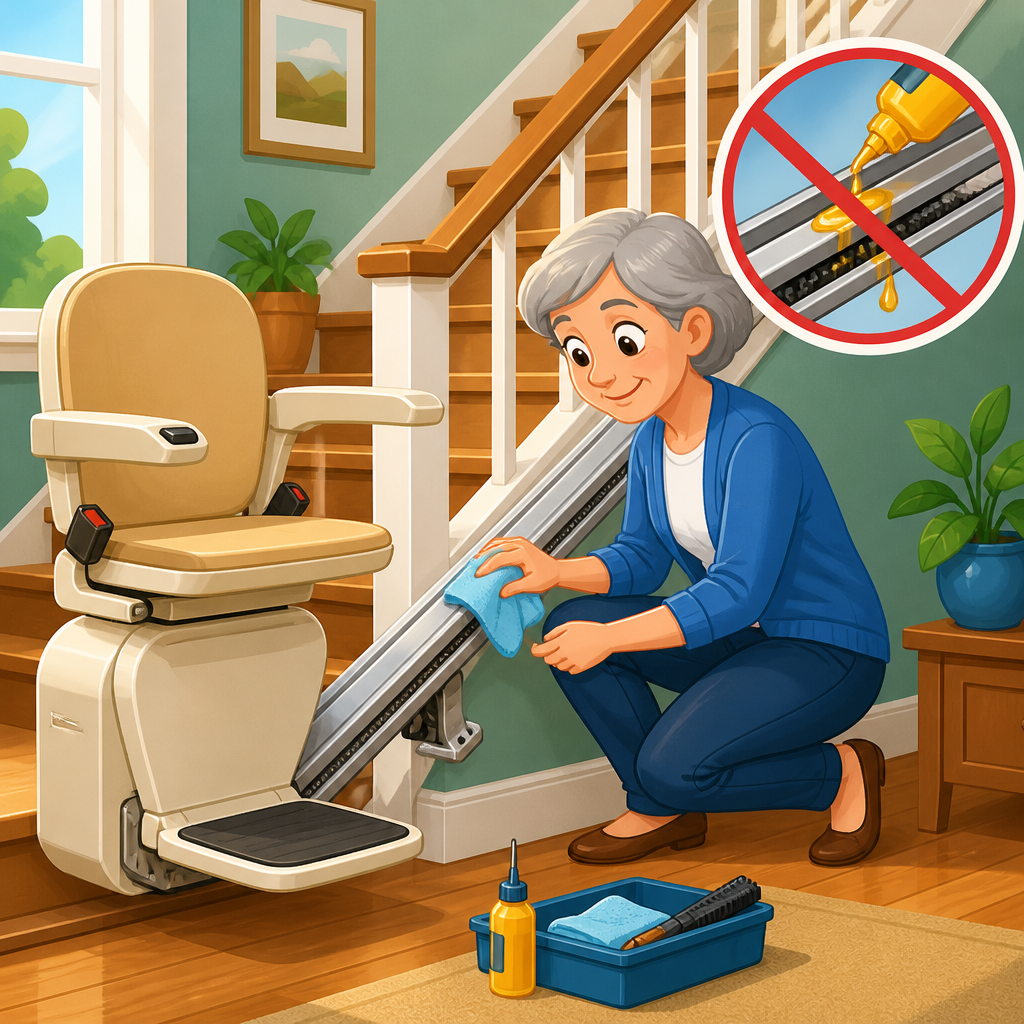
A stair lift rail works hardest when it is least noticed. It guides the carriage, supports smooth travel, and helps the motor and transmission deliver safe, controlled movement on every trip. When homeowners ask me why their stair lift suddenly feels noisy, jerky, or slow, the cause is often not neglect alone. Just as often, it is over-lubrication. Too much grease attracts dust, thickens around the gear rack, and creates drag that interferes with reliable operation. Learning how to maintain a stair lift rail without over-lubricating it is one of the most practical ways to extend equipment life, reduce service calls, and improve safety.
In simple terms, the rail is the fixed track attached to the stairs, while the carriage is the moving assembly that carries the seat up and down. Most modern stair lifts use a geared drive system, commonly a rack-and-pinion arrangement, although cable and drum systems exist in some models. The rail itself is not always meant to be coated in heavy lubricant. Manufacturers typically specify exactly where lubrication is allowed, what product type is approved, and how often cleaning should occur. Following those instructions matters because stair lifts are medical mobility devices, not general household hardware. A method that seems harmless on a garage door track can be wrong for a stair lift.
This topic matters because routine maintenance directly affects user confidence and fall prevention. A stair lift with a dirty or sticky rail may stop unexpectedly, trigger fault codes, or wear components prematurely. It can also leave vulnerable users stranded between floors. Good maintenance is not complicated, but it does require discipline: clean the rail correctly, inspect high-wear points, watch for changes in sound or travel speed, and avoid the instinct to solve every issue with more lubricant. The goal is controlled, manufacturer-aligned care that keeps the lift dependable between professional service visits. As the hub for routine maintenance tips, this guide explains what to clean, what to inspect, what to leave alone, and when to call a technician.
Understand how a stair lift rail is designed to work
Before cleaning anything, it helps to understand what you are looking at. On most straight stair lifts, the visible rail is aluminum or steel, and a geared strip or internal drive surface allows the carriage to move in a controlled path. The rollers, transmission, and motor are engineered to operate with specific tolerances. In field service, I have repeatedly seen well-meaning owners spray silicone, white lithium grease, or even penetrating oil along the full rail. That usually creates a film that collects pet hair, lint, carpet fibers, and grit. Once contamination builds up, the carriage can chatter, the ride becomes rougher, and diagnostic sensors may read inconsistent movement.
The key point is that the rail surface and the drive mechanism are not always serviced the same way. Some manufacturers want the exposed rail wiped clean and dry. Others specify a light application of lubricant only on the gear rack, not on the entire rail body. Still others use self-lubricating components and warn against homeowner lubrication altogether. Brands such as Bruno, Handicare, Harmar, and Stannah each provide model-specific instructions, and the owner’s manual is the first authority. If the manual says clean only, follow that. If it calls for a small amount of approved lubricant at set intervals, use only that amount and product.
Clean first, lubricate second if the manufacturer allows it
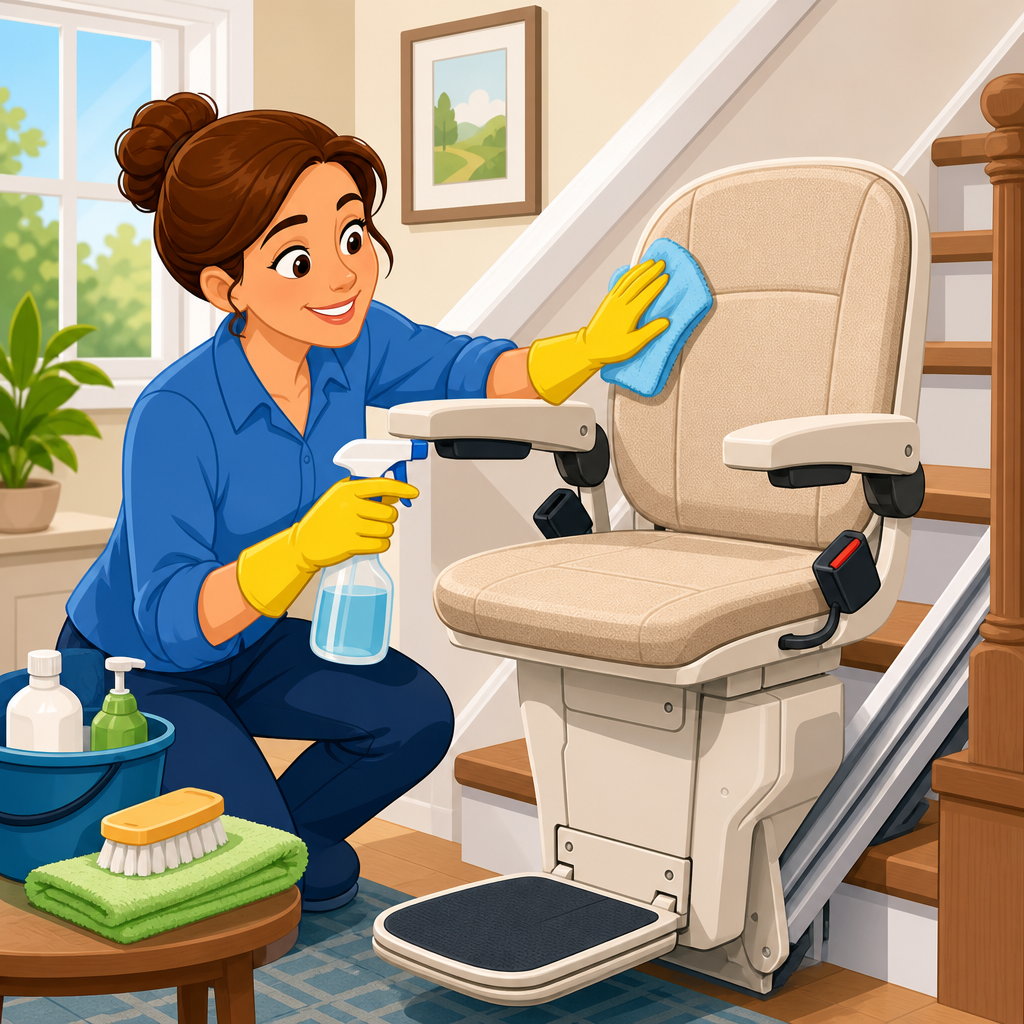
The best stair lift rail maintenance routine starts with cleaning, because many symptoms that look like dryness are actually contamination. Turn off the unit using the keyed switch or power switch, park it where you can access the rail safely, and if your manual recommends it, disconnect charging or battery power before close inspection. Use a soft, lint-free cloth to wipe the rail from top landing to bottom landing. For stubborn dirt, a slightly damp cloth is usually enough, but never let water drip into electrical housings, charge points, call stations, or the carriage. Avoid abrasive pads, degreasers, and household solvents unless the manufacturer explicitly approves them.
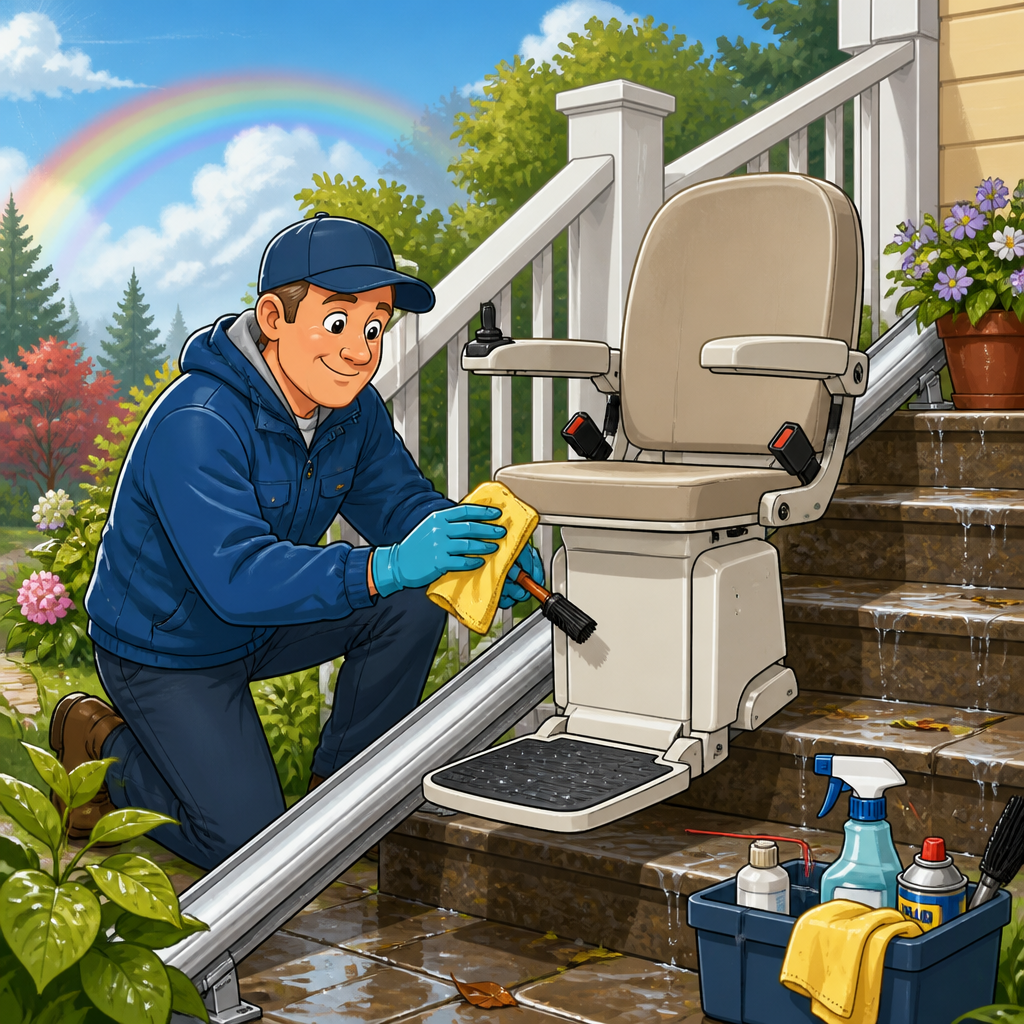
Once the rail is clean, inspect the gear rack, seams, and mounting brackets. If you see clumped grease, dark sludge, or trapped dust, remove it carefully rather than covering it with fresh lubricant. A nylon brush can help loosen buildup around teeth on a rack-and-pinion system. On outdoor stair lifts, pollen, insect debris, and oxidation are common, so cleaning frequency should be higher. After cleaning, assess whether lubrication is actually required. If the manual does not call for it, stop there. If the manual does call for it, apply a very thin, targeted amount only where specified. More is not better; a light film is sufficient for most approved applications.
Routine maintenance checks every owner should perform
Effective stair lift maintenance is broader than the rail alone. A reliable monthly routine helps you catch small problems before they become service issues. During home visits, I tell owners to build a short checklist and follow it consistently instead of reacting only when the lift sounds different. The rail is one part of a system that includes batteries, charging contacts, seat swivels, footrest safety edges, remote controls, and track overruns. Any of these can affect performance and may be misdiagnosed as a rail problem if they are ignored.
| Task | Recommended Frequency | What to Look For | Why It Matters |
|---|---|---|---|
| Wipe rail with lint-free cloth | Monthly | Dust, hair, sticky residue, old grease | Reduces drag and contamination on moving parts |
| Inspect gear rack or drive surface | Monthly | Buildup, damaged teeth, uneven residue | Prevents rough travel and premature wear |
| Check charging points | Monthly | Corrosion, misalignment, dirt | Supports battery charging and avoids shutdowns |
| Test seat, footrest, and arm functions | Monthly | Loose movement, failed latches, obstruction sensors | Confirms safe boarding and travel |
| Listen during a full travel cycle | Monthly | Grinding, clicking, new vibration, speed changes | Identifies early mechanical or alignment issues |
| Schedule professional service | Annually or per manual | Battery health, gearbox condition, fastener torque | Catches issues owners should not service themselves |
These simple checks answer the most common maintenance questions. How often should a stair lift rail be cleaned? Monthly is a good baseline indoors, with more frequent attention in high-dust homes or homes with pets. Should you grease a stair lift rail every time you clean it? No. Cleaning and lubricating are separate actions, and many rails need only cleaning. What if the lift becomes noisy after lubrication? Excess product may be trapping debris, and the rail may need to be cleaned back to specification.
How to avoid over-lubrication and the problems it causes
Over-lubrication is harmful because it changes the operating environment of the rail. Thick or excessive lubricant acts like a magnet for airborne debris. That debris mixes into an abrasive paste, which can accelerate wear on gear teeth, rollers, and bearings. It can also migrate onto charge strips or limit sensors. I have seen stair lifts fail to charge simply because overspray coated nearby contacts. In other cases, extra grease dripped onto stair treads, creating a slip hazard for everyone using the staircase. That risk alone is reason to be conservative.
The practical rule is to use the minimum amount specified by the manufacturer, in the exact location specified, at the interval specified. If your manual lists a proprietary lubricant, use it. If it allows an equivalent, match the formulation rather than substituting casually. Penetrating oils such as WD-40 are not a general stair lift lubricant. They can displace moisture temporarily, but they are not a long-term solution for rails and may leave residues that attract dirt. Greases also vary widely in viscosity and compatibility with plastics, seals, and coatings. Using the wrong one can damage components slowly and void warranty coverage.
If a previous owner or caregiver has already over-lubricated the rail, do not keep adding product. Clean off the excess methodically using the procedure in the manual. If the buildup is heavy, or if you are unsure whether residue has entered the transmission area, book a qualified service technician. A professional can clean the drive system, inspect roller wear, verify carriage alignment, and check whether sensors or charging contacts were contaminated. That is far less expensive than replacing damaged drive parts.
Warning signs that point to cleaning, adjustment, or service
A well-maintained stair lift usually gives warning signs before a complete failure. Jerky starts, squealing, intermittent beeping, inconsistent stopping points, or a visible layer of black residue on the rack all deserve attention. Not every symptom means the rail needs lubrication. A weak battery can cause slow travel. A misaligned charge point can trigger parking issues. Loose mounting brackets can create rattling noises that owners mistake for dry rails. This is why observation matters more than guesswork.
One useful habit is to ride the lift through a full cycle once a month while listening carefully. Notice whether the sound changes in the same part of the staircase every time. A repeatable noise near one joint or bracket often suggests localized debris or a mounting issue. If the seat vibrates only near the bottom overrun, inspect that section for dirt accumulation, minor impact damage, or a loose fixing. If the whole trip sounds strained, especially on battery-powered units, check whether the lift is charging properly at its parked position before focusing on the rail.
Call for service immediately if the lift stops repeatedly, displays fault codes you cannot clear according to the manual, shows damaged gear teeth, leaks from enclosed mechanical housings, or has become unstable at the seat or footrest. Routine maintenance should support reliability, but it should never turn into amateur repair. Owners can clean, inspect, and test basic functions safely. Gearbox work, wiring, and carriage disassembly belong to trained technicians.
Build a maintenance plan that supports long-term safety
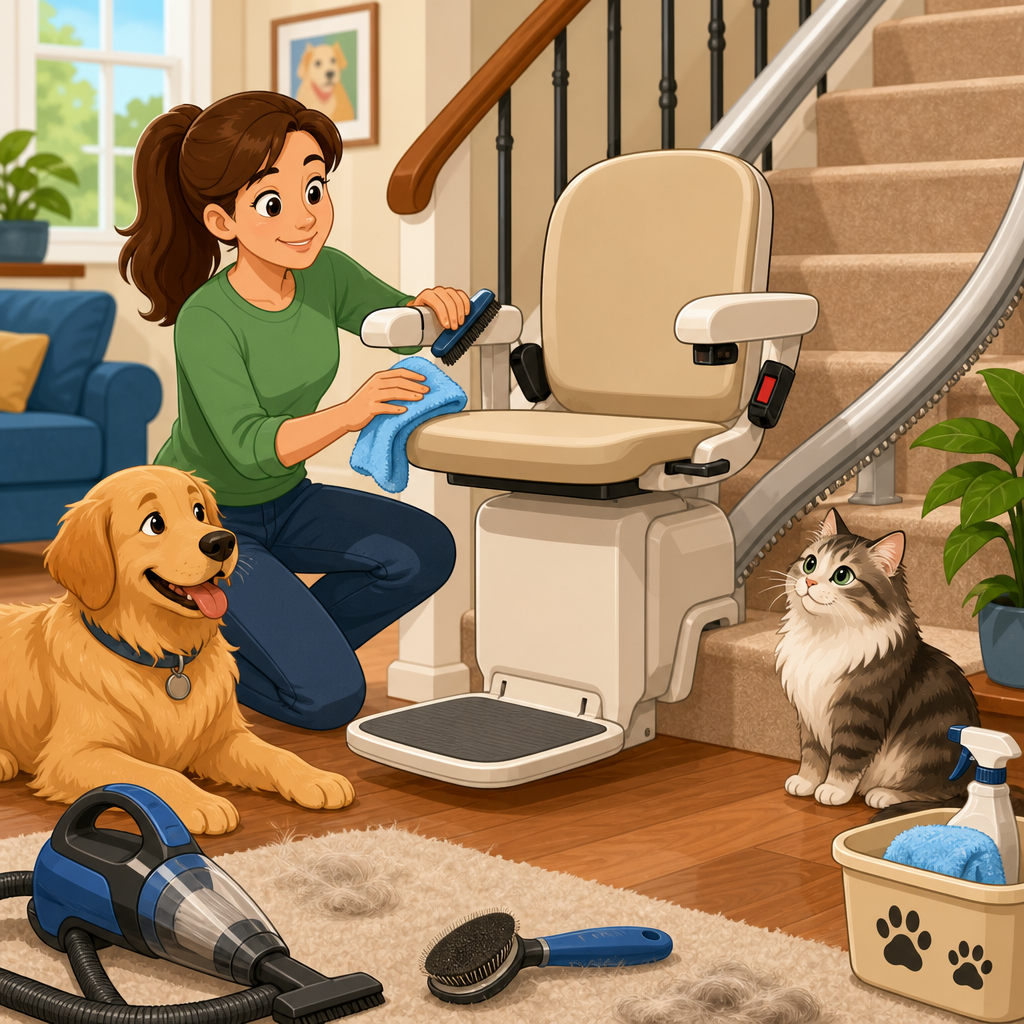
The most effective routine maintenance plan is simple enough to repeat. Keep a cloth near the staircase, note the model number, store the owner’s manual where caregivers can find it, and write down service dates. If multiple family members use the lift, ask them to report changes immediately instead of assuming someone else noticed. In homes with pets, vacuuming the stairs and rail area regularly reduces hair migration onto the track. In coastal or humid regions, pay closer attention to corrosion on exposed metal and charge contacts. For outdoor lifts, use the cover consistently and inspect after storms.
Annual professional service remains essential even when the stair lift appears to run well. A trained technician can measure battery output under load, inspect the final drive, check fastener torque, verify safety circuits, and confirm that lubrication levels match factory guidance. That combination of owner care and scheduled service is what keeps a stair lift dependable without over-lubricating the rail. Start with cleaning, follow the manual exactly, and treat new noise or residue as a signal to inspect rather than spray. If you want fewer breakdowns, longer component life, and safer daily use, make this maintenance routine your standard practice and review the rest of your stair lift safety resources regularly.
Frequently Asked Questions
How often should a stair lift rail be cleaned and inspected if I want to avoid over-lubricating it?
In most homes, a stair lift rail should be visually checked every week or two and cleaned lightly about once a month, depending on how often the lift is used and how much dust collects on the staircase. The key point is that routine maintenance is not the same as routine lubrication. Many homeowners assume that if the lift is moving, more grease must be better, but that is one of the most common causes of buildup along the rail and gear rack. A better approach is to wipe away dust, pet hair, and visible residue before deciding whether any lubrication is needed at all.
If your home has pets, heavy foot traffic, open windows, or nearby construction dust, you may need to clean the rail more often. A dry or slightly damp microfiber cloth is usually enough for the outer rail surfaces, while the toothed or geared section should be treated carefully and only according to the manufacturer’s guidance. If the stair lift still runs smoothly, quietly, and at a normal speed, that usually means the system is already adequately maintained. Regular inspection helps you catch grime, sticky residue, or unusual wear early, which is much more effective than repeatedly applying lubricant and hoping it solves every problem.
What are the signs that a stair lift rail has been over-lubricated rather than properly maintained?
Over-lubrication often leaves behind very specific clues. The most obvious sign is visible grease buildup on the rail, especially around the gear rack or along areas where the carriage travels most often. Instead of a light, controlled film where the manufacturer recommends it, you may see thick, dark residue collecting dust, carpet fibers, and pet hair. That mixture can turn into a paste-like coating that increases resistance rather than reducing it.
You may also notice the stair lift becoming noisier, jerkier, or slower over time. That sounds backward to many homeowners, but excess lubricant can create drag, interfere with smooth engagement between moving parts, and force the motor to work harder. In some cases, the lift may hesitate slightly at the start of travel or sound strained during operation. Another sign is grease transferring to hands, clothing, or the edges of stair treads near the rail. Properly maintained rails should not leave messy residue behind. If the rail looks dirty, gummy, or unusually wet, that is a strong indication the system needs careful cleaning and probably a review of the manufacturer’s maintenance instructions before any more product is applied.
What is the safest way to clean a stair lift rail without damaging the system or making it too slippery?
The safest method starts with turning off the stair lift and, if your model allows, switching off power at the unit before cleaning. This reduces the risk of accidental movement while you work. Use a clean microfiber cloth to wipe exposed rail surfaces and remove dust, debris, and old residue. For stubborn grime, a cloth that is only slightly damp may be appropriate on non-electrical exterior surfaces, but it is important not to soak the rail or let moisture reach wiring, charging points, or internal components. In general, harsh cleaners, degreasers, abrasive pads, and household sprays should be avoided unless the manufacturer specifically approves them.
The goal is not to strip the system aggressively but to remove contamination that can interfere with operation. If you see old grease caked around the geared section, clean only as recommended in the owner’s manual, because some stair lifts are designed to run with very specific lubrication characteristics. After cleaning, the rail should feel clean and controlled, not oily or slick. A stair lift rail is a precision guide surface, not a part that should be coated heavily. If you are unsure whether a section should be dry, lightly lubricated, or left alone entirely, it is always smarter to confirm with the manufacturer or a qualified technician than to guess and risk performance or safety issues.
Should I lubricate the stair lift rail myself, and if so, what kind of product should I use?
In many cases, less is more. Some stair lift models require little to no homeowner-applied lubrication on the rail itself, while others may call for a very specific lubricant in small amounts at defined locations. That is why the owner’s manual matters so much. Using the wrong product, such as general-purpose oil, automotive grease, or a heavy household lubricant, can attract dirt, thicken in cooler temperatures, and create exactly the kind of drag that leads to noisy or unreliable travel. It can also migrate into areas where it does not belong.
If the manufacturer does recommend lubrication, use only the exact product type they specify and apply it sparingly. More is not better. A thin, targeted application is typically all that is required, and any visible excess should be wiped away. Homeowners should never assume the entire rail needs to be coated from top to bottom. In fact, doing so often causes more harm than neglecting lubrication for a short period. If the stair lift is making unusual sounds, moving unevenly, or showing signs of resistance, that does not automatically mean it needs grease. Those symptoms can also point to buildup, alignment issues, worn parts, or a service need that lubrication alone will not fix.
When should I stop DIY maintenance and call a professional for stair lift rail service?
You should call a professional if cleaning the rail does not restore smooth, normal operation or if you notice persistent symptoms such as jerky movement, grinding noises, sudden slowing, hesitation, error codes, or visible wear on the geared surfaces. A stair lift is a safety device, and while basic cleaning is often appropriate for homeowners, diagnosing deeper mechanical or electrical issues is best left to a trained technician. The same is true if you suspect past over-lubrication has created heavy buildup that extends into the carriage, transmission area, or other enclosed components.
Professional service is also the right choice if you do not have the manual, are unsure which lubricant is approved, or cannot tell whether a rail section is supposed to be dry or treated. An expert can inspect the rail, gear rack, carriage rollers, transmission engagement, and overall performance as a complete system rather than treating the rail in isolation. That matters because a stair lift may seem like it has a rail problem when the real issue involves adjustment, wear, or a part that needs replacement. Calling for service early can prevent unnecessary strain on the motor and reduce the risk of a breakdown. In other words, good maintenance is not about doing everything yourself. It is about knowing when a careful wipe-down is enough and when the lift needs skilled attention.