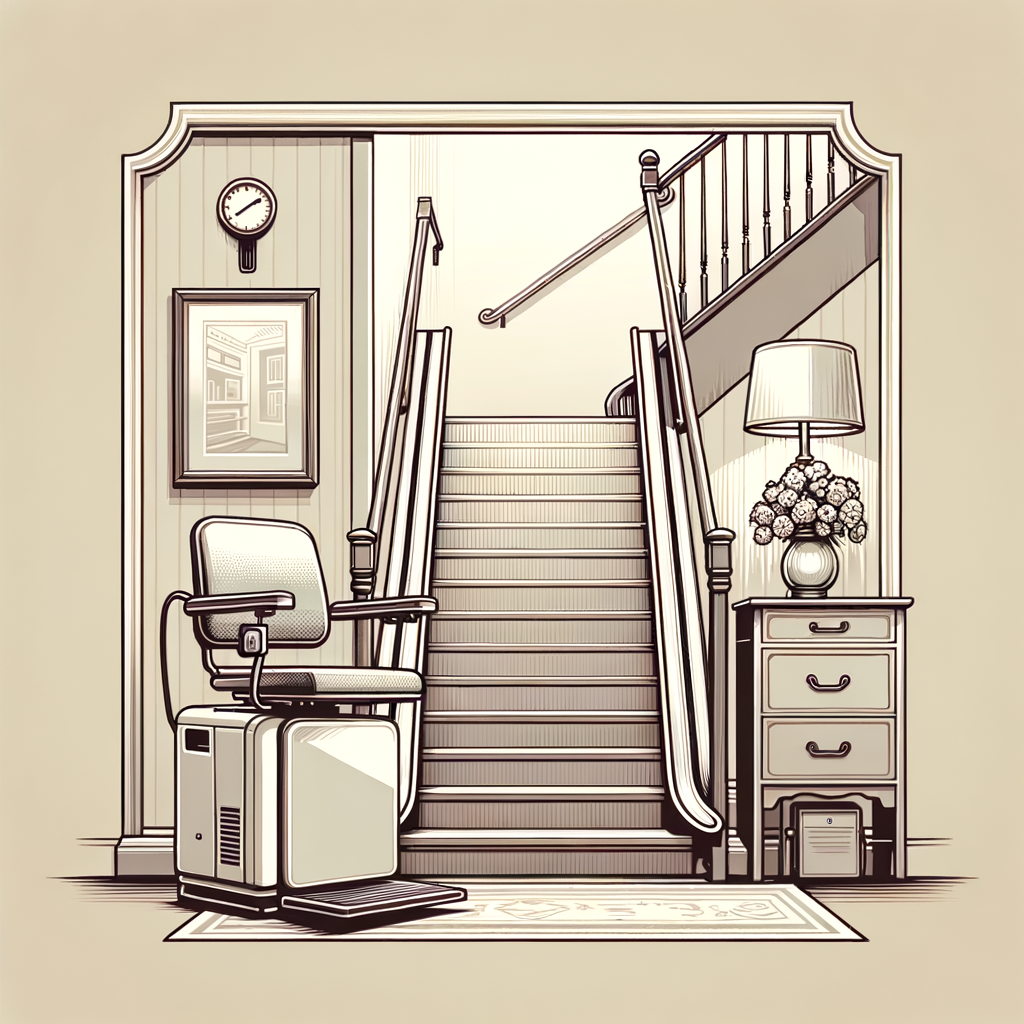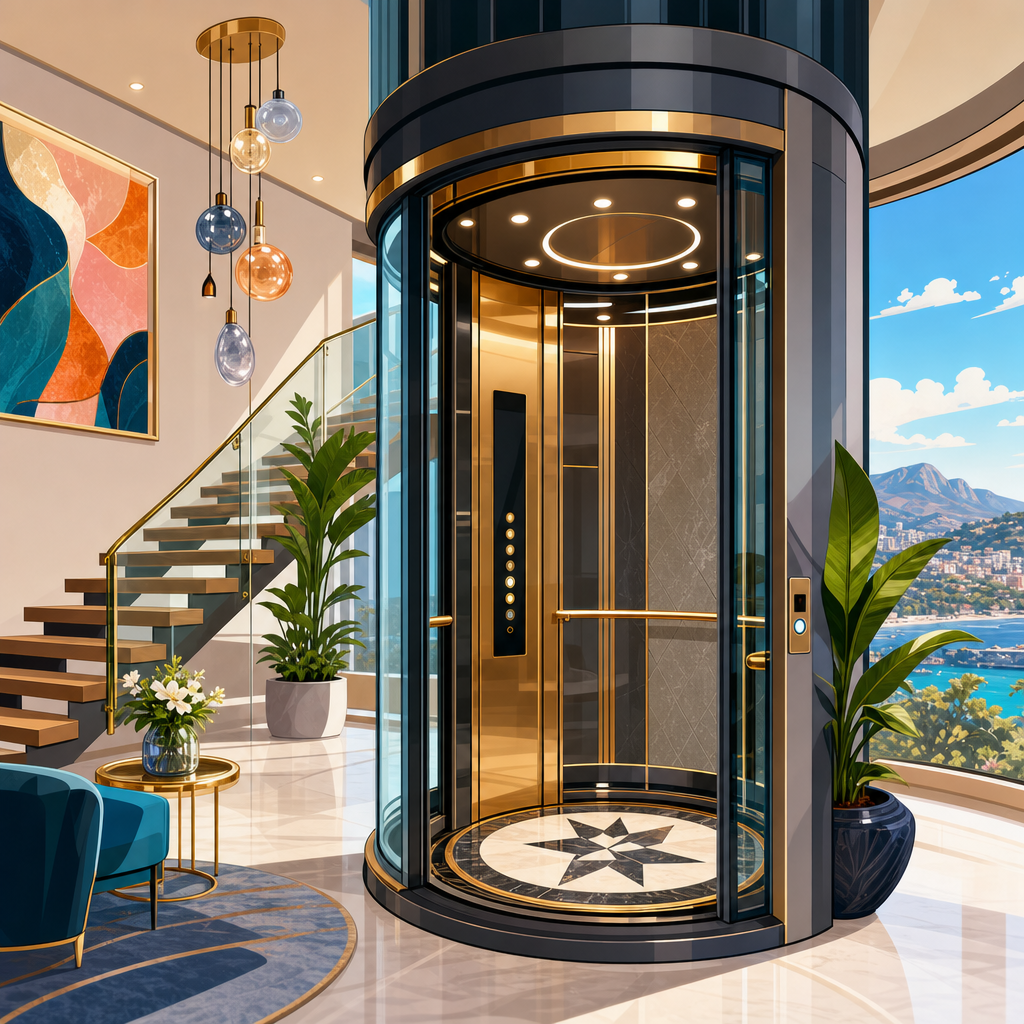
Luxury custom lifts combine engineered mobility with architectural expression, turning a practical accessibility device into a tailored design feature that improves daily movement, preserves independence, and complements high-end interiors. In the chair lift industry, “custom” usually means the rail, seat, controls, finishes, and installation details are adapted to a specific staircase, user profile, or design brief rather than selected from a standard package. “Hybrid designs” refers to solutions that blend categories, such as a stair lift with power swivel seating, a platform lift integrated beside feature stairs, or a lift system that mixes residential accessibility requirements with premium aesthetic detailing. I have worked on projects where the original concern was safety after a fall, yet the final buying decision depended just as much on wood species, rail color, folded profile, and whether the unit disappeared into the architecture when parked.
That shift matters because more homeowners now expect accessibility products to perform like luxury fixtures. In upscale renovations, a stair lift is no longer treated as a visible compromise. It must fit around curved balustrades, preserve sightlines, coordinate with lighting and millwork, and operate quietly enough for open-plan living. At the same time, the lift still has to satisfy the fundamentals: reliable transport, correct load capacity, user-friendly controls, and code-aware installation. The best luxury custom lifts succeed because they solve both sides of the equation. They answer the practical question, “Can this user travel safely between levels every day?” and the design question, “Will this home still feel intentional, refined, and valuable after installation?”
As a hub within custom and hybrid chair lift designs, this guide explains what luxury customization actually includes, how bespoke systems are specified, where hybrid solutions fit, and which tradeoffs buyers should understand before committing. It also clarifies a point many searchers ask directly: are luxury custom lifts only for mansions or complex staircases? No. They are most useful wherever standard products cannot fully address spatial constraints, user needs, or design expectations. That can be a penthouse with a helical stair, a historic townhouse with narrow landings, or a retirement-in-place renovation where the family wants accessibility without an institutional look. When chosen carefully, a custom lift protects mobility today and supports long-term property usability tomorrow.
What makes a lift truly custom
A true custom stair lift goes beyond selecting upholstery from a brochure. The process starts with a site survey that captures stair geometry, tread depth, riser height, landing transitions, wall conditions, power availability, and obstruction points such as newel posts, radiators, or projecting trim. For curved staircases, technicians commonly use digital photogrammetry, template methods, or precision track measurement systems to map the route. The rail is then fabricated to match the staircase exactly, including start overrun, intermediate parking points, and final exit position. On luxury projects, I often see additional detailing requested: hidden cable routing, rail powder coating matched to metalwork, slim carriage housings, and seats upholstered to echo nearby furnishings.
The seat assembly is usually where functionality and style meet most visibly. Standard seats prioritize broad compatibility, but custom seating can address petite users, larger body sizes, limited hip mobility, one-sided weakness after stroke, or transfer needs from a walker. Features may include powered footrests, powered swivel seats, retractable seat belts, alternative joystick or paddle controls, and perch-style seating for users who struggle to bend at the knees. In premium homes, manufacturers and specialist dealers may offer stitched leather, performance fabrics, timber arm inserts, or low-profile seat backs that reduce visual bulk. These upgrades are not decorative extras alone; they often determine whether a user can transfer safely and whether the lift can fold tightly enough to keep the staircase usable for everyone else.
Customization also extends to drive system selection and ride quality. Most residential chair lifts use rack-and-pinion or cable drum mechanisms, but what matters in luxury applications is smooth acceleration, stable braking, low vibration, and minimal operational noise. A lift placed near bedrooms, double-height foyers, or formal entertaining spaces should not sound industrial. Battery-powered units with charge points at the ends of travel remain common because they continue operating through short power interruptions and avoid some wiring complexity. However, performance depends on proper charging contact alignment and battery replacement intervals, so premium design still requires disciplined maintenance. The practical definition of luxury is not simply appearance; it is a system engineered so carefully that operation feels effortless.
Where hybrid designs fit in modern homes
Hybrid lift design is the answer when one category of product cannot solve every requirement. Many homeowners begin by searching for a stair lift, then realize they also need wheelchair access, caregiver support, or a lower visual footprint at the main staircase. A hybrid solution might combine a stair lift on a secondary stair with a compact home lift for primary access, or specify a platform stair lift that visually integrates with bespoke joinery and matching guardrails. In split-level homes, I have seen excellent outcomes from combining short-rise vertical platform lifts with custom seating solutions elsewhere, giving ambulatory users one option and wheelchair users another without forcing every need into a single device.
Another common hybrid approach involves blending off-the-shelf engineering with bespoke finish work. The motor, carriage, batteries, and safety circuits may come from an established manufacturer such as Stannah, Handicare, Bruno, Savaria, or Access BDD, while the visible interface is customized by the dealer, fabricator, architect, and millworker. That could mean designing a parking bay that conceals the folded seat, integrating a call station into paneled walls, or color-matching the rail to bronze stair spindles. This route can be smarter than commissioning a wholly unique mechanism because it retains proven components and parts support while delivering a tailored appearance. Buyers often assume “custom” means fully one-off machinery, but in practice, the most dependable luxury projects usually start with a certified core product and customize the user experience around it.
Hybridization also appears in user-interface design. For example, a system may pair conventional armrest controls with larger wall-mounted wireless call/send stations, smart-home-triggered lighting, and occupancy sensors that illuminate the stair edge when the seat is deployed. These features do not turn a chair lift into a consumer gadget; they reduce friction in everyday use. If a user with arthritis struggles to hold a small toggle, interface customization has real functional value. If visiting family can call the chair discreetly from another floor, the staircase stays clearer. The luxury aspect lies in seamlessness. Good hybrid design makes accessibility feel naturally integrated into the rhythms of the home rather than bolted on as a visible afterthought.
Design priorities: aesthetics, materials, and space planning
Luxury custom lifts succeed when design decisions start early, ideally during renovation planning rather than after finishes are complete. Early coordination lets the team evaluate parking positions, folded dimensions, lighting, outlet placement, trim details, and handrail continuity before costly rework begins. On narrow stairs, even a few centimeters in rail projection can determine whether the installation feels elegant or intrusive. Curved rails can be mounted on the inside or outside of the stair depending on landing geometry and user transfer needs, and that choice affects both appearance and pedestrian clearance. In heritage properties, preserving original plaster, stone treads, or carved balustrades may require alternate fixing strategies and careful protection during installation.
Material selection should balance visual quality with durability. Leather and woven upholstery look premium, but they need to resist abrasion from repeated folding and transfers. Powder-coated aluminum or steel rails offer color flexibility and corrosion resistance, while timber accents can soften the look in traditional interiors. Some homeowners request invisible integration, meaning the lift should almost disappear when parked. Achieving that usually involves a slim rail profile, a compact folded seat, coordinated paint, and a deliberate parking point away from the main sightline. Others want the opposite: a lift that reads as a crafted object akin to a fine appliance or luxury seat. Both approaches can work if the design language is consistent with the house.
| Design priority | Best custom approach | Practical consideration |
|---|---|---|
| Minimal visual impact | Slim rail, matched finish, remote parking bay | May increase fabrication cost and design time |
| User transfer comfort | Powered swivel seat, adjusted seat height, wider arms | Needs precise assessment of mobility limitations |
| Tight staircase clearance | Custom folded profile and rail placement study | Pedestrian access must still remain workable |
| Wheelchair compatibility | Hybrid platform or vertical lift integration | Often requires more landing space than a chair lift |
| Quiet operation | Premium drive tuning and maintenance schedule | Noise performance declines if servicing is neglected |
Space planning must also consider everyone who uses the stairs. Building a beautiful custom lift that blocks egress or creates awkward passing conditions is poor design. In most residential settings, stair lifts are mounted to the stair treads rather than the wall, but structural condition still matters, especially on older timber stairs. Surveyors should verify fixing integrity, landing stability, and any unevenness that could affect rail alignment. Luxury buyers sometimes focus heavily on finish samples and underestimate these fundamentals. The better approach is to treat structural soundness, user ergonomics, and interior styling as equal parts of one specification. That is how you get a lift that looks deliberate and performs reliably year after year.
Safety, standards, and long-term performance
No amount of styling compensates for weak safety planning. A premium lift must include obstruction sensors, seat belts or restraint systems appropriate to the user, overspeed protection, secure swivel locking, battery backup where specified, and clear emergency lowering procedures. Depending on jurisdiction and product type, installers may work to standards such as ASME A18.1 in North America or the Machinery Directive and relevant EN standards in Europe, alongside local building and electrical requirements. Homeowners do not need to memorize every standard, but they should ask direct questions: Which code framework applies? Is the model certified? Who performs installation? How are annual inspections handled? Trustworthy providers answer these clearly and in writing.
Maintenance is central to the luxury experience because a lift only feels premium when it works every time. Most manufacturers recommend regular servicing to inspect batteries, charge points, rollers, gear racks, seat pivots, safety edges, and remote controls. Curved rails demand particularly accurate setup because small alignment issues can affect ride smoothness over time. In real homes, dust, pet hair, humidity, and uneven usage patterns all influence wear. I advise clients to judge service support as seriously as upholstery or rail color. Ask about parts availability, response times, warranty terms, and whether the dealer services the exact model they sell. A beautiful bespoke installation becomes frustrating quickly if a failed call station leaves the chair parked on the wrong floor for a week.
Long-term performance also depends on realistic expectations. Custom lifts are durable, but they are not maintenance-free architectural sculptures. Batteries age, fabrics wear, and households change. The user who today wants a standard chair may later need a transfer aid, larger seat, or platform solution. This is why scalable design matters. If a hybrid plan is likely in the future, leave room at landings, preserve electrical access, and document finishes for later matching. The smartest luxury projects do not merely meet current needs; they anticipate progression without forcing a complete redesign. That foresight protects both usability and investment.
Buying process, costs, and choosing the right partner
The buying process for luxury custom lifts should feel closer to commissioning built-in cabinetry than ordering a commodity appliance. Start with a full assessment of the user: mobility level, balance, transfer method, reach, vision, weight, and whether one or multiple users need the system. Then assess the staircase and the design context. A reputable provider will produce detailed measurements, layout drawings, finish options, lead times, warranty terms, and a clear explanation of what is customized versus standard. If the home is under renovation, insist that the lift supplier coordinate with the architect, interior designer, electrician, and contractor. Many installation problems come from trades working in sequence without shared dimensions or parking requirements.
Costs vary widely. Straight stair lifts are generally the least expensive because the rail is standardized, while curved custom lifts cost more due to bespoke fabrication, more complex surveying, and longer lead times. Hybrid systems involving platform lifts, concealed parking, premium materials, or integrated millwork can rise significantly beyond a basic residential budget. Price should be broken into equipment, fabrication, installation, electrical work, finish upgrades, and service plan. Be cautious with quotes that seem unusually low on custom work; they often exclude finishing details, difficult site conditions, or aftercare. The right comparison is total delivered solution, not headline equipment price.
Choose a partner with a track record in both accessibility and high-end residential work. Ask for photos of comparable projects, references, manufacturer authorizations, and proof of service capability. The best providers speak candidly about limitations, such as when a platform lift needs more landing depth than the client hoped, or when a heritage stair cannot accept certain fixings without reinforcement. That honesty is valuable. Luxury custom lifts are at their best when engineering, ergonomics, and interior design are aligned from the beginning. If you are planning a bespoke accessibility upgrade, use this hub as your starting point, then move on to product-specific guides, installation planning, and maintenance resources to build a solution that elevates function with style.
Frequently Asked Questions
What makes a luxury custom lift different from a standard chair lift?
A luxury custom lift goes far beyond basic point-A-to-point-B transportation. While a standard chair lift is typically selected from a fixed set of sizes, seat styles, rail options, and finishes, a luxury custom lift is tailored to the staircase, the user, and the overall design intent of the home. In practice, that means the rail can be engineered to follow unusual staircase geometry, the seat can be chosen or refined for specific comfort and posture needs, the controls can be positioned for ease of use, and the visible materials can be selected to blend with premium interiors rather than stand out as purely utilitarian equipment.
In high-end residential settings, customization often includes details such as upholstery choices, wood or metal accents, slim-profile components, discreet parking positions, folding features, and finish coordination with railings, trim, flooring, or wall colors. The result is a mobility solution that feels integrated into the architecture rather than added on as an afterthought. For homeowners, this matters because the lift supports accessibility and independence without compromising the visual quality of the space. For designers and builders, it creates an opportunity to treat mobility equipment as part of the design language of the home.
Just as important, luxury custom lifts are typically specified with more attention to user experience. That includes smoother starts and stops, quieter operation, ergonomic seating, intuitive controls, and installation planning that minimizes disruption to circulation on the staircase. The overall difference is that a standard lift solves a mobility challenge, while a luxury custom lift solves it in a way that also respects aesthetics, comfort, and long-term livability.
How can a custom lift enhance both accessibility and interior design?
A well-designed custom lift improves accessibility by making upper and lower levels easier and safer to reach, especially for people who want to remain independent at home. It can reduce physical strain, lower fall risk on stairs, and make daily routines more manageable without requiring a major structural remodel. For many households, that practical value is the starting point. The luxury element comes in when the lift is designed to meet those functional goals while also contributing positively to the interior environment.
From a design perspective, the best custom lifts are planned as part of the home’s visual story. Manufacturers and installers can often adapt rail color, seat materials, armrest styling, and installation details so the lift works with modern, traditional, transitional, or highly bespoke interiors. In refined spaces, visual restraint is often key. A compact folded profile, carefully chosen finish, and strategically selected parking location can keep the staircase feeling open and elegant when the lift is not in use. In some homes, the lift becomes intentionally expressive; in others, it is designed to recede into the background. Both approaches can be successful when they are executed thoughtfully.
Accessibility and design are not opposing priorities. In fact, in luxury environments, they increasingly reinforce one another. A beautifully integrated lift allows the home to remain comfortable and usable across changing life stages without sacrificing craftsmanship or style. That makes it especially appealing for aging in place, multigenerational living, and homeowners who want future-ready design. When specified early and installed precisely, a custom lift can preserve the character of a staircase while making the home more inclusive, functional, and enjoyable every day.
What does “custom” typically include when designing a luxury chair lift?
In the chair lift industry, “custom” usually means adapting the system to the specific staircase, user profile, and design brief rather than relying on a one-size-fits-all package. The most common custom element is the rail itself. Staircases vary widely in width, landings, turns, intermediate levels, and obstructions, so the rail may need to be measured and manufactured to fit a straight, curved, narrow, or otherwise complex layout. A custom rail allows the lift to travel safely and efficiently while minimizing interference with normal stair use.
Customization also extends to the chair and user interface. Seat height, seat width, armrest configuration, footrest style, swivel function, and control placement may be selected to improve transfer safety, comfort, and ease of operation. For users with specific mobility limitations, body size considerations, or dexterity concerns, these details are especially important. Some projects also involve call/send controls, remote operation, upgraded safety sensors, or power options that improve convenience during daily use.
On the design side, custom may include finish coordination, upholstery selection, rail color matching, and installation detailing that supports a more refined appearance. Depending on the manufacturer and project scope, there may be options for premium textiles, leather-like materials, wood-look accents, metallic finishes, or low-profile components. Installation planning can also be customized to determine where the lift parks, how it folds away, and how visible the system is from main living spaces. In luxury projects, the most successful outcomes come from treating all of these choices as interconnected. The lift should fit the architecture, fit the user, and fit the way the home is actually lived in.
What are hybrid lift designs, and when are they a good choice?
Hybrid lift designs generally refer to solutions that combine features, materials, or planning strategies to balance performance, aesthetics, and spatial constraints. In the context of luxury custom lifts, that can mean blending accessibility engineering with architectural detailing so the final installation meets practical mobility needs while also aligning with a high-end design vision. A hybrid approach may involve mixing a highly customized rail layout with a compact seat profile, choosing premium finishes on visible components while prioritizing robust performance features underneath, or designing the installation so the lift functions prominently when needed but stores discreetly when not in use.
Hybrid designs are particularly useful in homes where no single standard option solves every requirement. For example, a staircase may have tight turns, limited width, and strong aesthetic expectations all at once. In that situation, the project may call for a custom-engineered rail, a folding seat system, carefully selected parking positions, and finish coordination with surrounding millwork or metalwork. The “hybrid” concept reflects the idea that the best solution often comes from combining mobility, comfort, space efficiency, and design sensitivity rather than optimizing for only one factor.
They are also a strong choice for homeowners planning for long-term usability. Some clients want a lift that serves immediate mobility needs without making the home feel clinical. Others are designing proactively for aging in place and want accessibility features integrated before they become urgent. A hybrid design can support both goals by delivering dependable function in a form that feels intentional and architecturally appropriate. When evaluated carefully by an experienced provider, this type of solution can offer an excellent balance of safety, usability, and visual sophistication.
How should homeowners choose the right luxury custom lift provider?
Choosing the right provider is one of the most important decisions in the entire process because even a premium product depends on precise assessment, specification, and installation. Homeowners should start by looking for a company with proven experience in custom and curved stair lift projects, not just standard installations. Complex staircases, luxury finishes, and design-sensitive environments require a higher level of technical skill and planning. A qualified provider should be able to explain how measurements are taken, how the rail is engineered, what customization options are available, and how installation will be handled with minimal impact on the home.
It is also wise to evaluate the provider’s design awareness. In a luxury setting, the conversation should not focus only on mechanics. The company should be prepared to discuss finish options, chair profile, parking positions, folded footprint, visibility from key rooms, and how the lift will relate to the staircase’s architectural character. The best providers are comfortable collaborating with homeowners, interior designers, architects, and builders. They understand that accessibility equipment in a high-end home must perform reliably while also respecting materials, proportions, and sightlines.
Finally, homeowners should ask detailed questions about safety features, warranties, service responsiveness, maintenance requirements, and long-term support. A luxury custom lift is an investment in both daily quality of life and the future usability of the home, so after-sales care matters as much as initial appearance. Requesting project examples, client references, and a clear breakdown of what is truly custom versus what is optional can help set realistic expectations. The right provider will combine engineering expertise, thoughtful design guidance, and dependable service, resulting in a lift that feels seamless in use and appropriate to the home for years to come.