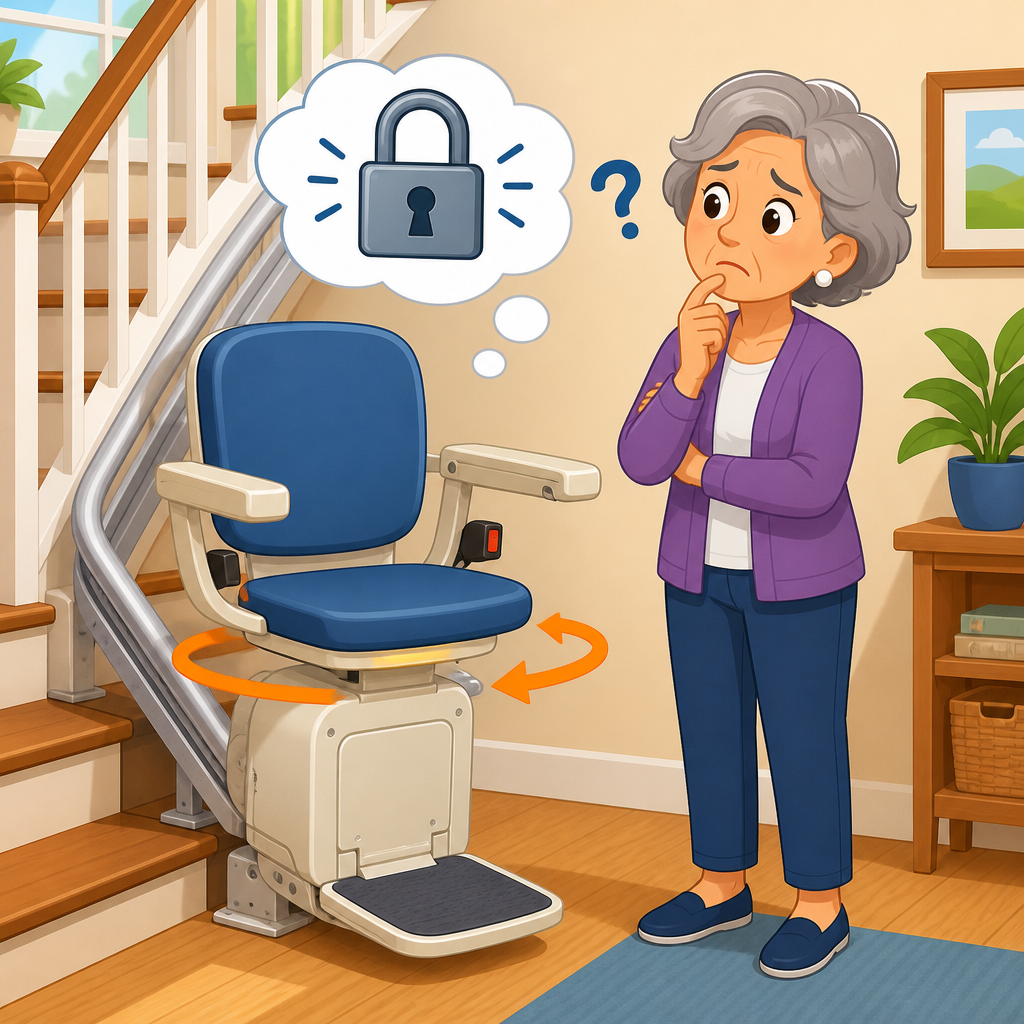
A stair lift swivel seat that will not lock is more than an inconvenience; it is a safety fault that can prevent safe boarding, safe exit, and normal lift operation. In practical terms, the swivel seat is the chair mechanism that rotates at a landing, usually at the top of the stairs, so the rider can stand up onto the floor rather than toward the staircase. The lock is the detent, latch, or interlock that holds the seat firmly in the travel position or in the rotated exit position. When that lock does not engage, the stair lift may stop, beep, refuse to move, or feel unstable under the user. I have seen this issue in routine service calls across several brands, and while the symptoms look similar, the root cause can range from something simple like dirt in the latch to something more serious like a worn seat-indexing cam, bent linkage, failed microswitch, or misaligned seat post.
This issue matters because seat lock faults sit at the intersection of mobility, fall prevention, and electrical interlock safety. Most modern stair lifts use a monitored safety circuit: if the seat is not locked in the required position, the control board blocks travel. That behavior is intentional. It prevents movement when the rider has not fully returned the seat to the forward position, and it prevents users from relying on friction alone to stay seated. The problem is that users often encounter the fault at the worst possible moment, such as after reaching the top landing and needing to dismount. A person with limited balance or strength may not be able to force the chair into position safely. Understanding the common causes and next steps helps users, caregivers, and property managers respond without guessing, damaging the lift, or creating a fall hazard.
As a hub article for common stair lift issues and fixes, this guide explains how swivel seats normally work, why they fail to lock, what checks are safe for a user to perform, what repairs belong to a trained technician, and when the safest answer is to stop using the lift immediately. It also connects this problem to related faults, including seat interlock errors, carriage safety edge faults, charging issues, rail obstructions, and remote-call problems, because stair lift troubleshooting is rarely isolated to one component. In many service visits, a swivel lock complaint turns out to involve several linked conditions: weak batteries causing inconsistent logic signals, loose armrest controls, top-overrun alignment issues, or damage after a minor impact. Clear diagnosis starts with the seat, but good maintenance looks at the full system.
How a stair lift swivel seat lock is supposed to work
On most straight and curved stair lifts, the seat rotates on a central post or bearing assembly. At one or both landing positions, a spring-loaded latch, pawl, or indexing pin drops into a notch, plate, or cam profile that defines the lock point. In many models, a separate microswitch or reed switch confirms to the controller that the lock is engaged. Some lifts require the seat to lock only in the travel position before movement. Others also monitor the fully swiveled dismount position. Manual swivel seats are unlocked with a lever under or beside the seat. Powered swivel seats use a motorized mechanism, often synchronized with the carriage controls and top landing logic.
Manufacturers such as Bruno, Stannah, Harmar, Acorn, Handicare, and Savaria each use different hardware, but the principle is the same: positive mechanical engagement plus an electrical confirmation signal. If either part fails, the lift may not operate. That distinction matters. A chair can feel partially secure yet still fail the electrical safety check. Conversely, a switch can indicate lock status incorrectly even when the seat does not hold firmly. During service work, I always test both conditions separately: first, whether the seat physically resists rotation when locked, and second, whether the control system recognizes that state consistently under load.
The most common user-facing symptoms are easy to recognize. The seat rotates but will not click into place. The seat clicks, then slips back slightly. The lift beeps and the status light shows a fault when the seat seems locked. The chair moves only after repeated attempts to push or jiggle the seat. On powered models, the seat starts to swivel but stops partway. These clues help narrow the problem, but they do not eliminate the need for careful inspection because several different failures can produce the same symptom.
Common causes of a swivel seat that will not lock
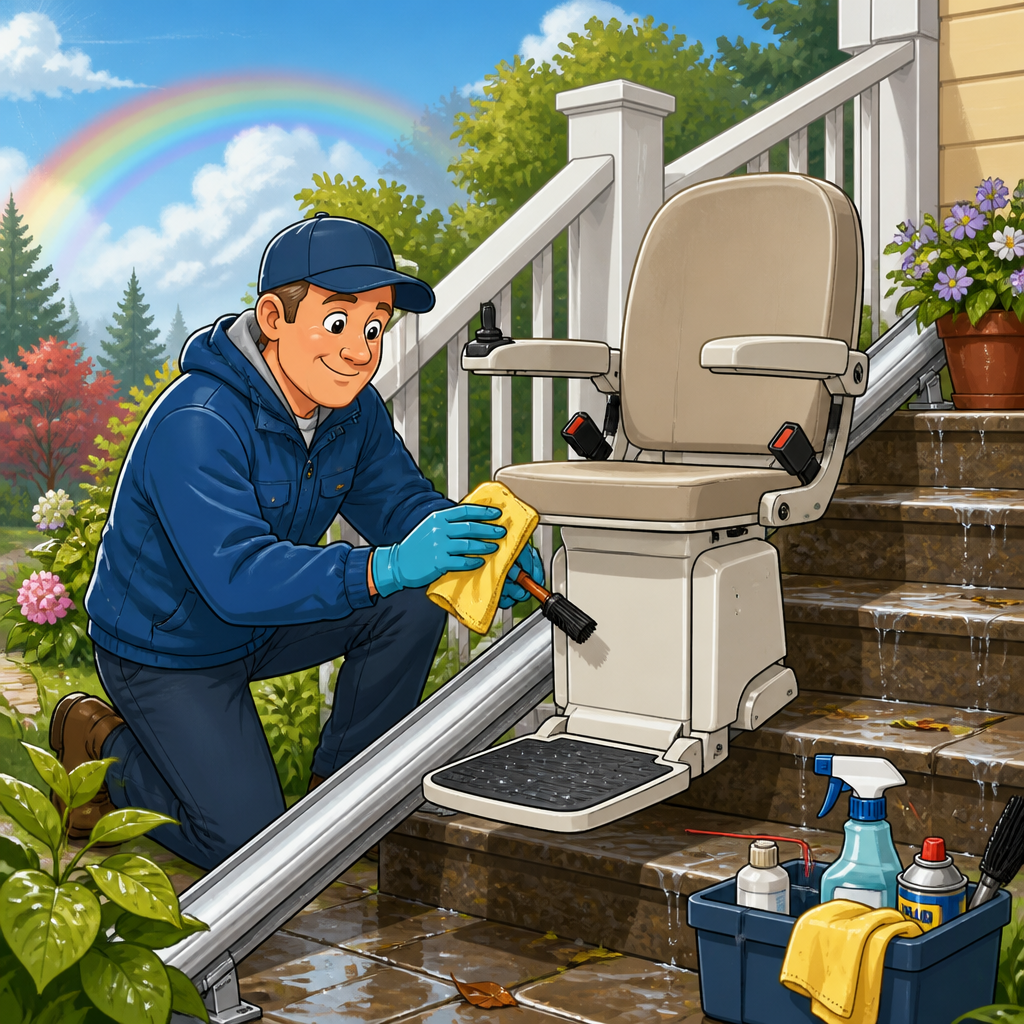
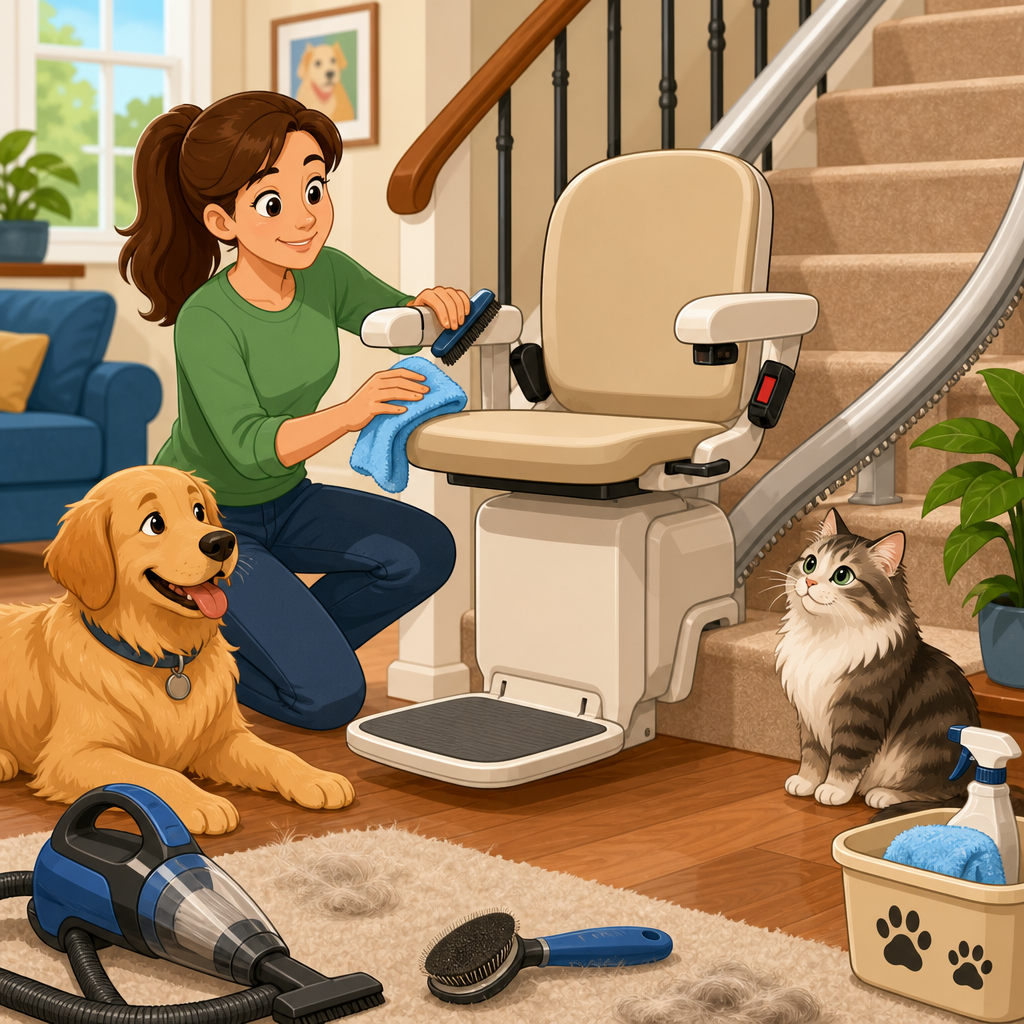
The most frequent cause is mechanical contamination. Dust, carpet fibers, pet hair, dried grease, and small debris can collect around the latch, detent plate, or seat pedestal. Over time the spring-loaded part cannot travel its full distance, so it never reaches the notch cleanly. This is especially common in homes where the lift sits near a heavily used landing or where aerosol cleaners have left sticky residue. A close second is wear. Repeated use rounds off the edge of the locking notch, weakens the spring, or loosens the pivot fastener so the latch no longer aligns precisely. In older lifts, plastic bushings can deform and create enough play that the mechanism misses its index point by a few millimeters.
Misalignment is another major cause. I often find that the chair, footrest, and seat post are slightly twisted after a user braces against the chair while standing or after the lift is bumped during furniture movement. Curved lifts are especially sensitive because the chair reaches the landing at a specific angle; if the final stop point drifts, the swivel hardware may not line up with the lock plate. Electrical issues matter too. A failed microswitch, broken wire in the seat harness, oxidized connector, or out-of-adjustment actuator tab can tell the control board that the seat is unlocked even when the latch is fully engaged. On battery-powered lifts, low voltage can cause borderline switch readings or incomplete operation of a powered swivel motor.
Less common but important causes include damage from forced operation, corrosion in coastal or humid environments, and incorrect reassembly after prior repair. I have also seen armrest upholstery screws driven too deep, interfering with the swivel linkage below the seat. Because the symptom affects a critical safety feature, the right next step depends on whether the problem is clearly superficial or potentially structural.
Safe checks a user or caregiver can perform first
Before touching anything, park the lift on a level charging point if possible, keep one hand on a stable support, and do not sit in the chair while testing the swivel lock. Turn the lift off with the key or isolation switch if your model has one. Then inspect the obvious areas in good light. Look around the base of the seat for lint, coins, crumbs, or pet hair. Check whether the swivel release lever returns fully after you let go. Fold and unfold the arms and footrest to make sure nothing is binding. On many lifts, a partly folded armrest or misseated footrest can subtly affect seat position or user perception of lock engagement.
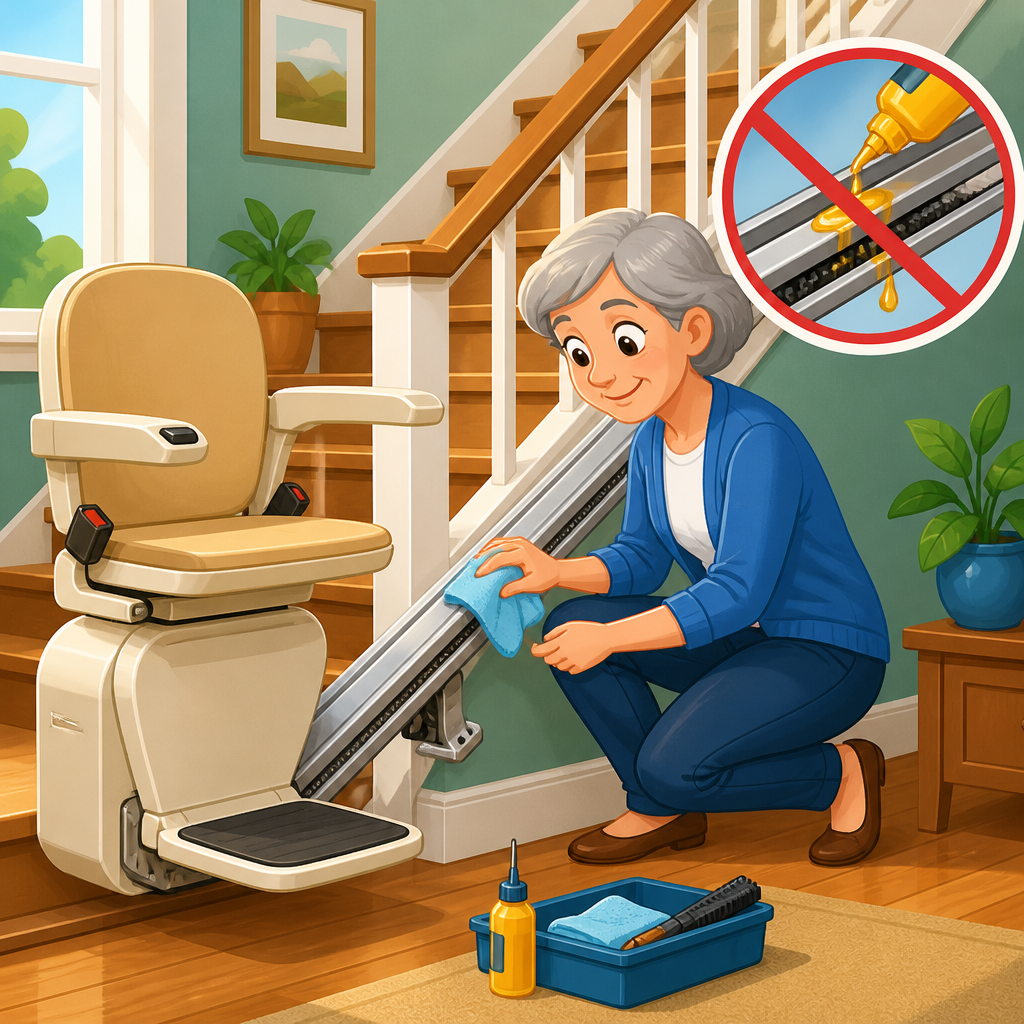
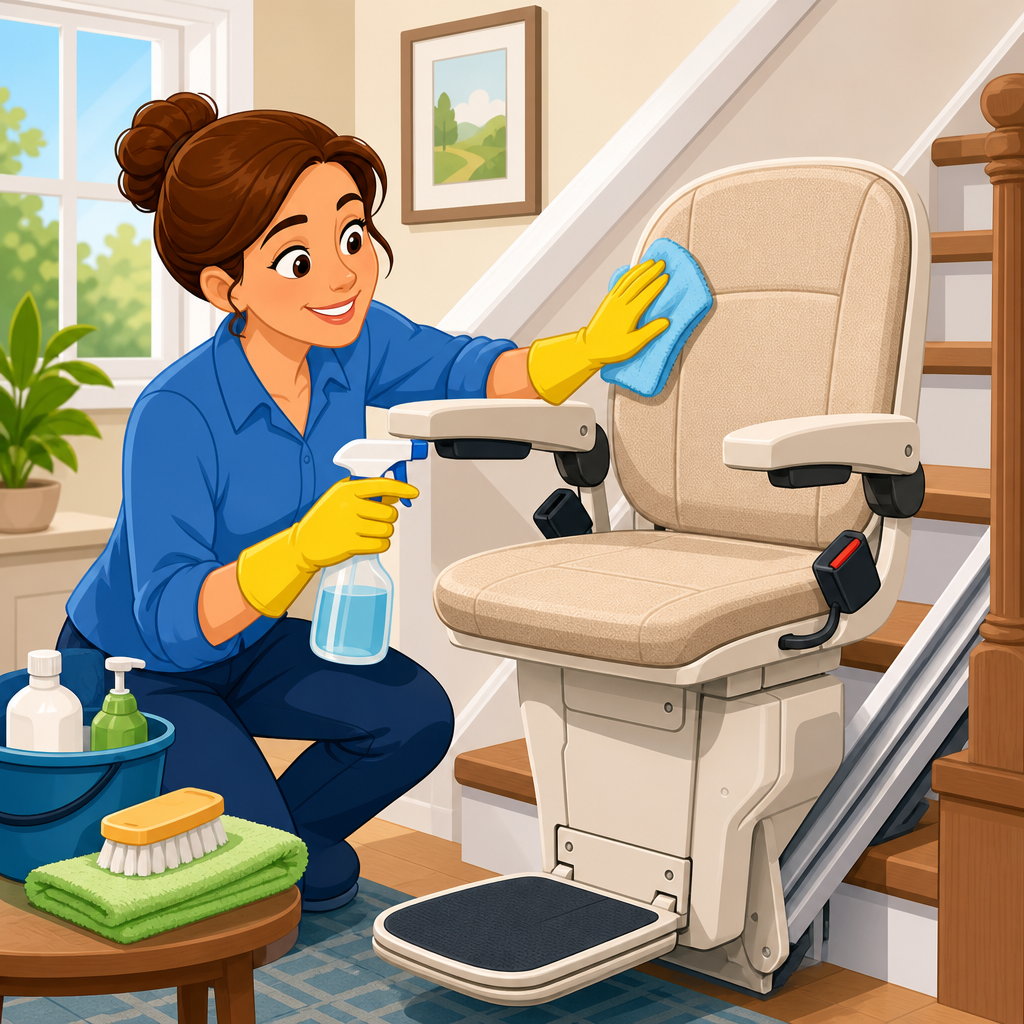
If the manufacturer manual allows owner cleaning, use a dry cloth or vacuum with a brush attachment to remove loose debris. Do not spray lubricant into the latch unless the manufacturer specifically recommends a product and location. Random oil attracts dirt and can migrate onto switch contacts, upholstery, or the rail. Next, rotate the seat slowly toward each intended lock point and listen for a clear click. A weak or mushy engagement often indicates contamination, wear, or spring fatigue. If the chair has a diagnostic display or fault light, note the code exactly. Brand-specific codes are often more useful than the symptom description because they separate seat interlock faults from charging or overspeed faults.
| Symptom | Likely cause | Safe user action | Needs technician |
|---|---|---|---|
| No click at lock point | Debris, worn latch, weak spring | Clean visible debris, retry gently | Yes if unresolved |
| Clicks but seat still moves | Rounded notch, bent linkage, loose hardware | Stop using immediately | Yes |
| Seat feels locked but lift will not run | Microswitch, wiring, connector, low battery | Check charge status, note fault code | Usually yes |
| Powered swivel stops midway | Low battery, motor fault, obstruction | Remove visible obstruction, recharge | Yes if repeated |
| Problem started after bump or move | Misalignment or damage | Do not force seat | Yes |
When not to force the seat and why that matters
Users are often tempted to push harder because the seat appears only slightly out of position. That is a mistake. Forcing a swivel seat can bend the release linkage, shear a roll pin, crack a cast bracket, or knock a switch further out of adjustment. I have replaced expensive powered swivel assemblies that might have needed only switch alignment if the chair had not been forced repeatedly. More importantly, a seat that locks incompletely can release unexpectedly during transfer. For someone with reduced leg strength, that sudden movement can cause a serious fall.
If the seat will not lock with normal hand pressure, or if it locks and then slips, stop using the lift until the cause is known. This is especially true at the top landing, where a loss of balance can send the user toward the stairs. If the problem strands a user, contact the stair lift provider’s service line and explain whether the chair is occupied, whether the seat is at the upper or lower landing, and whether the unit still has power. Many providers prioritize entrapment or transfer-risk calls. If emergency egress is an issue, local emergency services may need to assist, but that decision should be based on the user’s immediate safety, not on the desire to avoid a service fee.
Technical faults a stair lift technician will usually check
A trained technician should inspect the swivel lock in a structured order. First comes mechanical integrity: seat post play, bearing wear, latch travel, spring tension, fastener torque, detent wear, and linkage alignment. Then comes the electrical path: continuity through the seat interlock switch, switch actuation point, harness routing through the swivel point, connector condition, and control board input state. On powered swivel models, motor current draw, gearbox condition, end-stop calibration, and battery voltage under load are also relevant. The technician should compare findings against the service manual, not rely on feel alone.
Good repair practice includes checking for related faults outside the seat assembly. I routinely inspect rail charging contacts, call/send controls, final limit switches, and carriage safety edges when a seat lock complaint appears, because weak batteries or poor charging can create intermittent behavior that mimics a seat problem. Likewise, if the carriage is not parking accurately at the top overrun, the seat may arrive slightly off-angle and fail to lock cleanly. On some models, software setup or relearn procedures are required after replacing powered swivel parts. Skipping that step can leave the chair mechanically sound but electronically out of range.
Replacement decisions depend on wear patterns and parts availability. A microswitch or spring may be an economical repair. A worn seat indexing plate, cracked bracket, or damaged motorized swivel gearbox often justifies replacing the full assembly. For older lifts, discontinued parts can change the equation; owners may need to weigh repair cost against the value of a broader refurbishment or replacement. A reputable technician should explain that tradeoff clearly and document the fault.
How this problem connects to other common stair lift issues
A swivel seat that will not lock is one of several common stair lift problems that fall under maintenance, troubleshooting, and safety. It often overlaps with seat will not turn, stair lift beeping, stair lift not moving, and lift stops at top of stairs. It can also be confused with footrest obstruction faults, because both can prevent travel after boarding. In homes with children or pets, debris-related lock faults frequently appear alongside dirty rail racks, blocked charging points, and sticky armrest controls. In older installations, seat lock wear often accompanies battery decline and charger contact wear because all are age-related service items.
That is why this article functions as a hub for common issues and fixes. Effective stair lift troubleshooting starts by grouping symptoms into categories: movement faults, charging faults, control faults, safety-edge faults, and transfer-position faults. The swivel seat belongs to the transfer-position group, but diagnosis should always include the surrounding systems. Building that habit saves time, reduces repeat service visits, and improves user safety. If you manage a home, care facility, or property with a stair lift, create a simple maintenance log with date, fault symptom, status code, and repair performed. Patterns matter. Three minor seat-lock complaints over six months usually indicate a developing hardware problem, not user error.
Prevention, maintenance intervals, and the right next step
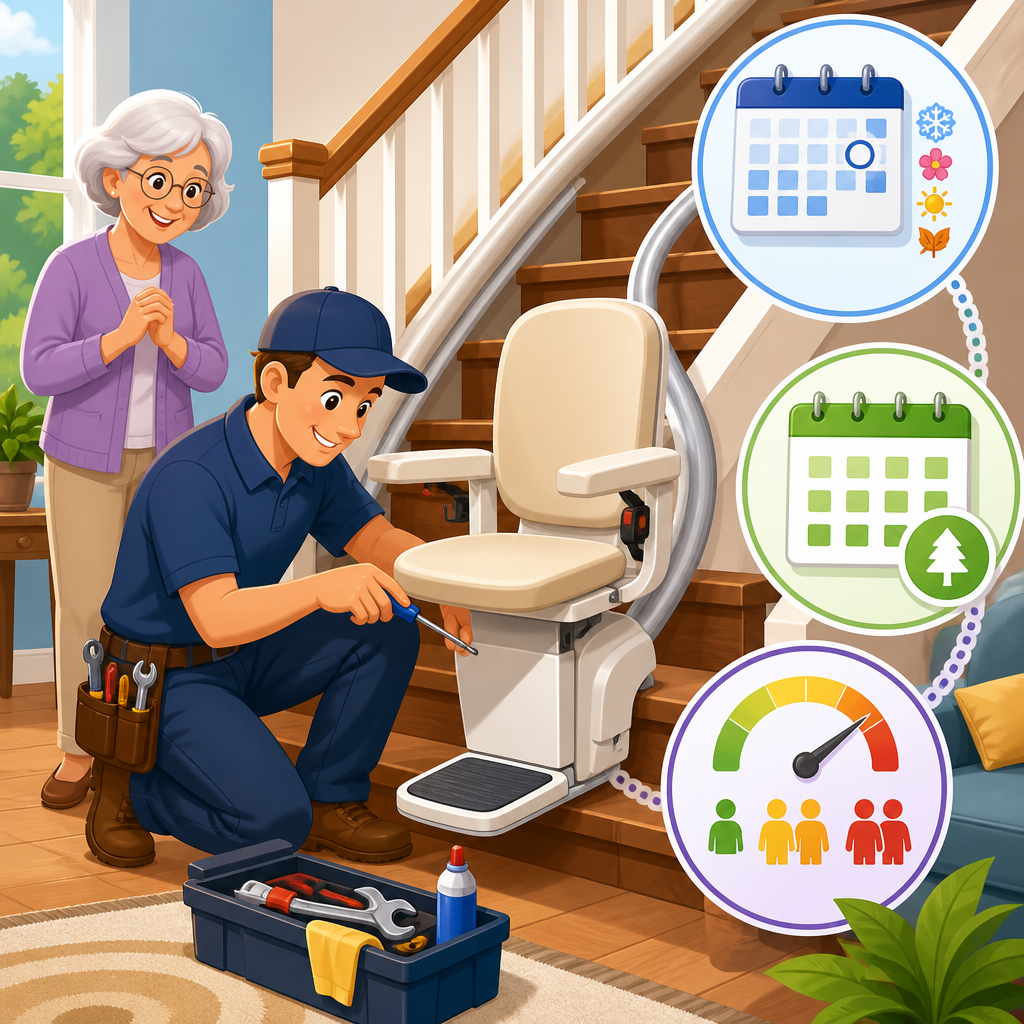
The best prevention is scheduled service plus careful cleaning. Most manufacturers recommend annual maintenance for typical residential use, with more frequent inspection for high-use or commercial-access settings. During service, the technician should clean and inspect the swivel mechanism, verify interlock operation, test batteries, check charging voltage, inspect harnesses, and confirm smooth stopping at both landings. Users should keep the landing area clean, avoid hanging weight on the armrests, and never use the chair as a support rail while it is swiveled. Those habits reduce side-loading on the seat post and lock hardware.
If your stair lift swivel seat will not lock, treat it as a safety issue first and a convenience issue second. Start with safe visual checks and cleaning of loose debris only. Do not force the seat, bypass a switch, or continue using a chair that clicks weakly or slips. If the lift still will not lock or will not run, schedule professional service and provide the brand, model, fault code, and a clear description of what happens at each landing. The main benefit of prompt diagnosis is simple: a properly locking seat restores safe transfer, reliable travel, and confidence in daily use. For the next step, review your manual, note the symptoms, and book a qualified stair lift technician before the problem worsens.
Frequently Asked Questions
Why will a stair lift swivel seat not lock in place?
A stair lift swivel seat usually fails to lock because something is interrupting the seat’s latch or interlock system. In many models, the seat must click securely into either the travel position or the rotated exit position before the lift will operate normally. If that locking action does not happen, common causes include worn latch components, a misaligned seat, loose hardware, dirt or debris inside the swivel mechanism, or a faulty seat interlock switch. In some cases, the problem starts after repeated daily use gradually wears the detent or locking pin. In others, the chair may have been bumped, serviced incorrectly, or reassembled with slight misalignment, which can prevent the seat from lining up with the lock point.
Temperature changes, lack of lubrication where specified by the manufacturer, and general age can also affect how smoothly the seat turns and whether the lock engages fully. The key point is that this is not just a comfort issue. A seat that does not lock can create a real safety hazard because the rider may not be able to board, exit, or ride securely. On many units, the lift will intentionally refuse to move when the seat is not locked, which is a built-in safety response rather than a separate malfunction. If the seat feels loose, rotates too freely, stops just short of the lock position, or does not produce the usual firm click, those are all signs that the swivel lock system needs attention.
Is it safe to use a stair lift if the swivel seat will not lock?
No, it should not be considered safe to use a stair lift when the swivel seat will not lock properly. The seat lock exists to stabilize the chair during boarding, exiting, and travel. Without that lock, the chair can shift unexpectedly, which increases the risk of losing balance, especially at the top landing where a fall could be particularly serious. Even if the lift still appears to function, a seat that is not firmly secured is a safety fault, not a minor annoyance.
Many stair lifts are designed so the carriage will not move unless the seat is correctly positioned and the interlock confirms it is locked. That safeguard helps prevent accidents, but it should not be bypassed or treated as the main issue. The bigger concern is that the seat mechanism itself is not doing its job. If you are experiencing this problem, stop using the lift until the cause is identified. Do not try to hold the seat in place manually, wedge it into position, or force the chair to rotate further than it naturally will. Those temporary workarounds can make the fault worse or create a dangerous situation. The safest next step is to inspect only the obvious, accessible areas for obstructions and then arrange for professional diagnosis and repair if the seat still will not lock normally.
What should I check before calling for stair lift service?
Before scheduling service, there are a few basic checks that may help identify a simple cause, but they should be limited to safe, non-technical observations. First, make sure the seat is being rotated fully into the intended position. Some swivel seats require a firm but controlled turn until a clear click is felt. If the seat stops short, try returning it gently to the starting position and rotating it again without forcing it. Next, look for visible obstructions such as crumbs, pet hair, lint, small objects, or buildup around the seat base, hinge area, or locking points. Debris can sometimes prevent the latch from engaging fully.
You should also check whether anything appears loose, crooked, or out of alignment. If the seat wobbles excessively, sits unevenly, or the armrests and footrest seem shifted relative to the carriage, that may indicate a mounting or alignment issue. Listen for unusual sounds such as grinding, scraping, or the absence of the normal locking click. If your stair lift has a display or status light, note any error code or flashing pattern, because that information can help a technician pinpoint whether the problem is mechanical, electrical, or both. Beyond these simple observations, avoid disassembling covers, adjusting screws, lubricating parts at random, or tampering with safety switches. Stair lift seat locks and interlocks are safety-critical components, and incorrect DIY repairs can compromise safe operation or make professional repair more difficult.
Can a faulty swivel seat lock be repaired, or does the whole seat need to be replaced?
In many cases, a faulty swivel seat lock can be repaired without replacing the entire seat, but the right solution depends on what has actually failed. If the issue is caused by dirt in the mechanism, minor misalignment, a loose bracket, or a worn but replaceable latch component, a technician may be able to restore proper operation relatively quickly. If the interlock switch has failed, the repair may involve replacing that switch and confirming that the seat reaches and reports the correct locked position. These are common service scenarios and do not always require major parts replacement.
However, if the swivel assembly is heavily worn, cracked, bent, or damaged from impact, replacement of the swivel mechanism or the entire seat base may be the safer and more practical option. Older stair lifts can also present a parts-availability issue, especially if the manufacturer no longer supports that model. In that case, a technician may discuss whether repair is still cost-effective or whether a larger upgrade makes more sense. The important thing is not to assume the worst, but also not to delay. A qualified stair lift engineer can determine whether the problem is isolated to a latch, detent, spring, cable, interlock, or structural part. Because the locking system is tied directly to rider safety, the repair decision should be based on reliable diagnosis rather than trial and error.
What are the next steps if the stair lift seat still will not lock after basic checks?
If the seat still will not lock after you have checked for obvious obstructions and confirmed that you are rotating it correctly, the next step is to stop using the stair lift and arrange professional service. When you call, be ready to describe exactly what is happening. Helpful details include whether the seat turns at all, whether it clicks into one position but not another, whether the lift refuses to move, whether the problem started suddenly or gradually, and whether there are any indicator lights or fault codes. If possible, provide the brand and model of the stair lift, because swivel seat designs vary between manufacturers and that information helps the service team prepare.
Until the lift is inspected, keep the area clear and do not attempt to bypass the lock or interlock. If the lift is needed for someone with limited mobility, it is wise to make temporary access arrangements to reduce fall risk on the stairs. During service, the technician will typically inspect the swivel seat mechanism, locking points, hardware, interlock switch, wiring connections, and seat alignment. They may also test whether the problem occurs only at one landing position or throughout the chair’s movement. Once the root cause is confirmed, the fix may be as simple as adjustment and cleaning or as involved as replacing worn components. Either way, treating a non-locking swivel seat promptly is the right course, because it protects both safe operation and safe transfers at the landing.