Choosing between standing stair lifts and seated stair lifts starts with a clear understanding of how each design supports mobility, safety, space constraints, and daily routines. A stair lift is a motorized chair or platform that travels along a rail fixed to the staircase, allowing a person with limited mobility to move safely between floors without climbing steps. In practice, the term often includes traditional seated stair lifts, standing or perch stair lifts, heavy-duty models, and custom systems for curved stairs. I have helped families compare these options in narrow townhomes, split-level houses, and aging-in-place renovations, and the right answer is rarely just about price. It depends on knee flexion, hip range of motion, balance, body size, staircase width, transfer ability, and whether more than one person will use the equipment.
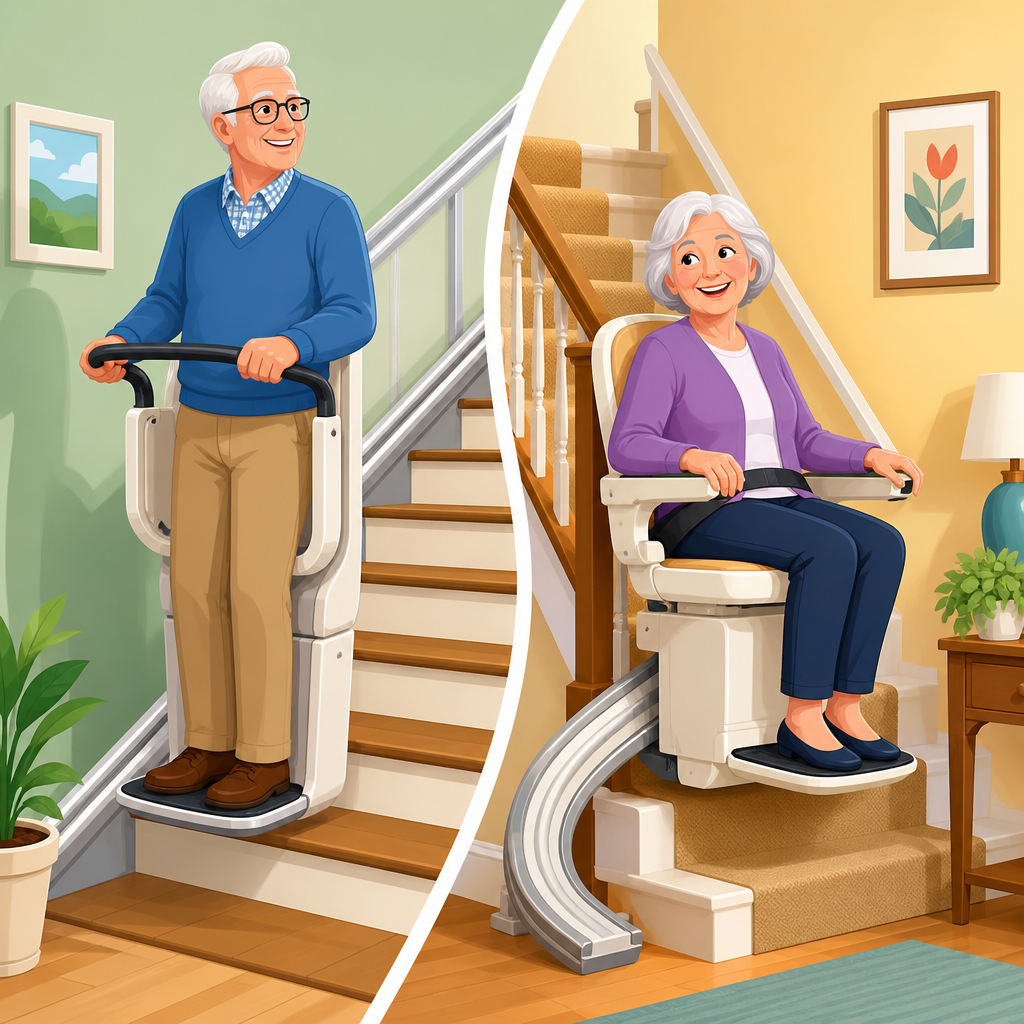
Standing stair lifts, sometimes called perch stair lifts, are designed for users who can remain upright or semi-seated while traveling. They typically include a small platform or angled seat, grab handles, a safety belt, obstruction sensors, and foldable components to preserve stair clearance. Seated stair lifts use a full seat, footrest, armrests, and usually a swivel mechanism at the top landing to improve exit safety. Both styles can be installed on straight staircases or, with custom rail fabrication, on curved stairs with landings or turns. Both rely on batteries, call/send controls, and safety circuits that stop the lift when an obstruction is detected. Yet their user profiles are meaningfully different.
This distinction matters because a poor match creates risk. A person with severe arthritis may not tolerate standing through travel, while a user with limited knee bend may find sitting down on a compact chair more painful than remaining perched. Home layout also matters. In older homes, especially those with narrow staircases under about 30 inches wide, a standing stair lift can preserve pass-through space that a seated model would reduce. On the other hand, most users benefit from the stability and lower physical demand of a seated stair lift. As the central guide within the broader Chair Lift Types & Designs topic, this article explains who benefits from each model, what features matter most, and how to choose a stair lift that fits both the user and the staircase.
What a stair lift does and how the main designs differ
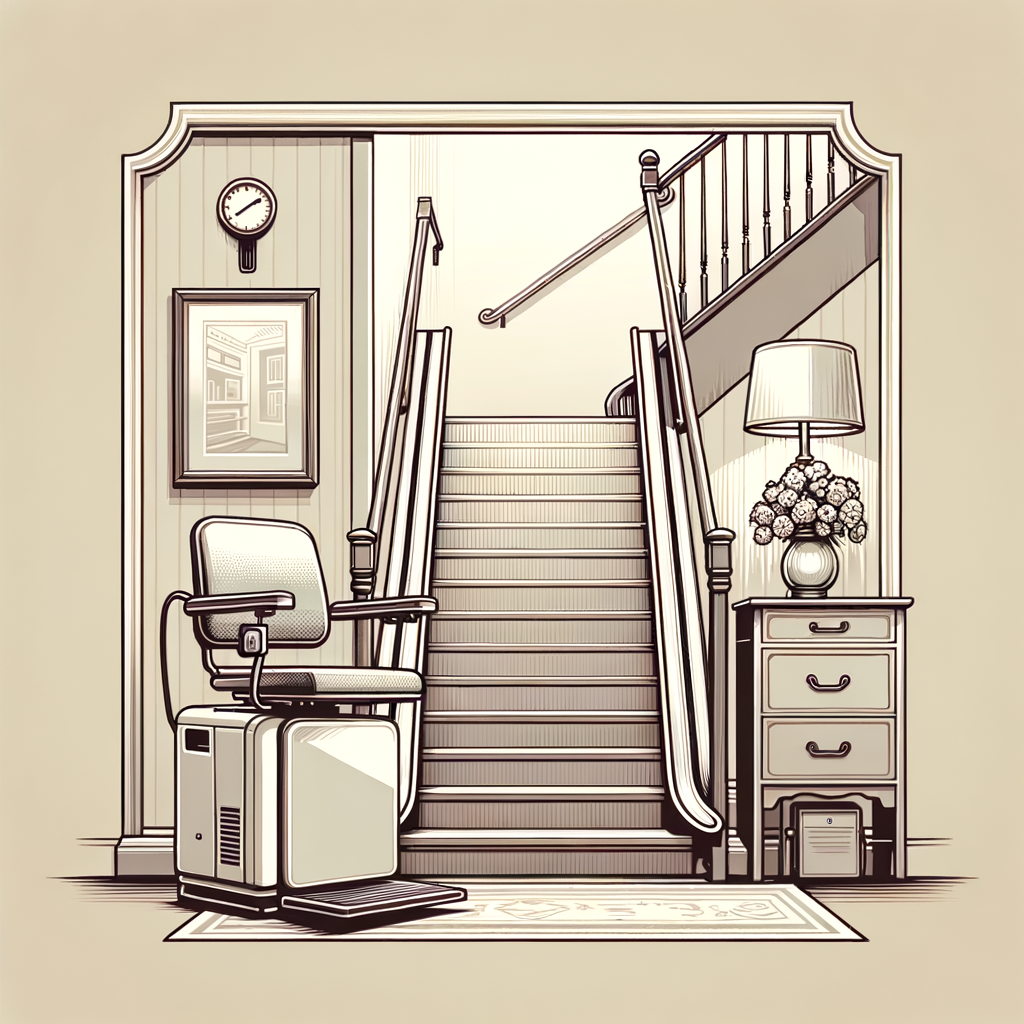
A stair lift moves a person along a staircase on a powered carriage attached to a rail. The rail mounts to stair treads, not usually the wall, which makes installation less invasive than many homeowners expect. Standard systems operate on rechargeable batteries so the lift keeps working during a short power outage, with the charger connected to household electricity at one or more points along the rail. Core components include the rail, carriage, drive system, seat or perch, footrest or standing platform, armrests or handholds, seat belt, controls, and sensors. Most reputable brands also include lockable controls and diagnostic displays for service technicians.
Seated stair lifts are the most common residential type. They are built for users who need to sit fully during travel and who benefit from arm support and a footrest. Many have powered swivel seats, folding rails, and higher weight capacities in heavy-duty versions. Standing stair lifts are more specialized. Instead of lowering the user into a conventional chair, they support travel in an upright or perched posture. That design is especially useful on narrow staircases because the user takes up less front-to-back space. However, it also demands more balance, trunk control, and confidence during the ride.
Manufacturers such as Bruno, Handicare, Stannah, Harmar, and Access BDD offer stair lift models with overlapping features, but configuration determines suitability more than brand alone. A straight stair lift uses a standardized rail and is generally faster to install and less expensive. A curved stair lift is custom measured and built to match every landing, bend, and intermediate step. Outdoor stair lifts add weather-resistant materials and covers. The key point is simple: the safest stair lift is the one that matches the user’s physical abilities, the staircase geometry, and the way the home is actually used every day.
Who benefits most from a seated stair lift
Seated stair lifts benefit the widest range of users because they minimize physical effort during transfer and travel. In most consultations, they are the default recommendation for older adults aging in place, people recovering from joint replacement, users with neurologic conditions, and anyone who becomes short of breath or unstable on stairs. A seated model is usually best for someone with reduced balance, lower-extremity weakness, fatigue, dizziness, chronic pain, or fear of falling. It is also the better choice when a caregiver wants the simplest, most repeatable routine with the fewest physical demands.
From a functional standpoint, seated stair lifts work well for users who can perform a sit-to-stand transfer with or without minimal assistance. Features such as a swivel seat at the top landing reduce the need to twist while stepping off, which lowers fall risk. A folding footrest prevents the feet from dragging and keeps the knees in a supported position. For people with osteoarthritis, lumbar stenosis, multiple sclerosis, Parkinson’s disease, or generalized deconditioning, this seated posture often feels substantially more secure than standing on a moving platform. In my experience, users accept and consistently use seated lifts when the controls are simple and the seat height is correctly fitted.
Seated lifts also make sense when long-term progression is likely. Mobility needs rarely stay static. A user who can manage a perch lift today may need fuller support in a year after a hospitalization or worsening arthritis. Choosing a seated model can therefore be a more durable decision, especially if the user already shows difficulty with prolonged standing. There are tradeoffs: seated lifts need more clearance, can feel bulky on a narrow staircase, and may be harder for someone with very limited hip or knee flexion. Still, for most households, the seated stair lift delivers the broadest margin of safety and comfort.
Who benefits most from a standing stair lift
Standing stair lifts benefit a narrower but important group of users. The typical candidate can bear weight reliably, has reasonable balance while holding support handles, and finds it difficult or painful to bend the knees or hips enough to sit in a standard stair lift chair. This often includes people with limited knee flexion after surgery, severe joint stiffness, fused joints, or certain spinal conditions that make sitting and rising uncomfortable. It also includes users in homes where the staircase is too narrow for a practical seated installation without blocking access for others.
The major advantage of a standing stair lift is space efficiency. Because the user travels upright or semi-perched, the system projects less into the staircase. In compact row houses and older properties with steep or narrow stairs, that design can be the only realistic way to maintain usable clearance. Some users also prefer the shorter transfer sequence: step onto the platform, lean against the perch or small seat, fasten the belt, and ride. For a person who can stand but struggles with deep bending, this is often easier than lowering into a chair and pushing back up at the destination.
That said, standing models are not appropriate for many people who inquire about them. They require more postural control, stronger grip, and better confidence on moving equipment. They are usually a poor fit for users with vertigo, significant tremor, unpredictable spasticity, severe cardiac fatigue, or substantial fear of heights and motion. Careful assessment matters. A standing stair lift should feel controlled and secure from the first demonstration ride. If the user appears tense, unstable, or unable to maintain position without substantial support, a seated lift or a different accessibility solution is usually the safer recommendation.
Key decision factors: mobility, staircase layout, and daily use
The best way to compare standing stair lifts versus seated stair lifts is to evaluate the user, the staircase, and the household routine together. User assessment comes first: Can the person safely transfer? Can they stand for the full travel time? How much knee and hip flexion do they have? Do they use a cane, walker, or caregiver assistance? Staircase assessment follows: width, pitch, number of landings, doorways near the top or bottom, handrail location, and obstructions such as radiators or trim. Routine matters too: Is the lift used ten times a day or only at bedtime? Will more than one person use it? Does the folded unit need to leave clear passage for children or other adults?
| Decision factor | Seated stair lift | Standing stair lift |
|---|---|---|
| Best for balance support | Excellent | Moderate |
| Works on narrow stairs | Sometimes limited | Often advantageous |
| Requires knee and hip bending | Yes | Less |
| Good for fatigue or weakness | Yes | Less ideal |
| User confidence needed during travel | Lower | Higher |
| Typical long-term adaptability | Higher | Lower |
Installation details also influence the recommendation. Most straight seated lifts can be installed in a few hours, while curved rails require digital measurement and factory-built sections. Weight capacity ranges matter: standard models may support around 250 to 350 pounds, while heavy-duty versions often exceed that. If the user is tall, broad-shouldered, or needs extra seat width, model selection becomes more specific. Noise level, battery charging points, fold-up dimensions, and top-landing overrun options all deserve attention because they affect everyday usability, not just technical compatibility.
Cost should be discussed honestly. Straight seated stair lifts are usually the most economical option, while curved systems and specialty standing models cost more due to customization and lower volume. Reconditioned units can reduce cost on straight stairs, but curved rails are almost always custom and therefore less reusable. Homeowners should also consider service availability, warranty terms, and local dealer reputation. A lower quote is not a better value if parts are hard to source or the installer lacks experience with complex staircase geometry.
Safety, standards, and when another solution may be better
Safety is the deciding principle. In North America, stair lifts are commonly evaluated to ASME A18.1 and related residential accessibility expectations, and reputable installers follow manufacturer specifications closely. Essential safety features include a seat belt or harness, overspeed governor, obstruction sensors on the carriage and footrest, battery backup, and secure call/send controls. For seated lifts, a swivel-and-lock seat at the top landing is one of the most valuable features because it allows exit onto the landing rather than toward the stairs. For standing lifts, sturdy handholds, anti-slip foot surfaces, and correct perch height are nonnegotiable.
Users should receive hands-on training, not just a brief demonstration. I advise families to practice loading, fastening the belt, operating the controls, and stepping off at both landings several times before relying on the lift alone. Maintenance is equally important. Batteries wear out, sensors need testing, and rails must stay clean. Annual service is a practical baseline, though high-use systems may need more frequent inspection. If a lift stops unexpectedly, repeated resets are not a solution; the unit should be checked by a qualified technician.
Sometimes neither a standing nor a seated stair lift is the best answer. A vertical platform lift may be better for wheelchair users who cannot transfer safely. A home elevator may be justified in a multistory aging-in-place renovation when multiple users, heavy loads, or long-term property value are priorities. On outdoor steps, weather exposure may push the decision toward a purpose-built outdoor stair lift with sealed controls and protective covers. The right recommendation is not the most sophisticated device. It is the one that the user can operate safely, comfortably, and consistently in real conditions.
How to choose the right stair lift for your home
Standing stair lifts and seated stair lifts solve the same basic problem, but they serve different bodies, different homes, and different long-term needs. Seated stair lifts are the best fit for most people because they require less balance, provide more support, and adapt better as mobility changes. Standing stair lifts are valuable when a user can remain upright safely, cannot bend easily into a chair, or needs a solution for a narrow staircase where space is tight. The decision should always be based on physical ability, staircase measurements, and realistic day-to-day use, not on appearance alone.
If you are comparing stair lift types within the broader Chair Lift Types & Designs category, use this page as your starting point and then narrow the search by stair shape, user weight, transfer needs, and indoor or outdoor installation. Ask for an in-home assessment, request exact folded-width measurements, and insist on a live demonstration of the proposed model. A reliable stair lift restores access to the full home, reduces fall risk, and supports aging in place with dignity. The next step is simple: schedule a professional evaluation and compare at least two models that match both the user and the staircase.
Frequently Asked Questions
What is the main difference between a standing stair lift and a seated stair lift?
The main difference is how the user rides and the type of support each model provides during travel. A seated stair lift includes a fold-down chair, armrests, a footrest, and safety restraints, allowing the user to sit comfortably while the lift moves up or down the staircase. This is the most familiar type of stair lift and is often the best fit for people who have difficulty standing for more than a short period, experience poor balance, or need the added stability of a seated position. Because the user is fully supported, seated stair lifts are typically preferred for long-term mobility needs and for individuals with more significant weakness, joint pain, or fatigue.
A standing stair lift, sometimes called a perch stair lift, is designed for users who remain upright or semi-upright while riding. Instead of a full chair, it usually has a small perch-style seat or support pad, along with handholds and a foot platform. This design can be especially helpful for people who can still stand securely but have trouble bending their knees fully or lowering themselves into a seated position. In homes with narrow staircases, standing stair lifts may also take up less visual and physical space because their profile is often more compact. In short, seated stair lifts prioritize full-body support and comfort, while standing stair lifts are often better suited to users who have enough strength and balance to remain upright and who need a solution that works well with tighter stairway dimensions.
Who benefits most from a standing stair lift?
A standing stair lift is usually best for someone who still has a fair amount of leg strength, trunk control, and balance but struggles with the repetitive effort of climbing stairs. It can be a strong option for people with limited knee flexion, stiff joints, or conditions that make sitting down and standing back up uncomfortable or impractical. For example, some users with arthritis, hip restrictions, or recent joint issues find that a perch-style or standing position is easier than transferring into a traditional stair lift seat. It can also help individuals who feel cramped in a seated lift or who have trouble folding their body into a standard seated posture.
That said, standing stair lifts are not ideal for everyone. Because the user must remain stable while upright, they generally require better balance and coordination than seated models. A person who becomes dizzy easily, has advanced muscle weakness, or is at risk of falling may not be a good candidate. The best users are those who can stand confidently for the duration of the ride, grip support handles securely, and follow safe transfer procedures getting on and off the lift. In many cases, a home assessment by a stair lift specialist or occupational therapist is the best way to determine whether a standing stair lift truly matches the user’s physical abilities, staircase layout, and daily routine.
Who is usually a better candidate for a seated stair lift?
Seated stair lifts are generally the better choice for a wider range of users because they offer more support throughout the ride. They are especially beneficial for people with reduced balance, limited endurance, chronic pain, generalized weakness, neurological conditions, or mobility limitations that make standing unsafe or tiring. If a person needs time to settle into position, prefers the reassurance of armrests and a seat belt, or cannot safely maintain an upright stance on a moving lift, a seated model is usually the safer and more practical solution. Many older adults choose seated stair lifts because they reduce the physical demand of stair use without requiring strong standing tolerance.
Seated stair lifts can also be the better option for those who use canes, walkers, or other mobility aids and want a predictable, stable transfer process. In addition, they are often preferred for daily long-term use because they tend to feel more secure and less physically demanding over time. Some models include powered swivel seats, folding footrests, and call/send controls, which make operation easier for users with limited flexibility or hand strength. While they may require a bit more staircase clearance than a standing model, their comfort, safety features, and accessibility make them the standard recommendation for many households where mobility needs are expected to progress rather than improve.
Is a standing stair lift better for narrow staircases and small homes?
In many cases, yes, a standing stair lift can be a smart choice for narrow staircases because it typically has a slimmer footprint than a traditional seated stair lift. Since the user rides in an upright or perched position, the unit often projects less into the stairway, which may leave more usable space for other household members. This can be particularly valuable in older homes, townhouses, or properties with steep, tight staircases where every inch matters. For homeowners concerned about preserving walking clearance, the compact design of a standing lift may make installation more feasible when a seated model would feel bulky.
However, “better for narrow stairs” does not automatically mean “best overall.” Stair width, landing size, rail placement, user height, transfer ability, and local safety requirements all matter. Some narrow staircases can still accommodate a seated stair lift, especially with modern fold-up components and custom rail systems. On the other hand, a standing lift may save space but still be a poor fit if the user lacks the strength or balance to ride safely. The right decision comes down to both the physical space and the person using the equipment. A professional measurement and in-home assessment are essential because the most space-efficient option is only beneficial if it also supports safe, comfortable everyday use.
What safety and lifestyle factors should you consider before choosing between the two?
Before choosing between a standing stair lift and a seated stair lift, it helps to look beyond the staircase itself and think about how the lift will fit into everyday life. Safety should come first. Key questions include whether the user can transfer on and off the lift independently, whether they can maintain stable posture during travel, and whether they may need support features such as armrests, a seat belt, obstruction sensors, or a swivel seat at the top landing. If there is any uncertainty about balance, fatigue, dizziness, or lower-body strength, a seated stair lift usually provides a higher margin of safety. If the user has specific orthopedic limitations that make sitting painful but can still stand securely, a standing model may be more appropriate.
Lifestyle and home-use patterns also matter. Think about how often the lift will be used, whether more than one person in the home may need it, how much staircase clearance the household wants to preserve, and whether mobility needs are likely to change in the future. A seated stair lift may be more adaptable over time as a user’s strength or endurance declines. A standing lift may work well for someone with current mobility limitations but who still wants a more compact, less chair-like solution. It is also important to consider comfort, maintenance support, and the potential need for a custom installation if the staircase has curves, intermediate landings, or unusual dimensions. The best choice is the one that balances present-day convenience with long-term safety, so it is wise to consult a qualified stair lift provider who can evaluate both the staircase and the user’s functional needs in detail.