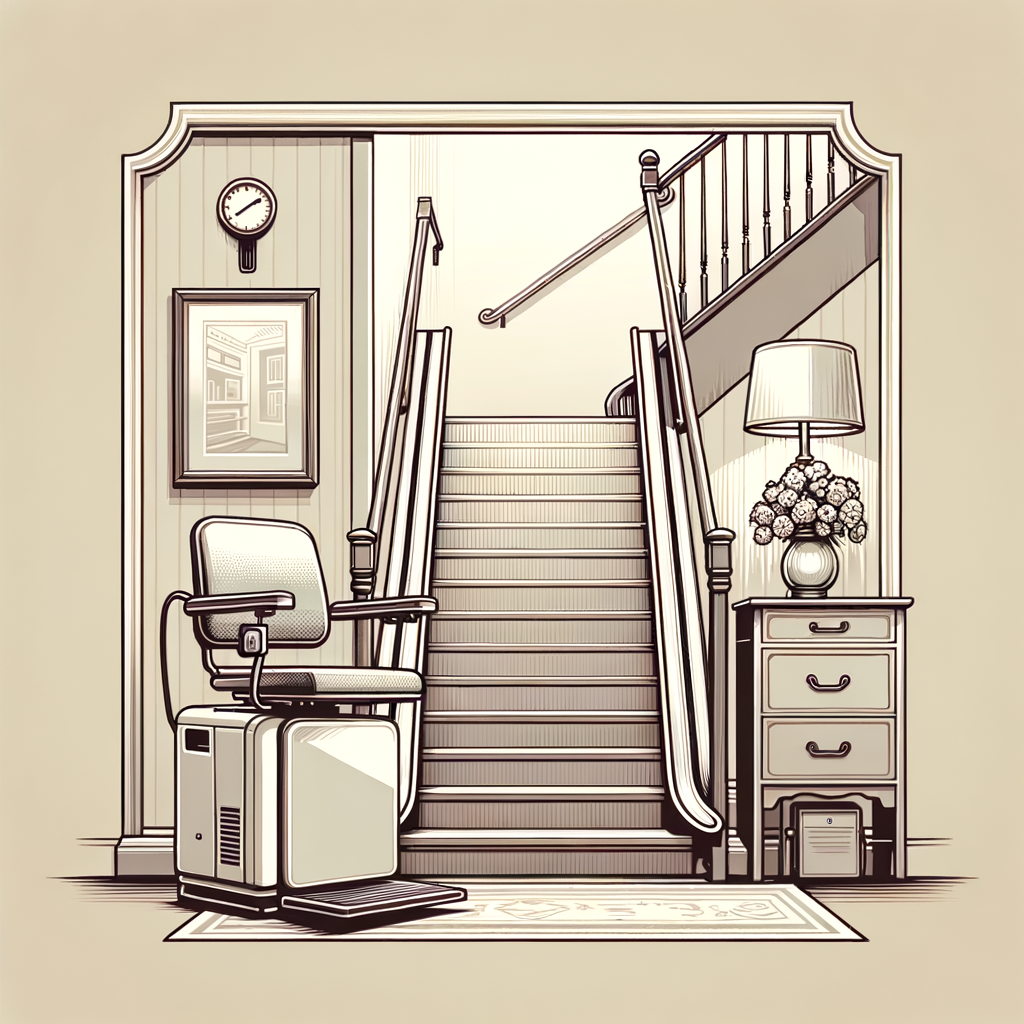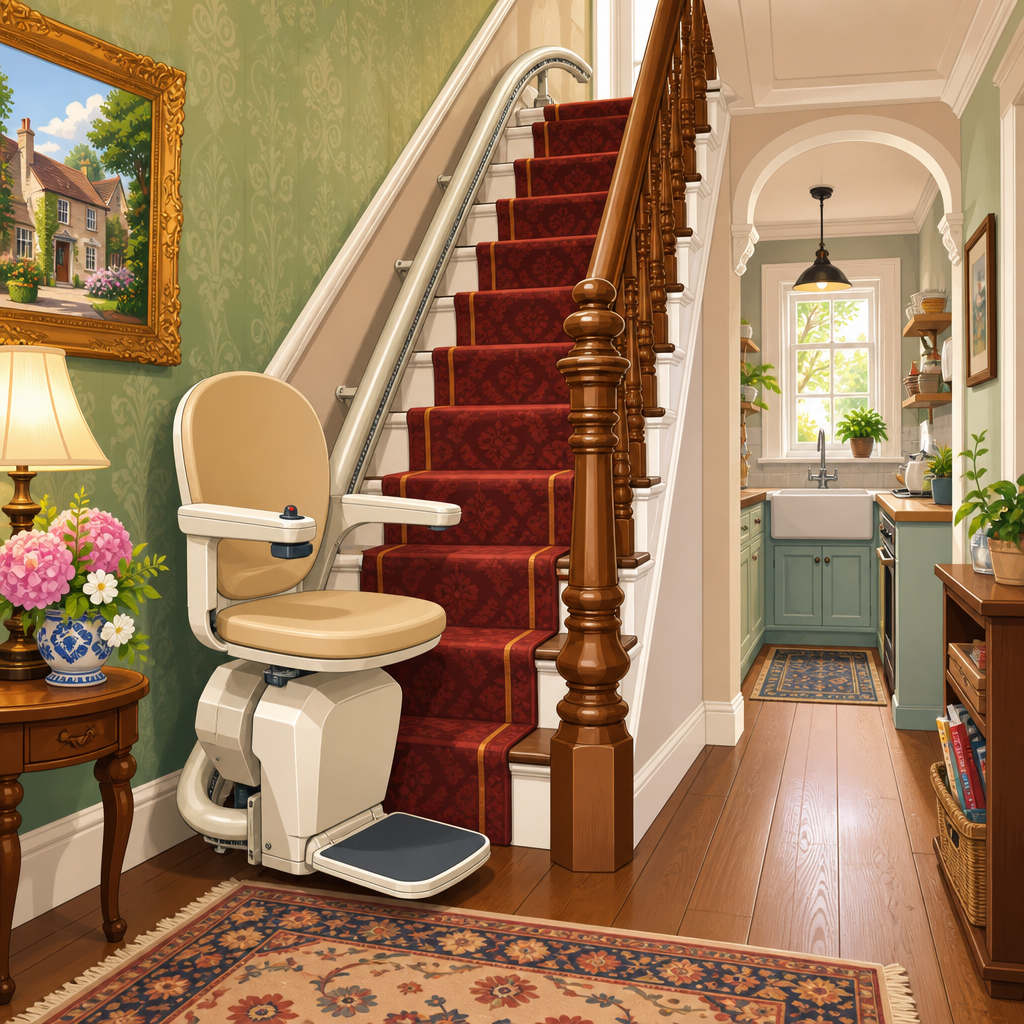
Tailored chair lifts for historic or compact homes solve a problem standard stairlift models often cannot: how to deliver safe, code-conscious access in spaces shaped by narrow staircases, tight landings, decorative woodwork, curved walls, and preservation rules. In practice, this category includes custom chair lifts built for unusual geometry, hybrid designs that combine straight and curved rail sections, and configurable components such as perch seats, hinged rails, offset arms, and slimline carriages. I have worked on projects where a conventional catalog unit fit the stair width on paper yet failed in the field because a radiator, newel post, or low sill blocked safe boarding. That is why tailored solutions matter. They start with the realities of the home rather than forcing the home to match the product. For owners of Victorian townhouses, bungalows with basement stairs, row houses, cottages, loft conversions, and other small-footprint homes, customization can make the difference between staying put and facing an unnecessary move. For families preserving a landmark property, the right design also protects original trim, plaster, and sightlines while improving day-to-day independence.
Custom and hybrid chair lift designs are the hub of the broader chair lift types and designs conversation because they connect many related topics: straight versus curved rails, indoor versus outdoor use, seat styles, rail mounting methods, transfer safety, battery backup, and maintenance planning. A tailored system is not one single product. It is an engineering approach. The installer surveys tread depth, rise, nosing profile, staircase pitch, folding clearance, parking positions, and user transfer needs, then builds a lift around those constraints. In compact homes, the objective is usually maximizing pass-through space for other household members while keeping boarding predictable. In historic homes, the objective expands to minimizing visual impact, limiting irreversible changes, and coordinating with preservation requirements. Across both settings, the same questions come up: Will the rail intrude into a hallway? Can the chair park away from the main room? Is the staircase wide enough when the footrest is folded? Can the system handle a mid-landing turn? This article explains how custom and hybrid designs answer those questions, where they work best, and what buyers should evaluate before choosing a manufacturer or dealer.
What makes a chair lift tailored, custom, or hybrid
A tailored chair lift is any stairlift configured beyond a standard straight run to suit the user and the home. The most common distinction is between custom and hybrid. A custom chair lift usually means the rail is manufactured to the exact staircase layout, often after a digital survey captures dimensions with photo measurement or laser tools. Curved stairlifts are the classic example. The rail bends to match turns, intermediate landings, spiral sections, or changes in pitch. A hybrid design blends modular and bespoke elements. For example, a home might use a mostly straight rail with one custom curve at the bottom to avoid blocking a front door, or a straight unit paired with a powered hinge to clear a walkway. Hybrid systems are especially valuable in compact homes because they control cost while solving one or two critical clearance issues.
In my experience, customization usually centers on five variables: rail path, seat form, parking position, mounting details, and user transfer setup. Rail path determines where the carriage travels and whether overrun sections move the rider away from the stairs at top or bottom. Seat form covers seat width, swivel range, perch options, arm shape, and folded depth. Parking position decides where the chair rests when not in use, often with remote controls so it can be sent to another floor. Mounting details include bracket spacing, load distribution, and whether the rail can avoid delicate trim or weak substrate. Transfer setup addresses how a user gets on and off, including powered swivel seats, retractable seat belts, and armrest controls. When all five are handled together, a chair lift feels integrated instead of improvised.
Design challenges in historic and compact homes
Historic and compact homes create a distinct set of installation constraints. Older houses often have steeper stair pitches, inconsistent tread dimensions, ornate banisters, and landings that were never designed around modern mobility equipment. Compact homes add narrow widths, short hallway depth, and doors that open near the first or last step. In many prewar homes, the staircase is also a visual centerpiece, which means the owner cares as much about appearance as function. A standard unit may technically travel the stairs but still be a poor fit if the folded chair blocks circulation or the rail cuts across a key sightline. I have seen compact row houses where two extra inches of folded footrest depth determined whether a spouse could safely pass on the stairs.
Preservation concerns can be equally important. Chair lifts generally mount to stair treads rather than the wall, which is useful in historic interiors because it reduces intervention in plaster and millwork. Still, the installation is not invisible. Brackets, rail color, charging points, and call stations all affect the room. In designated historic properties, local review boards may ask for reversible work, minimal alteration of character-defining features, and routing that avoids damaging original balusters or handrails. Good installers document existing conditions, propose discrete parking locations, and specify finishes that visually recede. They also coordinate with occupational therapists, contractors, or preservation consultants when the user has complex needs or the house has legal restrictions. The best tailored designs respect both access and architecture rather than treating one as secondary.
Core design options that make difficult stairs workable
Several components repeatedly solve access problems in custom and hybrid chair lift projects. Slimline seats reduce folded projection into the staircase. Perch seats help users who struggle to bend fully at the hips or knees and need a more upright travel position. Powered hinges lift the lower rail segment up when the chair is parked, preventing the rail from blocking a doorway or hall. Zero-intrusion and high-park starts reposition the chair away from the first step so the staircase entrance remains clearer. On upper floors, overrun rails move the rider beyond the top nosing to a safer transfer point. Powered swivel seats and footrests reduce twisting and bending, which lowers fall risk during boarding.
Hybrid rail geometry is another practical tool. If most of the staircase is straight, adding one custom curve can prevent expensive full-curve fabrication while still opening the room. This is common in compact foyers where the bottom landing meets a front door, closet door, or radiator. Some systems also allow tight-radius curves that hug the inner edge of the stair more closely, preserving walking space. Weight capacity matters too. Standard capacities often range from about 250 to 350 pounds, while heavy-duty custom models can exceed that, but larger seats and carriages may need more clearance. The right choice is not simply the strongest unit. It is the one that balances user size, transfer stability, folded profile, and household traffic.
| Design challenge | Tailored solution | Why it helps in older or smaller homes |
|---|---|---|
| Narrow staircase | Slimline seat with folded footrest | Preserves pass-through width for other users |
| Doorway at stair base | Powered hinge or bottom curve | Keeps rail from obstructing the doorway or hall |
| Top landing feels unsafe | Top overrun with swivel seat | Moves transfer away from stair edge |
| Decorative trim or plaster | Tread-mounted brackets and careful bracket spacing | Limits impact on historic fabric |
| User cannot sit fully | Perch-style seat | Allows more upright riding posture |
| Mid-landing turn | Custom curved rail | Maintains continuous travel without transfer |
Engineering, measurement, and installation standards
Successful custom chair lift installations depend on measurement discipline. Reputable dealers use detailed stair surveys that record overall run, individual tread dimensions, landing clearances, obstructions, electrical supply, and user anthropometrics. On curved projects, many manufacturers rely on photo survey systems or digital mapping so the rail can be fabricated precisely. A difference of even a small amount at a turn can create a rough ride, poor parking position, or interference with trim. The rail must also maintain proper rack alignment, support spacing, and carriage clearances. In difficult homes, the pre-install survey is more important than the installation day itself because it determines whether the final product behaves predictably.
Standards and code considerations should never be an afterthought. In the United States, stairway chairlifts are commonly evaluated to ASME A18.1, the Safety Standard for Platform Lifts and Stairway Chairlifts, and products may be listed by recognized testing organizations. Local building and electrical requirements still apply, especially in multifamily settings or when additional outlets are installed. Most residential chair lifts use battery-powered drives with charging points at one or both ends, which means they continue operating during a power outage for a limited number of trips. That is a significant benefit in older neighborhoods where service interruptions are more common. Installers should also explain emergency lowering, seat belt operation, obstruction sensors, and maintenance intervals. For compact homes, I advise clients to request a full boarding simulation before sign-off, using the actual user’s cane, walker, or transfer technique, because real-world movement often reveals issues that dimensions alone miss.
Choosing the right manufacturer, dealer, and specification
Not every dealer who sells stairlifts is equally strong at tailored work. Buyers should look for a company that can show completed projects in older homes, explain how it handles unusual geometry, and provide a written scope covering rail path, power needs, lead time, service coverage, and warranty terms. Manufacturers known for custom curved and space-saving solutions often differ in seat design, ride quality, noise level, and turnaround speed. Some excel at one-rail compact systems, while others are stronger in highly customized multi-curve rails or specialized perch configurations. The best match depends on the staircase and the rider, not just the brochure.
Ask direct questions. How much clear stair width remains with the seat and footrest folded? Can the unit park out of sight from the main room? Is there a powered hinge option, and how much clearance does it need? What is the tested weight capacity for the exact seat selected? How long will replacement batteries or service parts remain available? Can the rail color and upholstery be coordinated with the interior? Also ask about future adaptability. A user may need a different seat height, joystick position, or transfer setup later. In a hub topic like custom and hybrid designs, that flexibility matters because the chair lift is rarely a one-variable purchase. It is part accessibility device, part architectural intervention, and part long-term service relationship.
Cost, maintenance, and long-term value
Tailored chair lifts cost more than standard straight models because they involve custom surveying, engineered rails, more complex fabrication, and longer installation planning. Straight lifts may start in the low thousands, while custom curved or hybrid systems often rise substantially depending on rail complexity, powered options, and site constraints. Historic homes can add cost if installers need extra time to protect finishes, fabricate special mounting solutions, or coordinate with other trades. Even so, the value equation should be measured against delayed relocation, reduced caregiver strain, and lower fall risk. For many households, a customized chair lift is less expensive than a move, a major remodel, or repeated injury-related care.
Maintenance is straightforward when expectations are clear. Batteries are consumables and typically need periodic replacement. Rails should stay clean, charging contacts unobstructed, and upholstery inspected for wear. Annual service is a practical baseline, though high-use homes may need more frequent checks. Custom systems also deserve documentation: final drawings, serial numbers, remote programming details, and service contacts. That record is invaluable if the property changes hands or the user’s needs evolve. The strongest outcome is a tailored chair lift that blends into the home, serves the rider safely every day, and preserves options for the future. If you are comparing chair lift types and designs, start with a professional survey of your staircase and your transfer routine. That single step turns a generic product search into a precise plan for independent living in the home you want to keep.
Frequently Asked Questions
Can a chair lift really be installed in a historic home without damaging original features?
Yes, in many cases it can. Tailored chair lifts are specifically designed for homes where preserving original character matters just as much as improving accessibility. In historic properties, installers and manufacturers often work around narrow staircases, carved banisters, plaster walls, decorative trim, and unusual stair geometry by using custom rail layouts and compact components instead of forcing a standard system into place. The goal is to support safe mobility while minimizing alteration to architectural details that give the home its value and identity.
One important point is that most chair lift rails are mounted to the stair treads rather than the wall. That matters in older homes because it can reduce the need to drill into historic plaster, paneling, or masonry. Where visual sensitivity is a concern, slimline rails, park positions, folding seats, and retractable or hinged rail sections can help keep the lift as unobtrusive as possible when not in use. In some projects, installers also select finishes and upholstery that blend more naturally with the home’s interior rather than looking overly clinical.
Historic homes do come with added planning considerations. Local preservation rules, HOA guidelines, or landmark district requirements may affect what can be altered, especially near visible entryways or prominent stair halls. A qualified dealer or accessibility specialist should assess the staircase, review code and preservation constraints, and document a design that balances access, reversibility, and aesthetics. In many situations, a custom chair lift is one of the least invasive accessibility solutions available because it can often be installed with fewer structural changes than ramps, elevators, or major stair reconstruction.
What makes a chair lift “tailored” for a compact or unusually shaped staircase?
A tailored chair lift is built around the staircase instead of asking the staircase to fit the lift. Standard models generally work best on wide, predictable runs with simple layouts. Compact and historic homes rarely offer that kind of ideal condition. They may have steep rises, narrow tread depth, short bottom approaches, tight upper landings, intermediate turns, curved walls, or transitions that combine straight sections with bends. A tailored system addresses those variables through custom measurements, rail engineering, and configurable seat and arm options.
In practice, this can mean a fully custom curved rail, a hybrid design that uses both straight and curved sections, or specialized features that improve clearance in cramped areas. Examples include perch seats for users who have difficulty sitting fully, offset arms to improve transfer space, powered footrests, slimline seats that fold tightly, and hinged rails that lift out of the way near doorways or hall paths. These features are not cosmetic upgrades; they are often what makes a lift usable in a staircase where every inch matters.
The tailoring process usually begins with a detailed site survey. The installer measures stair width, tread shape, headroom, landing depth, wall projections, handrail interference, and the user’s transfer needs. From there, the manufacturer or engineering team determines whether a straight, curved, or hybrid rail system is appropriate and what seat configuration will preserve the most walking space. For compact homes, the best design is often the one that safely serves the rider while still allowing other household members to use the stairs comfortably.
Will a custom chair lift still leave enough room for other people to use a narrow staircase?
Often yes, but this depends on the exact dimensions of the staircase, the lift model, and how the system is configured. In compact homes, maintaining passable stair clearance is one of the biggest design priorities. Tailored chair lifts address this by using narrow-profile rails, fold-up seats and footrests, and parking positions that keep the chair out of the main walking path when it is not in use. A system that looks impossible at first glance may become workable once those details are planned correctly.
That said, there is no universal minimum that guarantees comfort for every household. A staircase may technically accommodate a chair lift, but the day-to-day usability can vary based on whether residents carry laundry, use the banister, or need to pass one another on landings. This is why an in-home assessment matters so much. A qualified professional should evaluate not only whether the lift fits, but whether the finished setup will function well for everyone who uses the stairs. In some cases, changing the side of installation, adjusting the rail overrun, or selecting a more compact seat makes a major difference.
For especially tight layouts, custom solutions such as hinged rails or perch-style seating can preserve precious clearance at the top or bottom of the staircase. The most successful installations are designed around actual movement patterns in the home, not just static measurements. If stair access for other occupants is a concern, bring it up early during the planning process so the system can be engineered with clearance, convenience, and safety in mind.
Are custom chair lifts safe and compliant with building or preservation requirements?
When properly selected and professionally installed, custom chair lifts can be both safe and code-conscious. Reputable systems are designed with core safety features such as seat belts, obstruction sensors, swivel seats for safer transfers, footrest protection, battery backup, and call/send controls. Customization does not mean improvisation. A well-designed tailored lift uses tested components and engineered rail solutions to adapt to a difficult staircase while preserving the safety standards expected from a residential mobility device.
Compliance, however, is not one-size-fits-all. Building code considerations may involve stair clearance, egress concerns, power supply requirements, and how the lift interacts with doors, hallways, or shared circulation areas. In historic homes, there can also be preservation-related restrictions on visible alterations, fastening methods, or modifications to character-defining features. That is why homeowners should work with experienced professionals who understand both accessibility equipment and the regulatory environment in their area. The best installers coordinate design decisions before fabrication, not after problems arise onsite.
If your home is subject to local historic review, it is wise to ask for drawings, product specifications, finish samples, and an explanation of how the installation can be reversed in the future if needed. Many preservation-minded property owners appreciate that chair lifts can often be removed with less long-term impact than more invasive accessibility projects. Safety and compliance are strongest when the project is approached as a planning exercise, not just a product purchase.
How do I know whether I need a fully custom curved lift, a hybrid system, or just configurable accessories on a standard model?
The right option depends on the staircase geometry and the user’s mobility needs. A fully custom curved lift is typically necessary when the staircase includes turns, winders, spirals, split landings, or continuous curvature that a straight rail cannot handle. These systems are built to follow the exact path of the stairs and are usually the best choice for complex layouts common in older or architecturally distinctive homes. They tend to cost more because the rail is fabricated to precise measurements, but they can solve access problems that standard equipment simply cannot.
A hybrid system can be a smart middle ground when the staircase includes both straightforward runs and one or more directional changes. Rather than treating the entire installation as either straight or curved, the design combines rail types to match the actual structure of the staircase. This can be especially useful in compact homes where space-saving transitions matter and where a fully conventional setup would create awkward landings or poor parking positions.
Configurable accessories on an otherwise standard model may be enough when the main issue is not the rail path but the available clearance. For example, a narrow staircase might still work with a straight lift if it includes a slim seat, perch option, folding footrest, offset armrests, or a hinged rail at the bottom to avoid blocking a doorway. The only reliable way to know is through a professional assessment that looks at both fit and function. A good provider should explain why a particular design is recommended, what trade-offs come with each option, and whether there is a simpler approach that still meets safety and usability needs.