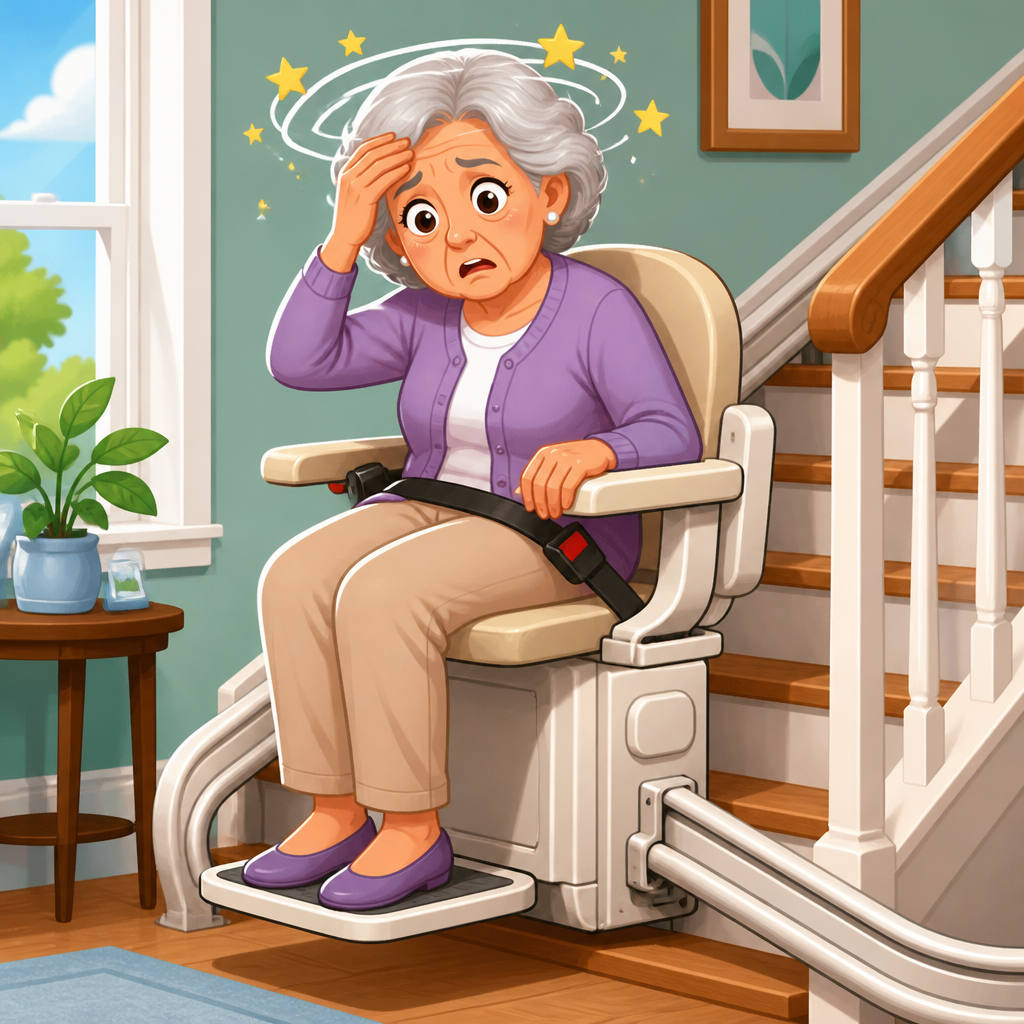
Feeling dizzy while riding a stair lift can be unsettling, but the right response is usually simple: stay seated, stop the lift if needed, and address the cause before riding again. Dizziness is a sensation of lightheadedness, imbalance, spinning, or faintness, and it matters because stair lifts are moving medical mobility devices installed on staircases, where poor judgment or sudden movement can lead to a fall. I have worked with stair lift users, installers, and caregivers long enough to see a consistent pattern: the dangerous moment is rarely the equipment itself; it is the rider’s instinct to stand up, twist around, or rush off the seat while symptoms are still active. This article explains what to do immediately, what may be causing the dizziness, how to prevent it, and when a symptom points to a medical problem rather than a lift issue.
A stair lift is designed to move one seated user safely along a rail, usually with a seat belt, armrests, footrest, obstruction sensors, and constant-pressure controls that stop movement when the control is released. Those features give you time to respond safely if something feels wrong. Common reasons a person feels dizzy on a stair lift include dehydration, low blood pressure, medication side effects, vertigo, anxiety, poor seat positioning, abrupt stopping or starting, and, less often, a maintenance issue that creates unusual motion. Because this page serves as a safety hub, it also connects the larger topic of user safety best practices: safe transfers, proper seating, routine checks, battery awareness, rider weight limits, clothing hazards, and caregiver support. If you understand the core response and the broader habits around safe use, you reduce risk every time the lift is used.
What to do immediately if you feel dizzy during a stair lift ride
If you feel dizzy while the stair lift is moving, remain seated fully back in the chair, keep both feet on the footrest, and do not try to stand up. Fast movements worsen dizziness and dramatically increase fall risk on stairs. Use the seat belt if it is not already fastened; on most modern lifts it should always be fastened before travel begins. If symptoms feel mild, focus on a fixed point ahead and take slow breaths. If the dizziness becomes stronger, release the constant-pressure control or press the stop control if your model has one. Stair lifts are intentionally designed to stop when the user stops pressing the directional control, which is one of the most important built-in safety features.
Once the lift stops, stay where you are until the spinning or lightheaded feeling settles. If you are between floors, call for help using your phone, voice assistant, or nearby caregiver rather than attempting to get off onto the staircase. In homes where the user has a known history of vertigo or fainting, I strongly recommend carrying a phone or wearable alert device during every ride. If the lift has swivel functionality at the landing, do not rotate the seat unless you are fully at the top or bottom landing and the chair is locked into transfer position. A controlled stop is safe; an unplanned transfer on a staircase is not. If symptoms include chest pain, severe shortness of breath, new weakness, confusion, slurred speech, or loss of consciousness, treat it as a medical emergency and call emergency services immediately.
Why dizziness happens on a stair lift
Dizziness during stair lift use usually comes from the rider, not the machine, but the sensation can still be triggered by the moving environment. Benign paroxysmal positional vertigo can make head position changes feel like spinning. Orthostatic hypotension, a drop in blood pressure when standing or changing position, can hit just before sitting down or just after standing up from the lift. Medications commonly associated with dizziness include antihypertensives, sedatives, sleep aids, some antidepressants, opioids, and drugs that affect blood sugar. Even missing a meal can leave a rider shaky and lightheaded. Anxiety also matters more than many families expect; a person who is already afraid of stairs may tense up during the ride, breathe shallowly, and interpret normal motion as instability.
Equipment-related contributors do exist. An aging battery can create sluggish performance before charging catches up. A dirty rail can make travel feel rougher. Misaligned footrest sensors, worn seat padding, or a seat set at an awkward height may force poor posture and increase discomfort. In my experience, users often describe “the lift made me dizzy” when the actual issue is a combination of dehydration, turning the head quickly to look behind them, and a stop-start ride caused by releasing and re-pressing the control. The practical lesson is to look at both human and equipment factors. A stair lift should move smoothly at a controlled speed, typically around 15 to 20 feet per minute depending on model and rail design, with no jerking, grinding, or abrupt surging.
How to tell whether the problem is medical, environmental, or mechanical
The quickest way to assess dizziness is to ask three direct questions. First, did the room feel like it was spinning, or did you feel faint? Spinning suggests vertigo; faintness points more toward blood pressure, dehydration, blood sugar, or medication effects. Second, did the symptom begin before the stair lift started moving, during travel, or when you got on or off? Symptoms before movement usually indicate a personal health cause, while symptoms only during the ride may involve anxiety, visual sensitivity, or a rough-running unit. Third, has this happened elsewhere, such as getting out of bed, standing from a chair, or riding in a car? If yes, the lift may simply be the setting where an existing problem shows up.
Environmental factors are also common and easy to miss. Dim lighting can distort depth perception. A narrow staircase with patterned wallpaper or strong shadows can make motion feel more dramatic. Hot indoor temperatures contribute to lightheadedness, especially in older adults. Mechanical causes are more likely if several users notice unusual motion, if the chair hesitates in the same spot on the rail, or if warning beeps, charging issues, or fault codes appear. Most manufacturers, including Bruno, Stannah, Handicare, and Harmar, publish owner guidance that emphasizes stopping use and calling for service if the ride feels abnormal. That is sound advice. If the unit’s movement has changed, do not assume it is “just one of those things.”
Safe riding habits that prevent dizziness and falls
Good stair lift safety starts before the ride. Sit all the way back in the seat so your spine is supported and your center of gravity stays stable. Fasten the seat belt every time, even for a short trip. Place both feet flat on the footrest and keep hands inside the armrests rather than reaching for the wall or banister. Face forward unless your model is specifically configured otherwise. The less you twist your neck and torso during travel, the less likely you are to trigger vertigo or lose orientation. I also advise users to pause for a few seconds after sitting down before pressing the control; that short reset helps if symptoms are caused by transferring too quickly from standing to sitting.
Transfer safety is just as important as riding safety. At the top landing, the seat should swivel away from the stairs and lock before you stand. At the bottom, stand slowly and hold a stable support such as a cane, walker, or grab bar if prescribed. Never carry bulky loads, laundry baskets, oxygen tubing loops, or pets on your lap during travel. Avoid loose scarves, long cardigans, and trailing blanket edges that can interfere with movement. If you use bifocals or progressive lenses, be aware that stair edges and moving visual fields can feel distorted; some users do better focusing straight ahead rather than looking down while the lift moves. Consistent habits reduce both dizziness and panic.
Maintenance checks that support user safety
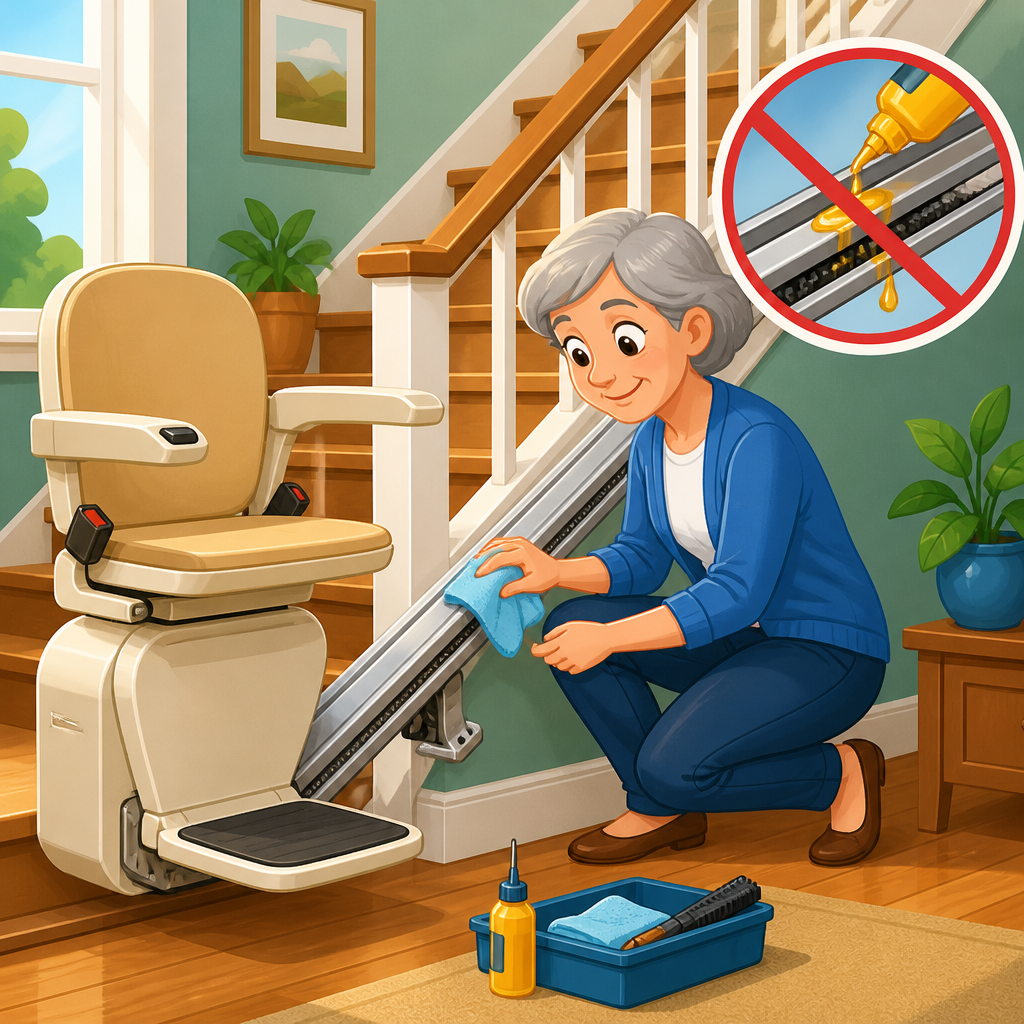
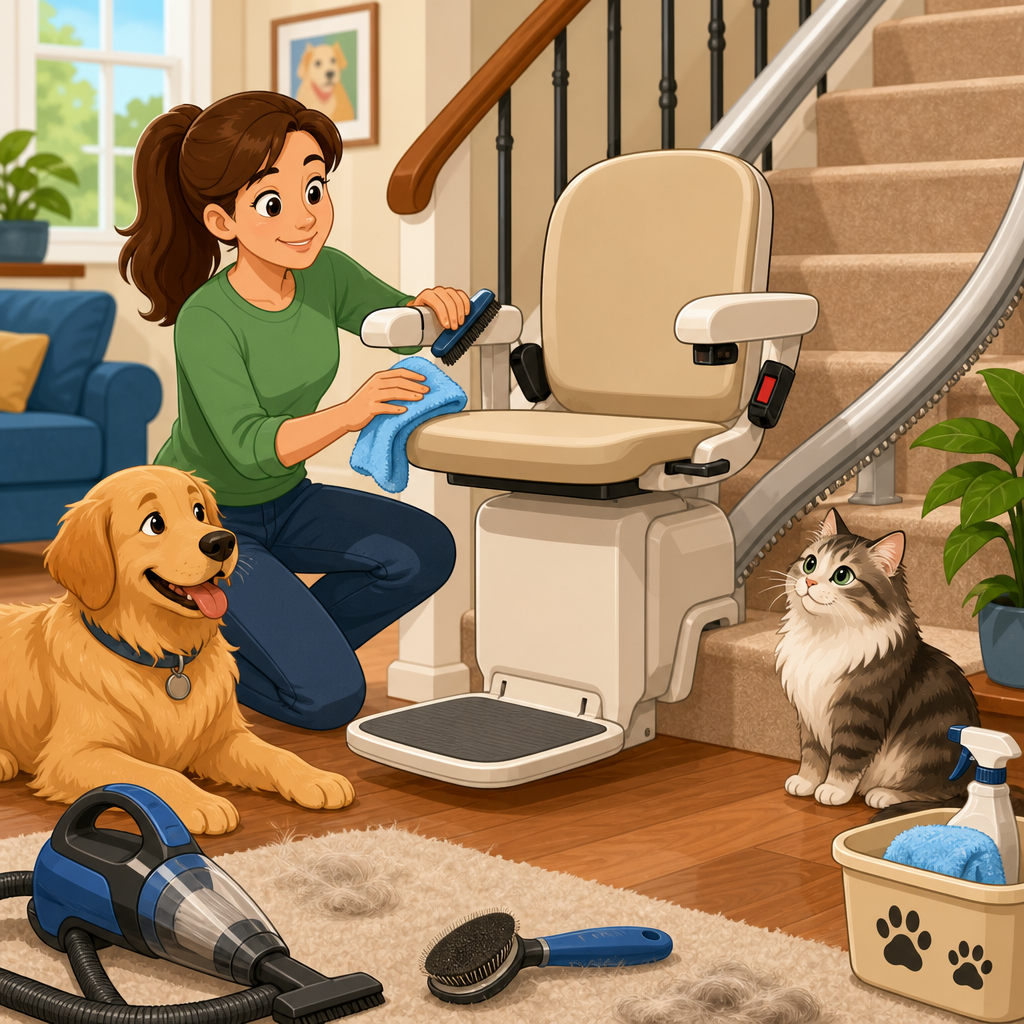
Reliable motion is a safety feature, which is why maintenance belongs in any stair lift safety hub. Most residential stair lifts use rechargeable batteries that charge at points on the rail. If the chair is not parked correctly, charging may not occur, and the user may encounter slow operation or a low-battery alarm. Keep the rail clean and free of dust, pet hair, and debris according to the manufacturer’s instructions; do not lubricate parts unless the manual specifically says to do so, because many modern rails should remain dry. Test the seat belt, swivel lock, footrest folding mechanism, and call/send controls regularly. If any component feels loose or inconsistent, schedule service before continued use.
The table below shows practical warning signs and the safest response.
| Warning sign | Likely meaning | What to do |
|---|---|---|
| Jerky movement or stopping in one spot | Possible rail obstruction, sensor issue, or service need | Stop using the lift and arrange professional inspection |
| Beeping when parked | Not charging properly or battery issue | Park at charge point, check power supply, call service if it continues |
| User feels dizzy only when standing up at landing | Possible orthostatic hypotension or transfer technique issue | Stand slowly, discuss symptoms with clinician, review transfer routine |
| Dizziness plus spinning when turning head | Possible positional vertigo | Stay seated, avoid sudden head movement, seek medical evaluation |
| Seat will not lock after swivel | Unsafe transfer condition | Do not use until repaired |
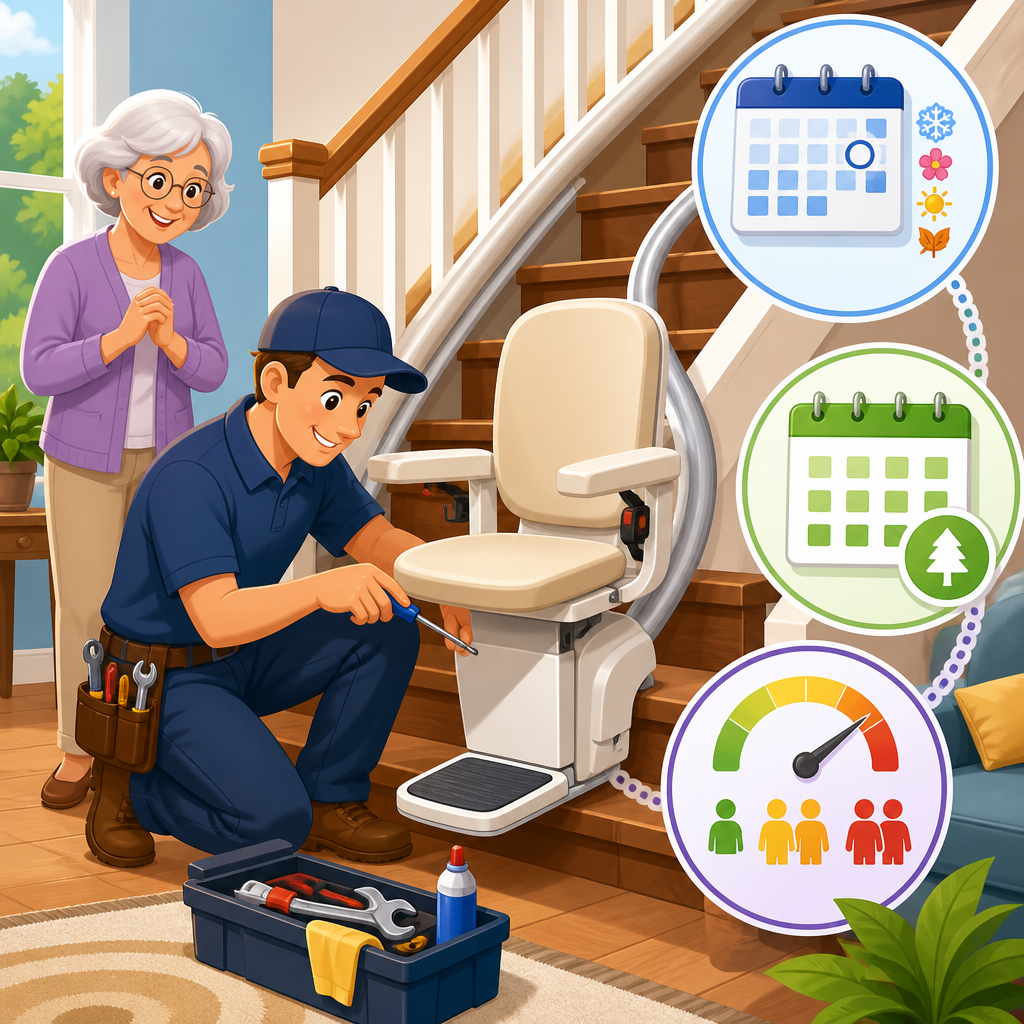
Annual professional servicing is a reasonable baseline, though heavy-use homes may need more frequent attention. Reputable technicians inspect carriage function, charge contacts, track alignment, overspeed governor components where applicable, seat and arm hardware, and safety edges or obstruction sensors. If your user manual includes a diagnostic display or fault code chart, keep it accessible near the staircase along with the service number. A simple maintenance log is useful in real homes because it shows whether dizziness complaints line up with missed service, battery age, or changes in ride quality. That kind of pattern recognition often solves problems faster than guesswork.
Special considerations for older adults, caregivers, and high-risk users
Older adults are more likely to have multiple risk factors for dizziness at the same time: reduced hydration, blood pressure variability, vision changes, inner ear disorders, diabetes, and medication interactions. A caregiver should not assume the user will mention symptoms clearly. Ask targeted questions: Did you feel the room spin, feel weak, or feel unsteady when you stood? Did it happen before you got on, while moving, or after you got off? Those details help determine whether the next step is a medical appointment, a safety routine change, or a service call. For users with cognitive impairment, consistent routines and close supervision are especially important because impulsive standing is a major hazard.
High-risk users benefit from environmental setup. Ensure the top and bottom landings have clear space, bright lighting, and a stable handhold nearby. Keep frequently used items off the stairs and off the floor around the landing so the user never feels rushed stepping away from the chair. If the person uses a walker, place it within easy reach at the destination landing, not on the stair treads. In homes with recurrent dizziness episodes, I often recommend discussing the symptom with the prescribing clinician and requesting a medication review. The American Geriatrics Society Beers Criteria is commonly used to identify medications that may be inappropriate or higher risk for older adults, and dizziness is a frequent reason those reviews matter.
When to call a clinician and when to call a stair lift technician
Call a clinician if dizziness is new, recurrent, worsening, or linked to standing, turning the head, missed meals, medication changes, hearing symptoms, or recent illness. Immediate medical evaluation is essential if dizziness comes with one-sided weakness, facial droop, severe headache, chest pain, fainting, or trouble speaking. Those are not stair lift problems. On the other hand, call a stair lift technician if the chair suddenly rides rough, stops unexpectedly, fails to charge, gives repeated alarms, or feels different from its usual smooth travel. If you cannot tell which category fits, start by taking the lift out of service temporarily and documenting exactly what happened, including the time, symptoms, and whether the unit showed any beeps or indicators.
The main benefit of this approach is clarity. You protect the rider first, then sort the cause without taking risks on the stairs. Safe stair lift use depends on a few nonnegotiable practices: stay seated if dizzy, never step off onto the staircase, use the seat belt every ride, transfer only at a locked landing position, and treat repeated symptoms as a signal to investigate. Maintenance, troubleshooting, and safety are connected, which is why this hub page should lead users to related guidance on batteries, charging, safe transfers, obstruction sensors, routine servicing, and rider setup. Review your stair lift manual, create a simple response plan, and schedule any overdue maintenance or medical follow-up now.
Frequently Asked Questions
What should you do immediately if you feel dizzy while riding a stair lift?
If you suddenly feel dizzy while the stair lift is moving, the safest first step is to stay seated and avoid any quick movements. Do not try to stand up, lean out, or reach awkwardly toward the stairs or handrail. Keep your back against the seat, hold the armrests if that helps you feel stable, and use the stop control if your lift has one and you can reach it safely. If the lift is already close to a landing and you feel steady enough to continue, move only if you are confident you can do so without increasing the dizziness. If the sensation is strong, stop the lift and wait until it passes or call for help if someone is nearby. The main goal is to prevent a fall, because dizziness combined with movement on a staircase can quickly become dangerous if you react suddenly.
Is it safe to keep riding the stair lift if the dizziness seems mild?
Sometimes mild dizziness passes within moments, but you should still take it seriously. Even slight lightheadedness, a spinning feeling, blurred vision, or a sense of being off-balance can affect judgment and make it harder to get on or off the lift safely. If the dizziness is minor and quickly improves while you remain seated, you may be able to continue to the nearest landing without issue, but only if you feel fully in control and the ride itself is not making symptoms worse. If there is any doubt, stop the lift and wait. A stair lift is a helpful mobility device, but it is still operating on a staircase, and the transfer on or off the seat is often the riskiest moment. In practice, it is far better to pause one trip than to push through dizziness and risk a misstep.
What can cause dizziness while using a stair lift?
Dizziness during a stair lift ride can come from several different causes, and not all of them are related to the lift itself. Some people are sensitive to movement or changes in visual perspective, especially when traveling up or down stairs while seated. Others may feel dizzy because of dehydration, low blood sugar, fatigue, medications, inner ear problems, blood pressure changes, or getting up too quickly before sitting down on the lift. Anxiety can also play a role, particularly for new users who are still adjusting to the sensation of riding. In some cases, the stair lift may contribute if it starts or stops abruptly, feels jerky, or does not seem to be running smoothly. That is why it helps to pay attention to patterns. If dizziness happens only occasionally and lines up with missed meals or standing up too fast, the cause may be personal and temporary. If it happens repeatedly during lift rides, especially with unusual motion, noise, or vibration, the lift should be inspected by a qualified technician.
When should you stop using the stair lift and call for medical or technical help?
You should stop using the stair lift until the issue is sorted out if dizziness is recurring, worsening, or severe enough to make you feel unsafe. Medical attention is especially important if the dizziness comes with chest pain, shortness of breath, fainting, weakness, confusion, severe headache, vision changes, or numbness, because those symptoms can point to something more serious than simple lightheadedness. If the dizziness seems tied to standing up, medication changes, balance problems, or a recent illness, contact your doctor for guidance before continuing regular use. On the technical side, arrange service if the lift feels jerky, stops unexpectedly, makes unusual sounds, starts too abruptly, or seems different from normal operation. A stair lift should move smoothly and predictably. If it does not, the equipment should be checked by a trained stair lift professional rather than guessed at or used “just one more time.”
How can you reduce the chances of feeling dizzy the next time you use a stair lift?
Prevention usually comes down to a few practical habits. Before using the stair lift, take a moment to make sure you feel steady, alert, and physically ready for the ride. Sit down carefully rather than dropping into the seat quickly, fasten the seat belt if your lift has one, and keep your feet positioned properly on the footrest. Many users do better when they look straight ahead instead of down the staircase during travel, since looking down can increase a sense of motion or imbalance. It also helps to stay hydrated, avoid riding on an empty stomach if low blood sugar is a concern, and rise slowly from beds or chairs before transferring to the lift. If you are new to stair lift use, a caregiver or family member can stay nearby during the first few rides until you feel comfortable. Finally, keep the lift maintained according to the manufacturer’s schedule. Smooth, predictable operation makes a real difference, and consistent maintenance helps rule out mechanical issues that could contribute to an unsettling ride.