Choosing between a chair lift and an elevator starts with understanding that both solve mobility problems, but they do so in very different ways, with different costs, installation demands, safety features, and daily user experiences. In home accessibility work, I have seen families use the terms interchangeably, yet the distinction matters because a stair lift, vertical platform lift, and residential elevator are built for different people, different homes, and different long-term plans. A chair lift usually means a motorized seat that travels along a rail mounted to a staircase, carrying one seated person up or down the stairs. An elevator, in the residential sense, is an enclosed cab that moves vertically through a shaft between floors and can carry standing passengers, seated riders, and often heavier loads. The right choice affects comfort, resale planning, caregiver support, and whether someone can remain safely at home after surgery, during aging, or while living with a permanent disability. This guide explains the practical difference between a chair lift and an elevator, answers common homeowner questions, and shows when each option makes the most sense.
What a chair lift is and who it is for
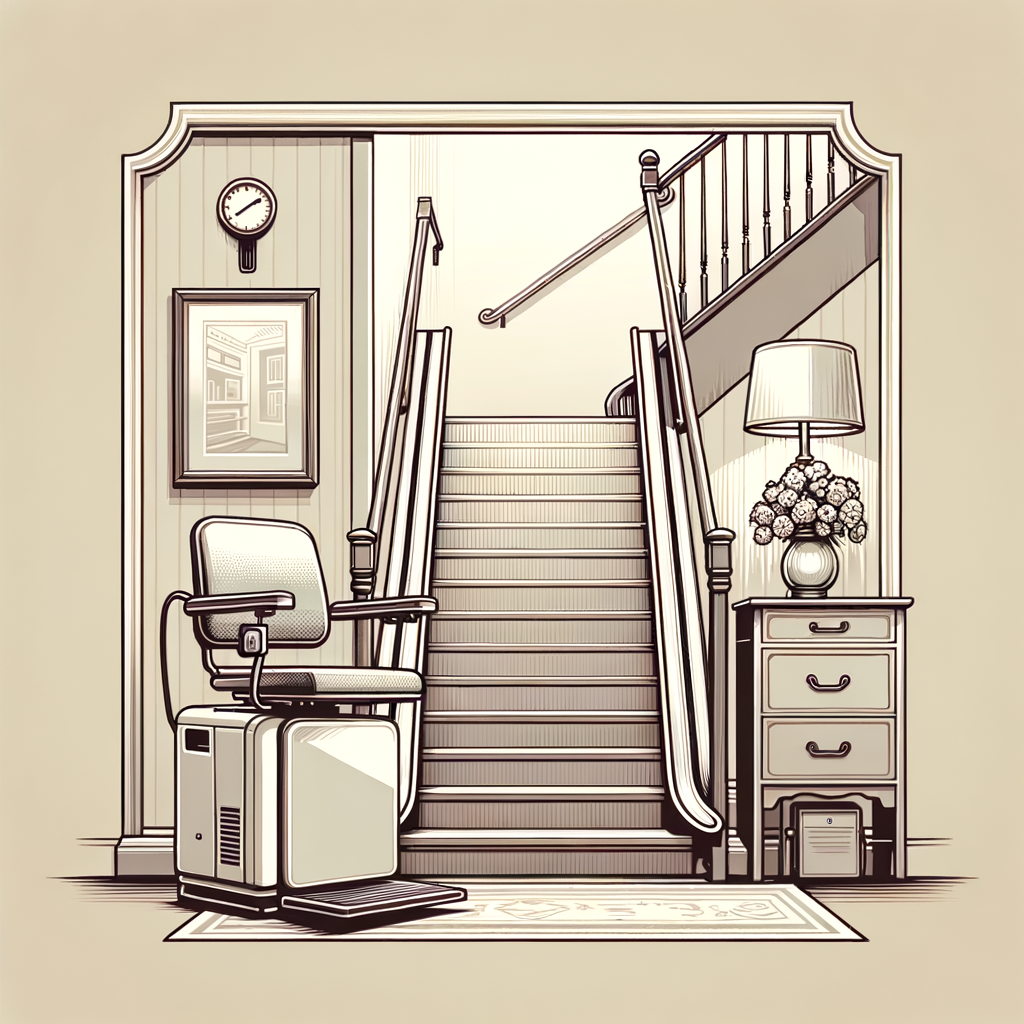
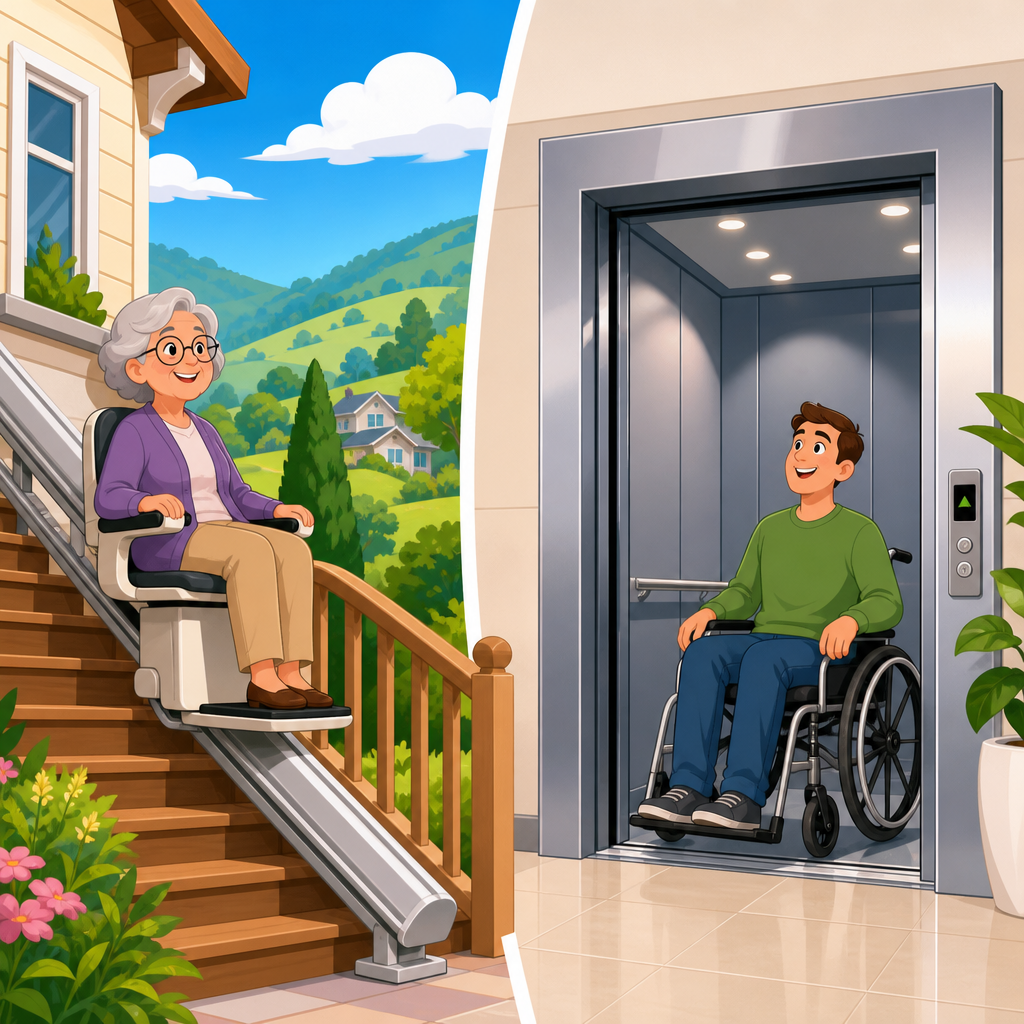
A chair lift is a powered seating system attached to a staircase. The user sits on the seat, secures a seat belt, and uses a control on the armrest or a call-send remote to travel along the stair rail. Straight stair lifts fit stairs without turns. Curved stair lifts are custom built for stairs with landings, bends, or intermediate turns. Outdoor stair lifts use weather-resistant materials and sealed components. In practical terms, chair lifts are best for people who can transfer onto a seat and sit upright safely during travel. That includes many older adults with knee arthritis, recovering surgical patients, and people with balance limitations who still retain some transfer ability. Most residential stair lifts run on batteries charged from household power, which means they often continue to operate during short power outages. Typical weight capacities start around 250 to 350 pounds, though heavy-duty models can go higher depending on stair width and rail design. The biggest advantage is minimal structural disruption. A stair lift usually installs on the stairs, not the wall, so many homes can be fitted in hours rather than weeks.
What a home elevator is and who it is for
A residential elevator is a vertical transportation system designed to move passengers between floors inside a hoistway or shaft. Unlike a chair lift, it does not require a user to transfer from a wheelchair, walker, or standing support device onto a seat. Modern home elevators may use hydraulic, winding drum, machine-room-less traction, or pneumatic systems, depending on model and local code acceptance. In most projects I have reviewed, the elevator becomes the more appropriate option when a household needs full wheelchair access, expects frequent caregiver assistance, or wants to move laundry carts, groceries, luggage, or medical equipment between floors. Elevators also suit multi-user households better because they can serve people with very different mobility profiles. Residential elevators are generally governed by code requirements that are more complex than those for stair lifts, including landing doors, emergency communications in some cases, pit or no-pit design parameters, overhead clearance, and electrical specifications. While they provide greater versatility, they demand significantly more planning, more space, and a much higher budget.
Chair lift vs elevator: the most important differences
The simplest difference is that a chair lift travels along stairs on a rail, while an elevator travels vertically in a dedicated path between floors. That design difference affects nearly every buying decision. A chair lift is usually faster to quote, simpler to install, and less expensive. An elevator is more adaptable, more accessible for wheelchairs, and often more attractive for long-term aging-in-place planning in larger homes. The transfer requirement is the deciding factor in many cases. If a person cannot sit safely, cannot bend comfortably, or uses a wheelchair full time, a standard chair lift may not solve the actual mobility problem. Another major difference is carrying capacity. Chair lifts are for one passenger at a time and little else. Elevators can transport people plus belongings, which matters in daily life more than many buyers expect. I often tell clients to imagine moving a vacuum cleaner, a hamper, or oxygen equipment, not just a person. A final difference is disruption. Stair lifts preserve the basic structure of the home, whereas elevators usually require framing changes, permits, inspections, and coordination among multiple trades.
| Feature | Chair Lift | Residential Elevator |
|---|---|---|
| Primary travel path | Along an existing staircase | Vertically between floors |
| User position | Seated rider | Standing, seated, or wheelchair user |
| Installation time | Often hours to 1 day | Often several weeks to months with construction |
| Typical home modifications | Minimal | Shaft, doors, electrical, and structural work |
| Accessibility level | Good for ambulatory users with transfer ability | Best for wheelchair and caregiver access |
| Relative cost | Lower | Much higher |
| Load flexibility | One seated person | People plus carts, supplies, or mobility devices |
Cost differences, maintenance, and long-term value
Cost is where the distinction becomes impossible to ignore. A straight stair lift commonly falls in the low thousands, while curved stair lifts cost more because the rail is custom fabricated to the staircase geometry. Residential elevators usually start far higher because the budget includes not only the lift equipment but also construction, permits, electrical work, finish carpentry, and inspections. In many markets, the final installed cost can be several times that of even a premium curved stair lift. Maintenance is different too. Stair lifts generally need battery checks, track cleaning, routine service, and occasional replacement of wear components. Elevators require more formal maintenance planning because there are more systems involved and more code-driven service expectations. Long-term value depends on the household. If one person needs seated stair access now, a stair lift can be the most efficient answer. If the home is intended as a decade-plus aging-in-place residence for multiple family members, an elevator may prevent a second costly upgrade later. The important point is that lower upfront price does not automatically mean better value; the better value is the option that matches current needs without creating new barriers within a few years.
Space, building requirements, and installation realities
Homeowners often ask whether they have enough space for a chair lift or an elevator. A stair lift needs sufficient staircase width, clear landings, and folding clearance for the seat, arms, and footrest. Many manufacturers recommend enough remaining walk space so other stair users can pass safely, though the exact requirement varies by product and local interpretation. Curved stairs, narrow stairs, and doorways near the top or bottom landing can complicate fit. An elevator requires a different level of feasibility analysis. Even compact residential models need a planned footprint, landing access on each floor, and compliance with local residential elevator code provisions, frequently based on ASME A17.1/CSA B44 requirements and related building rules. Some newer shaftless or through-floor lifts reduce structural impact, but they still need dedicated space and code review. Installation reality matters. A stair lift can often be measured, ordered, and installed with little disturbance to flooring, walls, or finishes. An elevator project can involve architects, contractors, electricians, permit offices, and inspectors. That does not make elevators impractical; it simply means buyers should think of them as construction projects, not appliance purchases.
Safety, comfort, and daily usability
Both systems can be very safe when correctly selected and maintained, but they manage risk differently. Chair lifts typically include a seat belt, obstruction sensors on the footrest or carriage, swivel seat locks at the landing, overspeed controls, and call-send stations. The key safety issue is user transfer. If getting on or off the seat is difficult, the hazard shifts from the machine to the transfer itself. I have seen this overlooked when families focus only on the staircase problem and not on hip range of motion, trunk strength, or dizziness. Elevators avoid that specific transfer challenge and can be more comfortable for people using wheelchairs or walkers. They also reduce caregiver lifting, which lowers injury risk in the home. However, elevators come with their own safety obligations, including regular service, emergency lowering or backup features depending on model, and proper use of landing doors and interlocks. In daily usability terms, chair lifts are excellent for a single routine trip up and down stairs. Elevators feel more natural for repeated household movement because users can enter with belongings, ride with another person, and move between floors without repositioning their body.
When a chair lift is the better choice
A chair lift is usually the better choice when the user can still walk short distances, transfer safely to a seat, and mainly needs help overcoming the stairs themselves. It works especially well in retrofit situations where budget is limited, installation speed matters, and structural changes are undesirable. For example, an older adult returning home after knee replacement may need temporary or medium-term stair support while regaining strength. A straight stair lift can solve that immediately with far less cost and disruption than adding an elevator. The same applies to homes where the upstairs bedroom remains accessible once the user reaches the landing and where wheelchair transport is not required. Chair lifts are also practical in townhouses or split-level homes with one problematic flight. If the goal is focused mobility support rather than whole-house universal access, a stair lift is often the rational answer. Buyers should still check seat size, weight rating, folded profile, and controls carefully. A cheap unit that does not fit the user’s body or staircase geometry is not a bargain; it is a daily frustration and a potential safety issue.
When an elevator is the better choice
An elevator is the better choice when the household needs broad accessibility rather than stair-specific assistance. If a resident uses a wheelchair, has progressive mobility loss, relies on a caregiver, or cannot perform safe seated transfers, an elevator addresses the underlying access problem far more completely. It is also the stronger option in luxury renovations and forever-home planning because it supports a wider range of future needs. I have recommended elevators in homes where clients initially asked for a chair lift but then described moving oxygen tanks, assisting a spouse, or expecting mobility changes from Parkinson’s disease, multiple sclerosis, or severe cardiopulmonary limitations. In those cases, a chair lift would have solved only a fraction of the problem. Elevators also make sense when the home has three or more levels and daily movement includes food, laundry, strollers, pets, or work materials. The drawback is straightforward: cost, construction, and lead time are materially higher. Even so, if the home will remain occupied long term and accessibility requirements are likely to expand, an elevator can be the more durable and financially sensible investment over the life of the property.
Frequently asked questions and practical buying guidance
Can a chair lift carry a wheelchair? No. A standard chair lift carries a seated person, not the wheelchair itself. Can an elevator be added to an existing house? Yes, but feasibility depends on layout, structural conditions, and local code. Is a chair lift easier to maintain? Usually yes, because the system is simpler, though routine service is still essential. Which adds more home value? A well-designed elevator often has broader market appeal, but value depends on neighborhood, home price point, and buyer demographics. Which is safer for an elderly parent? The safer option is the one the person can use independently and consistently without difficult transfers. Before buying, ask five practical questions: Can the user transfer safely today? What will mobility likely look like in three to five years? How many people need access? What structural work is acceptable? What is the full installed and service cost over time? Get an in-home assessment, request code-compliant specifications, and insist on a written scope covering warranty, service response, and removal or relocation limits. Good mobility equipment should fit the person, the staircase or structure, and the likely future, not just the immediate moment.
The difference between a chair lift and an elevator is not just technical; it is functional, financial, and deeply personal for the people who rely on it every day. A chair lift is the practical solution for many ambulatory users who need a faster, lower-cost way to ride existing stairs safely. An elevator is the comprehensive accessibility solution for households that need wheelchair access, caregiver support, greater carrying capacity, and stronger long-term adaptability. The smartest decision comes from matching the equipment to real mobility patterns, transfer ability, space constraints, and future health expectations. If you are comparing options under the broader Chair Lift Types & Designs topic, use this page as your hub: start by defining the user’s physical needs, then compare installation limits, code requirements, maintenance obligations, and total cost of ownership. That process prevents expensive mistakes and leads to equipment that genuinely supports independent living. The next step is simple: schedule an in-home assessment with a qualified accessibility professional and get recommendations based on your staircase, your floor plan, and the user’s actual daily routine.
Frequently Asked Questions
What is the main difference between a chair lift and an elevator?
The main difference is how each system moves the user and who it is designed to serve. A chair lift, often called a stair lift, carries one seated person along a rail mounted to a staircase. It is primarily intended for someone who can safely transfer into and out of a chair, remain seated during travel, and use the stairs as the travel path. A residential elevator, by contrast, is an enclosed cab that moves vertically between floors through a shaft or hoistway. It is designed to transport people, and often additional items such as walkers, laundry, groceries, or luggage, in a more comprehensive way.
That distinction matters because these products solve different accessibility challenges. A chair lift is usually a targeted solution for stair navigation. It can be ideal when a person has difficulty climbing stairs but still has enough balance and mobility to sit, fasten a seat belt, and stand up at the destination. An elevator is a broader mobility solution that can support aging in place, multi-user households, and long-term accessibility planning. It is generally better suited for homes where someone uses a wheelchair, has significant balance limitations, or needs easier transport between levels without using the staircase itself.
There is also a major difference in the home impact. Chair lifts use the existing staircase and typically require less structural change. Elevators usually involve more extensive construction, space planning, and mechanical requirements, but they offer a more seamless and universally accessible experience. In short, a chair lift is usually a staircase-based mobility aid, while an elevator is a whole-home vertical transportation system.
Which is more affordable to install: a chair lift or a residential elevator?
In most cases, a chair lift is far more affordable to purchase and install than a residential elevator. A stair lift is generally one of the least invasive home accessibility upgrades because it mounts to the stair treads or rail system rather than requiring a full shaft, machine space, or major framing changes. Installation is often completed relatively quickly, especially on a straight staircase, and the total project cost typically reflects that simplicity.
A residential elevator is usually a much larger investment. The equipment itself is more complex, and the installation often includes construction work such as building a hoistway, creating openings between floors, providing electrical service, and meeting local code requirements. Depending on the design, there may also be costs related to doors, interior finishes, permits, inspections, and customization. If the home was not originally designed for an elevator, retrofitting can increase the project cost further.
That said, affordability should be considered in terms of long-term value, not just upfront pricing. A chair lift may cost less initially but may not meet future mobility needs if the user later requires a wheelchair, caregiver assistance, or easier transport of everyday items. An elevator costs more at the start, but it can offer broader usability over time and may better support long-term aging in place. The right choice depends on both budget and whether the solution will still work several years from now.
Is a chair lift or an elevator better for someone with a wheelchair or more serious mobility limitations?
For a person who uses a wheelchair full time, a residential elevator or, in some homes, a vertical platform lift is usually the better choice. A standard chair lift is not designed to carry a person while they remain in a wheelchair. Instead, the user must transfer from the wheelchair onto the seat, ride the lift, and then transfer again at the other level. For many people, that transfer is physically difficult, unsafe, or simply impractical without assistance.
An elevator provides a much more accessible experience because the user can enter the cab directly, often with a wheelchair, walker, or other mobility device, and travel between floors without the need to transfer. This can significantly improve safety, comfort, and independence. It also helps caregivers, since assisting someone in and out of a chair lift can create strain and increase fall risk. In a real-world home setting, transfer ability is one of the most important decision points when comparing these options.
Even for someone who does not currently use a wheelchair, more serious mobility limitations can make an elevator the better long-term answer. Conditions involving poor balance, fatigue, joint pain, neurological changes, or progressive loss of strength may make the seated transfer and twisting motion of a chair lift more difficult over time. If the goal is to create a home that remains usable through changing health needs, an elevator usually offers greater flexibility and a safer path forward.
What are the installation and space requirements for a chair lift versus an elevator?
A chair lift typically has much lighter installation demands. It is installed along an existing staircase using a rail system, and in many homes it can be added without major remodeling. Straight staircases are the simplest, while curved staircases require custom rails and more detailed fitting. Even though chair lifts are relatively compact, they still take up physical space on the stairs, so homeowners need to think about staircase width, folded seat dimensions, and whether others can comfortably use the stairs when the lift is parked or folded.
An elevator requires much more planning because it needs dedicated vertical space between floors. In most residential applications, that means a hoistway or shaft, appropriate door openings, electrical service, and enough room for the cab and associated components. Some models reduce the need for a separate machine room, but they still require structural accommodations and coordination with contractors, designers, and local permitting authorities. In an existing home, finding the right footprint can be one of the biggest challenges.
The practical takeaway is that a chair lift works with the staircase you already have, while an elevator usually requires creating a new transportation path inside the home. If space is limited or the homeowner wants the least disruption possible, a chair lift may be easier to implement. If the home can accommodate more extensive work and the goal is a more universal accessibility solution, an elevator may justify the added complexity.
How do safety, convenience, and everyday use compare between a chair lift and an elevator?
Both chair lifts and elevators can be very safe when properly selected, installed, and maintained, but the daily experience is quite different. Chair lifts commonly include seat belts, obstruction sensors, swivel seats for safer dismounting, battery backup, and call/send controls. These features help reduce risk, but the user still needs to sit securely, keep feet positioned correctly, and get on and off safely at each landing. For someone with limited balance or coordination, those steps can still present challenges.
Residential elevators offer a different kind of convenience because they reduce many of the transfer and stair-related issues associated with chair lifts. The user enters an enclosed cab, travels between levels, and exits without interacting directly with the staircase. Elevators also make daily tasks easier because they can carry more than just one rider. Moving laundry, groceries, suitcases, or other household items between floors is much simpler, and the system can be more comfortable for multiple members of the household to use.
From a lifestyle perspective, convenience often becomes the deciding factor. A chair lift can be an excellent solution for one person with a fairly specific stair-access problem. An elevator is usually the more seamless whole-home option, particularly for families planning ahead, accommodating changing mobility needs, or wanting a solution that feels less task-specific. Safety is not only about built-in features; it is also about how naturally and reliably the user can operate the system every day. In many homes, that broader ease of use is what ultimately separates an elevator from a chair lift.