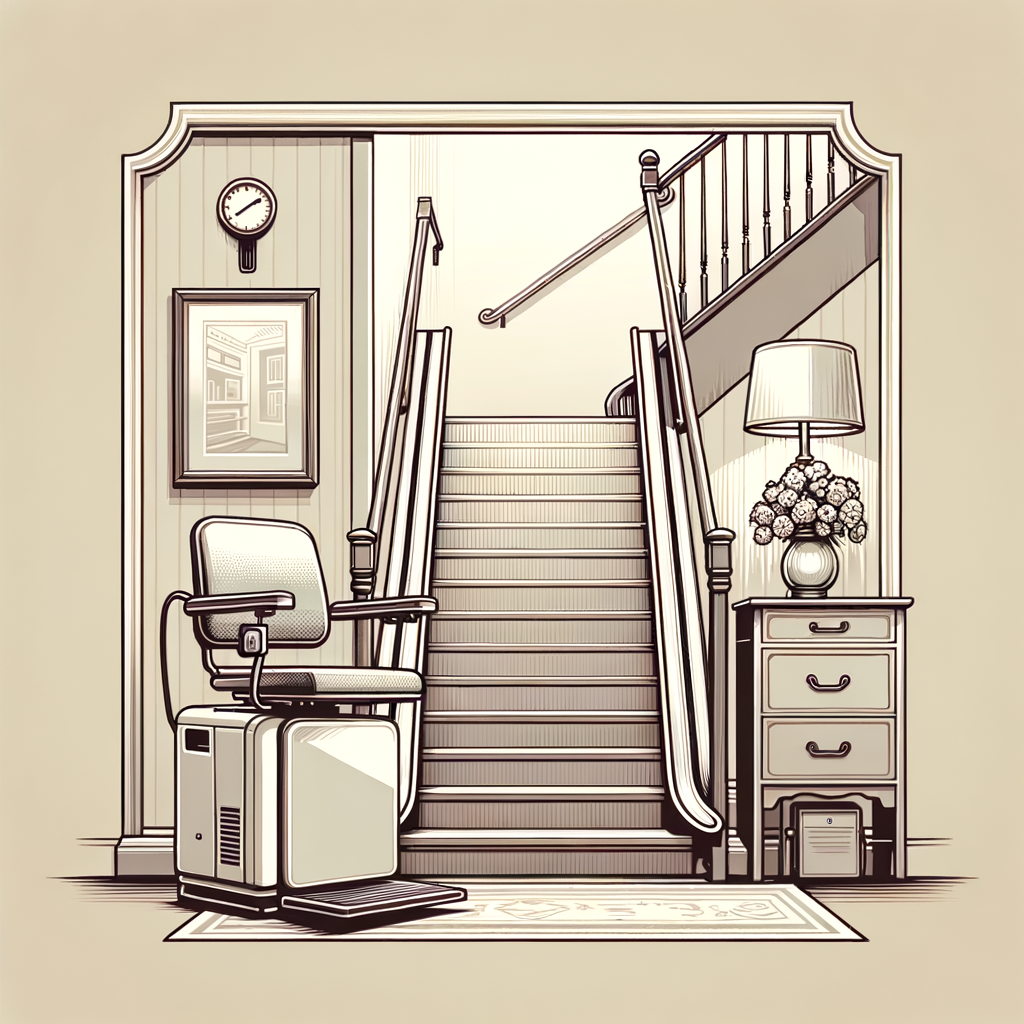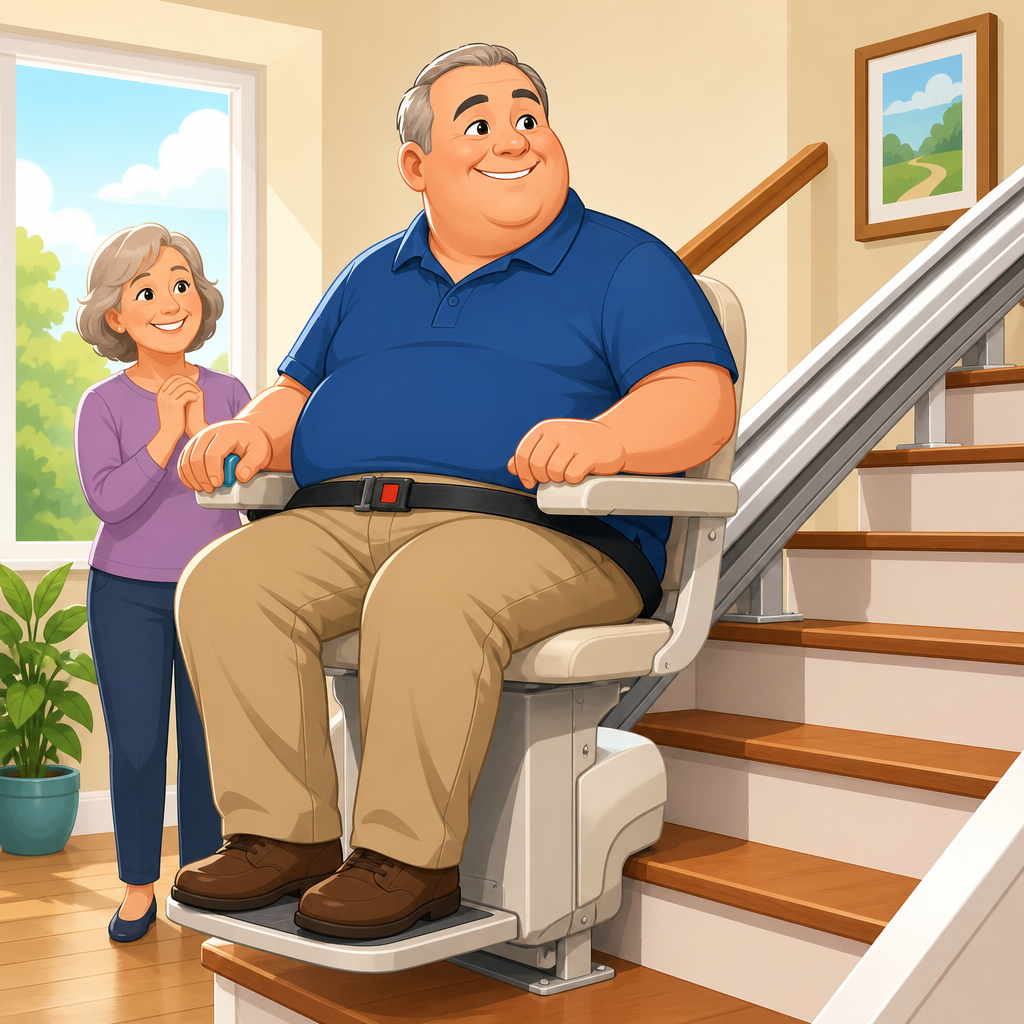
500-pound capacity stair lifts are specialized heavy-duty mobility systems built for users who need more strength, wider seating, and greater stability than standard residential models provide. In the chair lift market, “heavy-duty” usually means a lift engineered above the common 300- to 350-pound range, with reinforced rails, larger seats, stronger drivetrains, and installation requirements that must be checked carefully before purchase. For families comparing chair lift types and designs, this category deserves its own attention because the right high-capacity stair lift can make daily movement safer, more comfortable, and more sustainable for long-term use.
I have seen buyers focus almost entirely on weight rating, then discover too late that capacity alone does not guarantee a good fit. A 500-pound stair lift must match the user’s body dimensions, transfer ability, stair geometry, and the home’s structural conditions. It also needs to provide dependable ride quality, usable seat height, secure arm support, and enough landing space to get on and off without twisting awkwardly. When these details are missed, an expensive system can still feel unstable or impractical.
Heavy-duty lifts matter because the need is common, but the product selection is narrower than many shoppers expect. Aging in place, post-surgical recovery, bariatric care, and multi-user households all drive demand for higher-capacity stair access. At the same time, larger users are more likely to need features such as powered swivel seats, folding rails, call-send controls, and upgraded seat belts. Installers also have to think about rail overrun, track anchoring, battery backup, and code-aware electrical setup. A high-capacity system is not simply a standard chair made bigger; it is a distinct engineering and fitting category.
This hub explains what high-capacity buyers should know before requesting quotes. It covers capacity ratings, dimensional fit, straight versus curved heavy-duty lifts, installation limits, safety features, maintenance expectations, and cost drivers. It also highlights the practical questions I ask during assessments, because the best buying decisions come from combining manufacturer specifications with real-life use patterns inside the home.
What a 500-Pound Capacity Stair Lift Actually Means
A 500-pound capacity stair lift is a motorized chair that travels on a rail mounted to the staircase and is certified by the manufacturer to carry up to 500 pounds under specified operating conditions. That rating is not a marketing estimate. It is tied to the drive system, seat frame, transmission, rail design, and braking performance. Reputable brands test to recognized safety standards, commonly using protocols associated with ASME A18.1 and third-party certifications such as those from UL or ETL, depending on model and market.
Buyers should understand that the published capacity assumes proper installation on a staircase that meets the manufacturer’s dimensional requirements. It also assumes the user is seated correctly, with weight distributed as intended. If a person’s body size requires them to sit forward on the edge of the seat, or if knees project into the stairwell and force an angled seating position, the practical fit may be poor even if the stated weight capacity is technically adequate. That is why a dealer should take both weight and body measurements seriously.
In my experience, the best assessments include hip width, shoulder breadth, seat-to-floor transfer height, and foot placement on the footrest. These measurements matter because many heavy-duty users need a wider seat pan, longer arm spacing, and a higher perch for easier standing transfers. A comfortable 500-pound stair lift should support neutral sitting posture and allow the user to keep both feet fully planted on the footrest throughout travel.
Key Design Differences Between Standard and Heavy-Duty Lifts
Heavy-duty stair lifts differ from standard models in several important ways. The rail is often stronger or mounted with different bracket spacing to manage higher loads. The chair assembly typically has a wider seat, reinforced armrests, and a larger footrest. The drivetrain may use a more robust gear rack, transmission, or motor package to deliver steady starts and stops without excessive vibration. Many higher-capacity models also move at controlled speeds to keep the ride smooth and predictable.
Another major difference is the amount of stairway space required. Wider seats and armrests can reduce remaining walking space on the stairs when the lift is parked or in motion. Manufacturers usually publish a minimum staircase width, and for 500-pound systems that minimum may be significantly greater than for standard units. In compact homes, this becomes the deciding factor.
Seat height and swivel function are also more critical in this category. A larger user often needs the seat to align closely with standing transfer mechanics. If the seat is too low, knees and hips take more strain. If the swivel is manual and requires a forceful twist at the top landing, the user may still feel unsafe. Powered options add cost, but they often improve independence dramatically for bariatric users and for people with arthritis or limited trunk rotation.
Straight vs. Curved Heavy-Duty Stair Lifts
Straight heavy-duty stair lifts are built for staircases that run in one uninterrupted line. They are generally the fastest to install, the easiest to service, and the most budget-friendly high-capacity option. If your staircase has no turns, intermediate landings, or directional changes, a straight model should be the first category to evaluate.
Curved heavy-duty stair lifts are designed for stairs with bends, multiple levels, pie-shaped treads, or split landings. These systems use a custom rail built from detailed measurements, now often captured with digital photo-measuring or three-dimensional tools. For high-capacity buyers, curved systems present a narrower field of options because engineering a custom rail for larger loads is more complex and more expensive.
The practical difference is not only shape. Curved installations often determine whether the chair can park away from the main staircase, reducing visual impact and preserving walking space. In homes where a straight lift would leave the user stepping off too close to a doorway or hallway, a custom curved route can create a much safer transfer point. I have recommended curved heavy-duty models when the top landing was tight, because a safe exit path matters more than saving on initial price.
| Factor | Straight Heavy-Duty Lift | Curved Heavy-Duty Lift |
|---|---|---|
| Best for | Single-run stairs with no turns | Stairs with bends, landings, or multiple levels |
| Rail type | Standardized rail sections | Custom-fabricated rail |
| Typical lead time | Shorter | Longer due to custom production |
| Service complexity | Lower | Higher |
| Cost | Usually lower | Usually much higher |
Fit, Staircase Measurements, and Home Requirements
The most common reason a 500-pound stair lift is ruled out is not user weight. It is the staircase itself. High-capacity lifts typically need more clear width, stronger anchoring conditions, and enough landing area at the top and bottom to board and exit safely. Because most stair lifts mount to the stair treads rather than the wall, installers inspect tread depth, riser consistency, rail bracket positions, and obstructions such as trim, radiators, handrails, and door swings.
Minimum width requirements vary by model, but heavy-duty lifts often need a staircase wider than 36 inches for comfortable use. Some can function in narrower spaces, but the remaining pass-through area for other household members may become too tight. Installers also check headroom and the user’s knee path, especially on steeper stairs where forward knee projection can be an issue.
Landings matter as much as the stair run. The user needs enough room to approach the seat, sit down without side-loading the chair awkwardly, and stand up onto a level surface. If a doorway opens into the boarding zone, the plan may require a rail overrun, parking extension, or power folding rail. These details are especially important in the heavy-duty category because larger seats occupy more turning space. A careful in-home assessment should produce a measured layout, not a verbal guess.
Safety Features That Matter Most for High-Capacity Buyers
Every stair lift should include core protections such as a seat belt, obstruction sensors, overspeed governor, final limit switches, battery backup, and lockable controls. On a 500-pound stair lift, these features become even more important because the consequences of instability or abrupt stopping can be greater. Buyers should ask how the unit behaves during a power outage, what happens if the footrest contacts an obstacle, and whether the braking system is fail-safe.
Swivel-and-lock seating at the upper landing is one of the most valuable safety features. It allows the user to exit onto the floor rather than toward the staircase. For some people, a manual swivel is fine. For others, especially those with obesity, weakness, or shoulder pain, powered swivel operation is a meaningful risk reduction. The same is true of powered footrests, which eliminate the need to bend down.
Call-send controls are often underrated. In a two-user household, they let one person send the chair away after use, reducing stairway obstruction, then call it back later. Key switches can prevent unsupervised use by children. Upholstery texture, armrest grip, and seat contour also matter. I advise buyers to test these details in person because the difference between secure support and a slippery perch is obvious during a showroom trial.
Costs, Brands, Service, and Long-Term Ownership
Pricing for heavy-duty stair lifts varies widely based on rail type, feature set, and local labor rates. Straight 500-pound models generally cost less than curved systems, while custom curved heavy-duty lifts can rise sharply because of surveying, fabrication, and specialized installation. Beyond purchase price, buyers should budget for service coverage, replacement batteries, and possible home modifications such as electrical outlets, handrail adjustments, or landing clearance changes.
Established manufacturers and dealers matter more in this category than in entry-level installations. Buyers should ask who performs service locally, what the average response time is, whether parts are stocked domestically, and how warranty labor is handled after the first year. Bruno, Harmar, Savaria, Handicare, and Stannah are among the recognized names many shoppers encounter, though actual heavy-duty availability differs by region and model line. What matters is not brand familiarity alone but whether the specific product is rated for the user, supported locally, and suitable for the staircase.
Used stair lifts can save money, but heavy-duty buyers need to be cautious. Straight rails are sometimes reusable, yet the seat assembly, batteries, and wear components still require inspection. Curved rails are usually custom to the original staircase and rarely transfer economically. If budget is tight, ask about certified reconditioned straight models, rental programs for temporary needs, and financing options. The goal is a lift that remains dependable for years, not merely one that gets installed fastest.
How to Choose the Right Heavy-Duty Lift
Start with a professional home assessment from a dealer that regularly installs heavy-duty systems, not just standard lifts. Ask for the exact model name, rated capacity, minimum stair width, seat dimensions, and required landing clearances. Request a demonstration if possible. A user should sit in the chair, test the arm spacing, operate the controls, and simulate getting on and off. This step reveals problems that spec sheets cannot.
Next, compare the daily use pattern. Is the lift for one primary user or several? Will it be used ten times a day or only at bedtime? Does the user carry oxygen, use a cane, or need caregiver assistance? These factors influence whether powered features, folding components, or a larger parking overrun are worth the extra cost. If the person’s weight is near the maximum rating, I generally recommend choosing the most conservatively engineered option available rather than buying at the edge of capacity.
Finally, think beyond today. Many buyers in the heavy-duty category have changing mobility needs. A chair that feels acceptable now may become difficult after surgery, with arthritis progression, or during periods of deconditioning. The best 500-pound capacity stair lift is the one that fits safely, is easy to service, and supports continued independence without forcing risky transfers. If you are evaluating heavy-duty lifts as part of a broader chair lift types and designs search, use this hub as your starting point, then gather measurements, schedule an in-home quote, and compare products with real user comfort in mind.
Frequently Asked Questions
What makes a 500-pound capacity stair lift different from a standard stair lift?
A 500-pound capacity stair lift is designed for users who need more support, room, and structural strength than a standard residential model can provide. Most conventional stair lifts are built for roughly 300 to 350 pounds, so a heavy-duty unit goes well beyond that range with reinforced rails, a more powerful motor and drivetrain, a wider and deeper seat, stronger armrests and footrests, and an overall frame built for higher daily loads. The goal is not just to “hold more weight,” but to deliver safer, smoother travel and better stability for larger users.
These models also tend to offer more generous seat dimensions and a higher seating platform, which can make transfers on and off the chair easier. For many buyers, comfort is just as important as raw capacity. A stair lift that feels cramped or unstable may technically work on paper but still not be a good real-world fit. That is why high-capacity buyers should look at the full design of the unit, including seat width, swivel function, ride quality, and ease of use, not just the published weight rating.
Another key difference is installation planning. Heavy-duty stair lifts often need more stairway clearance and more careful evaluation of the staircase, landings, and mounting points. In short, a 500-pound model is a specialized accessibility product engineered for strength, durability, and user confidence, rather than simply a larger version of an entry-level chair lift.
Can any staircase support a 500-pound stair lift, or are there special installation requirements?
Not every staircase is automatically a good match for a 500-pound capacity stair lift. While stair lifts typically mount to the stair treads rather than the wall, a high-capacity system still places greater demands on the staircase because of the combined load of the lift, the user, and the dynamic forces created during travel. That is why a professional assessment is essential before purchase. Installers will usually evaluate stair width, tread depth, landing space at the top and bottom, rail path, and whether the user can get on and off the lift safely without crowding.
Width is one of the biggest concerns. Heavy-duty stair lifts generally have wider seats and bulkier components, so narrow staircases may not provide enough usable space for the lift and for other household members to pass by safely. The top and bottom landings also matter. Buyers need adequate room to sit, stand, pivot, and transfer comfortably. In some homes, folding rails, track overruns, or custom positioning may be recommended to improve safety and reduce obstruction.
Curved stairs, intermediate landings, and nonstandard layouts can add complexity as well. A straight staircase may be simpler to fit, but curved or multi-level stairways may require a custom rail system built specifically for the home. In some cases, the staircase itself may need repair or reinforcement if it is older or shows signs of wear. The takeaway is simple: capacity alone does not determine fit. A 500-pound stair lift should only be chosen after a detailed site evaluation confirms that the staircase and the home layout can accommodate the equipment safely and comfortably.
Is a higher weight capacity the only thing heavy-duty buyers should compare?
No. Weight capacity is important, but it should never be the only factor guiding the decision. A stair lift can advertise a 500-pound rating and still be a poor match if the seat is uncomfortable, the controls are difficult to operate, or the staircase fit is marginal. High-capacity buyers should compare the full user experience. That includes seat width and depth, backrest shape, armrest spacing, footrest size, seat height, and how stable the ride feels from start to finish.
Buyers should also ask about motor performance, start-and-stop smoothness, battery backup, charging system, and safety features such as seat belts, obstruction sensors, swivel locks, and folding components. For users with limited mobility, arthritis, balance concerns, or joint pain, the transfer process may be just as important as the lift’s carrying ability. A well-designed heavy-duty model should make it easier to sit down, ride securely, and stand up at the destination with minimal strain.
Durability and service support deserve close attention too. Because these lifts are engineered for higher-demand use, it is wise to compare warranty coverage, local dealer reputation, maintenance requirements, and availability of replacement parts. Some buyers also benefit from asking whether the unit is intended for frequent daily use, whether it can be customized for body size and comfort, and how much stairway clearance remains when the chair is folded. A smart purchase decision looks at safety, comfort, long-term reliability, and installation suitability together.
Are 500-pound stair lifts safe for everyday residential use?
Yes, when they are properly matched to the user, professionally installed, and regularly maintained, 500-pound stair lifts are built to be safe for daily residential use. In fact, for users who exceed standard lift limits or need a roomier and more stable seat, a heavy-duty model is often the safer choice because it is specifically engineered for those needs. These systems are designed with reinforced structural components, dependable drive systems, secure seating, and safety mechanisms that help protect the rider throughout the trip.
Important safety features may include a seat belt, swivel seat locks at the landing, obstruction sensors that stop the lift if something blocks the path, soft-start and soft-stop travel, battery operation during power outages, and call/send controls for moving the chair when needed. Many heavy-duty models also provide a more planted, less cramped ride, which can improve confidence for users who feel unstable on standard lifts. That added stability can be especially valuable for older adults and those with reduced balance or strength.
That said, safety depends on proper use as much as equipment quality. The rider should be within the manufacturer’s stated limits, use the seat belt, keep the footrest clear, and follow the operating instructions. Regular maintenance is also important because worn batteries, misaligned sensors, or neglected components can affect performance over time. Families should think of a 500-pound stair lift as a serious mobility device that can provide excellent everyday safety, as long as it is selected carefully, installed correctly, and serviced consistently.
Who should consider a 500-pound capacity stair lift, and when does it make sense to choose one?
A 500-pound capacity stair lift makes sense for buyers who need more than a standard model can safely or comfortably provide. That includes users whose body weight approaches or exceeds the limits of common residential stair lifts, as well as those who need a wider seat, more supportive arm spacing, or a sturdier overall ride. In many cases, the decision is about comfort and confidence as much as weight. A user may be below 500 pounds but still benefit from a heavy-duty design if standard chairs feel narrow, unstable, or difficult to transfer into.
It can also be the right choice for long-term planning. Families may decide to install a higher-capacity lift now to better accommodate changing mobility needs over time, especially if the user’s health condition is progressive or if multiple household members may rely on the lift. Choosing a heavy-duty model from the start can sometimes prevent the need to replace an undersized unit later. However, that only makes sense if the staircase has the necessary width and layout to support the larger system properly.
The best time to choose a 500-pound stair lift is when a professional evaluation shows that a standard lift may compromise safety, comfort, or usability. Rather than focusing only on the number in the brochure, buyers should consider the complete picture: body size, transfer ability, stair dimensions, anticipated frequency of use, and the need for long-term reliability. For the right user and home, a high-capacity stair lift can be an excellent investment in safer, more independent daily living.