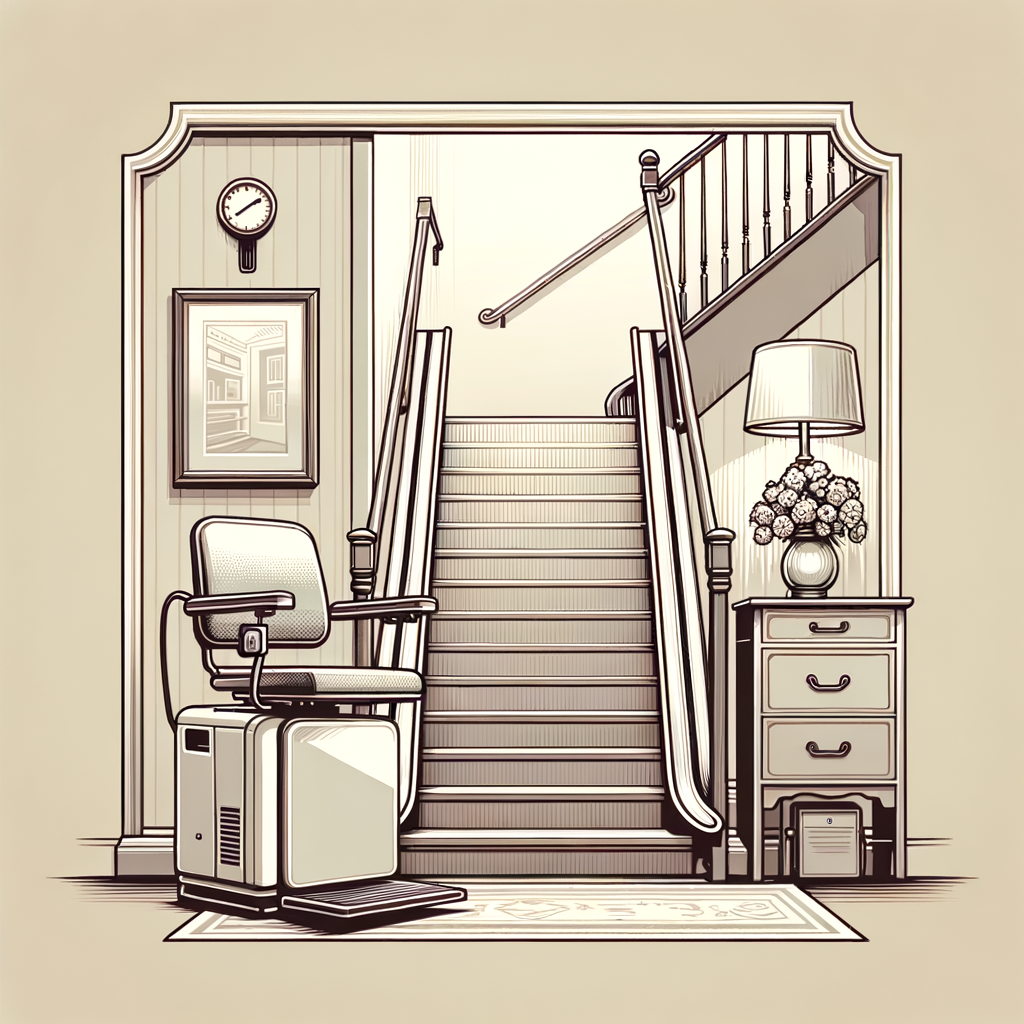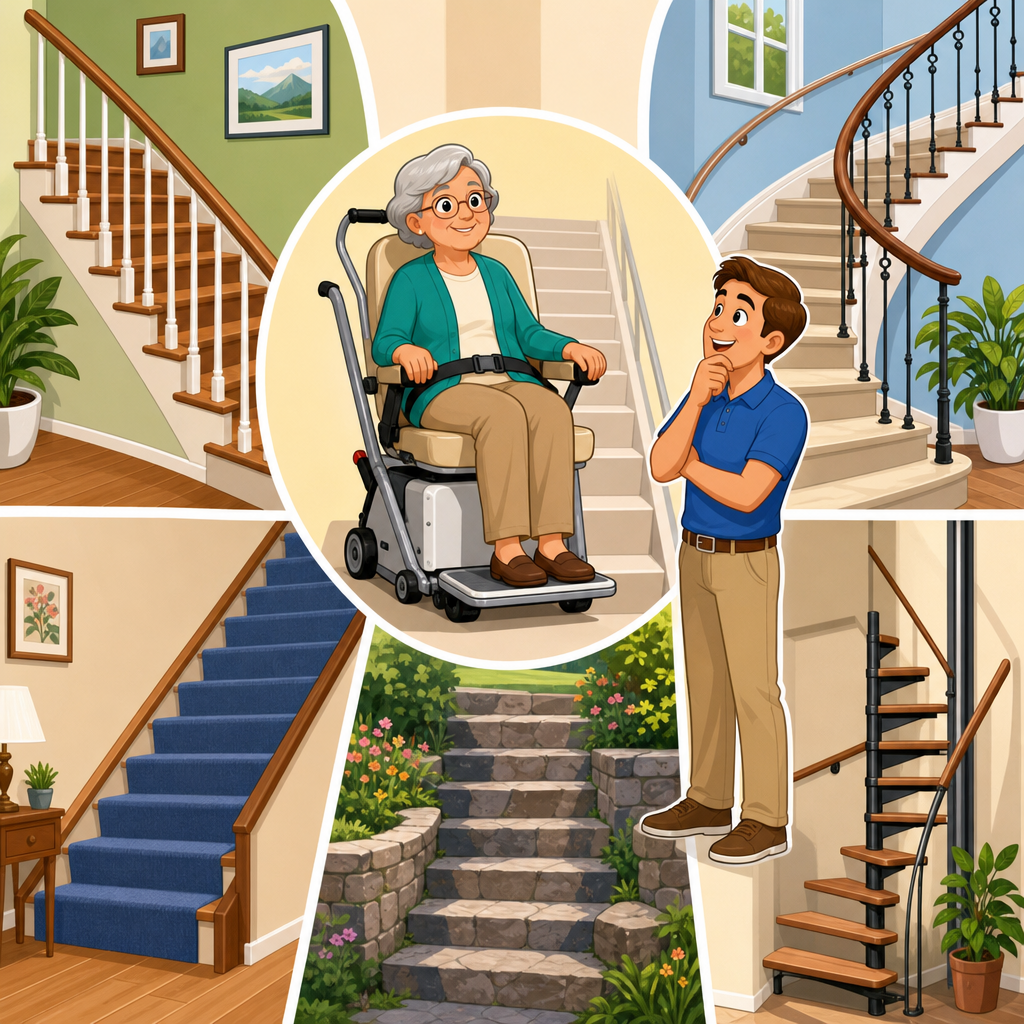
Portable lifts can work on many staircases, but they do not work on all types of stairs, and the difference depends on geometry, load rating, landing space, surface condition, and how the lift secures itself during use. In the chair lift industry, “portable lift” usually refers to a movable device that helps a person travel up or down steps without a permanently installed rail. That category includes portable stair climbers with tracks or wheels, evacuation chairs, battery-powered attendant-operated lifts, and a smaller group of self-propelled mobile units designed for users who can transfer safely. Because these products are often discussed alongside stair lifts, platform lifts, and vertical lifts, buyers regularly assume they are universally compatible. They are not. I have evaluated homes, schools, clinics, and houses of worship where a portable unit solved access immediately, and I have also seen staircases where the safest recommendation was a fixed rail stair lift or a vertical platform lift instead.
This matters because the wrong choice can create a safety risk, waste money, and leave a user without reliable access. A staircase is not just “straight” or “curved.” The exact rise, run, tread depth, nosing profile, handrail position, turning radius at the landing, and total width all affect whether a portable lift can move smoothly and stop securely. User factors matter just as much. Body weight, sitting balance, caregiver strength, transfer ability, and emergency evacuation needs can make one device practical and another inappropriate. Building context matters too. A private home has different expectations than a public building subject to fire safety planning, accessibility rules, and staff training requirements. For anyone researching chair lift types and designs, portable lifts sit in an important middle ground: more flexible than installed systems, but more limited than many product pages suggest.
The central question is simple: do portable lifts work on all types of stairs? The accurate answer is no, but they can work very well on a surprisingly wide range of stairs when the match is correct. Straight residential stairs are usually the easiest fit. Split-level entries, exterior concrete steps, narrow basement stairs, and stairs in older buildings often need closer review. Spiral stairs, very tight switchback stairs, wedge-shaped treads, and stairs with inadequate landing clearance are frequently poor candidates. In this hub article, I will explain how portable lifts function, which stair types they handle best, where they struggle, and how to evaluate a staircase before buying. If you are comparing portable lifts with installed stair lifts or platform systems, this page will give you the framework to choose the right solution and avoid common mistakes.
What Portable Lifts Are and How They Operate on Stairs
Portable lifts for stairs use one of several mobility methods. The most common is a tracked stair climber, which uses rubber tracks to grip tread edges and descend or ascend in a controlled sequence. Another design uses tri-wheel clusters that rotate over step edges. Evacuation chairs are a related category built primarily for emergency descent, often with friction belts that regulate speed while an attendant guides the chair. Some battery-powered units include powered ascent and descent, while others assist only in one direction or rely partly on caregiver force. Unlike a traditional stair lift, these devices do not mount to the stair structure with a rail, and unlike a vertical platform lift, they do not create a fully enclosed lifting path.
In practice, portable lifts perform best when the stair dimensions are consistent and the landings provide enough room to position the device before entering the first step and after exiting the last one. Manufacturers typically publish minimum tread depth, maximum stair angle, and minimum staircase width. They also specify whether operation requires one attendant or two. Those details are not marketing fine print; they determine safety. A machine may technically fit on a stair and still be a poor operational fit if the caregiver cannot maintain posture, visibility, and control at the turning points.
Battery capacity and braking systems are equally important. Quality portable lifts use sealed batteries, electromagnetic brakes, and anti-tip features. Reputable brands such as SANO, Liftkar, Garaventa, and EVAC+CHAIR have long experience in powered mobility and evacuation equipment, but even strong brands have models meant for different use cases. A school preparing for emergency egress has different requirements than a family helping a parent navigate a front stoop. Understanding the operating method is the first step in deciding whether a portable lift belongs in your shortlist.
Which Types of Stairs Usually Work Well
Portable lifts usually work well on standard straight stairs with uniform risers and full-depth treads. This includes many interior residential staircases, common exterior porch steps, church entries, clinic back stairs, and school side entrances. If the stair width allows the device to stay centered, the landings are level, and the tread edges are intact, an attendant-operated tracked climber can be an effective access tool. These devices also perform well where installation of a rail is impossible or undesirable, such as rented properties, historic buildings, or locations where multiple short stair runs exist in different areas.
Outdoor stairs can also be compatible if the surface is stable and dry enough for traction. Poured concrete steps with clear, square edges are usually easier than irregular stone. I have seen portable climbers work reliably on municipal building entrances and residential garage entries where a permanent lift would have required electrical work, permits, and exposure to weather. For temporary access, event venues sometimes choose portable systems because they can be stored between uses and deployed only when needed.
Many split-level homes are another practical use case. A portable unit can serve a small number of steps between levels without adding a rail in the main living area. For short runs, setup time is limited, and the compact footprint is a real advantage. That said, “works well” still assumes the user can transfer safely and the caregiver can manage the unit confidently. Compatibility is not only about the staircase; it is about the full transfer-and-travel process from start to finish.
Where Portable Lifts Struggle or Fail
Portable lifts commonly struggle on spiral stairs, sharply curved stairs, and switchback stairs with tiny intermediate landings. These layouts limit the ability to align the device and complete the transition between runs. Winder stairs are another problem because the tread depth narrows toward the inside turn, reducing predictable contact for tracks or wheels. Very steep stairs can exceed the operating angle approved by the manufacturer. Very narrow stairs may leave inadequate clearance for the device, the user’s knees, or the attendant’s footing.
Surface condition can disqualify a staircase even when the shape looks acceptable. Loose carpet, rounded nosings, broken tile edges, wet metal grating, uneven stone, and deteriorated timber reduce traction and stability. Exterior stairs become especially challenging when leaves, ice, or rain are present. Portable lifts are not all-terrain machines. A brochure image showing a unit on outdoor steps should never replace a site assessment. Public buildings also face operational concerns: if only one trained staff member knows how to use the device, access may exist on paper but fail in real conditions.
User limitations can be the deciding factor. If the person cannot tolerate a tilted seated position, has poor trunk control, uses oxygen equipment, or exceeds the rated capacity, a portable stair climber may be unsuitable even on perfect stairs. In those cases, a platform lift or elevator-style solution may be the safer recommendation. This is why universal claims about portable lifts should be treated skeptically.
How to Evaluate Stair Compatibility Before You Buy
The most reliable way to judge whether portable lifts work on a specific staircase is a measured assessment. Start with stair width, tread depth, riser height, total number of steps, and landing dimensions at top and bottom. Then document the stair angle, handrail projections, door swing conflicts, lighting quality, and surface material. Next, match those measurements against the manufacturer’s published limits. If a seller cannot provide dimensional requirements in writing, move on. Any serious supplier should be able to state minimum width, turning needs, capacity, battery range, and whether one or two attendants are required.
After measurements, evaluate the user and operator. Can the user transfer independently, with supervision, or with physical assistance? Is there a caregiver available every time the lift will be used? Can that person safely control the machine on ascent and descent? In commercial settings, who is trained, how often, and under what emergency procedures? These questions often matter more than stair geometry. I have seen excellent products underperform because the operating plan was unrealistic.
| Evaluation Factor | What to Check | Why It Matters |
|---|---|---|
| Stair width | Clear width between walls, rails, and trim | Determines whether the device and attendant can pass safely |
| Tread and riser consistency | Uniform depth and height on every step | Improves traction, balance, and predictable motion |
| Landing space | Room to position, turn, and exit at both ends | Most failures happen during entry and exit, not mid-stair |
| Surface condition | Dryness, edge integrity, carpet stability, debris | Directly affects grip and braking performance |
| User profile | Weight, posture, transfer ability, medical equipment | Confirms whether the ride is safe and tolerable |
| Operator demands | Strength, training, frequency of use | Shows whether daily operation is realistic |
Whenever possible, request an on-site demonstration. A live trial shows whether the lift clears the landing, whether the user feels secure, and whether the attendant can manage the controls without strain. That evidence is worth far more than a product photo or generic compatibility claim.
Portable Lifts Versus Installed Stair Lifts and Platform Lifts
Portable lifts are best understood by comparison. An installed stair lift uses a rail mounted to the stair or wall and typically serves one staircase repeatedly with minimal caregiver effort. It is usually the better choice for a user who wants independent or near-independent daily use on a compatible straight or curved stair. A vertical platform lift, sometimes called a wheelchair lift, is designed for users who remain in their wheelchair and travel vertically between levels. It needs more space, more construction planning, and usually permits, but it offers access that many portable devices cannot match.
Portable lifts win on flexibility, lower upfront commitment, and lack of permanent modification. They are often ideal for temporary recovery, multi-site use, emergency preparedness, or buildings where installation is restricted. They lose on convenience, user independence, and universal compatibility. If the same person needs stair access several times every day, an installed system is often more practical long term. If the goal is dignified wheelchair access without transfer, a platform lift may be the correct path from the start.
Cost should be weighed over the full use period. A portable unit may cost less initially, but labor, training, and limited usability can change the value equation. In my experience, the best outcomes happen when buyers focus first on the access task, not the product category. Once the task is clear, the right design usually becomes obvious.
Best Use Cases, Safety Practices, and Final Decision Criteria
The best use cases for portable lifts are straightforward: temporary mobility needs after surgery, buildings with short straight runs, historic properties where rails cannot be installed, emergency evacuation planning, and households where a trained caregiver is always present. They can also be excellent backup devices when a permanent accessibility project is delayed by construction timelines or permitting. In those scenarios, portable lifts deliver real value and immediate function.
Safe use depends on training, maintenance, and realistic limits. Batteries should be charged per manufacturer guidance, moving parts inspected regularly, and weight ratings respected without exception. Operators should practice on the actual staircase, not just in a showroom. For institutional use, written procedures and refresher drills are essential. Devices used outdoors should be evaluated in the worst likely weather, not the best. If a staircase becomes slippery, cluttered, or poorly lit, suspend use until conditions improve.
So, do portable lifts work on all types of stairs? No. They work on many stairs, especially straight, consistent stair runs with adequate landing space and trained assistance. They are poor matches for spiral, sharply curved, extremely narrow, highly irregular, or degraded stairs, and they are not substitutes for fully accessible design in every building. The benefit of this subtopic is clarity: when you understand stair geometry, user needs, and operating requirements, portable lifts become much easier to judge. Use this hub as your starting point, measure carefully, ask for a site demonstration, and compare portable lifts against installed stair lifts and platform lifts before making a final decision.
Frequently Asked Questions
Do portable lifts work on every type of staircase?
No. Portable lifts can work on many staircases, but they do not work on all of them. Whether a portable lift is suitable depends on the exact stair geometry, the amount of landing space at the top and bottom, the condition of the stair surface, the user’s weight and seating needs, and the way the device grips, tracks, or stabilizes itself during travel. In the chair lift industry, a portable lift usually means a movable solution such as a tracked stair climber, a wheel-based stair climber, an evacuation chair, or a battery-powered attendant-operated device that does not require a permanently installed rail. Because these products are not fixed to the staircase, they rely heavily on the stair layout being compatible with their design.
Straight, uniform stairs with solid treads and clear landings are usually the easiest for portable lifts to handle. Stairs become more challenging when they are narrow, steep, curved, winding, uneven, or interrupted by small landings or turns. Some devices can manage certain turns or landings better than others, but no portable lift is universally compatible with every staircase. That is why a product that works well in one home, school, office, or public building may be completely inappropriate in another. The safest approach is to treat staircase compatibility as a technical fit issue, not a general assumption.
What stair features determine whether a portable lift will work safely?
The most important factors are stair width, tread depth, riser height, overall steepness, landing size, and the presence of turns, curves, or obstructions. Portable lifts need enough room to be positioned correctly and to move without losing stability. If the stairs are too narrow, if the treads are too shallow, or if the landings do not provide enough turning or stopping space, the device may not operate safely. Even small architectural details such as overhanging nosings, uneven step heights, thick carpet, slick finishes, damaged edges, or loose tile can affect performance.
Another major factor is how the lift secures itself during use. Some portable stair climbers use tracks that distribute weight across multiple steps. Others use powered wheels or lifting mechanisms that depend on precise contact with each stair edge. Evacuation chairs may glide on tracks while being controlled by an attendant, but they still require enough space and the right stair angle to descend safely. Surface condition matters because the device must maintain traction and stability throughout the trip. A staircase that is wet, worn, cracked, or cluttered may create too much risk even if the dimensions appear acceptable on paper. In practice, safe use depends on both measurements and real-world condition.
Can portable lifts be used on curved, spiral, or unusually steep stairs?
Sometimes, but often with major limitations. Curved and spiral staircases are among the most difficult environments for portable lifts because they reduce usable tread area and change the angle and orientation of the device as it moves. Many portable stair climbers are designed for straight runs of stairs with consistent dimensions. On a spiral staircase, the inside edge of each step may be too narrow for stable placement, and the turning radius may be too tight for the device and attendant to maneuver properly. Curved stairs can create similar problems, especially when the landings are small or the stair width varies along the route.
Very steep stairs can also be problematic. Even if a manufacturer lists a maximum incline range, that does not automatically mean the device is ideal for every steep staircase within that range. User comfort, center of gravity, attendant control, and safe loading all become more demanding as the stairs get steeper. In many cases, a staircase that is technically passable is still not recommended for routine use. This is why site evaluation matters so much. If the stairs are curved, spiral, unusually steep, or architecturally irregular, it is essential to verify compatibility with the exact model rather than relying on a general category like “portable lift.”
Are portable lifts safe for all users and weight capacities?
No. Every portable lift has a specific load rating, and that limit must include the user as well as any attached seating, support, or transport equipment if applicable. A device that can physically move on the stairs is not automatically safe for every person who may need it. The user’s weight, body size, posture control, transfer ability, and medical condition all influence whether a portable lift is appropriate. Some users can sit securely in an attendant-operated stair climber, while others may require more support than the device can provide. In evacuation scenarios, the user’s ability to remain stable during descent can be just as important as the machine’s published weight capacity.
Attendant requirements are also part of the safety equation. Many portable lifts are not independent-use devices; they are designed to be operated by a trained caregiver, staff member, or emergency responder. That means safety depends not only on the equipment, but also on operator training, physical control, battery condition, and adherence to the manufacturer’s procedures. If the user is near the maximum weight limit, if the stairs are tight or steep, or if the user needs significant positioning support, a more robust solution may be necessary. The safest match is always the one that accounts for both the staircase and the specific person being transported.
How can you tell if a portable lift is the right choice for a particular staircase?
The best way is through a proper assessment that combines measurements, product specifications, and an in-person evaluation whenever possible. Start with the basics: stair width, number of steps, tread depth, riser height, landing dimensions, stair angle, and whether the route includes turns, curves, or obstructions such as handrails, doors, or low clearances. Then compare those conditions to the manufacturer’s requirements for the exact portable lift model. This step matters because two devices in the same general category can perform very differently on the same staircase.
It is also important to evaluate how the lift will actually be used day to day. Will it be used occasionally for emergency evacuation, or regularly for mobility access? Who will operate it, and are they trained? Is there enough room to position the device at the top and bottom of the stairs? Is the stair surface dry, stable, and well maintained? Are there any concerns about battery runtime, storage, charging, or transport between locations? If the answer to any of these questions is uncertain, a dealer, manufacturer representative, or accessibility professional should review the site before a purchase is made. Portable lifts can be extremely effective in the right setting, but the right setting has to be confirmed rather than assumed.