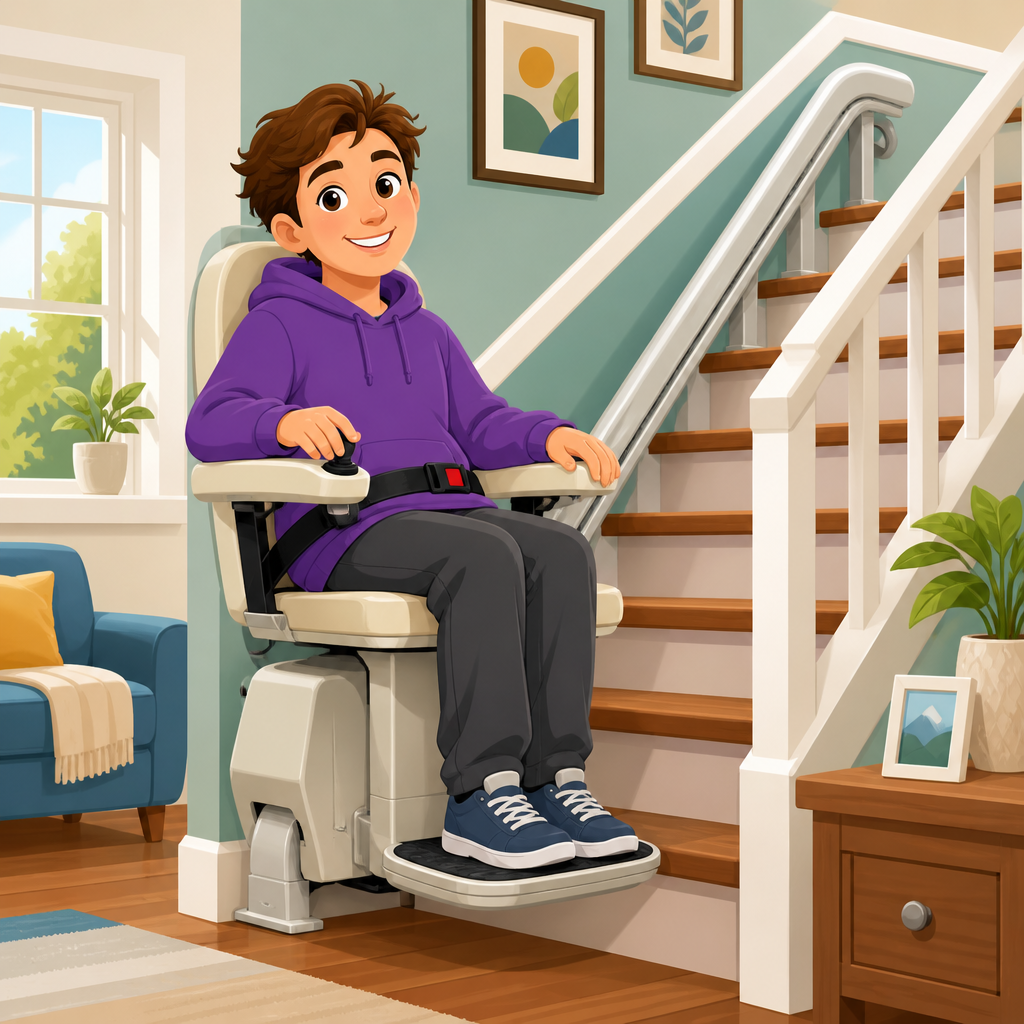
Choosing the best stair lifts for people with muscular dystrophy starts with understanding how muscle weakness changes day-to-day mobility, transfer safety, and fatigue. Muscular dystrophy is not one condition but a group of inherited disorders that progressively reduce muscle strength and, in many cases, balance, endurance, and trunk control. A stair lift, sometimes called a chair lift for stairs, is a motorized seat that travels along a rail fixed to the staircase, carrying a user safely between floors while reducing the physical strain and fall risk that stairs create. In my experience evaluating home accessibility equipment, the right lift can preserve independence for years, but the wrong model can create transfer problems, poor posture, and maintenance headaches.
This matters because stair negotiation is often one of the first household tasks to become unsafe as muscular dystrophy progresses. Caregivers may be able to assist for a time, yet manual support on stairs is one of the highest-risk activities in the home. A properly matched chair lift for disabled users can reduce that risk, conserve energy for work and family life, and delay or avoid the need for a first-floor move. The key is not simply buying the most advertised unit. It is matching seat geometry, weight capacity, safety sensors, control options, and staircase design to the user’s current and likely future needs. This guide explains the best stair lifts for people with muscular dystrophy, what features matter most, how leading brands compare, and how this topic fits within the broader search for the best chair lifts for disabled users.
What people with muscular dystrophy need from a stair lift
The best stair lifts for muscular dystrophy prioritize stable transfers, low-effort operation, and support for changing mobility over time. Most buyers first ask a simple question: will a stair lift work if leg strength is limited? In many cases, yes, if the user can transfer safely onto the seat with or without a cane, walker, transfer board, or caregiver assist. If independent standing is very limited, a perch seat, powered swivel, or higher seat height may help. If transfers are no longer safe, a residential wheelchair lift or vertical platform lift may be more appropriate than a seated stair lift.
Three functional issues shape product choice. First is proximal muscle weakness, which affects rising, lowering, and trunk stability. Seats that are too low can make sitting down uncontrolled and standing up extremely difficult. Second is fatigue. Users with muscular dystrophy often do better with larger armrests, simple rocker controls, and smooth starts and stops that do not require constant postural correction. Third is progression. A lift that works today should still be usable if hand strength declines, if caregiver assistance increases, or if a power wheelchair becomes part of the routine on another floor.
Important specifications include seat-to-floor height, seat width, armrest spacing, footrest size, folding profile, weight capacity, ride quality, and battery backup. Modern units typically use rechargeable batteries so the lift keeps running during a power outage, with charging points at one or both ends of the rail. Safety sensors stop the chair if it meets an obstruction on the stairs or footrest. A swivel seat, ideally powered on difficult transfers, allows exit onto the landing rather than toward the staircase. For users with muscular dystrophy, these are not luxury features. They are core safety components.
Best stair lift brands and models to consider
Several manufacturers consistently stand out in accessibility assessments: Bruno, Harmar, Stannah, Handicare, and Access BDD through dealers in select markets. No single model is best for everyone, but some are especially well suited to disabled users who need stability and ease of use. Bruno Elite straight and curved models are among the most reliable premium options. They are known for solid build quality, smooth travel, generous seat support, and high weight capacities, with many straight models rated around 400 pounds. I often recommend Bruno when buyers want a durable unit with strong dealer support and comfortable seating for daily use.
Harmar Stairlifts offers a broad range, including compact straight lifts and heavy-duty options. Harmar models often appeal to households balancing budget and accessibility because they offer practical features, battery operation, and commonly available service networks. Stannah is respected for customization, ride comfort, and ergonomics, particularly on curved stairs where fit and finish matter. Handicare is widely installed and offers straight and curved systems with useful powered options such as automatic hinge rails and powered swivel seats. If the user has significant weakness and relies on caregiver setup, those powered features can make a measurable difference.
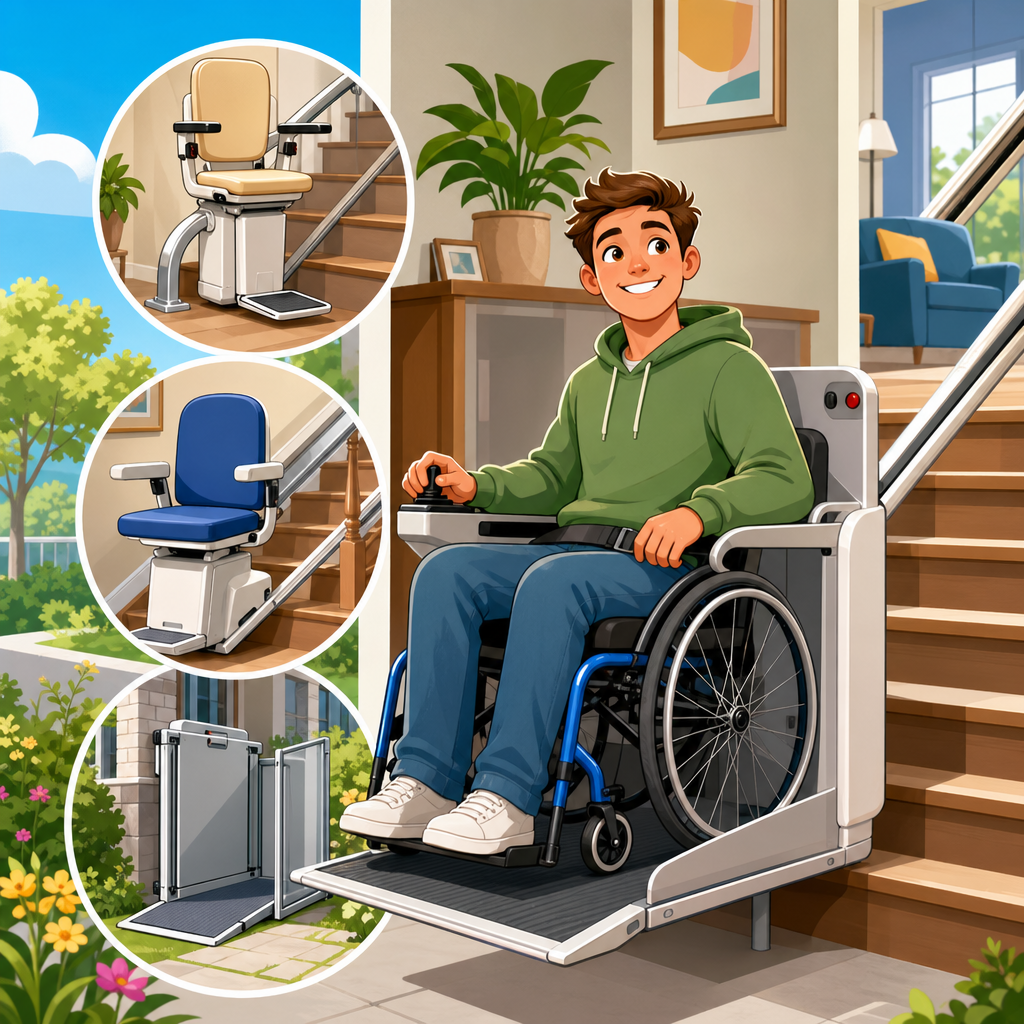
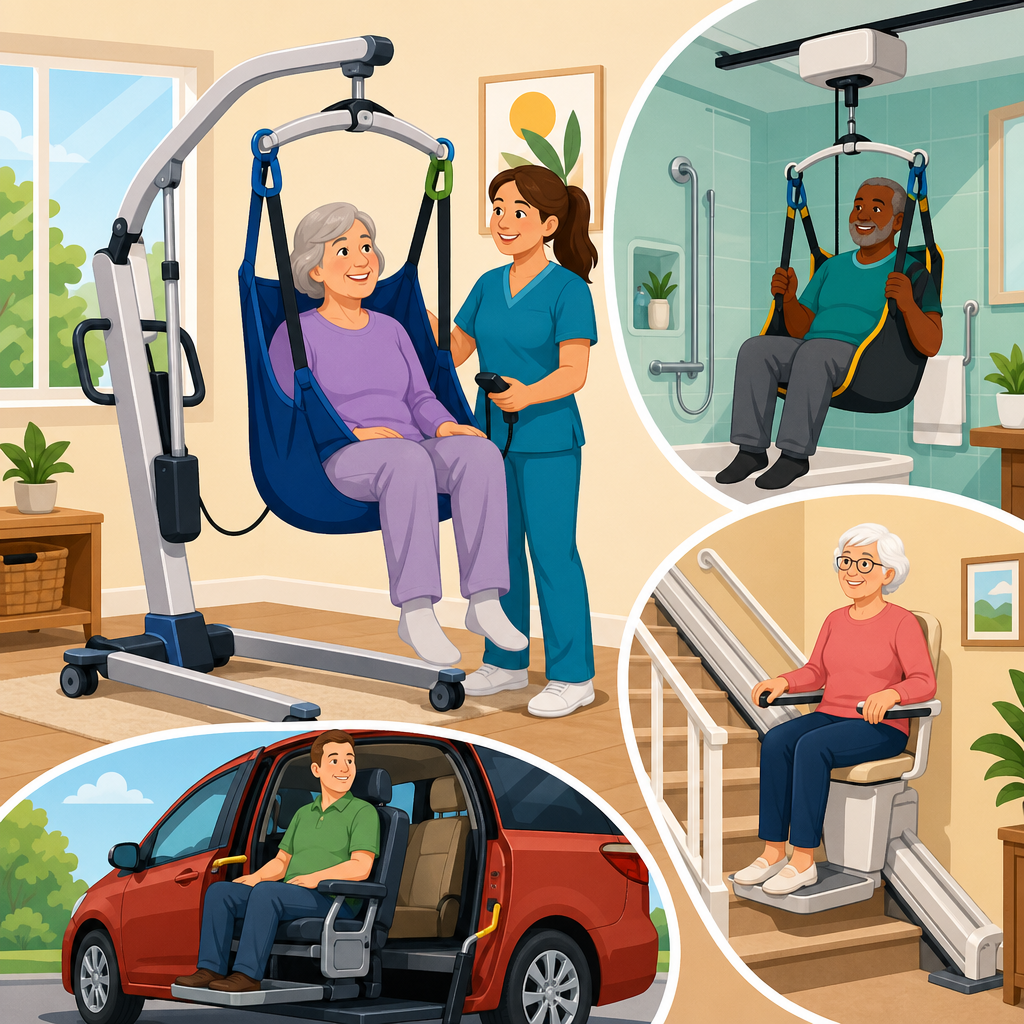
The phrase best chair lifts for disabled users can cover several categories, and that distinction is important in a hub guide. Straight stair lifts fit staircases without turns. Curved stair lifts follow bends, landings, or spiral sections and are custom fabricated. Standing or perch stair lifts support users who have difficulty bending the knees fully. Outdoor stair lifts use weather-resistant materials for porch or garage access. Vertical platform lifts are not stair lifts at all, but they may become the better option when seated transfer ability declines. Buyers comparing chair lifts for disabled users should keep these categories separate to avoid choosing a device that solves today’s problem but blocks tomorrow’s mobility needs.
Feature comparison for muscular dystrophy users
When I assess a home, I look beyond brand names and focus on fit. The same staircase can safely accommodate one user and be completely wrong for another because transfer mechanics differ. Seat height is often underestimated. A slightly higher perch can reduce the amount of quadriceps and hip strength needed to stand. Armrest shape matters because users frequently push through the arms during sit-to-stand. Powered footrests help if bending forward to fold or unfold the plate is tiring or unsafe. Remote controls allow another person to send the unit up or down, which is useful in shared homes.
| Feature | Why it matters for muscular dystrophy | Best fit |
|---|---|---|
| Powered swivel seat | Reduces trunk twisting and awkward turning at the top landing | Users with weak core muscles or caregiver-assisted transfers |
| Higher seat height | Makes standing transfers easier and lowers effort | People with hip and thigh weakness |
| Heavy-duty capacity | Improves seat size, frame stability, and long-term durability | Larger users or anyone wanting a sturdier ride |
| Powered footrest | Avoids repeated bending to position the feet | Users with fatigue, poor balance, or limited reach |
| Battery backup | Keeps lift operating during outages | All users, especially those unable to climb stairs manually |
| Retractable or hinge rail | Prevents the rail from blocking a doorway or walkway | Homes with tight hallways or door clearance issues |
Comfort and confidence also matter. A smooth gearbox, soft start and stop programming, and a well-padded backrest can reduce fear of movement, especially in users who feel unstable when the chair begins to travel. For some people with Becker muscular dystrophy or facioscapulohumeral muscular dystrophy, upper body strength remains relatively good, so standard controls may be fine. For others, especially with advanced weakness, larger toggles and minimal grip demands are preferable. Good dealers can often demonstrate multiple seat types at home, and that trial is invaluable.
Straight, curved, perch, and platform options
Straight stair lifts are generally the most affordable and fastest to install because the rail is modular and does not require custom bending. If your stairs run in a single line from one floor to the next, a straight unit may be installed within hours. For many households, this solves the problem efficiently. Curved stair lifts cost more because the rail is custom made after a detailed survey, but they are essential when the staircase includes corners, intermediate landings, or unusual geometry. Trying to work around a curved staircase with a straight lift is not an option; the system must match the path exactly.
Perch or standing stair lifts deserve attention for users who cannot comfortably bend their knees to a seated angle or who have limited hip flexion. They have a small ledge-like seat and support a semi-standing posture. However, they require sufficient balance and some standing tolerance, so they are rarely the first recommendation for progressive muscular dystrophy unless the user specifically transfers better in that position. For many disabled users, a standard seated stair lift with adjusted seat height is safer and less tiring than a perch model.
Platform lifts become the better answer when the person uses a wheelchair full time or cannot safely transfer to a stair lift seat. They carry the wheelchair itself rather than requiring a seated transfer. The tradeoff is cost, space, and home modification. A platform lift often requires a wider staircase or a separate vertical route. For a hub article on best chair lifts for disabled users, this is the critical decision point: chair lifts are excellent when transfers remain safe, while platform or vertical lifts are better when transfer safety has been lost.
Installation, home fit, and safety standards
Most residential stair lifts mount to the stair treads, not the wall, which surprises many first-time buyers. That means installation usually does not require major structural work, but it does require a staircase in sound condition with enough clear width. Many standard lifts need about 27 to 30 inches of stair width, while heavy-duty models may need 36 inches or more. The parked chair should still leave enough passage for other household members, and folding armrests, seat, and footrest help preserve walkway space.
Professional measurement is essential. Dealers assess top and bottom landing clearance, nearby door swings, rail overrun requirements, outlet access, and any trip hazards. In my experience, the most overlooked issue is landing space at the top. The user must be able to swivel, stand, and step away without backing toward open stairs. A rail overrun can carry the chair slightly past the final step, creating a safer dismount zone. On some layouts, a powered hinge at the bottom prevents the rail from blocking a door or hallway.
Safety should be judged against established standards and service practices, not just marketing language. Reputable products are typically certified to relevant stair lift safety standards in their market, and installers should follow manufacturer specifications exactly. Ask about routine maintenance intervals, battery replacement expectations, and response times for service calls. Batteries commonly last several years, but performance drops if the lift is frequently left off charge. A reliable dealer will explain this clearly, provide a written warranty, and offer a demonstration that includes seatbelt use, swivel lock operation, and emergency stop procedures.
Cost, funding, and how to choose the right dealer
Price varies widely by type. A straight stair lift often falls in the low-thousands range installed, while a curved stair lift can cost several times more because of custom rail fabrication. Heavy-duty options, powered swivels, powered footrests, and hinge rails add cost. Outdoor models also carry a premium due to sealed components and weather covers. For buyers searching best stair lifts for people with muscular dystrophy, cost should be weighed against years of use, service access, and whether a more future-proof option prevents a second purchase later.
Funding sources depend on location. Some families use health savings accounts, veterans benefits, state assistive technology programs, Medicaid waiver supports, nonprofit grants, or home modification loans. Traditional Medicare generally does not cover stair lifts because they are usually considered home modifications rather than durable medical equipment, but local exceptions and secondary support programs do exist. This is one reason a knowledgeable dealer matters: the best companies can point customers toward local funding avenues and provide detailed quotes needed for applications.
Choose a dealer as carefully as the product. Ask how many lifts they service locally, whether technicians are in-house or subcontracted, how quickly emergency repairs are handled, and whether they carry parts for the brands they sell. Request an in-home assessment rather than a phone estimate. A strong dealer will ask about diagnosis, transfers, fatigue, caregiver involvement, and expected progression. That conversation is a sign of competence, not intrusion. The best chair lifts for disabled users are selected through assessment, not guesswork.
The best stair lifts for people with muscular dystrophy are the ones that match the user’s strength, transfer pattern, home layout, and likely future needs. In practical terms, that usually means prioritizing a stable seat, easy controls, battery backup, obstruction sensors, and safe landings before cosmetic upgrades. Premium brands such as Bruno, Stannah, Handicare, and Harmar all offer viable options, but the winning choice depends on whether the stairs are straight or curved, whether the user needs powered features, and whether seated transfer will remain realistic over time.
As the hub for best chair lifts for disabled users, this guide points to the main principle that should drive every buying decision: mobility equipment works best when it is prescribed to the person, not sold as a generic product. Start with an in-home assessment, compare at least two reputable dealers, and ask direct questions about transfer safety, service response, and long-term suitability. A well-chosen stair lift can reduce falls, save energy, and keep a multilevel home usable far longer. If you are narrowing options now, schedule a professional evaluation and test the controls, seat height, and swivel function before you buy.
Frequently Asked Questions
What features matter most when choosing a stair lift for someone with muscular dystrophy?
The most important features are the ones that support safe transfers, reduce physical strain, and remain practical as muscle weakness changes over time. For many people with muscular dystrophy, a stair lift should do more than simply move up and down the stairs. It should help conserve energy, improve day-to-day confidence, and lower the risk of falls during the sitting, riding, and standing process.
Key features to prioritize include a secure seat with supportive armrests, a swivel seat that locks into place at the top landing, a reliable seat belt, easy-to-use controls, and a weight capacity that comfortably meets current and future needs. A powered swivel seat and powered footrest can be especially helpful for users with limited leg strength, reduced trunk control, or difficulty bending. These powered options reduce the amount of effort required during transfers and can make the stair lift much easier to use independently.
Seat height, seat depth, and overall fit also matter. A chair that is too low can make standing up more difficult, while one that does not provide enough support may feel unstable. Some users benefit from higher-back seats, improved padding, or more supportive positioning depending on their posture and balance needs. If hand strength is limited, look for controls that require minimal pressure, such as toggle or rocker-style controls, and consider models with remote call/send controls so the lift can be moved without unnecessary exertion.
Battery backup is another essential feature. Most modern stair lifts operate on batteries and continue working during a power outage, which can be very important for a household where stairs are the main route between levels. Safety sensors that detect obstructions on the stairs or track are also standard on quality models and help prevent accidents. In short, the best stair lift for muscular dystrophy is one that matches the user’s present mobility level, supports safe transfers, and offers flexibility for progression in strength, endurance, and balance changes.
Is a standard stair lift enough for someone with muscular dystrophy, or are custom options usually better?
That depends on the person’s current abilities, the staircase layout, and how muscular dystrophy is affecting movement. In some cases, a standard stair lift for a straight staircase may be completely appropriate, especially if the user can still transfer with minimal assistance and maintain stable seated posture during the ride. However, many people with muscular dystrophy benefit from more tailored options because the condition can affect leg strength, core control, endurance, and coordination in different ways.
Custom options become especially important when the staircase has turns, intermediate landings, narrow dimensions, or limited clearance at the top or bottom. A curved stair lift is designed specifically for the shape of the staircase and can create smoother access in homes where a straight rail will not work. Beyond the rail design, customization may also involve powered features, seat style, folding options, upgraded controls, and parking locations that reduce obstruction and make daily use more convenient.
Another reason custom solutions are often worth considering is progression. Muscular dystrophy is typically progressive, so a stair lift that feels adequate today may become harder to use later if it requires too much upper-body effort or trunk stability. Choosing a lift with optional powered functions, a larger or more supportive seat, or easier transfer positioning can help the equipment remain usable longer. That can save money and frustration compared with replacing the lift too soon.
The best approach is to think in terms of fit rather than “standard versus custom.” A high-quality straight lift can be an excellent choice when the home and user needs are straightforward. But when transfers are challenging, fatigue is significant, or the staircase layout is more complex, custom features often provide meaningful safety and comfort benefits. A home assessment by a stair lift provider, ideally with input from an occupational therapist or clinician familiar with neuromuscular conditions, can help determine what level of customization is truly necessary.
How do stair lifts help with fatigue and safety for people with muscular dystrophy?
Stair lifts can make a major difference because they remove one of the most physically demanding tasks in the home: climbing stairs. For people with muscular dystrophy, stairs can quickly drain energy, increase muscle strain, and create a serious fall risk. Even when someone can still manage steps, doing so repeatedly throughout the day may lead to overexertion, delayed recovery, or reduced energy for other important activities such as bathing, dressing, preparing meals, or leaving the house.
By carrying the user between floors, a stair lift helps conserve strength and reduce unnecessary exertion. This energy conservation is not just about comfort. It can support better overall function during the day by limiting avoidable fatigue. Many families find that using a stair lift regularly allows the person with muscular dystrophy to participate more safely and consistently in daily routines without “using up” so much energy on the staircase alone.
From a safety standpoint, stair lifts reduce exposure to one of the most dangerous areas in the home. Muscle weakness, poor balance, foot drop, and reduced trunk control can all make stair navigation unpredictable. A stair lift provides a seated, controlled ride along a fixed rail, usually with a seat belt, footrest, armrests, and built-in safety sensors. These features help prevent slips, trips, and loss of balance while on the stairs themselves.
That said, the greatest safety benefit depends on proper transfers onto and off the seat. If someone struggles to sit down safely, reposition on the chair, or stand at the landing, those issues need to be addressed with the right seat height, swivel function, and transfer strategy. In many cases, a stair lift substantially improves safety, but only when it is selected and installed with the person’s specific mobility pattern in mind. For that reason, fatigue reduction and fall prevention should be evaluated together, not separately, when deciding whether a stair lift is the right mobility solution.
Can a stair lift still work if muscular dystrophy symptoms get worse over time?
Often yes, but only if the stair lift is chosen with future needs in mind. Because muscular dystrophy usually involves progressive muscle weakness, it is important to avoid selecting a lift based only on what feels acceptable right now. A model that requires strong arm pushing, good trunk stability, or a difficult standing transfer may become less practical as symptoms advance. Planning ahead can extend the useful life of the equipment and reduce the need for another major home modification later.
Features that support long-term usability include powered swivel seats, powered footrests, larger seat options, supportive armrests, higher weight capacities, and controls that are easy to operate even if hand strength declines. Smooth starts and stops can also improve comfort and stability for users who have difficulty maintaining posture. If the user currently needs some assistance but is likely to need more later, choosing a model that accommodates caregiver support during transfers may be wise.
It is also important to understand that there may come a point when a traditional seated stair lift is no longer the safest option. If someone can no longer transfer safely onto the seat, cannot maintain secure positioning during the ride, or requires extensive physical assistance, other accessibility solutions may be more appropriate. Depending on the home and the person’s mobility level, that could include a wheelchair platform lift, a home elevator, or relocating essential living spaces to one level.
This is why reassessment matters. A stair lift should not be viewed as a one-time decision that never needs revisiting. As muscular dystrophy changes, the right equipment strategy can change too. The best outcomes usually come from choosing a lift with some built-in flexibility, monitoring how well it continues to meet needs, and involving qualified professionals when mobility or transfer ability starts to shift.
What should families know about installation, home setup, and professional assessment before buying a stair lift?
Families should know that the buying decision is about much more than the staircase itself. A good stair lift installation begins with understanding the user’s physical abilities, the home’s layout, and the way transfers happen at both landings. The rail is typically attached to the stair treads rather than the wall, so installation is often less invasive than people expect. Even so, precise measurements are critical, especially for narrow stairs, curved staircases, or homes where doorways and hallways near the top or bottom landing affect access.
Home setup considerations include whether there is enough room to sit down safely, whether the seat can swivel toward a secure landing, and whether the folded lift leaves adequate passage for others using the stairs. The location of charging points, the parking position of the chair, and the presence of obstacles near the staircase also matter. In some homes, a track overrun at the top or bottom can improve safety by moving the user away from the edge of the stairs before standing up. This can be especially beneficial for people with weakness, poor balance, or difficulty turning.
A professional assessment is strongly recommended because muscular dystrophy affects each person differently. A stair lift dealer can evaluate the staircase and explain model options, but an occupational therapist or rehab professional can add valuable insight into transfer safety, seating support, caregiver involvement, and likely future needs. This combined perspective often leads to a better decision than focusing on price or staircase compatibility alone.
Families should also ask detailed questions about service, maintenance, warranty coverage, battery replacement, and emergency operation. A lower upfront price is not always the best value if the lift is harder to use, less supportive, or poorly matched to the