Choosing the best chair lifts for disabled users starts with a clear understanding of mobility needs, home layout, transfer ability, and long-term safety. In practice, many buyers begin by searching for the best lifts for individuals with limited upper body strength, but that phrase can describe several different products: stair lifts with seated travel, powered lift chairs that help with sit-to-stand movement, patient transfer lifts, and vertical platform lifts for wheelchair users. I have worked with families comparing all four, and the most common mistake is assuming one device solves every problem. It does not. A stair lift helps a person travel between floors while seated. A lift chair helps someone rise from a seated position. A patient lift moves a person from bed to chair or toilet. A platform lift carries a wheelchair and user together. Understanding those distinctions matters because the right match reduces falls, caregiver strain, and home modifications, while the wrong match creates frustration, wasted money, and unsafe transfers.
For disabled users with limited upper body strength, the decision carries even more weight. Someone who cannot reliably push through armrests, stabilize their trunk, or grip a transfer bar may need powered support at multiple points during the day. In assessments I have seen, the best results come from evaluating five factors first: the user’s diagnosis and progression, current transfer method, weight and seating dimensions, staircase or entry configuration, and whether a caregiver is involved. The ideal solution is not simply the strongest motor or lowest price. It is the product that allows consistent, repeatable movement with the least physical effort and the lowest risk. This hub article explains the main categories, shows how to compare them, and highlights the practical details buyers often miss, from battery backup and rail design to seat height, sling fit, and code compliance.
What “chair lift” means in this buying guide
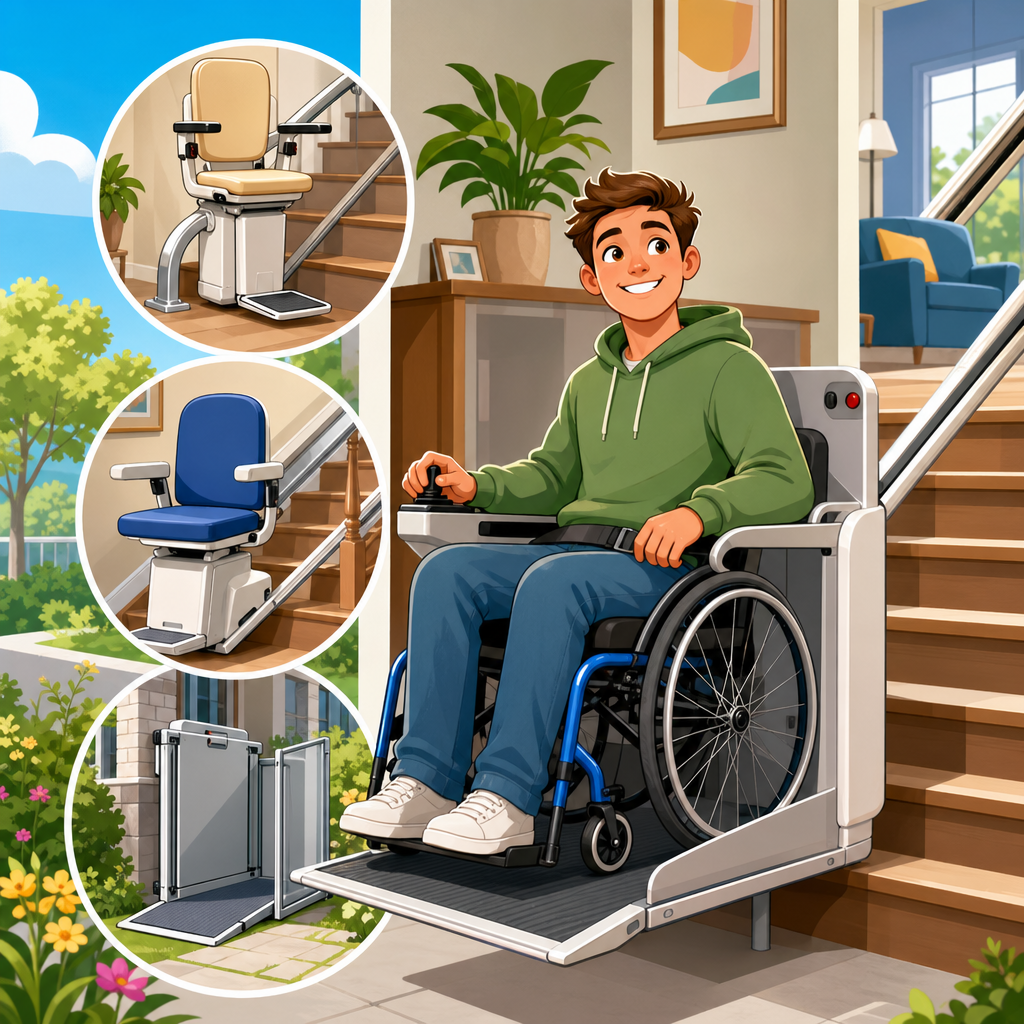
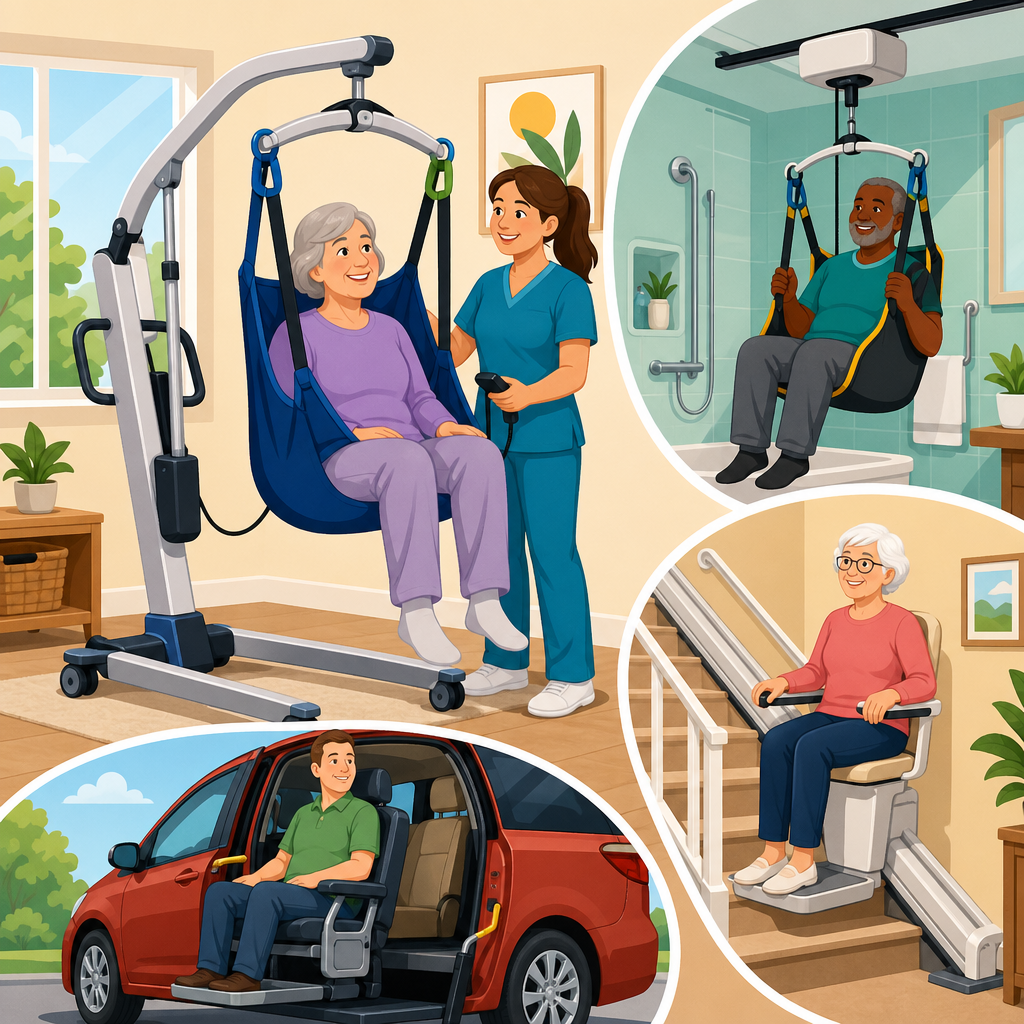
In consumer searches, chair lift is used loosely, so this guide treats it as an umbrella term while separating the products that actually serve disabled users. First are stair lifts, such as models from Bruno, Stannah, Harmar, and Handicare. These carry a seated rider on a rail along a staircase. They are best for users who can transfer onto a seat with minimal help and do not use a wheelchair during the trip. Second are lift chairs, often sold by Pride Mobility, Golden Technologies, and UltraComfort. These are powered recliners with one or more motors that tilt and raise to help the user stand. Third are patient lifts, including Hoyer-style floor lifts and ceiling lifts from companies like Joerns, Invacare, Arjo, and Human Care. These are used when a person cannot safely stand-pivot. Fourth are vertical platform lifts, made by brands such as Bruno, Savaria, and Harmar, which function like a compact residential lift for a wheelchair or scooter.
If your audience is looking for the best chair lifts for disabled users as a broad category, the hub should answer a simple question directly: which type is best for which person? For most ambulatory users with weak arms but some leg function, a stair lift or lift chair is the best fit. For non-ambulatory users or wheelchair users who must remain seated in their mobility device, a patient lift or platform lift is usually more appropriate. The distinction matters because each product has different installation needs, coverage rules, and safety standards. Stair lifts are commonly built to ASME A18.1 requirements in the United States. Patient lifts must match the user’s clinical transfer needs and sling type. Lift chairs may qualify for limited reimbursement of the lift mechanism under certain plans, but not always the chair upholstery itself. Buyers who understand the category before shopping make better decisions and avoid expensive returns.
Best stair lifts for disabled users with limited upper body strength
For many homes, a stair lift is the most practical answer when the user can sit upright and transfer with minimal assistance. The strongest choices typically come from established manufacturers with reliable local dealers, because service quality matters as much as the chair. Bruno stair lifts are often recommended for build quality, smooth ride feel, and strong dealer support. Stannah is known for custom curved rails and refined engineering. Harmar offers solid value and a broad product range. Handicare stands out for modular curved systems in some layouts. In real home evaluations, the best stair lift for a disabled user with weak arms usually includes a swivel seat, retractable seat belt that is easy to manage, large toggle or paddle controls, and powered folding options if bending is difficult.
Weight capacity and transfer design are critical. A standard residential stair lift may support around 300 to 350 pounds, while heavy-duty models can reach 400 pounds or more. Seat width, armrest spacing, footrest height, and final overrun position all affect whether the user can transfer safely at the top landing. I have seen buyers focus on upholstery or speed and overlook the much more important issue of hip clearance at the landing. If the user has poor upper body strength, they need a stable seated position and enough room to pivot without relying on arm power. Battery-powered units are generally preferred because they keep operating during power outages and deliver smoother starts and stops. Straight stair lifts are less expensive and quicker to install than curved models, but a curved staircase, doorway obstruction, or intermediate landing requires a custom rail and a careful site survey.
| Lift type | Best for | Main advantage | Main limitation |
|---|---|---|---|
| Stair lift | User can transfer onto a seat and travel stairs seated | Lower cost than major remodeling | Not suitable for users who must stay in a wheelchair |
| Lift chair | User needs help standing from a seated position | Supports daily sit-to-stand and pressure relief | Does not move the user between floors |
| Patient lift | User cannot safely stand-pivot or needs caregiver transfer help | Reduces caregiver strain and transfer risk | Requires sling selection and transfer training |
| Platform lift | Wheelchair user must remain in mobility device | Moves wheelchair and rider together | Higher cost and stricter installation requirements |
Best lift chairs for sit-to-stand support and daily comfort
Lift chairs are often the best answer when the core problem is standing up from a seated position rather than moving between levels. For disabled users with limited upper body strength, a well-fitted lift chair reduces the effort required to rise and can make toileting, meals, medication routines, and transfers safer. The best models are not simply plush recliners with a motor. They need the right seat-to-floor height, seat depth, back style, and hand control layout. Pride Mobility and Golden Technologies dominate this category for a reason: they offer broad sizing, dependable mechanisms, and clear dealer networks. UltraComfort is also respected for positioning options and pressure management features.
Single-motor chairs move the back and footrest together, while dual- and multi-motor chairs allow more independent positioning. For someone with weakness, edema, pain, or pressure injury risk, independent leg elevation and recline can matter a great deal. Infinite-position and zero-gravity functions can improve comfort, but fit remains the first priority. If the seat is too deep, the user slides forward and loses leverage. If the seat is too high, their feet do not anchor. If it is too low, the lift arc still may not create enough forward momentum to stand. Good dealers measure hip width, lower leg length, and torso height before recommending a model. Features worth paying for include battery backup, wipe-clean fabrics, side pockets for remotes, and a hand control with large tactile buttons. Heat and massage are optional comfort add-ons, not core safety features.
Best patient lifts when transfers are no longer safe manually
When a disabled user has very limited upper body strength and cannot reliably bear weight, a patient lift becomes the safest choice. Families often delay this purchase because they think a manual assist at the arms is still “good enough.” In my experience, that is where injuries happen. A floor-based Hoyer lift or a ceiling track lift allows controlled transfers from bed to wheelchair, commode, shower chair, or recliner without depending on the user’s grip or trunk stability. Invacare, Joerns, Arjo, and Human Care are established names here, and the real differentiator is not only the lift but the sling system and training provided.
Manual hydraulic lifts cost less, but powered lifts are far easier for home caregivers, especially when transfers happen multiple times daily. Ceiling lifts are smoother and reduce floor clutter, yet they require structural planning and a larger upfront budget. The sling must match the task: divided-leg, full-body, toileting, amputee, and mesh bathing slings all have different uses. Wrong sling size is one of the most common and dangerous fitting errors. Buyers should confirm safe working load, base width, leg opening range, under-bed clearance, battery charging method, and emergency lowering function. If the user has fluctuating tone, involuntary movement, or skin fragility, those factors should shape the final selection. Training is non-negotiable. Even excellent equipment fails if caregivers do not learn positioning, strap attachment order, and how to move slowly enough to maintain comfort and safety.
Best platform lifts for wheelchair users and barrier-free entry
For wheelchair users who cannot transfer to a stair lift seat, a vertical platform lift may be the best home access solution. These lifts carry the user while they remain in their wheelchair or scooter, which makes them especially valuable for people with profound upper body weakness, neuromuscular conditions, or severe balance limitations. Savaria, Bruno, and Harmar are well-known in the residential market. Compared with a ramp, a platform lift uses less space and can solve elevation changes that would require an impractically long ramp under ADA-style slope guidance. Compared with a residential elevator, it is usually less expensive and simpler to install, although travel height is more limited.
The tradeoff is that platform lifts have stricter site requirements than a typical stair lift or recliner. Buyers need to evaluate landing size, gate swing, weather exposure, drainage for outdoor units, electrical service, and local permitting. Safety features should include non-skid flooring, obstruction sensors, emergency stop, battery backup if offered, and controls that the user can reach from a seated position. If the mobility device is large, confirm platform dimensions with footrests and anti-tip bars included, not just the nominal chair width. Platform lifts can transform entry access, but they are not a universal replacement for interior circulation planning. Door widths, threshold heights, bathroom turning radius, and bedroom access still determine whether the whole home is usable after installation.
How to choose the right chair lift for a disabled user
The best buying process starts with the user, not the catalog. Ask what movement is failing: standing up, climbing stairs, getting into bed, or entering the home. Then ask what level of assistance is available every day. A spouse may be willing to help, but that does not mean they can safely manage a transfer. I advise buyers to document the hardest three moments in the day and match equipment to those moments first. A stair lift may solve upstairs access, but if the user still cannot rise from the toilet, the overall problem remains. Many homes ultimately need more than one device.
Before purchasing, request an in-home assessment, verify dealer service coverage, and test controls if possible. Review warranty terms for motor, gearbox, electronics, battery, and labor separately. Ask about maintenance intervals, lead times for custom rails or slings, and what happens during a power failure. Measure carefully, including staircase width, landing depth, doorway clearance, and user dimensions with winter clothing or pressure cushions if relevant. If the user’s condition is progressive, buy for the next stage, not only today’s function. The most successful installations balance independence, caregiver protection, and realistic home constraints. Start with a professional assessment and compare two or three reputable brands before committing.
The best chair lifts for disabled users are the ones that match real functional limits, not search terms or showroom impressions. Stair lifts are ideal for seated travel on stairs when transfers are still possible. Lift chairs are best for daily sit-to-stand support and positioning. Patient lifts are essential when manual transfers become unsafe. Platform lifts are the strongest option for wheelchair users who must remain in their chair. Each product serves a different problem, and buyers who treat them as interchangeable usually waste time and money.
If you are building a reliable plan for home mobility, focus on fit, transfer safety, service support, and future needs. Look beyond price tags and ask how the user will move at 7 a.m., after a tiring afternoon, or during a power outage. That practical lens leads to better purchases. Use this hub as your starting point, then compare product-specific guides, request an in-home evaluation, and choose the lift that makes everyday movement safer, easier, and more sustainable.
Frequently Asked Questions
What types of lifts are best for individuals with limited upper body strength?
The best option depends on what task the lift needs to solve, because “lift” can mean several different products. For someone who can walk but has difficulty climbing stairs or pulling with their arms, a stair lift is often the most practical choice. It allows seated travel up and down the stairs with minimal upper body effort, especially when equipped with powered swivel seats, footrests, and easy-touch controls. For someone who struggles most with getting up from a seated position, a powered lift chair can be extremely helpful because it gently tilts and raises the user to support safer sit-to-stand transfers.
If the person needs help moving between a bed, wheelchair, toilet, or recliner, a patient lift may be more appropriate. These include mobile floor lifts and ceiling-mounted systems designed to reduce the amount of lifting required from both the user and caregiver. For wheelchair users who need access between levels without transferring out of the chair, a vertical platform lift is often the best fit. The key is matching the product to the mobility challenge: stair access, standing assistance, full-body transfer support, or wheelchair level changes. Choosing correctly improves safety, comfort, and day-to-day independence.
How do I know whether a stair lift, lift chair, patient lift, or vertical platform lift is the right choice?
Start by identifying the exact movement that is difficult or unsafe. If the main problem is navigating stairs, a stair lift is usually the right solution for users who can safely transfer onto a seat. If the user cannot comfortably stand up from a sofa or recliner without pushing hard through the arms, a lift chair may be the better answer. If hands-on assistance is needed to move from one surface to another, such as from bed to wheelchair, then a patient transfer lift is typically more appropriate. If the person remains in a wheelchair and should not be required to transfer at all, a vertical platform lift may be the most functional and safest option.
Transfer ability is one of the biggest decision points. Some people have limited upper body strength but still have enough trunk control and lower body stability to perform a seated transfer onto a stair lift. Others do not. Home layout matters too. Narrow staircases, split-level entrances, tight bathrooms, and room-to-room access can all affect which equipment will work. It is also important to think long term. A lift that works today may not be the best investment if strength, balance, or endurance are declining. In many cases, an in-home assessment by a mobility professional or occupational therapist is the best way to confirm which product supports both current needs and future safety.
What features should I look for in a lift if upper body strength is limited?
Look for features that reduce the need to push, pull, twist, or brace with the arms. For stair lifts, this often means a powered swivel seat, powered footrest, large easy-press controls, seat belts that are simple to fasten, and remote call/send controls. A higher seat back, supportive armrests, and a smooth start-and-stop ride can also make transfers feel more secure. On a powered lift chair, seek a model with stable positioning, gentle lifting motion, and enough support for the user’s height and weight. Infinite-position or dual-motor designs may also improve comfort if the chair will be used for long periods.
For patient lifts, consider sling compatibility, ease of positioning, powered base adjustment, battery backup, and caregiver-friendly controls. Ceiling lifts can be especially helpful when repeated transfers are needed, because they often require less physical effort than mobile floor lifts. For vertical platform lifts, key features include simple controls, non-slip platform surfaces, obstruction sensors, appropriate weight capacity, weather protection if installed outdoors, and safe entry and exit clearances. Across all categories, reliability and ease of use matter just as much as raw lifting capability. The safest lift is one the user and caregiver can operate confidently every day without unnecessary strain.
Are lifts for people with limited upper body strength safe to use at home?
Yes, when the correct lift is chosen, professionally installed if required, and used as intended, these products can be very safe and can significantly reduce fall risk. Safety starts with proper matching. A stair lift is safe for users who can transfer onto and off the seat with adequate support, but it is not a substitute for a wheelchair-access solution if transfers are not realistic. A lift chair can reduce the risk of falls during sit-to-stand movement, but it must be the right size and placed on a stable surface. Patient lifts can greatly improve caregiver and user safety, but they require proper sling selection, training, and enough space to maneuver. Vertical platform lifts are designed specifically for wheelchair access and can be a safer alternative to ramps in some homes where elevation change is substantial.
Installation quality and training are essential. Stair lifts and platform lifts should be installed by qualified professionals who understand rail alignment, weight limits, battery systems, and code-related issues. Users and caregivers should be shown exactly how to transfer, secure belts or slings, and respond to common issues such as stopping midway or low battery alerts. Routine maintenance also matters. Batteries, moving parts, and safety sensors need periodic inspection. In short, home lifts are generally very safe, but only when selection, setup, and use are all handled correctly.
What should buyers consider before purchasing a lift for limited upper body strength?
Before buying, think beyond the product name and focus on how the person moves through daily life. Consider whether the user can stand, pivot, or transfer independently, how much assistance a caregiver provides, and whether mobility needs are likely to change over time. Measure the home carefully, including stair width, landing space, doorway clearance, flooring surfaces, and any tight turns that may affect transfer equipment. Weight capacity, body size, and seating comfort should also be considered, especially for equipment used multiple times per day. It is also smart to ask whether the goal is independence, caregiver support, reduced fall risk, or all three.
Buyers should also compare service and support, not just price. Ask about warranty coverage, maintenance requirements, battery backup, emergency lowering features, replacement parts availability, and local technician support. If the lift is being installed in a permanent residence, a more durable long-term solution may be worth the investment. If needs are temporary, rental or short-term options may exist for certain patient lifts. Whenever possible, involve a medical professional, occupational therapist, or experienced mobility dealer in the decision. The right lift can make daily life dramatically safer and easier, but the wrong one can create frustration, unsafe transfers, and unnecessary expense.