Top-rated chair lifts for neuromuscular conditions solve a specific mobility problem: helping disabled users move safely from sitting to standing when muscle weakness, fatigue, poor balance, or impaired coordination make transfers difficult. In this guide, I use chair lift to mean powered lift recliners, seat lift chairs, and closely related rise-and-recline models designed for home use, not stairlifts or overhead hoists. That distinction matters because buyers often search for best chair lifts for disabled users and land on mixed results that combine unrelated products. A lift chair supports the transfer itself, reduces strain on caregivers, and can preserve independence in bedrooms, living rooms, and recovery spaces.
Neuromuscular conditions such as muscular dystrophy, multiple sclerosis, spinal muscular atrophy, post-polio syndrome, Parkinsonian syndromes, motor neuropathies, and some forms of cerebral palsy create overlapping challenges, but they do not affect people in the same way. One user may need gentle tilt and stable arm support to stand. Another may need pressure relief, head and trunk positioning, or a chair that accommodates involuntary movement and frequent repositioning. After working with families comparing these products, I have learned that the best model is rarely the one with the most features. It is the one that matches strength level, transfer pattern, body size, skin protection needs, and the room where it will be used.
This matters because the wrong chair can increase falls, worsen fatigue, and create avoidable shoulder or caregiver injuries. The right chair can reduce transfer effort, improve comfort over long sitting periods, and support safer routines around dressing, eating, medication, and rest. It can also extend time at home by making daily mobility more manageable. Below, I cover how to evaluate top-rated chair lifts for neuromuscular conditions, what features actually affect outcomes, and which product categories consistently perform best for disabled users shopping this topic.
What makes a chair lift suitable for neuromuscular conditions
A suitable chair lift must do more than rise. It needs to control the sit-to-stand transition in a way that matches limited muscle power and variable balance. In practical terms, that means a stable base, predictable lift arc, supportive armrests, and motor movement that does not jolt the user forward. For people with proximal weakness, a slightly slower, smoother rise often works better than aggressive lift speed. For users with spasticity or tremor, a wide, steady stance and generous arm contact area can make a visible difference in confidence.
Positioning is equally important. Standard two-position lift chairs may help with basic standing, but many neuromuscular users benefit more from three-position or infinite-position models that allow finer control of backrest and leg rest angles. Infinite-position chairs usually use dual motors, letting the back and footrest move independently. That supports pressure redistribution, edema management, and rest breaks during the day. If a user spends several hours seated, this extra adjustability is often not a luxury; it is part of skin integrity and pain management.
Seat dimensions need precise attention. A seat that is too deep leaves the user slumped with poor back contact. A seat that is too high can reduce foot stability before the lift even begins. I usually tell buyers to measure popliteal height, hip width, and usable seat depth before comparing brands. Reputable manufacturers publish sizing charts, and these should be treated as clinical fit data, not rough suggestions. Weight capacity also matters, but frame design and cushion density matter just as much for long-term support.
Best chair lift categories for disabled users
The best chair lifts for disabled users usually fall into five categories. First are standard power lift recliners from established brands such as Pride Mobility, Golden Technologies, and UltraComfort. These are the most common home option and fit users who need transfer assistance plus everyday relaxation. Second are heavy-duty lift chairs with reinforced frames and wider seats for bariatric needs. Third are zero-gravity or infinite-position models that support longer sitting periods and pressure relief. Fourth are therapeutic chairs with heat, massage, or advanced positioning, though these features should remain secondary to transfer safety. Fifth are custom or clinical seating systems, often sourced through durable medical equipment providers, for users with significant postural support needs.
For most households, the strongest balance of value and function comes from dual-motor lift recliners in the mid-to-premium range. Models like the Golden Technologies MaxiComfort series and UltraComfort medium or large infinite-position chairs are frequently well reviewed because they combine smooth lift mechanics, broad size options, backup battery support, and upholstery choices that are easier to maintain. Pride Mobility chairs also remain widely recommended because service networks and parts availability are generally better than with lesser-known import brands. That matters more than buyers expect, especially after the first year when hand controls, transformers, or actuator components may need replacement.
For users with pronounced fatigue, edema, or pressure sensitivity, infinite-position designs are usually worth the higher price. Being able to elevate the legs without forcing a fixed back angle can reduce discomfort and keep the chair usable for more hours each day. By contrast, a cheaper single-motor chair may still help a user stand, but if it becomes uncomfortable after thirty minutes, it will not serve as an all-day seating solution. Product reviews often focus on softness. In real use, support, fit, and motor control predict satisfaction more reliably than plush feel in a showroom.
Key features that separate top-rated models
Several features consistently separate top-rated chair lifts for neuromuscular conditions from average models. Dual motors are near the top because they expand positioning choices and make transfers easier to stage. Backup power is another must-have. Most lift chairs use a battery backup for emergency return during outages, but buyers should confirm whether batteries are included and whether the system supports more than one cycle. Quiet motors matter too, especially for users with anxiety, sensory sensitivity, or nighttime transfer needs.
Upholstery should be chosen for skin protection and cleaning, not only appearance. High-friction fabrics can help reduce sliding, but they may also increase shear if the user is repositioned poorly. Faux leather wipes clean easily yet can trap heat. Performance fabrics and moisture-resistant covers often provide a better compromise. Remotes should have large, tactile buttons and simple labeling. In homes where hand weakness is significant, wand-style remotes with minimal force requirements are easier to use than small membrane controls.
| Feature | Why it matters | Best fit |
|---|---|---|
| Dual-motor positioning | Independent back and leg movement for comfort and transfer control | Users with fatigue, edema, or long sitting times |
| Battery backup | Allows safe return during a power outage | All home users |
| Size-specific seating | Improves posture, foot contact, and lift effectiveness | Users outside average height ranges |
| Higher-density cushions | Reduces bottoming out and supports longer seating | Users with pressure concerns |
| Extended armrests | Improves push support and transfer confidence | Users with arm weakness or balance deficits |
Warranty structure deserves close reading. Many brands advertise comprehensive coverage, but the details vary between frame, lift mechanism, electrical parts, labor, and fabric. A strong chair on paper becomes a weak purchase if labor coverage is brief and no local technician services the brand. Before buying, ask who handles in-home repairs, what parts are stocked regionally, and how long actuator replacement typically takes. That practical service information often matters more than one extra comfort feature.
How to match a lift chair to specific neuromuscular needs
Matching a lift chair to condition-specific needs starts with the transfer pattern. Does the user stand and pivot independently once elevated, or do they need hands-on assistance? Someone with multiple sclerosis may have fluctuating strength and benefit from a chair with a very controllable rise and supportive arms. A person with muscular dystrophy may need a firmer seat, stable lateral support, and enough width for orthotics or transfer equipment. A user with Parkinsonian freezing may do better with a predictable lift angle and strong visual contrast around the armrests and floor area.
Head and trunk control are often overlooked. If a user naps in the chair or tires easily, the backrest shape and pillow system matter. Some premium models offer adjustable headrest and lumbar support, which can be helpful, but these features should not distract from overall fit. Foot positioning is another deciding factor. If the footplate or leg rest leaves the knees unsupported, discomfort and sliding increase. Users with ankle-foot orthoses need enough clearance and depth to sit fully back without awkward pressure points.
Pressure management becomes critical when sitting time exceeds two hours at a stretch. In that case, higher-resilience foam, gel-enhanced cushions, or pressure-redistributing overlays may be appropriate, though overlays must not interfere with the lift geometry. For users with severe weakness, a lift chair is sometimes only one part of the solution. A transfer board, gait belt, floor lift, or standing aid may still be necessary. The safest assessment is to ask an occupational therapist or seating specialist to observe one real transfer before purchase. That single visit can prevent an expensive mismatch.
Buying, setup, and common mistakes to avoid
When buying a chair lift for a disabled user, start with measurements, then confirm room clearance. Recline path, wall distance, and transfer side access are common failure points. A chair may fit the room but block a walker, wheelchair, or caregiver position when fully reclined. White-glove delivery is usually worth paying for because it includes in-room placement, assembly, and packaging removal. If possible, ask the installer to confirm full lift function before leaving and to demonstrate battery backup, hand control lockouts, and emergency lowering procedures.
One common mistake is buying based on online star ratings alone. Reviews often reflect fast shipping or softness on day one, not whether the chair supports weak quads, neuropathy, or prolonged sitting after six months. Another mistake is choosing oversized seating because it feels luxurious. For neuromuscular users, oversizing can reduce arm leverage, worsen slumping, and make standing harder. I have also seen buyers skip service questions, then discover that the nearest authorized repair technician is several hours away.
Price matters, but total ownership cost matters more. Entry-level lift chairs may start below a thousand dollars, while premium infinite-position or bariatric models can reach several thousand. Some insurers and veterans’ programs may help in limited cases, especially when prescribed through medical channels, but coverage is inconsistent. Ask for the exact warranty in writing, the expected lifespan of motors and hand controls, and whether replacement parts remain available after model updates. For households researching related topics, this hub pairs naturally with guides on lift chair sizing, bariatric lift recliners, power recliner safety, and transfer aids for home mobility.
The best chair lifts for neuromuscular conditions are the ones that turn an exhausting transfer into a safe, repeatable routine while supporting comfort between transfers. For disabled users, top-rated models stand out because they combine smooth lift mechanics, correct sizing, stable arm support, durable cushions, and dependable service after delivery. Brands such as Golden Technologies, Pride Mobility, and UltraComfort remain strong starting points not because every model is perfect, but because they offer broader fit ranges, established parts channels, and better long-term ownership experiences than many low-cost alternatives.
If you remember only three buying principles, make them these: fit the chair to the body, match the lift pattern to the real transfer, and verify local service before you pay. A dual-motor chair is often the best choice for users with fatigue, edema, or long sitting periods, while a simpler model may work for basic rise assistance if posture and comfort needs are limited. Measure carefully, test if possible, and involve an occupational therapist when weakness, pressure risk, or caregiver strain is significant. That extra step usually saves money and frustration.
Use this page as your hub for best chair lifts for disabled users, then compare sizing guides, product reviews, and transfer-safety resources before deciding. A well-chosen lift chair can protect independence, reduce falls, and make daily life noticeably easier. Start with your measurements, your transfer needs, and the brands that can support the chair after installation.
Frequently Asked Questions
What is the difference between a chair lift for neuromuscular conditions and other mobility equipment like stairlifts or patient hoists?
In this guide, a chair lift refers to a powered lift recliner, seat lift chair, or rise-and-recline chair made for home use. These chairs help a person move from a seated position to a safer, more supported standing position by gently tilting and lifting the seat base. That function is especially valuable for people with neuromuscular conditions who may struggle with leg weakness, trunk instability, fatigue, poor coordination, or reduced balance during transfers.
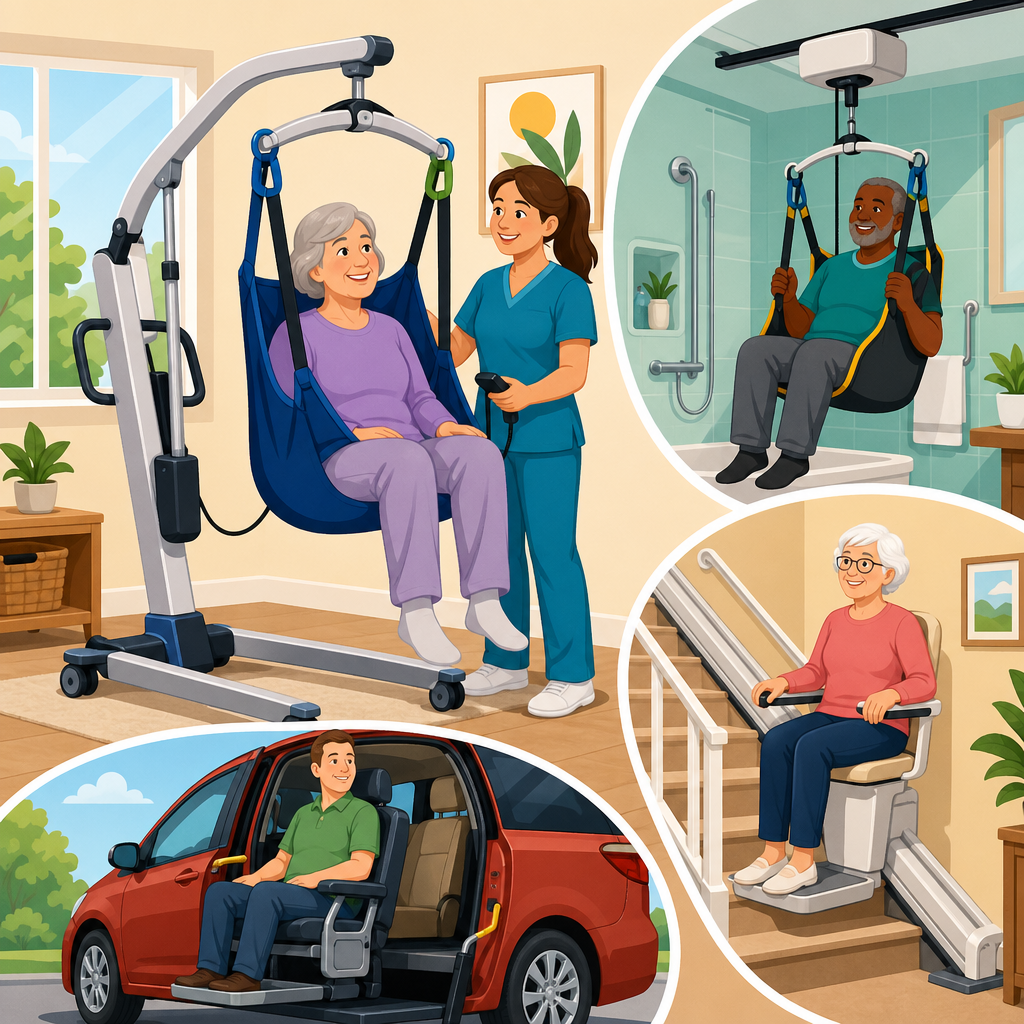
This is very different from a stairlift, which carries a user along a staircase on a rail, or a patient hoist, which uses a sling and mechanical lift system to transfer someone from bed to chair, chair to toilet, or similar locations. A lift recliner is intended to support sit-to-stand and stand-to-sit movement in a familiar seated chair, while also serving as a comfortable place to rest. For many households, that makes it one of the most practical everyday mobility aids because it combines seating, positioning support, and transfer assistance in one product.
That distinction matters because shoppers often search for “best chair lifts” and end up seeing results for unrelated equipment. If the goal is to reduce transfer strain in the living room or bedroom, improve safety when standing up, and support daily comfort at home, then powered lift recliners and rise-and-recline chairs are usually the category to focus on. Choosing the right type of device first can save time, money, and frustration.
Which features matter most when choosing a top-rated chair lift for someone with a neuromuscular condition?
The best chair lift for a neuromuscular condition is not simply the one with the most features; it is the one that matches the user’s physical needs, body size, symptom pattern, and daily routine. A smooth and controlled lift mechanism is one of the most important features because abrupt movement can feel unsafe or physically demanding for users with weakness, spasticity, tremor, or impaired coordination. The chair should lift the person far enough forward and upward to reduce the effort needed to stand, but not so aggressively that it causes instability.
Seat dimensions are equally important. A chair that is too wide may reduce lateral support and make it harder to maintain posture, while a chair that is too deep can prevent the user from positioning their feet properly under the knees for standing. Proper fit affects safety, comfort, pressure distribution, and ease of transfer. Weight capacity should also be checked carefully, not only for safety but because heavy-duty models may have different seat heights, widths, and cushioning characteristics than standard sizes.
Many buyers should also pay close attention to the backrest style, head and neck support, and pressure-relieving cushioning. People with progressive weakness often spend extended periods sitting, so supportive padding and stable positioning can make a meaningful difference. Dual-motor or infinite-position models can be helpful because they allow the backrest and footrest to move independently, giving more flexibility for rest, pressure relief, edema management, and comfort. If a person naps in the chair, spends much of the day seated, or needs frequent repositioning, that added adjustability can be especially useful.
Other worthwhile features include battery backup for power outages, easy-to-use hand controls with large buttons, side pockets for essentials, stain-resistant upholstery, and transfer-friendly armrests. Some users benefit from heat or massage, but these should be treated as comfort extras rather than core clinical features. In general, the most important priorities are safe lifting, proper sizing, supportive positioning, dependable build quality, and controls that the user can operate easily and confidently.
Are lift recliners safe for people with muscle weakness, poor balance, or fatigue?
Yes, lift recliners can be very safe for people with muscle weakness, fatigue, poor balance, or mild to moderate transfer difficulty, provided the chair is correctly sized, used properly, and appropriate for the person’s level of mobility. Their main safety advantage is that they reduce the physical effort required to move from sitting to standing. Instead of forcing the user to push up from a low seat with limited leg strength, the chair raises and tilts forward to place the body in a more favorable position for standing.
That said, safety depends on matching the chair to the user’s actual needs. If a person has severe trunk instability, cannot bear weight reliably, or needs hands-on assistance for nearly all transfers, a standard lift recliner may not be enough on its own. In those situations, guidance from an occupational therapist, physical therapist, or seating specialist is a smart step. They can help determine whether a lift chair is suitable, what seat height is needed, and whether additional supports or a different transfer device would be safer.
To improve safety, the user should place both feet flat on the floor before activating the lift, keep mobility aids like walkers within easy reach, and avoid twisting during the transfer. The surrounding area should be free of rugs, cords, or clutter that could increase fall risk. Caregivers should also understand how the control works and how to assist without pulling awkwardly on the person’s arms or shoulders. When used in the right setting and with good transfer habits, a quality lift recliner can significantly reduce strain and lower the risk of difficult or unsafe sit-to-stand movements.
Should I choose a two-position, three-position, or infinite-position chair lift?
The best choice depends on how the chair will be used day to day. A two-position or basic lift chair usually offers more limited recline and is often best for users who mainly need help standing up and sitting down, rather than extended positioning options. These models can work well for people who want straightforward transfer assistance in a smaller room or at a lower price point, but they may not offer enough flexibility for users who spend long hours seated.
A three-position chair reclines farther and is often better for napping, resting, and general comfort. For many households, it provides a good balance between affordability and functionality. However, if the user needs highly customizable positioning because of fatigue, pressure concerns, swelling, discomfort, or changing support needs throughout the day, an infinite-position or dual-motor model is often the stronger choice. These chairs allow the backrest and footrest to move independently, which means the user can find a more personalized posture rather than being limited to preset movement patterns.
For neuromuscular conditions, that extra adjustability can be especially helpful. Symptoms may vary from morning to evening, and a person may need one position for eating, another for reading, another for resting, and another for easing edema or pressure. An infinite-position chair may also help caregivers with repositioning and comfort management. While it usually costs more, the additional flexibility can be well worth it if the chair will be used heavily or if the user’s condition is progressive. In short, if transfer assistance is the main goal, a simpler model may be enough; if comfort, positioning, and longer sitting time are major concerns, a more advanced chair is usually the better investment.
How do I know if a lift recliner will fit the user and the room properly?
Proper fit starts with the user, not the room. The chair’s seat height should allow the person’s feet to rest flat on the floor with knees at a comfortable angle, because this directly affects transfer mechanics. If the seat is too high, the feet may dangle or provide poor leverage. If it is too low, standing may still require too much effort even with the lift function. Seat depth matters as well; the user should be able to sit all the way back while keeping a small space between the back of the knees and the front edge of the seat. Seat width should provide support without squeezing or allowing too much side-to-side movement.
Back height and head support are also important. A taller user may need fuller shoulder and head support, while a smaller user may feel swallowed by an oversized chair and have trouble using the controls or armrests effectively. If possible, compare the manufacturer’s sizing chart with the user’s height, weight, and key seated measurements rather than relying on labels like small, medium, or large alone. Those labels vary by brand and can be misleading.
For room fit, measure the chair in both the upright and fully reclined positions. Lift recliners need clearance behind the backrest and in front of the footrest, and some walls require more spacing unless the model is specifically designed for wall-hugging placement. Also check that there is enough open space for the user to exit safely, turn with a walker if needed, and reach nearby tables, remotes, and charging cords without creating hazards. A chair that technically fits but crowds the walking path can still become a problem.
Finally, think beyond measurements alone. Consider where the power outlet is, whether battery backup is included, how easy it is to clean around the chair, and whether the upholstery suits the home environment. If the user’s condition may change over time, it is often wise to choose a model that offers a bit more support and adjustability than is needed today. The right fit is one that supports safe transfers, comfortable sitting, and practical everyday use in the real home, not just on a spec sheet.