Choosing the right stair lift can determine whether a disabled user stays safely at home or starts avoiding entire parts of the house, which is why the top stair lifts with built-in seat belts deserve careful, practical review. A stair lift is a motorized chair that travels along a rail fixed to the staircase, carrying one seated rider between floors. Built-in seat belts are not a cosmetic extra; they are a core safety feature designed to keep the user positioned correctly during travel, especially on starts, stops, and turns. In my experience evaluating mobility equipment for multi-level homes, the best chair lifts for disabled users combine secure restraint systems, stable seat geometry, easy transfers, dependable batteries, and service support that does not disappear after installation.
This matters because stair falls remain a major source of household injury, and disability can magnify the risk. Users with limited balance, muscle weakness, spasticity, reduced sensation, arthritis, stroke aftereffects, Parkinsonian movement changes, or visual impairment often need more than a simple seat moving up a rail. They need a chair lift that supports posture, allows straightforward boarding, and maintains safety even during a power outage. A built-in seat belt helps prevent forward sliding and lateral shifting, but the belt only works well when the seat depth, armrest height, footrest position, and swivel-lock mechanism are also matched to the user.
For buyers comparing stair lift reviews, this hub article covers the core products, safety standards, fit issues, and purchasing criteria that shape a good decision. It focuses on residential chair lifts for disabled users, including straight stair lifts and curved stair lifts, with attention to seat-belt design and day-to-day usability. Rather than treating every model as interchangeable, the article explains where each brand tends to fit best, what tradeoffs matter, and which questions should be answered before asking for a quote. If you are building a shortlist of top stair lifts with built-in seat belts, this guide gives you the framework to choose with confidence.
What makes a stair lift safe and suitable for disabled users
The safest stair lift for a disabled user is not simply the one with the highest advertised weight capacity. It is the one that fits the rider’s body, transfer ability, staircase layout, and home environment. Every reputable stair lift should include a seat belt, obstruction sensors, a lockable swivel seat at the landing, a foldable footrest, and battery backup. Most modern units use DC power with batteries housed in the carriage, so the lift continues to run for multiple trips during a blackout while charging from a household outlet.
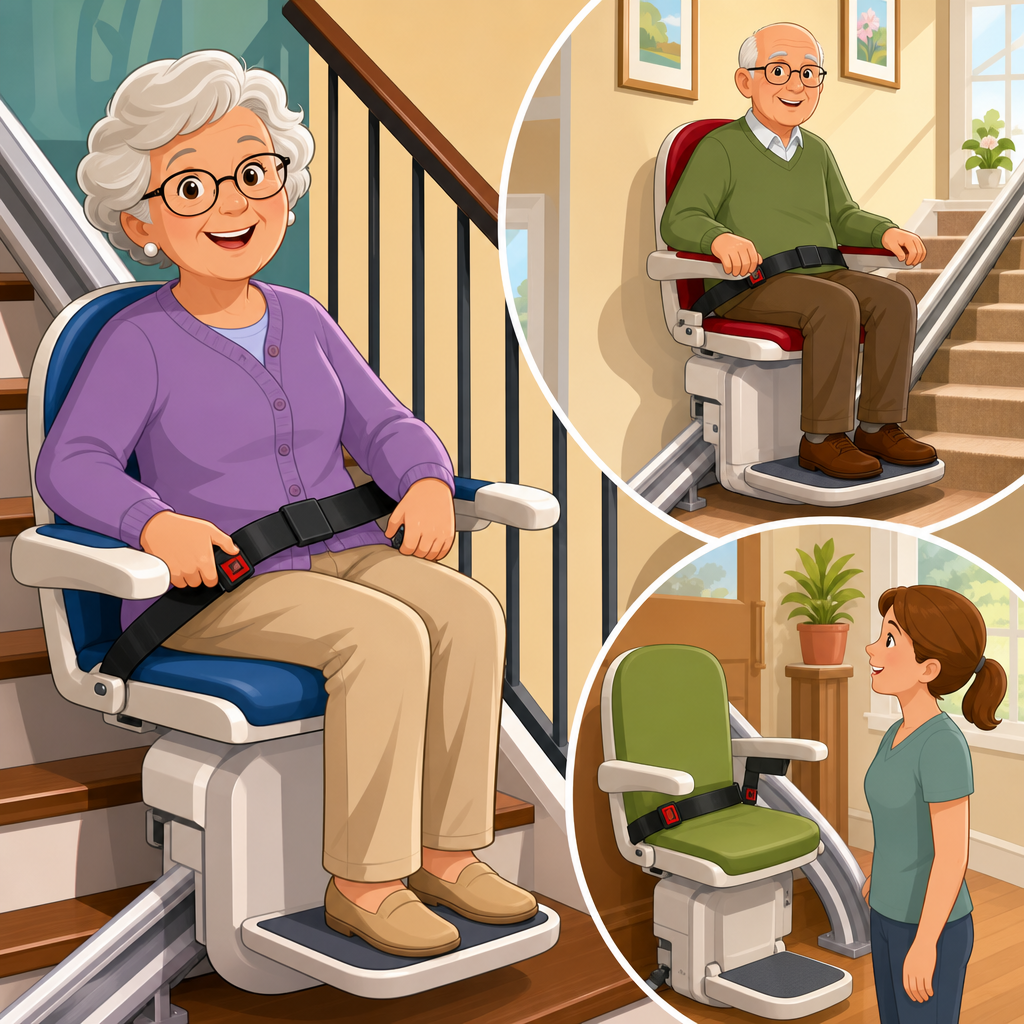
Seat belts vary more than most buyers realize. Some lifts use a basic lap belt, which is adequate for many riders with stable trunk control. Others offer an immobilizing or retractable belt that is easier to fasten one-handed and less likely to be left hanging under the seat. For users with limited hand dexterity, arthritis, or hemiparesis after stroke, buckle shape and latch resistance matter as much as belt presence. I have seen otherwise excellent installations become frustrating because the rider could not consistently click the buckle without assistance. That is why a real demonstration is essential.
Another overlooked factor is transfer mechanics. A stair lift can reduce stair use but still fail the user if getting on and off the chair feels unsafe. The seat should swivel smoothly at the top landing and lock firmly in place. Armrests should provide leverage without forcing awkward shoulder positions. The footrest should support both feet to reduce dangling and keep knees comfortable. Disabled users who need a mobility aid on the landing may also require enough clearance to position a walker or wheelchair beside the chair for a controlled transfer.
Industry compliance also matters. In the United States, many residential stair lifts are designed to meet ASME A18.1 safety requirements for platform lifts and stairway chairlifts. Installers should follow manufacturer rail specifications, anchoring methods, and charging-point placement. Good companies document the staircase survey, discuss user limitations, and explain maintenance intervals. If a dealer cannot clearly describe service response times, warranty coverage, and battery replacement expectations, that is a warning sign, regardless of how polished the sales presentation appears.
Top stair lift brands with built-in seat belts
Several manufacturers consistently appear in serious stair lift buying guides because they balance safety engineering, dealer support, and model variety. Bruno is a standout in North America, particularly for the Elite straight and curved lines. Bruno lifts are known for solid ride quality, straightforward controls, and seats that feel substantial rather than flimsy. The company’s built-in seat belts are standard on most models, and higher weight-capacity versions serve users who need bariatric support without moving immediately to a vertical platform lift.
Stannah remains one of the most recognized global stair lift brands and earns that reputation through reliability, customization, and polished curved-rail design. Its residential lifts commonly include retractable seat belts, intuitive controls, and strong safety sensing around the carriage and footrest. Stannah often fits homes where aesthetics matter alongside function, since rail routing and upholstery options can feel less institutional. For disabled users with variable mobility, the smooth start and stop profile can make a noticeable difference in comfort and confidence.
Handicare is another strong option, especially when flexibility in installation is important. Models in the 1000 and Freecurve ranges address both straight and curved staircases, and the company is often competitive on features such as powered swivel seats, powered footrests, and ergonomic controls. Handicare’s built-in seat belts are standard, and some dealers do a good job pairing the right seat style with the rider’s torso stability and hip width. For narrow stairs, their compact folding dimensions can be especially helpful.
Access BDD, often sold under the HomeGlide name in some markets, offers dependable straight and curved stair lifts with standard safety belts and practical controls. These lifts often appeal to buyers who want a simpler feature set without giving up core safety. Harmar also deserves mention, particularly in the United States, where dealers may recommend Pinnacle models for straightforward installations and lower-profile rails. Harmar’s helical worm gear system and folding footrest options can work well, although ride feel and seat comfort should be tested carefully because user preference varies widely.
| Brand | Typical strengths | Best fit for | Built-in seat belt |
|---|---|---|---|
| Bruno | Sturdy build, strong dealer network, high capacity options | Straight or curved stairs, heavier users, long-term ownership | Standard on most residential models |
| Stannah | Smooth ride, premium curved customization, refined controls | Users prioritizing comfort, design, and proven reliability | Standard, often retractable |
| Handicare | Compact folding, flexible options, good narrow-stair solutions | Homes needing space efficiency or powered features | Standard |
| Access BDD | Practical design, dependable operation, simpler feature mix | Budget-conscious buyers wanting core safety | Standard |
| Harmar | Availability, low-profile rail, straightforward installs | Simple layouts and buyers comparing value-oriented options | Standard on key models |
No brand is automatically best for every disabled user. A person with severe trunk instability may need a more secure seating position and powered functions that reduce twisting. A user with obesity may need a wider seat and higher weight capacity. Someone with only mild balance impairment may value compact folding more than advanced options. The right approach is to match the chair lift to the user first, then evaluate brand reputation, rail design, service access, and total ownership cost.
How to choose the best chair lift for disability needs
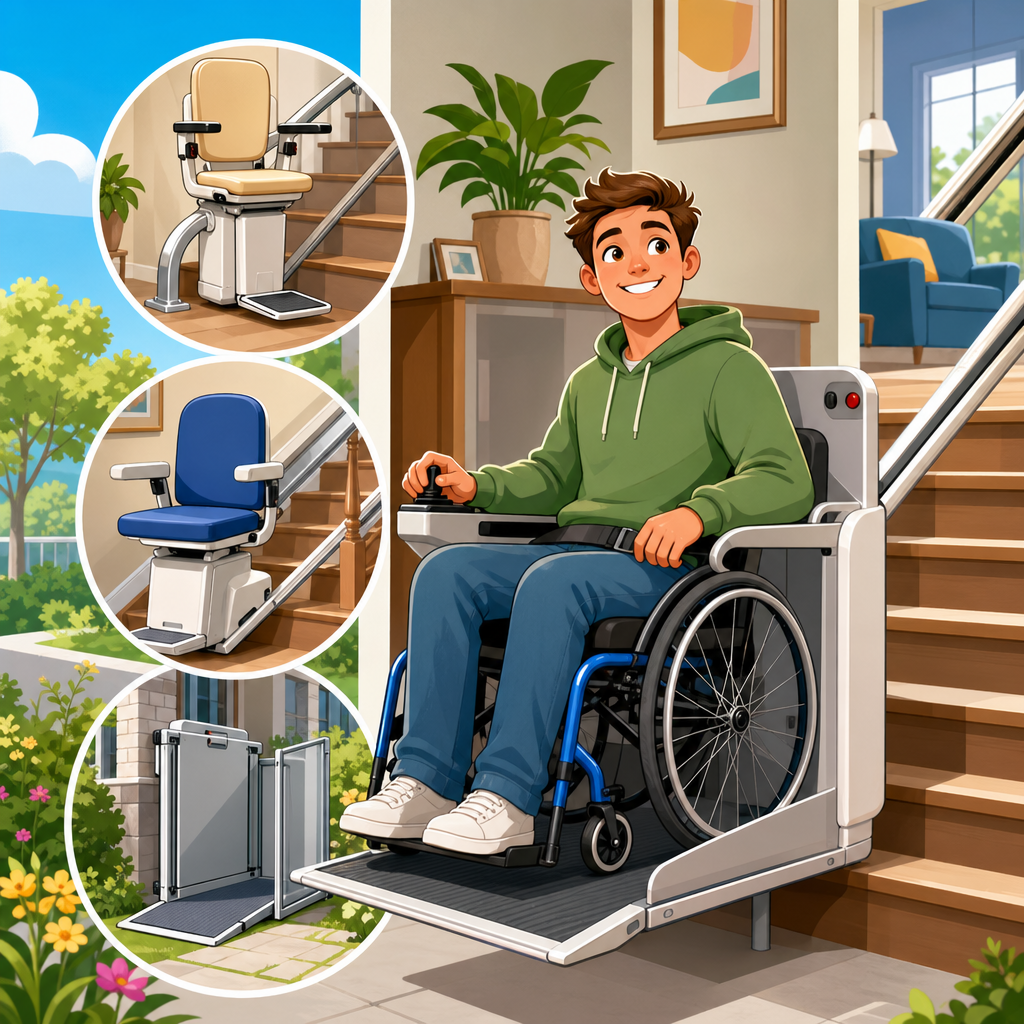
The first question buyers ask is usually whether they need a straight stair lift or a curved stair lift. The answer is simple: straight lifts fit staircases without turns, intermediate landings, or complex changes in angle, while curved lifts are custom-built for staircases with bends, spirals, or split-level transitions. Straight lifts cost less and install faster because the rail is standardized. Curved lifts cost more because the rail is measured and fabricated specifically for the home, but they can preserve safer access where a straight model cannot.
The second question should be about the rider, not the staircase. Can the user sit upright without sliding? Can they bend their knees comfortably to place both feet on the footrest? Can they reach a toggle or joystick control? Do they transfer independently, with a cane, with a walker, or with caregiver assistance? I have found that the same model can feel secure for one disabled user and unsafe for another purely because of seat height, armrest spacing, or buckle design. This is why an in-home assessment is far more valuable than a brochure.
Weight capacity is often marketed aggressively, but capacity should be treated as a minimum requirement, not a complete answer. Most residential stair lifts support roughly 250 to 400 pounds, while heavy-duty models can exceed that range. The user also needs enough seat width, back support, and carriage stability to ride comfortably. If a rider is close to the limit, ask whether the quoted unit’s capacity changes on a curved section, whether larger seats affect stair clearance, and whether the home may be better served by a wheelchair platform lift.
Ease of operation is another deciding factor. Powered swivel seats and powered footrests add cost, but for users with painful arthritis, weak grip, or limited bending, these options can be the difference between regular use and abandonment. Call/send remotes are standard on many models and let the chair be parked away from the main living area. Upholstery texture, armrest contour, and control placement also deserve attention. Small details shape daily comfort, and daily comfort strongly predicts whether the lift will truly improve independence.
Installation, maintenance, and costs buyers should expect
Residential stair lift installation is usually less invasive than buyers fear because the rail mounts to stair treads, not typically to the wall. A straight stair lift may be installed in a few hours once measurements are confirmed and power access is available. Curved stair lifts take longer because they require custom manufacturing and detailed survey work, often using photo measurement systems or digital mapping. Good installers verify top and bottom landing clearances, check for door conflicts, and confirm that the folded chair leaves enough walking space for other household members.
Cost varies widely by staircase complexity, features, and region. In the current market, straight stair lifts often start in the low thousands, while curved stair lifts commonly reach much higher due to custom rail fabrication. Powered swivel seats, hinged rails for door clearance, upgraded upholstery, and heavy-duty configurations all increase price. Used or refurbished lifts can reduce costs for straight stairs, but availability is less predictable for curved units because the rail is home-specific. Buyers should ask whether the quote includes installation, permit handling if required locally, sales tax, and future service call rates.
Maintenance is usually straightforward but should never be ignored. Stair lifts need periodic cleaning of the rail, battery checks, and inspection of safety edges, charging contacts, seat swivels, and footrest hinges. Most manufacturers recommend professional servicing at regular intervals, even if the unit seems to be running normally. Batteries are consumable parts, and in many homes they need replacement every few years depending on use patterns and charging consistency. A lift that beeps, slows noticeably, or stops short of charge points needs attention quickly to prevent avoidable failure.
Service support deserves the same scrutiny as the hardware. Ask who performs repairs, whether technicians are factory trained, how emergency calls are handled, and how long common parts usually take to obtain. In my experience, local dealer quality can matter more than brand prestige after the sale. A well-installed midrange stair lift backed by responsive service is usually a better long-term choice than a premium model sold by a dealer with poor scheduling, weak communication, or limited parts inventory.
Common mistakes when buying stair lifts and how to avoid them
The most common mistake is buying based on price alone. A stair lift that is cheap upfront but uncomfortable, hard to buckle, or poorly supported by the dealer often becomes expensive in missed use and repeated service calls. Another frequent error is assuming any seat belt is sufficient. For disabled users, belt accessibility is crucial. If the user cannot independently grasp, pull, and latch the belt, the safety feature may go unused. During the demonstration, ask the rider to perform the full transfer and buckle sequence multiple times.
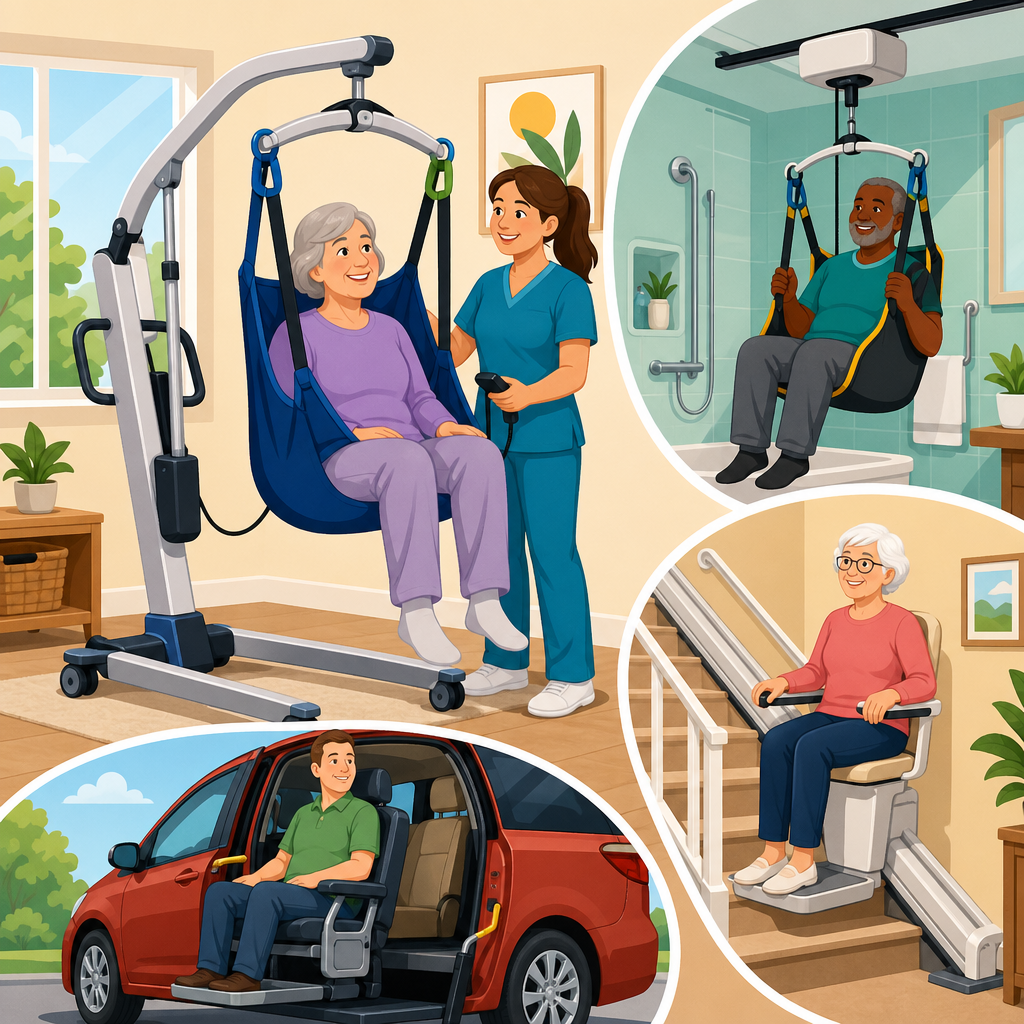
Another mistake is ignoring future needs. Progressive conditions such as multiple sclerosis, muscular dystrophy, or Parkinson’s disease can change transfer ability within months or years. A buyer may reasonably choose a simpler model today, but it is important to understand when a stair lift stops being appropriate. If a user is likely to require full wheelchair access soon, a platform lift, home elevator, or first-floor living reconfiguration may be more practical than investing heavily in a chair lift with limited adaptability.
Shoppers also underestimate staircase details that affect daily use. Hinged rails may be necessary if the track would block a doorway or create a trip hazard at the base of the stairs. Parking positions matter in narrow halls. Pets, children, and laundry traffic change how safely the folded unit fits household routines. A trustworthy dealer addresses these realities without being prompted. If the salesperson rushes past transfer questions, avoids discussing service limitations, or refuses to leave written specifications, continue shopping.
The best results come from a structured buying process: schedule at least two in-home assessments, compare written quotes feature by feature, test the seat belt personally, verify warranty terms, and confirm local service coverage. That approach turns a confusing purchase into a measured decision.
Top stair lifts with built-in seat belts give disabled users more than convenience; they create a safer, more manageable path through a multilevel home. The best chair lifts for disabled users share the same fundamentals: reliable battery operation, a secure and usable seat belt, stable seating, safe transfer design, and dealer support that remains available after installation. Brands such as Bruno, Stannah, Handicare, Access BDD, and Harmar all offer credible options, but the right choice depends on the rider’s body mechanics, staircase shape, and likely future needs.
If you remember only three things from this guide, make them these. First, treat the seat belt as a functional safety system, not a checkbox feature. Second, insist on an in-home assessment that evaluates transfers, controls, and landing clearances in real conditions. Third, compare dealers as carefully as you compare models, because installation quality and service response determine long-term satisfaction. These steps reduce risk and help ensure the lift is actually used every day.
Use this hub as your starting point for deeper product comparisons, straight-versus-curved buying advice, and brand-specific reviews within the broader buying guides and product reviews section. Build a shortlist, book demonstrations, and choose the stair lift that fits the user, the staircase, and the home with the fewest compromises.
Frequently Asked Questions
Why are built-in seat belts so important on a stair lift?
Built-in seat belts are one of the most important safety features on any stair lift because they help keep the rider stable, centered, and properly seated during the entire trip. While stair lifts are designed to move smoothly along the rail, the user is still traveling up or down an incline, often with limited balance, reduced core strength, or slower reaction time. A seat belt helps prevent forward shifting, sideways leaning, or sliding out of position, especially when starting, stopping, or riding over any slight changes in the track. For many disabled users, older adults, and people recovering from surgery or injury, that added support can make the difference between feeling secure and feeling anxious every time they use the lift.
Another reason built-in seat belts matter is consistency. Because the belt is integrated into the chair, it is always available and designed to work with that specific stair lift model. That is much better than relying on an add-on restraint or assuming the rider can brace themselves. A properly designed built-in belt encourages safer habits, supports correct seating posture, and helps caregivers feel more confident that the user is protected. In practical terms, if a stair lift is being used daily in a home where safety and independence are priorities, a built-in seat belt should be treated as a standard requirement, not an optional extra.
What type of seat belt is best on a stair lift?
The best type of seat belt depends on the user’s mobility, hand strength, coordination, and comfort level, but in most cases, the ideal choice is one that is both secure and easy to fasten without frustration. Many top stair lifts use a simple lap belt, which crosses over the hips and clicks into place much like a car seat belt. This style works well for many riders because it provides reliable restraint without being overly complicated. Some models offer retractable seat belts, which can be especially helpful because they are easier to pull across the body, less likely to twist, and more convenient for users with limited dexterity. A belt that is hard to reach or difficult to latch is less likely to be used consistently, which defeats the purpose of having it.
When comparing stair lifts, it is smart to look beyond whether a belt is included and focus on how usable it is in everyday life. The buckle should be easy to identify, easy to clip, and easy to release. The belt should also sit comfortably across the lap without digging in or requiring awkward movement. For users with significant weakness, arthritis, or one-sided mobility limitations, a model with an easy-grip buckle or a retractable mechanism may be the best fit. The strongest stair lift is not automatically the safest one for every person; the safest lift is the one with a seat belt the rider can and will use every single time.
Are all stair lifts with built-in seat belts equally safe?
No, not all stair lifts with built-in seat belts offer the same level of safety, even though the presence of a belt is a strong starting point. The overall safety of the stair lift depends on how well the seat belt works together with the chair design, footrest, armrests, swivel seat, braking system, sensors, and rail installation. A built-in seat belt on a poorly fitted or low-quality stair lift does not automatically create a safe riding experience. For example, if the seat is too narrow, too high, or difficult for the user to enter and exit, the rider may not sit correctly enough for the belt to provide proper support. Likewise, if the belt is awkward to reach or uncomfortable to wear, the user may skip it entirely.
That is why the best stair lifts with built-in seat belts are typically made by reputable manufacturers with strong safety testing, dependable engineering, and professional installation standards. Features such as obstruction sensors, smooth start-and-stop motion, secure swivel-locking seats, battery backup, and sturdy folding components all contribute to a safer ride. The seat belt should be viewed as part of a full safety system rather than a standalone feature. When evaluating options, it is wise to consider user fit, build quality, service support, and installer experience in addition to the belt itself. A well-designed stair lift should make the safe choice the easy choice from the moment the rider sits down.
How do I choose the best stair lift with a built-in seat belt for a disabled user?
The best approach is to match the stair lift to the specific needs of the person who will use it, rather than choosing based on brand name alone. Start by looking at the user’s mobility level, transfer ability, balance, body size, and hand function. If the rider has trouble sitting down or standing up, a lift with a comfortable seat height, supportive armrests, and a swiveling seat at the landing may be essential. If the user has arthritis or limited grip strength, the seat belt should be easy to handle and fasten. If there is a higher fall risk, the overall seating position and restraint design become even more important. A narrow staircase, curved staircase, or multiple landings will also influence which models are suitable.
It is also important to think practically about day-to-day use. A stair lift can look impressive on paper but still be a poor fit if the rider finds the seat belt difficult, the controls confusing, or the ride uncomfortable. The best choices usually come from in-home assessments where measurements are taken and the user’s needs are observed directly. Ask whether the seat belt is standard, retractable, adjustable, and positioned for easy access. Review the weight capacity, battery system, maintenance requirements, warranty, and local service availability as well. In many cases, the top stair lifts stand out not because they have the most features, but because they combine safety, comfort, ease of use, and dependable support in a way that truly fits the user’s life at home.
Can a stair lift with a built-in seat belt help someone stay safely at home longer?
Yes, in many cases it can play a major role in making that possible. One of the biggest reasons people start avoiding parts of their home is fear of falling on the stairs. Once that fear sets in, daily routines can become restricted very quickly. A bedroom upstairs, laundry downstairs, or even access to a favorite living space may start to feel out of reach. A stair lift with a built-in seat belt helps reduce that risk by offering a controlled, seated way to move between floors while keeping the rider securely positioned during travel. That added sense of safety can restore confidence and make the home feel usable again rather than divided into safe and unsafe zones.
Just as important, a seat belt-equipped stair lift supports independence without ignoring real safety concerns. Families and caregivers often worry not only about whether the user can ride the lift, but whether they can ride it safely every time. A built-in seat belt helps address that concern by reinforcing proper use and reducing the chance of slipping or shifting in the chair. Combined with professional installation and other key safety features, it can allow a disabled user to continue living in a familiar environment with greater freedom and less physical strain. While no single device solves every accessibility challenge, a well-chosen stair lift with a built-in seat belt can be a meaningful step toward aging in place or remaining at home with dignity, safety, and confidence.