Voice-controlled chair lifts promise a simpler way to move safely between floors, but the real question is whether they add meaningful value for disabled users or simply increase price and complexity. In practical buying decisions, a chair lift is not judged by novelty; it is judged by transfer safety, reliability, fit to the staircase, ease of use, service support, and the rider’s physical and cognitive needs. When people search for the best chair lifts for disabled users, they are usually comparing standard controls, powered options, and newer voice features while trying to understand which upgrades genuinely improve independence.
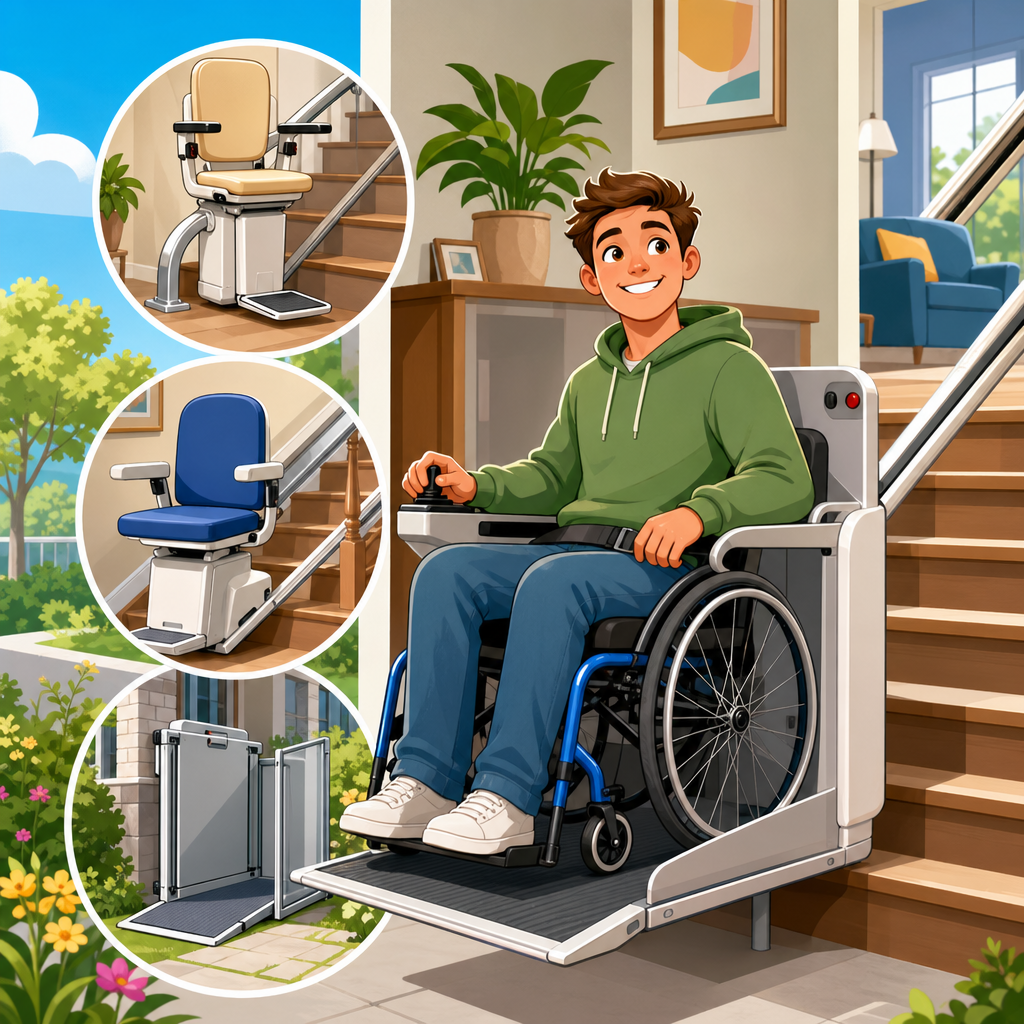
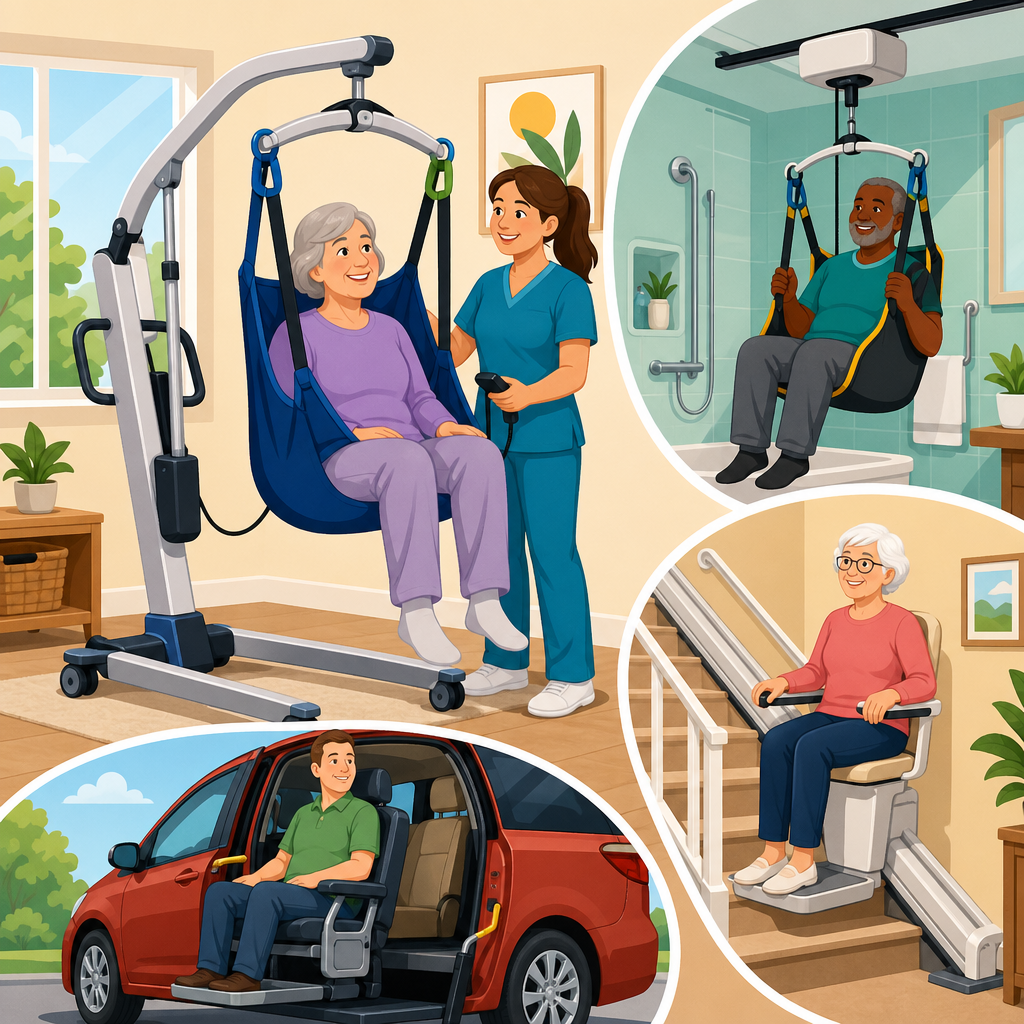
A chair lift, often called a stair lift, is a motorized seat that travels on a rail mounted to the stairs. Core components include the carriage, seat, footrest, armrests, call-send controls, battery backup, charging points, and safety sensors that stop the lift if it meets an obstruction. Voice control adds another input method. Instead of pressing a rocker switch or remote, the user speaks a command to summon the lift, send it away, or in some systems start movement. That sounds appealing, especially for users with limited hand strength, arthritis, tremor, or reduced reach. Yet voice-controlled chair lifts are still a niche feature compared with established controls because they must perform flawlessly in a high-consequence mobility device.
Why does this matter? Falls on stairs remain a major source of injury, especially for older adults and people with mobility impairments. A well-matched chair lift can reduce daily risk, preserve access to the full home, and delay or avoid a forced move. I have seen buyers focus on one headline feature, then regret overlooking seat height, swivel behavior, rail overrun, or the installer’s service coverage. Voice control can be worthwhile, but only when the staircase, rider profile, and support plan are right. As a hub guide, this article explains where voice control fits into the wider market for the best chair lifts for disabled users, what tradeoffs to expect, and how to choose with confidence.
How voice-controlled chair lifts work in real homes
Most chair lifts use simple pressure controls built into the armrest and wireless call-send remotes mounted at the top and bottom landings. Voice-controlled models layer speech recognition onto that standard system. Depending on the brand, the microphone may sit on the armrest, in a paired remote, or in an external smart-home device. The lift’s controller translates a spoken phrase into a command such as “bring lift down” or “send lift up.” For safety reasons, many systems restrict what can be done by voice while the user is seated. Manufacturers are careful here because unintended motion from background conversation, television audio, or a misunderstood phrase is unacceptable.
In the best implementations, voice features are secondary, not primary. The lift still has tactile controls, seatbelt interlocks, overspeed governors, obstruction sensors, and battery backup. That is exactly how it should be. The recognized safety standards for stair lifts and inclined platform lifts, including ASME A18.1 in the United States, prioritize predictable operation and fail-safe behavior. If a voice system loses connectivity or mishears a command, the core lift must remain fully usable. That is why buyers should think of voice capability as an accessibility enhancement rather than the foundation of lift operation.
There are also practical installation differences. Straight stair lifts, which run on a single uncomplicated rail, are the easiest platform for extra control options. Curved stair lifts use custom rails built to the stair geometry, often with tighter programming and higher base cost, so voice features may be limited or special order. Outdoor stair lifts add weatherproofing concerns; microphones and external smart integrations must withstand moisture, temperature swings, and wind noise. In homes with weak Wi-Fi, dense carpeting that affects acoustics, or multiple users calling the lift from different levels, the ideal setup may still be a standard remote rather than voice activation.
Who benefits most from voice control and who may not
Voice control is most valuable when hand use is the true bottleneck. Users with rheumatoid arthritis, severe osteoarthritis, muscular dystrophy, post-stroke weakness, limited grip, or upper-limb amputation may find even light-pressure toggles frustrating on bad days. A spoken call-send command can prevent awkward leaning at the landing and reduce dependence on another person. In households where a disabled user lives with family, voice control can also help keep the lift parked away from the main sightline without forcing someone to physically retrieve it every time. For some riders, that convenience increases actual use, and actual use is what turns equipment into independence.
However, voice control is not universally helpful. People with dysarthria, aphasia, low-volume speech, heavy accents that a device does not reliably learn, or fluctuating cognition may experience inconsistent recognition. Users with hearing impairments may not benefit from audio confirmations unless the system also provides clear visual indicators. In dementia care, voice activation can be confusing if the device responds unpredictably or if the rider forgets the command structure. I often tell buyers that the best chair lifts for disabled users are the ones that reduce mental effort, not add another layer of it. A large paddle switch and dependable remotes may be superior to a voice interface that works well only under ideal conditions.
Environment matters too. Open-plan homes with television noise, barking dogs, or children calling out can create recognition errors. Some systems need an internet connection for smart-assistant integration, introducing another failure point and a privacy consideration. If a user lives alone and depends on the lift multiple times a day, every added dependency must justify itself. Convenience upgrades are worth paying for only when they improve reliability from the rider’s perspective, not just the product brochure’s perspective.
Features that matter more than voice control when buying the best chair lifts for disabled users
Buyers often start with voice control because it sounds modern, but several specifications have a bigger effect on safety and comfort. Seat-to-footrest geometry determines whether knees sit comfortably or feel cramped. Swivel seats, especially powered swivel options, can make transfers dramatically safer at the top landing. Rail overrun extends the seat away from the stair edge, reducing the chance of stepping off near the first drop. Weight capacity is critical, particularly for bariatric users; some heavy-duty models support substantially more than standard units, but they may require wider stairs. Folded width matters in shared homes where others still walk the stairs. Battery performance, charging arrangement, and local service coverage matter every single day.
Below is a practical comparison of the chair lift features that usually deserve priority before paying extra for voice integration.
| Feature | Why it matters | Best fit | Voice control priority |
|---|---|---|---|
| Powered swivel seat | Reduces twisting and awkward top-landing exits | Users with poor balance or trunk weakness | Higher |
| Rail overrun | Moves transfer point away from stair edge | Homes with tight top or bottom landings | Higher |
| Weight capacity | Determines safe operation and seat sizing | Bariatric and larger-framed users | Higher |
| Folded width | Preserves stair access for others | Narrow staircases | Higher |
| Battery backup | Keeps lift running during power outages | All homes, especially single-user reliance | Higher |
| Voice control | Allows spoken call-send or command input | Users with limited hand strength or reach | Situational |
Brand support should also sit near the top of the checklist. Bruno, Stannah, Handicare, Harmar, Acorn, and Access BDD are among the names buyers commonly encounter, though model availability and dealer quality vary by region. A premium brand installed by an overstretched dealer can create more downtime than a simpler model backed by responsive local technicians. Ask about average service response time, battery replacement intervals, parts availability, and whether the installer handles both warranty and post-warranty repairs directly.
Costs, maintenance, and hidden tradeoffs
Price is where enthusiasm for voice-controlled chair lifts often meets reality. A straight stair lift typically costs far less than a curved one because the rail is standardized rather than custom fabricated. Voice capability, if offered, may appear as a premium package, smart-home integration add-on, or custom control option layered onto either format. The issue is not only the initial purchase price. Advanced controls can affect setup time, user training, troubleshooting, and future service. If the lift depends on a third-party voice assistant platform, software changes outside the lift manufacturer’s control may affect compatibility down the line.
Maintenance on a chair lift is usually straightforward: battery checks, charging contact inspection, rail cleaning, seat and footrest mechanism inspection, and routine testing of safety edges and call-send controls. Voice systems add a few more questions. Does the microphone need periodic recalibration? Is there a firmware update path? Can the unit still be serviced if the smart ecosystem it relies on is discontinued? These are not hypothetical concerns. In connected home devices broadly, app support and cloud features can change faster than the hardware lifespan of accessibility equipment, which is often expected to last years with proper maintenance.
There is also a privacy tradeoff. Some users are comfortable with always-listening devices in the home; others are not. If a chair lift uses on-device recognition for limited commands, privacy exposure is smaller. If it routes commands through a cloud assistant, buyers should understand what data is processed and how. This is especially important in healthcare-adjacent home environments where dignity and confidentiality matter. My rule is simple: if a user would still choose the lift without the voice layer, then the added technology can be considered an optional benefit. If the entire purchase depends on voice working perfectly forever, the buying logic is too fragile.
How to evaluate a model before you buy
The best way to decide whether voice-controlled chair lifts are worth it is to test the exact workflow the rider will use at home. During a showroom demo or in-home assessment, ask the dealer to simulate normal background noise. Have the user call the lift, sit down, fasten the belt, move to the other landing, swivel, stand, and then send the lift away. Repeat the sequence several times. If voice commands fail even occasionally during a controlled demo, they will be more frustrating in daily life. Also verify what commands are enabled when seated and whether accidental activation is blocked.
Measure the staircase carefully, but do not stop there. The landing space before the first step and after the last step often decides whether a certain seat size, overrun, or swivel arrangement will work. If the user transfers from a walker or wheelchair, bring that mobility aid into the assessment. Check armrest height, seat depth, and whether the footrest folds easily. Ask the installer whether the rail mounts to treads or wall structures, what electrical outlet arrangement is needed, and how the charging points are positioned. Good dealers welcome these questions because they know long-term satisfaction depends on fit, not sales speed.
For this hub page on the best chair lifts for disabled users, the broader recommendation is to treat voice control as one branch of the decision tree. Also compare straight versus curved lifts, indoor versus outdoor models, heavy-duty designs, compact seats for narrow stairs, and transfer aids such as powered footrests and automatic hinge rails. If possible, read service reviews from owners in your region, not just national brand marketing. Then request a written quote that separates essential safety features from optional technology. That pricing transparency makes the value of voice control much easier to judge.
Are voice-controlled chair lifts worth it?
Voice-controlled chair lifts are worth it for a specific group of buyers: disabled users who have enough clear speech for reliable recognition, limited hand function that makes standard controls harder to use, and access to a reputable installer who can support both the lift and the voice feature over time. In those cases, spoken call-send commands can reduce effort, improve convenience, and make the lift feel more accessible day after day. For many other households, the best investment is not voice control but a better seat, safer transfer setup, stronger battery support, or a dealer with faster service.
The main takeaway is simple. When choosing the best chair lifts for disabled users, prioritize safety, fit, and reliability first. Then consider whether voice control solves a real problem for the rider. If it does, ask for a live demonstration and clear documentation on how the system behaves when speech recognition fails or connectivity drops. If it does not, skip the upgrade and put that budget toward features that improve every trip on the stairs. Start with an in-home assessment from a qualified local dealer, compare at least two models, and choose the chair lift that matches the user’s body, home, and daily routine.
Frequently Asked Questions
Are voice-controlled chair lifts actually worth the extra cost?
Voice-controlled chair lifts can be worth it, but only for a fairly specific type of user and home setup. In most cases, the biggest factors that determine value are still safety, reliability, comfort, stair compatibility, and service support. Voice control is a convenience feature, not a core performance feature. That means it should usually be viewed as an add-on that may improve day-to-day ease of use, rather than as the main reason to choose one lift over another.
For some disabled users, voice operation can reduce the effort required to call the lift, send it away, or activate certain functions when using standard controls is uncomfortable or difficult. This may be especially helpful for people with limited hand strength, arthritis, tremors, or reduced dexterity. However, if the rider still needs hands-on support for transfers, seat positioning, seatbelt fastening, or footrest management, then voice control may not significantly change the overall experience of using the lift.
There is also a practical buying question to consider: does the added feature improve independence enough to justify the added price and potential complexity? If a standard chair lift already meets the user’s needs safely and simply, voice capability may offer only marginal benefit. On the other hand, if the rider struggles with buttons or remotes and wants a more accessible way to operate the system, it may deliver meaningful value. The best way to judge whether it is worth it is to compare the voice feature against the user’s actual mobility challenges, not against marketing claims or novelty appeal.
Who benefits most from a voice-controlled chair lift?
The people most likely to benefit are users who have difficulty operating conventional controls but still have the cognitive ability and speech clarity needed to use voice commands consistently. For example, someone with limited grip strength, hand pain, upper-body weakness, or a condition that makes pressing small buttons difficult may find voice activation much easier than a handheld remote or armrest control. In those situations, the feature can reduce frustration and support greater independence.
Voice control may also be useful in homes where another person occasionally needs to call or park the lift without walking over to a wall control. In multi-user households, this can add convenience, especially if the chair is parked away from the main living area. Some users also simply prefer a more hands-free experience, particularly if they are managing canes, walkers, or other mobility aids while preparing to transfer.
That said, voice-controlled chair lifts are not ideal for everyone. Riders with speech impairments, memory issues, cognitive decline, or hearing and communication challenges may not find voice systems dependable or intuitive. Background noise, accents, inconsistent command recognition, or the need to repeat phrases can also make the feature less helpful than expected. The strongest candidates are users whose physical limitations make manual controls difficult, but whose communication abilities allow them to use voice commands accurately and comfortably.
Do voice features improve safety, or do they mostly add convenience?
In most cases, voice features primarily add convenience rather than dramatically improving core safety. The essential safety of a chair lift still depends on the quality of the rail system, the stability of the seat, the smoothness of the ride, the effectiveness of the seatbelt, obstruction sensors, swivel-seat locking, footrest design, and safe transfer space at the top and bottom landings. Those are the features that directly protect the rider during real-world use.
Voice control can contribute indirectly to safety in certain situations. If a user struggles to reach controls or has trouble pressing them steadily, a voice command may reduce awkward movements, loss of balance, or unnecessary reaching. That can make operation feel safer and more manageable. It may also help a user summon the lift without walking farther than is comfortable or safe. But these are supportive benefits, not replacements for strong foundational safety features.
It is important not to confuse a modern interface with a safer machine. A basic chair lift from a reliable manufacturer with strong safety engineering and dependable service support is often a better choice than a more advanced model with flashy features but less proven performance. When evaluating options, buyers should ask whether the voice system works alongside the safety design, not instead of it. If the lift is difficult to transfer onto, poorly fitted to the staircase, or unreliable in daily use, voice control will not solve the underlying problem.
Are voice-controlled chair lifts more likely to have reliability or maintenance issues?
Any time a mobility device includes additional electronics, software, connectivity, or smart-home integration, there is more potential for setup issues, compatibility problems, or extra troubleshooting. That does not automatically mean a voice-controlled chair lift is unreliable, but it does mean buyers should ask more detailed questions about how the feature works, what it depends on, and what happens if it fails. The underlying lift system should still function dependably even if the voice feature is unavailable or temporarily not responding.
Before buying, it is wise to find out whether the voice control is built directly into the lift, linked to an external smart speaker, or connected through a third-party home automation platform. Each setup has different implications for reliability. A fully integrated system may be simpler, while a lift that relies on internet-connected devices or outside platforms may introduce more points of failure. You should also ask whether the lift can still be operated easily with standard onboard controls and remotes if the voice system malfunctions.
Maintenance support matters just as much as technology. A strong local dealer network, prompt repair service, clear warranty terms, and access to replacement parts are usually more important than having the newest control option. For disabled users who rely on the lift every day, downtime is a serious concern. The best voice-controlled chair lift is one backed by a company that can service it quickly and keep the essential system running even when optional smart features need adjustment.
What should buyers look for before choosing a voice-controlled chair lift?
Buyers should start with the fundamentals: staircase fit, transfer safety, seat comfort, weight capacity, power source, battery backup, ease of boarding, and long-term service support. These matter far more than whether the lift responds to spoken commands. Straight staircases, curved staircases, narrow stairs, and complex landings all affect what type of lift can be installed and how safe it will be to use. A lift that fits the home and the rider properly will always outperform a poorly matched model with advanced features.
Next, consider the rider’s physical and cognitive needs in realistic daily scenarios. Can the user transfer onto the seat safely? Can they fasten the seatbelt independently? Can they swivel and stand at the landing without assistance? Will voice commands genuinely remove a barrier, or will they only save a second or two during operation? These questions help separate useful accessibility improvements from features that sound impressive but do not materially improve independence.
It is also smart to request a demonstration of the exact control method. Buyers should test whether commands are easy to remember, easy to trigger, and accurate in normal household conditions. Ask whether the system works offline, whether it responds to different voices, and whether there are privacy considerations if microphones or connected devices are involved. Finally, compare total ownership costs, including installation, warranty coverage, maintenance plans, and repair response times. A voice-controlled chair lift is worth considering when it fits the rider’s real needs and comes from a provider with proven reliability and support, not simply because it offers a newer way to operate the chair.