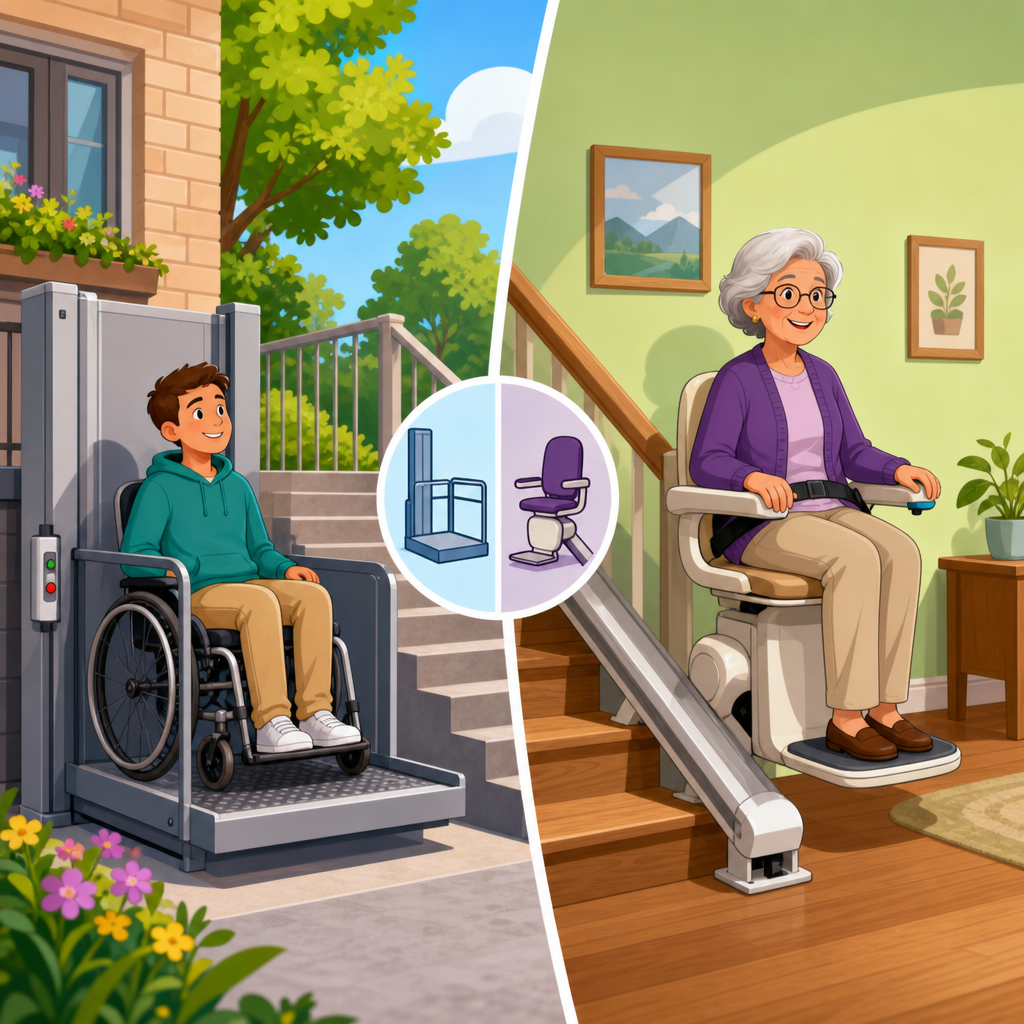
Choosing between platform lifts and chair lifts for disabilities is one of the most important decisions families make when improving home accessibility, because the right system affects safety, independence, installation cost, and long-term usability. In practical terms, a chair lift carries a seated rider along a rail attached to the stairs, while a platform lift supports a wheelchair, scooter, walker user, or standing passenger on a flat deck that travels vertically or along an incline. Both products solve mobility barriers, but they serve different needs, building conditions, and future plans.
In accessibility projects I have worked on, the biggest mistakes usually happen when buyers start with price alone instead of user requirements. A lower-cost chair lift can become the wrong investment if the person cannot transfer safely from a wheelchair, has poor trunk control, or is likely to need a mobility device full time within a year or two. On the other hand, a platform lift can be unnecessary, more expensive, and more complex to permit if a user can transfer independently and only needs seated stair travel. Understanding these distinctions early prevents costly replacement, renovation delays, and avoidable safety risks.
This guide is designed as a central resource for anyone researching the best chair lifts for disabled users while comparing them against platform lifts. It explains who each lift is for, how they differ in installation and maintenance, what standards and features matter, and how to evaluate brands, dealers, and total ownership cost. If you are wondering which lift is safer, which is easier to install, whether Medicare pays, or which solution preserves the most independence, the answer depends on mobility profile, home layout, and expected progression of disability. The best buying decision is the one that fits the user today without creating barriers tomorrow.
What a Chair Lift Does Best
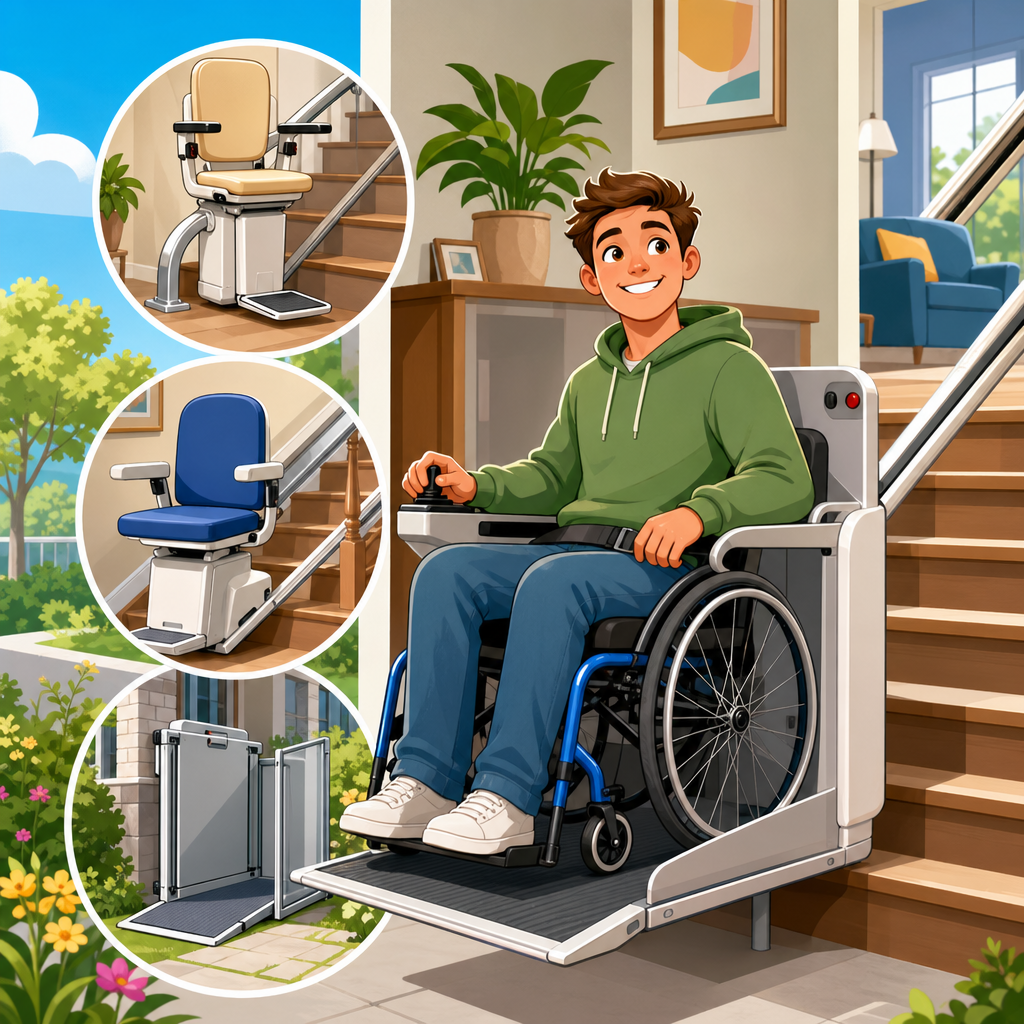
A chair lift, often called a stair lift, is usually the best choice when a user can sit down, buckle in, ride the stairs, and stand or transfer at the top and bottom safely. The system includes a motorized seat, footrest, armrests, call-send controls, and a rail mounted to the stair treads rather than the wall. Straight stair lifts are the most common and least expensive. Curved stair lifts are custom-built for stairs with turns, landings, or intermediate bends.
The main strength of a chair lift is efficiency. Installation for a straight unit can often be completed in a few hours, electrical needs are modest because most modern models use battery-powered drive systems with charging points at the rail ends, and structural disruption is limited. For many disabled users with multiple sclerosis, arthritis, stroke recovery, or reduced endurance, a chair lift restores access to bedrooms and bathrooms without a major remodel. Models from Bruno, Harmar, Stannah, and Access BDD are commonly evaluated because they offer different seat sizes, folding profiles, weight capacities, and service networks.
When people search for the best chair lifts for disabled users, they often assume all stair lifts are similar. They are not. The best models combine a stable swivel seat, obstruction sensors, seat belt options that are easy to manage with limited dexterity, fold-up footrests, and a rail design that leaves enough walking room for other household members. Heavy-duty versions can support users above 350 pounds, and some premium chairs provide powered swivel and powered folding footrests for people with reduced bending ability. These details matter more than marketing labels because they determine whether the rider can use the lift safely every day.
Where Platform Lifts Have a Clear Advantage
Platform lifts are the stronger option when the user needs to remain in a wheelchair or scooter, cannot transfer reliably, or requires a caregiver to manage mobility equipment as part of the trip. Two common types are vertical platform lifts, which move straight up like a compact open elevator, and inclined platform lifts, which travel along the staircase. Vertical platform lifts are more widely used in homes and public settings because they can bridge a porch, garage, or split-level rise while keeping the user in the mobility device.
The core advantage is access without transfer. For wheelchair users with spinal cord injuries, advanced muscular dystrophy, severe cerebral palsy, or progressive neuromuscular conditions, eliminating transfer is not just convenient; it reduces fall risk, shoulder strain, and caregiver burden. In projects involving narrow stairs or users with powered wheelchairs, a platform lift often proves to be the only realistic way to preserve independence short of a full residential elevator or first-floor reconfiguration.
Platform lifts also align better with future-proofing. If a person currently uses a walker but may need a wheelchair later, installing a chair lift can solve today’s problem while creating tomorrow’s replacement expense. A platform lift typically costs more upfront, requires more space, and may trigger more permit scrutiny, but it can continue serving the user through significant changes in mobility. That long-term suitability is why therapists and accessibility specialists frequently recommend platform lifts for degenerative conditions.
Head-to-Head Comparison: Cost, Space, Safety, and Use
The fastest way to compare platform lifts and chair lifts is to evaluate the user’s transfer ability, the staircase geometry, and the home’s structural constraints. In plain terms, chair lifts are usually cheaper and easier to install, while platform lifts serve a broader range of disabilities and mobility devices.
| Factor | Chair Lift | Platform Lift |
|---|---|---|
| User position | Seated transfer required | Wheelchair, scooter, or standing use possible |
| Typical home cost | Lower, especially for straight stairs | Higher due to structure and controls |
| Installation complexity | Usually moderate | Moderate to high |
| Space needs | Smaller folded footprint | Larger landing and travel clearance |
| Best for | Users who can sit and stand safely | Users who cannot transfer or use wheelchairs full time |
| Future-proofing | Limited if mobility declines | Stronger for progressive disability |
Price ranges vary by market, but a straight chair lift often starts in the low thousands, while curved stair lifts can rise sharply because the rail is custom fabricated. Platform lifts generally start higher and can climb significantly once gates, enclosures, longer travel distances, electrical upgrades, and code-related modifications are added. Buyers should ask for itemized quotes that separate base equipment, rail or tower construction, permits, delivery, installation labor, electrical work, and service plans. That is the only way to compare bids accurately.
Safety should also be compared realistically. A chair lift is very safe for the right user, but it becomes unsafe if the rider slides, cannot keep feet on the footrest, forgets seat belt use, or transfers onto an unstable landing. A platform lift removes many transfer-related hazards, yet it introduces its own considerations, including gate interlocks, platform dimensions, emergency lowering, and sufficient turning radius at entry and exit points. Neither option is universally safer. The safer option is the one matched to the user’s actual physical abilities and daily environment.
How to Choose the Best Chair Lift for Disabled Users
If a chair lift is the right category, the next step is choosing the right model. Start with a transfer assessment. Can the user sit without help, rotate onto the seat, maintain balance while moving, and stand up at the destination without a risky pivot? If any answer is uncertain, involve an occupational therapist or mobility specialist before purchase. I have seen buyers skip this step and end up with a lift that technically worked but was too difficult for the user to operate independently.
Next, examine stair dimensions and traffic flow. Measure stair width, top and bottom landing depth, and any door swings near the rail. Many homes can accommodate a standard stair lift, but narrow staircases may require a compact seat, a hinged rail to clear a doorway, or a parking position away from the main entrance path. For disabled users with limited hand strength, rocker controls or light-touch toggles are usually easier than small buttons. Powered swivel seats are especially valuable when the top landing is tight because they reduce twisting and lower the chance of stepping down onto a stair edge.
Weight capacity is another major filter. Standard chair lifts commonly support around 300 to 350 pounds, while heavy-duty models can exceed that, sometimes requiring a wider staircase or larger seat assembly. Ask whether the listed capacity applies across the full incline and whether it changes on custom curved systems. Buyers should also ask about battery backup performance during power outages, charging point design, diagnostic displays, and dealer response time for repairs. A lift is only as dependable as the service organization behind it.
For shoppers reviewing the best chair lifts for disabled users, the shortlist usually includes straight versus curved models, indoor versus outdoor versions, and standard versus heavy-duty seats. Outdoor lifts need weather-resistant upholstery, sealed controls, and corrosion protection. Curved lifts need precise digital measurement and longer lead times. Heavy-duty lifts need enough staircase width to remain safe for other household traffic. Good dealers walk through these tradeoffs clearly instead of pushing a single stocked product.
Installation, Codes, Maintenance, and Funding
Installation quality matters as much as product quality. Reputable providers measure the site, verify electrical conditions, inspect stair integrity, confirm landing clearances, and explain who handles permits. In the United States, accessibility equipment may intersect with ASME A18.1 requirements for platform lifts and stairway chairlifts, local building codes, and manufacturer-specific installation instructions. Platform lifts often involve stricter permitting because they function more like vertical conveyance equipment. Chair lifts may be simpler, but they still require correct anchoring, charging setup, and final safety testing.
Maintenance is straightforward when buyers understand the schedule. Chair lifts need rail cleaning, battery checks, seat and footrest inspection, and periodic service to confirm sensors and charging contacts are working properly. Platform lifts add gate systems, drive components, and sometimes enclosure or weatherproofing elements that increase service demands. Ask whether annual preventive maintenance is required to preserve the warranty and whether replacement parts are stocked locally. Fast service availability is essential for households that depend on the lift as the only route to a bedroom or accessible bathroom.
Funding is often misunderstood. Original Medicare typically does not pay for stair lifts because they are usually classified as home modifications rather than durable medical equipment. Medicaid waiver programs, state assistive technology programs, veterans’ benefits, workers’ compensation, vocational rehabilitation, nonprofit grants, and local aging or disability agencies may help in some cases. Home equity financing and medical expense tax deductions may also be relevant. Because policies vary sharply by state and insurer, buyers should request a written diagnosis-based letter of medical necessity and ask suppliers for funding documentation support.
When a Chair Lift Is the Better Buy, and When It Is Not
A chair lift is usually the better buy when the user can transfer safely, wants the least invasive installation, and needs a lower-cost route to full-home access. It is particularly effective for older adults with painful knee arthritis, people recovering from surgery, and ambulatory disabled users whose balance is limited but manageable. In those cases, a good stair lift can preserve energy, reduce falls on stairs, and delay or avoid a first-floor move. It also tends to have lower ownership cost than a platform lift.
A platform lift is the better buy when the user relies on a wheelchair, cannot perform consistent transfers, or has a condition likely to progress. It is also preferable when a caregiver regularly assists, because managing a wheelchair on a lift platform is often safer than helping someone onto a chair at the edge of a staircase. Buyers should think beyond the next six months. If the disability trajectory points toward reduced standing tolerance or non-weight-bearing transfers, a platform lift often prevents a second purchase and another construction cycle.
The best decision comes from matching the device to the person, not the catalog. Compare function, not just features. Test controls. Ask about service. Review code requirements. Get itemized quotes. Most important, picture the user operating the lift alone on a tired day, not during a perfect showroom demonstration.
Platform lifts and chair lifts both improve accessibility, but they solve different problems. Chair lifts are typically the best answer for disabled users who can still transfer, sit securely, and stand safely at each landing. They install faster, cost less in many homes, and remain the leading option for shoppers researching the best chair lifts for disabled users. Platform lifts are the stronger solution for wheelchair users, people with severe transfer limitations, and households planning for progressive disability.
If you remember one rule, make it this: buy for the user’s real mobility pattern, not the lowest quote. A chair lift that fits the person well can restore daily independence with minimal disruption. A platform lift that preserves wheelchair access can eliminate transfers and support long-term living at home. Both can be excellent investments when selected through careful assessment, accurate measurements, and a dealer with solid service support.
Use this hub as your starting point, then compare specific models, dealer credentials, warranties, and funding options before signing a contract. The right lift does more than move someone between floors. It protects safety, preserves dignity, and makes the home usable again.
Frequently Asked Questions
What is the main difference between a platform lift and a chair lift for disabilities?
The biggest difference is how the user rides and what mobility needs the equipment is designed to support. A chair lift is built for a person who can safely transfer onto a seat, remain seated during travel, and get on and off at the top and bottom of the stairs. It moves along a rail mounted to the staircase, making it a practical solution for many people with limited strength, balance concerns, or difficulty climbing steps. A platform lift, by contrast, carries the user on a flat platform rather than a seat. That means it can accommodate a wheelchair, scooter, walker, or even a standing passenger, depending on the model and local code requirements.
In real-world accessibility planning, this distinction matters a great deal. If the person using the lift relies on a wheelchair full time, a platform lift is often the more appropriate option because it reduces or eliminates the need for a physical transfer. That can improve both safety and independence. If the individual can still transfer comfortably and wants a lower-cost, simpler system for stair access, a chair lift may be the better fit. Families should also think beyond current needs. A chair lift may work well today, but if the user’s mobility is expected to decline, a platform lift may offer better long-term usability.
Which is better for wheelchair users: a platform lift or a chair lift?
For most wheelchair users, a platform lift is the better and more accessible choice because it is specifically designed to transport both the rider and the mobility device together. Instead of asking the user to transfer out of the wheelchair and onto a stairlift seat, the platform lift allows them to roll directly onto the deck, secure their position, and travel between levels with much less physical strain. This can be especially important for people with limited core strength, severe balance issues, paralysis, progressive conditions, or caregivers who want to reduce lifting and transfer risks.
A chair lift can still be useful in some cases, but it generally works best when the user can stand, pivot, and sit safely without significant assistance. For a part-time wheelchair user or someone who uses a wheelchair mainly for distance but can transfer independently, a chair lift may still be a workable option. However, for full-time wheelchair use, platform lifts usually provide a safer and more dignified access solution. They also tend to support broader mobility needs, including scooters and walkers, which can make them a stronger investment if multiple household members have different accessibility requirements.
How do installation costs and home modifications compare between platform lifts and chair lifts?
In most homes, chair lifts are less expensive to buy and install than platform lifts. That is because chair lifts typically mount directly to the stair treads or rail system and often require fewer structural changes. A standard straight stair lift is usually the simplest and most affordable option, while curved models cost more because they are custom-built to follow landings, turns, or unusual stair layouts. Even so, chair lifts are often selected when budget is a major concern because installation is generally faster and less invasive than many other accessibility upgrades.
Platform lifts usually involve a higher upfront investment because the equipment is larger, heavier-duty, and subject to more extensive safety and code considerations. Depending on whether the lift is vertical or inclined, installation may require additional space planning, electrical work, gates, landing preparation, and sometimes structural modifications. Vertical platform lifts may need a dedicated area similar to a small residential lift footprint, while inclined platform lifts must fit the stairway without creating an obstruction. Although the initial cost is higher, many families see value in platform lifts because they can better serve wheelchair users and may delay or reduce the need for larger renovation projects. The best way to compare costs accurately is to have a qualified accessibility professional assess the home layout, user needs, and code requirements before making a decision.
Which option is safer and easier to use over the long term?
Both platform lifts and chair lifts can be very safe when they are properly selected, professionally installed, and routinely maintained, but the safest option depends on the person using it. A chair lift is generally safe for someone who can sit securely, fasten a seat belt if required, and get on and off without losing balance. It often includes safety sensors, swivel seats, footrest protection, and call-send controls, all of which help reduce fall risk when used correctly. For many older adults or individuals with moderate mobility limitations, a chair lift offers an easy, familiar, and dependable way to navigate stairs.
A platform lift may be safer over the long term for users with more advanced mobility challenges because it avoids repeated transfers and supports the user in their wheelchair or on a stable platform. This can significantly reduce the risk of falls during boarding and exiting. It can also be easier for caregivers because there is less manual assistance involved. Long-term ease of use also depends on disease progression, stamina, and body mechanics. Someone with arthritis, neuromuscular conditions, or worsening balance may find a chair lift manageable at first but increasingly difficult over time. In those cases, a platform lift often provides better future-proofing. The most reliable approach is to evaluate not only what feels safe today, but what will remain practical and low-risk several years from now.
How should families decide between a platform lift and a chair lift for home accessibility?
Families should start by focusing on the user’s actual mobility pattern rather than just the staircase itself. Important questions include whether the person uses a wheelchair full time, whether they can transfer independently, how much caregiver help is available, whether their condition is stable or progressive, and how often the lift will be used each day. A chair lift may be the right fit if the user can sit safely, wants a more affordable solution, and does not need to bring a wheelchair up and down the stairs. A platform lift may be the stronger choice if independence in a wheelchair is the priority, if transfers are unsafe, or if the household wants a more inclusive solution for multiple mobility devices.
It is also wise to consider the home’s layout, available space, local code requirements, maintenance expectations, and long-term financial value. Some homes can easily accommodate a chair lift but not a platform lift without major changes, while others have enough space to support either option. Families should consult a licensed accessibility equipment provider and, when possible, an occupational therapist or aging-in-place specialist. That combination of technical and clinical input can help ensure the equipment matches the user’s physical abilities, future needs, and home environment. In the end, the best decision is the one that improves safety, preserves dignity, and supports daily independence in a realistic, sustainable way.