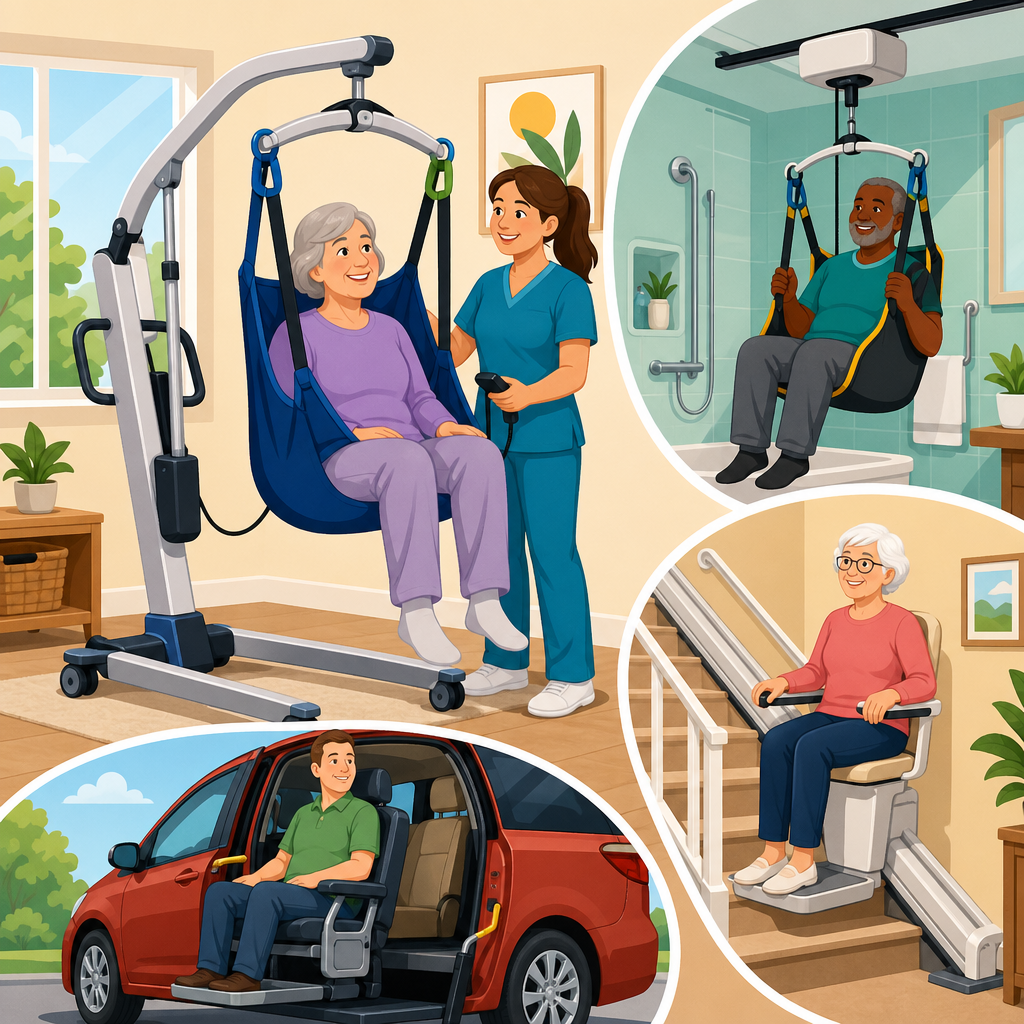
Power outages are more than an inconvenience when a stair lift is part of daily mobility, which is why the best chair lifts with backup battery for power outages should be judged first on reliability, not just price or upholstery. In this guide, I am treating “chair lift” as the common consumer term for a stair lift: a motorized seat that travels along a rail mounted to the staircase, letting a user move between floors safely while seated. A backup battery is the onboard power reserve that keeps the unit operating when household current fails, and for disabled users that feature is not optional. It determines whether someone can reach a bedroom, bathroom, medication, caregiver, or exit during a storm, grid failure, or tripped breaker.
I have worked with families comparing straight and curved stair lifts, reviewed installation proposals, and walked through outage scenarios that sales brochures often skip. The pattern is consistent: buyers focus on weight capacity and seat comfort, then discover later that charging method, battery chemistry, rail design, and service coverage matter just as much. A lift that advertises battery operation can still differ widely in how many trips it can complete during an outage, how long batteries last, and what happens if the unit is parked away from a charging point. Those details affect day to day confidence.
This article serves as a hub for anyone researching the best chair lifts for disabled users, with a specific focus on battery backed models. You will learn which features actually improve safety, how leading brands differ, what questions to ask before buying, and where each type fits best. If you are comparing Bruno, Harmar, Stannah, Handicare, Savaria, or Acorn, this overview will help you narrow choices before moving into deeper brand reviews, straight stair lift comparisons, curved stair lift guides, and installation planning resources across the broader buying guides section.
What makes a chair lift dependable during a power outage
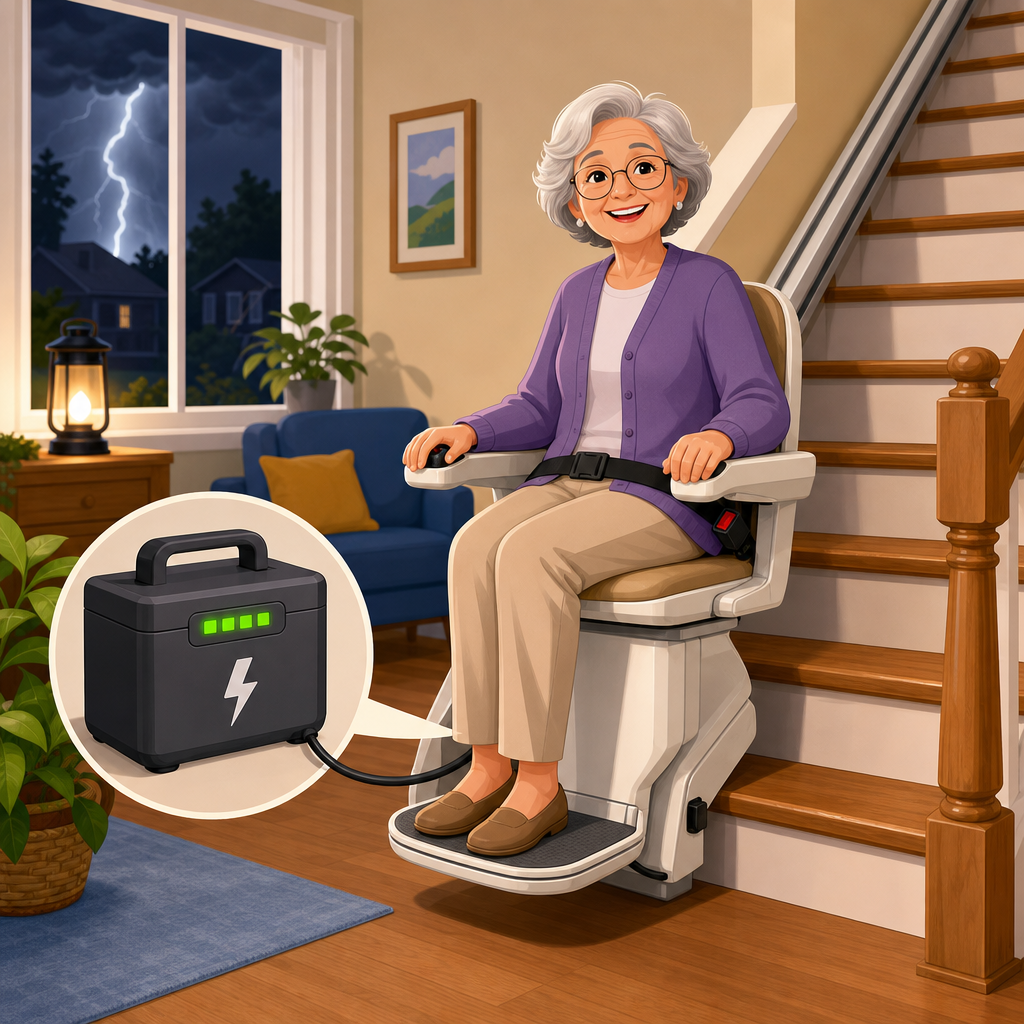
The most dependable chair lifts for power outages use DC drive systems with rechargeable batteries onboard the carriage. In plain terms, the lift runs off battery power all the time, while household electricity simply keeps those batteries charged. This design is now standard among major manufacturers because it provides smoother starts, quieter travel, and continued operation when the mains supply drops. A non battery or older AC driven model is harder to recommend for disabled users because an outage can immobilize the user on the wrong floor.
Battery backup quality depends on four practical factors. First is trip capacity. Many modern lifts can complete multiple one way trips during an outage, but the real number varies by user weight, rail length, staircase angle, and battery condition. Second is charging design. Some units charge continuously or at several points along the rail, while others require the chair to be parked at a charge station. Third is battery replacement access and cost. Most use sealed lead acid batteries similar to those found in mobility equipment, and they typically need replacement every two to five years depending on usage and ambient temperature. Fourth is fault tolerance: a dependable lift should stop smoothly, lock the seat securely, and display clear diagnostics if battery voltage drops.
Safety features matter just as much as battery backup. Look for swivel seats with locking positions at the landing, seat belts, obstruction sensors on the footrest and carriage, overspeed governors, and manual lowering or troubleshooting instructions that a caregiver can follow. In my experience, the lifts that feel best in an outage are not merely powered; they are predictable. The user knows where to park the lift, how to read the status lights, and who to call if the charger fails. That predictability reduces anxiety as much as the hardware does.
Best chair lift brands with backup battery for disabled users
Several manufacturers consistently appear on shortlists because they combine battery operation, established dealer networks, and models suited to different staircases. Bruno is widely respected in North America for build quality, generous seat design, and straightforward controls. Models like the Bruno Elan for straight stairs and Elite for higher capacity applications are battery powered and known for smooth ride performance. Harmar is another strong option, especially for buyers looking at the Pinnacle series or heavy duty configurations. Harmar lifts are common through local dealers, and replacement parts and service are usually accessible in many regions.
Stannah has a long history in stair lift manufacturing and often stands out for refined rail engineering, strong dealer support, and thoughtful ergonomics. Its battery powered lifts are popular in homes where comfort, folding dimensions, and ride quality matter. Handicare offers both straight and curved options, frequently appealing to buyers who need custom solutions, hinge tracks, or outdoor installations. Savaria, which also has a large accessibility portfolio, can be a good fit where buyers want an established accessibility company with options beyond stair lifts if home mobility needs expand later. Acorn remains highly visible in consumer advertising and can work well for straightforward residential applications, though the buying experience depends heavily on local installation and service standards.
The best brand is usually the one with the best local dealer, not just the most polished brochure. I have seen an excellent product underperform because annual maintenance was neglected, and a midrange model perform very well because the installer carefully set charging points, rail clearances, and seat height. Ask each dealer how many outage trips the model can typically deliver under load, whether charging occurs anywhere on the rail or only at designated points, how emergency callouts are handled, and what the average battery replacement interval is in your climate. Those answers reveal more than marketing claims.
| Brand | Best fit | Battery backup strengths | Watch points |
|---|---|---|---|
| Bruno | Straight stairs, premium residential use | Smooth DC operation, reliable charging, strong dealer reputation | Higher pricing in some markets |
| Harmar | Value focused buyers, varied capacity needs | Battery powered models, broad dealer availability | Ride feel varies by model and install quality |
| Stannah | Comfort, fit and finish, custom home integration | Refined controls and dependable battery systems | Dealer availability differs by region |
| Handicare | Curved stairs, tight spaces, outdoor options | Strong custom rail options with battery operation | Complex layouts increase price and lead time |
| Savaria | Whole home accessibility planning | Established accessibility engineering and support structure | Model selection may vary locally |
| Acorn | Simple residential staircases | Battery powered mainstream units | Evaluate service responsiveness carefully |
How to choose between straight, curved, and outdoor battery powered lifts
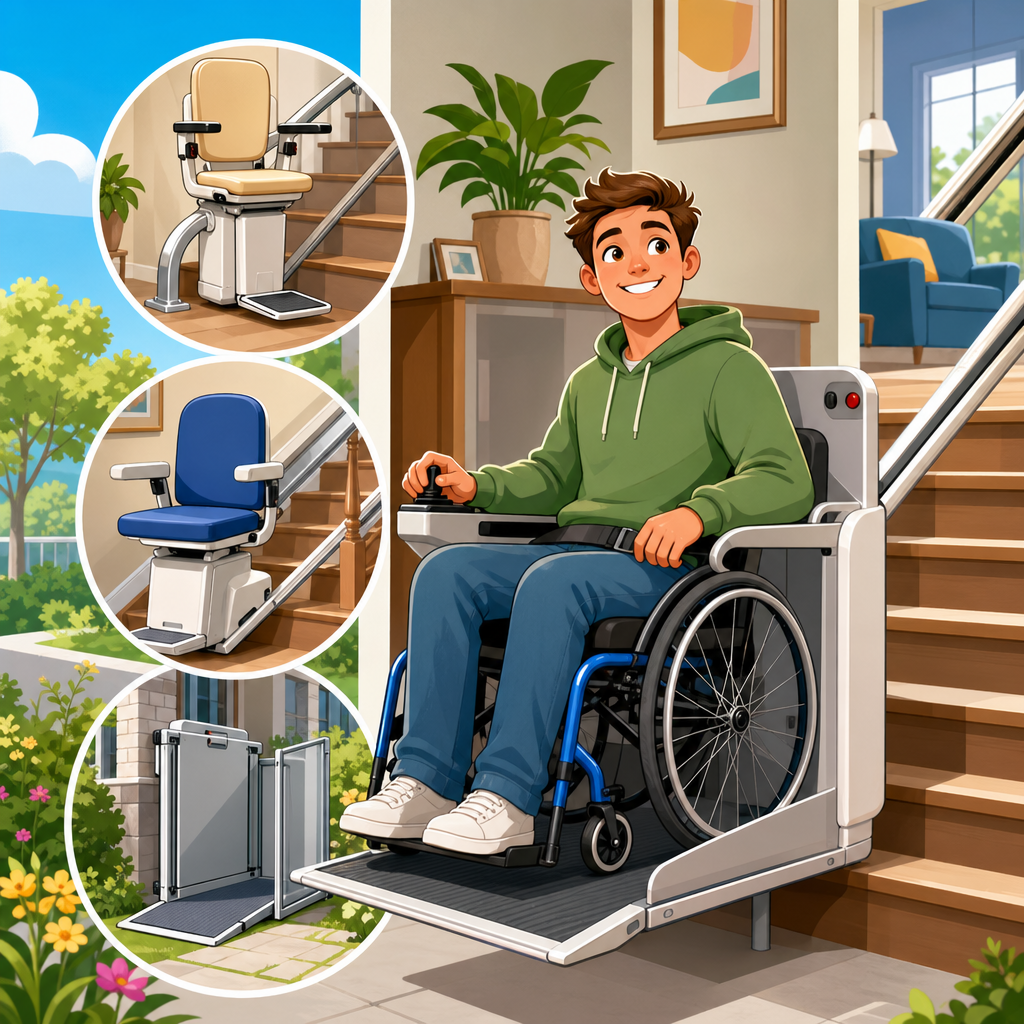
Straight stair lifts are usually the best value and the easiest to service. They fit staircases that run in a single line without turns, intermediate landings, or spiral geometry. Because the rail is standardized, straight models tend to cost less, install faster, and arrive sooner. If your top priority is outage readiness on a basic staircase, a straight battery powered lift is often the most practical choice. It can still include key upgrades such as a folding rail, power swivel seat, or larger footrest.
Curved stair lifts are custom built to match staircases with turns, landings, or unusual shapes. They are often the only workable option in multilevel homes where a user must pass around a corner to reach a bedroom or bathroom. These models can perform very well during power outages, but buyers should pay close attention to charge point location, custom rail lead time, and what happens if the chair stops away from a charger. Because the rail is bespoke, repairs and remakes can take longer than with straight lifts. That does not make curved models a bad choice; it means planning matters more.
Outdoor stair lifts add another layer of complexity because moisture, temperature swings, and debris affect battery life and charging reliability. A proper outdoor model should include weather resistant covers, sealed controls, corrosion resistant components, and batteries rated for the environment. In colder climates, I advise buyers to ask specifically how low temperatures affect charge retention and available trips during an outage. An outdoor battery backup sounds reassuring, but winter performance can differ markedly from summer performance, especially if the charger area is exposed.
Features that matter most for disabled users and caregivers
The best chair lifts for disabled users are not defined by one universal checklist because disability is not one universal condition. A user with limited leg strength may need a higher seat and easier transfer geometry, while a user with balance impairment may need a power swivel seat and stable armrests. Users with arthritis often benefit from larger toggle controls rather than small buttons. People with hemiparesis may need controls positioned for one handed use. During an assessment, I pay close attention to transfer posture at both landings because a safe transfer is more important than a slightly faster ride.
Weight capacity should be chosen conservatively, not optimistically. Standard stair lifts often support around 250 to 350 pounds, while heavy duty models can handle more and may include wider seats and reinforced rails. If the user is close to the upper limit, choose a lift with margin. Batteries and motors work harder near maximum load, which can reduce outage trip capacity and long term reliability. Seat width, footrest depth, folded profile, and armrest spacing all deserve the same level of scrutiny.
Caregiver convenience also influences safety. Two remote controls are common and useful, but the bigger issue is whether the caregiver can send the chair away, park it on charge, and understand indicator lights without guesswork. Audible alerts for low battery, simple manual release instructions, and service labels with a direct support number are small details that matter when stress is high. If a user lives alone, consider whether the unit can be paired with a monitored emergency response plan or whether the household should keep a backup evacuation strategy for severe weather.
Installation, maintenance, and real ownership costs
Most stair lifts mount to the stair treads, not the wall, which surprises first time buyers. That usually simplifies installation and protects structural reliability, but every staircase still needs a detailed survey. Installers should measure width, landing clearances, overrun space, seat to wall clearance, and potential obstruction points such as doors, radiators, trim, and handrails. For battery backed lifts, they should also confirm where the charger plugs in, whether the outlet is dependable, and whether a switched receptacle could accidentally cut charging power. I have seen “battery failure” complaints that were really outlet or parking position issues.
Maintenance is unavoidable and should be budgeted from the start. Annual service is a reasonable baseline for many residential users, though high use households may need more frequent checks. A typical service visit includes rail cleaning, gear inspection, safety sensor testing, fastener checks, battery voltage review, and seat swivel verification. Battery replacement intervals vary, but many homeowners encounter replacement within two to five years. When comparing quotes, ask whether batteries, labor, callout fees, and annual maintenance are included. A cheaper purchase price can become more expensive over five years if service terms are weak.
Cost ranges vary by region, but straight lifts commonly start in the low thousands, while curved lifts can rise dramatically because of custom rails. Refurbished straight lifts can offer value if they come from a reputable dealer with new batteries, new wear parts, and a real warranty. Refurbished curved lifts are less common because rails are custom. Rental programs can be useful for temporary recovery, but for long term disability needs, ownership usually provides better value and stronger control over service history.
How to compare models and make the final buying decision
Start by identifying the staircase type, user transfer needs, weight requirements, and outage risk profile. Then compare at least three quotes from authorized dealers. Ask each dealer to demonstrate the lift, explain battery charging behavior, and provide a written answer to a simple question: how many trips should this lift complete during a typical power outage in this home? If they cannot answer clearly, keep looking. Also ask about warranty length for drivetrain components, batteries, and labor, plus expected response time for a nonworking unit.
Read reviews carefully, but separate product complaints from dealer complaints. Many negative stair lift reviews are really about delayed service, poor installation, or aggressive sales tactics rather than the engineering of the unit itself. A local dealer with certified technicians, stocked batteries, and a practical maintenance plan is worth paying for. If possible, test the seated position while wearing normal footwear and outerwear, because winter coats, braces, or orthotics can change fit and comfort more than showroom tests suggest.
For most buyers seeking the best chair lifts with backup battery for power outages, the right answer is a battery powered model from a reputable brand, installed by a proven local dealer, sized correctly for the user, and supported by a clear maintenance plan. Focus on safe transfers, reliable charging, service access, and realistic outage performance. Then move to deeper comparisons of straight stair lifts, curved stair lifts, heavy duty models, and brand specific reviews in the rest of this buying guide hub. Make a shortlist, book in home assessments, and choose the lift that will still feel dependable on the worst day, not just the sales floor.
Frequently Asked Questions
What is a backup battery in a chair lift, and why does it matter during a power outage?
A backup battery in a chair lift is the built-in power reserve that allows the stair lift to keep operating when household electricity goes out. In most modern stair lifts, the batteries are housed within the unit and are charged automatically whenever the lift is parked at its charging point. When utility power fails, the lift switches to battery power so the user can still travel up or down the stairs instead of being stranded on one level of the home.
This feature matters because a stair lift is not just a convenience item for many households. It is often essential daily mobility equipment. During a storm, electrical outage, tripped breaker, or local service interruption, a backup battery can be the difference between maintaining independence and being unable to safely access a bedroom, bathroom, medication, or an exit. That is why reliability should come before cosmetic upgrades or bargain pricing when comparing models.
It is also important to understand that not all battery systems are equal. Some lifts provide multiple trips on battery power, while others offer more limited performance depending on the user’s weight, stair length, battery age, and charge level at the time of the outage. A well-designed battery-backed lift should deliver smooth starts and stops, predictable performance, and enough reserve capacity to remain useful in a real-world outage, not just under ideal showroom conditions.
How many trips can a battery-powered chair lift usually make when the power is out?
The exact number of trips depends on the stair lift model, the condition of the batteries, the length and incline of the staircase, and the user’s weight, but many quality battery-powered chair lifts are designed to complete multiple one-way trips during a power outage. In practical terms, homeowners should not assume unlimited use. Battery backup is there to maintain mobility through an outage, but its total capacity is finite.
Manufacturers often provide estimated trip ranges under standard conditions, but those numbers are best treated as guidance rather than a guarantee. A straight stair lift on a shorter staircase may allow more trips than a curved stair lift on a longer, more complex rail. Heavier usage, older batteries, cold conditions, or a unit that was not parked properly on the charger before the outage can all reduce available run time.
When evaluating the best chair lifts with backup battery for power outages, it is smart to ask dealers very specific questions: how many trips the lift can make on a full charge, whether that estimate applies to your staircase type, how battery age affects performance, and how long the batteries typically last before replacement is needed. A good dealer should explain this clearly and relate the answer to your home layout and daily routine rather than giving a generic sales number.
Are all modern stair lifts battery powered, or do some still stop working when the electricity goes out?
Many modern stair lifts use batteries as part of their normal operating system, but not every unit offers the same level of outage performance, and older or lower-end models may differ. In most current residential stair lifts, the lift runs on battery power all the time and recharges from household electricity when parked at designated charging contacts. That design is widely preferred because it provides continued operation during a power loss and often delivers smoother, quieter use.
However, buyers should never assume every chair lift is equally prepared for an outage. Some systems have stronger battery reserves, more dependable charging setups, or better performance on long or curved staircases. Others may technically include batteries but offer less real-world backup capacity than expected. If you are shopping specifically for outage protection, ask whether the lift can operate normally during a blackout, how charging works, and what happens if the unit is left off the charge point for an extended time.
This is especially relevant for people comparing newer battery-operated lifts with older direct-powered designs. A non-battery or outdated system may become unusable the moment house power is lost. For users who rely on a stair lift every day, that is a serious limitation. The safest approach is to prioritize a current model from a reputable manufacturer with a well-documented battery system, clear maintenance requirements, and local service support.
How long do stair lift backup batteries last, and when should they be replaced?
Stair lift backup batteries typically last several years, with many homeowners seeing replacement intervals in the range of about three to five years, though actual lifespan can vary. Usage frequency, charging consistency, temperature conditions, staircase length, and the overall health of the lift all play a role. A lift that is used heavily every day or one that is frequently left off its charging point may need battery replacement sooner than a lightly used unit that is maintained properly.
Common signs of aging batteries include slower travel, warning beeps, reduced number of trips during an outage, hesitation while moving, or failure to operate unless household power is present. If the lift seems less reliable than before, battery health should be one of the first things checked. Regular maintenance visits are valuable because a trained technician can test the batteries, inspect the charger, and confirm that the unit is making proper contact at its charge stations.
Replacement timing should not be based only on whether the lift still moves. Since the purpose of backup batteries is to provide dependable operation in an emergency, it is wise to replace them before they become a failure risk. For households where the stair lift is essential, proactive replacement is often better than waiting for the system to weaken noticeably. Ask the dealer what battery type the lift uses, what replacement typically costs, whether service is available locally, and whether preventative maintenance plans include battery testing.
What should I look for when choosing the best chair lift with backup battery for power outages?
Start with reliability, because that is the core reason a backup battery matters. Look for a stair lift from a well-established manufacturer with a solid reputation for safe operation, dependable battery performance, and responsive service. The best model for power outages is not simply the one with the lowest upfront price. It is the one that can be counted on to keep working when household power is unavailable and when the user most needs access between floors.
Pay close attention to battery-related details. Ask how the batteries charge, how many trips the lift can provide during an outage, how performance changes on a straight versus curved staircase, and what the expected battery replacement schedule is. You should also ask about diagnostics, low-battery alerts, and whether the unit has a manual swivel, seat belt, obstruction sensors, and other safety features that remain easy to use in a blackout or low-light situation.
Installation quality is just as important as the lift itself. A premium stair lift can underperform if it is installed poorly or if charging points are not aligned correctly. Choose a dealer who evaluates your staircase carefully, explains how the rail and charging system will be set up, and provides after-sale support. It also helps to consider practical ownership factors such as warranty coverage, maintenance availability, turnaround time for repairs, and whether replacement batteries are readily available.
Finally, match the lift to the user and the home. A shorter, straight staircase may allow a wider selection of models, while curved stairs or multiple landings may require a more specialized system. User weight capacity, seat comfort, folding dimensions, and ease of controls all matter, but for an article focused on outages, the deciding factor should be confidence: when the lights go out, will this chair lift still let the user move safely and independently? That is the standard that separates a merely attractive model from one that is truly the best choice.