Adaptive chair lifts for cerebral palsy patients can transform daily life by making stairways safer, reducing caregiver strain, and preserving independence in homes that were never designed for limited mobility. Cerebral palsy is a group of movement and posture disorders caused by early brain injury, but its practical effects vary widely: spasticity, involuntary movements, balance problems, fatigue, poor trunk control, and one-sided weakness can all affect stair use. A chair lift, sometimes called a stair lift, carries a seated user along a rail fixed to the staircase. In my work helping families compare home accessibility equipment, I have seen one mistake repeat often: buyers shop by staircase shape first and user needs second. For cerebral palsy, that order should be reversed. The best chair lifts for disabled users are not simply those that fit the stairs; they are those that match transfers, seating support, control method, safety tolerance, and long-term progression. This matters because an ill-matched unit may technically work while remaining uncomfortable, unsafe, or unused. A well-selected adaptive chair lift can lower fall risk, support energy conservation, and delay or eliminate the need for costly first-floor remodeling. As a hub guide, this article explains the core buying criteria, compares lift types, and shows how to evaluate products for different cerebral palsy presentations so you can narrow options with confidence.
How Cerebral Palsy Changes Chair Lift Requirements
The first question most families ask is simple: can a standard stair lift work for someone with cerebral palsy? Sometimes yes, but only after a careful assessment of seating stability, transfer ability, and control use. Cerebral palsy is not one profile. A user with mild spastic diplegia who walks short distances may need a compact perch-style lift for fatigue on stairs. A user with athetoid cerebral palsy may need a deeper seat, stronger positioning belt, and larger footrest to control involuntary movement during travel. Someone with hemiplegia may need controls mounted on the stronger side and a swivel seat that locks positively at the landing.
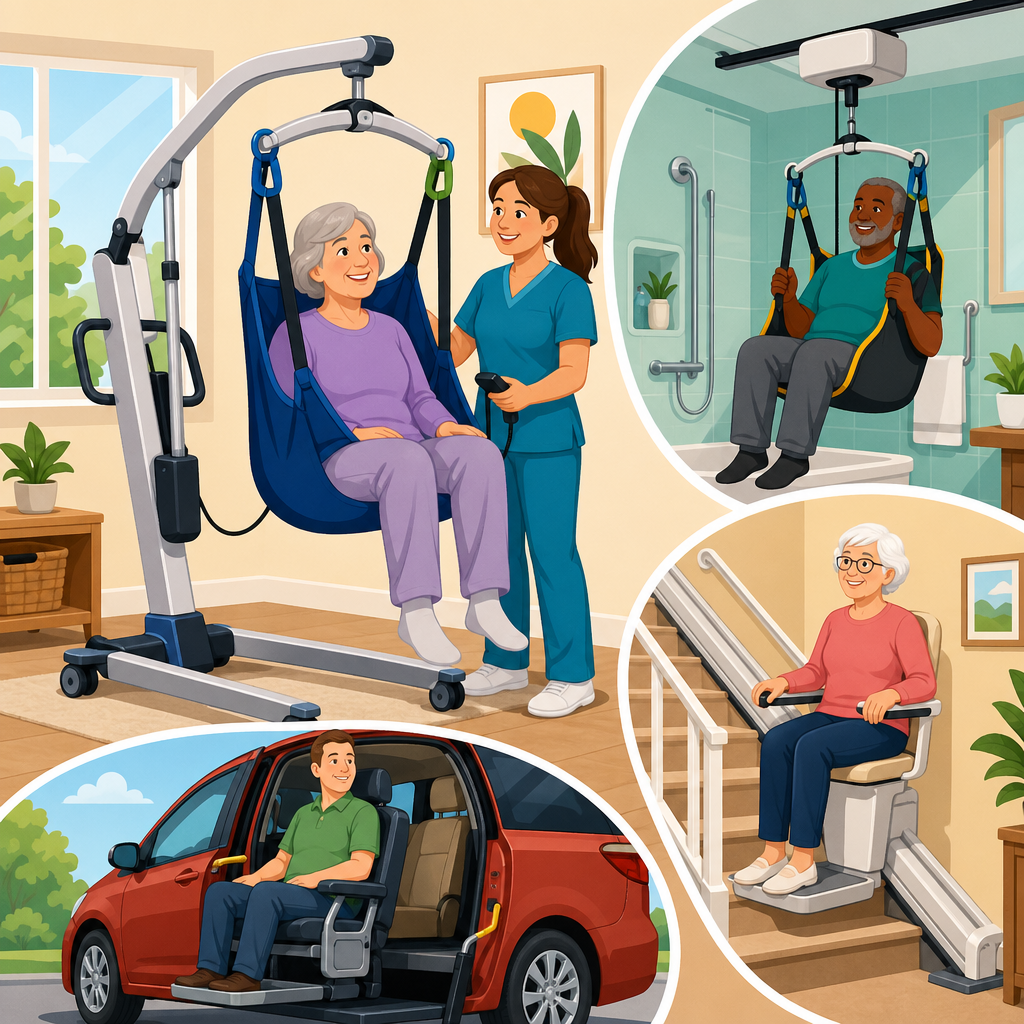
Transfers are usually the deciding factor. If the user can stand-pivot with one helper, a seated chair lift may be appropriate. If the user requires a full mechanical lift or cannot maintain upright sitting even with a belt, a stair lift may not be the correct device; a platform lift, home elevator, or floor-plan change may be safer. I advise families to watch the entire transfer sequence, not just the ride. The critical moments are approaching the seat, lowering onto it without collapse, positioning the feet, securing the belt, and standing up at the top landing without twisting. Those are the moments when poor product selection creates risk.
Muscle tone also affects comfort. Spasticity can increase with cold, stress, or awkward positioning. Seats with hard edges, narrow arm spacing, or abrupt starts and stops can trigger extensor tone and make the trip more difficult. Better lifts provide soft-start and soft-stop drive systems, stable armrests, and enough seat width for winter clothing, braces, or lateral trunk supports. For children growing into adolescence or adults with changing orthopedic needs, adjustability matters more than showroom appearance.
Types of Chair Lifts and Which Users They Suit Best
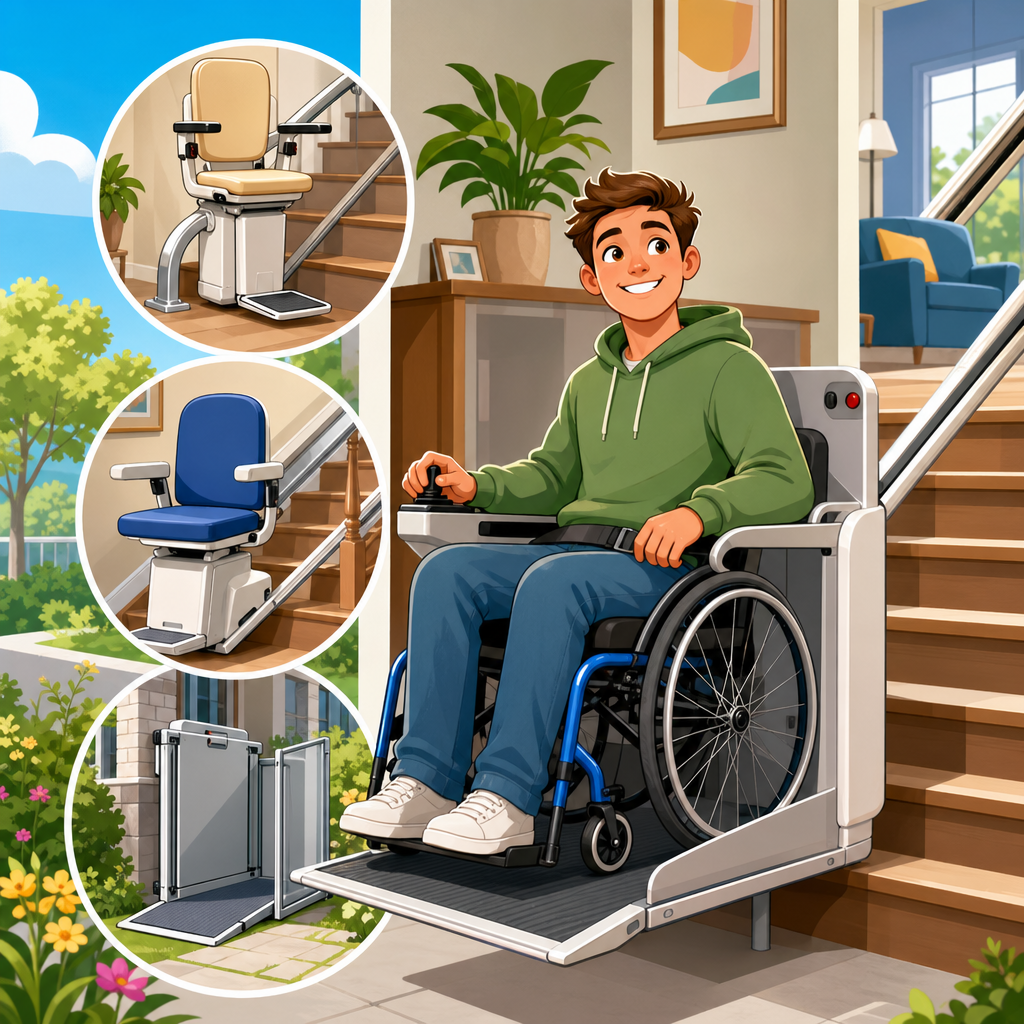
Most buyers encounter three categories: straight stair lifts, curved stair lifts, and standing or perch lifts. Straight lifts run on a single uninterrupted staircase and are typically the most affordable and fastest to install. They often suit ambulatory users with cerebral palsy who need support mainly for endurance, balance, or one-sided weakness. Curved lifts are custom-built for stairs with turns, intermediate landings, or spiral sections. They cost more because the rail is fabricated to exact measurements, but they can preserve access in multilevel homes where relocation is unrealistic.
Standing and perch lifts are more specialized. They reduce the need to bend hips and knees deeply and can help users who have difficulty sitting fully, but they demand better balance and trunk control during travel. For many cerebral palsy patients, especially those with startle responses or fluctuating tone, a fully seated model is safer than a perch design. Heavy-duty lifts, meanwhile, are not just for higher body weight. They often include wider seats, larger footrests, and more robust frames that can benefit users wearing orthoses or needing more lateral space.
Outdoor lifts can also matter for disabled users who access porches, garden paths, or garage entries via stairs. Look for anodized rails, UV-resistant upholstery, weather covers, and operating temperature ratings. In cold climates, battery performance drops, so charging contact reliability becomes important. I have seen families install an excellent indoor model but ignore the three exterior steps that still block independent access. The best hub strategy is to map every staircase the user must navigate, then prioritize where a chair lift meaningfully improves daily routine.
Core Safety Features That Matter Most
For cerebral palsy, safety features are not add-ons; they are baseline requirements. A reliable seat belt is essential, and for users with poor trunk control, a more supportive harness or crossover pelvic positioning system may be worth discussing with the manufacturer and therapist. Swivel seats should lock firmly at the upper landing to reduce twisting while standing. Folding footrests save hallway space, but the foot platform must remain large enough to accommodate ankle-foot orthoses, high-tone plantar flexion, or uneven foot placement.
Obstruction sensors are another must-have. These stop the lift if toys, shoes, pets, or dropped items are on the stairs or rail. Battery backup is equally important because many modern lifts charge continuously and continue running through power cuts; that feature is not cosmetic when the user sleeps upstairs. Remote call/send controls are useful for multiuser homes, but large tactile buttons or joystick-style controls are usually easier for users with limited fine motor control than tiny membrane switches.
Look closely at ride quality. Rack-and-pinion drives are common and durable, cable-driven systems can be smooth, and worm-gear designs vary by brand. The practical question is whether the lift starts gently, stops without jerking, and stays stable over years of use. Ask dealers about rated load, seat-to-footrest geometry, overspeed governor design, and compliance with recognized standards such as ASME A18.1 in the United States. A reputable supplier should answer directly, provide maintenance schedules, and explain limitations without pressure.
Buying Criteria: Fit, Comfort, Controls, and Cost
When comparing the best chair lifts for disabled users, four criteria determine satisfaction: physical fit, seated support, ease of control, and total installed cost. Physical fit begins with the staircase. Dealers measure tread depth, riser height, landing clearance, wall projections, hinge points, and any door swings near the rail. But user fit is equally technical. Measure hip width, seated thigh length, shoulder breadth, transfer height from mobility device, and the footprint of braces or shoes. If the user slides forward due to extensor tone, a flatter seat front or different back angle can help.
Comfort is not a luxury purchase issue. If the seat is wrong, the lift goes unused. Padding density, armrest height, seatbelt reach, and the ability to fold arms up for side transfers all affect daily success. Controls should match motor planning and hand function. Toggle switches are simple but may be hard for users with athetosis. Constant-pressure rocker controls are safer than one-touch travel because they stop when released, but they require sustained contact. Some brands offer larger paddles that work better for weak grasp or gloves.
Total cost includes more than equipment price. Straight lifts commonly range from about $2,500 to $5,500 installed, while curved models often start around $10,000 and can exceed $20,000 depending on rail complexity. Optional powered swivel seats, powered footrests, folding rails, upgraded upholstery, and extended warranties add cost quickly. Medicare typically does not cover stair lifts because they are treated as home modifications rather than durable medical equipment, though Medicaid waivers, state assistive technology programs, VA benefits, nonprofit grants, and local aging or disability agencies may help.
| Lift type | Best suited user profile | Main advantages | Main limitations |
|---|---|---|---|
| Straight seated lift | Mild to moderate cerebral palsy, consistent sitting balance, simple staircase | Lower cost, faster installation, broad product choice | Only fits straight runs, fewer custom positioning options |
| Curved seated lift | Users needing full home access on stairs with turns or landings | Custom rail, continuous travel, preserves existing layout | Higher price, longer lead time, harder to reuse |
| Heavy-duty seated lift | Users needing wider seat, braces, more trunk space, higher load rating | Better room for orthotics, stronger frame, larger footrest | Needs more stair width, bulkier parked position |
| Perch or standing lift | Users with good balance who struggle with deep sitting | Works on some narrow stairs, less hip and knee flexion | Not ideal for poor trunk control, spasticity, or involuntary movement |
Best Brands, Product Signals, and Real-World Selection Tips
Several established manufacturers dominate this category, including Bruno, Harmar, Stannah, Handicare, and Access BDD. Models change by market, but the strongest buying signals are consistent across brands: dealer network quality, service response time, parts availability, and customization options. Bruno lifts are often praised for build quality and straightforward controls. Harmar offers broad dealer reach and many configurations. Stannah has a strong reputation for refined ride quality and compact rail engineering. Handicare and Access BDD are also widely specified where curved solutions and tailored seating are required.
Brand reputation should never replace an in-home trial mindset. If possible, test a showroom unit and mimic real transfers with the user’s usual braces, footwear, and caregiver assistance. Ask whether the seat height can be matched to a wheelchair cushion level. Check if armrests lift independently. See whether the rail leaves enough clearance for other household members. On narrow stairs, a hinged rail may prevent a trip hazard at the lower landing, but powered hinges add maintenance points, so reliability history matters.
I also recommend discussing maintenance before purchase. Batteries usually need replacement every few years, depending on charge cycles and climate. Annual service is prudent even if not legally required. Ask how emergency manual lowering works, whether technicians are factory trained, and how quickly the dealer handles breakdowns. For families supporting a disabled user who cannot safely climb stairs at all, next-day service is not a luxury; it is part of the product value. The best buying guide question is, “What happens on the worst day?” A credible dealer will have a clear answer.
When a Chair Lift Is Not the Best Option
A chair lift is not always the right accessibility solution for cerebral palsy patients. If the user cannot transfer safely onto a seat, lacks head or trunk control, or has severe involuntary movements that compromise seated stability, a vertical platform lift or residential elevator may be safer. Wheelchair users who remain in their chair throughout the trip usually need a platform system rather than a transfer-based chair lift. Homes with extremely narrow stairs, poor landing space, or structural barriers may also call for a different approach.
There are lifestyle tradeoffs too. Chair lifts are slower than walking and can bottleneck a busy staircase. Curved rails are highly custom and usually stay with the house. Children with cerebral palsy may outgrow a fit that seemed acceptable at installation, especially if surgeries, contractures, or orthopedic hardware change sitting posture. That is why I urge buyers to think in three time frames: immediate need, likely need in two to five years, and resale or reconfiguration potential.
The strongest outcomes come from coordinated assessment. An occupational therapist can evaluate transfers, posture, and control access. A physical therapist can comment on tone, range of motion, and fatigue. The lift dealer can determine structural fit and code compliance. Together, they help families choose a system that actually supports independent living rather than merely occupying the stairs. If you are building your shortlist of the best chair lifts for disabled users, start with user function, insist on a home assessment, compare service support as carefully as hardware, and choose the product that will still be safe on an ordinary Tuesday, not just impressive in a brochure.
Adaptive chair lifts are most valuable when they are selected as mobility tools, not as generic home upgrades. For cerebral palsy patients, the right model must match transfer method, postural support needs, staircase layout, hand control ability, and likely future changes. Straight lifts offer the simplest path for many homes, curved lifts solve complex layouts, and heavy-duty seated models often provide the extra stability disabled users need. Safety features such as secure belts, obstruction sensors, battery backup, soft starts and stops, and a locking swivel seat should be treated as essentials, not upgrades.
Cost matters, but service quality, fit, and daily usability matter more because a poorly chosen lift quickly becomes expensive dead equipment. The strongest buying process includes an in-home survey, therapist input when needed, a realistic transfer test, and a clear plan for maintenance and repairs. Families comparing the best chair lifts for disabled users should also be ready to reject a chair lift when a platform lift or elevator is the safer choice. That decision is not a failure; it is good accessibility planning.
Use this hub as your starting point, then build your shortlist around the user’s body, routine, and home rather than around marketing claims. If you are actively shopping, schedule at least two assessments, request written specifications, and compare dealer support before signing. A carefully matched adaptive chair lift can restore access to the full home, reduce falls, and make everyday life markedly easier for both the user and the caregiver.
Frequently Asked Questions
How can an adaptive chair lift help someone with cerebral palsy at home?
An adaptive chair lift can make everyday life significantly safer and more manageable for a person with cerebral palsy by removing one of the biggest challenges in the home: stairs. Because cerebral palsy affects movement and posture in different ways, stair use may be difficult due to spasticity, muscle tightness, poor balance, fatigue, involuntary movements, limited coordination, or weakness on one side of the body. Even when a person can technically climb stairs, doing so repeatedly may be exhausting, painful, or unsafe. A chair lift creates a stable seated ride between floors, reducing the risk of slips and falls while allowing the user to conserve energy for work, school, therapy, and daily activities.
Beyond safety, a stair lift can also support independence and dignity. Many homes were not designed for limited mobility, and relocating bedrooms or bathrooms to the first floor is not always realistic. With the right adaptive features, a chair lift can help a user move through the home more freely without needing hands-on assistance every time stairs are involved. This can reduce caregiver strain, lower anxiety around transfers, and make routines such as getting ready in the morning or going to bed at night much easier. In practical terms, the lift often becomes more than a convenience; it becomes an accessibility tool that helps the home function better for the person’s specific mobility profile.
What features should families look for in a chair lift for someone with cerebral palsy?
The best chair lift for a person with cerebral palsy is rarely a one-size-fits-all model. Families should start by considering the individual’s specific movement patterns, trunk control, sitting balance, range of motion, and transfer ability. Important features may include a wider or more supportive seat, a seat belt or harness for added positioning security, swivel seating for safer entry and exit, folding arms and footrests, and easy-to-use controls that can be operated with limited hand strength or coordination. For users with spasticity or involuntary movements, stability during the ride is especially important, so smooth starts and stops and a secure seated position matter a great deal.
Other practical considerations include weight capacity, stair configuration, and whether the lift must be installed on a straight staircase or a curved one. Some users benefit from powered swivel seats, powered footrests, or remote controls so they do not have to bend, twist, or manage awkward movements during transfers. If the person uses a walker, cane, or wheelchair on one or both floors, the landing areas should also be evaluated to make sure there is enough room to get on and off the lift safely. A qualified dealer or accessibility specialist should assess not only the staircase but also the user’s physical needs and home routine. In many cases, input from a physical therapist or occupational therapist can be extremely helpful when choosing the right adaptive chair lift features.
Is a chair lift safe for cerebral palsy patients who have spasticity, poor balance, or involuntary movements?
Yes, a chair lift can be very safe for many cerebral palsy patients, but safety depends on proper assessment, appropriate equipment selection, and correct installation. Cerebral palsy presents differently from person to person, so the lift needs to match the user’s physical abilities and risks. For example, someone with poor trunk control may need more seat support and secure positioning, while a person with spasticity may benefit from features that reduce awkward joint positioning during boarding and riding. Standard safety components usually include a seat belt, obstruction sensors, locking swivel seat, and a footrest to help keep the user properly positioned throughout the trip.
That said, the key question is not simply whether chair lifts are safe in general, but whether a specific lift is safe for a specific user. Safe use involves being able to transfer onto the seat, remain stable during travel, and dismount at the top or bottom without losing balance. The surrounding area matters too. Clear landings, grab bars when appropriate, adequate lighting, and enough room for caregivers or mobility aids all improve overall safety. Families should request a professional in-home evaluation and, when needed, a therapist’s guidance before purchase. With the right setup and training, a stair lift can reduce fall risk dramatically compared with repeated stair climbing or assisted carrying on the stairs, which is often far more dangerous.
Can a chair lift reduce caregiver strain for families supporting someone with cerebral palsy?
In many households, yes. One of the biggest benefits of an adaptive chair lift is that it can reduce the physical and emotional strain on caregivers who would otherwise help with stairs several times a day. Assisting someone up and down steps may involve lifting, guarding, stabilizing, or supporting awkward movements, all of which increase the risk of injury for both the caregiver and the person with cerebral palsy. This is especially true when fatigue, muscle stiffness, poor coordination, or unpredictable movement patterns are part of the picture. A chair lift replaces much of that manual effort with a safer mechanical solution.
The impact on daily life can be substantial. Caregivers may spend less time planning around stairs, less energy worrying about falls, and less physical effort helping with each transition between floors. That can make routines smoother and preserve energy for other important tasks such as transportation, meals, therapy appointments, work, and personal care. It can also improve privacy and autonomy for the user, since they may no longer need direct assistance every time they move from one level of the home to another. While some users will still need help transferring on and off the lift, the overall burden is often much lower than manually navigating stairs. For many families, that reduction in strain is one of the most meaningful long-term advantages of installing a chair lift.
How do you know if a home and staircase are suitable for an adaptive chair lift?
The only reliable way to know is through a professional home assessment. A stair lift specialist will measure the staircase, evaluate whether it is straight or curved, check the width of the stairs, and inspect the landing areas at the top and bottom. They will also look at power supply options, rail placement, and any structural or layout issues that could affect installation. Most homes can accommodate some type of chair lift, even older homes, but suitability depends on more than just whether the stairs physically exist. The user must also be able to approach the lift, transfer safely, and exit into a clear, stable space on each floor.
For cerebral palsy patients, the assessment should go beyond the staircase itself. It should consider the person’s posture, transfer needs, use of braces or mobility devices, hand control, endurance, and whether a caregiver needs room to assist. In some homes, additional modifications such as grab bars, improved lighting, repositioned furniture, or transfer aids may make the stair lift safer and easier to use. If the person primarily uses a wheelchair, the family should also plan carefully for how mobility will be managed on both levels of the house. A good installer will discuss all of these factors instead of focusing only on the rail. That broader accessibility perspective is what helps ensure the chair lift truly improves safety, independence, and day-to-day function.