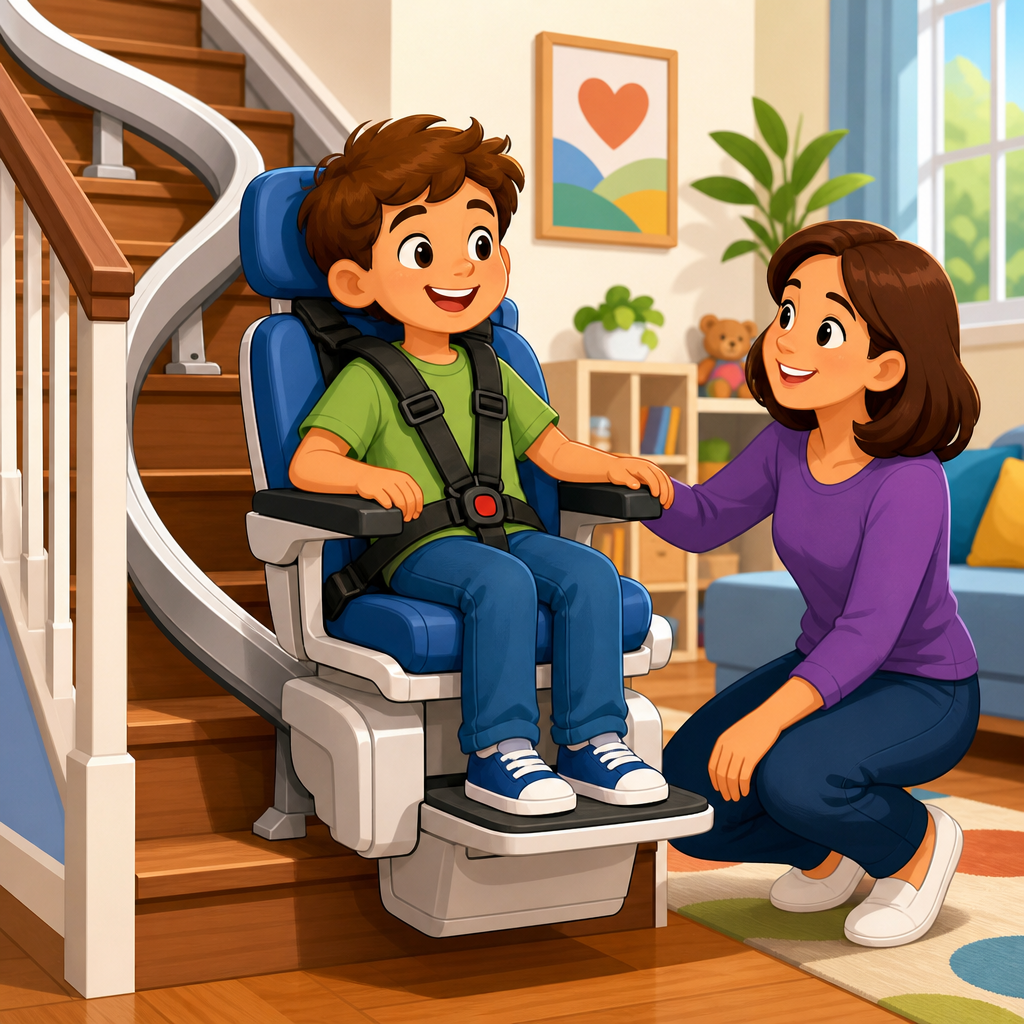
Chair lifts for children with disabilities can transform daily life by making stairs safer, reducing physical strain on caregivers, and helping a child move through the home with more comfort and dignity. In this guide, chair lifts for children with disabilities refers to motorized stairlift systems installed on a staircase, with a seat, footrest, rail, and safety controls that carry a rider between floors. Families often begin researching after a diagnosis, a surgery, a progression in muscle weakness, or repeated unsafe transfers on steps. I have worked with families comparing pediatric mobility equipment, and the same questions come up every time: what type fits the staircase, what safety features matter most, how much does installation cost, and whether a child will actually tolerate and use the lift. Those questions matter because a poor purchase can create new hazards, while the right system can preserve energy, protect caregivers from injury, and extend the time a family can stay in a multilevel home. This hub article covers the essential buying tips, explains how pediatric needs differ from adult stairlift purchases, and outlines the standards, features, and tradeoffs that should shape a smart decision.
How chair lifts for children differ from standard stairlifts
The best chair lifts for disabled users are not automatically the best choice for a child. Pediatric buyers need to assess fit, posture, supervision needs, sensory preferences, and long-term progression. A compact adult seat may be too deep for a small child, allowing forward slouching that compromises pelvic positioning and trunk stability. On the other hand, a child expected to grow quickly may outsize a pediatric seat in a short period, making an adjustable perch, swivel geometry, and optional harness more important than the smallest frame.
In practice, the child’s diagnosis shapes the buying decision. A child with cerebral palsy may need better lateral support, a secure lap belt, and simplified controls because of tone changes or involuntary movement. A child with Duchenne muscular dystrophy may initially transfer independently but later require a powered swivel seat, lower footrest height, and easier caregiver access. A child with spina bifida may have strong upper-body function but reduced balance, making armrest height and transfer space crucial. Children on the autism spectrum may be sensitive to noise, abrupt starts, or confined seating, so ride smoothness, soft-touch upholstery, and a consistent routine matter more than families expect at first.
Another difference is supervision. Many manufacturers design stairlifts for one seated adult who can follow instructions independently. For a child, families must ask whether the lift is intended for supervised use only, whether the controls can be secured with a key switch, and whether call/send remotes could be activated by siblings. A pediatric-friendly system balances accessibility and control; it should be easy for caregivers to operate while preventing unsupervised rides.
Home layout also affects a child more than an adult. Clearance at the top landing matters because children often need more setup time for transfers, orthotics, walkers, or a parent assisting from the side. If a child uses ankle-foot orthoses, check footrest depth and angle. If they use a gait trainer or manual wheelchair on one level, confirm there is enough parking space at both ends so the lift does not block circulation or emergency egress.
Types of chair lifts and who each one suits best
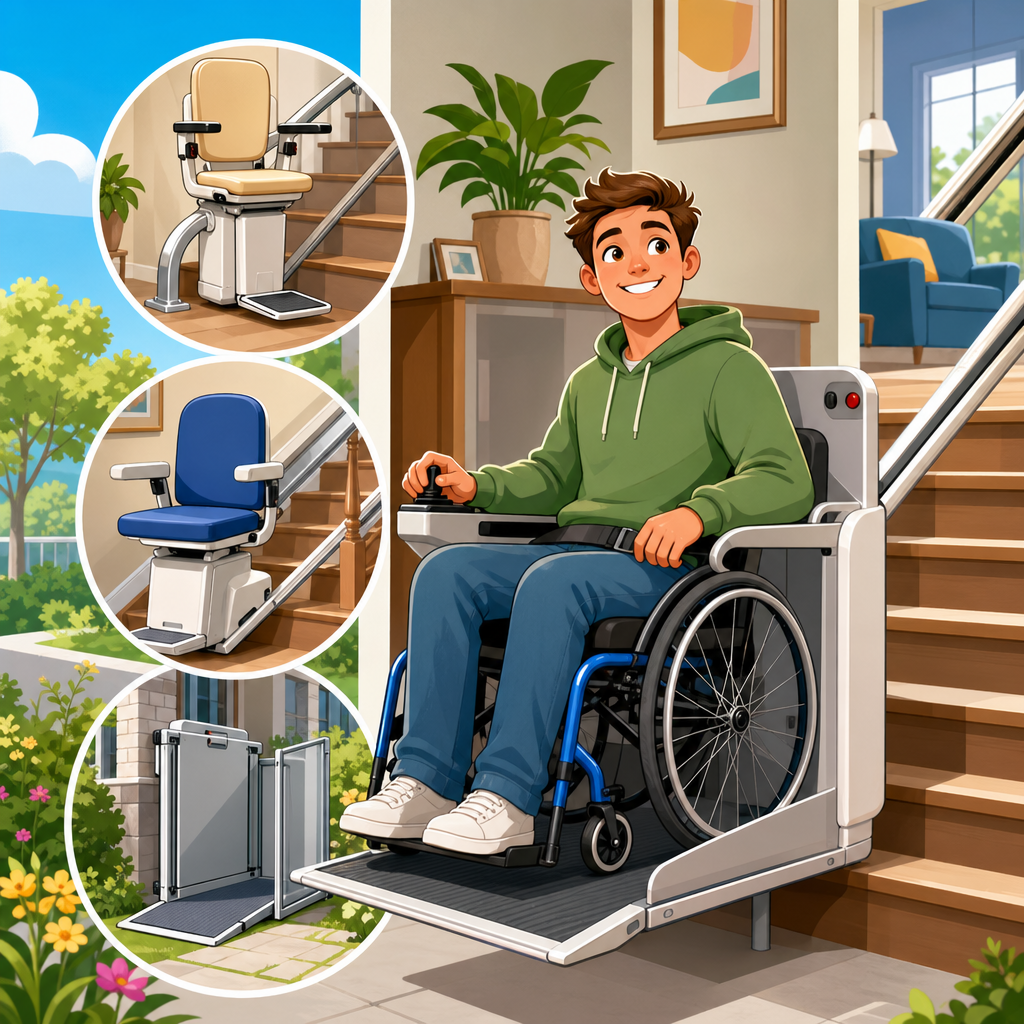
Most residential chair lifts for children with disabilities fall into two categories: straight stairlifts and curved stairlifts. Straight models run on a single, uninterrupted staircase and usually cost less because the rail is standardized. Curved models are custom-built for stairs with turns, intermediate landings, or spiral geometry. In my experience, families sometimes try to avoid the higher price of a curved rail by considering two straight lifts, but that only works when the child can transfer safely at the landing. For many children, especially those with fatigue, poor balance, or seizure risk, a single continuous ride is the safer option.
There are also perch-style lifts, standing stairlifts, and platform lifts. Perch models can help older children or teens who cannot bend knees easily or who struggle with a full seated transfer, but they are rarely ideal for younger children with limited balance. Platform lifts carry a wheelchair rather than a seated rider and can be appropriate when transfers are unsafe or impossible, although they require more space, structural planning, and budget. For families searching “best chair lifts for disabled users,” platform lifts belong in the broader mobility discussion, but they are a different product category from seated stairlifts and should be quoted separately.
Battery-powered systems dominate the market and are generally preferable for pediatric use. They charge at points along the rail and continue to operate during a power outage for a limited number of trips, which matters during storms or emergencies. Direct-powered systems are less common in homes and can stop when electricity fails. Reputable residential brands often discussed by dealers include Bruno, Handicare, Harmar, Stannah, Access BDD, and Acorn, though available models vary by region and dealer network. The quality of the local installer is often as important as the brand badge, because rail alignment, seat setup, and service responsiveness determine real-world reliability.
| Type | Best use case | Main advantage | Main limitation |
|---|---|---|---|
| Straight stairlift | Single flight with no turns | Lower cost, faster installation | Only fits simple staircases |
| Curved stairlift | Turns or intermediate landings | Custom fit, one continuous ride | Higher price, longer lead time |
| Perch stairlift | Limited knee bend, partial standing ability | Compact riding position | Requires better balance and supervision |
| Platform lift | Wheelchair user with unsafe transfers | No transfer from wheelchair | Needs more space and budget |
Safety features that matter most for pediatric use
If a family asks me for the single most important buying tip, I say this: prioritize safety features that match the child’s actual movement patterns, not just a generic checklist. Every stairlift should have a seat belt, obstruction sensors, a folding footrest, overspeed governor, and a reliable braking system. However, pediatric use often requires a deeper review. Ask whether the seat belt is a simple retractable belt, a five-point harness, or an optional upgraded restraint. Some children do fine with a standard lap belt; others with poor trunk control need more support. Any additional restraint must still allow quick release in an emergency.
Swivel and lock functions deserve careful attention. At the upper landing, the seat should swivel away from the stairs and lock firmly so the child transfers onto a flat landing rather than toward the edge. Power swivel options can help when a caregiver needs one hand free to steady the child. Footrest obstruction sensors are essential because toys, pets, and dangling straps are common in family homes. I also recommend a key lockout when younger siblings are present, plus armrest-mounted controls that require deliberate pressure rather than a light accidental tap.
Ride quality affects safety more than shoppers expect. A soft start and soft stop reduce jolting, which is especially helpful for children with spasticity, pain, or anxiety. A narrower seat is not automatically safer; if it pinches the pelvis or forces poor posture, the child may lean or resist. Look for seats with supportive contours, wipe-clean materials, and stable armrests used as transfer points. For children with seizure disorders, ask the prescribing clinician and dealer how the system should be used, supervised, and stopped if an event occurs during travel. The stairlift is part of a care routine, not a stand-alone gadget.
Fit, installation, and the true cost of ownership
Pricing for chair lifts for children with disabilities varies widely by staircase shape, rail length, powered options, and local labor rates. As a general range in the United States, straight stairlifts often start around $3,000 to $6,000 installed, while curved models commonly run from $10,000 upward, sometimes well beyond that for complex layouts. Platform lifts can exceed those numbers. Families should ask for a written quote that separates equipment, rail, powered seat or footrest options, installation, permit fees if applicable, and service coverage.
Installation quality begins with measurement. Professional dealers use precise stair geometry, landing clearances, and seat-overrun calculations to verify safe boarding and dismounting. The rail is usually fixed to stair treads rather than the wall, which surprises many homeowners. That means structural soundness of the staircase matters, but major wall reinforcement is often unnecessary. Ask whether the rail includes a folding hinge at the bottom if it would otherwise block a doorway or walkway. Hinges solve real space problems, but they also add moving parts that need maintenance.
The true cost of ownership includes battery replacement, annual service, upholstery wear, and future reconfiguration. Some straight lifts can be removed and reinstalled elsewhere more easily than curved systems. Used stairlifts may look attractive, and refurbished straight units can make sense when sold by an established dealer with a warranty and fresh batteries. Used curved rails are far less practical because they are custom-made to one staircase. Before buying, confirm response times for repairs, availability of local technicians, and what happens if the child’s needs change within two years. Good dealers discuss these scenarios openly instead of pushing the cheapest quote.
Funding is inconsistent, so families must piece together options. Private insurance often does not cover residential stairlifts because they are treated as home modifications rather than durable medical equipment, but exceptions exist. Medicaid waiver programs, state assistive technology programs, charitable grants, vocational rehabilitation for older teens, and condition-specific nonprofits may help. A physician letter of medical necessity, physical or occupational therapy documentation, and a home safety assessment strengthen applications.
How to evaluate brands, dealers, and long-term usability
Choosing among the best chair lifts for disabled users comes down to evidence, not marketing. Start with the dealer, because the dealer measures the stairs, installs the unit, handles service, and often manages warranty claims. Ask how many pediatric or complex-needs installations they complete each year. Request a home assessment that includes the child’s transfer method, orthotics, fatigue level, supervision needs, and growth expectations. If a dealer only talks about rail length and price, that is a warning sign.
Look for products aligned with recognized safety standards and local code requirements. In North America, stairway chairlifts are commonly associated with ASME A18.1 safety requirements, while electrical components may reference UL standards depending on the product. A reputable dealer should explain what standards the model meets, what maintenance schedule is recommended, and which parts are covered. They should also provide hands-on training, not just an instruction booklet.
Usability testing matters. If possible, arrange a showroom visit or in-home demonstration. Watch whether the child tolerates the seated position for the full ride. Note whether the controls are intuitive, whether the footrest supports both feet with braces on, and whether the caregiver can assist without twisting awkwardly. Ask the child directly what feels scary, noisy, or uncomfortable. Families sometimes focus on mechanics and ignore acceptance, yet a perfectly engineered lift that a child refuses to ride is a failed purchase.
Finally, think beyond the first year. The best buying decision supports a child’s development while reducing household risk today. If you are comparing specific models next, build a shortlist, request detailed assessments from experienced dealers, and use this guide as your checklist before you buy.
Frequently Asked Questions
1. What should families look for first when buying a chair lift for a child with disabilities?
The best place to start is with safety, fit, and long-term usability. A chair lift for a child with disabilities should do more than simply move up and down the stairs. It should match the child’s current mobility needs, support safe transfers on and off the seat, and remain practical as those needs change over time. Families should look closely at seat size, seat height, footrest design, swivel function, armrests, easy-to-use controls, and overall stability. If a child has limited trunk control, poor balance, or involuntary movements, those details matter even more. A lift that is technically functional but difficult to board safely may not be the right choice.
It is also important to evaluate the staircase itself. The width of the stairs, whether the staircase is straight or curved, the location of nearby doorways, and the amount of space at the top and bottom landings all affect which stairlift models are suitable. A professional assessment should include measurements and a discussion of how the child and caregivers will actually use the lift every day. For example, a family may need a powered swivel seat, a folding rail, or a call/send control so the lift can be moved without the rider on it.
Another key buying tip is to think ahead. Children grow, and diagnoses can change functional ability over time. A lift that works now but does not allow for changing transfer needs, caregiver assistance, or future safety accessories may become limiting sooner than expected. Ask whether the model can accommodate a growing child, whether there are optional harnesses or seat modifications, and whether the lift’s weight capacity provides enough room for future use. In many cases, families benefit from involving an occupational therapist, physical therapist, or rehabilitation specialist during the selection process so the final choice reflects both present and anticipated needs.
2. Are chair lifts safe for children with disabilities, and what safety features matter most?
Yes, chair lifts can be very safe for children with disabilities when they are properly selected, professionally installed, and used as directed. In fact, one of the main reasons families invest in a stairlift is to reduce the risk of falls on the stairs and lessen the physical strain of carrying or assisting a child between floors. That said, safety depends heavily on matching the equipment to the child’s physical, cognitive, and behavioral needs. A standard residential stairlift may not be ideal for every child, especially if the child has significant postural instability, impulsivity, sensory challenges, or difficulty following instructions.
The most important safety features often include a seat belt or harness option, obstruction sensors, a swivel seat with a locking mechanism, secure armrests, a stable footrest, and easy-to-reach controls. Obstruction sensors help stop the lift if something is on the stairs or rail. A swivel seat can make getting off at the landing safer by turning the rider away from the staircase before standing or transferring. Some families also benefit from powered features, such as a powered swivel seat or powered footrest, because they reduce the need for awkward bending and can improve transfer safety for caregivers.
Battery backup is another major feature to ask about. If there is a power outage, a battery-powered chair lift can continue operating for multiple trips, which is especially important when a child must access a bedroom, bathroom, or medical equipment on another floor. Families should also ask the provider about emergency stop functions, lockable controls, and whether the controls are simple enough for the child or caregivers to use consistently. Finally, safe use requires training. Everyone who assists the child should understand transfers, seat belt use, positioning, and what to do if the lift stops. The safest chair lift is one that fits the child well, includes the right features, and is used the same correct way every time.
3. How do we know whether a straight or curved chair lift is needed, and does that affect cost?
The shape of your staircase determines whether you need a straight or curved chair lift. A straight stairlift is designed for stairs that go directly from one floor to another without turns, landings in the middle, or changes in direction. A curved stairlift is built for staircases with bends, corners, intermediate landings, spiral sections, or other complex layouts. Because curved systems are custom-made to follow the exact path of the staircase, they usually require more detailed measurements, custom rail fabrication, and longer lead times.
Yes, this choice has a significant effect on cost. Straight chair lifts are generally less expensive because they use standardized rails and are faster to manufacture and install. Curved lifts are usually much more costly because the rail is built specifically for the home. For families already managing medical expenses, this price difference can be substantial. That is why an in-home assessment is so important. A provider can identify the staircase type, confirm what models are compatible, and explain which features are necessary versus optional.
Families should also ask how the lift will affect daily household movement. On narrower staircases, the folded size of the lift matters. On curved staircases, the parking position of the chair may be especially important so it does not block a hallway or doorway. If more than one person in the household may use the lift, or if the child rides with close caregiver assistance during transfers, those details should be discussed early. While cost is naturally a major concern, the right system is ultimately the one that can be used safely, reliably, and comfortably within the actual layout of the home.
4. Can a child use a chair lift independently, or will a caregiver always need to help?
That depends on the child’s age, strength, balance, coordination, judgment, and ability to follow safety instructions. Some children with disabilities can use a chair lift independently or with minimal supervision, especially if they can transfer safely, sit upright without extra support, fasten the seat belt correctly, and operate the controls consistently. Other children will always need caregiver assistance for transfers, positioning, or supervision during the ride. Independence is not simply about whether a child can press a button. It is about whether every step of the process can be done safely from start to finish.
For many families, the goal is not full independence right away, but safer participation in daily routines. A child may gradually become more involved in using the lift, such as learning how to call the chair, place feet correctly on the footrest, or use the controls under supervision. This can improve confidence and preserve dignity while still keeping safety at the center. If independent use is a possibility, discuss it directly with the dealer and with the child’s therapy team. They can help determine whether the child has the motor and cognitive skills needed and whether any accessories would improve safe use.
It is also wise to plan for real-life situations, not ideal ones. Think about fatigue, pain after surgery, muscle weakness that fluctuates, behavioral unpredictability, and how rushed mornings or evenings affect routines. A child who can use the lift safely on a good day may still need help at other times. Buying tips should therefore focus on flexibility. Choose a chair lift that supports both supervised and partially independent use if that reflects your family’s daily reality. In many homes, the most successful setup is one that allows the child to do as much as possible while still making it easy for caregivers to step in whenever needed.
5. What questions should we ask a chair lift company before making a final decision?
Before signing a contract, families should ask detailed questions about installation, maintenance, warranty coverage, service response time, and product customization. Start by asking whether the company has experience recommending chair lifts for children with disabilities rather than only for older adults. Pediatric needs can be very different, particularly when seating support, caregiver transfers, and growth are part of the picture. Ask what safety options are available, whether the lift can be adapted to the child’s needs, and whether an in-home assessment will include discussion of diagnosis, mobility, transfers, and future changes.
You should also ask about installation standards and follow-up support. Find out who installs the lift, whether the installers are trained on the specific model, how long installation typically takes, and whether the company handles permits or inspections if they are required locally. Ask what happens if the lift needs repair, how quickly service calls are answered, and whether loaner solutions or emergency support are available if the lift becomes unusable. Since many families rely on stair access multiple times a day, dependable service is just as important as the initial purchase.
Finally, ask for a full breakdown of costs. That includes the unit, rail, powered options, customization, installation, warranty terms, service plans, and any future maintenance expenses. If budget is a concern, ask whether there are financing options, refurbished units for straight staircases, or possible funding sources through Medicaid waivers, nonprofit programs, veterans’ benefits, or state assistive technology resources. A trustworthy company should answer these questions clearly and patiently. The final decision should be based not only on price, but on safety, fit, support, and confidence that the lift will continue to meet your child’s needs in everyday family life.