Choosing the right stair lift can turn a hazardous staircase into a safe, routine part of daily life, and models with swivel seats are often the best option for older adults who need extra stability when getting on and off. In practical terms, a swivel seat rotates at the top landing so the rider exits onto the floor rather than toward the stairs, reducing the chance of a fall during the most vulnerable part of the trip. After reviewing stair lift installations, manufacturer specifications, and common in-home mobility challenges, I have found that swivel-seat design is not a minor comfort feature; it is one of the most important safety components in any buying guide for the best chair lifts for seniors.
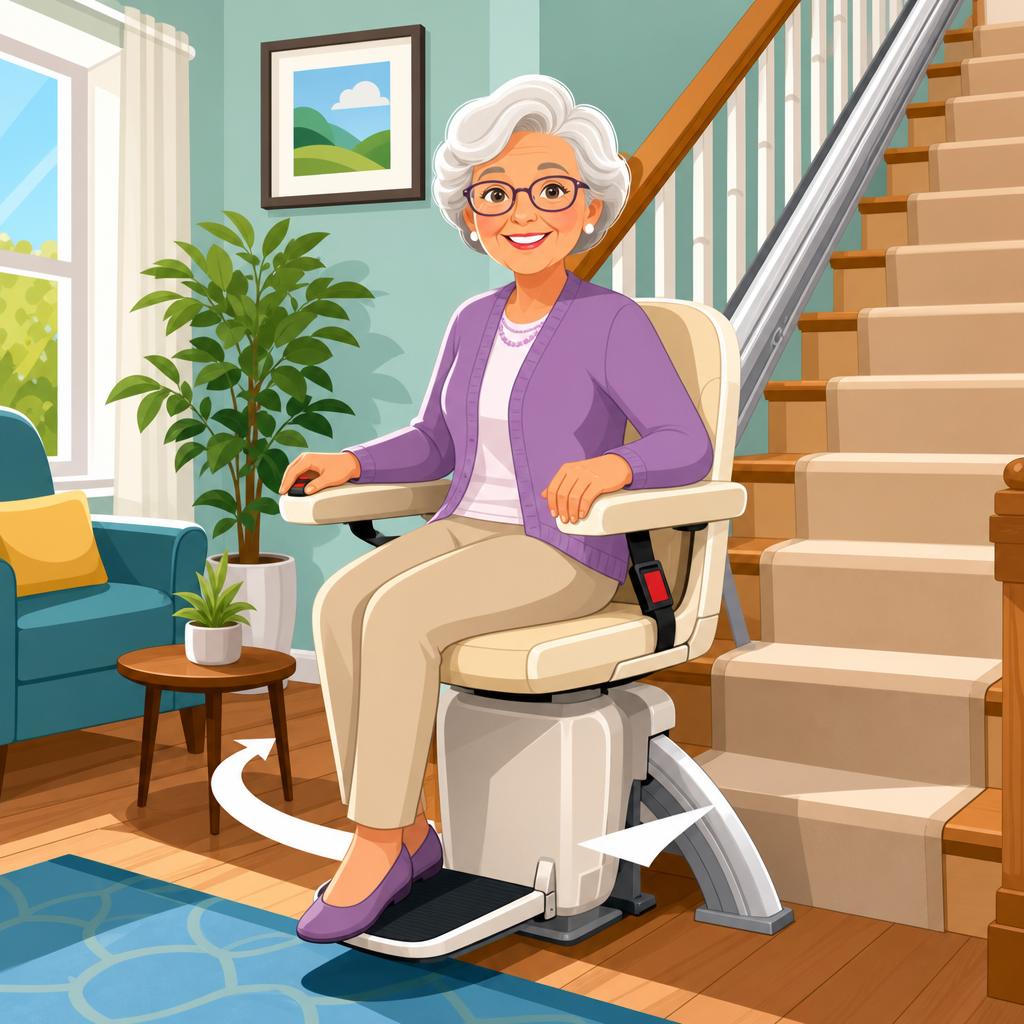
A stair lift is a motorized chair that travels along a rail fixed to the staircase treads. The main parts include the track or rail, carriage, seat, footrest, armrests, battery system, call-send controls, and seat belt. A swivel seat is typically manual on budget models and powered on premium units. Manual swivel seats require the rider to turn a lever and rotate the chair by hand, while powered swivel seats rotate automatically, usually when the chair reaches the top landing. For seniors with arthritis, weakness, balance issues, or limited trunk mobility, the difference is significant. A powered swivel can reduce twisting strain and create a more controlled exit.
This matters because falls on stairs remain a major source of injury for older adults. The Centers for Disease Control and Prevention has long reported that falls are a leading cause of injury among adults age sixty-five and older. In homes with bedrooms upstairs, the risk compounds quickly: repeated stair use, poor lighting, carrying laundry, medication side effects, and reduced reaction time all make a staircase less forgiving. A well-chosen stair lift does more than transport someone up and down. It preserves access to the entire home, delays disruptive moves, supports caregiving, and helps families avoid the false choice between independence and safety.
As a sub-pillar hub for best chair lifts for seniors, this guide covers what makes swivel-seat stair lifts safer, which product categories deserve attention, how leading brands compare, what installation and maintenance really involve, and which features are worth paying for. If you are researching for yourself, a parent, or a client, start with this principle: the safest stair lift is the one that matches the user’s body mechanics, staircase layout, and daily routine, not simply the one with the lowest advertised price.
Why swivel seats matter more than most buyers expect
The highest-risk moment on a stair lift is not always the ride itself. It is the transfer at the top landing, where the user stands up, turns, and steps away. On a standard fixed seat, that movement can force the rider to pivot near the edge of the staircase. A swivel seat changes the geometry of the transfer by rotating the chair away from the stairwell so the person rises facing the hallway or landing. That single change improves center-of-gravity control and gives the user a larger, flatter target area for the first step.
In homes I have evaluated, this feature becomes essential when the top landing is narrow, when the user relies on a walker positioned nearby, or when there is weakness on one side of the body after a stroke. It also helps caregivers assist from a safer angle. Most quality units lock in place at the ride position and again at the exit position, preventing the seat from drifting during transfer. Look for clear detents, solid latching, and easy-to-reach controls. If the user has limited hand strength, a powered swivel is often worth the extra cost because it removes one more manual task from the transfer sequence.
Swivel seats should not be evaluated alone. They work best when paired with a folding footrest, obstruction sensors, a retractable seat belt, and armrests shaped to support push-off without forcing awkward shoulder movement. If a lift stops short of the landing because of a battery or rail issue, a seat that can still be safely rotated matters even more. That is why top stair lifts with swivel seats should be judged as complete transfer systems, not isolated chairs attached to a rail.
Best chair lifts for seniors: product types and who they suit
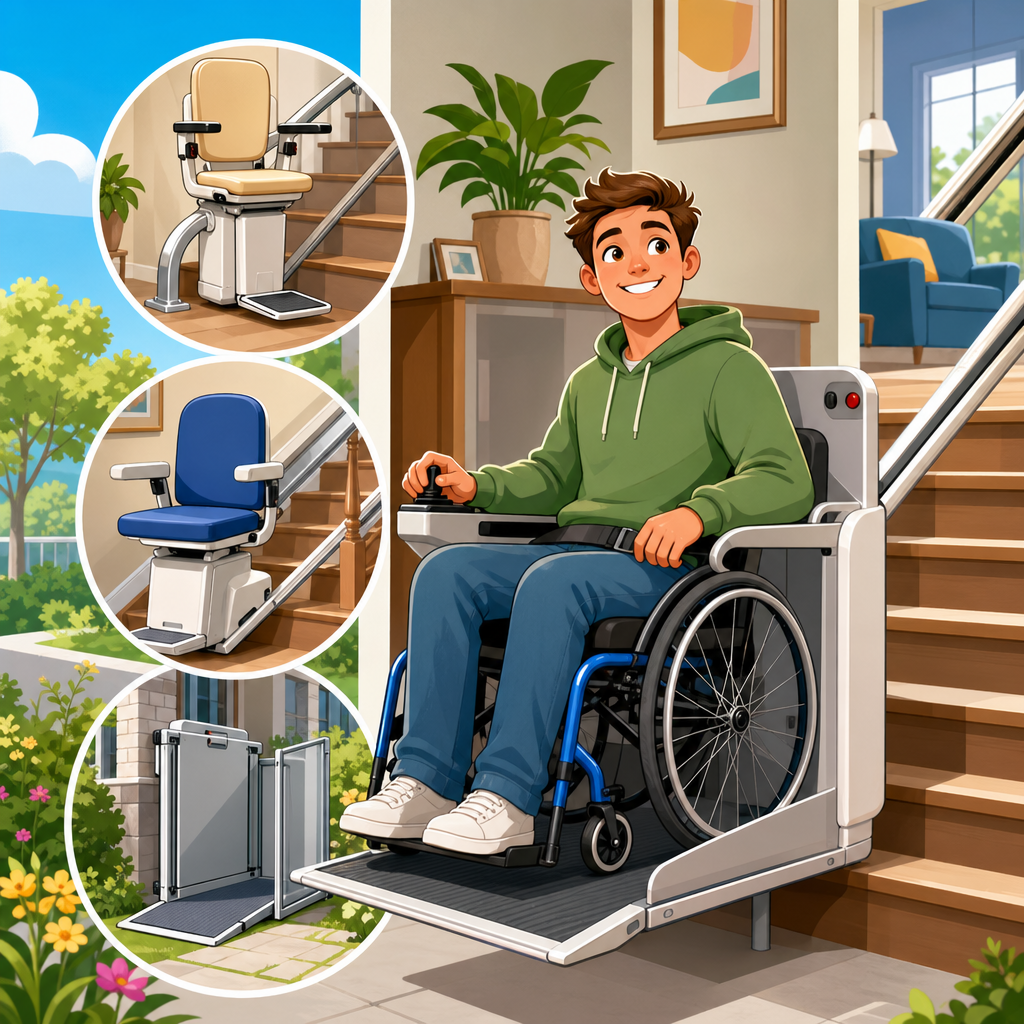
Most buyers start by comparing brands, but the more useful first step is identifying the right category. Straight stair lifts fit staircases with no turns or intermediate landings and are the fastest to install because the rail is cut to length on site. Curved stair lifts are custom manufactured for stairs with bends, spirals, or split-level transitions. Outdoor stair lifts use weather-resistant materials and covered components for porch or deck access. Heavy-duty models provide wider seats and higher weight capacities, often around 350 to 600 pounds depending on brand and rail system.
For seniors, the choice usually comes down to body size, upper-body strength, and transfer ability. A petite rider with good hand use may do well with a compact straight lift and manual swivel. A taller rider with knee stiffness may need a higher seat base and more generous seat-to-footrest geometry. Someone with Parkinson’s disease, advanced arthritis, or neuropathy often benefits from powered seat swivel, powered footrest folding, and larger rocker controls that can be operated without precision finger movement. If the home has multiple users, call-send remotes and programmable parking positions become much more important.
The hub topic of best chair lifts for seniors also includes practical lifestyle fit. Some users need a perch-style seat for steep stairs, though these are less common in the United States. Others prioritize a slim folded profile so family members can still walk the staircase comfortably. In my experience, buyers who focus only on maximum speed or promotional pricing often miss the features that actually determine long-term satisfaction: transfer comfort, control simplicity, and service availability in their zip code.
Top stair lift brands with swivel seat options
Several established manufacturers dominate the residential market. Bruno is known for robust build quality, a smooth ride, and strong dealer support in the United States. Its Elan straight stair lift and Elite models offer manual swivel seats, while premium configurations can include powered options and higher weight capacities. Stannah is widely respected for custom engineering and seat choices, with models such as the Stannah 260 for straight stairs and the Sadler seating concept for users who struggle with knee flexion. Harmar offers the Pinnacle and Helix lines, often appealing to buyers seeking a mix of compact rails and broad dealer distribution. Handicare, Acorn, and Access BDD also appear frequently in serious comparisons.
No single brand is best for every home. Bruno often stands out for reliability and dealer setup quality. Stannah excels when stairs or seating requirements are unusual. Harmar can be competitive on space-saving designs and dealer-backed service packages. Acorn is visible nationally and often sells direct-to-consumer, but service experience may vary more by region. When comparing these brands, pay attention to four things: seat rotation mechanism, weight capacity, folded width, and local maintenance support. A superior seat design loses value quickly if replacement parts or technicians are hard to access.
| Brand | Typical Strength | Swivel Seat Options | Best Fit |
|---|---|---|---|
| Bruno | Durability, dealer installation quality | Manual on many models, powered on select upgrades | Seniors wanting reliable straight or premium heavy-duty lifts |
| Stannah | Custom engineering, seating variety | Manual and powered depending on configuration | Homes with complex stairs or specialized seating needs |
| Harmar | Compact rail options, broad availability | Manual and powered features on select models | Buyers balancing space savings and service access |
| Handicare | Customization and twin-rail curved systems | Manual and powered options | Curved staircases and tailored configurations |
| Acorn | National presence, straightforward packages | Manual swivel common, powered varies | Shoppers seeking quick quotes and standard residential setups |
These comparisons are useful, but an in-home assessment still decides the winner. Rail overrun options, seat height, hinge-rail needs near doorways, and transfer direction at the top landing can completely change the recommendation. Reputable dealers measure these factors before quoting a final configuration.
Safety features seniors should prioritize beyond the swivel seat
The best stair lifts for seniors combine several protective features. Battery backup is nonnegotiable. Most residential lifts charge continuously or at charging points and continue operating during a power outage for multiple trips, though exact performance depends on battery age and user weight. Obstruction sensors on the footrest and carriage stop the lift if it contacts an item on the stairs. A seat belt, ideally easy to latch with limited dexterity, keeps the rider stable during travel. Armrests should feel secure when sitting down and standing up, not thin or decorative.
Track overruns are particularly important. A top overrun moves the user past the edge of the staircase so dismounting occurs farther from the drop. For many homes, that provides nearly as much safety benefit as the swivel itself. Powered footrests can also reduce trip hazards because users do not have to bend down to fold the platform. For people with low vision, look for contrasting control colors, clear indicator lights, and remote controls with tactile buttons.
There are also standards and process details that separate safer installations from mediocre ones. In the United States, dealers commonly reference ASME A18.1 requirements for platform lifts and stairway chairlifts, along with manufacturer-specific installation procedures. A proper survey checks tread depth, nosing, landing clearance, electrical access, and any door swing conflicts. Good installers test start-stop smoothness, charge points, swivel lock engagement, and user training before leaving. If a quote feels rushed or the salesperson avoids discussing service intervals, that is a warning sign.
Cost, installation, and ownership realities
Straight stair lifts generally cost far less than curved units because the rail is standardized. In many markets, a new straight lift lands roughly between $2,500 and $5,500 installed, while curved lifts often start around $10,000 and can climb much higher depending on complexity. Powered swivel seats, powered footrests, heavy-duty capacity, hinge rails, and upholstery upgrades add cost. Outdoor models also carry premiums because of weatherproofing and specialized covers.
Installation for a straight lift often takes only a few hours. Curved lifts require manufacturing lead time because the rail is built to measured specifications, and installation may take most of a day. Maintenance is usually modest if the unit is used correctly: keep the rail clean, charge points unobstructed, and moving parts inspected according to the dealer schedule. Batteries are consumable items and commonly need replacement after several years, depending on usage and charging behavior.
Rentals and reconditioned units can make sense, especially after surgery or during hospice care, but availability is far better for straight lifts than curved ones. Buyers should ask about warranty length, labor coverage, emergency response time, and whether service is performed by the seller or subcontracted. I also advise confirming the process for removing the lift later and whether there is any buyback value. Total ownership cost is not just purchase price; it includes downtime risk, battery replacement, and the quality of local support.
How to choose the right model for a specific senior
The best buying decision starts with the rider, not the brochure. Measure the user’s seated hip width, note which side is stronger for transfers, and observe whether standing up requires arm push, a walker, or caregiver help. If the rider hesitates when turning, choose a powered swivel. If bending is difficult, add a powered footrest. If the person is tall, check seat-to-footrest distance carefully so knees do not rise uncomfortably. If hearing or memory issues are present, simple controls and predictable operation matter more than extra features.
Next, examine the staircase itself. Count turns, measure width, check top and bottom landing space, and identify doors that could interfere with a parked chair or hinged rail. Then compare at least three quotes, ideally from dealers representing different manufacturers. Ask each dealer to explain exactly how the user will transfer at the top landing and to demonstrate seat rotation, lock points, and belt use. That hands-on explanation often reveals whether a model is truly senior-friendly or merely marketable.
Top stair lifts with swivel seats for safety deliver their value at the exact moment a person most needs stability: when transitioning between chair and floor. For seniors, that design can reduce fall risk, preserve independence, and make a multi-level home livable again. The strongest choices combine a secure swivel mechanism with battery backup, obstruction sensors, quality installation, and dependable service. Start with a professional in-home assessment, insist on a transfer-focused demonstration, and choose the model that fits the user and staircase together, not just the price sheet. That is how families find the best chair lift for seniors and buy with confidence.
Frequently Asked Questions
Why is a swivel seat such an important safety feature on a stair lift?
A swivel seat is one of the most valuable safety features on a stair lift because it helps protect the user during the transition on and off the chair, which is often the riskiest part of the ride. Instead of stepping off while facing the staircase, the seat rotates at the top landing so the rider can exit onto a stable, flat surface. That simple change in positioning can significantly reduce the chance of losing balance, misjudging a step, or turning awkwardly near the edge of the stairs. For older adults, people with limited mobility, and anyone who feels unsteady when standing and pivoting, this added control can make a major difference in day-to-day safety.
Swivel seats also improve confidence. Many users are less worried about the ride itself than they are about getting off at the top without twisting, reaching, or stepping too close to the staircase. A well-designed swivel mechanism addresses that concern directly. On many models, the seat locks securely into place at the landing, helping prevent unexpected movement while the user stands up. Some stair lifts offer manual swivel seats, while others provide powered swivel options that can be especially helpful for people with arthritis, weak grip strength, or limited upper-body mobility. In short, a swivel seat is not just a convenience feature; it is a core safety upgrade that supports a more stable and predictable exit from the lift.
What should I look for when comparing stair lifts with swivel seats?
When comparing stair lifts with swivel seats, start by looking at how the swivel function works and whether it matches the user’s physical needs. Some seats swivel manually using a lever, while others rotate automatically with the push of a button. A powered swivel seat can be easier and safer for users who may struggle with turning the chair themselves. It is also important to check whether the seat locks firmly in the exit position, since a secure lock helps create a steadier transfer at the top landing. Smooth operation, intuitive controls, and reliable stopping points all matter when evaluating overall safety.
Beyond the swivel feature itself, pay close attention to weight capacity, seat size, armrest design, footrest height, and ease of entry and exit. A stair lift that fits the user properly will be safer and more comfortable over time. Look for seat belts, obstruction sensors, battery backup, folding rails or folding footrests if space is limited, and simple call-send controls. If the staircase is narrow, the folded profile of the chair can be especially important. For homes with curved stairs, custom rail design and landing configuration should be reviewed carefully. Finally, compare warranty coverage, dealer support, maintenance expectations, and installer experience. The best stair lift is not just the one with a swivel seat, but the one that combines that feature with the right fit, dependable performance, and professional installation.
Are powered swivel seats better than manual swivel seats?
Powered swivel seats are often the better choice for users who have limited strength, joint pain, reduced dexterity, or difficulty with twisting movements. With a powered swivel system, the chair rotates automatically, which means the user does not have to reach for a lever or exert effort to reposition the seat at the top landing. This can make transfers feel smoother and less physically demanding, especially for people with arthritis, balance issues, or post-surgery mobility restrictions. In many cases, the added ease of use translates into better daily safety because the user is less likely to rush, strain, or attempt an awkward movement while exiting the lift.
That said, manual swivel seats are still an excellent option for many households. They can be dependable, straightforward, and sometimes more affordable. If the user has enough strength and flexibility to operate the swivel mechanism comfortably, a manual seat may provide all the functionality needed. The right choice depends on the person using the lift, not just on the feature list. It is also worth considering who else may use the stair lift and whether needs could change over time. A stair lift is often a long-term accessibility investment, so choosing a powered swivel seat can provide extra future-proofing if mobility is expected to decline. The key is to match the swivel mechanism to the user’s current abilities and likely needs over the years ahead.
Can a stair lift with a swivel seat be installed on any staircase?
Stair lifts with swivel seats can be installed on many types of staircases, but not every setup is identical, and the staircase layout plays a major role in what is possible. Straight staircases are usually the simplest and most affordable to fit because they use standard rail systems. Curved staircases, stairs with intermediate landings, and more complex layouts typically require a custom-built rail, which increases cost and installation planning. The presence of a swivel seat is usually not the limiting factor on its own, but the size of the top landing, the width of the stairs, and the available clearance around walls, doors, and hallways all affect how safely the chair can rotate and how easily the rider can get on and off.
This is why an in-home assessment is so important. A qualified stair lift dealer or installer will measure the staircase, evaluate the top and bottom landings, and identify any obstacles that could affect seat rotation or transfer safety. They will also look at whether a hinged rail, parking position, or specific seat style would improve access. In some homes, a swivel seat is especially valuable because it allows the rider to dismount in a more controlled position even in tighter spaces. In others, additional customization may be needed to create a safe exit path. Most staircases can be accommodated in some form, but the best results come from choosing a model designed specifically for the home’s layout and the user’s mobility needs.
How do I know which stair lift with a swivel seat is best for an older adult?
The best stair lift for an older adult is the one that makes everyday use feel safe, comfortable, and simple. Start by focusing on the person’s mobility challenges. If they have trouble standing up, turning, or maintaining balance, a model with a secure swivel seat, sturdy armrests, and easy-to-use controls should move to the top of the list. If hand strength is limited, a powered swivel seat and powered footrest may be worth the upgrade. Seat height, cushioning, and back support also matter more than many buyers expect, especially if the user will rely on the lift multiple times each day. What looks like a small comfort feature can become a meaningful quality-of-life improvement over time.
It is also smart to consider the broader picture: reliability, service support, and how well the lift fits into the home. A reputable brand with strong local installation and maintenance support is often a better long-term choice than a lower-priced model with limited follow-up care. Ask about battery operation during power outages, safety sensors, warranty terms, and whether the stair lift can accommodate future changes in mobility. Whenever possible, involve the older adult in the decision and have them try a demonstration model. The best stair lift is not simply the one with the most features; it is the one that the user feels confident using every day. For many households, that confidence comes from a well-fitted chair, dependable operation, and a swivel seat that makes getting off at the top landing feel far safer and more natural.