Choosing the best chair lifts with remote controls for seniors starts with understanding what these products actually do, who they help, and which features matter in daily use. In this guide, chair lifts refers to power lift recliners and seat-lift chairs designed to gently raise a seated user to a near-standing position with a handheld or wired remote. For many older adults, that simple motion reduces strain on knees, hips, and lower back, and it can make the difference between independent living and needing hands-on assistance several times a day. I have evaluated these chairs by the standards that matter in real homes: transfer safety, motor reliability, seat dimensions, cleaning ease, and how intuitive the remote feels when dexterity or vision is limited.
A remote-controlled chair lift is not just a comfort purchase. It is a mobility aid, a fall-prevention tool, and often a practical alternative to costly home modifications. Seniors recovering from joint replacement, living with arthritis, managing Parkinsonian stiffness, or experiencing general lower-body weakness often find the sit-to-stand transition harder than walking short distances. A well-matched lift chair addresses that specific problem. The best models also support pressure relief, napping, swelling reduction, and caregiver assistance. This hub article covers the best chair lifts for seniors comprehensively so readers can compare types, understand core features, and decide when to prioritize budget, posture support, heat and massage, zero-gravity positioning, or heavy-duty construction.
Because this page serves as a hub under buying guides and product reviews, it focuses on the decision framework behind top products rather than pretending one chair fits everyone. The right answer depends on body size, room layout, medical needs, and how often the chair will be used each day. Throughout the article, I will explain the categories of lift chairs, the most reliable feature sets, practical buying criteria, and the mistakes that lead to returns. If you are researching the best chair lifts for seniors, start here, then use this overview to narrow your options before comparing individual models and brand-specific reviews.
What a Remote-Controlled Chair Lift Does and Who Benefits Most
A chair lift for seniors uses one or more electric motors to recline the backrest, raise the footrest, and tilt the entire chair forward during exit. In plain terms, the mechanism moves the user from a deep seated position into a safer transfer angle. Most quality chairs rely on steel lift frames and low-voltage motors, with a transformer connecting to a standard household outlet. The remote usually has large buttons labeled sit, recline, and lift, although premium models add memory presets, independent lumbar control, and separate headrest adjustment.
The seniors who benefit most are those with limited leg strength, painful joints, balance concerns, or fatigue during transfers. In home assessments, I have seen lift chairs help people after hip replacement, spinal surgery, and stroke rehabilitation. They are also useful for chronic conditions such as osteoarthritis, edema, neuropathy, and COPD, where frequent position changes reduce discomfort. Importantly, a chair lift is not a substitute for a stair lift or patient lift. It solves one problem very well: safer seated positioning and standing assistance in a living room or bedroom setting.
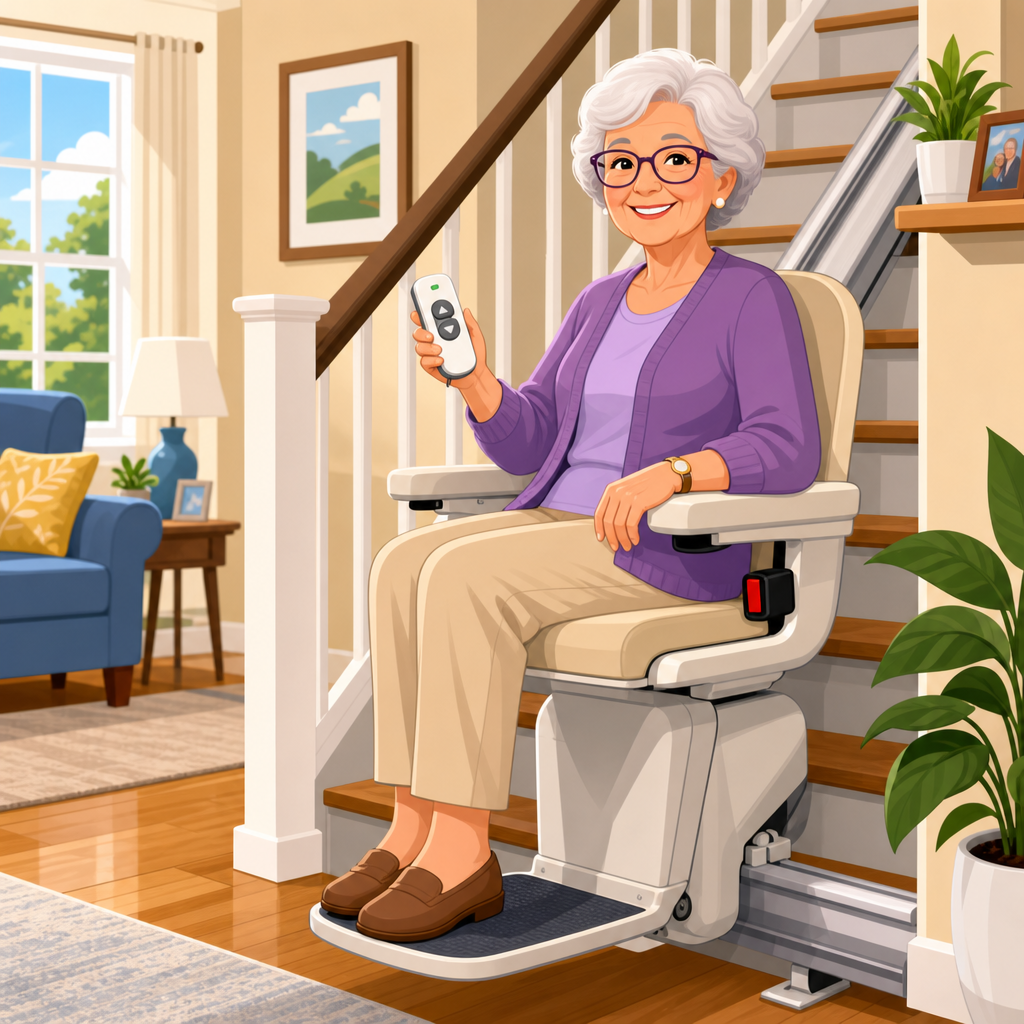
Remote control matters more than many buyers expect. Seniors with arthritis, tremor, or reduced hand strength need tactile buttons, clear labeling, and a cord length that allows the remote to rest in an easy-to-reach pocket. Wireless remotes can reduce cord clutter, but wired controls are often more dependable and harder to misplace. Simplicity usually wins. The best remotes are understandable on the first day without a manual.
Types of Lift Chairs: Two-Position, Three-Position, Infinite Position, and Zero Gravity
The first major buying decision is chair type. Two-position lift chairs recline modestly, usually to about 45 degrees, making them suitable for reading, television viewing, and short rests. They are generally the most affordable option and work well for seniors who mainly need standing assistance rather than long periods of reclined positioning. Three-position chairs recline farther, often close to a near-flat position, and are more comfortable for napping.
Infinite-position lift chairs use at least two motors so the backrest and footrest can move independently. This is a meaningful upgrade, not a marketing detail. Independent movement allows more precise posture changes, which is valuable for people with back pain, circulation issues, or those who sleep in the chair. Zero-gravity models build on that concept by positioning the legs above the heart and distributing body weight more evenly. Many users report reduced lower-back pressure and less ankle swelling after extended sitting in zero-gravity setups.
There are also heavy-duty and bariatric chair lifts designed for higher weight capacities and wider seat dimensions. These chairs typically use reinforced frames, broader armrests, and stronger motors, but they require more floor space. Some petite models, on the other hand, are intentionally shorter in seat depth and lower in overall height so smaller users do not sit with unsupported feet. Correct fit is as important as motor quality. A powerful chair that does not match the user’s body dimensions can create poor posture and unsafe transfers.
| Type | Best For | Typical Advantage | Main Tradeoff |
|---|---|---|---|
| Two-position | Budget buyers needing basic lift help | Lower cost and simple remote | Limited recline range |
| Three-position | Seniors who nap in the chair | Deeper recline for rest | Larger footprint |
| Infinite-position | Users needing customized support | Independent back and foot movement | Higher price |
| Zero-gravity | Swelling, back pain, long sitting sessions | Pressure distribution and leg elevation | May be less intuitive at first |
| Heavy-duty/bariatric | Larger users needing wider seating | Higher capacity and stability | Bulkier in small rooms |
Features That Actually Matter in Daily Use
When comparing the best chair lifts with remote controls for seniors, focus first on transfer performance, seat fit, and durability. Marketing often pushes massage, cup holders, or LED lighting, but those are secondary. The core question is whether the chair helps the user stand smoothly without pitching too abruptly or stopping too low. A good lift arc feels steady and predictable. The seat should support the thighs without pressing into the knees, and the backrest height should align with the shoulders and head.
Motor count is one of the most important technical details. Single-motor chairs move the backrest and footrest together, which is acceptable for basic users. Dual-motor and triple-motor chairs allow more tailored positioning. Premium models may add power lumbar and power headrest adjustments, especially helpful for seniors who watch television, read, or need cervical support while reclined. Battery backup is another high-value feature. During a power outage, a backup system can return the chair from a reclined position to a safer sitting or exit angle.
Upholstery affects both comfort and maintenance. Faux leather wipes clean easily and can be useful in homes with spills or incontinence concerns, but it may feel warm and less breathable. Performance fabric, microfiber, and stain-resistant polyester blends often provide better day-to-day comfort. If skin fragility is a concern, avoid rough seams and overly firm edge piping. Also check whether the chair includes removable back sections for easier delivery through narrow doors, USB charging ports for convenience, and side pockets that actually hold the remote securely.
Best Use Cases: Matching the Chair to Health, Mobility, and Room Needs
The best chair lift for one senior can be wrong for another, even at the same price point. For arthritis in knees and hips, prioritize a strong lift mechanism, medium-firm cushions, and armrests positioned for push-off support. For edema or venous insufficiency, leg elevation becomes more important, so infinite-position or zero-gravity models deserve attention. For seniors with spinal stenosis or chronic lower-back pain, adjustable lumbar and independent footrest control often improve tolerance during long sitting periods.
After surgery, safety and ease of use usually matter more than luxury features. A post-operative user may need a chair with straightforward controls, stable side arms, and a fabric that does not trap heat. For Parkinson’s disease or general deconditioning, a chair with smooth starts and stops can feel more secure than one with faster movement. For users with larger body frames, do not simply buy the highest capacity model. Check seat width, seat depth, back height, and the distance from seat to floor. A chair that is too deep makes standing harder because the user must scoot forward repeatedly.
Room layout is often overlooked. Measure wall clearance, walking paths, and whether the chair must sit on carpet or hard flooring. Wall-hugger designs can recline with less rear clearance, which helps in apartments and smaller living rooms. Also consider where the remote will rest, whether a walker can approach from the front, and whether caregivers need access from one or both sides. In real homes, these practical details determine satisfaction far more than showroom styling.
How Leading Brands and Retailers Differ
Several brands dominate the lift-chair market, and each has a recognizable approach. Pride Mobility is widely known for broad sizing options, dependable mechanisms, and availability through medical equipment dealers. Golden Technologies is frequently recommended for fit variety, comfort engineering, and upgraded positioning features such as MaxiComfort-style seating. Mega Motion often appeals to value-focused buyers who want straightforward functionality at a more accessible price. Ashley, Mcombo, and other furniture-oriented brands sell lift recliners that may look more residential, though feature depth and service support can vary significantly.
Where you buy matters almost as much as what you buy. Medical supply dealers may offer setup, sizing guidance, and warranty coordination, which is especially useful for older buyers or family caregivers. Big-box online marketplaces can offer lower pricing and faster delivery, but assembly expectations, return freight, and post-sale support may be less favorable. Manufacturer warranties typically cover frame, lift mechanism, and electronics for different lengths of time, so read the terms closely. Labor is often excluded after an initial period, and that can become expensive if in-home service is needed.
I generally advise comparing dealer-backed brands against direct-to-consumer chairs in three areas: fit options, service network, and replacement part availability. A cheaper chair is not cheaper if a failed hand control takes weeks to replace. Reputable brands maintain better parts pipelines and clearer model documentation, which becomes important years after purchase.
Buying Checklist, Safety Guidance, and Common Mistakes
Before buying, measure the intended user in the seated position. Note hip width, lower leg length, shoulder height, and how easily the person can reach the floor. Then compare those measurements with the manufacturer’s seat width, seat depth, top-of-back height, and seat-to-floor height. If the user’s feet do not rest flat, transfers become less stable. If the seat is too wide, lateral support decreases. If the chair is too narrow, pressure points develop quickly.
Safety starts with placement and operation. Keep the chair on a level surface, avoid extension cords when possible, and secure the power cable away from foot traffic. Teach the user to stop the mechanism before attempting to exit. Pets and grandchildren are a real hazard around moving footrests and lift frames, so households should treat the chair like any powered mobility device. If cognition is impaired, choose the simplest remote available and consider caregiver supervision during the adjustment period.
The most common mistakes are buying solely on price, ignoring weight capacity margins, and overvaluing massage and heat. Heat can be pleasant, but it does not correct poor seat fit. Massage motors in lower-priced chairs are often basic vibration units, not therapeutic massage systems. Another frequent error is underestimating doorway and hallway measurements before delivery. A final mistake is skipping a realistic trial of the remote. If the user cannot operate the chair confidently, the best specifications on paper will not matter.
The best chair lifts with remote controls for seniors improve independence by making one of the hardest daily movements safer, smoother, and less painful. The right model supports standing, encourages comfortable repositioning, and reduces the physical burden on both the senior and the caregiver. As this hub has shown, the strongest buying decisions come from matching chair type, motor configuration, seat dimensions, and upholstery to the user’s real needs rather than chasing the longest feature list.
For most buyers, the decision can be simplified. Choose a two- or three-position chair for basic transfer help and occasional rest. Move to an infinite-position or zero-gravity model when posture control, swelling reduction, or all-day sitting comfort matters more. Prioritize fit, remote simplicity, battery backup, and service support before extras like lighting or vibration. Stick with brands and dealers that provide clear measurements, replacement parts, and transparent warranty terms.
If you are building out your research on the best chair lifts for seniors, use this page as your starting point and then compare individual models based on body size, health condition, and room setup. A well-chosen lift chair is not just another recliner. It is a practical mobility investment that can extend comfort, confidence, and independence at home. Make your shortlist, measure carefully, and move on to detailed product reviews before you buy.
Frequently Asked Questions
What is a chair lift with a remote control, and how does it help seniors?
A chair lift with a remote control usually refers to a power lift recliner or seat-lift chair that uses an electric motor to change positions at the push of a button. Unlike a standard recliner, these chairs are specifically designed to help a person move from a seated position to a more upright, near-standing position. The remote allows the user to raise or lower the chair gradually, recline for comfort, and in many models, stop at multiple positions that feel safest and most supportive.
For seniors, this kind of assistance can make daily living much easier. Standing up from a low seat often puts extra pressure on the knees, hips, and lower back, especially for people with arthritis, weakness, balance concerns, or recovery needs after surgery. A lift chair reduces that physical strain by doing much of the work mechanically. It can also support greater independence, since many older adults are able to sit down and get back up without needing another person to assist them every time. That combination of comfort, safety, and self-sufficiency is the main reason these chairs are so valuable in senior-friendly homes.
What features should seniors and caregivers look for when choosing the best remote-controlled lift chair?
The most important feature is smooth, reliable lift performance that feels stable throughout the full range of motion. A good chair should raise the user gently rather than jolt them forward, and it should recline and return to seated position without hesitation. Remote design matters more than many buyers expect. Seniors often do best with large, clearly labeled buttons, simple up-and-down controls, and a remote that is easy to grip and store. Wired remotes are common and can be very dependable, while some models offer wireless options for added flexibility.
Fit is just as important as function. A lift chair should match the user’s height and weight so the seat depth, width, and back height support proper posture. If the chair is too deep, the user may struggle to sit comfortably with feet flat on the floor. If it is too small, it may feel restrictive and less supportive. Buyers should also compare position types. Two-position chairs are more basic, three-position models offer more recline, and infinite-position or dual-motor chairs allow the backrest and footrest to move independently for a more customized experience.
Additional features can make a big difference in long-term satisfaction. Many seniors appreciate heat and massage functions, side pockets for storing the remote, backup battery support during power outages, and fabrics that are easy to clean. For users with swelling, circulation concerns, or long sitting periods, extended recline options may be especially beneficial. Caregivers may also want to look at transfer height, seat firmness, warranty coverage, motor reputation, and whether the chair can fit through doorways during delivery. The best choice is not just the most expensive model, but the one that best matches the user’s physical needs, comfort preferences, and daily routine.
Are lift chairs safe for elderly users, and what precautions should be taken?
Yes, lift chairs are generally safe for elderly users when they are properly selected, used as directed, and placed in an appropriate location. In fact, for many seniors, a quality lift chair is safer than repeatedly trying to push up from a low sofa or a soft recliner that does not offer support. The lifting motion can reduce the chance of overexertion and make sit-to-stand transitions more controlled. Many modern models are built with sturdy frames, stable bases, and easy-to-operate remotes that help users move gradually rather than all at once.
That said, safety depends on correct use. The chair should be placed on a level surface with enough clearance behind and in front so it can fully recline and lift without hitting walls or furniture. Cords should be kept out of walkways to reduce tripping hazards. Seniors should also be encouraged to keep both feet positioned properly when the chair is moving and to avoid leaning too far to one side during lift operation. If the user has significant balance issues, cognitive impairment, or severe weakness, it may be wise for a caregiver or clinician to help evaluate whether a specific chair model is suitable.
It is also important to understand that a lift chair is an aid, not a substitute for medical supervision when mobility is seriously compromised. People with recent surgeries, advanced neurological conditions, or major fall risk should ask a physician or therapist whether a particular seat height, recline angle, or transfer setup is appropriate. Choosing the right size chair, following the manufacturer’s instructions, and testing the controls before regular use can go a long way toward making the chair both safe and effective.
What is the difference between a standard recliner and a power lift recliner for seniors?
A standard recliner is mainly built for relaxation. It may lean back manually with a lever or body pressure, and some power recliners use a motor to adjust comfort positions. However, a standard recliner typically does not raise the seat base forward to help the user stand up. A power lift recliner, by contrast, is designed specifically with mobility support in mind. It not only reclines, but also tilts and lifts the seated user toward a standing position using a powered mechanism controlled by a remote.
That difference is especially important for seniors with reduced leg strength, painful joints, or limited balance. With a standard recliner, getting out of the chair can still require a strong push from the arms and legs. In a lift recliner, the chair assists the transition, which can reduce strain and improve confidence. Many lift chairs are also designed with senior-focused features such as firmer seat support, easier-to-reach controls, and movement patterns intended to make transfers feel more stable.
Another key difference is purpose. Standard recliners are usually selected based on style and lounging comfort, while lift recliners should be chosen based on physical fit, transfer support, motor quality, and ease of operation. For an older adult who simply wants a comfortable chair, a standard recliner may be enough. But for someone who struggles to sit down or stand up safely, a power lift recliner is often the better and more practical solution.
How much should you expect to spend on the best chair lifts with remote controls for seniors?
Prices vary widely depending on chair size, motor type, upholstery, brand reputation, and added comfort features. In general, entry-level lift chairs with basic remote controls and fewer positioning options tend to be the most affordable, while premium models with dual motors, infinite positioning, heat, massage, higher-end materials, and extended warranties cost more. Buyers should expect the price to reflect not just appearance, but also the quality of the lifting mechanism, frame durability, cushioning, and overall support.
When comparing cost, it helps to look beyond the upfront purchase price. A lower-cost chair may be appealing initially, but if it lacks the right fit, has a noisy or weak motor, or wears out quickly, it may not be a good value. A slightly more expensive chair that fits the user well and performs reliably every day can be the smarter investment. Delivery, in-home setup, and service plans may also add to the total, so those details should be reviewed before ordering.
Some buyers may also wonder whether insurance or Medicare will help cover the expense. Coverage rules can be limited and often depend on medical necessity, documentation, and whether part of the lift mechanism qualifies rather than the entire chair. Because policies vary, it is best to check directly with the insurance provider and the equipment supplier before making assumptions. The most cost-effective purchase is usually the one that combines safe mobility support, long-term comfort, and dependable operation for the senior who will actually use it every day.