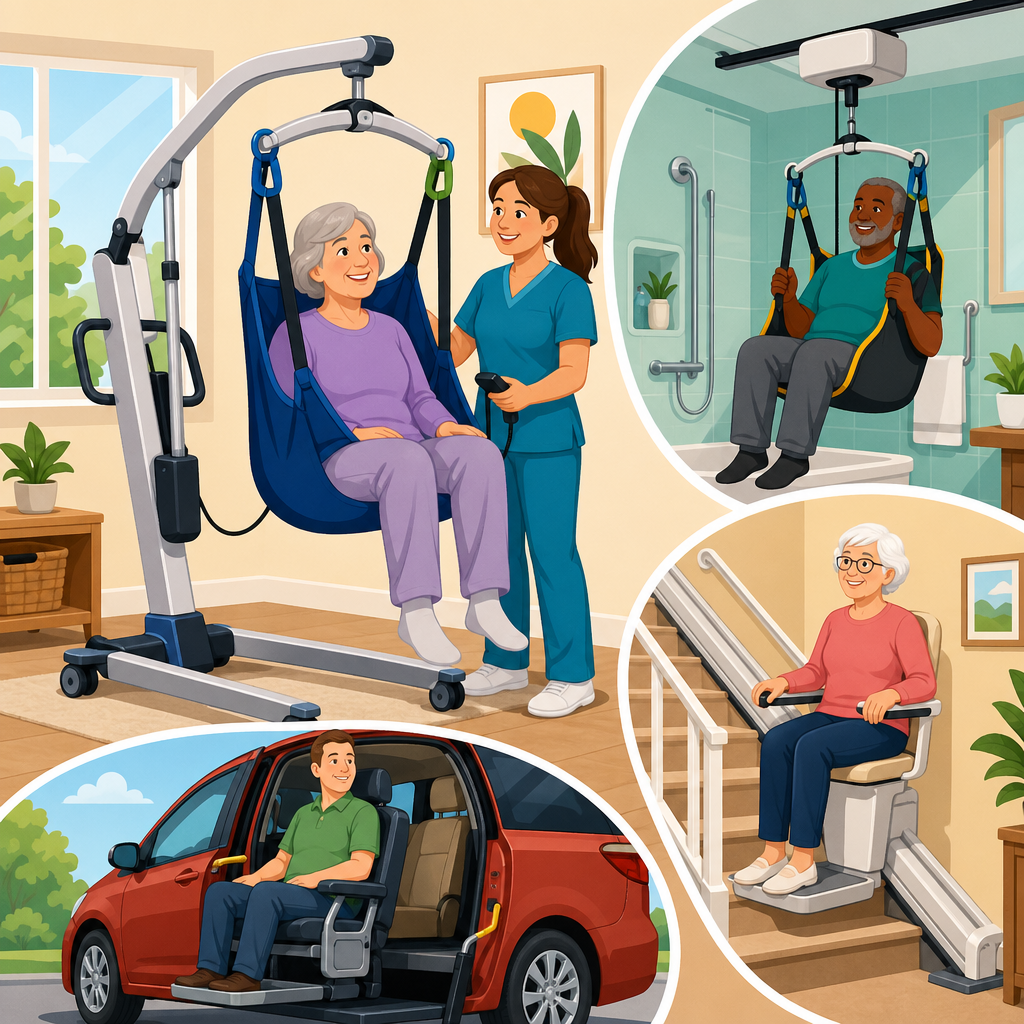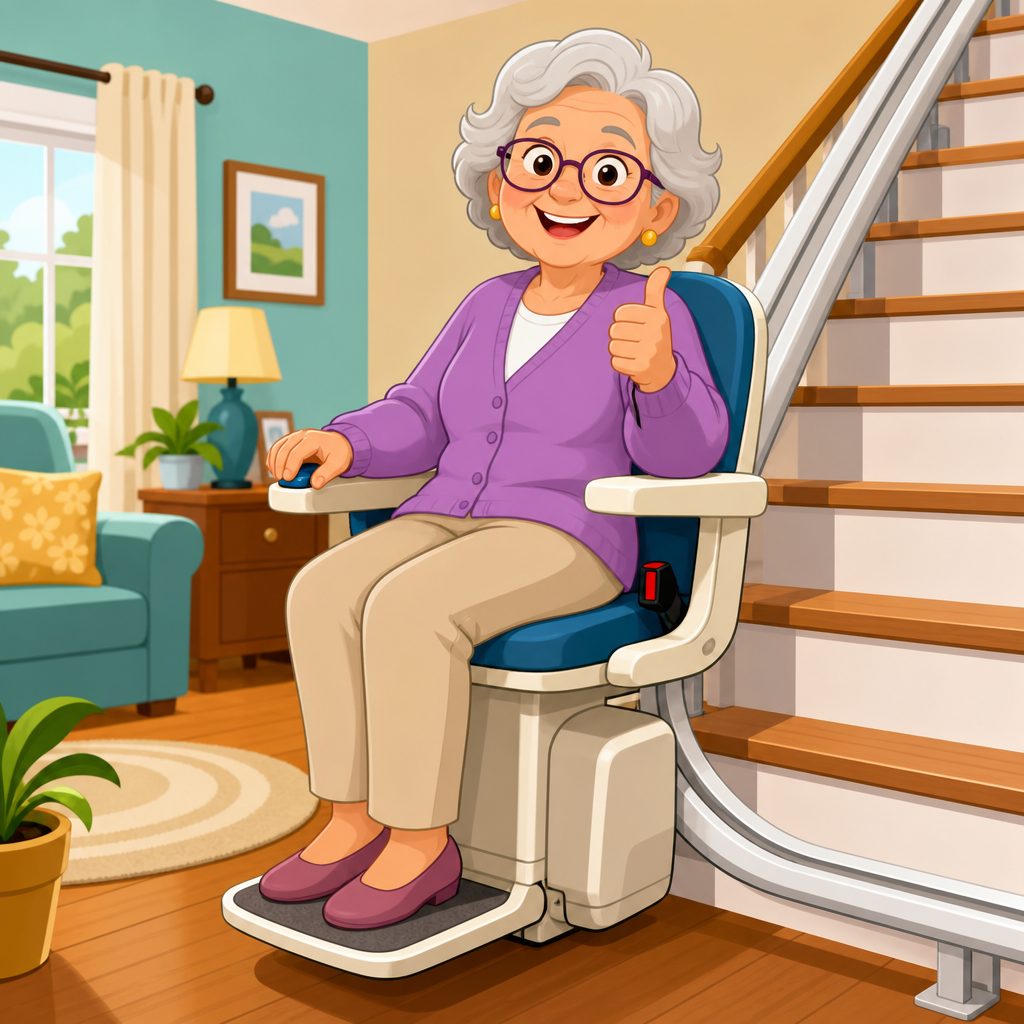
Easy-to-use chair lifts for technophobes solve a practical problem: how to help older adults move safely up and down stairs without forcing them to learn complicated controls, apps, or maintenance routines. In the mobility industry, “chair lift” usually means a motorized stairlift with a seat that travels along a rail fixed to the staircase, while “lift chair” often refers to a reclining armchair that tilts forward to help someone stand. For seniors and family caregivers, that distinction matters because the buying process, installation needs, and day-to-day usability are completely different. I have helped families compare both products, and the most common mistake is shopping by price alone instead of matching the device to the user’s strength, balance, cognition, and home layout.
The best chair lifts for seniors are not necessarily the most advanced models. They are the units that reduce fall risk, feel intuitive on the first day, and continue working reliably with minimal intervention. That is especially important for technophobes: people who dislike digital interfaces, are anxious about pressing the wrong button, or simply want equipment that behaves the same way every time. According to the Centers for Disease Control and Prevention, falls are a leading cause of injury among older adults, and stairs are a frequent site of serious incidents. A well-chosen stairlift can remove a major household hazard, preserve access to bedrooms and bathrooms, and delay or avoid a disruptive move to a single-level home.
This guide is the hub for the best chair lifts for seniors, with a focus on simple operation, proven safety features, and practical buying advice. It explains what makes a chair lift easy to use, which specifications matter most, how straight and curved models differ, what installation and ownership really cost, and which brands have earned trust in the market. If you are comparing options for yourself, a parent, or a spouse, the goal is straightforward: identify a chair lift that feels familiar, dependable, and safe from the first ride.
What makes a chair lift easy for seniors to use?
An easy-to-use chair lift has predictable controls, comfortable seating, and clear safety behavior. In practice, the most senior-friendly stairlifts rely on a simple armrest toggle or rocker switch that requires only a gentle push in the direction of travel. The user sits, lowers the armrests, places feet on the footrest, fastens the seat belt, and holds the control until the ride ends. That sequence is easier than systems that depend on touchscreens, mobile apps, voice control, or layered menus. For technophobes, fewer choices mean less hesitation and fewer mistakes.
The best chair lifts for seniors also reduce physical effort before and after the ride. A swivel seat at the top landing is essential because it turns the seat away from the stairs, letting the user stand onto the landing rather than twist toward open steps. Most quality models lock in the swivel position for stability. Fold-up seats, arms, and footrests help keep the staircase usable for others. Some premium units include powered swivel and powered footrest functions, but simpler manual versions are often better for users who want fewer parts to manage. In my experience, a sturdy manual swivel with an obvious release lever is often easier to trust than an automated movement that feels unfamiliar.
Ride quality matters more than shoppers expect. Seniors with arthritis, back pain, neuropathy, or vestibular sensitivity notice abrupt starts and stops immediately. Look for soft-start and soft-stop technology, a padded seat, and a footrest large enough to support both feet securely. A chair lift can be technically safe and still be rejected by the user if it feels jerky, narrow, or unstable. The most successful installations are the ones people are willing to use every day without coaching.
Best chair lift types for different homes and mobility needs
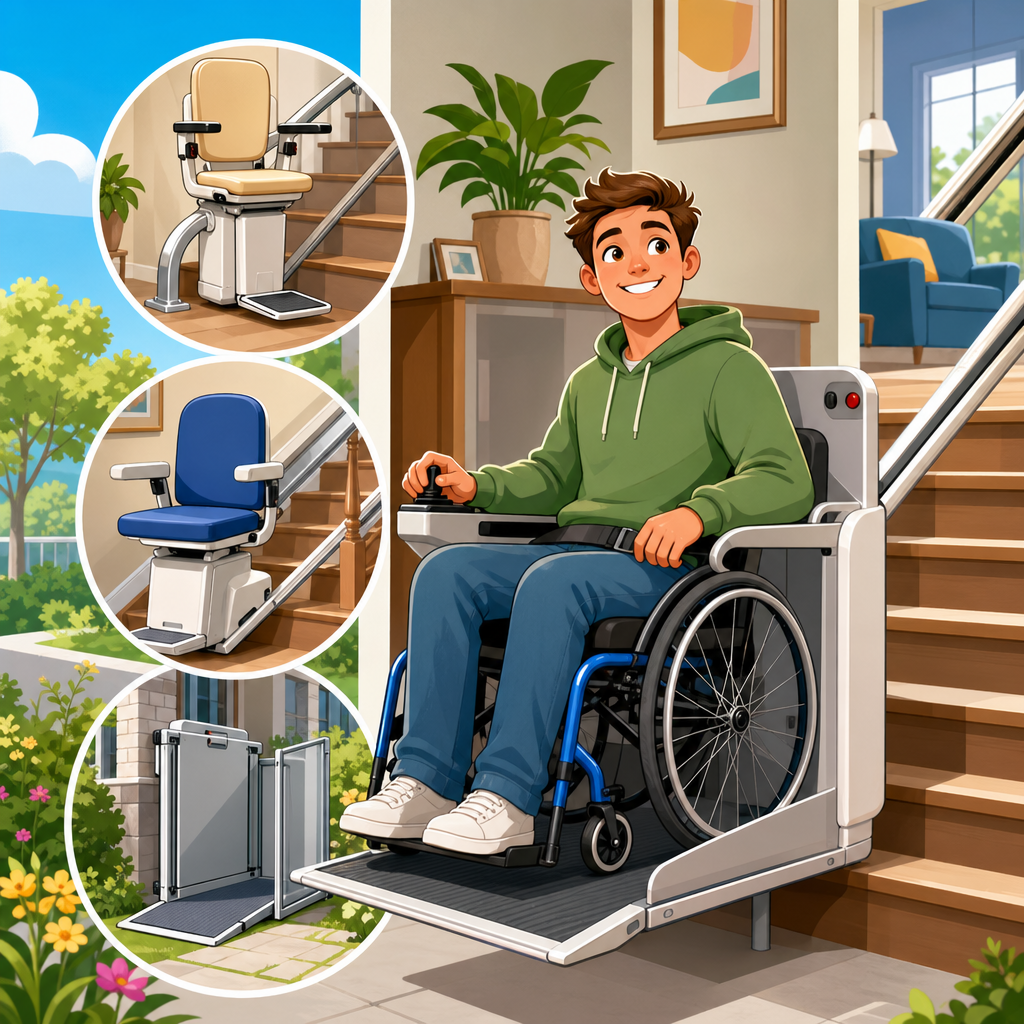
Most stairlifts fall into two categories: straight and curved. Straight stairlifts run on a direct staircase with no turns, intermediate landings, or changes in angle. They are the most common, fastest to install, and usually the most affordable. Because rails can often be cut to size from stock materials, installation may take only a few hours once measurements are confirmed. For a senior with a standard staircase and predictable needs, a straight model is usually the first option to consider.
Curved stairlifts are built for staircases with bends, spirals, split landings, or unusual geometry. Their rails are custom fabricated from detailed measurements, sometimes taken with photo mapping or digital surveying tools. That custom work increases cost and lead time, but it also allows the chair to park out of the way and follow the home’s exact layout. In period homes, townhouses, and houses with decorative stairs, a curved model may be the only practical solution. If a family tries to force a straight-lift budget onto a curved staircase, they waste time; there is no safe shortcut around the geometry.
Mobility needs should shape the choice just as much as staircase shape. A compact perch-style stairlift can help someone who has difficulty bending the knees fully and prefers a semi-standing position, but it is not ideal for frail users with poor balance. Heavy-duty models offer higher weight capacities, wider seats, and reinforced drives for larger users; they also need enough staircase width to maintain safe clearance. Outdoor stairlifts use weather-resistant materials, sealed components, and covers to protect against moisture and temperature swings. The best chair lifts for seniors are the ones matched closely to body size, transfer ability, and the actual environment in which they will operate.
Key features to compare before buying
When families ask me how to compare stairlifts quickly, I focus on six factors: control simplicity, seat comfort, safety sensors, battery backup, fit for the staircase, and after-sales service. Safety sensors are nonnegotiable. Reputable stairlifts have obstruction sensors on the footrest and carriage that stop the lift if it meets an object on the stairs. Battery-powered operation is equally important. Most modern units charge from household power but run on onboard batteries, so the lift still works during a power outage for multiple trips, depending on battery condition and model.
Weight capacity and seat dimensions deserve close attention. Standard stairlifts commonly support around 250 to 350 pounds, while heavy-duty versions can exceed that. Buyers should not assume “higher capacity” automatically means better; larger seats may be harder for a smaller person to position in, and oversized models may reduce stair clearance. Noise level is another underappreciated factor. Rack-and-pinion systems from established brands are usually reliable, but drive quality, rail fit, and installation precision determine whether the ride sounds smooth or mechanical. A nervous user may stop using a lift that seems noisy even if it is operating normally.
Brand reputation matters because service infrastructure matters. Bruno, Stannah, Harmar, Acorn, Handicare, Savaria, and AmeriGlide are among the names shoppers encounter most often in North America and Europe, though dealer support varies by region. Some brands excel in custom curved systems, others in straight-lift value, and others in dealer training. Ask not just who makes the lift, but who installs and services it locally, how quickly parts are available, and what the warranty covers on the motor, gearbox, rail, electronics, and battery. A stairlift is not a commodity product; local support can matter more than a small difference in upfront price.
Chair lift comparison table for seniors
The table below summarizes the main buying categories most families evaluate first. These are typical market patterns, not fixed rules, because dimensions, labor rates, and dealer packages vary by location.
| Category | Best for | Typical installed cost | Main advantage | Main limitation |
|---|---|---|---|---|
| Straight stairlift | Standard single-flight stairs | $2,500-$5,500 | Fast installation and lower price | Will not fit turns or landings |
| Curved stairlift | Stairs with bends or intermediate landings | $10,000-$20,000+ | Custom fit for complex layouts | Higher cost and longer lead time |
| Heavy-duty stairlift | Larger users needing wider seating | $4,500-$9,000 | Higher capacity and sturdier build | Needs more staircase width |
| Outdoor stairlift | Porch, garage, or garden access | $4,000-$8,500 | Weather-resistant construction | Exposure still increases wear over time |
| Refurbished straight stairlift | Budget-focused buyers with simple stairs | $2,000-$4,000 | Lower entry cost | Shorter warranty and limited customization |
Cost, installation, and ownership reality
How much does a chair lift cost for seniors? For straight stairlifts, installed pricing often starts around the mid-two-thousand-dollar range and climbs with power options, higher capacities, and premium seats. Curved systems routinely move into five figures because every rail is custom designed and manufactured. Outdoor lifts, zero-intrusion parking options, and unusual transfer points add cost. If a quote seems dramatically lower than competing bids, check what is excluded: electrical work, rail overruns, service calls, removal of old units, or warranty labor are common gaps.
Installation is less invasive than many buyers expect because the rail typically mounts to stair treads, not the wall. That means most homes do not need major remodeling. A competent installer measures staircase width, tread depth, landing clearance, and any protrusions such as radiators, trim, or door swings. The installer also evaluates where the user will get on and off, whether there is enough room to swivel safely, and whether a folding rail is needed to prevent the track from blocking a doorway at the bottom. In small foyers, that last detail can determine whether a stairlift is practical.
Ownership costs include battery replacement every few years, annual service if recommended by the dealer, and occasional repairs from wear. The batteries are usually sealed lead-acid units similar in concept to what you find in backup power devices, though exact specifications vary. They are consumables, not defects. Medicare generally does not cover stairlifts because they are considered home modifications rather than durable medical equipment in most situations, but Medicaid waiver programs, Veterans Affairs benefits, state assistive technology programs, nonprofit grants, and long-term care insurance may help in some cases. Used and rental stairlifts can lower the barrier for short-term needs, especially after surgery, but they are usually practical only for straight staircases.
How to choose the best chair lift brand and model
The best chair lift brand for one household may be the wrong choice for another, so the right process matters more than the logo on the seatback. Start with an in-home assessment. The salesperson or accessibility specialist should watch the intended user approach the stairs, sit, stand, pivot, and explain any pain points. If they only measure the staircase and ignore the person, the evaluation is incomplete. I have seen families buy a technically compatible stairlift that still failed because the rider could not manage the seat height, the armrest width, or the swivel motion.
Ask direct questions. Is the control usable with arthritis? Can the user operate the seat belt one-handed? Are call/send remotes simple enough for another household member? What happens during a power outage? How many service technicians cover your area? Is there a local parts inventory? Can the lift be removed and reinstalled if the user moves? These answers reveal whether a company understands real-life use or is simply pushing inventory. Request a demonstration ride if possible, especially for a technophobe who may need to feel how straightforward the lift is.
For families building out a broader safety plan, this hub should connect naturally with related topics such as stairlift installation checklists, stairlift maintenance, heavy-duty stairlifts, outdoor stairlifts, and alternatives like home elevators or first-floor bedroom conversions. Those deeper comparisons matter because a stairlift is highly effective for stair travel, but it does not solve every mobility problem. If transfers are becoming unsafe, if cognition is declining rapidly, or if a wheelchair user cannot transfer independently, the best chair lifts for seniors may no longer be the best solution. Matching the device to the person is the central rule.
Easy-to-use chair lifts for technophobes succeed when they remove complexity instead of adding it. The strongest options share the same core traits: straightforward controls, stable seating, reliable battery-powered operation, obstruction sensors, and local service from an experienced dealer. Straight stairlifts usually deliver the best value on standard stairs, while curved models justify their higher price by solving layouts that no off-the-shelf system can handle. Comfort, transfer safety, and confidence matter as much as specifications on a brochure, because a lift only protects someone when they are willing to use it consistently.
If you are shopping for the best chair lifts for seniors, focus first on the rider’s daily experience. Measure the staircase correctly, confirm weight capacity and seat fit, test the swivel and controls, and review warranty and service terms line by line. Do not be distracted by unnecessary technology if the user wants simplicity. A dependable, intuitive stairlift can reduce falls, preserve independence, and make the entire home usable again. Use this guide as your starting point, then compare model-specific reviews and in-home quotes to find the safest, simplest match for your household today.
Frequently Asked Questions
What is the difference between a chair lift and a lift chair?
A chair lift usually refers to a motorized stairlift: a seat that rides along a rail mounted to the staircase to carry someone safely up and down the stairs. A lift chair, by contrast, is typically a reclining armchair that gently tilts forward to help a person stand up or sit down more easily. This difference matters because many families search for one term when they really need the other. If the goal is to make a staircase usable without climbing steps, a stairlift is the relevant solution. If the goal is to make it easier to get out of a living room chair, a lift chair may be the better fit. For technophobes, getting the terminology right is especially important because it avoids confusion during shopping, installation, and training, and helps families focus on the device that solves the actual mobility problem.
Are stairlifts really easy to use for older adults who dislike technology?
Yes, many modern stairlifts are specifically designed to be simple, predictable, and low-stress to operate. For someone who does not want touchscreens, apps, passwords, or complicated settings, the best stairlifts usually rely on straightforward controls such as a clearly marked toggle, rocker switch, or large-button remote. In most cases, the user sits down, fastens the seat belt, presses a single control in the direction they want to go, and rides smoothly to the top or bottom of the stairs. That is the entire routine. Good models also include practical features that support ease of use without adding complexity, such as swivel seats for easier exits, folding footrests, obstruction sensors, and battery backup in case of a power outage. For technophobic users, the ideal system is one that works the same way every time and does not require software updates, smartphone pairing, or ongoing digital management. A reputable dealer can also demonstrate the lift in person and make sure the user feels comfortable before installation is complete.
What features should technophobes and caregivers look for in an easy-to-use chair lift?
The best easy-to-use chair lifts focus on clarity, safety, and minimal learning. Start with basic controls that are intuitive at a glance, such as a simple armrest switch or two-button call/send remote. Avoid models that depend heavily on mobile apps or advanced programming if the user is likely to find those stressful. Next, look for a comfortable, stable seat with armrests and a seat belt that is easy to latch. A swivel seat at the top landing is especially valuable because it allows the rider to turn away from the staircase before standing, which can reduce fall risk. Battery backup is another important feature because it lets the stairlift operate during a household power outage. Folding seat, arm, and footrest components are useful when multiple people use the staircase, but they should be lightweight and easy to manage. Caregivers should also ask about maintenance requirements, service response times, and whether the dealer provides hands-on instruction. In many cases, the simplest model from a reliable brand is a better choice than a feature-heavy unit that creates anxiety or confusion.
Is installation and maintenance complicated for someone who wants a low-hassle solution?
In most cases, no. Stairlifts are generally installed on the staircase itself, not directly into the wall, which means installation is often more straightforward than people expect. A professional installer measures the stairs, fits the rail, mounts the chair, tests the system, and shows the household how to use it. For straight staircases, installation can often be completed relatively quickly. Curved staircases are more customized, so they usually take more planning, but the day-to-day operation can still be very simple once installed. Maintenance is typically modest rather than burdensome. Most stairlifts need periodic inspection, cleaning, and routine servicing according to the manufacturer’s recommendations. For technophobes, this is good news: there is usually no need to manage software, navigate menus, or troubleshoot digital systems. The most user-friendly approach is to choose a provider that offers dependable local service, clear maintenance schedules, and responsive support. That way, the older adult can focus on using the lift safely while the technical details remain in the hands of trained professionals.
How can families choose the right stairlift for a senior who is nervous about using equipment?
Start by focusing on the person’s comfort level, physical needs, and daily routine rather than on flashy features. A senior who is nervous about equipment often benefits most from a stairlift that feels sturdy, has very simple controls, and comes with patient instruction. It helps to schedule an in-home assessment with a reputable stairlift company so the family can ask practical questions: How easy is the seat to get on and off? Are the controls large and clear? Can the chair be parked away from the main living area? What happens during a power outage? How quickly can service be scheduled if something goes wrong? Families should also consider body size, transfer ability, balance, and whether the user will need help fastening the seat belt or folding parts of the chair. A live demonstration can make a major difference because fear often decreases once the person sees how calm and straightforward the ride actually is. Choosing a dealer with strong training and after-sales support is just as important as choosing the equipment itself, especially when the goal is to provide safe stair access without overwhelming someone who prefers simple, familiar tools.