Choosing among the best chair lifts for seniors starts with understanding that the right model is not simply the newest or most expensive one, but the one that matches a person’s staircase, mobility limits, home layout, and long-term safety needs. In daily accessibility planning, I have seen families focus first on brand names, then discover that rail design, seat dimensions, and service coverage matter far more than glossy brochures. A chair lift, often called a stair lift, is a motorized seat that travels along a rail fixed to the stairs, allowing a user to move between floors without climbing steps. For older adults managing arthritis, balance disorders, reduced leg strength, or recovery after surgery, it can be the difference between aging comfortably at home and restricting life to one level.
This guide compares top chair lift models for seniors in the way buyers actually need: by installation type, safety, comfort, reliability, and total ownership cost. The market includes straight stair lifts for standard staircases, curved models for turns or landings, outdoor lifts for porch or garden access, and heavy-duty units with wider seats and higher weight capacities. Key terms matter. Track overruns extend the rail beyond the first or last step for safer transfers. Swivel seats reduce twisting at landings. Battery backup keeps the lift running during a power outage. Weight capacity, folded width, and call-send controls influence day-to-day usability more than many shoppers realize. Because this article serves as a buying hub, it lays out the main options clearly, so readers can compare models now and then move deeper into detailed brand and installation articles with confidence.
What to evaluate before comparing chair lift models
The best chair lift for a senior is the one that fits the staircase and the user at the same time. I always start with five practical checks: staircase type, user transfer ability, seat comfort, safety features, and after-sales support. Straight staircases are the simplest and least expensive because they use standardized rails. Curved staircases require custom-bent rails measured precisely to the home, which raises both lead time and cost. Narrow staircases need special attention to folded width, armrest shape, and whether the footrest leaves enough walking room for others in the house.
Transfer ability is equally important. Some seniors can stand and pivot confidently; others need a powered swivel seat, a perch seat, or a higher seat base that makes standing easier. If the user has hip stiffness, poor trunk control, or uses a walker, seat height and armrest position become critical. I have seen otherwise strong products fail in real homes because the seat depth was too long for a shorter user or because the footrest sat too high for limited knee flexion. Comfort is not cosmetic here; it directly affects safe boarding and dismounting.
Safety features should be nonnegotiable. Look for seat belts, obstruction sensors on the carriage and footrest, lockable controls, battery operation, and smooth start-stop programming to avoid jolting. The recognized benchmark in North America is ASME A18.1, the safety standard covering platform lifts and stairway chairlifts. Reputable manufacturers design around it and trained dealers install to those requirements. Finally, support matters. Chair lifts are electromechanical devices that need maintenance, battery replacement, and occasional service calls. A strong dealer network and clear warranty often matter more than a small difference in sticker price.
Top straight stair lift models for seniors
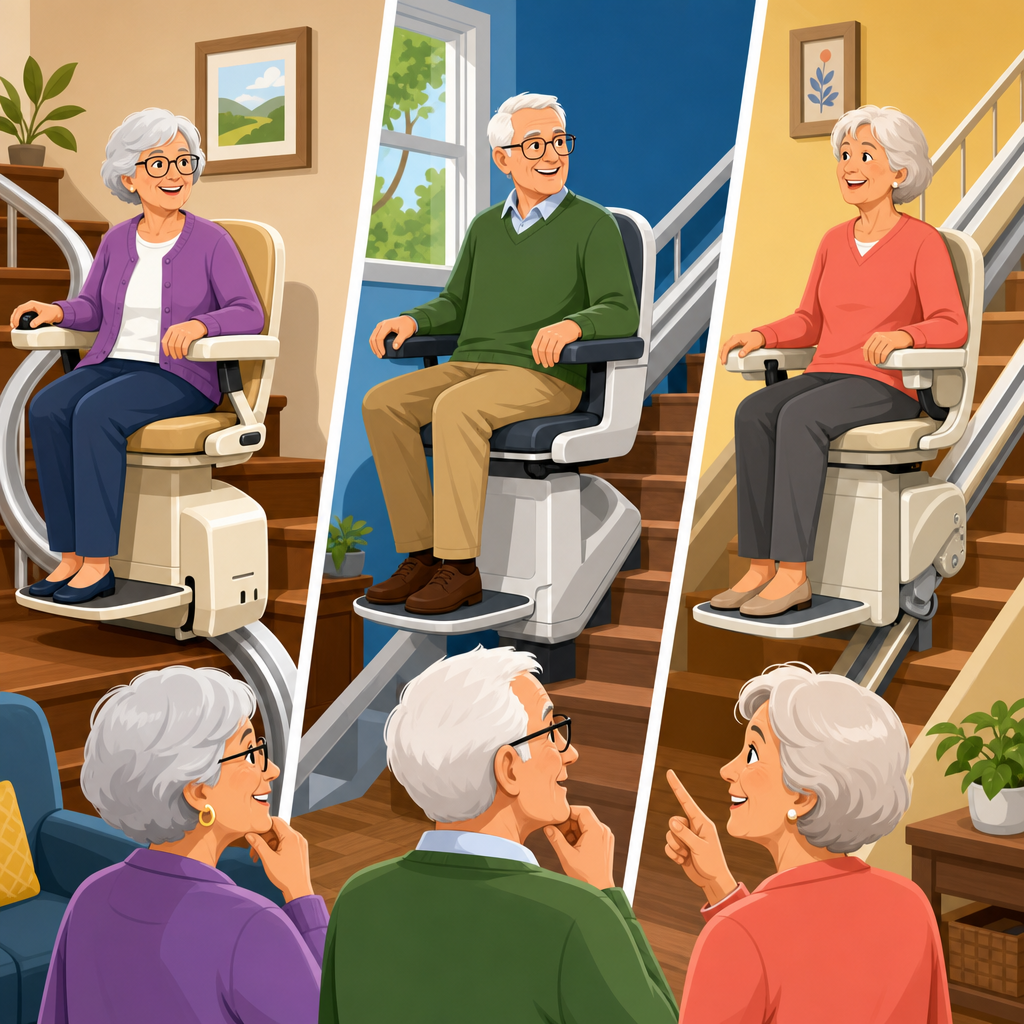
Straight models dominate the residential market because most homes have at least one uninterrupted staircase. Among the strongest options, Bruno Elan consistently stands out for compact design and simple operation. Its narrow folded profile suits tighter stairways, and Bruno’s dealer network is one of the better service advantages in the United States. For a user who wants dependable travel without premium pricing, Elan is often the practical recommendation. It is not the highest-capacity lift, but for average-size users on a standard staircase, it covers the essentials well.
Bruno Elite is the step-up model for seniors who want a sturdier feel, larger seat, and higher weight rating. In homes where the user is tall, broad-shouldered, or simply wants more seat room, the Elite usually feels less restrictive than entry-level units. Handicare 1100 is another standout straight lift, especially for households concerned about grease and maintenance. It uses a friction-drive system rather than a traditional rack-and-pinion setup, which reduces the oily rail appearance some homeowners dislike. Its slim rail also works well in narrow spaces.
Stannah’s Siena and Sadler models serve different user needs. The Siena fits many standard users comfortably and has polished ride quality. The Sadler is more specialized, with a perch-style seat designed for people who have trouble bending their knees fully or sitting from a low position. Harmar’s Pinnacle line is known for efficient battery usage and a relatively compact footprint. In practical comparisons, straight lifts differ less in raw travel function than in seat ergonomics, folded width, rail appearance, and service quality. That is why an in-home assessment matters: two lifts with similar brochures can feel very different when a senior actually transfers onto the seat.
Best curved and custom chair lift models
Curved stair lifts are the premium end of the category because every rail is tailored to the staircase. For homes with turns, intermediate landings, spiral sections, or split-level layouts, a custom system is the only realistic option. Stannah is widely respected here because its curved installations are refined, quiet, and supported by strong engineering. Bruno Elite Curved is another top-tier choice, particularly for buyers who value heavy-duty build quality and a broad U.S. support base. These lifts are designed after detailed staircase measurements, often using digital photo measurement tools or 3D mapping systems to ensure the rail fits exactly.
Handicare’s Freecurve is notable for flexibility on complex stair geometry. It can handle tight bends and variable seat positions that help preserve hallway space at the top or bottom landing. Access BDD, now commonly referenced under larger mobility ownership groups in some markets, has also long been associated with sophisticated custom rail production. The defining question for curved lifts is not which brochure sounds best; it is which model solves the home’s exact geometry while allowing a safe transfer zone at both ends. In several homes I have reviewed, the winning quote was not the cheapest one but the one that positioned parking and overrun sections intelligently so the user avoided a risky landing edge.
Buyers should expect longer lead times and higher prices for curved models because the rail is fabricated to order. They should also confirm what happens if home renovations alter the staircase later; custom rails are not nearly as transferable as straight rails. Still, for seniors determined to remain in a multilevel home, a properly specified curved chair lift can restore full access with less disruption than relocating a bedroom or installing a residential elevator.
Outdoor and heavy-duty chair lift options
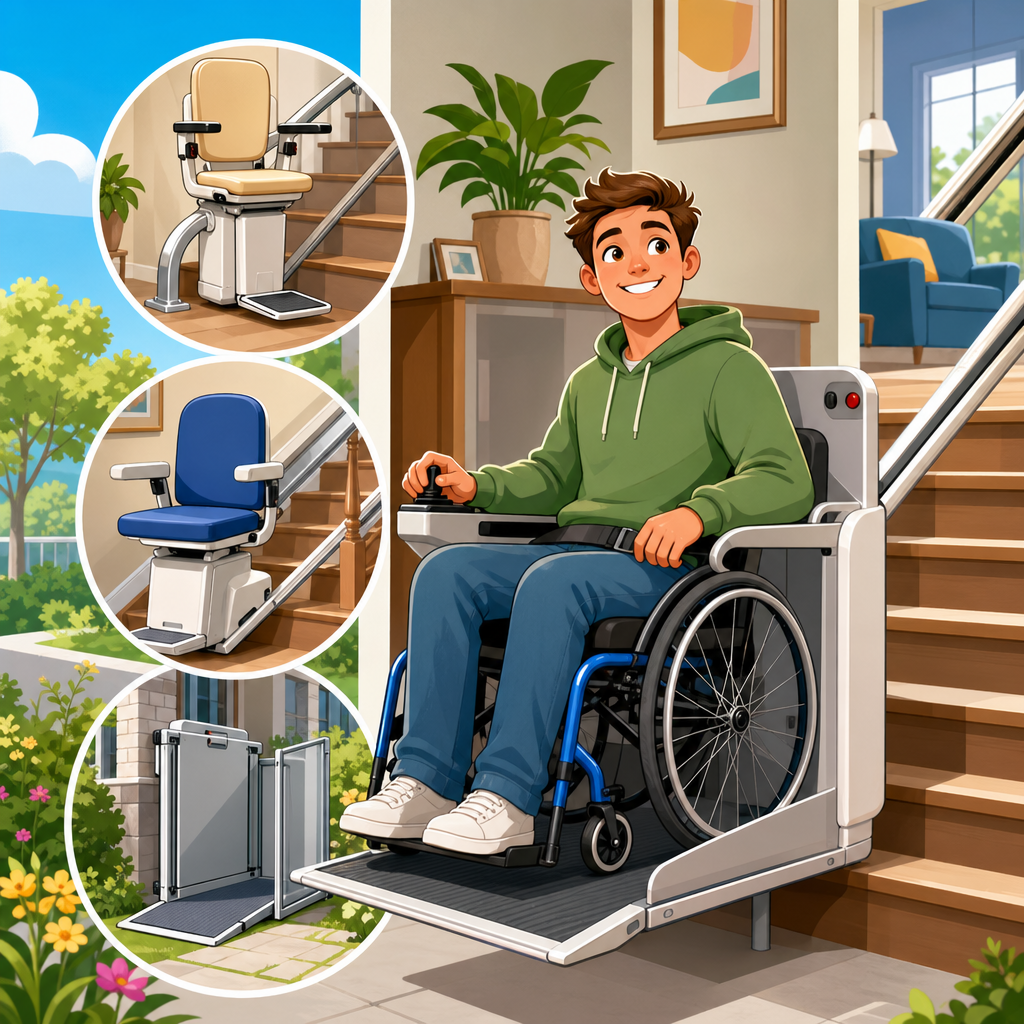
Outdoor chair lifts solve a different problem: access to front steps, garage entries, decks, and garden paths. Weather resistance is the key differentiator. Bruno Outdoor Elite is one of the most recognized options because it uses marine-grade vinyl, a protective cover, and components designed for rain and temperature swings. Harmar also offers outdoor-capable models that perform well when installed under at least partial shelter. In coastal or freeze-thaw climates, material quality matters more than buyers assume. Corrosion resistance, sealed controls, and dealer guidance on winter care directly affect service life.
Heavy-duty lifts deserve special attention because many seniors need more than average weight capacity, and comfort often improves with a wider chassis. Bruno Elite and some Savaria configurations are common recommendations when capacities above standard residential ranges are required. A higher weight limit should not be treated as a simple specification checkbox. Wider seats need wider clearance, stronger rail support, and enough landing space for a secure transfer. If the user also relies on a cane or walker, the turning radius at the top landing becomes part of the decision.
| Model category | Best for | Typical strengths | Main tradeoff |
|---|---|---|---|
| Straight stair lift | Standard uninterrupted stairs | Lower cost, faster installation, simpler rail | Cannot fit turns or landings |
| Curved stair lift | Stairs with bends or intermediate landings | Custom fit, full-home access, flexible parking positions | Higher cost and longer lead time |
| Outdoor stair lift | Porch, deck, garage, or garden access | Weather-resistant materials, exterior mobility support | Exposure can shorten component life |
| Heavy-duty stair lift | Larger users or those wanting more seat room | Higher capacity, wider seat, sturdier ride | Needs more staircase and landing space |
Outdoor and heavy-duty comparisons should also include power management, cover use, and cleaning routines. Batteries in all chair lifts are consumable parts, but outdoor exposure can make replacement intervals more important. For seniors with limited hand function, ask whether the cover is easy to remove and whether the seat drains or dries quickly after rain. Small details like these often determine whether the lift is used confidently every day.
Comparing safety, comfort, and ease of use
When families ask which chair lift is safest for seniors, the answer is usually the model that fits the user best and is installed by a qualified local dealer. Safety begins with stable boarding. A powered or manual swivel seat locks the rider into a safer exit position at the landing. Retractable seat belts are easier for users with arthritis than basic lap belts. Obstruction sensors stop the lift if the footrest or carriage contacts an object on the stairs. Call-send remotes let the chair be moved away when multiple people share the staircase.
Ride quality matters more than spec sheets suggest. Smooth acceleration and deceleration reduce anxiety, especially for seniors with vestibular disorders or fear of falling. Seat padding should support the thighs without forcing a deep bend at the knees. Footrests should align naturally so the rider is not lifting the knees too high. In my experience, the best demonstrations involve having the user sit, buckle, swivel, and stand multiple times, because transfers expose design differences quickly. A model that travels quietly but requires an awkward dismount is not the right choice.
Ease of use also includes the controls. Some toggles are intuitive; others are too small or stiff for hands affected by arthritis or neuropathy. Charging points, parking positions, and folding mechanisms should be explained clearly. The simplest systems usually earn the highest satisfaction because seniors do not want a learning curve every time they move between floors.
Cost, installation, warranties, and long-term value
For budgeting, straight stair lifts typically cost far less than curved lifts, and outdoor versions usually add some premium because of weatherproofing. Prices vary by region, staircase length, seat options, power swivel features, and dealer labor. In current market conditions, many buyers see straight models quoted in the low thousands of dollars, while curved installations often run several times higher due to custom rail fabrication. Used or rental stair lifts can reduce upfront cost, especially for temporary recovery after surgery, but they are most practical on straight staircases because curved rails are home-specific.
Installation is generally quick for straight lifts, often completed in a few hours, with rails attached to stair treads rather than the wall. That point surprises many homeowners and usually eases concerns about major remodeling. Curved lifts take longer because of measurement, manufacturing, and more complex fitting. Warranties differ widely, so read the breakdown: motor, gearbox, rail, electronics, and batteries may each have separate coverage terms. Batteries are commonly excluded from long-term full coverage because they wear out with charging cycles.
Long-term value comes from reliability and support, not just purchase price. Ask who performs service locally, how quickly technicians respond, and whether annual maintenance is recommended. A cheaper lift with weak support can become the expensive choice if the user loses access to an upper floor during a breakdown. The best chair lifts for seniors combine proven hardware, a solid fit for the user, and dependable local service. Before buying, schedule an in-home assessment, compare at least two reputable dealers, and have the intended user test seat comfort and transfer ease. That process leads to safer decisions, better daily use, and a stronger chance of aging in place successfully.
Frequently Asked Questions
What should seniors and families compare first when choosing between top chair lift models?
The best place to start is not with the brand name or the highest-end feature list, but with the practical fit between the chair lift and the user’s daily needs. A quality comparison should begin with the staircase itself: is it straight, curved, narrow, steep, or interrupted by landings? Straight stair lifts are usually more affordable and faster to install, while curved models are custom-built for more complex stairways and often cost significantly more. From there, compare the rider’s mobility level. Some seniors need a basic seated ride with simple controls, while others benefit from a power swivel seat, powered footrest, folding arms, or easier transfer support at the top landing.
Seat size, weight capacity, and ease of use are also major decision points. A chair lift that looks excellent in a brochure may still be uncomfortable if the seat is too narrow, too high, or difficult to get in and out of. For some households, a heavy-duty model with a wider seat and stronger motor is the safest option. Families should also compare rail placement, how much folded clearance remains on the stairs, battery backup performance during power outages, and whether the controls are intuitive enough for the senior to operate independently. In many cases, the most important differences between top models come down to safety, comfort, and long-term reliability rather than appearance or marketing language.
How do straight and curved chair lifts differ, and which type is better for seniors?
Straight and curved chair lifts serve the same core purpose, but they are built for very different staircases. A straight chair lift is designed for a staircase that runs in one uninterrupted line without turns or intermediate landings. These models are generally less expensive, more widely available, and quicker to install because the rail can often be cut to fit on site. For seniors with a standard staircase, a straight model can be a practical and dependable solution that delivers the essentials without the extra cost of customization.
A curved chair lift, on the other hand, is made for staircases with bends, corners, spiral sections, or multiple landings. These lifts use a custom rail measured specifically for the home, which means they usually take longer to manufacture and install. They are more expensive, but in the right setting they are not a luxury; they are a necessity. For seniors living in homes with complex stair layouts, a curved model may be the only safe way to preserve access between floors without major remodeling.
Neither type is automatically “better” for seniors in a general sense. The better choice is the one that matches the home correctly and allows safe, confident use every day. A straight lift on the wrong staircase is not an option, and a curved lift in a simple straight stairway may be unnecessary. The most effective comparison is always based on the structure of the home, the rider’s mobility needs, and whether the chosen model provides safe loading and unloading points at both ends of the trip.
Which chair lift features matter most for safety and long-term comfort?
When comparing top chair lift models for seniors, safety and comfort features should be treated as essential, not optional. A seat belt is a basic safety requirement, and obstruction sensors are equally important because they help stop the lift if something is detected on the stairs or rail. Battery backup is another key feature, since many modern chair lifts run on batteries that recharge when parked and can continue operating during a power outage. That can make a major difference for seniors who cannot safely manage the stairs on foot if electricity is interrupted.
Comfort matters just as much because a chair lift is only useful if the senior feels secure and at ease while using it. Seat height, back support, armrest positioning, and footrest stability all influence whether transfers on and off the chair are safe. A swivel seat, especially one that locks into position at the top landing, can reduce the risk of awkward twisting and make dismounting much easier. Power-operated swivel seats and footrests can be especially helpful for seniors with arthritis, limited grip strength, or reduced flexibility. Some models also offer larger seats, higher weight capacities, or upholstery designed for longer-term daily use.
Families should also pay attention to ride quality. A smooth start and stop, quiet motor operation, and easy-to-press controls may not sound dramatic, but they strongly affect confidence and usability. A model that feels jerky, cramped, or difficult to fold may be less likely to be used consistently. In the long term, the best chair lift is one that remains comfortable, predictable, and easy to operate as mobility needs change over time.
How important are installation quality, maintenance, and service coverage when comparing models?
They are extremely important, and in many cases they matter just as much as the lift itself. Even a top-rated chair lift can become a disappointing purchase if it is installed poorly or backed by weak service support. Proper installation affects rail alignment, seat stability, charging performance, and overall safety. That is why families should look beyond the product brochure and ask who performs the installation, whether technicians are factory-trained, how long the process takes, and what type of in-home evaluation is done before the system is ordered.
Maintenance is another critical comparison point. Chair lifts are mechanical devices used regularly for essential access, so ongoing upkeep should be expected. Ask how often service is recommended, what parts commonly wear over time, and whether replacement components are easy to obtain. Battery replacement schedules, diagnostic features, and warranty coverage can differ noticeably from one manufacturer to another. A model with a solid parts warranty and responsive service network may provide more real value than a cheaper unit with limited support.
Service coverage is especially important for seniors who rely on the lift every day. If the unit stops working, delays in repair can seriously disrupt daily life. Families should compare response times, local dealer availability, emergency repair options, and whether service is available in their region long term. The strongest chair lift model on paper is not necessarily the best choice if dependable maintenance and repair support are hard to access. Reliability is not just about hardware; it is also about the people and systems behind the product.
Is the most expensive chair lift usually the best option for seniors?
No, the most expensive chair lift is not automatically the best option, and that is one of the most important realities families should understand. Higher-priced models may include custom rails, premium finishes, advanced powered features, or specialized seating configurations, but those upgrades only add value if they solve a real need. A senior with a straight staircase and moderate mobility limitations may do very well with a simpler model that offers safe operation, good seat support, battery backup, and reliable service. Paying more for extra features that will never be used does not necessarily improve safety or quality of life.
What matters more is matching the chair lift to the person and the home. For example, a less expensive unit may become a poor value if it has a seat that is uncomfortable, a weight capacity that is too limited, or controls that are difficult for the user to manage. On the other hand, a more expensive model may be fully justified if the home has a curved staircase, if the rider needs powered seating functions, or if the family wants additional safety features to support long-term aging in place. Cost should always be weighed against fit, function, durability, and support after installation.
The smartest buying approach is to focus on total value rather than sticker price alone. That means considering the layout of the staircase, the user’s current and future mobility, available safety features, installation quality, warranty terms, and local service support. In real-world comparisons, the best chair lift for seniors is usually the one that combines safe design, dependable operation, user comfort, and practical support over time—not simply the one with the highest price tag.