Choosing the best chair lifts for seniors starts with understanding which features genuinely improve safety, comfort, and long-term usability rather than simply comparing prices or upholstery. A chair lift, sometimes called a stair lift, is a motorized seat that travels along a rail mounted to a staircase, allowing a person to move between floors without climbing steps. In my experience helping families compare models for aging parents, the most successful purchases happen when buyers focus first on mobility needs, home layout, and reliability. This matters because falls on stairs are one of the most serious household risks for older adults, and the right lift can preserve independence for years. This hub article explains the chair lift features most important to seniors, outlines what separates a good model from a poor fit, and gives you a practical framework for evaluating the best chair lifts for seniors before you request quotes or schedule installation.
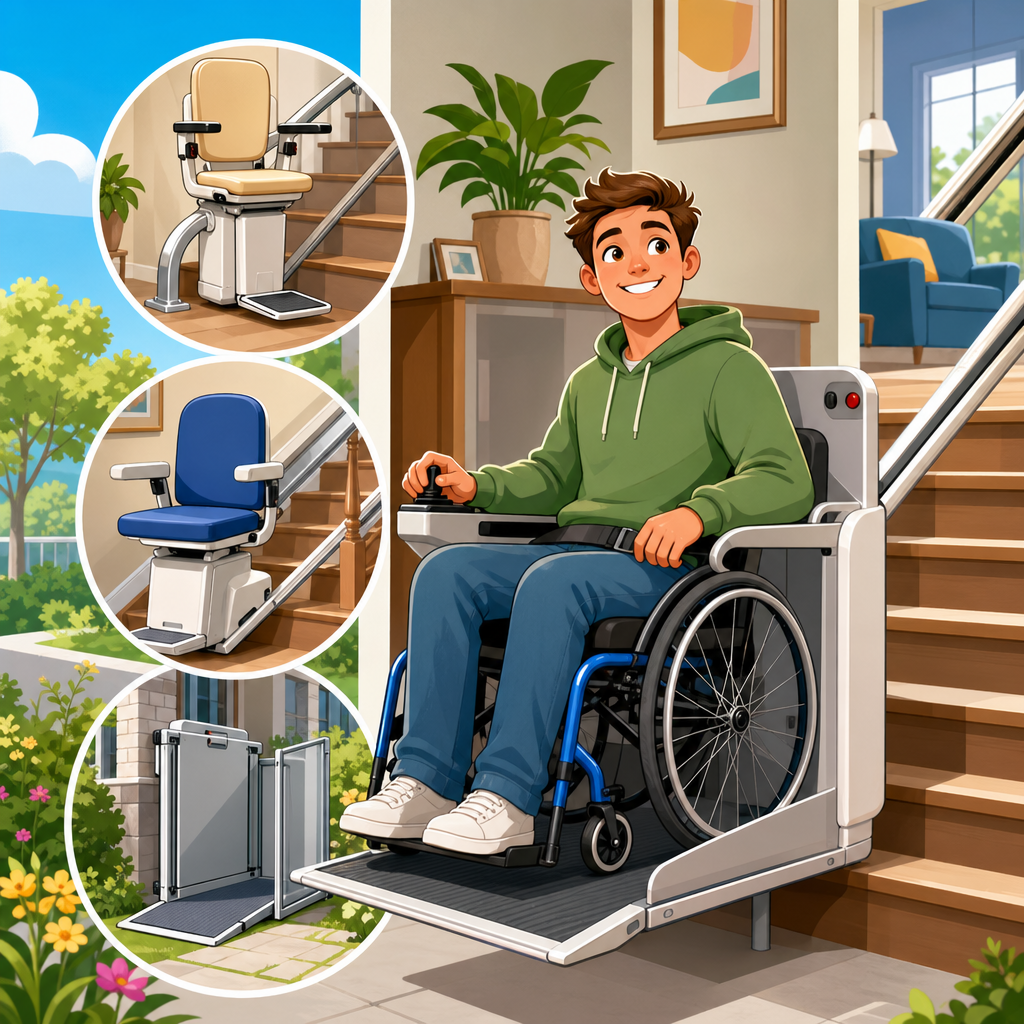
Not every senior needs the same chair lift. A compact, foldable straight-stair model may work perfectly for someone with mild knee pain, while a user with balance issues, arthritis in the hands, or a history of hip replacement may need a powered swivel seat, larger footrest, and simpler controls. There are also important distinctions between straight stair lifts, curved stair lifts, outdoor stair lifts, and heavy-duty models. Straight lifts run on a single uninterrupted staircase and are usually the most affordable. Curved lifts are custom-built to follow turns, landings, or spiral sections and cost more because the rail is made to fit exact measurements. Outdoor models add weatherproofing and corrosion resistance. Heavy-duty lifts offer wider seats, higher weight capacities, and often a different seat height. Knowing these categories helps buyers avoid the common mistake of looking at a “best” list without checking whether a product actually suits the staircase or the rider.
For seniors and their families, the best chair lifts are not simply the cheapest or the fastest to install. They are the lifts that reduce physical strain, work dependably every day, and remain easy to use even if mobility declines. That means key features deserve close attention: safety sensors, seat design, control systems, battery backup, rail configuration, maintenance support, and warranty quality. It also means looking beyond marketing claims. A reputable dealer should assess the staircase, explain code and clearance considerations, disclose service response times, and help match the equipment to the user’s present and likely future needs. The sections below break down the most important chair lift features in plain terms, using the criteria I rely on when reviewing options with homeowners. If you are building a shortlist of the best chair lifts for seniors, this guide will help you ask better questions and choose with more confidence.
Safety Features Seniors Should Never Compromise On
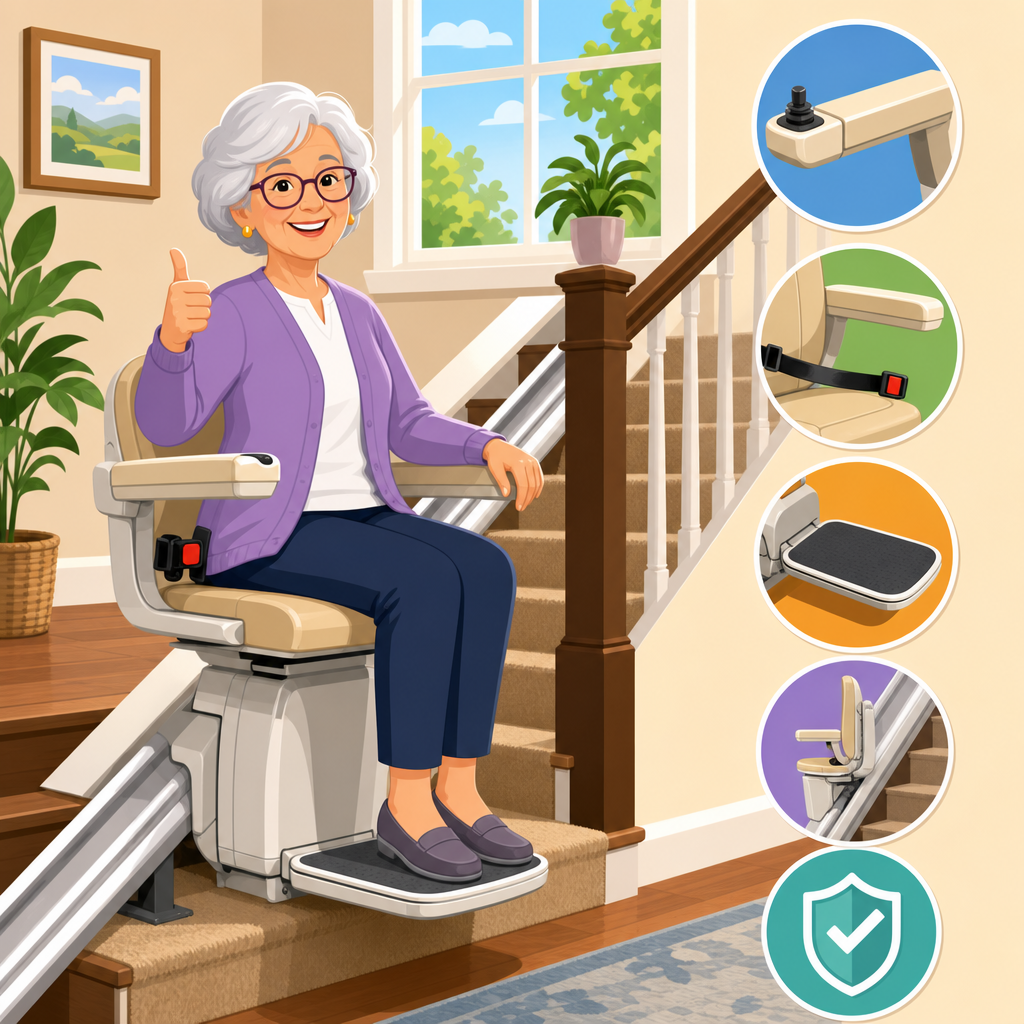
Safety is the first filter for any chair lift comparison. The essential features are a seat belt, obstruction sensors, a secure swivel seat, and smooth starting and stopping. Obstruction sensors stop the lift if something is detected on the stairs or rail, reducing the risk of striking objects, pets, or a person on the staircase. I always advise buyers to test how abruptly a model stops and starts. Jerky motion can be unsettling for older users and can increase the feeling of instability, especially for people with Parkinsonian symptoms, vestibular issues, or general frailty.
A manual swivel seat may be acceptable for some users, but many seniors are safer with a powered swivel seat that turns automatically at the top landing. This feature makes it easier to exit onto the floor rather than toward the staircase. Footrest safety is equally important. A foldable footrest prevents a tripping hazard when the lift is parked, and powered footrests are valuable for users who cannot bend comfortably due to back pain, arthritis, or recent surgery. Quality models also include overspeed governors and locking systems that keep the seat stable during travel. These are not luxury extras; they are foundational features that directly affect daily risk.
Comfort and Ergonomics Matter More Than Buyers Expect
Comfort determines whether a chair lift gets used consistently. Seniors often underestimate how much seat height, back support, armrest shape, and foot placement affect confidence. A seat that is too low can be difficult for someone with reduced leg strength to stand from, while a seat that is too narrow can feel restrictive even if the weight rating is technically adequate. The best chair lifts for seniors typically offer a supportive backrest, well-padded armrests, and dimensions that allow the rider to sit fully back with feet planted securely on the footrest.
Ergonomics also includes the transfer on and off the seat. If a user relies on a cane or walker, there must be enough landing space to turn safely. In several home assessments I have seen, the staircase itself was suitable, but the top landing required a rail overrun so the rider could dismount farther from the stair edge. That is an ergonomic and safety decision, not just a rail option. Upholstery material matters too. Easy-clean synthetic upholstery is practical for everyday use and simpler for caregivers to maintain than textured fabric that traps dust or moisture.
Controls, Ease of Use, and Accessibility for Aging Hands
The best chair lift controls are simple enough to use under stress or fatigue. Most modern lifts use a joystick, rocker switch, or paddle control on the armrest, plus call/send remotes that allow the unit to be moved from another floor. For seniors with arthritis, neuropathy, tremor, or reduced grip strength, control resistance and button size can make the difference between independence and frustration. I recommend testing controls in person whenever possible. A buyer may assume any switch will do, then discover that a stiff toggle is difficult to operate one-handed.
Remote call/send controls are especially useful in two-story homes shared by spouses. One person can send the lift down after use so it is available for the next rider, or park it away from the main living area. Some premium systems offer powered folding rails for doorways at the bottom of the stairs, preventing the rail from obstructing a hallway. Seniors with vision changes benefit from clearly marked controls and obvious status indicators. Accessibility is not only about the ride; it is about reducing every small barrier to use.
Power Supply, Battery Backup, and Reliability in Real Life
Battery-powered chair lifts are generally the standard recommendation for seniors because they continue to operate during a power outage. The unit charges continuously at designated points on the rail, and the battery supplies the travel power. In practical terms, this means a senior is less likely to become stranded on one floor during a storm or service interruption. Buyers should ask how many trips the lift can make on battery alone and what battery replacement typically costs after several years.
Reliability depends on more than batteries. It includes the drivetrain, track quality, service network, and parts availability. Brands with strong dealer support often outperform lesser-known options even when spec sheets look similar. When I compare manufacturers, I look at installation quality, noise level over repeated use, and the clarity of maintenance guidance. A dependable chair lift should run quietly, charge consistently, and recover predictably after being parked. If a dealer cannot explain service intervals or average repair response times, that is a warning sign. The best chair lifts for seniors come from companies that treat after-sale support as part of the product, not an afterthought.
Straight, Curved, Outdoor, and Heavy-Duty Models Compared
Different staircases and users call for different chair lift types. Straight stair lifts are the quickest to install because the rail is standardized, while curved models require custom fabrication based on precise measurements. Outdoor lifts need sealed components, UV-resistant seats, and weather covers. Heavy-duty lifts accommodate higher weight capacities and often provide a roomier seating position. The right match is determined by the staircase geometry and the rider’s physical needs, not by broad popularity.
| Type | Best Use | Main Advantage | Key Limitation |
|---|---|---|---|
| Straight stair lift | Single uninterrupted staircase | Lower cost and faster installation | Cannot handle turns or intermediate landings |
| Curved stair lift | Stairs with bends, landings, or unusual layouts | Custom fit and smooth routing | Higher price and longer lead time |
| Outdoor stair lift | Porch, deck, or garden access | Weather-resistant construction | Needs regular cleaning and climate-aware maintenance |
| Heavy-duty stair lift | Larger users or those needing more seat space | Higher weight capacity and wider seat | May require more stair width |
Most straight lifts require less stair width than heavy-duty models, so measurements matter. Many manufacturers specify a minimum staircase width, often around 29 inches for standard models, though exact requirements vary. Buyers should also ask about folded width, because a lift that fits technically may still narrow the staircase too much for other household members. This is one reason professional measurement is essential. The best chair lifts for seniors are not universal products; they are correctly specified solutions.
Installation, Maintenance, Warranties, and Cost of Ownership
Installation quality shapes long-term performance. A stair lift rail is typically mounted to stair treads rather than the wall, which means installation is usually less invasive than buyers fear. Even so, the installer’s precision affects ride smoothness, charging alignment, and seat positioning at landings. A good survey should document staircase width, number of steps, landings, power access, and any obstructions such as doors or radiators. Ask whether the quote includes rail overruns, powered options, and any carpentry or electrical work. Unexpected add-ons are common when buyers compare prices too casually.
Maintenance should be straightforward and documented. Reputable brands provide clear owner manuals, routine inspection guidance, and replacement parts support. Warranty terms deserve close reading. Some companies advertise a lifetime warranty that applies only to the motor or gearbox, while limiting electronics, batteries, or labor to much shorter periods. For seniors, labor coverage and local service access often matter more than a headline promise. Cost of ownership includes purchase price, installation, annual service if recommended, battery replacement, and eventual removal or transfer if the home is sold. When families compare the best chair lifts for seniors, the durable and well-supported option often proves less expensive over time than the cheapest initial quote.
How to Choose the Best Chair Lift for a Senior’s Specific Needs
The most effective buying process begins with the user, not the product list. Start with five questions: What mobility limitation is driving the need? Can the user sit and stand without major assistance? Does the staircase have turns or narrow clearances? Will more than one person use the lift? Is this likely to be a short-term recovery aid or a long-term aging-in-place solution? The answers narrow the field quickly. For example, a senior with severe arthritis may benefit more from powered seat swivel and powered footrest than from a premium upholstery upgrade, while a larger user may need a heavy-duty model even on a straight staircase.
It is also wise to think ahead. Mobility rarely improves dramatically with age, so the best chair lift for seniors is usually one that accommodates likely changes over the next several years. Ask dealers for an in-home assessment, a written quote, and a demonstration of controls and transfer positions. Compare not only price, but also warranty scope, service coverage area, install timeline, and dealer reputation. If you are building out a broader buying guide or reviewing related mobility products, this hub should be your starting point for evaluating models, features, and next-step questions. The core takeaway is simple: prioritize safety, fit, ease of use, and support. If you are researching the best chair lifts for seniors, use these criteria to create a short list, schedule professional assessments, and choose the lift that will keep daily life safer and more independent.
Frequently Asked Questions
What safety features are most important in a chair lift for seniors?
The most important chair lift features for seniors are the ones that reduce fall risk and make every ride predictable and secure. A seat belt is essential, not optional, because it keeps the user stable while the lift is moving. Swivel seats are another top safety feature, especially at the top of the stairs, because they allow the rider to turn away from the staircase and stand up onto the landing instead of stepping toward the edge. Look for a model with a locking swivel seat so it stays firmly in place during transfer.
Obstruction sensors also matter a great deal. These sensors stop the lift automatically if something is on the stairs or in the path of the footrest or carriage. That can prevent damage to the lift and, more importantly, help avoid accidents involving pets, grandchildren, or dropped items. A secure footrest with a non-slip surface adds another layer of protection by keeping the feet in a stable position during travel.
Reliable start-and-stop performance is equally important. Seniors often feel uneasy if a lift jerks at takeoff or stops abruptly, so smooth acceleration and braking should be high on the priority list. Many buyers also overlook the value of battery backup. If the power goes out, a battery-powered chair lift can still complete multiple trips, which can be critical in an emergency. In practical terms, the safest chair lift is one that combines a seat belt, swivel seat, obstruction sensors, smooth motion, and backup power into a system that is easy for the senior to use every single day.
Which comfort features make a chair lift easier for seniors to use long term?
Comfort matters more than many families expect because a chair lift that feels awkward or tiring can quickly become a piece of equipment the senior avoids using. A well-padded seat and backrest are important, but long-term comfort goes beyond cushioning. Seat height, seat width, armrest position, and footrest placement all affect how easy it is to sit down, ride comfortably, and stand back up. A chair lift that fits the user’s body properly will feel safer and require less effort during transfers.
For many seniors, ease of getting on and off the lift is the true comfort issue. A powered swivel seat can be very helpful for users with arthritis, limited hip mobility, or reduced strength because it reduces the twisting motion needed at the top landing. Folding arms, seat, and footrest also improve day-to-day usability by keeping the staircase more open when the lift is not in use. Some models even include a powered footrest, which can be especially valuable for seniors who have difficulty bending down.
Ride quality is another major comfort factor. A quiet motor, smooth rail transitions, and steady travel speed help reduce anxiety and motion discomfort. If the chair lift will be used several times a day, these details become even more important. In my experience, the best long-term choice is not necessarily the softest seat, but the model that makes the entire process of sitting, riding, and standing feel natural, stable, and low-effort for the senior using it.
How important is ease of operation when choosing a chair lift for an older adult?
Ease of operation is one of the most important factors because even the best-designed chair lift is only useful if the senior feels confident using it independently. Controls should be simple, clearly labeled, and easy to press without requiring strong hand grip or fine finger coordination. Many seniors do best with a straightforward toggle, rocker switch, or large-button control rather than a more complicated interface. If the controls are confusing, hesitation and misuse become more likely.
Call/send controls are also very important, particularly in households where more than one person uses the staircase or when the chair needs to be moved to the other floor. These wall-mounted or remote controls allow the user to summon the chair lift when needed. For seniors living with a spouse or caregiver, this feature improves convenience and reduces frustration. It also helps keep the chair parked out of the main living area when not in use.
Ease of operation includes physical effort as well as mental simplicity. If the seat, footrest, or armrests require too much force to fold or adjust, daily use can become frustrating. That is why powered options can be worthwhile for some seniors. The goal is to choose a chair lift that feels intuitive from day one and remains manageable even if the user’s strength, balance, or dexterity decline over time. A successful purchase is usually one that supports independence rather than requiring frequent help from others.
Should seniors prioritize battery backup and reliability over extra features?
Yes, in most cases seniors should put reliability and battery backup ahead of cosmetic upgrades or less essential convenience features. A chair lift is fundamentally a mobility and safety device, so dependable operation has to come first. Battery-powered systems are especially valuable because they continue working during a power outage, and most modern units charge continuously when parked. This means the lift can still be used when the household electrical supply is interrupted, which is a major advantage for anyone who cannot safely manage the stairs on foot.
Reliability also includes the quality of the rail, motor, transmission, and service support behind the product. A feature-rich chair lift is not a good investment if it requires frequent repairs or has inconsistent performance. Seniors benefit most from a lift that starts every time, moves smoothly, and is backed by a company with responsive maintenance and parts availability. It is wise to ask about warranty coverage, service intervals, expected battery life, and how quickly a technician can respond if the unit needs repair.
That does not mean extra features have no value. Powered swivel seats, folding footrests, and upgraded upholstery can make a real difference for the right user. But those should be considered after the basics are covered: safe transfers, easy controls, smooth operation, strong build quality, and battery backup. When families focus on these core features first, they usually end up with a chair lift that remains dependable and useful for years rather than one that only looks impressive in a brochure.
What features help ensure a chair lift will still meet a senior’s needs in the future?
The best chair lift for a senior is not just the one that works well today, but the one that can continue meeting changing needs over time. Future-friendly features often include a higher weight capacity, easier transfer options, and controls that remain manageable if arthritis, weakness, or balance problems worsen. A powered swivel seat, for example, may not seem necessary at first, but it can become extremely valuable if the user later has more difficulty twisting or standing securely at the top of the stairs.
Seat size and overall fit also deserve careful thought. A model that is barely comfortable now may become harder to use later, especially if the senior begins using bulkier clothing, supportive braces, or mobility aids. In some homes, a hinged rail or track overrun is important because it creates a safer place to get on and off the chair away from the staircase edge or doorway. These layout-related features can have a big impact on long-term usability and safety.
It is also smart to consider the availability of service and parts in the years ahead. A durable chair lift from a reputable manufacturer with local support is usually a better long-term investment than a cheaper model with uncertain maintenance options. Families should think in terms of progression: if the senior becomes less mobile, will this chair lift still be easy and safe to use? The most important features are the ones that preserve independence not just at installation, but as needs evolve. That is why thoughtful buyers look beyond price and focus on safety, comfort, reliability, and adaptability from the start.