Adjustable seat height in chair lifts affects far more than comfort; it determines whether a senior can sit down safely, stand up with control, and use a stair lift every day without strain. In the years I have spent evaluating mobility equipment in private homes, rehab settings, and dealer showrooms, seat height has been one of the first measurements I check because a lift that fits the staircase but not the rider often becomes an expensive compromise. When families search for the best chair lifts for seniors, they usually compare brand, price, weight capacity, and battery backup. Those matter, but the relationship between the rider’s leg length, hip and knee angle, transfer ability, and the final seat position matters just as much. Adjustable seat height refers to the ability to raise or lower the chair seat relative to the footrest and rail so the user can board and exit with stable footing. That matters for seniors with arthritis, limited knee flexion, hip replacements, poor balance, neuropathy, or general deconditioning. It also matters in multi-user households where one rider is petite and another is tall. This guide explains how adjustable seat height works, which chair lift features influence fit, what to compare across leading models, and how to choose a system that supports safer transfers rather than simply transporting someone up the stairs.
Why Adjustable Seat Height Matters for Senior Safety and Daily Use
The practical reason to focus on seat height is simple: transfers are the highest-risk part of using a chair lift. Once a rider is seated, buckled, and moving, the system is generally predictable. The challenge comes at the top and bottom landings, where the user must turn, back up, sit, or stand while managing balance and limited mobility. If the seat is too low, a senior may drop into the chair hard, flex the knees excessively, or need a dangerous forward rock to stand. If the seat is too high, the user’s feet may not rest flat on the footrest during travel or on the landing during boarding, which reduces stability.
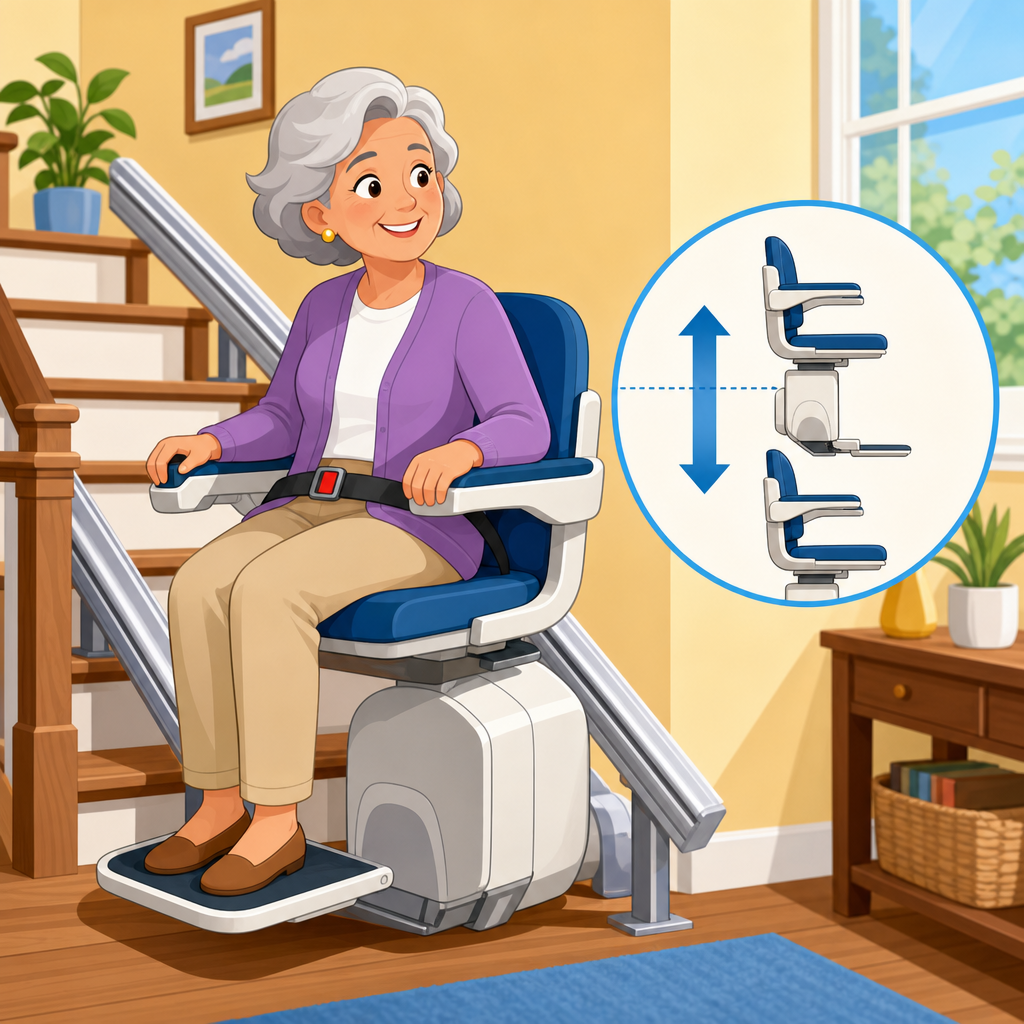
For many seniors, the ideal seated posture is close to a 90-degree knee angle with feet supported and hips positioned far enough back to prevent sliding. In practice, I look at three measurements: floor-to-knee height, hip-to-knee length, and the rise needed to stand comfortably. A taller rider with long femurs may need a higher seat to avoid excessive knee bend, while a shorter rider may need a lower setup so both feet contact the floor securely before sitting. Seniors with arthritis often do better with a slightly higher perch because it reduces joint compression during sit-to-stand. Those with spasticity or foot drop may need careful coordination between seat height and footrest height so the lower legs stay controlled throughout travel.
Seat height also affects confidence. I have seen users reject otherwise excellent lifts because the chair felt awkward to board. Confidence is not a soft factor; it directly shapes adherence. If a senior hesitates every time they approach the lift, the chance of unsafe stair use rises. A properly adjusted chair lift becomes routine. An ill-fitting one remains intimidating.
How Seat Height Adjustment Works on Modern Chair Lifts
Not every chair lift offers the same type of seat adjustment. Some straight stair lift models provide limited vertical adjustment during installation through bracket settings, seat post options, or factory-selected seat heights. Others offer broader customization with alternative seat bases, heavy-duty packages, or perch-style seats. Most curved stair lifts are configured more specifically during the ordering process because the rail is custom built to the staircase and the chair geometry is matched to that rail path.
In plain terms, adjustable seat height usually means the installer can set the chair at one of several fixed heights rather than the rider pressing a button to raise and lower the seat daily. That distinction matters when shopping. Families sometimes expect a powered seat-height function similar to a lift recliner, but most stair lifts instead rely on mechanical setup choices made before installation. The key questions are: What seat heights are available, how does that choice affect footrest position, and can the dealer adapt the chair for a specific rider’s leg length?
Another detail is the interaction between seat height and swivel function. Many top-tier lifts for seniors include a manual or powered swivel seat at the upper landing. When the chair arrives, the seat rotates away from the staircase so the rider can exit onto the landing rather than toward the stairs. If the seat height is correct but the swivel is stiff, narrow, or badly placed relative to the landing, transfers still suffer. Likewise, a well-designed footrest with obstruction sensors, fold-up hinges, and adequate depth can make a modest seat-height range more usable.
Battery-powered DC stair lifts dominate the residential market, and that is good news for seniors. These systems run on batteries charged from household power, so the lift continues working during many outages. Seat height does not alter that core power system, but the best overall models combine customizable fit with reliability features such as soft start and stop, overspeed governors, seat belts, and diagnostic displays.
What to Compare When Choosing the Best Chair Lifts for Seniors
When I help families compare stair lift options, I use a fit-first checklist rather than starting with price. The best chair lifts for seniors are the ones that match the user’s body dimensions, balance needs, and staircase layout. Start with staircase type: straight lifts cost less and install faster because the rail is modular, while curved lifts are custom fabricated for turns, intermediate landings, or spiral sections. Then evaluate the rider profile. Is the senior petite, tall, bariatric, or coping with one-sided weakness after stroke? Does the user need powered swivel because twisting is painful? Will multiple family members share the lift?
Seat width, depth, armrest spacing, and backrest contour all matter, but seat-to-footrest distance is often the hidden factor that determines whether the posture feels natural. Weight capacity is another critical spec. Standard residential models commonly support around 300 to 350 pounds, while heavy-duty units can reach 400 to 600 pounds depending on brand and rail. A higher capacity chair often has a different seat geometry, and that may improve or worsen fit for a given rider.
Speed is less important than smoothness. Most residential stair lifts travel slowly by design, often around 15 to 20 feet per minute, because controlled movement is safer and less intimidating. Safety sensors should stop the lift if the footrest or carriage contacts an obstruction. Remote call/send controls are useful in two-story homes and essential when more than one person uses the system. Upholstery and folding dimensions deserve attention too. In narrow staircases, a folded chair, arms, and footrest need to leave sufficient walking clearance, typically guided by local code and installer judgment.
| Feature to Compare | Why It Matters | Best Fit for Seniors |
|---|---|---|
| Seat height range | Determines safe sit-to-stand transfers and foot support | Choose models with multiple setup positions matched to leg length |
| Swivel seat | Reduces twisting at the top landing | Powered swivel helps riders with arthritis or limited trunk rotation |
| Weight capacity | Affects safety margin and seat geometry | Look for realistic capacity with comfortable seat width, not just a high number |
| Rail type | Controls fit to the staircase and total cost | Straight for simple runs, custom curved for turns and split landings |
| Footrest design | Supports lower legs and triggers obstruction sensors | Low-profile, power-folding options help users with limited bending |
| Battery backup | Keeps the lift running in outages | Essential in any home where stairs are the only route to bedroom or bathroom |
Leading Brands, Model Differences, and Real-World Fit
Among recognized manufacturers, Bruno, Harmar, Handicare, Stannah, and Acorn are frequently considered by buyers in North America and the UK, though dealer availability varies by region. Bruno’s Elite straight and curved lines have a strong reputation for build quality, smooth ride characteristics, and dealer support. Harmar offers broad model coverage, including heavy-duty options and vertical platform products, which can matter when a stair lift may not be the right long-term answer. Handicare is known for modular features and some flexible seat configurations. Stannah has long emphasized ride quality, custom curved installations, and polished fit and finish. Acorn is widely recognized and often heavily advertised, but service experience can depend substantially on the local network.
No single brand is universally best. In one home, a Bruno Elite may be the best chair lift for seniors because the rider needs a comfortable seat, reliable operation, and a dealer that can respond quickly. In another, a Handicare or Stannah curved unit may fit a complicated staircase more elegantly. For a larger user, a heavy-duty model with a wider seat and reinforced rail may be necessary, but bigger is not automatically better. I have seen petite riders struggle on oversized chairs because armrests were too far apart and the sitting surface prevented secure foot placement.
Ask dealers for exact seat-height specifications, not broad assurances. Request a demonstration of transfer setup if possible. Reputable providers perform an in-home assessment, measure the staircase carefully, and discuss landing space, power supply, body dimensions, and medical limitations. They should also explain applicable standards, including ASME A18.1 in the United States, which governs many aspects of platform and stairway chairlift safety. A dealer who cannot explain adjustment options clearly is a poor partner for a device this important.
Installation, Home Layout, and When a Stair Lift Is Not the Best Option
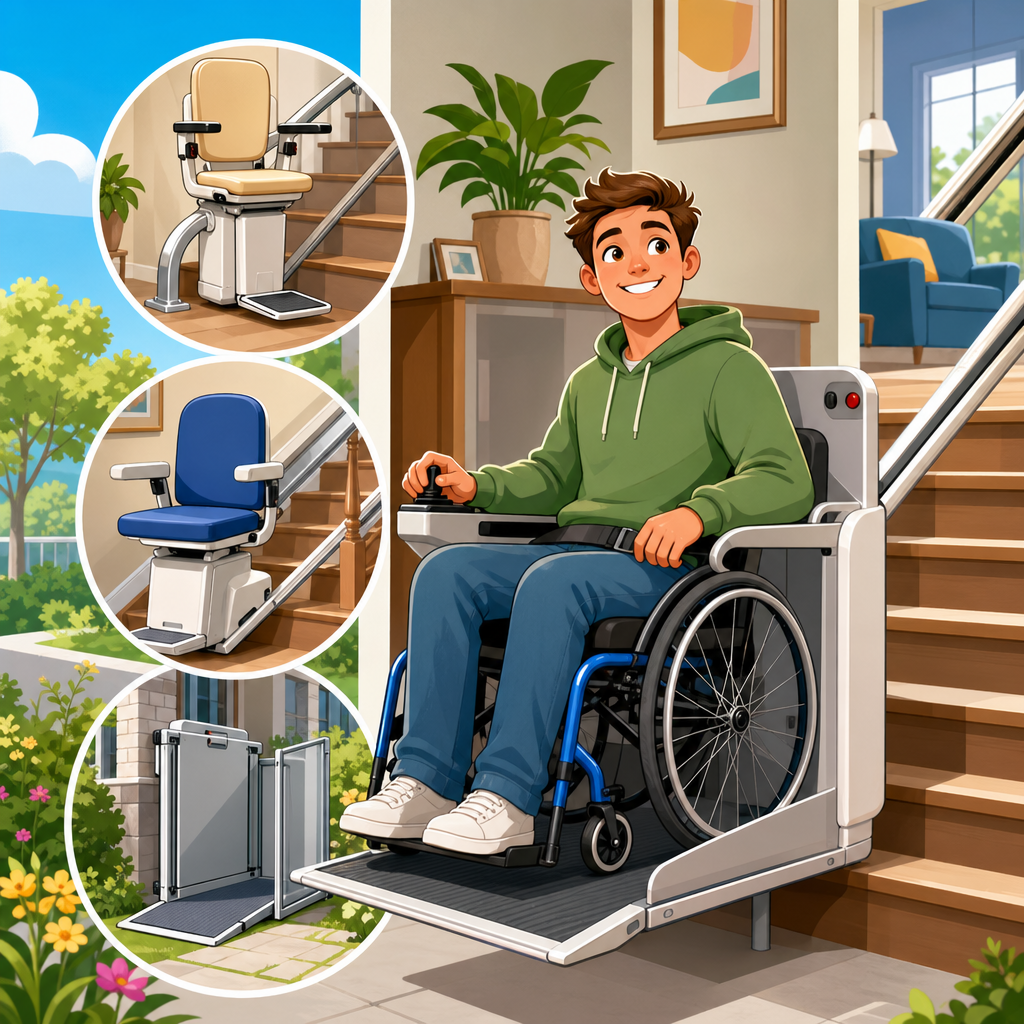
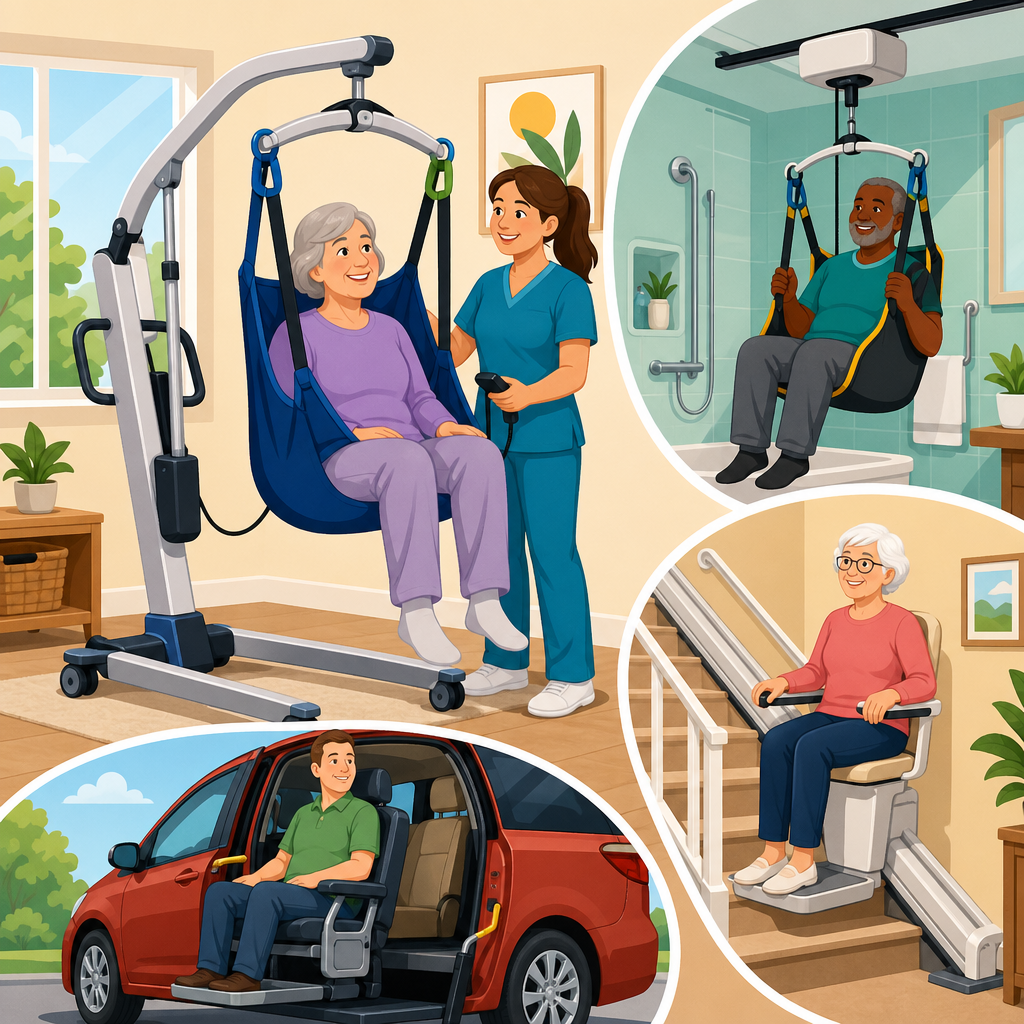
Even the best chair lifts for seniors have limits. A staircase may be too narrow for comfortable use, especially if other residents must pass on foot. Some users cannot transfer independently or safely remain seated in the required posture. Others have progressive conditions that may soon require a wheelchair, making a vertical platform lift or home elevator more practical. In homes with severe landing constraints, a hinged rail, parking option, or custom overrun may solve access issues, but these features add cost and complexity.
Installation quality is as important as the product itself. Most residential stair lifts mount to the stair treads, not the wall, which simplifies many projects and reduces structural concerns. Straight lifts can often be installed in a few hours. Curved lifts usually take longer because the rail is custom manufactured after a survey. During installation, the technician should verify charging points, final stop positions, swivel lock function, seat belt operation, sensor response, and folding clearance. They should also train the user and caregiver repeatedly, not just run one quick demonstration.
Maintenance is generally modest, but it is not optional. Batteries wear out over time, often within a few years depending on usage and charging habits. Tracks need to remain clean. Upholstery, seat pivots, and footrest mechanisms should be inspected. Service contracts vary, and buyers should compare warranty terms on the motor, gearbox, rail, and electronics. Fast local service matters more than glossy brochures because a nonworking stair lift can leave a senior stranded on one floor.
How to Buy With Confidence and Choose a Safer Long-Term Fit
The smartest way to buy is to think beyond today’s mobility level. A senior recovering from knee surgery may need a lift for six months, while another user with spinal stenosis or chronic heart failure may rely on it for years. Rent-to-own or reconditioned straight stair lifts can make sense for temporary needs, but only from reputable dealers that replace wear parts, verify battery health, and confirm the chair can still be adjusted to fit the rider. Used curved lifts are rarely straightforward because the rail is custom to the staircase.
Before signing, ask five direct questions. What exact seat height will be installed? How does that height affect footrest support and transfer at both landings? What service response time is guaranteed locally? Which features are standard versus optional, especially powered swivel and power folding footrest? And if the rider’s condition changes, what upgrade path exists? Those answers reveal far more than marketing claims.
Adjustable seat height in chair lifts is not a minor comfort feature; it is central to safety, independence, and daily usability. The best chair lifts for seniors combine correct fit, dependable engineering, thoughtful transfer features, and strong local support. If you are comparing options now, schedule an in-home assessment, bring the rider into every decision, and insist on a model configured to their body and staircase rather than forcing them to adapt to the machine.
Frequently Asked Questions
Why is adjustable seat height so important in a chair lift?
Adjustable seat height matters because it directly affects safe transfers on and off the stair lift, not just overall comfort during the ride. A seat that is too low can force a user to drop down harder than intended when sitting and struggle to rise at the top or bottom landing. A seat that is too high can leave the user feeling unstable, with feet not planted properly and too much pressure on the backs of the thighs. In real-world use, this becomes one of the biggest factors in whether a senior uses the lift confidently every day or begins avoiding it because the transfer feels awkward or tiring.
The goal is to create a seated position that allows the rider to sit with control, keep feet supported, and stand up without excessive pushing, twisting, or strain. Proper seat height can also reduce stress on the knees, hips, and lower back, which is especially important for people with arthritis, muscle weakness, recent surgery, or balance concerns. Even if a stair lift fits the staircase perfectly, poor seat height can make the equipment feel like a compromise. That is why experienced installers and mobility specialists pay close attention to the rider’s body dimensions, footwear, strength, and transfer style before recommending a model.
How do I know if a chair lift seat height is right for the user?
A good starting point is to look at how the person sits and stands from a standard chair they already use comfortably. In general, the correct height allows the user to place both feet securely on the footrest or floor area during transfer, with knees and hips in a stable, natural position. When seated, the rider should not feel like they are squatting too low or perching too high. When standing, they should be able to rise with control rather than rocking excessively, pulling hard on armrests, or relying heavily on another person for assistance.
Professionals often evaluate lower leg length, joint range of motion, footwear, and whether the rider uses a cane, walker, or caregiver support. They also look at the top and bottom landings, because transfer height has to work in the exact places where the rider gets on and off. A seat height that seems acceptable in a showroom can feel very different in a narrow hallway or at a landing with limited turning space. The best way to confirm proper fit is with an in-home assessment and, when possible, a demonstration using the actual model being considered. Fit should be based on function and safety, not guesswork.
Can adjustable seat height improve safety for seniors with mobility issues or joint pain?
Yes, in many cases it can make a meaningful safety difference. Seniors with knee pain, hip stiffness, reduced leg strength, Parkinson’s symptoms, balance problems, or recovery needs after surgery often struggle most during the sit-to-stand portion of stair lift use. If the seat height is adjusted appropriately, the movement becomes smoother and more controlled. That can reduce the risk of loss of balance, sudden dropping into the seat, or unsafe pushing and twisting when getting up.
Adjustable seat height can also work together with other stair lift features such as swivel seats, folding armrests, seat belts, and footrest positioning to create a safer transfer setup. For example, if the rider can swivel at the landing and stand from a height that matches their strength and joint comfort, they are less likely to pivot awkwardly near the stairs. This matters because many stair lift incidents happen during boarding and exiting, not during travel. While seat height alone does not solve every mobility challenge, it is one of the most practical fit adjustments available and often has a bigger impact than buyers expect.
Are all chair lifts adjustable, or do some models offer more seat-height flexibility than others?
Not all chair lifts offer the same level of seat-height adjustment. Some models have limited adjustment built into the seat post or mounting configuration, while others offer only a fixed seating geometry. Manufacturers also vary in how they define “adjustable,” so it is important to ask exactly what can be changed, by how much, and whether that adjustment is done during installation only or can be modified later if the user’s needs change. In some cases, what seems like a minor difference in seat height range can have a major effect on everyday usability.
This is especially relevant when comparing compact models designed for narrow staircases with premium lifts that offer more customization. Heavier-duty units, outdoor lifts, and specialty installations may have different seating dimensions as well. Families should ask the dealer whether the chosen model can be fitted to the rider rather than assuming all stair lifts sit at the same height. A reputable provider should be able to explain the seat-to-footrest relationship, transfer height at both landings, and any tradeoffs created by staircase shape or rail placement. The best choice is usually the model that fits both the staircase and the rider’s body mechanics, not simply the one with the smallest footprint or lowest price.
What should families ask during a stair lift assessment when seat height is a concern?
Families should ask very direct, practical questions. Start with: How will this seat height help the user sit down and stand up safely at both the top and bottom of the stairs? Then ask whether the installer has measured the rider’s lower leg length, observed a transfer, and considered any medical issues such as knee replacement, hip pain, weakness, or limited ankle motion. It is also smart to ask whether footwear, preferred chairs in the home, walker use, or caregiver assistance have been factored into the recommendation. These details often reveal whether the assessment is personalized or simply a standard sales visit.
Other useful questions include whether the seat height can be adjusted after installation, whether another model would provide a better transfer position, and how the footrest height relates to the seat. Families should also ask for a demonstration of how the seat swivels at the landing and whether the rider can get off without stepping into an awkward or cramped position. If possible, request that the provider simulate actual use conditions rather than relying on brochure specifications alone. The most helpful stair lift assessments focus on the full transfer process, because the right seat height can turn a lift from something technically functional into something genuinely safe, comfortable, and sustainable for daily use.