Chair lifts that offer the smoothest ride do more than move a person up the stairs. They reduce strain on knees and hips, lower the risk of falls, and help older adults stay in the homes they know. In the context of buying guides, the smoothest stair lift is one that starts and stops gently, stays stable on the rail, fits the staircase correctly, and remains comfortable through years of daily use.
When families search for the best chair lifts for seniors, they are usually comparing several related products at once: straight stair lifts, curved stair lifts, outdoor models, heavy-duty options, and compact designs for narrow staircases. I have worked through these comparisons with families who were balancing mobility needs, home layout, safety concerns, and budget, and the same lesson comes up repeatedly. Ride quality matters as much as price because a jarring lift often goes unused, while a smooth, confidence-building lift becomes part of everyday life.
A chair lift, also called a stair lift, includes a rail mounted to the stairs, a motorized chair, a transmission system, safety sensors, a seat belt, and call/send controls. Smooth ride quality depends on engineering details that are easy to miss in a quick product review. Gear rack design, battery-powered operation, seat padding, swivel action, rail alignment, and professional installation all affect whether the ride feels secure. This guide explains which chair lifts tend to feel best in real homes, how to evaluate top brands, and what features seniors should prioritize before buying.
What Makes a Chair Lift Feel Smooth and Safe
The smoothest ride starts with controlled movement. The best chair lifts for seniors use soft-start and soft-stop programming so the chair does not jerk at the beginning or end of travel. Premium models also maintain even speed along the rail instead of surging under load. In practice, this matters most for users with back pain, arthritis, Parkinsonian tremor, or reduced balance, because abrupt movement can trigger discomfort or anxiety.
Battery-powered systems usually ride more smoothly than older direct-power designs because they draw from onboard batteries while charging at stations on the rail. That setup supports steady performance and keeps the lift running during a power outage. Most reputable brands pair this with obstruction sensors on the carriage and footrest, lockable swivel seats at the top landing, and folding arms and footrests to preserve stair access for others in the home.
Installation quality is equally important. Even a well-designed stair lift can feel rough if the rail is misaligned or the staircase has structural irregularities that were not measured correctly. A proper assessment should include stair width, top and bottom landing clearance, user height and weight, transfer strength, and whether the person needs a powered swivel or powered footrest to avoid bending.
Best Chair Lift Brands Known for the Smoothest Ride
Among major manufacturers, Bruno, Stannah, Harmar, Handicare, and Acorn are the names most buyers encounter. Each can serve seniors well, but they differ in ride quality, customization, and dealer support. In my experience, the smoothest overall ride usually comes from premium straight and curved models that combine stable rail design with refined transmission tuning rather than simply high motor power.
Bruno is widely respected in the United States for build quality and dependable operation. The Bruno Elan is often recommended for straight staircases where space is limited, while the Bruno Elite line is better for users who want a more substantial seat and a more planted feel. Bruno lifts are known for gentle starts, quiet travel, and strong dealer networks. Stannah is another top-tier option, especially for curved staircases, because its custom rails and seat ergonomics tend to produce very controlled movement around turns.
Harmar offers popular models such as the Pinnacle series, which are valued for slim rail profiles and practical reliability. Handicare stands out for modular solutions and options suited to unusual stair layouts. Acorn remains visible because of national marketing and broad availability, though actual ride smoothness can depend heavily on the local installer. For many households, dealer quality is as decisive as brand name because service response, maintenance support, and installation precision directly shape long-term satisfaction.
| Brand | Best Use | Ride Quality Strength | Possible Limitation |
|---|---|---|---|
| Bruno | Straight stairs, premium home installs | Quiet travel, gentle start and stop, sturdy seat feel | Higher price than entry-level competitors |
| Stannah | Curved stairs, tailored fit | Excellent custom rail movement around bends | Custom systems increase total cost |
| Harmar | Narrow stairs, practical value | Slim rail and consistent battery-powered motion | Seat comfort varies by model |
| Handicare | Complex layouts, modular solutions | Flexible fit and good control on specialized installs | Experience depends on local dealer expertise |
| Acorn | Broad availability, basic residential use | Accessible buying process and familiar controls | Ride refinement may lag top premium brands |
Choosing the Right Type of Stair Lift for Your Home
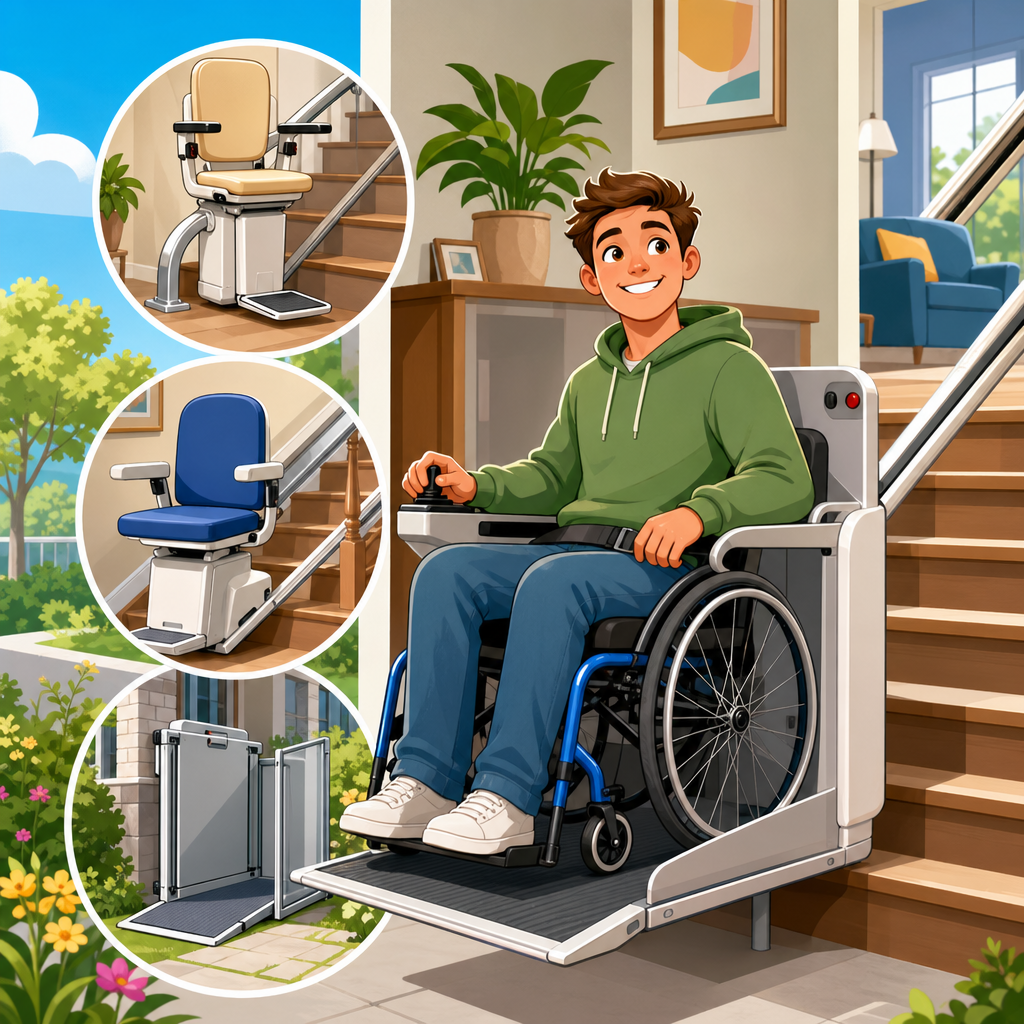
The best chair lift for a senior is not always the most expensive model. It is the one matched to the staircase, the user’s body mechanics, and the way the home is used every day. Straight stair lifts are the simplest and most affordable because they run on a single uninterrupted rail. They usually deliver the smoothest value because fewer custom components mean fewer variables in the ride.
Curved stair lifts are designed for stairs with turns, intermediate landings, or spiral geometry. Because the rail is custom built, a high-quality curved unit can feel exceptionally smooth when properly measured. However, poor surveying or rushed installation will be obvious immediately. Outdoor stair lifts need weather-resistant seats, sealed components, and covers; smoothness here also depends on corrosion resistance and traction in changing temperatures.
Heavy-duty chair lifts deserve special attention. Seniors who need a wider seat, higher weight capacity, or more transfer stability often feel safer on a larger platform even if the staircase allows a standard model. The tradeoff is clearance. On narrow stairs, a compact seat and folding footrest may preserve walk-by space better. If your home includes multiple floors or a wheelchair user with limited transfer ability, it may also be worth comparing vertical platform lifts and home elevators, since a stair lift is not the right answer for every mobility profile.
Features Seniors Should Prioritize Before Buying
If ride comfort is the goal, focus first on features that influence daily usability, not just showroom appeal. A padded seat with supportive armrests matters, but so do a footrest height that prevents knee strain and a seat height that allows safe standing transfers. Powered swivel seats are valuable for seniors who cannot twist easily at the top landing. Powered footrests are often worth the extra cost when bending is painful or unsafe.
Remote call/send controls let another household member send the lift away from the main living area or call it to a different level. This is especially helpful in shared homes. Seat belts, overspeed governors, obstruction sensors, and diagnostic displays should be standard expectations, not premium surprises. Reputable manufacturers design to recognized safety standards such as ASME A18.1 in the United States, and buyers should ask directly whether the installed system complies with applicable code requirements.
Noise is another overlooked comfort factor. A smooth chair lift should sound controlled, not strained. Grinding, clunking, or rattling often point to setup issues, worn rollers, or rail alignment problems. Upholstery quality also affects willingness to use the product. Seniors who spend even a minute or two on the lift several times a day notice pressure points quickly, particularly after joint replacement or with fragile skin. A test ride is ideal, but when that is not possible, ask the dealer to demonstrate start, stop, swivel, fold, and charging functions on a similar model.
Cost, Installation, and Long-Term Ownership
For a straight stair lift, buyers commonly see installed prices from about $2,500 to $5,500 depending on brand, power options, seat upgrades, and local labor. Curved stair lifts often start around $10,000 and can rise well beyond that because of custom rail fabrication. Outdoor models and heavy-duty units also increase total cost. Used or refurbished chair lifts can reduce the price, but they are far easier to source for straight staircases than for curved ones because curved rails are custom built for a specific home.
Installation should not be treated as an afterthought. Most residential stair lifts mount to the stair treads rather than the wall, which surprises many buyers and usually simplifies installation. A qualified installer should review electrical charging points, parking locations, clearance at doorways, and whether a rail overrun is needed to move the user away from the staircase edge at the top or bottom landing. In homes with pets or grandchildren, placement of call/send controls and folding components also deserves attention.
Ownership costs include annual service, battery replacement every few years, and occasional repairs such as seat switch or footrest sensor replacement. Warranty terms vary, so read the fine print on drivetrain coverage, labor, and service call charges. A cheaper purchase price can lose its appeal quickly if local service is weak. This hub should also point readers toward deeper guides on stair lift costs, curved versus straight models, used chair lifts, and installation questions, because those details often determine whether a seemingly smooth lift stays smooth over time.
How to Compare Models and Make the Final Decision
The most reliable way to choose among the best chair lifts for seniors is to compare real use conditions. Start with the user, not the product brochure. Can the person sit down and stand up without dropping heavily into the seat? Do they need a perch-style seat for limited knee flexion? Is one arm significantly weaker than the other? Those answers narrow the field faster than brand marketing ever will.
Next, look at the staircase itself. Measure width, count turns, note carpet thickness, and identify any radiator, doorway, or molding that may interfere with the rail. Then compare dealers, because the same manufacturer can produce very different customer outcomes depending on survey accuracy and service standards. Ask how long installation takes, how emergency service works, what maintenance schedule is recommended, and whether replacement parts are stocked locally.
Finally, insist on clarity about what “smoothest ride” means for your household. For one senior, it means the quietest motor. For another, it means the most stable seat during a transfer. For a family caregiver, it may mean predictable operation and fewer service interruptions. The best choice is usually a well-installed battery-powered lift from a proven brand, fitted to the staircase with appropriate seat and safety options, and supported by a responsive local dealer.
Chair lifts that offer the smoothest ride combine gentle motion, solid engineering, correct installation, and features matched to the user’s mobility needs. That is why the best chair lifts for seniors are not defined by a single brand or price point. Straight models often provide the best value, curved models solve more complex layouts, and heavy-duty or outdoor versions address specific living situations. Across all categories, smooth starts and stops, stable rails, comfortable seating, and strong service support are the factors that matter most.
For families building a safe aging-in-place plan, this hub should serve as the starting point. Use it to narrow the type of lift you need, identify the brands worth shortlisting, and understand the features that improve comfort and confidence every day. Then move on to detailed comparisons of costs, curved versus straight stair lifts, installation requirements, and senior-focused safety features. A careful comparison now leads to a chair lift that gets used consistently, protects independence, and makes every trip between floors feel secure.
Frequently Asked Questions
What makes a chair lift feel smooth and comfortable during everyday use?
A smooth-riding chair lift comes down to a combination of engineering, fit, and setup. The best models are designed to start and stop gradually rather than jerk into motion, which is especially important for older adults with back pain, balance issues, or sensitive joints. A chair lift that accelerates gently and slows down evenly helps reduce the feeling of being pulled forward or pushed back in the seat. That alone can make a major difference in day-to-day comfort and confidence.
Rail stability also plays a big role. A well-built rail system keeps the chair moving steadily without wobbling, vibration, or side-to-side movement. If the carriage glides cleanly along the track and the installation is precise, the ride tends to feel much more secure. Seat design matters too. A padded seat, supportive backrest, properly positioned armrests, and a footrest that keeps the user’s legs comfortable all contribute to the overall riding experience.
Just as important, the lift has to match the staircase correctly. Even a high-quality unit may not feel smooth if the rail layout is poorly suited to the stairway or if the seat height and positioning are not right for the user. In practical terms, the smoothest chair lifts are the ones that combine soft starts and stops, a stable rail, quiet operation, and a custom fit for both the staircase and the person using it.
Are straight stair lifts smoother than curved stair lifts?
Not necessarily, but straight stair lifts often have a simpler mechanical design, which can make them feel very consistent and predictable. Because they travel on a direct rail without turns, landings, or changes in direction, there are fewer transitions during the ride. That simplicity can create a very smooth experience, especially when the lift is well made and professionally installed.
Curved stair lifts, however, can also provide an excellent ride when they are custom-built for the staircase. In many homes, a curved model is the only practical option because the stairs include bends, intermediate landings, or a spiral-like shape. A well-manufactured curved lift should move through corners steadily and maintain a secure, balanced feel throughout the trip. The key is precision. Since curved rails are custom fabricated, accuracy in measurement and installation matters even more than it does with straight lifts.
For buyers comparing comfort, the better question is not simply whether the lift is straight or curved, but whether it is properly designed for the home and includes ride-quality features such as gentle acceleration, stable rail movement, and supportive seating. A straight lift may feel smoother in some cases because the path is simpler, but a premium curved lift that is expertly fitted can still deliver a very comfortable and confidence-inspiring ride.
Which features should families look for when comparing the best chair lifts for seniors?
Families should focus first on ride quality and safety. A chair lift that starts and stops softly is often easier on the user’s knees, hips, and lower back than one that moves abruptly. Stability on the rail is another top priority. The chair should feel secure throughout the trip, with minimal shaking or rattling. Quiet operation is also a good sign of a refined system, especially in homes where the lift will be used several times a day.
Comfort features are equally important for long-term satisfaction. Look for a well-cushioned seat, solid back support, armrests that are easy to grip, and a footrest that keeps the rider in a natural seated posture. Seat height and width should suit the user comfortably, and swivel-seat functionality at the top landing can make getting on and off much safer. Many families also appreciate folding seats, arms, and footrests because they help keep the staircase more open when the lift is not in use.
Beyond comfort, reliability and fit should guide the decision. Battery backup is essential so the lift can still operate during a power outage. Safety sensors that detect objects on the stairs or rail are another important feature. Finally, consider the company’s reputation for installation quality, maintenance support, and warranty coverage. The smoothest ride is not just about the first demonstration. It is about how the chair lift performs after months and years of daily use, so build quality and service support matter just as much as the listed features.
Can installation quality affect how smooth a stair lift feels?
Yes, installation quality has a direct impact on ride smoothness. Even a top-rated chair lift can feel less stable if the rail is not mounted precisely, if measurements are off, or if the system is not adjusted correctly after installation. A professionally installed stair lift should travel evenly, remain aligned on the track, and operate without unusual vibration, noise, or hesitation. Small setup issues can translate into a noticeably rougher ride.
Proper installation begins with accurate assessment of the staircase. The installer needs to account for stair dimensions, rail placement, clearances, and the user’s transfer needs at the top and bottom landings. When those details are handled correctly, the chair can park in a safer position and the rider can get on and off with better balance and less strain. This is especially important for seniors who may already feel unsteady on stairs.
After installation, testing and fine-tuning matter as well. Reputable providers check the lift’s travel, seat function, safety sensors, charging points, and stopping positions before the job is complete. They also show the household how to use the lift correctly. If smooth ride quality is a priority, choosing an experienced dealer or installer is every bit as important as choosing the chair lift brand itself.
How can buyers tell if a chair lift will stay comfortable and smooth over the long term?
Long-term comfort depends on durability, maintenance, and how well the lift matches the user’s needs from the start. A chair lift may feel fine in a short demo, but daily use over months or years reveals the real difference between an average product and a well-built one. Buyers should ask about the drive system, expected service life, maintenance schedule, and warranty terms. A unit designed for regular residential use should continue to start and stop smoothly, hold a steady ride, and operate quietly with proper care.
It is also wise to think about the user’s future needs. If a senior’s mobility is likely to change, a model with better seat support, easier controls, and safer transfer features may remain comfortable longer than a more basic option. Consistent charging, routine inspection, and prompt service when something seems off can help preserve ride quality and prevent minor issues from turning into rough operation or breakdowns.
Another practical step is to read reviews with an eye toward long-term ownership, not just first impressions. Comments about reliability, repair frequency, noise level after extended use, and customer service can be very revealing. In the end, the smoothest chair lifts are usually the ones that combine good design, precise installation, and dependable support over time. Buyers should think beyond the initial purchase and choose a lift that will continue to provide safe, stable, and comfortable travel every day.