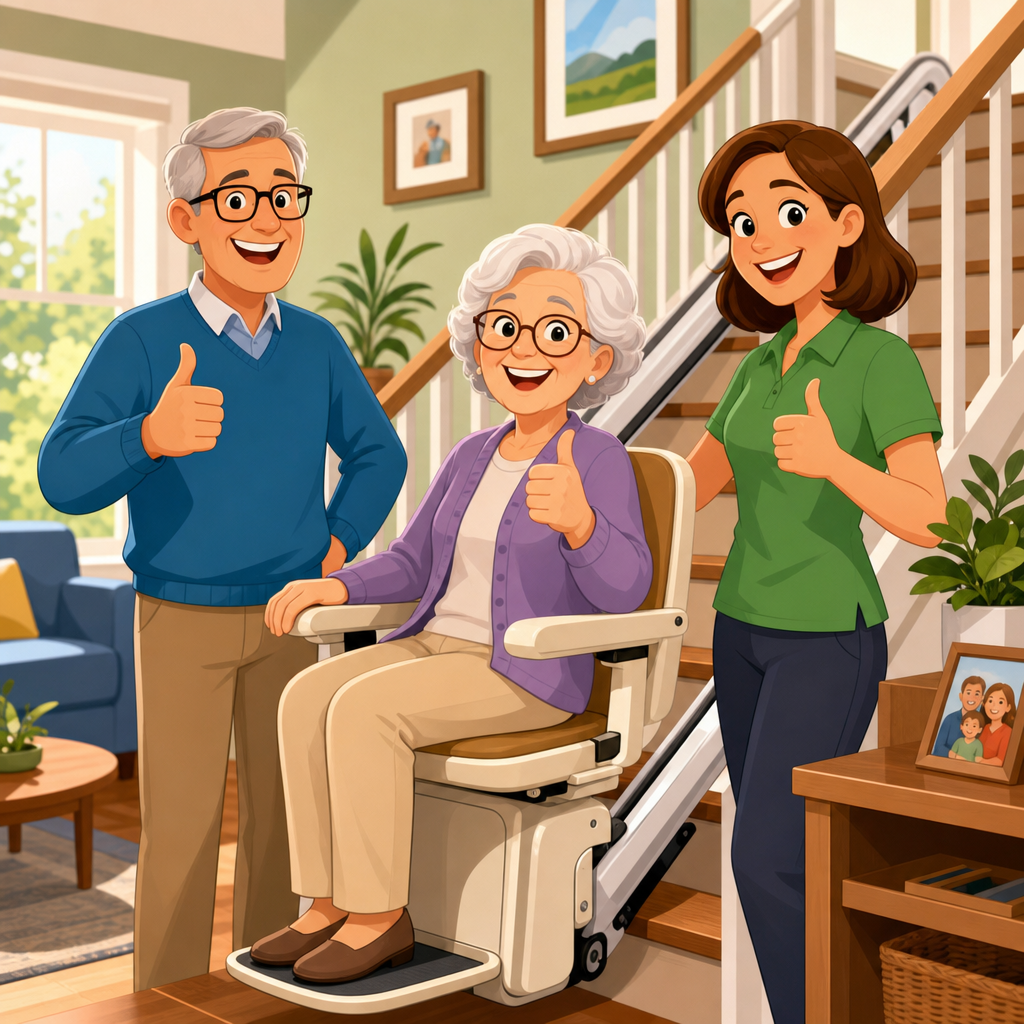
Choosing stair lifts with the best customer satisfaction ratings starts with understanding what families actually value after installation: reliability, comfort, safety, service response, and a fair total cost over time. In the market for best chair lifts for seniors, satisfaction ratings matter because a stair lift is not an impulse purchase; it is a mobility solution that affects daily independence, fall risk, and whether someone can remain safely at home. A stair lift, sometimes called a chair lift for stairs, is a motorized seat that travels along a rail mounted to the staircase, carrying a user between floors without climbing steps. I have worked with families comparing models, measuring staircases, and reviewing post-install service records, and the same pattern appears repeatedly: the best-rated brands are not always the cheapest, but they consistently deliver smooth rides, dependable parts, and better local support. This hub article explains how to evaluate top-rated stair lifts, which brands earn strong customer feedback, what features matter most for seniors, and how to use this guide as the starting point for deeper comparisons across straight, curved, indoor, and outdoor systems.
Customer satisfaction ratings are especially useful in this category because brochures often sound similar. Nearly every manufacturer promises safety sensors, swivel seats, and simple controls. What separates one option from another is the ownership experience. Does the dealer answer quickly when a chair stops mid-rail? Is the seat comfortable for a rider with arthritis? Can the unit fold tightly enough for a narrow staircase? Are replacement batteries easy to source? These practical questions shape ratings far more than marketing claims do. For seniors and adult children, the goal is not just buying a machine; it is choosing a stair lift company and dealer network that reduce stress for years. That is why this guide focuses on real decision factors behind satisfaction, while also serving as the central resource in a broader buying-guides cluster on best chair lifts for seniors.
What Customer Satisfaction Ratings Really Measure
In stair lift reviews, high satisfaction usually reflects five measurable factors: installation quality, ride performance, ease of use, service support, and perceived value. Installation quality matters because even a well-engineered lift can feel jerky or noisy if the rail alignment is poor. Ride performance includes start-and-stop smoothness, seat stability, noise level, speed consistency, and confidence on the staircase. Ease of use covers seat height, armrest shape, rocker or toggle controls, remote-call stations, and how easy it is to fold the footrest and seat when not in use. Service support becomes critical after the sale. The brands that keep customers happiest typically have broad dealer coverage, stocked parts, and technicians trained on a narrow range of systems rather than many unrelated accessibility products.
Ratings also need context. A company may score well on straight stair lifts yet draw weaker feedback on custom curved installations because curved rails involve longer lead times, higher pricing, and more variables during templating. Likewise, some users give lower reviews because of sticker shock, even when the actual product performs well. I advise families to read ratings in layers: overall brand reputation, local dealer reputation, and reviews mentioning the exact model type they need. A straight indoor stair lift for a standard staircase is easier to standardize than a hinged rail at a doorway or an outdoor installation exposed to heat, humidity, and rain. Good research means separating dissatisfaction caused by product quality from dissatisfaction caused by fit, expectations, or dealer communication.
Brands Commonly Associated With High Satisfaction
Several manufacturers consistently appear in conversations about top-rated stair lifts: Bruno, Stannah, Handicare, Harmar, Acorn, and in some regions Access BDD through dealer channels. Bruno is often praised for build quality, quiet operation, and strong dealer training in North America. Its Elite straight and curved lines commonly receive positive comments from users who want a sturdier feel and a higher weight capacity. Stannah has a long history in the stair lift market and typically earns high marks for ride quality, seat comfort, and refined engineering, especially on curved staircases. Handicare is frequently noted for model variety and practical options such as hinged rails for doorways, making it a strong fit where layout challenges influence satisfaction.
Harmar stands out for breadth, including straight, curved, and outdoor systems, and often appeals to shoppers balancing price and serviceability. Acorn has broad consumer awareness and strong availability, with positive feedback often centered on fast installation for straightforward stairs. However, satisfaction can vary more by dealer or sales process, so local reputation matters. No single manufacturer is best for every home. In my experience, Bruno and Stannah often lead when buyers prioritize premium feel and long-term ownership confidence, while Handicare and Harmar frequently score well when the home requires flexibility or a more budget-conscious configuration. The best chair lift for seniors is the one that matches staircase geometry, user mobility, and the strength of local after-sales support.
Features That Drive Better Reviews From Seniors
The features most tied to high customer satisfaction are not flashy. Seniors rate stair lifts highest when the chair feels secure, simple, and physically comfortable. A powered swivel seat can make a major difference for users with limited trunk rotation because it reduces twisting when getting on and off at the top landing. Folding rails or hinged rail sections improve satisfaction in homes where the track would otherwise block a hallway or doorway. Larger footrests help users with bigger shoes or reduced ankle flexibility. Upholstery shape matters more than many buyers expect; a well-contoured seat with supportive armrests feels safer than a thin perch, especially during repeated daily use.
Battery backup is another major factor. Most modern stair lifts use battery-powered operation with charging points along the rail, allowing use during power outages. Customers appreciate this once they live with the product. Safety sensors that stop the lift when it contacts an obstruction are standard, but the best-rated systems combine these with smooth soft-start and soft-stop programming that prevents the abrupt movement users often describe as unsettling. Weight capacity also influences satisfaction. A lift rated at 300 to 400 pounds may be sufficient for many users, but heavy-duty models can improve comfort even for riders below the limit because the seat and drivetrain often feel more substantial. Quiet motors, visible seatbelt design, and easy-to-press controls all contribute to stronger reviews because they reduce friction in everyday use.
How to Compare Leading Stair Lift Options
When comparing top stair lifts, use a framework that mirrors how satisfied owners describe their experience after six months, not just what sales brochures emphasize on day one. Start with staircase type. Straight stair lifts are simpler, faster to install, and less expensive than curved stair lifts, which require custom rail fabrication. Next, match the user to the seat and controls. Someone with arthritis may need larger paddles and a powered footrest. Someone with balance issues may benefit from a wider seat, secure armrests, and a seat that locks positively in the swivel position. Then assess service reality: who performs the installation, who carries parts locally, and what the actual callout response time is.
| Brand | Common Strengths | Best Fit | Potential Limitation |
|---|---|---|---|
| Bruno | Strong build, quiet ride, high dealer training standards | Buyers prioritizing premium feel and durability | Often priced above entry-level competitors |
| Stannah | Refined ride quality, excellent curved options, comfort | Homes needing custom solutions with polished engineering | Availability depends heavily on regional dealer coverage |
| Handicare | Flexible configurations, useful hinged rail options | Challenging layouts and practical access constraints | Model experience can vary by dealer setup |
| Harmar | Wide model range, good value, outdoor offerings | Shoppers balancing budget and feature range | Ride refinement may feel less premium on some models |
| Acorn | Fast installation, simple straight-stair solutions | Standard staircases needing quick deployment | Sales and service satisfaction can vary by location |
Use this table as a first filter, not a final verdict. Ask each dealer whether the quoted model includes installation, warranty labor, service visits, powered options, and rail overruns. A lower headline price can produce worse satisfaction if needed features are excluded or if service coverage is thin. The best comparisons are apples-to-apples and include the total ownership picture.
Straight, Curved, and Outdoor Models: Which Type Scores Best?
Straight stair lifts usually earn the highest overall satisfaction ratings because they are the simplest systems mechanically and operationally. They fit a single, uninterrupted staircase, can often be installed quickly, and generally require less maintenance. Because the rail is standardized rather than custom-made, pricing is more predictable and replacement timelines are shorter. For many seniors, a straight stair lift from a reputable dealer is the most reliable path to preserving access between floors.
Curved stair lifts can also score very highly, but satisfaction depends more heavily on accurate measuring, custom manufacturing, and installer skill. Homes with landings, turns, or spiral geometry need a custom rail, and any mistake in specification can delay the project. When done correctly, however, curved systems from experienced brands such as Stannah, Bruno, or Handicare are impressive. Outdoor stair lifts present another category entirely. Weather resistance, UV-stable covers, corrosion protection, and battery performance in temperature extremes all matter. High ratings here usually come from buyers whose dealer correctly set expectations about maintenance and seasonal wear.
Cost, Warranties, and Service: The Hidden Drivers of Satisfaction
Stair lift cost strongly affects reviews, but not always in the way shoppers assume. Buyers are often satisfied paying more when the installation is clean, the chair is comfortable, and service arrives quickly. They are far less satisfied with a bargain unit that needs repeated adjustments. As a general range, straight stair lifts often start around the low thousands installed, while curved stair lifts can cost several times more because each rail is custom fabricated. Outdoor units add weatherproofing costs. Refurbished stair lifts may reduce upfront expense on straight stairs, but satisfaction depends on the quality of reconditioning, battery condition, and warranty support.
Warranty details deserve careful attention. A long parts warranty sounds reassuring, yet labor coverage may be much shorter. Ask specifically about motor, gearbox, batteries, PCB coverage, and whether service travel is included. In practice, the dealer often matters as much as the manufacturer. A responsive local dealer with stocked batteries and a technician who knows the model well can transform ownership. Before buying, ask how quickly they typically respond to a nonworking lift, whether they provide loaner solutions, and what routine maintenance they recommend. These answers predict satisfaction better than a glossy brochure.
How to Choose the Best Chair Lift for Seniors in Your Home
The best way to choose is to combine product fit, user fit, and dealer fit. Measure the staircase, note any doorways or obstructions near the bottom, and document whether the top landing has enough room for safe transfer. Then assess the rider honestly. Consider height, weight, hip and knee mobility, hand strength, vision, and whether more than one person will use the lift. In home assessments I have seen families focus on the wrong detail, such as fabric color, while ignoring transfer safety at the top landing. That is where satisfaction is won or lost.
Request in-home quotes from at least two reputable dealers and insist on a live demonstration if possible. Sit in the chair, fold the footrest, test the controls, and ask how the seatbelt fastens. For a hub page on best chair lifts for seniors, this is the central takeaway: brand reputation gets you to the shortlist, but customer satisfaction depends on matching the right lift to the right staircase with the right installer. Use this guide as your starting point, then continue into detailed comparisons of straight stair lifts, curved stair lifts, heavy-duty models, outdoor systems, rental options, and used chair lifts. A careful, side-by-side review now can prevent costly frustration later. If you are shopping today, schedule two in-home assessments, compare service terms line by line, and choose the lift that will feel dependable every single day.
Frequently Asked Questions
What do customer satisfaction ratings actually tell you when comparing stair lifts?
Customer satisfaction ratings help you look beyond marketing claims and focus on what real owners experience after purchase and installation. For a stair lift, that matters a great deal because this is not a product most families buy casually or replace often. A highly rated model or brand usually reflects strong performance in the areas that affect daily life most: dependable operation, a comfortable ride, easy-to-use controls, quiet travel on the staircase, and confidence in the lift’s safety features. Satisfaction ratings can also reveal whether owners felt supported throughout the process, from the in-home assessment to installation, maintenance, and any service calls that came later.
Just as important, ratings often show how a stair lift performs over time, not just in the first few weeks. Families commonly mention whether the seat remains comfortable, whether folding features make the stairs easier to share, whether battery backup works reliably during outages, and whether the lift starts and stops smoothly for users with limited balance or joint pain. In the best cases, high satisfaction scores indicate that the stair lift did what it was supposed to do: reduce fall risk, restore independence, and make staying at home feel realistic and safe. When evaluating ratings, it is wise to pay attention to patterns rather than one or two extreme reviews. Consistent praise for reliability, installer professionalism, and responsive service usually carries more weight than broad star averages alone.
Which features tend to matter most to seniors and families when rating a stair lift highly?
The features that drive the best customer satisfaction ratings are usually the ones that make everyday use safer, easier, and less stressful. Safety is almost always at the top of the list. Families value swivel seats that make getting on and off more secure at the top landing, seat belts that are simple to fasten, obstruction sensors that stop the lift if something is on the stairs, and battery backup that keeps the unit working during a power outage. These are not just technical specifications; they directly affect how confident the user feels each time the stair lift is used.
Comfort also plays a major role in owner satisfaction, especially for seniors using the lift multiple times each day. A well-padded seat, supportive armrests, a smooth ride, and controls that do not require hand strength or complicated motions can make a significant difference. For many households, convenience features matter almost as much as core safety features. Fold-up seats, armrests, and footrests help preserve stairway space, while call/send controls make it easier for more than one person in the home to use the lift without frustration. In homes where appearance matters, a stair lift that blends neatly with the staircase and folds compactly often receives stronger reviews because it feels less intrusive. Altogether, the most highly rated stair lifts are rarely the ones with the longest feature list on paper; they are the ones whose features solve real mobility problems in a practical, comfortable way.
How important is installation quality and customer service to overall stair lift satisfaction?
Installation quality and customer service are two of the biggest factors behind long-term stair lift satisfaction. Even an excellent stair lift can feel disappointing if measurements are inaccurate, the rail fit is poor, or the installer does not explain how to use the system properly. Families tend to rate their experience much higher when the installation process is organized, respectful of the home, and completed by technicians who clearly understand the product and the staircase layout. A properly installed lift should feel secure, move smoothly, and be positioned so the user can get on and off safely at both ends of the stairs.
Customer service becomes even more important after the installation is finished. Owners want to know that if the lift stops working, starts beeping unexpectedly, or needs routine maintenance, help will be available quickly. Brands with better satisfaction ratings often earn that reputation because they communicate well, honor warranties, provide clear troubleshooting guidance, and respond promptly when repairs are needed. For seniors who rely on the stair lift every day, a long delay in service is not just an inconvenience; it can disrupt access to bedrooms, bathrooms, and the rest of the home. That is why many families judge a company not only by the product itself but by how it handles follow-up support. In practical terms, responsive service, a dependable local dealer network, and straightforward warranty coverage can matter almost as much as the lift’s design.
Are the stair lifts with the highest satisfaction ratings always the best value?
Not necessarily, but high satisfaction ratings often point you toward better long-term value. The lowest-priced stair lift is not always the most affordable once you consider reliability, future maintenance, warranty terms, and the possibility of repairs. Likewise, the most expensive model is not automatically the best choice if it includes features the user does not need. Value comes from matching the right lift to the user’s mobility needs, staircase design, and expected frequency of use while also choosing a company with a strong service reputation.
In many cases, the stair lifts with the best satisfaction ratings are considered a strong value because owners feel they received dependable performance, a safe installation, and support that justified the total cost. Families often report being happiest when they focus on total ownership experience rather than sticker price alone. That includes the initial assessment, customization for straight or curved stairs, maintenance expectations, battery replacement costs, and how easy it is to get service if a problem arises. A stair lift that works reliably for years and helps a senior remain safely at home may deliver excellent value even if the upfront price is higher. For this reason, smart shoppers compare quotes carefully, ask what is included, and weigh customer feedback on durability and support, not just purchase price. The best value is usually the stair lift that performs consistently, meets the user’s needs comfortably, and avoids costly headaches later.
How can families use customer reviews and ratings to choose the best chair lift for seniors?
Families can use customer reviews most effectively by reading them with a clear checklist in mind. Instead of looking only at overall star scores, focus on comments about reliability, ease of use, ride comfort, safety, and service response. These are the areas that most directly affect whether a stair lift will work well in daily life. It is especially helpful to look for reviews from people whose situations resemble your own, such as seniors with arthritis, limited balance, or difficulty standing from a seated position, as well as homes with narrow staircases, landings, or curved stairs. Those details make reviews much more relevant than general praise alone.
It is also wise to compare what reviewers say about the full experience, not just the product. Look for feedback on the consultation, whether the company explained options clearly, whether the installation was completed on time, and how problems were handled afterward. Repeated mentions of slow repair response, confusing warranty terms, or poor communication should be taken seriously. On the other hand, when many reviewers independently mention a smooth installation, dependable operation, and courteous support staff, that is often a strong sign of a well-run company. Families should combine those review insights with an in-home evaluation and direct questions about safety features, warranty coverage, maintenance, and service availability in their area. Reviews are most useful when they help confirm that a stair lift will be safe, practical, and dependable for the specific senior who will use it every day.