Choosing the best chair lifts with custom controls for disabled users starts with understanding that no single lift fits every body, staircase, or mobility condition. In my work evaluating home accessibility equipment, the biggest mistake I see is buying a stair lift based on price alone, then discovering the seat, joystick, arm controls, or transfer height does not match the user’s strength, coordination, or range of motion. A chair lift is a motorized seat that travels along a rail fixed to the stairs, while custom controls are adapted input methods such as oversized buttons, toggle switches, paddle controls, retractable remotes, joystick modules, or alternative call stations designed to suit the user’s abilities. This matters because the right control system can be the difference between independent daily use and a device that requires constant caregiver help. For disabled users with stroke-related weakness, spinal cord injury, arthritis, muscular dystrophy, cerebral palsy, Parkinson’s disease, or limb difference, control layout is not a minor feature; it is a core safety requirement. The best chair lifts for disabled users combine reliable drive systems, stable seating, easy transfers, obstruction sensors, battery backup, and controls tailored to real physical needs. This hub article explains what custom controls actually include, which chair lift brands and models are strongest in this area, how to compare straight and curved systems, and what buying factors determine long-term satisfaction, serviceability, and safe use at home.
What custom controls mean on a chair lift
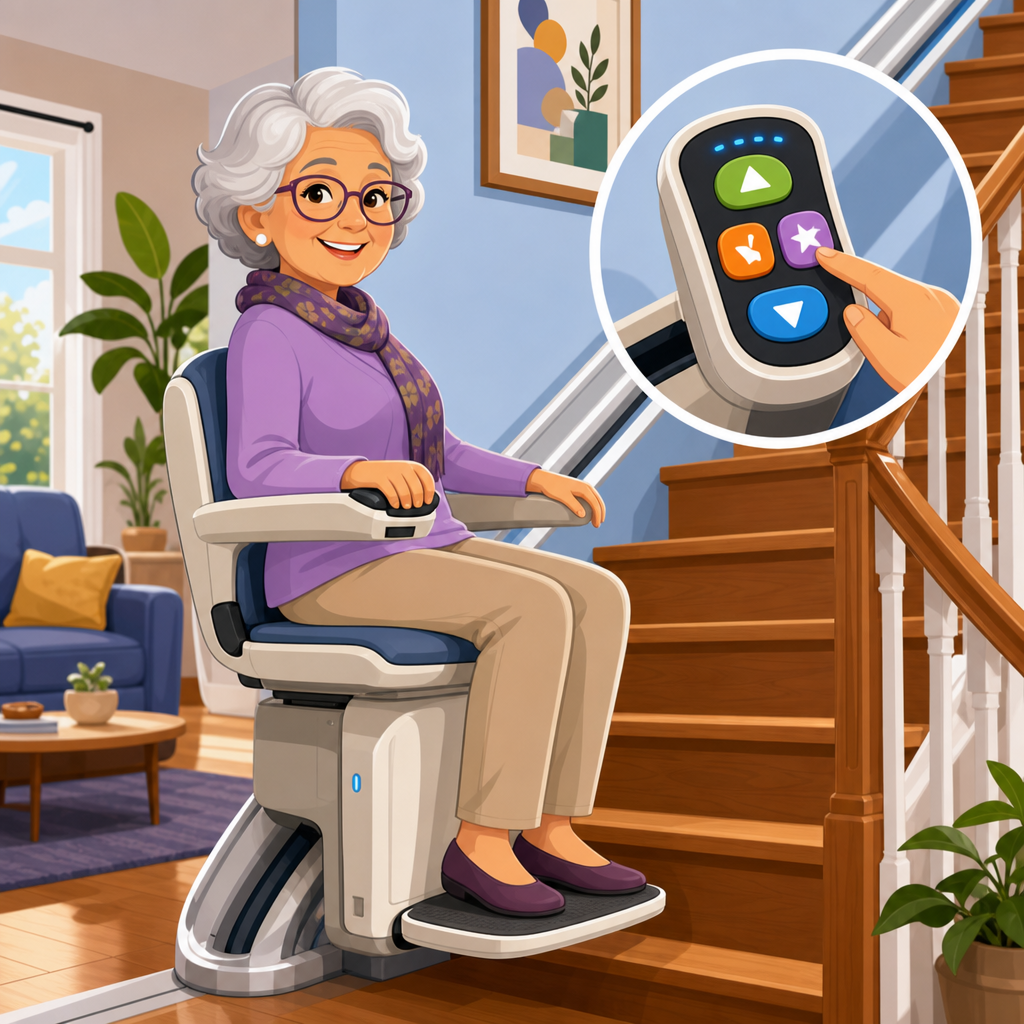
Custom controls on a stair lift are any user interface modifications that make operation easier, safer, or possible for someone who cannot comfortably use standard rocker switches on the armrest. In practice, this can include enlarged constant-pressure toggles for users with reduced finger dexterity, light-touch paddles for severe arthritis, left-side or right-side placement based on unilateral weakness, folding or fixed call/send stations, powered swivel and footrest functions, key locks for cognitive safety, and remote controls that reduce the need to reach or twist. Some manufacturers also support integration through dealers for nonstandard switches, though availability depends on model, installer expertise, and local code requirements.
Why does this matter so much? Because stair lift operation is more demanding than many buyers assume. The user must position themselves for transfer, stabilize the body, activate movement continuously, stop if pain or spasm occurs, and often operate the seat swivel at the landing. For a person with limited hand closure or tremor, a small recessed switch can be unusable. For someone with hemiparesis after stroke, the wrong side control location may force unsafe reaching across the body. For a wheelchair user with minimal trunk control, the difference between a manual and powered swivel can directly affect fall risk.
When I assess a lift setup, I look at the whole transfer sequence rather than the travel feature alone. Can the user approach safely with a cane, walker, or wheelchair? Can they sit without dropping too far? Can they keep feet clear of the stair edge? Can they operate the control while maintaining contact with the armrest? These questions identify whether a lift truly offers custom usability or only a marketing claim.
Best chair lifts for disabled users: top categories and standout options
The best chair lifts for disabled users usually come from established manufacturers with strong dealer networks, clear parts support, and proven safety features. Bruno, Harmar, Handicare, Access BDD, and Stannah are the names most often considered in North America and Europe. Each brand approaches customization differently, so the strongest choice depends on the user profile rather than a universal ranking.
Bruno stair lifts are frequently recommended because the company has a strong reliability reputation, especially for straight lifts such as the Elan and the heavier-duty Elite line. Bruno models are known for stable ride quality, simple arm controls, and dealer familiarity with seat and rail options. For disabled users who need a dependable standard interface that can be adapted through placement, seat height, and powered features, Bruno is often a safe first short list candidate.
Harmar offers models that are often chosen for value and feature breadth. The Pinnacle series is common in residential installations and has a compact folded profile that helps in narrow stairways. Harmar dealers may provide useful setup flexibility, including powered folding rails or seating choices, which matters in homes where door clearance or landing space is limited. For some users, reduced obstruction at the staircase is as important as the control itself.
Handicare stands out for twin-rail curved systems and options that can work well in complex stair layouts. The brand’s seat ergonomics and control simplicity are often appreciated by older adults and users with reduced dexterity. Stannah remains a premium contender because of fit-and-finish, smooth ride quality, and thoughtful safety engineering, especially on curved stairs. Access BDD is notable in many markets for extensive curved lift expertise and custom rail manufacturing.
| Brand | Best for | Control-related strengths | Potential limitation |
|---|---|---|---|
| Bruno | Reliable straight lifts and heavy users | Simple arm controls, powered options, strong dealer support | Curved systems can be pricier |
| Harmar | Value-conscious buyers and narrow stairs | Compact folding design, practical control layouts | Ride feel varies by model and installation |
| Handicare | Curved stairs and ergonomic seating | Accessible toggle controls, good curved customization | Feature availability depends on dealer package |
| Stannah | Premium curved and straight installations | Refined controls, strong safety systems, powered features | Higher purchase cost |
| Access BDD | Complex staircase geometry | Highly tailored rail solutions, adaptable seating setups | Dealer coverage varies by region |
No brand wins every scenario. A user with advanced rheumatoid arthritis may prioritize feather-light control pressure and powered swivel. A larger user transferring from a mobility scooter may need higher seat-to-footrest stability and greater weight capacity. A person with severe one-sided weakness may need controls placed on the stronger side plus a retractable rail at the lower landing. The best chair lift for disabled users is the one that matches the body, home, and caregiver routine together.
How to match chair lift controls to specific disabilities
Different disabilities create different control challenges, so matching the interface to the condition is the most effective way to avoid buyer regret. For arthritis, look for oversized or low-resistance controls, wider armrests for support, and powered swivel or powered footrest options to reduce bending and hand strain. Small thumb toggles can aggravate pain in the carpometacarpal joint of the thumb, a frequent source of weakness in older adults.
For stroke survivors, side placement is critical. If the user has right-sided weakness, the primary operating control should usually be on the left armrest, and the swivel release or powered swivel control must also be reachable from that side. Seat depth, pelvic support, and transfer space at the top landing are equally important because many post-stroke users can stand pivot only in one direction. I have seen otherwise good lifts abandoned because the installer failed to consider transfer direction.
For Parkinson’s disease, tremor and bradykinesia make stable seating and easy continuous activation essential. Controls should provide clear tactile feedback without requiring precise finger isolation. For cerebral palsy or other spastic movement disorders, a firm seat, secure arm support, and a control that tolerates less precise movement are often better than delicate interfaces. For users with spinal cord injury who can perform supported transfers, seat height relative to the wheelchair cushion can matter more than brand name, because even a two-inch mismatch can turn a safe lateral transfer into a difficult lift.
For amputees or users with significant lower-limb asymmetry, footrest size and angle deserve close attention. A poorly placed footrest can destabilize posture during travel. For people with low vision, illuminated controls, high-contrast labels, and predictable switch placement improve confidence. For users with mild cognitive impairment, locking call stations and a very simple interface may be safer than advanced options with multiple buttons.
Straight vs curved chair lifts and why customization changes the decision
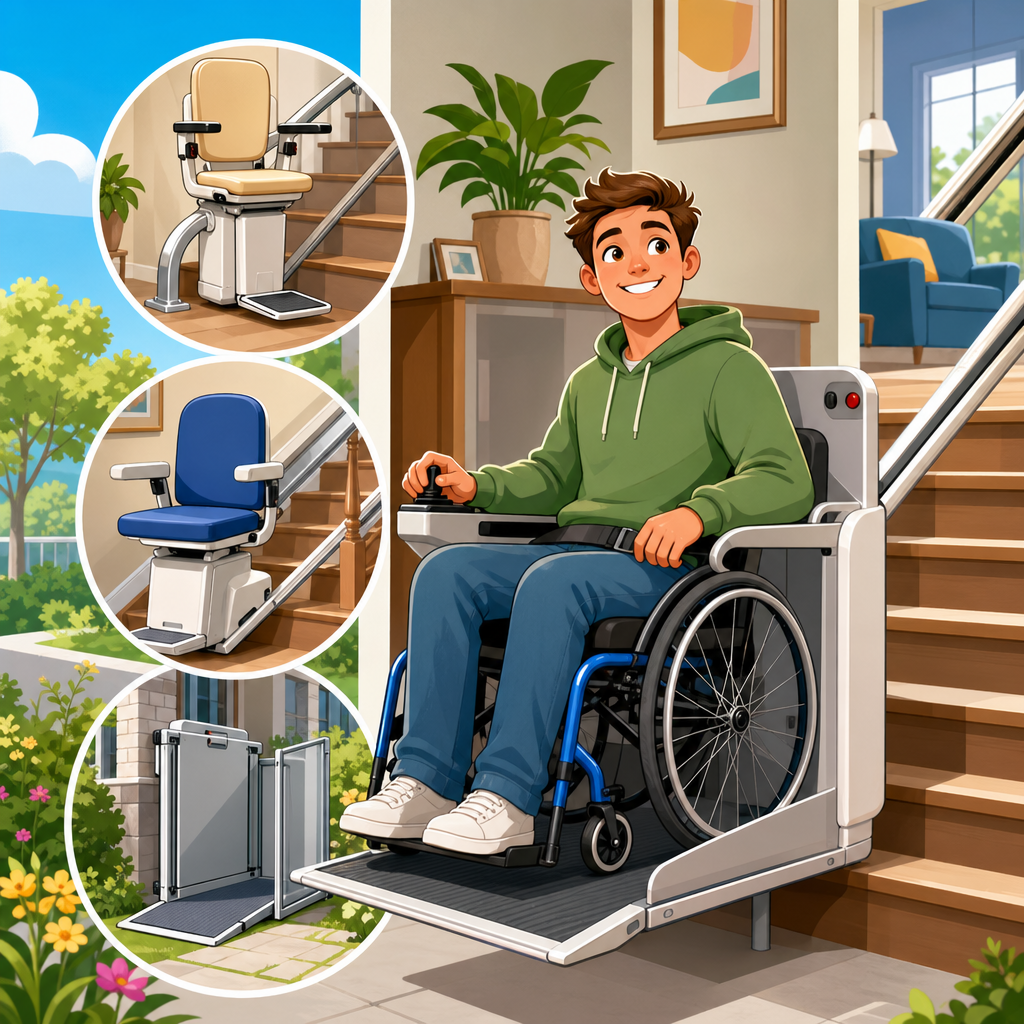
Straight stair lifts run on a simple rail for stairs without turns, intermediate landings, or spiral sections. They are less expensive, faster to install, and easier to service because parts and rail sections are standardized. Curved stair lifts are built for staircases with bends, landings, or unusual geometry, and they require custom rail fabrication using detailed measurements or digital mapping. This usually raises cost substantially, but it also opens the door to more precise parking positions and transfer points, which can be valuable for disabled users.
Customization changes the buying decision because the rail path affects where the user gets on and off, how much room exists for a caregiver, and whether the seat can swivel safely away from the staircase. On a straight staircase, the key questions are often width, transfer clearance, and folding profile. On a curved staircase, the critical issue may be whether the seat can stop exactly where the user’s stronger side aligns with a handrail, grab bar, or wheelchair position at the landing.
In homes with narrow hallways at the base of the stairs, a hinged rail or retractable rail can prevent a trip hazard or blocked doorway. That is not a luxury feature. For someone using a walker or rollator, floor clearance at the lower landing can determine whether the lift works with the rest of the mobility route. I advise buyers to think in terms of movement chain: approach, transfer, ride, dismount, and continuation into the next room. The right customization supports all five steps.
Safety, installation, and service factors that separate good lifts from poor purchases
The safest chair lifts for disabled users share a core set of features: obstruction sensors on the carriage and footrest, seat belt restraint, battery operation with automatic charging, overspeed protection, limit sensors, and a stable seat frame with secure armrests. In many markets, stair lifts are designed to comply with standards such as ASME A18.1 in the United States or applicable European machinery and lift safety requirements. Buyers do not need to memorize standards, but they should expect a dealer to explain how the product meets recognized safety criteria.
Installation quality is as important as the lift itself. The rail is typically mounted to stair treads, not the wall, and poor fastening or inaccurate measurement can create ride vibration, parking misalignment, or premature wear. A professional home assessment should include stair width, riser and tread dimensions, landing depth, nearby door swings, power outlet access, and the user’s transfer method. Reputable dealers also perform a ride test and teach the user how to lock, park, fold, and send the unit.
Service support is where many bargains fail. Battery replacement, charger troubleshooting, seat switch faults, and call station issues are normal lifetime maintenance items. Ask how quickly a technician can respond, whether parts are stocked locally, and whether the installer is factory trained. A cheaper online unit with weak service coverage can become unusable after a simple control failure. Since disabled users may rely on the lift multiple times per day, downtime is not merely inconvenient; it can confine someone to one floor of the home.
How to buy the right chair lift and avoid expensive mistakes
Start with an in-home assessment from at least two qualified dealers. Bring the actual user, primary caregiver, and any mobility equipment involved in the transfer. Ask for a live demonstration of the control style, not just a brochure. The user should test button pressure, armrest height, seat width, swivel function, and footrest reach. If the user struggles in the showroom, they will not improve with daily use at home.
Next, request a written quote that specifies rail type, seat dimensions, weight capacity, power options, warranty terms, and exactly which custom controls or powered functions are included. Vague proposals cause disputes later. Compare straight-lift and curved-lift warranties carefully; custom rails often have different terms from drive components. Also ask whether the lift can be reconfigured if the user’s condition changes. Progressive diseases can alter control needs within a year.
Used and reconditioned stair lifts can reduce cost on straight stairs, but buyers should be cautious. Straight rails can sometimes be reused effectively, while curved rails are usually custom and less practical secondhand. A refurbished unit is only a smart buy if the installer supports it fully, provides fresh batteries, confirms parts availability, and ensures the control layout still fits the user. Price matters, but fit, support, and safety matter more.
The strongest buying decision comes from matching customization to everyday function. Choose a chair lift with controls the user can operate consistently, a transfer setup that reduces fall risk, and service support that keeps the lift running. If you are comparing the best chair lifts for disabled users, use this hub as your starting point, then move to model-specific reviews, dealer assessments, and an in-home trial. A well-matched lift restores access to the full home, protects energy, and preserves independence every single day.
Frequently Asked Questions
What makes a chair lift with custom controls better for disabled users than a standard stair lift?
A chair lift with custom controls is often a much better fit because it can be matched to the user’s actual movement patterns, strength, coordination, and comfort needs rather than forcing the person to adapt to a one-size-fits-all design. Standard stair lifts usually come with basic armrest toggles or simple rocker switches, which may work well for some people but can be difficult or even unsafe for users with limited grip strength, tremors, arthritis, paralysis on one side, reduced dexterity, or cognitive processing challenges. Custom controls can include larger buttons, joystick-style controls, touch-sensitive pads, one-handed operation, repositioned switches, reduced-force activation, or controls mounted on the more functional side of the body. In many cases, the difference is not just convenience, but daily usability and safety.
The best systems also consider transfer needs, seating posture, and the timing of controls during boarding and exit. For example, a user who struggles with trunk stability may need a seat that swivels smoothly and locks firmly into place before standing. Someone with limited shoulder range may need arm controls positioned lower or closer to the front edge of the chair. Others may benefit from remote call/send controls, footrest folding assistance, or seat-height modifications to reduce strain during transfers. When evaluating chair lifts for disabled users, the most important question is not whether the lift goes up and down the stairs, but whether the person can safely approach it, sit down, operate it, ride securely, and get off without help or excessive effort.
Which custom control features should I look for when choosing the best chair lift for a specific disability or mobility limitation?
The right control features depend heavily on the user’s diagnosis, functional ability, and daily routine. For people with weak grip or hand pain, look for oversized controls that require minimal pressure, along with ergonomic placement that avoids wrist strain. Users with Parkinson’s disease, tremors, or coordination issues may do better with controls that have clear tactile feedback and a forgiving activation design rather than very small or highly sensitive switches. People who have had a stroke or who use only one hand should look for one-sided controls that can be installed on the stronger side, as well as a seat and armrest layout that supports easier transfers. For users with spinal cord injuries or significant lower-body weakness, transfer height, swivel locking, seat depth, footrest accessibility, and arm support can matter just as much as the control itself.
You should also think beyond the main travel switch. Good customization may include wireless remotes, powered swivel seats, adjustable seat-to-footrest distance, retractable or powered footrests, seatbelt options that are easier to fasten with limited dexterity, and obstruction sensors that improve safety. Some users benefit from simple controls with very clear directional labeling, while others need advanced options integrated with caregiver support or home accessibility routines. The best way to choose is to assess the entire sequence of use: approaching the lift, transferring into the seat, starting the ride, maintaining stable posture during travel, and exiting at the landing. A lift that looks impressive on paper may still be the wrong choice if the user cannot comfortably reach or understand the controls under real-world conditions.
Can chair lifts be customized for users with limited hand function, one-sided weakness, or difficulty transferring?
Yes, and in many cases they should be. Some of the best chair lifts for disabled users are not the ones with the longest feature list, but the ones that can be tailored to the user’s exact physical limitations. For someone with limited hand function, customization may include larger paddles, soft-touch controls, joystick adaptations, lower-resistance switches, or alternative placement that reduces the need for finger isolation or a strong pinch grip. If the user has one-sided weakness from stroke, cerebral palsy, or injury, the control can often be mounted on the stronger side, and the seat configuration can be selected to make transfers easier from the side where balance and stability are better. This can dramatically improve independence and reduce caregiver strain.
Transfer difficulty is another major reason customization matters. A user may need a higher or lower seat height, a more supportive backrest, a powered swivel mechanism, folding arms, or a seat shape that allows safer lateral movement. In narrow staircases or tight landings, small design changes can make the difference between an easy exit and a risky one. This is why a proper assessment is so important before buying. Measurements of the staircase are only part of the process. A quality provider should also evaluate how the user stands, pivots, reaches, sits, and rises; whether they use a cane, walker, or wheelchair; how much assistance they currently need; and whether their condition is stable or progressive. The goal is to make sure the chair lift supports the user’s present needs while remaining practical as those needs change over time.
How do I know if a chair lift is safe and comfortable for daily use in my home?
Safety and comfort come from the combination of correct fit, reliable operation, and a layout that matches the user’s home environment. A chair lift may have excellent safety certifications, but if the seat is too high, too low, too deep, too narrow, or poorly positioned for the landing, it can still create daily problems. Start by focusing on transfer safety. The user should be able to get onto and off the chair without twisting awkwardly, overreaching, or losing balance. A swivel seat with secure locking, easy-to-use armrests, a supportive back, and a footrest that keeps the legs comfortably positioned are all important. The rail should be installed to allow smooth travel without blocking necessary walking space more than expected, and the upper and lower landings should provide enough room for safe entry and exit.
For daily comfort, look at ride quality, seat cushioning, posture support, noise level, and ease of operation. People are more likely to use the lift consistently if it feels stable and predictable rather than jerky or intimidating. Good models include seatbelts, obstruction sensors, battery backup, and call/send controls, but comfort often depends on subtler details such as armrest height, control reach, and how naturally the seat lines up with the landing. I always recommend a professional home assessment and, if possible, a hands-on demonstration. This helps reveal issues that brochures never show, such as whether the user can operate the control without fatigue, whether the swivel action is manageable, and whether the transfer position works with their walker, wheelchair, or caregiver assistance routine.
Is it a mistake to choose a chair lift based mainly on price?
In most cases, yes. Price matters, but choosing a chair lift based mainly on the lowest quote is one of the most common and costly mistakes homeowners make. A lower-priced unit may seem appealing at first, but it can quickly become the wrong investment if the controls are hard to use, the seat does not support the user properly, or the transfer setup creates fall risk. When a lift is uncomfortable or difficult to operate, people often avoid using it, which defeats the whole purpose of installing accessibility equipment in the first place. Even worse, an ill-fitting lift may require modifications, service calls, or full replacement much sooner than expected. The real value of a chair lift comes from reliability, usability, and how well it supports long-term independence.
A better approach is to compare total suitability rather than sticker price alone. Ask whether the controls can be customized, whether the seat and arm configuration fit the user, whether the lift is appropriate for the specific staircase, and whether the installer has experience adapting equipment for disability-related needs. You should also consider warranty coverage, service availability, battery backup, parts support, and whether the system can accommodate changes in mobility over time. A slightly more expensive chair lift that is properly fitted and easier to use every day is often the far better investment than a cheaper model that creates frustration, discomfort, or safety concerns. For disabled users, the best chair lift is the one that matches the person first and the staircase second, not the one with the lowest upfront number.