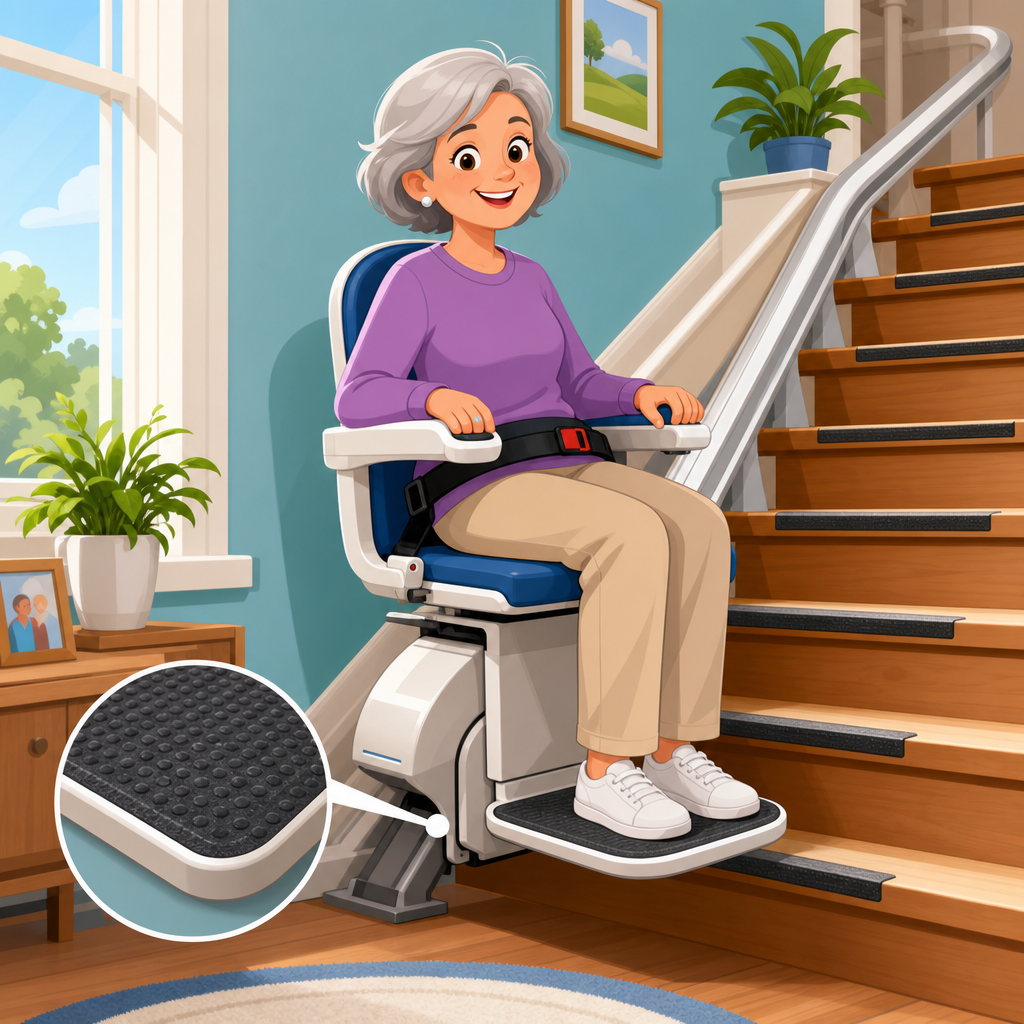
Anti-slip features in chair lifts for disabled people are not minor extras; they are core safety systems that determine whether a lift remains stable, predictable, and usable in everyday life. In practical buying decisions, families often focus first on weight capacity, seat comfort, or battery backup, yet traction and slip prevention usually have a bigger effect on real-world confidence. A stairlift or vertical platform lift is only as safe as its ability to keep the rider, the seat, and the moving components secure during boarding, travel, and exit. When I have reviewed chair lifts with clients in private homes and care settings, the models that inspired the most trust were always the ones that reduced slipping at every contact point, not just on the footrest.
For this guide, chair lifts refers mainly to stairlifts and closely related seated lifting systems used by disabled users in homes, apartments, and assisted living properties. Anti-slip features include textured footrests, non-skid seat materials, secure armrest grip zones, seat belts, obstruction sensors, swivel-seat locks, carriage braking systems, and track designs that minimize jolts. Together, these features help prevent falls caused by wet shoes, weak balance, poor transfers, muscle spasticity, or sudden starts and stops. This matters because falls on stairs remain one of the most serious household hazards for people with mobility impairments, older adults, and users recovering from stroke, spinal injury, or surgery. Choosing the best chair lifts for disabled users means looking beyond brand claims and identifying which anti-slip systems actually reduce risk in normal daily use.
This hub article explains what anti-slip features do, which designs work best for different disabilities, how major lift types compare, and what to check before buying. It is written to serve as the main reference point within a broader buying-guides section, so the goal is not just to list products but to give you a framework for judging them. If you are comparing straight stairlifts, curved stairlifts, perch lifts, or platform-based systems, the same question should guide the purchase: where could slipping happen, and what has the manufacturer done to stop it?
Why anti-slip design matters more than most buyers expect
Most lift incidents do not begin with a mechanical failure. They start during transfer: the moment a user turns, lowers onto the seat, places feet on the footrest, reaches for the armrest, or stands up at the landing. That is why anti-slip design must be assessed as a complete user journey. A textured footplate helps, but if the seat upholstery is slick vinyl, the swivel seat does not lock firmly, or the armrests taper awkwardly, the user can still slide or lose balance. In my experience evaluating domestic lifts, transfer stability is the single most overlooked part of product comparison.
There are several common causes of slipping on chair lifts. Reduced ankle control can let the foot drift off a smooth footrest. Limited trunk strength can cause the pelvis to slide forward on a flat seat. Users with Parkinsonian symptoms or neuropathy may not reposition their feet quickly enough after boarding. Carers often notice another issue: loose clothing or waterproof trousers can move easily against synthetic seat surfaces. Good anti-slip engineering addresses all of these variables through material choice, geometry, and controlled motion.
Standards and safety practices also point buyers in this direction. In many markets, stairlifts are assessed against established machinery and accessibility requirements, and reputable manufacturers build in overspeed governors, seat belts, obstruction detection, and interlocks. Those features are essential, but they should be considered baseline protection rather than premium upgrades. The stronger differentiator between average and excellent lifts is how well the product prevents micro-slips before they become falls.
Key anti-slip features to look for in the best chair lifts for disabled users
The best chair lifts for disabled users combine several anti-slip elements instead of relying on one headline feature. First, look for a footrest with a textured, high-friction finish. Ribbed rubber inserts or molded non-skid surfaces give better shoe contact than smooth painted metal. A larger footrest also matters because it allows users with braces, orthotics, or poor foot placement to keep both feet fully supported. Some premium units add edge contrast, which helps visually impaired users judge positioning more accurately.
Second, evaluate the seat surface. Moderate friction is ideal. If the upholstery is too slick, the rider may slide forward; if it is too grippy, transfers become harder. Contoured seat bases generally perform better than completely flat pads because they reduce forward drift during travel. Well-designed armrests support weight during sitting and standing, and they should feel secure even with weak grip strength. Padded tops are fine, but the best versions include a stable profile that resists the hand slipping sideways.
Third, check the restraint and locking systems. A seat belt prevents forward movement on the journey, but it must be easy to latch one-handed if the user has hemiparesis or arthritis. A swivel seat lock at the top landing is especially important. It allows the user to dismount onto the floor rather than toward the stairwell, and a positive lock prevents the chair rotating unexpectedly under load. Finally, smooth start-stop programming, battery-powered drive systems, and reliable braking all reduce the sudden motion that can trigger a slip.
| Feature | What it prevents | Best for | What to verify before buying |
|---|---|---|---|
| Textured footrest | Feet sliding during travel or transfer | Users with weak ankle control, braces, neuropathy | Surface material, size, edge grip, easy cleaning |
| Contoured seat cushion | Forward pelvic slide | Users with poor trunk stability | Depth, firmness, upholstery friction |
| Swivel-seat lock | Twisting or falling at the top landing | Most stairlift users | Lock strength, release lever position, ease of use |
| Seat belt or harness | Forward movement during travel | Users with balance impairment or spasms | Buckle type, one-handed operation, fit |
| Smooth start-stop drive | Jolts that destabilize posture | Frailer users, pain-sensitive users | Ride quality on demo, rail alignment, motor noise |
How different lift types handle slip prevention
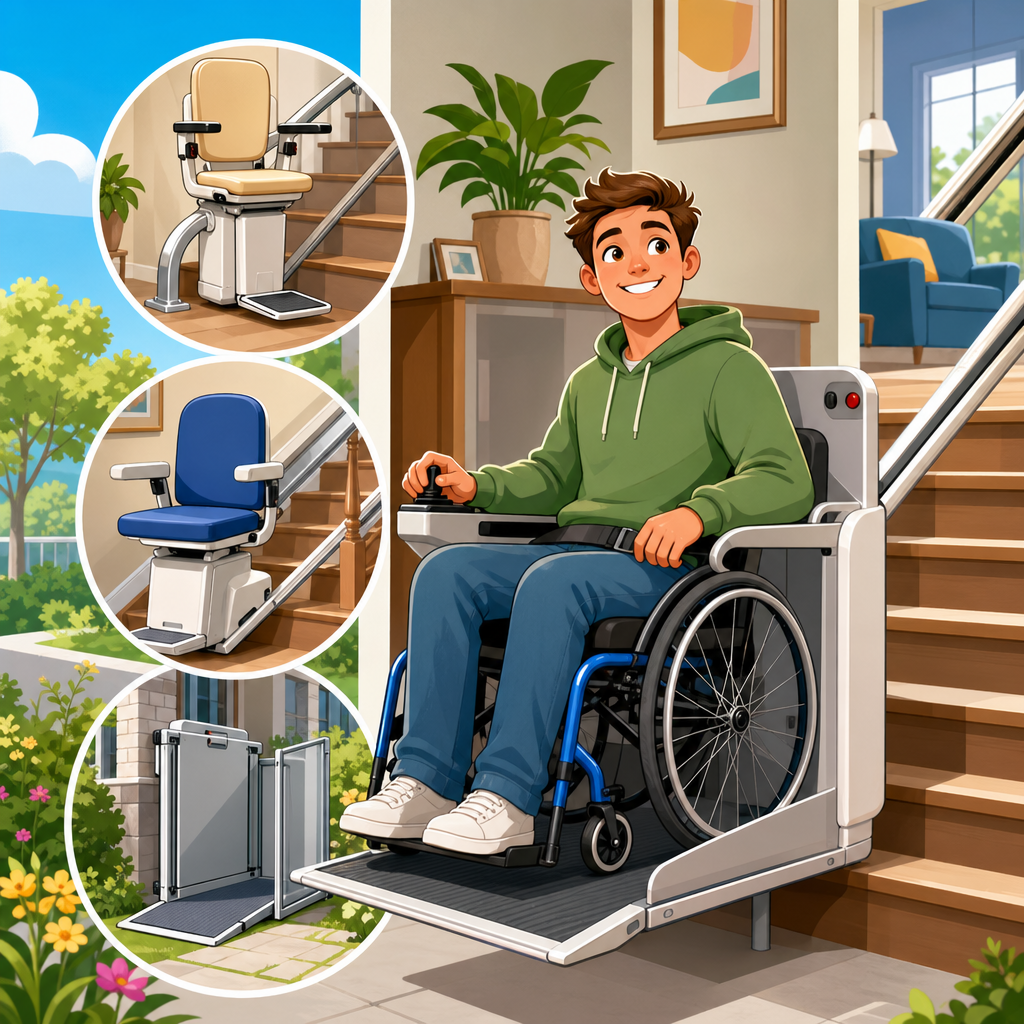
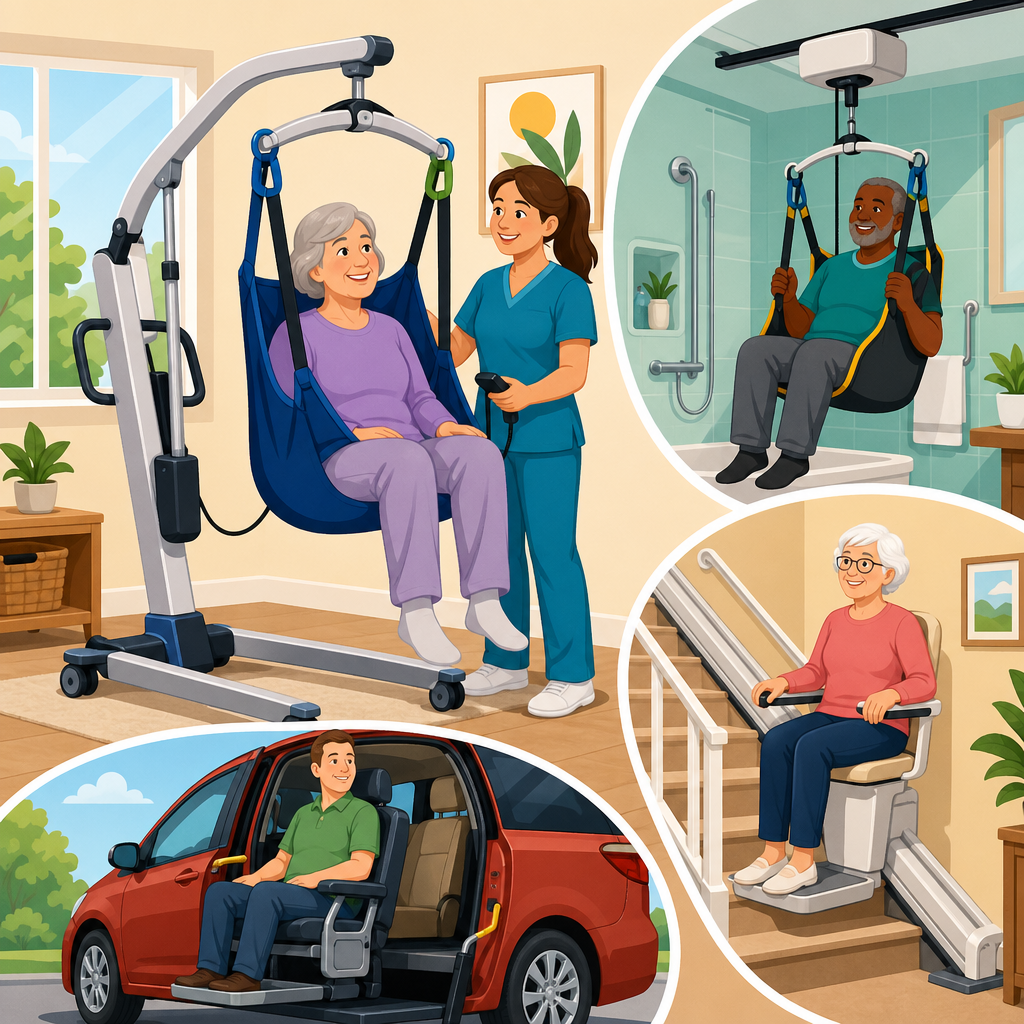
Straight stairlifts are usually the easiest category to assess because the rail path is simple and ride quality is more predictable. The best straight models from brands such as Bruno, Handicare, Harmar, and Stannah often include non-slip footrests, retractable seat belts, and secure swivel mechanisms as standard or near-standard. Because the installation is less complex, performance depends heavily on seat ergonomics and transfer setup at the top and bottom landings. If the user can approach the chair cleanly and place both feet squarely, anti-slip performance is usually excellent.
Curved stairlifts introduce more variables. As the lift travels around bends, the rider may experience slight lateral shifts, especially on tighter radii. That makes seat contouring, armrest stability, and controlled speed even more important. In curved installations, I always pay close attention to how firmly the swivel seat locks and whether the rail parking position leaves enough space for a stable transfer. A beautifully engineered rail is not enough if the user has to step awkwardly around it while exiting.
Perch lifts and sit-stand models suit users who cannot fully bend the knees or prefer a semi-standing posture, but they require careful anti-slip design because the user’s center of gravity stays higher. These lifts need especially secure foot platforms, supportive knee pads where fitted, and handholds that resist sliding. For some disabled users, a perch model improves comfort; for others, it increases transfer risk. Wheelchair users or those with very limited transfer ability may be safer with a vertical platform lift, where slip prevention depends more on platform surface grip, ramp angle, gate interlocks, and wheelchair wheel retention.
Matching anti-slip features to specific disabilities and mobility patterns
No single chair lift is best for every disabled user because slipping risk changes with the person’s diagnosis, strength, coordination, and home layout. For stroke survivors with one-sided weakness, easy-to-use controls and a seat belt that can be managed with the stronger hand are critical. The chair should also permit stable positioning of the affected leg on a broad footrest. Users with multiple sclerosis may need a lift that remains secure even when fatigue changes their posture from day to day, so supportive seat shaping and gentle ride quality become high priorities.
For people with Parkinson’s disease, freezing and impaired balance can make the transition on and off the seat more hazardous than the ride itself. In those cases, firm armrests, a dependable swivel lock, and enough landing space for deliberate movement matter more than cosmetic features. Users with cerebral palsy or muscle spasticity often benefit from stronger restraint options and seating that minimizes forward slide during involuntary movement. A standard lap belt may be enough for some, while others need a clinician’s input before purchase.
Amputees, users with diabetic neuropathy, and people with reduced sensation in the feet need especially clear contact surfaces. If they cannot reliably feel where the foot is placed, the footrest texture and shape become essential. Bariatric users should look beyond maximum weight rating and ask how the chair maintains lateral stability under higher load. Wider seats are helpful, but only if armrests and center of gravity still support a secure transfer. The right match is always individual, which is why a home assessment is more valuable than any brochure.
Installation, maintenance, and testing that keep anti-slip features effective
Even the best anti-slip features lose value if the lift is badly installed or poorly maintained. A misaligned rail can create rough starts, vibration, or inconsistent stopping, all of which increase slip risk. Installers should verify level seating positions at landings, smooth carriage travel, and proper operation of seat locks, footrest sensors, and call controls. In homes with narrow staircases, small adjustments in seat height or rail overrun can make a major difference to how safely a user boards and exits.
Maintenance should include more than motor inspection. Seat upholstery needs cleaning with products that do not leave a slick residue. Footrests should be checked for wear, peeling inserts, or polished smooth spots. Swivel mechanisms and armrests must remain tight, because any wobble reduces confidence during transfer. Battery condition matters too: low or failing batteries can cause sluggish performance or uneven movement in some systems. Reputable suppliers schedule periodic servicing and document safety checks rather than waiting for a fault.
Testing a chair lift before buying should be hands-on and specific. Ask the dealer to demonstrate boarding, swivel operation, belt fastening, and foot placement using the actual user’s mobility pattern. If possible, test with the footwear normally worn at home. A slipper sole behaves differently from a supportive outdoor shoe. Also ask whether accessories are available, such as powered swivel seats, folding rails, upgraded harnesses, or larger footrests. The best buying decision is usually made after a realistic transfer trial, not after comparing spec sheets.
How to compare brands and make a confident purchase
When buyers search for the best chair lifts for disabled users, they often expect a simple ranked list. In reality, the strongest choice depends on the staircase, the user, and the quality of local installation support. Well-known manufacturers like Stannah, Bruno, Handicare, Harmar, Access BDD, and Platinum Stairlifts all offer credible products, but their strengths differ. Some excel in ride smoothness, some in customization for curved rails, and some in dealer coverage or heavy-duty options. The better approach is to compare how each model handles transfer safety, not just travel speed or upholstery style.
Start with five questions. Does the seat stay stable during boarding? Do the feet remain secure without constant repositioning? Is the top-landing exit protected by a reliable swivel and lock? Can the user fasten restraints independently? Will the local dealer provide maintenance and urgent repairs? If a model scores well on those points, it is usually a strong candidate. If not, no amount of marketing language should outweigh the gap.
Price should also be viewed in context. A cheaper lift with a smooth footrest, weak armrest support, or awkward dismount can cost more later in falls, carer strain, or replacement. Ask for a written quotation that includes installation, warranty terms, battery replacement expectations, service intervals, and any modifications needed for the staircase. Good suppliers are comfortable discussing limitations as well as advantages. That honesty is a useful buying signal.
Anti-slip features in chair lifts for disabled people directly influence whether a lift feels safe enough to use every day, and that makes them central to any serious buying guide. The best chair lifts for disabled users do not rely on one standout component. They combine textured footrests, supportive seats, stable armrests, effective restraints, smooth drive systems, and secure swivel locks into a transfer process that reduces slips from start to finish. When those elements work together, users gain more than stair access; they gain confidence, consistency, and a lower risk of falls at home.
The clearest takeaway is simple: evaluate the whole transfer, not just the ride. Match the lift type to the user’s disability, insist on a home assessment, and test anti-slip performance under realistic conditions. Look for reputable brands, experienced installers, and maintenance plans that preserve traction and stability over time. If you are building out your shortlist, use this hub as the starting point, then compare individual models and reviews with anti-slip safety at the center of every decision.
Frequently Asked Questions
Why are anti-slip features so important in chair lifts for disabled people?
Anti-slip features are essential because they directly affect whether a chair lift feels stable, controlled, and safe during everyday use. Many buyers initially pay attention to visible features such as seat padding, armrest design, or lifting capacity, but slip prevention often plays a bigger role in real-world safety. A chair lift is used during moments when a rider may already be physically vulnerable, balancing carefully while sitting down, standing up, or transitioning from the lift to a landing. If the footrest surface is slick, the seat material allows the user to slide, or the boarding area lacks traction, even a well-built lift can become difficult or unsafe to use.
Good anti-slip design reduces the likelihood of foot movement during boarding, prevents instability while traveling, and helps maintain confidence for users who may have limited strength, coordination, or sensation in their legs and feet. It also protects caregivers, who often assist with positioning and transfers in tight spaces where slips can happen quickly. In practical terms, anti-slip features are not cosmetic upgrades. They are core safety systems that support predictable movement, secure seating, and safer entry and exit. For many households, they are one of the most important factors in determining whether a chair lift remains genuinely usable over the long term.
What anti-slip features should buyers look for in a stairlift or vertical platform lift?
Buyers should look for a combination of traction-focused safety elements rather than relying on a single feature. One of the most important is a non-slip footrest or platform surface. Textured finishes, rubberized grip materials, anti-skid strips, and grooved platform designs can all help keep feet or mobility devices from shifting during use. On vertical platform lifts, the platform floor should provide strong traction even when exposed to dust, damp shoes, or outdoor conditions. On stairlifts, the footrest should help the rider place their feet securely while seated and should remain stable as the lift moves.
Seat material also matters. A well-designed seat should provide enough grip to prevent sliding without making transfers uncomfortable. Some lifts use slightly textured upholstery or shaped seat contours to improve body positioning. Armrests, seat belts, and secure swivel-seat locking systems contribute to anti-slip performance as well, because they help the rider remain properly aligned when getting on and off the lift. Buyers should also ask about the condition of landing areas, edge visibility, threshold design, and whether the unit includes safety sensors that stop operation if something becomes unstable or obstructed.
Another important area is entry and exit support. Anti-slip flooring around the base and top of the lift is just as important as traction on the lift itself. If the user steps onto a slick landing, the safety benefit of the chair lift is immediately reduced. In short, the best systems use layered protection: grippy surfaces, stable seating, secure positioning, clear transitions, and reliable stopping mechanisms. That combination delivers much better everyday safety than a chair lift that only advertises one anti-slip component.
Do anti-slip features really make a noticeable difference in daily confidence and independence?
Yes, they absolutely do. Anti-slip features have a major effect on how confident a person feels using a chair lift repeatedly over time. Safety is not only about preventing major accidents; it is also about reducing hesitation, fear, and the small moments of instability that make people avoid equipment they technically have access to. When a rider knows their feet will stay planted on the footrest, the seat will not feel slick, and the transfer area offers reliable traction, they are more likely to use the lift consistently and with less anxiety.
This is especially important for disabled users who may have balance limitations, muscle weakness, joint pain, or reduced reaction time. Even a minor shift in footing can feel significant if the person already has limited mobility. Strong anti-slip design creates a more predictable experience from start to finish. That predictability allows users to focus on the movement itself instead of worrying about sliding, repositioning, or asking for help every time they use the lift. For caregivers and family members, these features also provide reassurance that the equipment supports safer transfers and lowers the risk of a preventable incident.
Over time, that added confidence can translate into greater independence. A lift that feels stable is more likely to become part of a normal routine rather than a device used only when assistance is available. That is why anti-slip performance often has a bigger impact on quality of life than buyers expect. It shapes whether the lift feels trustworthy in ordinary daily use, not just whether it passes a technical safety checklist.
How should anti-slip chair lift features be maintained to keep them effective?
Anti-slip features need regular inspection and maintenance because even the best traction systems can lose effectiveness if they become worn, dirty, or damaged. Footrests and platform surfaces should be checked for smooth spots, peeling anti-skid strips, cracked rubber, worn textures, or residue buildup from shoes, cleaning products, or dust. Upholstered seats and armrests should also be inspected if they have become overly polished, loose, or slippery with age. In many homes, gradual wear goes unnoticed until the user starts feeling less secure, so routine attention is important.
Cleaning matters as much as inspection. Dirt, moisture, waxy cleaners, and household polish can reduce grip dramatically. Manufacturers usually recommend mild cleaning methods that preserve the texture and finish of safety surfaces. It is a good idea to avoid products that leave a slick coating behind. Outdoor platform lifts may need even closer monitoring because rain, mud, leaves, and seasonal temperature changes can affect traction. In those cases, drainage, weather-resistant materials, and timely cleaning become part of the anti-slip safety system.
Professional servicing is also important. During maintenance visits, technicians can assess not only the obvious traction surfaces but also the related components that influence safe positioning, such as seat locks, swivel mechanisms, safety edges, sensors, and leveling performance. A lift may appear functional while still becoming less secure due to subtle wear. Consistent maintenance helps ensure the chair lift continues to provide stable, predictable use rather than slowly becoming more slippery and less confidence-inspiring over time.
Are anti-slip features enough on their own, or should they be considered part of a bigger safety system?
Anti-slip features should always be viewed as part of a broader safety system. They are critical, but they work best when combined with proper lift design, professional installation, user training, and an environment that supports safe transfers. For example, a non-slip footrest is highly valuable, but it cannot fully compensate for a poorly positioned seat, an awkward landing, inadequate lighting, or a transfer area that does not accommodate the user’s mobility needs. True safety comes from how all of these elements work together.
That is why a thorough buying decision should include questions about the full user experience. Does the seat lock securely in place? Is the platform level and easy to enter? Are there seat belts, obstruction sensors, and stable armrests? Is the top and bottom landing area wide enough and fitted with safe flooring? Has the lift been matched to the user’s disability, strength, transfer style, and mobility equipment? These questions matter because slip prevention is strongest when the entire lift setup supports balance, alignment, and predictable movement.
In practice, anti-slip features form the foundation of daily confidence, but the best results come when they are integrated into a complete safety approach. Families and buyers should think beyond a single product feature and evaluate how the lift performs in real household conditions, with the actual user, during real transfers. That is the standard that turns a chair lift from a basic accessibility device into a dependable long-term solution.