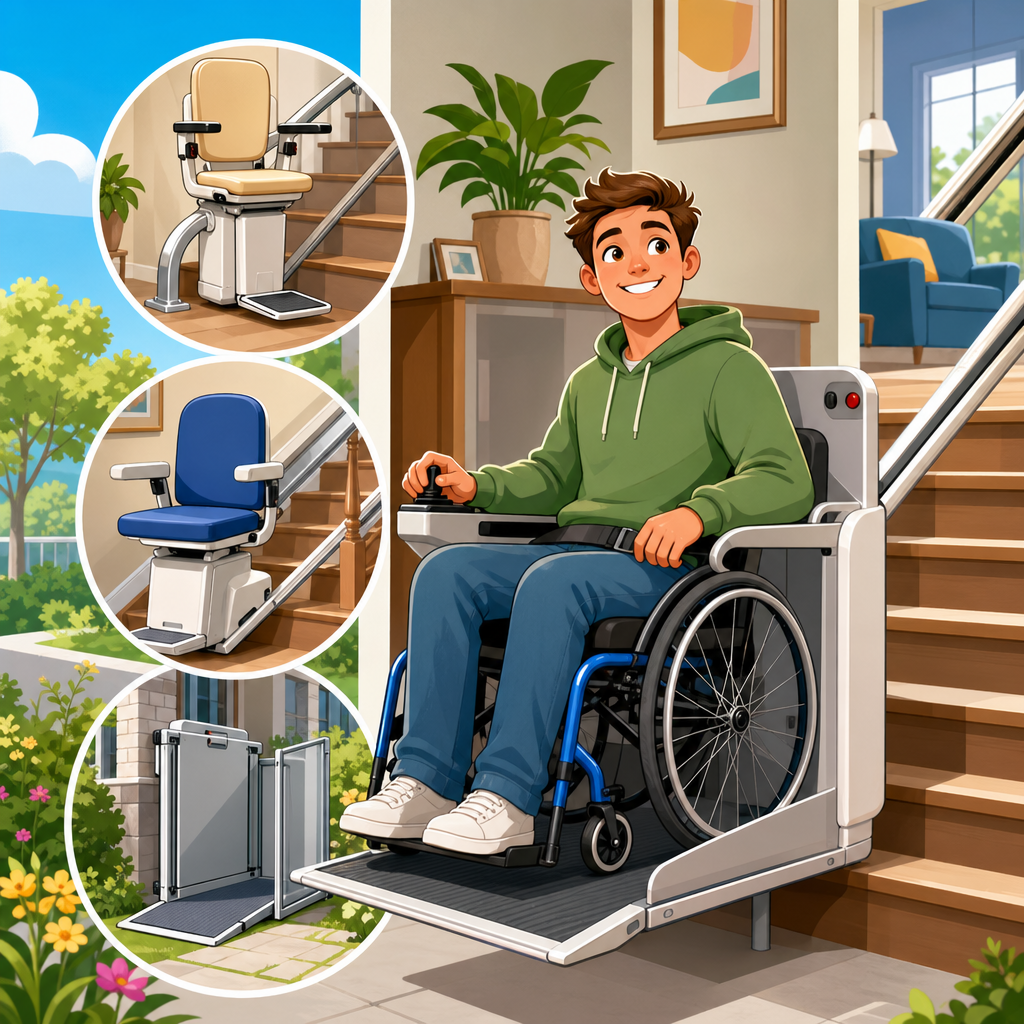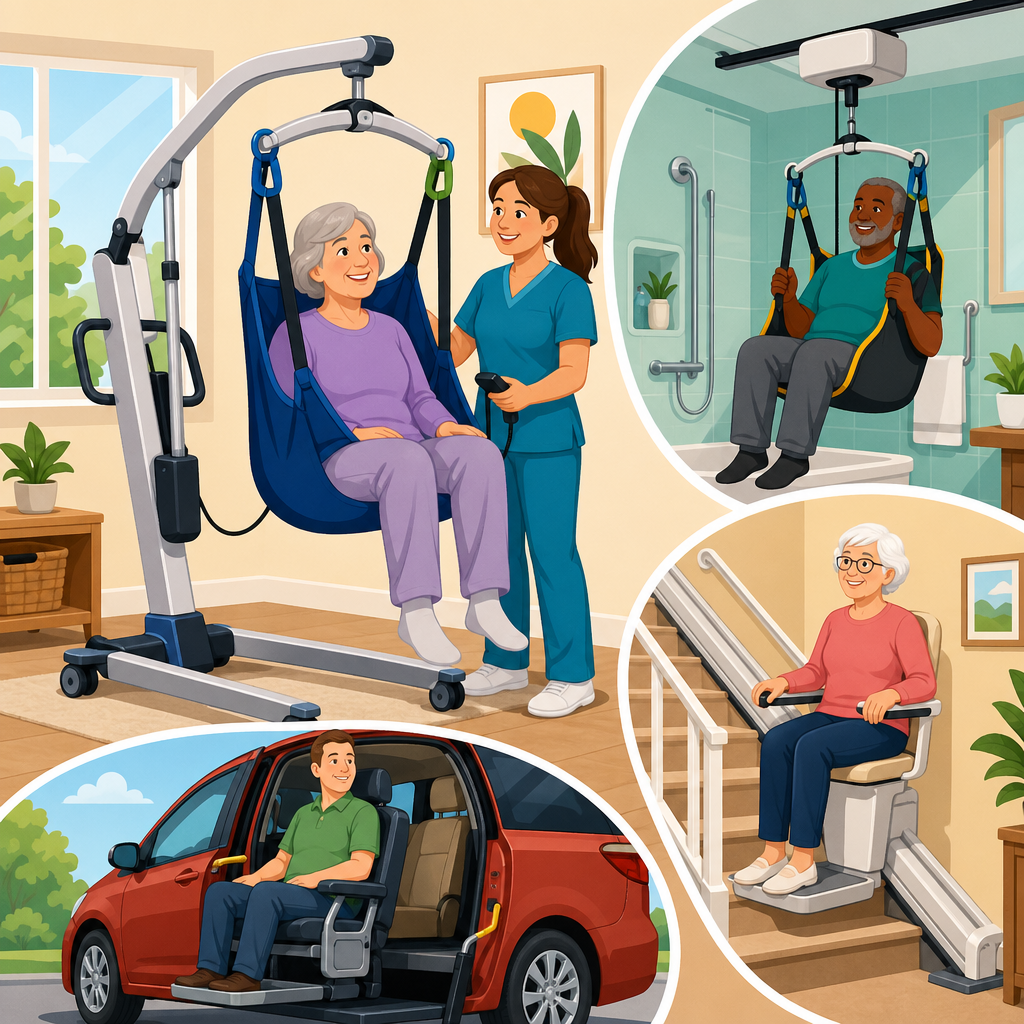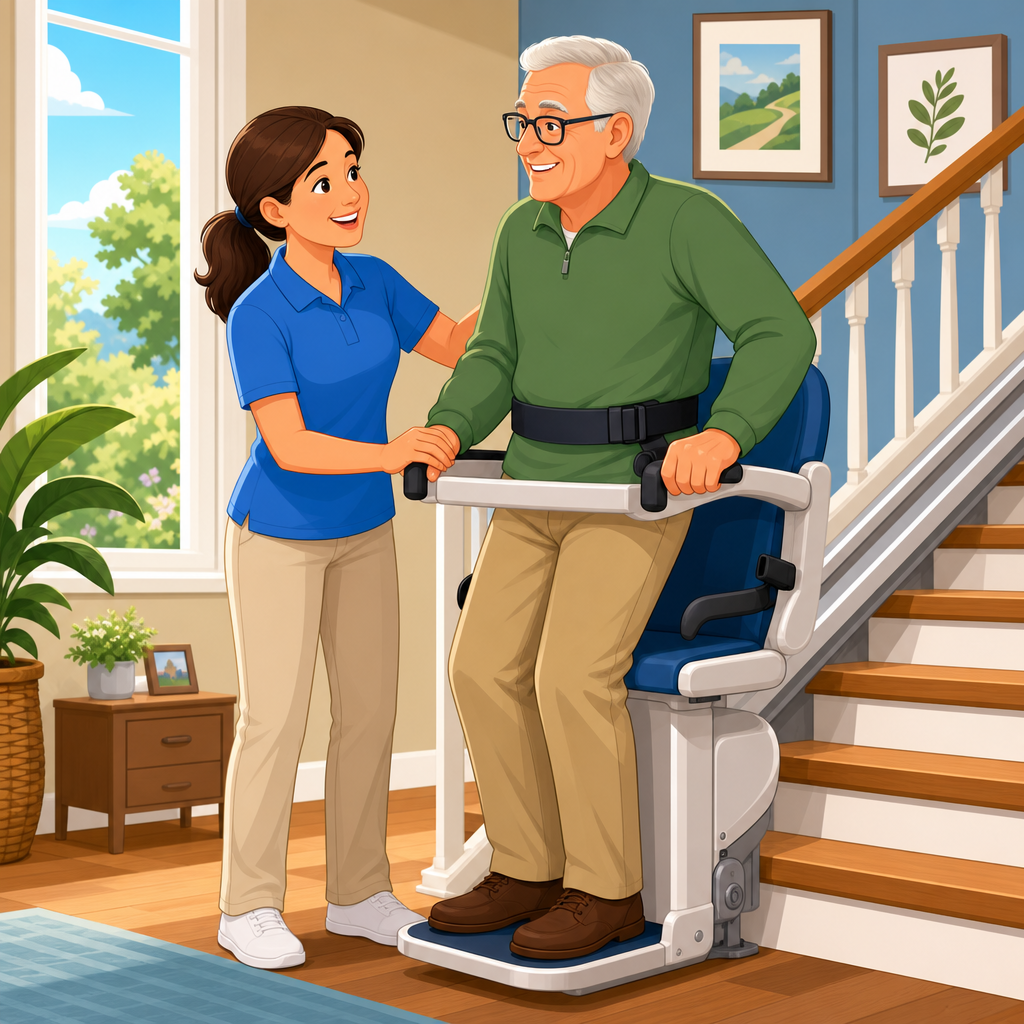
Chair lifts that support standing transfers are specialized mobility devices designed to help a disabled user move from sitting to standing with stability, control, and less strain on caregivers. In practice, this category includes recliner-style lift chairs, compact sit-to-stand seats, and transfer-assist power chairs that elevate the user to a near-standing position. I have worked with families comparing these products after hospital discharge, and the same questions always come up: who benefits, what features matter, and how do you choose a model that improves safety rather than creating new risks? This guide answers those questions and serves as the central overview for the best chair lifts for disabled users.
A standing transfer means the user can bear at least some weight through the legs and pivot, step, or reach during the move to a walker, wheelchair, bedside commode, or bed. That detail matters because not every lift chair is appropriate for every disability. A person with Parkinson’s disease who freezes when rising has different needs from a stroke survivor with one-sided weakness or an older adult with severe knee osteoarthritis. The right chair lift reduces shear forces, lowers fall risk, and positions the hips so the user can transfer with better alignment. The wrong one may push the knees too far forward, rise too quickly, or place the armrests at an unusable height.
This topic matters because transfers are one of the most hazardous moments in daily care. According to guidance from rehabilitation clinicians and safe patient handling standards, many falls happen during sit-to-stand transitions, especially when fatigue, poor balance, or urgency is involved. A well-matched chair lift can protect skin integrity, conserve energy, and preserve independence longer. It can also delay the need for heavier equipment if the user still has enough trunk control and leg strength to participate. For buyers researching best chair lifts for disabled users, the goal is not simply comfort. The goal is reliable function at the exact moment when the body has to overcome gravity, pain, weakness, and fear.
Who should use a chair lift for standing transfers
The best candidates can tolerate an upright position, follow basic safety cues, and contribute some effort through the legs or arms. In home assessments, I look first at transfer ability rather than diagnosis alone. A person with multiple sclerosis may do well with a lift chair if morning stiffness is the main barrier, while another person with the same diagnosis may need a full mechanical lift because of inconsistent trunk control. Chair lifts for standing transfers work best for users who can pivot with a walker, cane, grab bar, or caregiver standby assist. They are often effective for arthritis, joint replacement recovery, mild to moderate balance loss, deconditioning, neuropathy, and early movement disorders.
They are less appropriate when the user cannot maintain foot placement, cannot control the head and trunk, or has unpredictable collapse at the knees. In those cases, a sit-to-stand sling lift or full-body patient lift is usually safer than a powered recliner. This distinction is crucial in any buying guide because marketing language often blurs categories. A “lift chair” sold through furniture channels is not automatically a transfer device. The seat height, rise angle, armrest support, and emergency backup all determine whether it can truly support a standing transfer in real use.
Types of chair lifts and how they differ
There are three main product groups in this subtopic. First are traditional powered lift recliners, which raise the seat base and tilt the user forward to assist standing. Second are high-seat or perch-style lift chairs that emphasize upright positioning and short transfers rather than long lounging sessions. Third are advanced transfer-assist chairs and wheelchairs with powered seat elevation that help users stand from a mobility device. Understanding the category prevents expensive mismatches.
Traditional lift recliners are the most widely purchased. Brands such as Pride Mobility, Golden Technologies, UltraComfort, and La-Z-Boy offer models with one, two, three, or infinite positions. For standing transfers, a two-motor or infinite-position chair is usually more adaptable because the backrest and footrest can be adjusted independently. That allows better pre-transfer positioning: feet flat, knees at roughly ninety degrees, and hips close to the front edge. Single-motor models can be comfortable, but they may not fine-tune posture well enough for users with asymmetry or contractures.
Perch-style chairs are useful when prolonged upright sitting is preferable to deep recline. They tend to have firmer cushions, higher seat-to-floor measurements, and less sink. That matters because a soft, overstuffed chair can trap the pelvis and increase the effort needed to stand. Transfer-assist power chairs occupy another niche. They are expensive, but for some users they bridge the gap between a standard power wheelchair and more intensive lift systems by combining seat elevation with daily mobility.
Features that make standing transfers safer
The single most important feature is fit. Seat width, depth, and height determine whether the user’s feet can contact the floor and whether the knees stay behind the toes during the rise. A seat that is too deep encourages slouching; too high and the feet dangle; too low and the lift must overcome a mechanically poor starting angle. In home trials, even a one-inch difference in seat height can decide whether a user needs moderate help or can stand with supervision only.
Motor configuration matters next. Dual motors allow the caregiver or user to place the back more upright before activating the lift sequence. Quiet, smooth actuators reduce startle and maintain confidence. Look for a stable lift arc, not a jerky ejection-like motion. Armrests should be firm, grippable, and positioned so the user can push through the hands if advised by a therapist. Some chairs have waterfall arm caps that feel pleasant but offer poor leverage. Others provide squared, supportive arms that improve push-off mechanics significantly.
Fabric and cushion design also affect transfer quality. Pressure-redistributing foam, gel layers, and breathable upholstery help users who spend many hours seated, yet the cushion still needs enough responsiveness to avoid a hammock effect. Battery backup is essential, especially for users who cannot get up without the chair’s assistance. If the power fails and the chair stops in recline, the result may be panic, skin risk, and a missed toilet transfer. Remotes with large buttons, USB charging, heat and massage, and cup holders are secondary. They can improve convenience, but they do not substitute for correct ergonomics.
| Feature | Why it matters for standing transfers | What to look for |
|---|---|---|
| Seat height | Controls knee angle and foot contact | Feet flat, hips slightly above knees |
| Seat depth | Affects pelvic position and reach to armrests | Two to three fingers behind the knees |
| Dual motor | Improves pre-transfer positioning | Independent back and footrest control |
| Armrests | Provide push-off support and balance | Firm, stable, easy to grasp |
| Lift arc | Determines smoothness and safety of rise | Gradual forward tilt, no sudden surge |
| Battery backup | Maintains function during outages | Tested emergency power system |
Best chair lift brands and model categories to compare
When buyers search for the best chair lifts for disabled users, several brands consistently appear because they offer sizing ranges, service networks, and medically oriented features. Pride Mobility’s VivaLift line is often considered for modern positioning options and broad dealer availability. Golden Technologies’ MaxiComfort chairs are frequently recommended because their seat geometry works well for many older adults who need both pressure relief and transfer assistance. UltraComfort has strong infinite-position options, and some models are especially useful for users who alternate between edema management and upright transfers throughout the day.
For shoppers who prioritize furniture styling, mass-market brands can be appealing, but service access and parts availability should be checked carefully. A chair lift is not just upholstery with a motor. It is an assistive device used during a high-risk movement. White-glove delivery, in-home setup, and warranty support are worth paying for when the user depends on the chair daily. In my experience, the best outcomes come when a local dealer measures the user, confirms doorway clearance, and verifies the wall-hugger space needed for recline.
Model category matters more than marketing adjectives like deluxe or premium. Heavy-duty chairs with higher weight capacities often include broader seats, stronger frames, and more powerful actuators, but they can be too wide for smaller users, reducing arm support during standing. Small-to-medium chairs often fit better and transfer better because the user can anchor the feet and leverage the armrests correctly. Matching the body to the frame is more important than buying the largest or most padded option.
How to choose the right chair for specific disabilities
For arthritis, especially severe hip or knee osteoarthritis, seek a seat height that minimizes deep flexion and a smooth, slow lift. Users with Parkinson’s disease usually benefit from predictable controls, firm armrests, and a seat that prevents sliding forward before the lift begins. For stroke survivors, lateral support and careful armrest use are critical. If one arm cannot push effectively, the caregiver may need a transfer strategy using a gait belt and a walker positioned on the stronger side. The chair should allow that setup without blocking foot placement.
For users with heart failure or lower-extremity edema, leg elevation is helpful, but transfer performance still comes first. I advise families not to buy a chair solely because it reclines deeply if the user struggles to return to a stable upright posture. For neuropathy or diabetic foot issues, solid foot contact and non-slip flooring around the chair are essential because sensory loss increases missteps during pivoting. Bariatric users need reinforced frames, wider transfer zones, and realistic planning for home access. A high weight capacity is only useful if the chair fits the room and the user can still reach both armrests securely.
This hub article connects naturally to narrower buying guides on petite lift chairs, bariatric lift chairs, zero-gravity lift recliners, and lift chairs for Parkinson’s disease, stroke recovery, and arthritis. Those subtopics deserve deeper product-by-product reviews, but the decision framework remains the same: assess transfer ability, body size, seating tolerance, and environmental constraints before comparing finishes or extras.
Buying, setup, and long-term ownership
Measure the user and the room before ordering. Record hip width, seat-to-floor transfer height, lower leg length, and reach to armrests. Then measure hallways, doorways, and the space required behind and in front of the chair. Confirm whether the unit comes boxed, partially assembled, or ready to place. If the user sleeps in the chair, ask about duty cycle and cushion durability because all-day use wears foam and motors faster than evening lounging.
Cost varies widely. Basic lift recliners may start around the low four figures, while premium therapeutic models and transfer-assist mobility chairs can be several thousand dollars more. Medicare generally does not cover the whole chair; in some cases only the lift mechanism may qualify with proper documentation, while upholstery and non-medical features remain out of pocket. Policies differ, so buyers should verify coverage directly with suppliers and insurers rather than relying on sales claims.
Maintenance is straightforward but important. Keep the lift path clear, inspect the hand control, test the battery backup, and listen for changes in motor noise. Reassess fit after weight change, surgery, or decline in mobility. The right chair lift should continue to support safe standing transfers, not simply remain comfortable. If transfers become more hands-on despite proper setup, it may be time to move from a lift chair to a dedicated patient transfer device.
Chair lifts that support standing transfers are valuable because they target one of the hardest and riskiest movements in daily living: getting up safely enough to move to the next surface. The best chair lifts for disabled users are not defined by plush upholstery or long feature lists. They are defined by fit, stable mechanics, appropriate motor control, supportive armrests, and a lift pattern that matches the user’s real transfer ability. When those elements align, the chair reduces falls, lowers caregiver strain, and preserves independence in a measurable way.
The most practical buying strategy is simple. Start with the user’s transfer pattern, not the catalog photo. Decide whether the person can bear weight, pivot, and follow cues. Match seat height and depth to the body. Choose a reputable brand with service support. Prioritize safe positioning, battery backup, and setup quality over cosmetic upgrades. For many households, that process turns a frustrating daily struggle into a predictable routine that feels safer for everyone involved.
If you are building a shortlist, use this hub as your starting point and compare models by transfer mechanics, sizing, and disability-specific needs. Then move on to detailed reviews for your exact use case, whether that is arthritis, stroke recovery, Parkinson’s disease, bariatric support, or petite sizing. A careful choice now can prevent injuries, reduce caregiving effort, and make every stand-to-sit and sit-to-stand transition more manageable.
Frequently Asked Questions
What is a chair lift that supports standing transfers, and how is it different from a standard lift chair?
A chair lift that supports standing transfers is a mobility device designed to help a person move from a seated position to a supported, near-standing position in a controlled way. Unlike a standard recliner that simply changes comfort positions, these products are built around transfer safety. They tilt, elevate, or pivot the user forward so the feet can stay planted and the body can come over the legs more naturally. That makes it easier to stand, pivot to a walker or wheelchair, or complete a short assisted transfer with less effort.
This category can include several product types. Recliner-style lift chairs are the most familiar and are often used at home for daily sitting, resting, and standing assistance. Compact sit-to-stand seats are more focused on helping the user rise from a chair or bedside location without taking up much space. Transfer-assist power chairs go a step further by combining mobility seating with powered elevation features that position the user for standing or caregiver-assisted transfers. The right choice depends on whether the main goal is comfort, independent standing, or safer caregiver support.
The biggest difference from a standard lift recliner is how intentionally the chair supports the transfer itself. A transfer-support chair should provide a stable base, a smooth lift path, usable armrests for push-off, and enough forward positioning to help the user get their center of gravity over their feet. In real-world use, that matters because many people do not just need help getting comfortable; they need help getting up repeatedly throughout the day without excessive strain, instability, or dependence on a second person.
Who benefits most from a chair lift designed for standing transfers?
These chairs are often most helpful for people who can bear at least some weight through their legs but have difficulty rising safely from a seated position. That includes many older adults, people recovering after surgery or hospitalization, and individuals living with conditions such as arthritis, generalized weakness, Parkinson’s disease, multiple sclerosis, stroke-related weakness, or balance impairment. If a person can participate in the transfer but struggles with the strength, coordination, or confidence to stand up, a lift chair with standing-transfer support can make a major difference.
They can also be valuable for family caregivers. One of the most common concerns after discharge home is that a spouse or adult child is suddenly expected to help with repeated sit-to-stand transfers throughout the day. Without proper equipment, that often leads to unsafe lifting, back strain, and falls. A well-chosen chair can reduce how much physical force the caregiver has to use by putting the user in a better standing position from the start. It does not eliminate all risk, but it can make transfers more manageable and more predictable.
That said, these chairs are not ideal for everyone. A person who cannot bear weight at all, cannot follow simple transfer instructions, or has severe trunk instability may need a different transfer solution, such as a mechanical lift or more specialized seating system. This is why it is important to match the chair to the user’s actual transfer ability, not just their diagnosis. The most successful outcomes usually happen when the buyer considers leg strength, balance, cognition, caregiver availability, and the exact transfer tasks the chair needs to support.
What features should I look for when comparing chair lifts for standing transfers?
Start with the lift mechanism and transfer path. Some chairs gently tilt and raise, while others move the user more directly forward into a near-standing posture. The best design is the one that helps the user place their feet securely on the floor and shift weight forward without feeling like they are being pushed out of the chair too fast. Smooth motion matters. A jerky or overly rapid lift can increase anxiety, reduce stability, and make the transfer harder rather than easier.
Seat height, seat depth, armrest design, and overall fit are also essential. If the seat is too deep, the user may not be able to scoot forward enough for an effective stand. If it is too high or too low, the feet may not be positioned well for weight-bearing. Sturdy armrests are especially important because many users rely on them for balance and push-off during the transition. Weight capacity should never be treated as an afterthought; the chair should comfortably support the user’s body size without operating near its maximum limit.
Other worthwhile features include backup battery power, simple hand controls, pressure-relieving cushioning, wipeable fabrics, side-transfer clearance, and compatibility with the room layout. In some homes, a compact footprint is critical because the chair will be used near a bed, walker path, or narrow living area. In others, recline options and long-term sitting comfort matter just as much as transfer support. If possible, buyers should also look for manufacturer guidance on ideal user profiles, safety lockouts, and maintenance requirements, because ease of ownership matters over time.
Are chair lifts for standing transfers safe to use at home?
Yes, they can be very safe at home when the chair is properly matched to the user and used as intended. In fact, one of their main benefits is that they create a more controlled transfer routine. Instead of a caregiver pulling someone up by the arms or the user struggling to rise from a low, soft couch, the chair provides consistent elevation and support. That can lower the risk of falls, reduce caregiver strain, and improve confidence for everyone involved.
Safety depends on several practical factors. The user should be able to place both feet firmly on the floor, understand when to start standing, and use the armrests or other supports appropriately. The floor around the chair should be clear of rugs, cords, and clutter. The chair should sit on a stable surface with enough space in front and to the sides for a walker, wheelchair, or caregiver to position correctly. If the user transfers to another device, that device should be locked and placed at the right angle before the lift begins.
It is also important to recognize the limits of the equipment. A chair lift is not a substitute for a full patient lift when a person cannot safely participate in standing. If there is frequent collapsing, severe dizziness, poor judgment, or rapidly changing medical status, the transfer plan may need to be reassessed. Whenever possible, it helps to have a therapist, rehab professional, or equipment specialist demonstrate the best transfer technique. A short training session often prevents the most common home safety mistakes and makes the chair much more effective.
How do I know whether to choose a recliner-style lift chair, a compact sit-to-stand seat, or a transfer-assist power chair?
The best choice depends on what problem you are trying to solve day to day. A recliner-style lift chair is usually the right fit when the person spends a lot of time sitting in one main location and needs both comfort and standing assistance. It works well in living rooms, bedrooms, and recovery-at-home situations where the chair doubles as a primary seat. For many families, this is the most practical option because it combines pressure relief, resting positions, and transfer help in one familiar piece of furniture.
A compact sit-to-stand seat is often better when space is limited or the user does not need full recliner-style seating. These units can be useful beside the bed, in smaller apartments, or in care routines where the main challenge is simply rising from sitting with less effort. They are generally more task-focused and less about lounging comfort. If the user already has another preferred chair or only needs support during specific transfers, a compact solution may be more sensible and easier to place in the home.
A transfer-assist power chair is typically the most specialized option and may be appropriate when the user needs both mobility seating and powered positioning to support standing or caregiver-assisted transfers. These products can be very helpful for people with more complex mobility needs, but they also require closer attention to training, fit, and home setup. In practice, the decision usually comes down to three questions: how much weight-bearing the user has, where the transfer happens most often, and whether the chair needs to be primarily a comfort seat, a transfer tool, or both. When those answers are clear, the product choice becomes much easier.