Finding affordable stair lifts for under $2,500 is difficult, but it is not impossible if you know where to look, what features matter, and which compromises are acceptable. In this price range, buyers usually compare reconditioned units, entry-level straight-rail models, and portable lift alternatives rather than premium custom systems. A stair lift is a motorized chair or perch that travels along a rail attached to the staircase, helping people with limited mobility move safely between floors. Budget-friendly options matter because falls on stairs remain one of the most common household injury risks for older adults and people recovering from surgery. I have helped families compare quotes, inspect used rails, and separate truly low-cost products from misleading teaser prices, and the same lesson comes up every time: the sticker price alone tells you almost nothing. The real value depends on rail length, installation complexity, battery condition, warranty coverage, and local service support.
For a hub article on budget-friendly options, the goal is not just to list cheap products. It is to explain which low-cost stair lifts are realistic purchases, which brands consistently appear below this threshold, and which situations make a sub-$2,500 target achievable. In most markets, brand-new stair lifts from well-known manufacturers such as Bruno, Harmar, Stannah, and Acorn often exceed this budget once installation is included. However, reconditioned straight stair lifts, dealer-certified used models, and platform-independent portable solutions can fall below the line. That makes this guide especially useful for shoppers who need immediate mobility help, are outfitting a temporary recovery home, or want to avoid financing a much larger purchase. The options below focus on straight staircases, because curved stair lifts almost never land under $2,500 due to custom rail fabrication.
What You Can Realistically Buy for Under $2,500
If you are searching for the best affordable stair lifts under $2,500, the first practical answer is this: expect a straight staircase solution, basic seat controls, and limited customization. At this price, the market is dominated by reconditioned units and short-rail installations. A straight stair lift runs on a standard linear track and does not require the custom engineering that drives up the cost of curved systems. In my experience, buyers who stay within budget succeed when they already know their staircase length, electrical outlet access, and weight-capacity needs before requesting quotes.
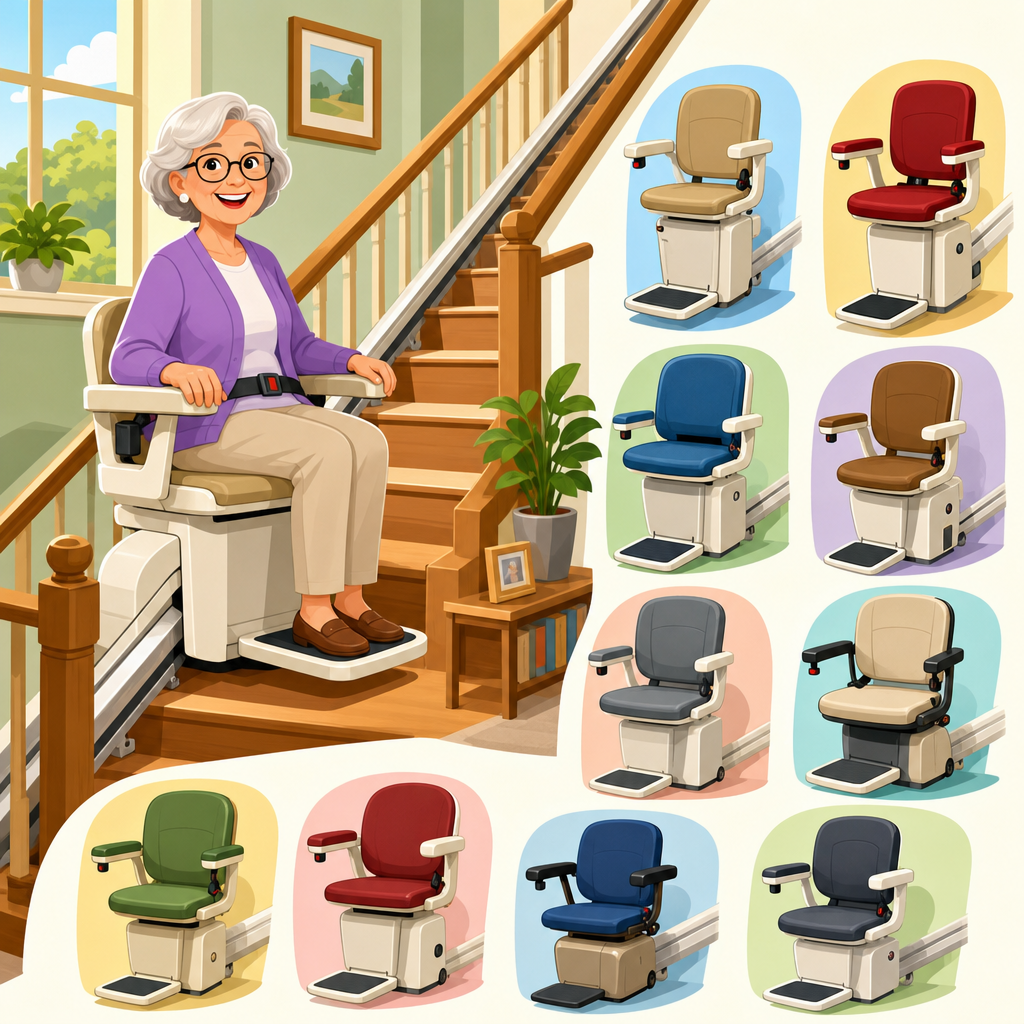
Most low-cost stair lifts use battery-powered drive systems charged at the rail, which is preferable to older direct-power models because the lift will still run during an outage. Standard capacities in the budget segment typically range from 250 to 300 pounds. You may also find manual swivel seats, manual footrests, and wired call/send controls instead of powered upgrades. None of those limitations are deal-breakers for many homes. What matters more is safe rail mounting, smooth start-stop performance, and verified serviceability. A cheap stair lift with no parts support is often more expensive in practice than a slightly higher-priced certified model with local dealer backing.
Top 10 Affordable Stair Lifts for Under $2,500
The list below reflects the products and buying paths that most often meet the under-$2,500 target in real shopping conditions. Prices vary by dealer, rail length, refurbishment quality, region, and whether installation is bundled. Each option is best understood as a realistic market category tied to a recognizable product line rather than a guaranteed national advertised price.
| Option | Typical Price Range | Best For | Key Tradeoff |
|---|---|---|---|
| Bruno Elan reconditioned | $2,000–$2,500 | Reliable dealer-supported used purchase | Older cosmetic finish |
| Harmar SL300 used | $1,800–$2,400 | Narrow staircases | Availability depends on local inventory |
| Acorn 130 reconditioned | $2,200–$2,500 | Simple straight stairs | Service quality varies by seller |
| Brooks 130 refurbished | $1,900–$2,400 | Value-focused buyers | Often sold through regional dealers only |
| Handicare 1000 used | $2,000–$2,500 | Compact fold-up profile | May need replacement batteries soon |
| Sterling 1000 reconditioned | $1,800–$2,300 | Temporary mobility needs | Shorter warranty terms |
| Platinum straight used | $2,100–$2,500 | Smooth ride preference | Fewer dealers in some regions |
| Savaria K2 pre-owned | $2,200–$2,500 | Higher weight-capacity needs | Often near the top of budget |
| Rental stair lift buyout | $1,500–$2,300 | Short-term users who decide to keep unit | Condition depends on prior use |
| Open-box dealer stock | $1,900–$2,500 | Buyers wanting newer equipment cheaply | Inventory is unpredictable |
A reconditioned Bruno Elan is one of the strongest value plays in this segment because Bruno has broad dealer support in the United States and a reputation for durable straight-rail systems. When technicians refurbish these lifts correctly, they usually replace batteries, inspect the gearbox, test charge points, and confirm overspeed and seat-safety circuits. Harmar’s SL300 often appeals to homes with tighter staircases because its footprint is compact. I have seen families choose it specifically because folded clearance mattered as much as price.
The Acorn 130 and closely related Brooks 130 remain common in the used market, which helps keep pricing competitive. They are straightforward lifts for standard straight stairs, and parts availability is generally better than for obscure brands. Handicare 1000 and Sterling 1000 models are also frequent dealer-refurbished options, particularly in markets where accessibility resellers rotate rental inventory. Savaria’s K2 can be harder to find under $2,500, but it is worth watching if user weight capacity is a concern. Finally, rental buyouts and open-box inventory can produce the best bargains because the rail is standard and the unit may have minimal wear. The catch is speed: these deals go quickly and often require flexible scheduling.
How to Judge Quality in a Budget Stair Lift
The safest way to buy a cheap stair lift is to evaluate condition systematically. Start with the rail. Check for bends, excessive wear at gear contact points, and secure mounting hardware. Then inspect the carriage and transmission for grinding noises, jerky starts, or hesitation at charge points. Batteries deserve special attention because weak sealed lead-acid batteries are one of the most common hidden replacement costs. A dealer who cannot tell you battery age, charge-cycle testing method, or replacement policy is not giving you enough information.
Seat integrity matters just as much. Verify that the seat lock engages fully, the swivel mechanism holds firmly at the landing, and the seat belt latches cleanly. Safety edges on the footrest and carriage should stop travel when obstructed. Ask whether the unit complies with current ASME A18.1 platform and chairlift safety expectations or equivalent applicable local standards, especially if the lift has been heavily rebuilt. Many reputable dealers also perform final load testing and stair-specific fit checks before handoff. That process reduces the chance of nuisance faults after installation.
Warranty terms reveal whether a low price is credible. On used stair lifts, a realistic warranty may be 30 days to one year on parts, with labor covered for a shorter period. That is normal. What you want to avoid is a verbal promise with no written scope. Ask exactly which components are covered: batteries, board, motor, gearbox, charger, and remote controls should all be addressed. Also confirm that removal, reinstallation, and service trip charges are spelled out. A $2,200 stair lift can quickly stop looking affordable if every callout costs hundreds of dollars.
Where Budget Shoppers Usually Save the Most Money
If your goal is to buy a stair lift under $2,500, savings usually come from one of five places: buying used, choosing a standard-length rail, limiting upgrades, taking dealer inventory rather than custom ordering, and handling cosmetic imperfections without concern. Straight rails are modular and can often be cut or matched to common stair runs, which keeps labor lower than buyers expect. Homes with uncomplicated landings and good wall-side clearance also reduce installation time, and that savings is often passed through.
Another overlooked strategy is asking about rental fleets. Dealers sometimes install stair lifts for temporary recovery after hip replacement, stroke rehabilitation, or injury, then remove and service those units for the next customer. When one of those lifts fits your staircase dimensions, the economics become favorable. You are effectively buying a proven unit with known maintenance history. I have also seen strong pricing from accessibility companies that move slow-selling inventory at quarter end or during showroom resets. A model that sat as demo stock can be substantially cheaper than a factory-order equivalent.
Medicare generally does not cover stair lifts because they are usually classified as home modifications rather than durable medical equipment, but some buyers reduce net cost through Medicaid waiver programs, Veterans Affairs benefits, state assistive technology programs, nonprofit grants, or flexible spending accounts. These funding paths vary widely by location. They rarely change the product price itself, yet they can make a better-quality option feasible within the same practical budget.
When a Sub-$2,500 Stair Lift Is the Wrong Choice
Budget-friendly stair lifts are not right for every home. If the user needs a heavy-duty seat above 350 pounds, a powered swivel due to limited trunk rotation, a folding rail to clear a doorway, or a custom curved track, your budget target is likely too low. The same is true when stairs are unusually steep, narrow, or interrupted by intermediate landings that prevent a standard layout. In those cases, forcing a cheap solution usually creates safety and usability problems.
It is also the wrong choice when local service is weak. I have seen buyers save a few hundred dollars through online resellers only to discover there was no qualified technician within 100 miles to handle faults. A stair lift is not just a product; it is an installed mobility system that needs setup, adjustment, and occasional service. If support is unavailable, a low upfront price is a false economy. For some households, a portable stair climbing chair operated by a caregiver, a first-floor room conversion, or a short-term rental may be more practical than buying the cheapest permanent lift possible.
How This Hub Helps You Compare Budget-Friendly Options
As a hub for budget-friendly options, this guide should help you narrow your next step quickly. If you want the safest path, start by requesting quotes for dealer-certified used straight stair lifts from Bruno, Harmar, Handicare, Acorn, Brooks, Sterling, Platinum, and Savaria sellers in your region. Ask for all-in pricing that includes rail, installation, batteries, warranty, and any service call minimums. Measure your staircase before you call, and confirm whether the top and bottom landings provide safe transfer space. That single step saves time and filters out unrealistic quotes.
The main takeaway is simple: the best affordable stair lifts for under $2,500 are usually reconditioned straight models backed by established dealers, not bargain-basement unknown brands. Price matters, but condition, installation quality, and service access matter more. Focus on battery health, rail fit, safety features, and written warranty terms. Compare at least three quotes, ask direct questions, and do not assume a low advertised number includes everything. If you are building a shortlist for this subtopic, use this page as your starting point, then move into detailed brand reviews, used-versus-new comparisons, and funding guides to find the budget stair lift that is genuinely safe, supportable, and worth buying.
Frequently Asked Questions
Can you really buy a stair lift for under $2,500?
Yes, but in most cases that budget limits you to very specific types of products. Buyers shopping under $2,500 are usually choosing between reconditioned stair lifts, basic straight-rail models with minimal customization, or portable alternatives designed for users who do not need a permanently installed system. Brand-new premium stair lifts, especially curved models made for staircases with turns, landings, or unusual layouts, almost always cost far more than this price range. That is why it is important to understand what “affordable” typically means in the stair lift market.
For a standard straight staircase, a used or factory-reconditioned unit can sometimes fall below the $2,500 mark, particularly if the rail length is short and the installation is straightforward. Some entry-level direct-to-consumer products may also advertise pricing near this level, but buyers need to confirm whether the listed price includes the rail, seat, batteries, call/send controls, installation, delivery, and any warranty coverage. A low sticker price can become misleading if necessary add-ons are billed separately. In other words, it is possible to find a stair lift in this budget, but success depends on matching your staircase type, mobility needs, and expectations to what the lower end of the market actually offers.
What features matter most when comparing affordable stair lifts?
When shopping in the lower price range, the smartest approach is to focus on safety, fit, and reliability before convenience upgrades. The first priority is making sure the lift is appropriate for your staircase. Most affordable units are designed for straight stairs only, so buyers should verify rail compatibility, maximum stair length, and whether the staircase provides enough clearance for safe use. If the rail does not match the stair layout or the seat does not allow comfortable transfers on and off the lift, even a low-cost unit is not a good value.
After fit, pay close attention to core safety features. Look for a seat belt, obstruction sensors, a swivel seat for safer entry and exit at the top landing, and secure footrest positioning. Battery backup is also important because many stair lifts charge from household power but continue operating on battery power during an outage. This can be especially valuable for users who depend on the lift every day. Weight capacity matters too, as lower-cost models may support less than higher-end products. Buyers should also assess folded width, because narrow staircases may need a lift that folds compactly to leave walking space for others.
Beyond the basics, consider serviceability. A stair lift is not just a product; it is a mobility device that may need maintenance over time. Even on a budget, it is worth checking warranty length, availability of replacement batteries, and whether local technicians can service the model. Features like powered swivel seats, powered footrests, or custom upholstery are nice to have, but under $2,500 they are usually secondary to dependable operation and safe daily use.
Are reconditioned stair lifts a good option for saving money?
Reconditioned stair lifts are often one of the best ways to stay under budget, especially for buyers with a straight staircase and flexible preferences about cosmetics. A properly reconditioned unit has typically been removed from a previous home, inspected, cleaned, repaired as needed, and tested before resale. Because the original equipment cost was much higher, buyers may be able to get a sturdy, name-brand lift for significantly less than the price of a new system. For many households, that makes reconditioned models the most realistic path to affordability without dropping to a much more limited portable solution.
That said, not all reconditioned stair lifts are equal. The key question is who performed the refurbishment and what standards were used. Reputable dealers usually replace worn components, test the motor and controls, verify battery health, and provide at least a limited warranty. Less reliable sellers may simply resell a used unit with minimal inspection. Buyers should ask exactly what was refurbished, whether the rail is included, how old the unit is, and what service support is available after installation. A stair lift is a safety device, so confidence in the seller matters just as much as the price.
Another factor to remember is that even with a reconditioned unit, installation requirements can affect cost. Straight stair lifts are generally easier and cheaper to install than curved models, and in some cases a reused chair can be paired with a new rail. If you are considering a reconditioned system, ask for a full quote that separates equipment, rail, delivery, and installation charges. Done right, a reconditioned stair lift can be a very practical, cost-effective choice. Done poorly, it can become a frustrating purchase with hidden repair expenses.
What compromises are usually necessary with stair lifts under $2,500?
The biggest compromise is customization. At this price point, buyers generally should not expect a stair lift tailored to a complex staircase or loaded with premium comfort features. Affordable options are usually focused on straight stairs, standard seat sizes, basic upholstery, and simple controls. If your staircase has curves, intermediate landings, or unusually narrow dimensions, the low-cost market becomes much more difficult to navigate because custom rails quickly raise the total price.
Another common compromise is aesthetics and convenience. Budget-friendly models may have fewer seat style choices, less refined folding mechanisms, and more visible hardware than high-end systems. They may also lack powered features such as automatic swivel, power folding footrests, or advanced remote functions. In many cases, these missing upgrades do not affect the core purpose of the stair lift, but they can influence comfort and ease of use for people with limited hand strength, arthritis, or balance concerns.
Warranty coverage and service support may also be more limited at the low end of the market. A lower upfront price can sometimes mean shorter warranties, fewer included service visits, or a smaller dealer network. That does not automatically make the lift a poor choice, but it does mean buyers should carefully compare what is included. The most reasonable compromise is usually cosmetic or convenience-related, not safety-related. If the budget requires trade-offs, it is best to accept a simpler chair or fewer extras rather than sacrifice proper fit, stable operation, or dependable installation.
How can you find the best affordable stair lift without making a costly mistake?
Start by evaluating the staircase and the user’s needs before comparing brands or prices. Measure whether the staircase is straight or curved, note the available width, and consider who will use the lift and how often. Important details include the user’s height, weight, balance, transfer ability, and whether features like a swivel seat or larger footrest are necessary. A cheap lift that is uncomfortable, hard to board, or incompatible with the staircase is not a bargain. The best value comes from buying a model that safely matches the home and the person using it.
Next, request complete pricing rather than relying on advertised starting prices. Ask whether the quote includes the chair, rail, installation, delivery, warranty, batteries, and any service call setup fees. If you are comparing reconditioned and new units, make sure you understand differences in warranty length, service availability, and return policies. It is also wise to ask about lead times, especially if the stair lift is needed after surgery, injury, or a change in mobility. Fast availability can be just as important as low cost.
Finally, research the seller as carefully as the equipment. Look for established mobility dealers, read customer reviews, ask how repairs are handled, and find out whether replacement parts are readily available. If possible, choose a provider that can assess the staircase directly rather than relying only on a generic online order. Affordable stair lifts do exist, but the safest and smartest purchases are made when buyers focus on total value instead of headline price alone. A modest budget can still go a long way if you prioritize fit, safety, transparency, and ongoing support.