Finding the best value-for-money chair lifts in 2025 means looking beyond the sticker price and judging how well a lift balances safety, reliability, comfort, installation complexity, warranty coverage, and long-term service costs. In this guide, value-for-money refers to the total benefit you get for every dollar spent, not simply the cheapest chair lift available. A low-priced model that breaks down often, lacks battery backup, or is difficult to service is rarely a bargain. By contrast, a moderately priced stair lift with dependable operation, solid dealer support, and features that match the user’s mobility needs can deliver far better value over five to ten years.
Chair lifts matter because they let many older adults and people with limited mobility stay in multilevel homes safely, delaying or avoiding costly renovations or assisted living moves. I have worked with families comparing estimates, measuring staircases, and reviewing service contracts, and the same pattern appears repeatedly: buyers save the most when they choose a lift that fits the staircase and user correctly the first time. In 2025, the market offers more budget-friendly options than ever, including compact straight stair lifts, reconditioned units from major brands, rental programs, and feature-limited packages designed to keep entry costs down without compromising core safety functions.
This article serves as a hub for budget-friendly options within chair lift buying guides and product reviews. It explains what makes a chair lift affordable, which features are essential, what tradeoffs come with lower-cost models, and which brands consistently provide strong value. If you are asking, “What is the cheapest reliable stair lift?” “Is a used chair lift worth it?” or “How much should installation cost?” you will find direct answers here, along with the context needed to compare quotes confidently.
What “value-for-money” really means in chair lifts
The best budget-friendly chair lift is the one that solves the user’s access problem safely at the lowest total ownership cost. Total ownership cost includes purchase price, rail configuration, installation labor, electrical charging setup, annual maintenance, repair frequency, replacement parts, and resale or removal value. Straight stair lifts usually offer the strongest value because they use standardized rails, simpler carriage systems, and faster installation methods. Curved stair lifts are custom-built, so even an entry-level model can cost several times more than a straight unit.
For most buyers in 2025, the baseline features that define good value are straightforward: battery-powered operation, two remote call/send controls, swivel seat with locking positions, obstruction sensors, seat belt, folding footrest, and a minimum one-year warranty covering key components. If a low-cost lift lacks these basics, its lower price is not justified. I strongly recommend treating power outage operation as non-negotiable. Nearly all respected manufacturers now use battery-backed DC systems that continue running during an outage while charging from a standard household outlet.
Brand support also affects value. Bruno, Harmar, Stannah, Access BDD, and Handicare remain recognized names because their dealer networks, parts availability, and long-term service records are generally stronger than unknown import brands sold only online. A bargain unit with weak after-sales support can become expensive fast if a board fails or a rail alignment issue appears six months after installation.
Best budget-friendly chair lift categories in 2025
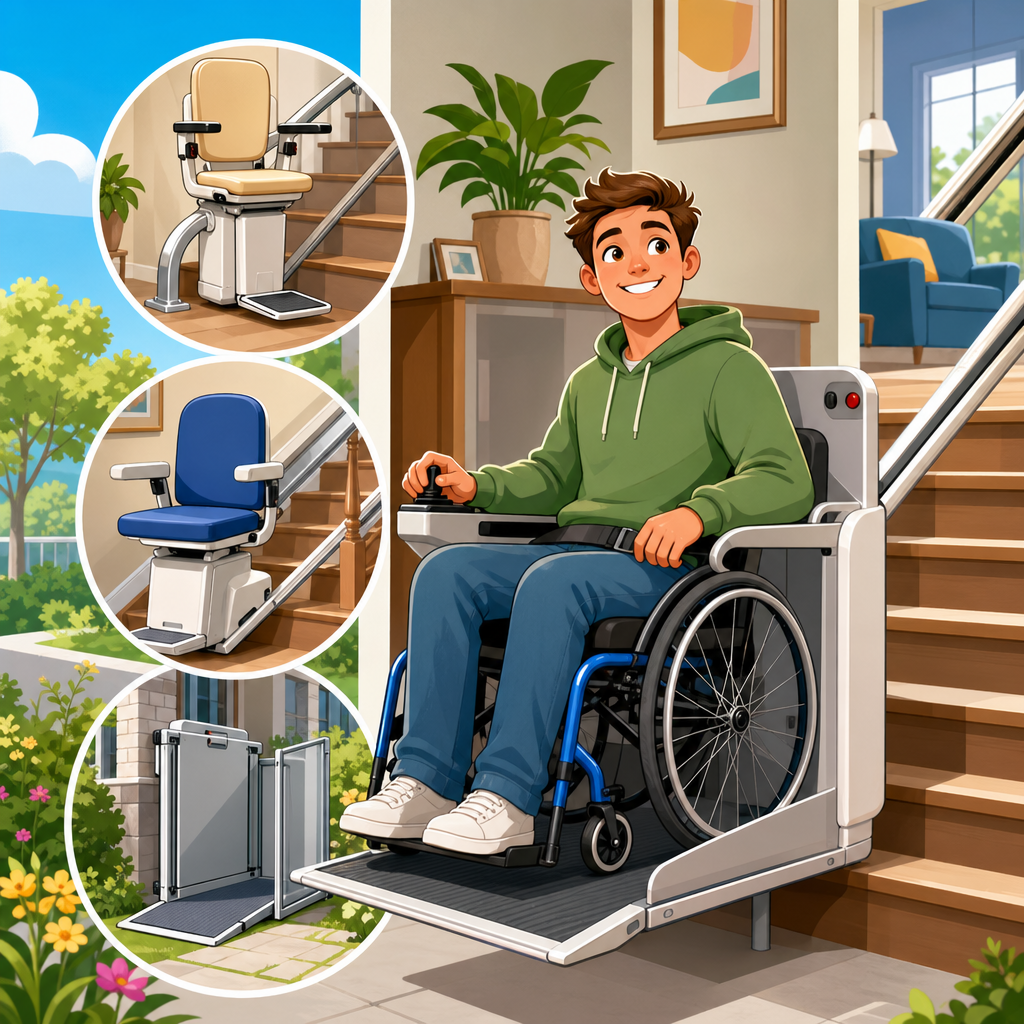
If you want the best value-for-money chair lifts in 2025, begin by narrowing the category before comparing individual products. The lowest-cost reliable option for most homes is a new straight stair lift from an established manufacturer. These models typically fit standard residential stairs, install in a few hours, and include the most important safety features. They are ideal for one user, one staircase, and predictable daily use. In real purchasing scenarios, this category usually beats custom solutions on both upfront and lifetime cost.
Reconditioned chair lifts are the second major value category. A professionally refurbished straight stair lift from a reputable local dealer can reduce costs substantially while still including new batteries, inspected drive components, and a limited labor warranty. These are best for buyers with modest budgets who still want a recognized brand. The key distinction is dealer-refurbished versus privately sold used units. Dealer-refurbished lifts are tested, fitted, and supported. Marketplace purchases often are not.
Rental chair lifts can be cost-effective when the need is temporary, such as after surgery, during cancer treatment recovery, or when a visiting family member needs access for several months. Rentals usually work best for straight staircases because custom curved rails are expensive to fabricate and difficult to repurpose. For short-term use, a rental can preserve cash and avoid a large upfront purchase.
| Category | Best for | Typical value advantage | Main limitation |
|---|---|---|---|
| New straight stair lift | Long-term home use on standard stairs | Lowest lifetime cost with full warranty | Not suitable for curved stairs |
| Dealer-refurbished straight lift | Lower budgets needing reliable service | Reduced upfront cost from major brands | Shorter warranty than new units |
| Rental straight lift | Temporary mobility needs | Avoids large purchase for short use periods | Monthly fees add up over time |
| Entry-level curved lift | Homes with turns or landings | Cheapest path for complex staircases | Still expensive due to custom rail fabrication |
Top chair lift brands that consistently deliver strong value
Among mainstream manufacturers, Bruno often stands out for durable build quality and strong dealer support in North America. The Bruno Elan straight stair lift is regularly shortlisted as a value leader because it combines compact folded dimensions, smooth ride quality, battery operation, and straightforward servicing. It is not always the cheapest quote, but it frequently delivers lower service headaches over time. For buyers prioritizing reliability over rock-bottom pricing, that matters.
Harmar remains a major contender in the budget-friendly segment, especially through the Pinnacle series. Harmar lifts are widely distributed, and parts and technician familiarity are common in many markets. The narrow rail profile on some models is helpful on tighter staircases. Buyers should compare warranty terms carefully because dealer labor coverage can differ even when the product brand is the same.
Stannah usually sits slightly higher on price, but in many homes it still qualifies as strong value because of ride comfort, engineering quality, and customization options that reduce the chance of a poor fit. Handicare and Access BDD also deserve attention, especially where local dealers offer aggressive package pricing. In my experience, dealer quality often influences value as much as the manufacturer. A fair-priced lift installed by an experienced technician with clear service policies almost always outperforms a slightly cheaper quote from a weak dealer.
Features worth paying for and features you can skip
When buying on a budget, spend money on safety, fit, and serviceability before comfort extras. The features worth paying for include a powered or easy-to-use swivel seat if the user has limited trunk rotation, a reliable battery system, diagnostic display or fault indicators, and a rail design that leaves adequate walking space for other household members. If the staircase is narrow, a compact seat and folding armrests can make the difference between practical daily use and constant frustration.
Some upgrades are optional for many buyers. Power-folding footrests are convenient, but they increase cost and add moving parts. Upholstery upgrades, premium color packages, and heavily customized seat styling rarely improve real-world value. Powered hinges are useful only when the lower rail would otherwise obstruct a doorway or hallway. If clearance is not an issue, skip them.
Another area where buyers overspend is unnecessary overcapacity. Heavy-duty stair lifts have an important role, but choosing one without need usually increases price, seat size, and rail bulk. Match the weight capacity to the user with an appropriate safety margin rather than assuming bigger is better. Good value comes from precise fit, not maximum specifications on paper.
How to compare quotes without getting misled
The smartest way to compare chair lift prices is to request itemized quotes from at least three local providers. Each quote should break out the lift model, rail length, installation charges, electrical requirements, warranty coverage, service call rates after warranty, and removal or relocation fees if applicable. A quote that looks low at first glance may exclude labor warranty, permit charges, or essential options such as a powered hinge.
Ask every dealer the same direct questions: Is this unit new, reconditioned, or rental inventory? What parts are covered and for how long? Who performs service locally? How quickly can a technician respond? Are batteries included and how often are they typically replaced? Can the lift be removed and repurchased by the dealer if needs change? The answers reveal real value faster than any brochure.
Also verify whether the dealer follows recognized accessibility and lift installation practices, including proper stair measurement, final ride testing, seat lock verification, and user training. Reputable installers document these steps and explain safe transfers at both landings. A low-cost install that ignores user training creates risk and often leads to expensive callbacks.
Used, refurbished, and rental chair lifts: where the savings are real
Used chair lifts attract buyers because online listings can look dramatically cheaper than dealer prices. The problem is compatibility. Rails are staircase-specific in length and mounting, and curved rails are usually useless outside the original home. Even straight lifts require the correct rail sections, brackets, seat orientation, and safe installation. I have seen families buy a cheap used unit only to discover that missing remotes, dead batteries, and incompatible rail lengths erased the expected savings.
Refurbished lifts from a dealer are different. They are usually cleaned, tested, fitted with new batteries, and backed by at least a short warranty. For a straightforward staircase, this can be one of the best value-for-money options in 2025. Rental lifts also provide real savings when the need is under a year. Buyers should compare total rental commitment, installation fees, and removal charges against the cost of purchasing a refurbished unit, because the crossover point can come sooner than expected.
Costs, funding options, and the best next step
For most households, a new straight chair lift in 2025 typically lands in the lower thousands installed, while curved models often rise much higher due to custom rail fabrication. Refurbished straight lifts can lower the entry point, and rentals spread costs monthly. Funding may come from veterans’ benefits, state assistive technology programs, Medicaid waivers in some states, long-term care insurance, or nonprofit home accessibility grants. Coverage varies widely, so buyers should ask local aging agencies and independent living centers about programs in their area.
The key takeaway is simple: the best value-for-money chair lift is not the cheapest model on a website. It is the lift that matches the staircase, the user’s mobility profile, and the expected duration of use while keeping maintenance and service risks low. For most buyers, that means starting with a reputable straight stair lift brand, then comparing new, refurbished, and rental paths through local dealers with strong service records.
Use this hub as your starting point for budget-friendly options under buying guides and product reviews, then move deeper into model-specific comparisons, warranty breakdowns, refurbished buying advice, and installation checklists. Gather measurements, shortlist trusted brands, request itemized quotes, and ask hard questions about support. That process is what turns a chair lift purchase from a stressful expense into a smart long-term investment.
Frequently Asked Questions
1. What does “value-for-money” really mean when comparing chair lifts in 2025?
Value-for-money in 2025 is about the total return you get from a chair lift over time, not just the lowest upfront quote. A truly good-value chair lift combines dependable safety features, smooth performance, comfortable seating, sensible installation requirements, strong warranty protection, and reasonable long-term maintenance costs. In other words, the best-value model is the one that delivers reliable day-to-day use without creating expensive problems later.
When comparing options, it helps to look at the full ownership picture. A low-cost lift may seem attractive at first, but if it has limited battery backup, weaker components, fewer safety sensors, or poor service support, the long-term cost can rise quickly. Repairs, service callouts, downtime, and replacement parts can erase any initial savings. By contrast, a moderately priced unit from a reputable manufacturer may cost more upfront but offer better rails, quieter operation, easier servicing, and a longer lifespan. That balance often makes it the better investment.
In practical terms, value-for-money means asking, “How well will this lift serve the user safely and reliably for years?” rather than, “Which one is cheapest today?” The best answer usually comes from evaluating build quality, dealer reputation, warranty terms, battery system, ride comfort, and how well the lift fits the staircase and the user’s mobility needs. A chair lift is a safety device as much as a convenience product, so the smartest purchase is the one that delivers confidence as well as affordability.
2. Which features matter most if I want a chair lift that is affordable but still reliable?
If you want a chair lift that is budget-conscious without sacrificing reliability, the most important features are the ones that affect safety, durability, and everyday usability. Battery backup is near the top of the list. Most modern chair lifts run on batteries that charge continuously at designated points on the rail, which means the lift can still operate during a power outage. That feature is especially important for households where stairs are the primary route between essential living spaces.
Safety sensors are another must-have. Good-value chair lifts should include obstruction sensors on the footrest and carriage, a seat belt, swivel seat locking at the landing, and intuitive controls. These features help prevent accidents and reduce wear caused by improper use. Comfort also matters more than many buyers expect. A padded seat, well-positioned armrests, foldable components, and a smooth start-and-stop system improve the daily experience and can make the difference between a lift that gets used confidently and one that feels awkward or intimidating.
Reliability also depends on the basics: the rail system, motor quality, and serviceability. A sturdy rail matched correctly to the staircase, a proven drive system, and access to local service technicians all contribute to better long-term value. Some buyers focus only on the chair itself, but installation quality is equally important. Even a well-made lift can underperform if it is poorly fitted. Finally, look at warranty coverage in detail. A strong warranty on major components, plus access to maintenance plans and replacement parts, often indicates a manufacturer that expects its product to hold up over time. The most affordable reliable chair lift is not the one with the fewest features, but the one with the right features for consistent, low-stress use.
3. Is it better value to buy a straight stair lift or a curved stair lift?
In most cases, a straight stair lift offers better value-for-money than a curved stair lift, but that is mainly because straight staircases are simpler and less expensive to equip. Straight lifts use standardized rails, are typically faster to install, and usually involve lower manufacturing and labor costs. If your staircase runs in one uninterrupted line without turns, landings, or changes in angle, a straight stair lift is often the most cost-effective choice by a wide margin.
Curved stair lifts, on the other hand, are custom-built to fit staircases with bends, intermediate landings, or spiral sections. That customization increases the price because the rail must be measured precisely and manufactured specifically for the home. Installation is also more specialized. However, that does not automatically make a curved lift poor value. If a curved staircase requires a custom solution, then a properly designed curved lift may be the only practical and safe option. In that situation, value should be judged by how well the system fits the home, how smoothly it travels, and how effectively it preserves the user’s independence.
The key is to avoid forcing a cheaper straight-lift mindset onto a staircase that truly needs a curved solution. A poorly matched system can create safety risks, inconvenience, and additional expense. So while straight stair lifts generally win on pure affordability, the best value always comes from buying the correct type for the staircase layout. Paying more for a custom curved lift can still be money well spent if it delivers reliable access, safer transfers, and a long service life in a home where no standard rail would work properly.
4. How important are warranty coverage and after-sales service when judging chair lift value?
They are extremely important, and in many cases they are what separate a smart purchase from a disappointing one. Warranty coverage matters because it protects you from unexpected repair costs, especially in the first few years of ownership. But not all warranties are equal. Some cover major components such as the motor, gearbox, and rail for a longer period, while offering shorter coverage for batteries, remotes, or labor. To judge value accurately, you need to understand exactly what is included, for how long, and whether in-home labor is part of the package.
After-sales service is just as critical because a chair lift is not a “set it and forget it” product. It is a mobility device that may need routine maintenance, battery replacement, adjustments, or occasional troubleshooting. If a lift malfunctions and the homeowner cannot easily reach a qualified local technician, even a lower-priced model can become a poor value very quickly. Fast response times, available replacement parts, and technicians familiar with the brand all contribute to a better ownership experience and lower lifetime hassle.
From a value standpoint, a solid warranty and dependable service network reduce both financial risk and practical risk. They help ensure the lift remains available when the user needs it most. This is especially important for older adults or anyone with limited mobility, where a nonworking stair lift can become a serious daily problem. A good rule is to favor brands and dealers that are transparent about service plans, inspection schedules, battery replacement expectations, and average response times. Strong support may not always show up in the sticker price, but it often has a major impact on whether the chair lift remains a cost-effective solution over the long term.
5. How can I tell if a more expensive chair lift is actually worth the extra money?
A more expensive chair lift is worth the extra money only if the additional cost translates into meaningful real-world benefits. The first step is to identify what you are paying more for. Sometimes the higher price reflects better engineering, quieter operation, superior safety systems, a more comfortable seat, a slimmer fold profile, higher weight capacity, or a rail design that suits the staircase better. In other cases, the extra cost may include professional installation, a stronger warranty, faster service support, or a brand with a stronger reliability record. Those upgrades can absolutely justify a higher price if they improve safety, comfort, and long-term dependability.
It also helps to consider the user’s needs. If the person using the lift has balance concerns, joint pain, difficulty transferring, or expects frequent daily use, premium features may deliver genuine value rather than unnecessary luxury. A powered swivel seat, folding footrest, or smoother ride can reduce strain and make the lift safer and easier to use every day. For some households, paying more upfront can also prevent the need for an early replacement or repeated service calls, which improves total cost efficiency over the life of the product.
The clearest way to judge whether a higher-priced model is worth it is to compare total ownership value instead of just initial price. Ask about expected maintenance, battery life, warranty terms, service availability, and how the model performs in homes similar to yours. Read reviews with an eye toward reliability and dealer support, not just first impressions. If the more expensive lift gives you noticeably better durability, safer operation, easier use, and stronger support over many years, then the extra cost is often justified. If it adds cosmetic upgrades without improving performance or support, it may not be the best value. The right answer is the one where every extra dollar buys a meaningful improvement in function, safety, or peace of mind.