Curved stair lifts can be worth it for seniors when the home has turns, intermediate landings, or split-level stairs that a straight rail cannot follow. A stair lift is a motorized chair that travels along a rail fixed to the stair treads, while a curved stair lift uses a custom-built rail shaped to the staircase. For older adults trying to age in place, this distinction matters because the right lift can remove a daily fall risk without forcing a move or a major remodel. In my experience reviewing and specifying mobility equipment for families, the conversation usually starts with one urgent problem: a parent can still live independently, but the stairs are becoming the barrier that threatens everything else.
This guide sits at the center of any serious review of the best chair lifts for seniors because curved models represent the most complex, expensive, and misunderstood category. Buyers often compare them only on price, yet the better question is value over time. A well-fitted curved lift can preserve full access to bedrooms, bathrooms, laundry, and entry points for years. It can also reduce caregiver strain, lower the chance of stair-related injury, and postpone a move to assisted living. Those benefits are substantial, but they come with tradeoffs in cost, installation time, maintenance, and resale potential. Understanding those tradeoffs is what determines whether a curved stair lift is truly worth it.
For seniors and adult children researching chair lifts, a practical buying guide must answer more than “Which brand is best?” It should explain who needs a curved rail instead of a straight one, what features matter most, how custom manufacturing affects lead time, and what ownership really costs after installation. It should also place curved models within the larger best chair lifts for seniors discussion, because many buyers are choosing among straight lifts, home elevators, vertical platform lifts, and first-floor bedroom conversions. The right answer depends on the staircase, the user’s mobility, the home layout, and the expected duration of use.
Several trusted manufacturers dominate this space, including Bruno, Stannah, Handicare, Harmar, and Access BDD through dealer networks. Their products differ in rail design, seat ergonomics, folding dimensions, charging systems, and service coverage. Reputable dealers measure the staircase precisely, map every turn, and submit the layout for engineering before fabrication. That custom process is why curved lifts cost more than straight lifts, but it is also why they can navigate spiral sections, 90-degree bends, 180-degree switchbacks, and multi-landing staircases safely. If a home has any of those conditions, a curved model is usually the only practical stair lift option.
What makes a curved stair lift different from a straight model
A straight stair lift runs on a standard rail for a staircase with no turns. It is faster to quote, faster to install, and far less expensive. A curved stair lift uses a rail manufactured specifically for one staircase. That rail can bend around corners, continue across a landing, or park the chair away from the main walking path. In real homes, that customization solves problems that straight lifts cannot. I have seen families assume they needed two straight lifts with a transfer at the landing, only to realize that the user could not safely get on and off mid-stair. One continuous curved rail was the safer choice, even at a higher upfront price.
The custom rail is the core difference, but not the only one. Curved systems often include advanced call/send controls, powered swivel seats, and tighter folding profiles because they must manage more complex spaces. Installation still attaches to the stair treads rather than the wall in most cases, which surprises many buyers. That means wall strength is rarely the limiting issue. Instead, the critical questions are stair width, obstructions, landing clearance, and whether the user can transfer onto the seat comfortably at both ends. A good assessment measures all of this before any recommendation is made.
As a hub topic within best chair lifts for seniors, this distinction matters because many review lists mix straight and curved units together without explaining suitability. That can mislead buyers. A top-rated straight lift is irrelevant if the staircase has a turn. Likewise, a premium curved lift may be unnecessary overkill for a simple flight. Product quality matters, but fit is the first filter. In accessibility equipment, the wrong category is a failed purchase no matter how strong the brand reputation is.
When a curved stair lift is worth the money
A curved stair lift is worth the money when it prevents a move, restores access to essential rooms, or eliminates a stair hazard that cannot be solved another way. The strongest case is a senior who uses the full house every day and plans to remain there for several years. If the only full bathroom is upstairs, or the safest exterior exit requires stairs, maintaining access has direct daily value. In those situations, a custom lift is not a luxury. It is a home access device that protects independence.
Fall risk is the clearest reason. According to the CDC, falls are a leading cause of injury among older adults, and stairs are a common site of serious incidents. A senior who is “still managing” the stairs often does so with increasing fatigue, pain, or fear. Families sometimes wait until after a fall to act. That is a mistake. The better buying decision looks ahead to declining knee strength, balance disorders, neuropathy, COPD, arthritis, stroke recovery, or cardiac limitations. If climbing stairs is already a strain, the value of a stair lift is not hypothetical.
Curved lifts are also worth considering when the alternative is a more expensive home modification. Converting a dining room into a bedroom, adding a first-floor bathroom with a shower, or installing a residential elevator can cost far more. A basic elevator project often runs into tens of thousands before finish work, permits, and structural changes. A curved stair lift is still expensive, but it is usually less invasive, quicker to install, and easier to reverse later. For many households, that makes it the most cost-effective aging-in-place upgrade available.
Cost, installation, and long-term ownership realities
Most curved stair lifts cost substantially more than straight models because every rail is fabricated to order. While regional pricing varies, a curved lift commonly lands in the roughly $10,000 to $20,000 range, and complex layouts can exceed that. By contrast, many straight lifts fall far below that range. Price depends on rail length, number of bends, parking extensions, powered options, weight capacity, upholstery grade, and dealer labor. The most honest way to compare quotes is to ask what is included: survey, design, installation, warranty, service response, and any electrical work.
Lead time matters. Straight lifts are often installed quickly because rails are stocked or cut locally. Curved lifts require measurement, engineering, and fabrication, which can extend timelines by several weeks. That delay is frustrating for families in crisis, but it is part of what ensures proper fit. During assessments, experienced dealers now use digital measurement tools, photo mapping, and CAD-based design systems to reduce errors. Accuracy is critical because a poor fit can create landing issues, knee clearance problems, or unsafe dismount positions.
Ownership costs go beyond the purchase. Most modern stair lifts use battery-powered drive systems that charge at points on the rail, allowing operation during a power outage if the batteries are healthy. Batteries are consumables and will need replacement periodically. Annual service is wise, especially for heavy-use lifts. In my experience, the best dealers make the strongest case not with the initial quote but with their service network. A premium lift with slow repair support is a weaker buy than a good lift backed by a responsive local provider.
| Factor | Straight Stair Lift | Curved Stair Lift |
|---|---|---|
| Rail type | Standard, linear rail | Custom rail built for one staircase |
| Typical staircase | No turns or landings | Turns, corners, split levels, multiple landings |
| Price range | Lower | Higher |
| Installation speed | Faster | Slower due to fabrication |
| Resale potential | Better | Limited because rail is custom |
| Best use case | Simple access problem | Whole-home access on complex stairs |
Features that matter most for seniors choosing the best chair lifts
When comparing the best chair lifts for seniors, safety and fit matter more than luxury branding. Start with seat comfort, arm support, and transfer ease. A senior with hip pain may need a higher seat and a powered swivel at the top landing to reduce twisting. Someone with limited hand strength may need larger rocker controls or an alternative joystick-style interface. Perch seats can help users who struggle to bend fully, but they are not ideal for everyone. The right seat geometry often matters more than rail aesthetics.
Weight capacity is another core specification. Standard units may support around 300 pounds, while heavy-duty models can go higher. Capacity should not be treated as a simple pass-fail number. User height, body proportions, and how much room remains on the staircase all affect comfort and safety. Folding dimensions also deserve close attention, especially in narrow halls where other household members still need clear passage. Better dealers demonstrate the folded profile and the parked position at both ends, not just the ride itself.
Look for safety sensors on the footrest and carriage, seat belt design that is easy to latch, battery backup, smooth start-stop programming, and reliable call/send controls. Some homes benefit from a rail overrun that carries the user away from the stair edge at the top or bottom before dismounting. Others need a hinged rail to protect a doorway or walkway. These are not cosmetic extras. They directly affect whether the lift works safely in everyday life. The best chair lift reviews should discuss them in the context of real homes, not just spec sheets.
Brand comparisons are useful, but dealer quality often determines the better outcome. Bruno is widely respected for build quality and dealer support in the United States. Stannah has a strong global reputation and refined ride quality. Handicare offers a broad product range and compact options. Harmar has strong market presence and familiar service channels in many areas. The best brand in abstract is less important than the best dealer for that brand in your ZIP code, because measurement, installation, and support determine long-term satisfaction.
Who should buy a curved stair lift, and who should not
The ideal buyer is a senior who can safely transfer to and from the seat, can sit upright throughout the ride, and needs reliable access across a complex staircase. Many users still walk independently on level floors but no longer manage stairs safely. Others use a cane or walker and need the lift only for vertical travel. In these cases, a curved stair lift can extend independent living dramatically. It also helps spouses and caregivers who otherwise assist on the stairs, one of the riskiest routines in the home.
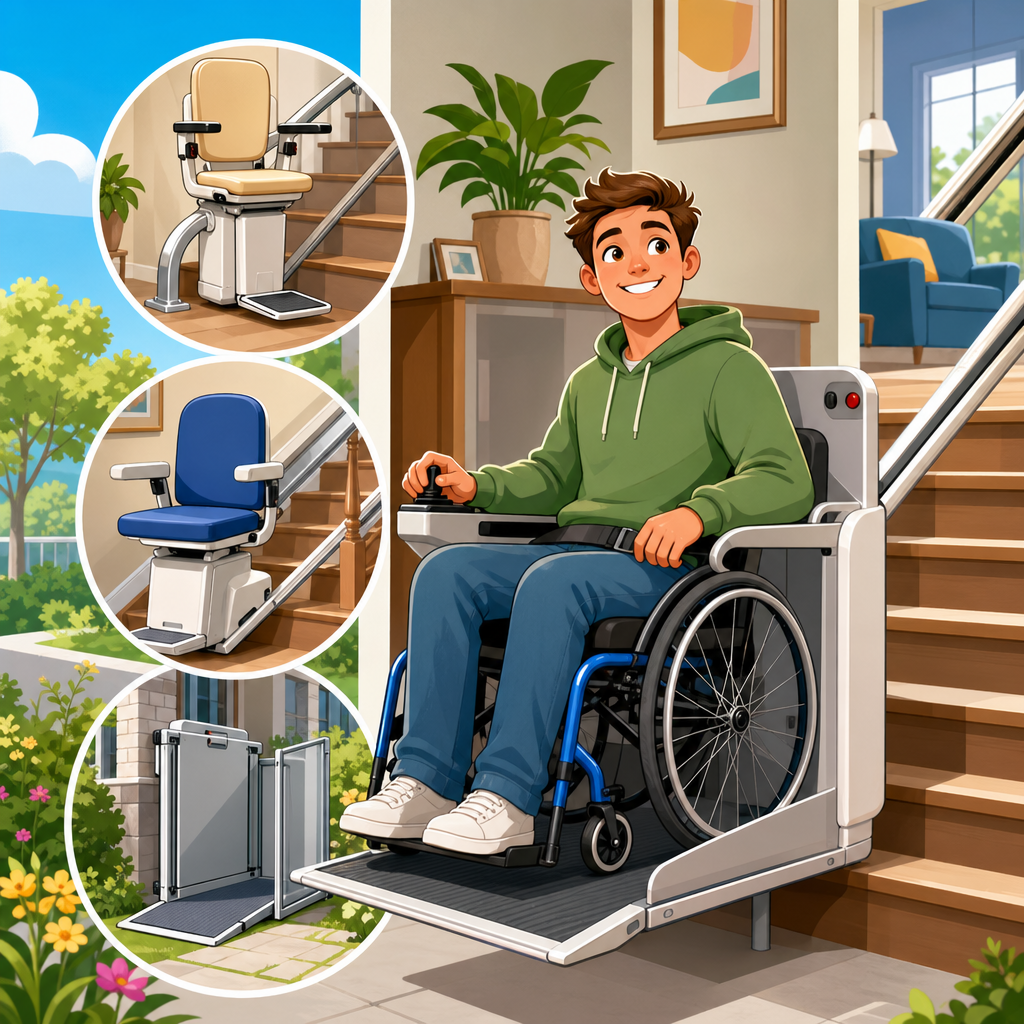
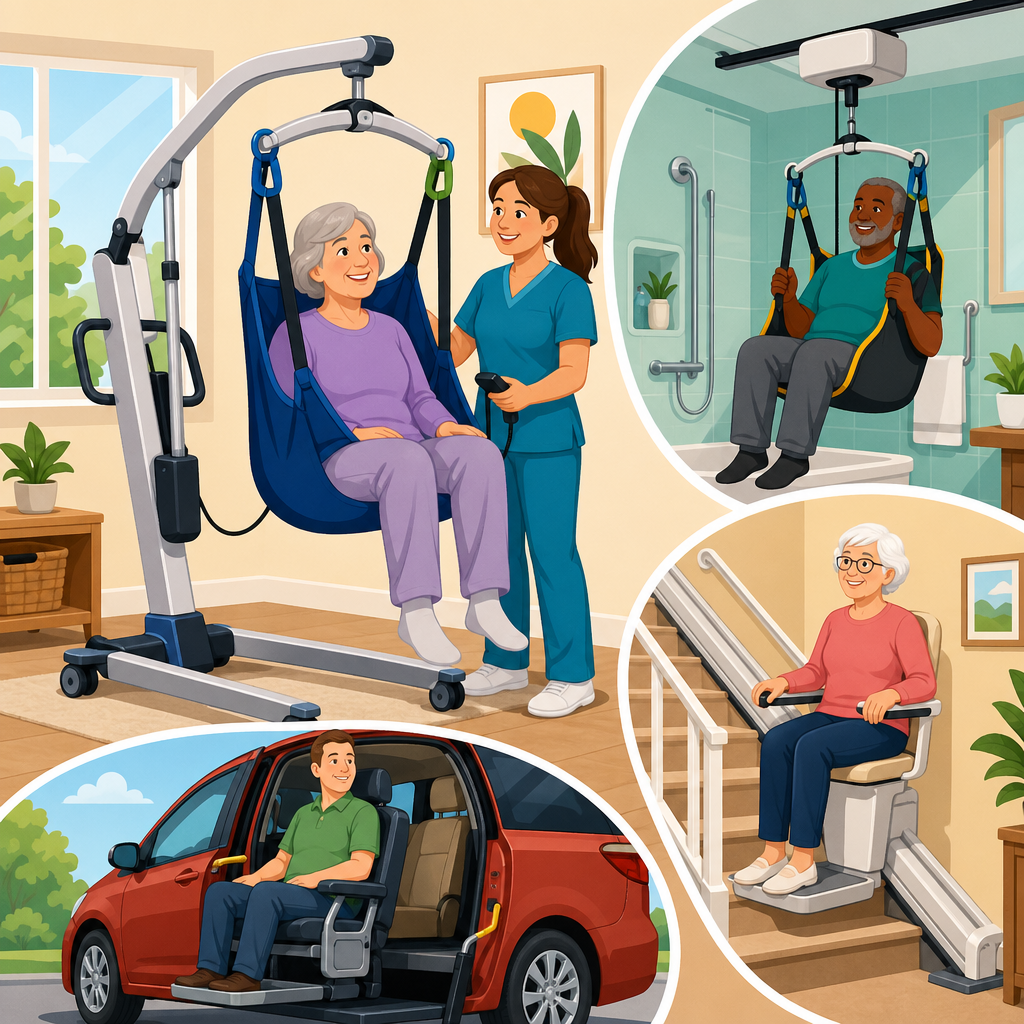
A curved stair lift may not be the right choice if the user cannot perform a seated transfer even with support, has severe postural instability, or is likely to need a wheelchair full time very soon. In those cases, a vertical platform lift, wheelchair lift, first-floor living arrangement, or residential elevator may be more appropriate. The same caution applies when severe cognitive impairment affects safe operation. Stair lifts are simple, but they still require consistent use of seat belts, foot placement, and boarding routines. A thorough assessment should include the user’s physical and cognitive status, not just the staircase dimensions.
Short-term need is another reason to hesitate. Because curved rails are custom, resale options are limited. Some dealers offer rental or buyback programs, but these are less common than with straight lifts. If the expected use is brief, families should compare the cost of installation against temporary relocation, concentrated caregiving, or other access solutions. A curved lift is usually best as a medium- to long-term investment, not a quick stopgap.
How to shop smart and avoid costly mistakes
Start with an in-home assessment from at least two established dealers. Ask who manufactures the rail, who installs it, who services it, and what the response time is for breakdowns. Request a written quote showing model name, seat type, powered options, warranty terms, and whether annual maintenance is recommended. If possible, test a similar unit in a showroom. Ride quality, seat height, and control feel are much easier to judge in person than from brochures.
Do not buy based on price alone. The cheapest quote may omit a powered swivel, overrun, or service coverage that the senior will need every day. Also avoid assuming Medicare will pay; original Medicare generally does not cover stair lifts as durable medical equipment for home use. Some Medicaid waiver programs, veterans’ benefits, state assistive technology programs, long-term care insurance policies, or local aging agencies may help, but funding is highly variable. Confirm all assistance directly before counting on it.
The bottom line is straightforward: curved stair lifts are worth it for seniors when the staircase is complex, the home is likely to remain the long-term residence, and safe daily access to essential rooms would otherwise be lost. They are not the cheapest mobility option, but in the right home they deliver something more important than convenience: continued use of the home seniors already know and want to keep. If you are building your shortlist of the best chair lifts for seniors, treat curved models as a category that deserves careful assessment, not sticker shock. Measure the staircase, evaluate the user honestly, compare reputable dealers, and choose the solution that makes aging in place safer and more sustainable.
Frequently Asked Questions
Are curved stair lifts really worth it for seniors compared with moving or remodeling?
For many seniors, yes, a curved stair lift is absolutely worth it when the staircase has turns, landings, or a split-level layout that a straight lift cannot handle. The biggest reason is safety. Stairs become one of the most common trouble spots in the home as balance, joint strength, and confidence change with age. A curved stair lift can turn a risky daily obstacle into a predictable, seated ride, which may greatly reduce the chance of falls. That benefit alone can make it a practical investment for older adults who want to remain at home.
It can also be more cost-effective than the alternatives people often consider first. Moving to a one-story home, downsizing, or entering assisted living usually comes with major financial, emotional, and logistical costs. Remodeling a home to create first-floor living may also be expensive and disruptive, especially if it involves adding a bathroom, changing room layouts, or reworking entrances. A curved stair lift is not inexpensive, but it often solves the specific mobility problem without requiring the senior to leave a familiar home and routine.
Beyond dollars, there is quality of life to consider. Many older adults want to age in place because home is tied to independence, comfort, and emotional well-being. If the only thing standing in the way of using the full home is a staircase with bends or landings, a custom curved stair lift may preserve access to bedrooms, laundry areas, and other important parts of the house. In that context, the lift is not just a convenience item. It is a tool that supports safer independence and helps extend the time someone can remain in the home they love.
What makes a curved stair lift different from a straight stair lift?
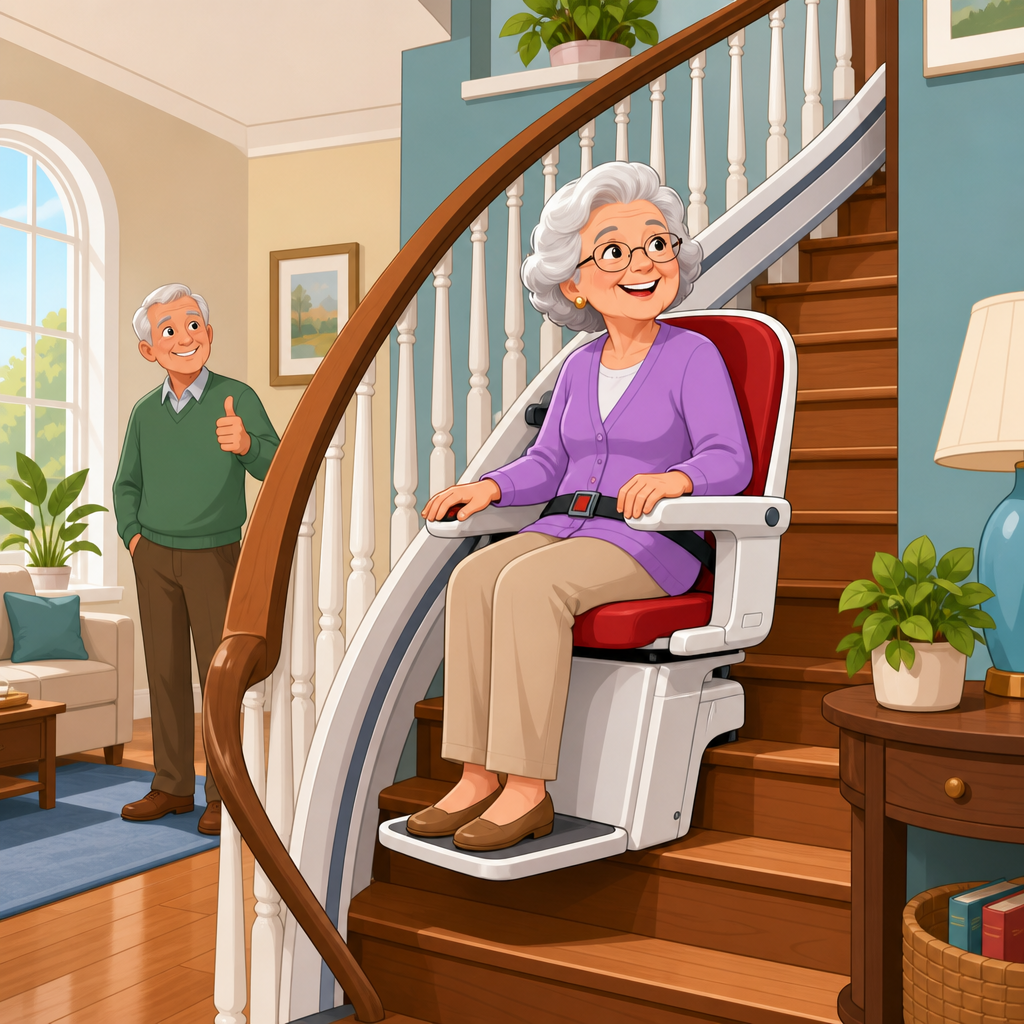
A straight stair lift travels on a simple rail designed for one uninterrupted flight of stairs. If the staircase goes straight from bottom to top with no turns, no intermediate landings, and no change in direction, a straight model may work well. A curved stair lift, however, is designed for staircases that bend, wrap, or break at landings. Its rail is custom-built to match the exact shape and dimensions of the staircase, allowing the chair to follow the path safely and smoothly.
This difference matters more than many homeowners realize. A straight lift cannot simply be adapted to go around corners. If the stairs curve or split, the rail must be engineered to fit those features precisely. That custom fit is what allows the user to ride continuously rather than transferring from one lift to another or stopping at a landing and walking the rest of the way. For seniors with limited balance, arthritis, weakness, or fatigue, avoiding that extra walking or transferring can make a big difference in daily safety and comfort.
Curved stair lifts also often allow more customized start and stop positions, parking locations, and rail options. In some homes, the rail can be designed so the chair parks away from the main walkway, helping reduce obstruction. While this custom design usually increases the price and installation complexity compared with straight models, it is also the reason curved stair lifts can solve mobility issues in homes where a standard lift would simply not work.
How much do curved stair lifts cost, and why are they more expensive?
Curved stair lifts are generally more expensive than straight stair lifts because they are custom-made for a specific staircase. Unlike straight rails, which can often be cut from standardized components, a curved rail must be manufactured to match the home’s exact stair dimensions, turns, angles, and landings. That design and fabrication process is a major reason the price goes up. In addition to the equipment itself, homeowners are paying for measuring, engineering, custom production, and specialized installation.
The final cost can vary based on the length of the staircase, the number of curves, whether there are intermediate landings, the seat style, weight capacity, power features, and any upgraded options such as powered swivel seats or folding rails. Homes with more complex stair layouts typically cost more because the rail system is more intricate. Brand, warranty, dealer support, and local labor rates also affect pricing. For these reasons, curved models often cost significantly more than straight lifts, but that added cost reflects the fact that they are built to fit the architecture of the home rather than using a one-size-fits-most rail.
Even so, value should be judged in context. If a curved stair lift allows a senior to avoid a move, prevent a fall, or continue using an upper floor safely, many families find the investment worthwhile. It is smart to get multiple quotes, ask what is included in the estimate, and clarify warranty coverage, service response times, and battery backup features. Some dealers also offer reconditioned units for certain situations, although true curved rails are typically still custom-made. The best way to evaluate cost is to compare it not only to other lift options, but also to the broader costs of reduced mobility at home.
Are curved stair lifts safe and easy for seniors to use every day?
Yes, when properly installed and matched to the user’s needs, curved stair lifts are generally very safe and designed for everyday ease of use. Most models include a seat belt, armrests, footrest safety sensors, and simple operating controls on the chair itself. Many also come with call/send remotes, so the chair can be moved up or down the stairs without the user sitting in it. Battery backup is another important feature, since it allows the lift to operate during a power outage in many cases.
Ease of use is one of the strongest points in favor of these lifts. Seniors do not need to climb, balance, or exert themselves on the stairs. They sit down, secure the belt, and use a straightforward control to ride along the rail. Seats often swivel at the top landing to make getting on and off more stable and comfortable. In homes where every stair trip has become stressful, painful, or dangerous, that simple routine can be a major improvement in both safety and confidence.
That said, safety also depends on choosing the right model and installer. The staircase should be professionally assessed, and the senior’s mobility, height, weight, and transfer ability should be taken into account. A stair lift can be life-changing, but it is not ideal for every situation, especially if someone cannot safely transfer into and out of the seat even with the swivel feature. A reputable provider will explain the limitations clearly, review maintenance needs, and make sure the lift is installed securely on the stair treads with appropriate testing before use.
Who is the best candidate for a curved stair lift, and when might it not be the right choice?
The best candidate is usually a senior who can still transfer safely into a seated position but has difficulty climbing stairs due to balance concerns, joint pain, reduced strength, shortness of breath, or fear of falling. Curved stair lifts are especially useful for people living in homes with staircases that turn, have multiple sections, or include landings where a straight rail would not work. They are often a strong option for older adults who want to age in place and keep using all levels of their home without taking on a major renovation or relocation.
They can also be a very good fit for families trying to support a loved one’s independence while reducing risk. If the upstairs includes bedrooms and bathrooms that are still important to daily life, a curved lift can preserve normal routines and make the home more livable for longer. In many cases, the emotional value of staying in a familiar home matters just as much as the practical benefit of getting from one floor to another safely.
Still, a curved stair lift is not automatically the right answer for everyone. If a senior has severe difficulty sitting upright, cannot transfer safely even with assistance, or has advanced cognitive challenges that would make operation unsafe, other mobility solutions may be more appropriate. Likewise, if broader accessibility issues exist throughout the home, a stair lift may solve only part of the problem. The best approach is a full assessment of the person, the staircase, and the long-term living plan. When the fit is right, a curved stair lift can be an excellent investment. When the fit is wrong, it is better to know that before installation than after.