Rush stair lift installation after hospital discharge often becomes the difference between a safe return home and an avoidable readmission. In practical terms, a rush installation means compressing assessment, equipment selection, scheduling, and fitting into days rather than weeks so a patient can access bedrooms, bathrooms, and normal routines without dangerous stair climbing. For families coordinating discharge, the timing feels urgent because it is urgent: reduced mobility after surgery, stroke, cardiac events, or falls sharply increases the risk of another accident on the staircase. I have worked with discharge planners, mobility dealers, and caregivers in exactly these situations, and the pattern is consistent. The smoother the installation plan, the safer the first week at home.
A stair lift is a motorized chair or perch mounted to the staircase, not the wall, that transports a user between floors along a rail. Key terms matter when speed matters. A straight stair lift fits a staircase without turns or landings and is usually the fastest, least expensive option because rails are commonly stocked in standard lengths and cut on site. A curved stair lift follows turns, intermediate landings, or spiral geometry and typically requires a custom rail made from detailed measurements. Battery-powered models dominate the market because they continue working during a power outage, while charging points keep the batteries topped up at one or both ends of the rail.
This topic matters because hospital discharge deadlines rarely align with ideal home modification timelines. Case managers may confirm discharge in forty-eight hours, while the patient still cannot safely manage thirteen steps to a second-floor bedroom. Families then need answers to practical questions: How fast can a stair lift be installed? What affects the timeline? Can a rental work temporarily? What does emergency installation cost? Understanding installation timeline and costs upfront helps avoid rushed, expensive mistakes such as ordering a curved unit when a temporary bedroom relocation would solve the immediate problem, or delaying a straight lift because no one realized next-day installation was possible. This article explains the process clearly so you can make safe, financially sensible decisions under pressure.
How fast can a rush stair lift installation happen?
For a straight staircase, same-day or next-day stair lift installation is often realistic if the dealer has inventory, the home is within service range, and the staircase is structurally suitable. In many markets, established providers keep popular straight models from Bruno, Harmar, Handicare, or Access BDD in stock precisely for urgent discharges. A technician can complete a site assessment in under an hour, confirm power access, measure tread depth, check obstructions, and install the unit in two to four hours. In my experience, the biggest delay is not the fitting itself; it is reaching a decision quickly on model, seat configuration, and payment.
Curved stair lift installation is different. Because the rail must match the staircase exactly, lead times usually run from several days to several weeks depending on the manufacturer, measurement method, engineering queue, and shipping distance. Digital photogrammetry systems and rail fabrication software have shortened timelines significantly, but a true custom build still cannot match the speed of a stocked straight lift. If discharge is imminent and the home has a curved staircase, the fastest solution may involve a temporary first-floor sleeping arrangement, a short-term rehab extension, or in rare cases a used reconditioned curved lift that matches similar geometry closely enough to be adapted. Those situations are uncommon and must be evaluated carefully.
Several variables determine whether “rush” really means twenty-four hours or five days. The first is staircase type: straight versus curved. The second is product availability, including seat size, weight capacity, and rail length. The third is scheduling capacity; a dealer may have stock but no open technician slot. The fourth is home readiness, such as clearing furniture, securing pets, and ensuring a working outlet. The fifth is medical fit. If the user cannot transfer safely into a standard seat, you may need a perch seat, powered swivel, folding rail, or higher-capacity unit, each of which can narrow inventory choices and extend the timeline.
What happens from discharge planning to final testing?
The process usually starts with a referral from a hospital social worker, occupational therapist, discharge planner, home health clinician, or family caregiver. A reputable dealer asks targeted questions immediately: staircase shape, number of steps, user height and weight, whether the person uses a walker or wheelchair, which side has the handrail, and whether the top and bottom landings provide safe transfer space. Good providers also ask about the discharge date and whether the patient can temporarily sleep on the main floor. Those answers determine whether the case is a standard straight install, an urgent straight install, or a custom project with interim safety planning.
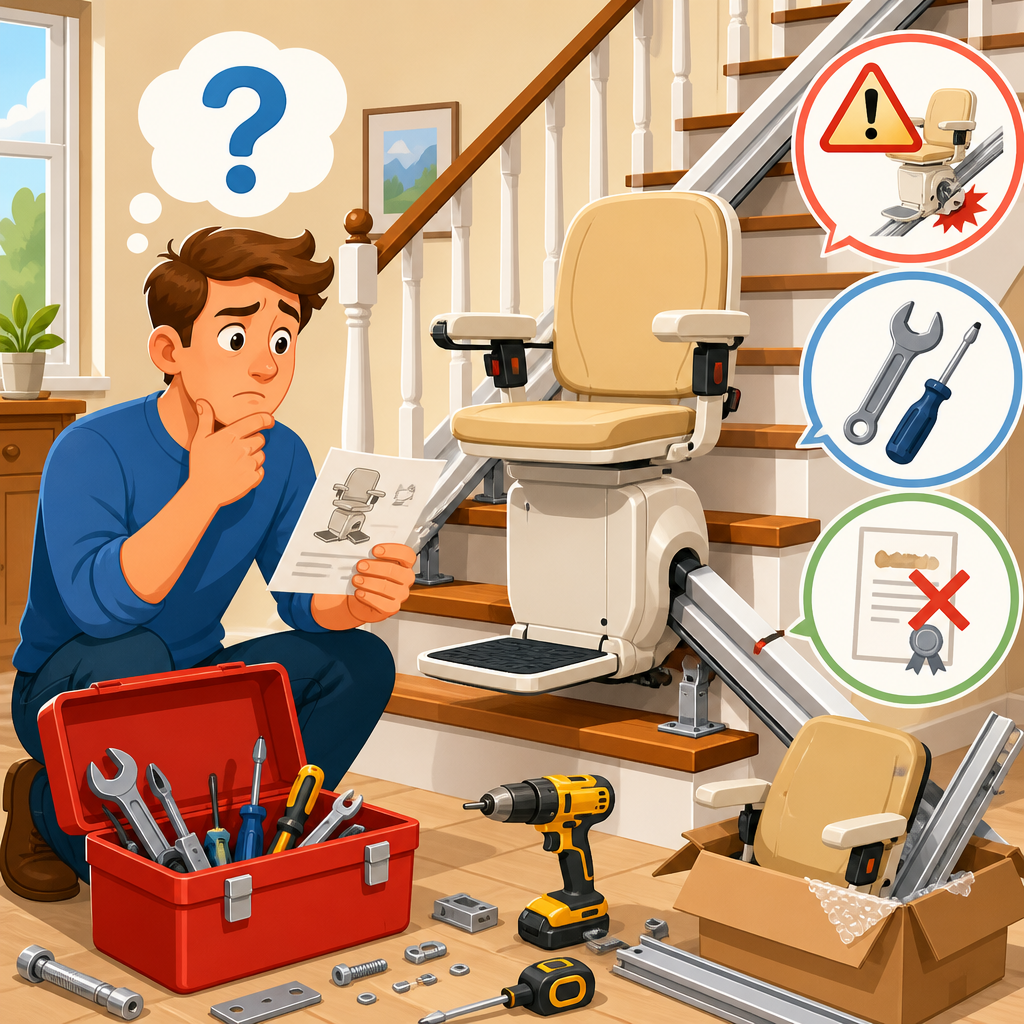
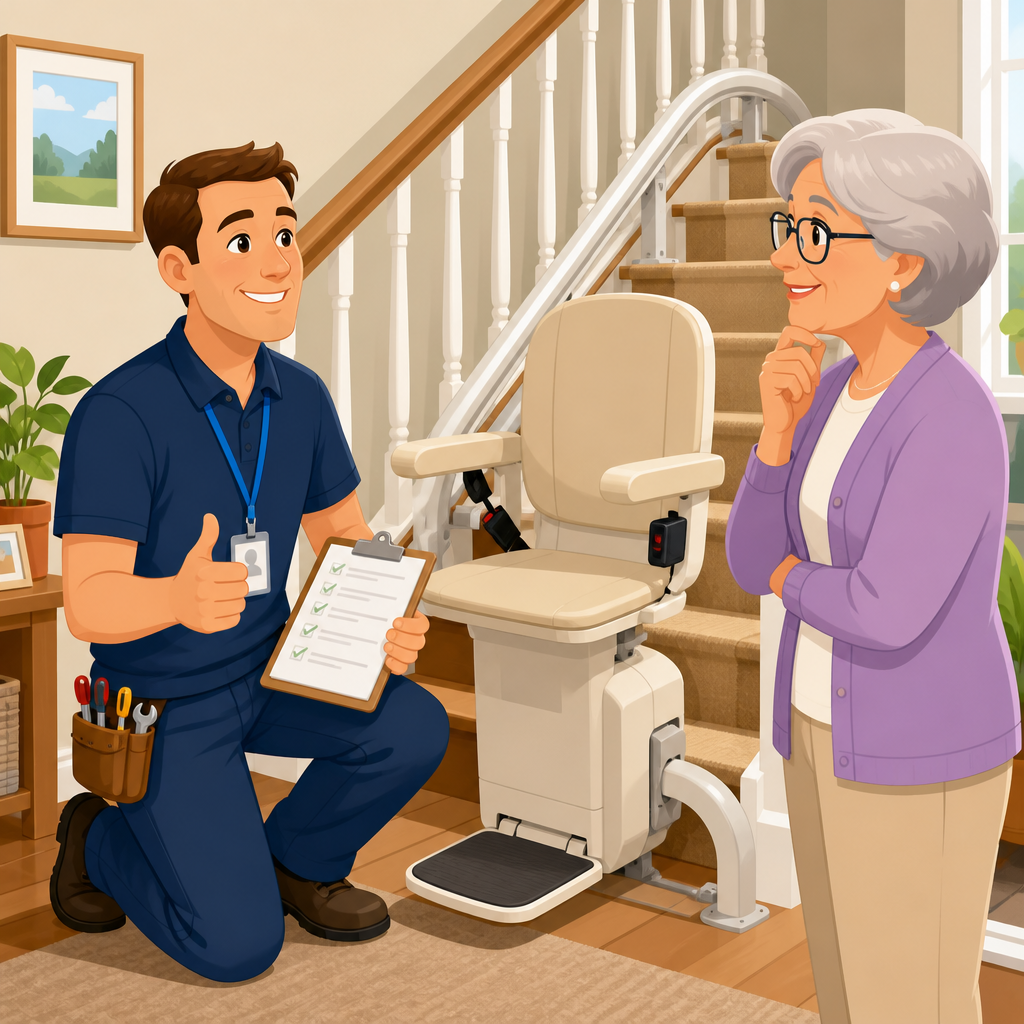
Next comes the home assessment. The installer or assessor measures the staircase angle, tread dimensions, overall run, landing depth, and head clearance. They identify hazards such as narrow hallways at the top, doors that swing into the travel path, radiators, baseboard heaters, and protruding trim. They also verify anchoring points on the treads and review the power supply. Stair lifts generally draw modest household current, but the charging point must be reliable. At this stage, the provider should explain seatbelt use, swivel operation, footrest obstruction sensors, battery charging, and any limitations. A rushed purchase without this explanation is a warning sign.
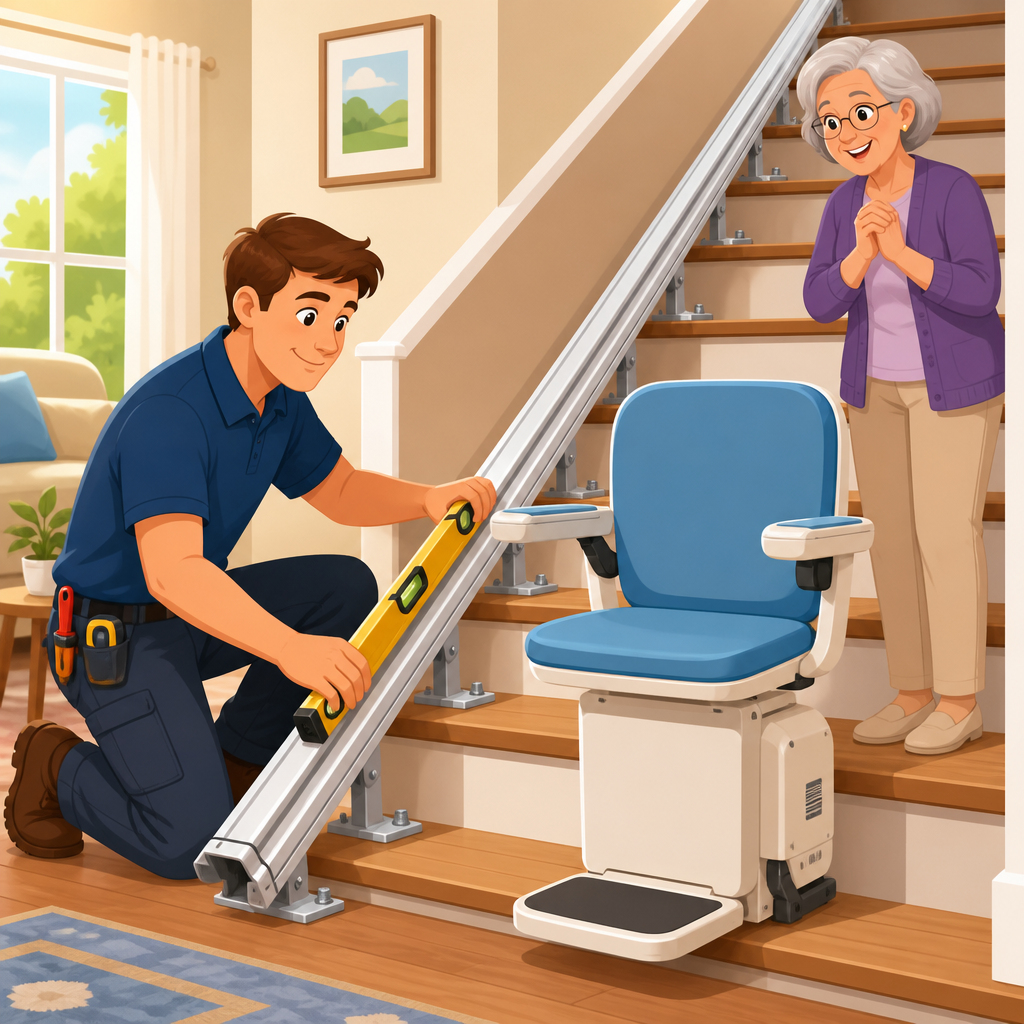
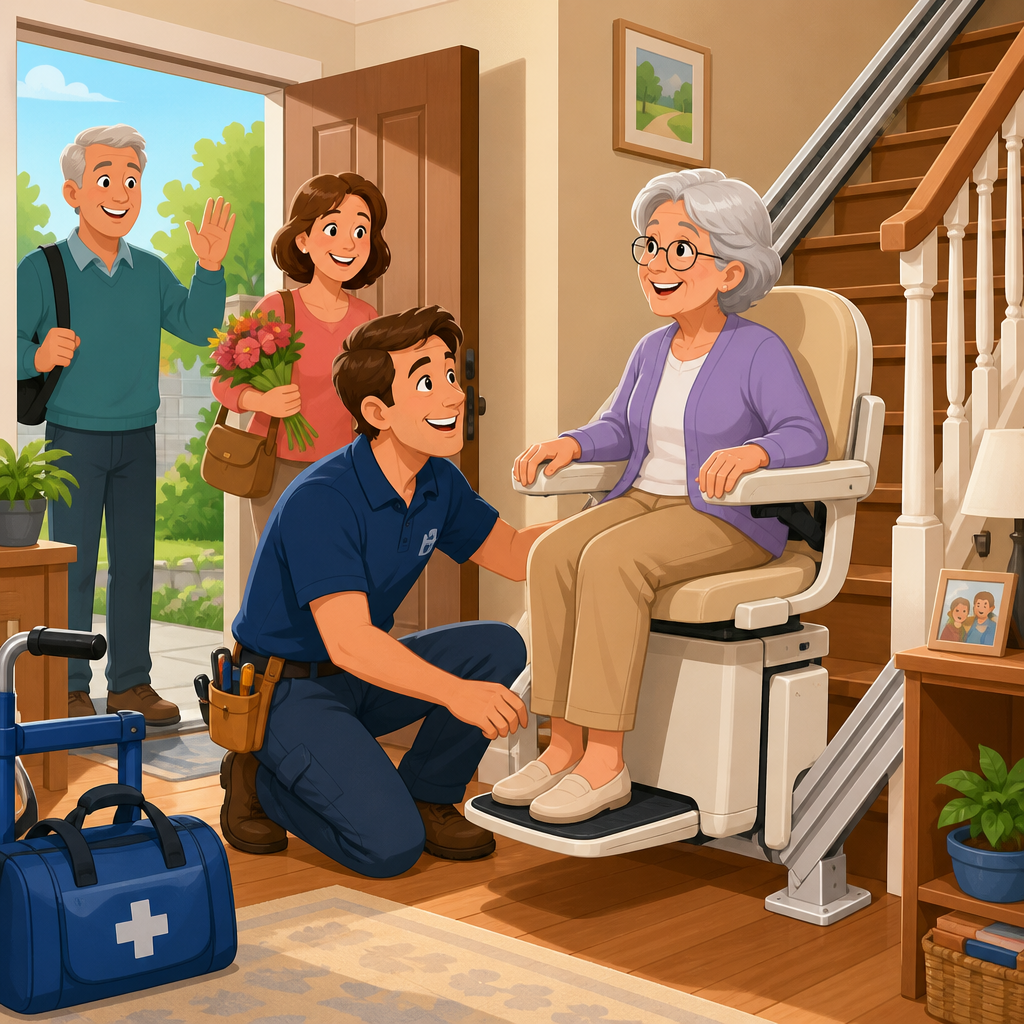
Once approved, the installation itself is straightforward on a straight staircase. The rail is secured to the stair treads, the carriage and seat are assembled, charging contacts are aligned, and call-send controls are paired. The technician then runs multiple test cycles with and without load, checks stopping positions at the landings, and verifies that safety edges stop the unit when obstructed. Before leaving, a competent installer trains the user and caregiver together. I always look for this final step because early misuse is common: people forget to leave the chair parked on its charger, neglect to fold the footrest, or attempt unsafe transfers without locking walkers in place.
| Stage | Straight Stair Lift Typical Timing | Curved Stair Lift Typical Timing | Main Cost Impact |
|---|---|---|---|
| Initial consultation | Same day to 24 hours | Same day to 48 hours | Usually included |
| Home assessment and measurements | Same day or next day | Same day to 3 days | Usually included; travel fees possible |
| Equipment sourcing | In-stock inventory | Custom rail fabrication | Major driver of price difference |
| Installation appointment | 2 to 4 hours | 4 to 8 hours | Labor, complexity, accessories |
| Total rush timeline | 24 to 72 hours in many cases | Several days to several weeks | Rush scheduling may add fees |
Installation timeline by stair type, home layout, and patient needs
Straight stair lifts are the workhorses of emergency installation because the rail is modular and installers can cut it to length on site. Many standard jobs are completed within one visit after assessment. Costs stay lower because engineering is minimal and parts are interchangeable. A folding rail may be added when a doorway or hallway at the bottom would otherwise be blocked. That accessory improves circulation but adds installation time and price. Heavy-duty straight lifts for users above standard weight limits, often 300 to 350 pounds on entry models and higher on specialized units, may also require wider seats and reinforced components that are not always stocked locally.
Curved stair lifts vary dramatically by geometry. A staircase with one ninety-degree turn and a generous landing is simpler than a narrow staircase with multiple turns and limited clearance. Manufacturers use detailed measurement systems, and accuracy is critical because even small errors affect parking positions, seat clearance, and ride smoothness. For discharge planning, the key fact is that custom fabrication drives both time and cost. If the patient must return home before the unit is ready, clinicians should document temporary mobility strategies. That may include relocating a bed downstairs, setting up a commode, increasing caregiver hours, or arranging short-term inpatient rehabilitation.
Patient factors can change the installation approach as much as the staircase itself. Someone recovering from total knee replacement may tolerate a standard seated lift well, while a person with severe hip precautions, poor trunk control, or advanced Parkinsonian rigidity may need powered swivel and powered footrest functions to reduce fall risk during transfers. Users with limited knee flexion often need more landing space to sit safely. Cardiac or pulmonary patients may need the ride speed and seating posture explained carefully to reduce anxiety. These needs do not make installation impossible, but they shape product selection, training, and therefore timeline and cost.
What does rush stair lift installation cost?
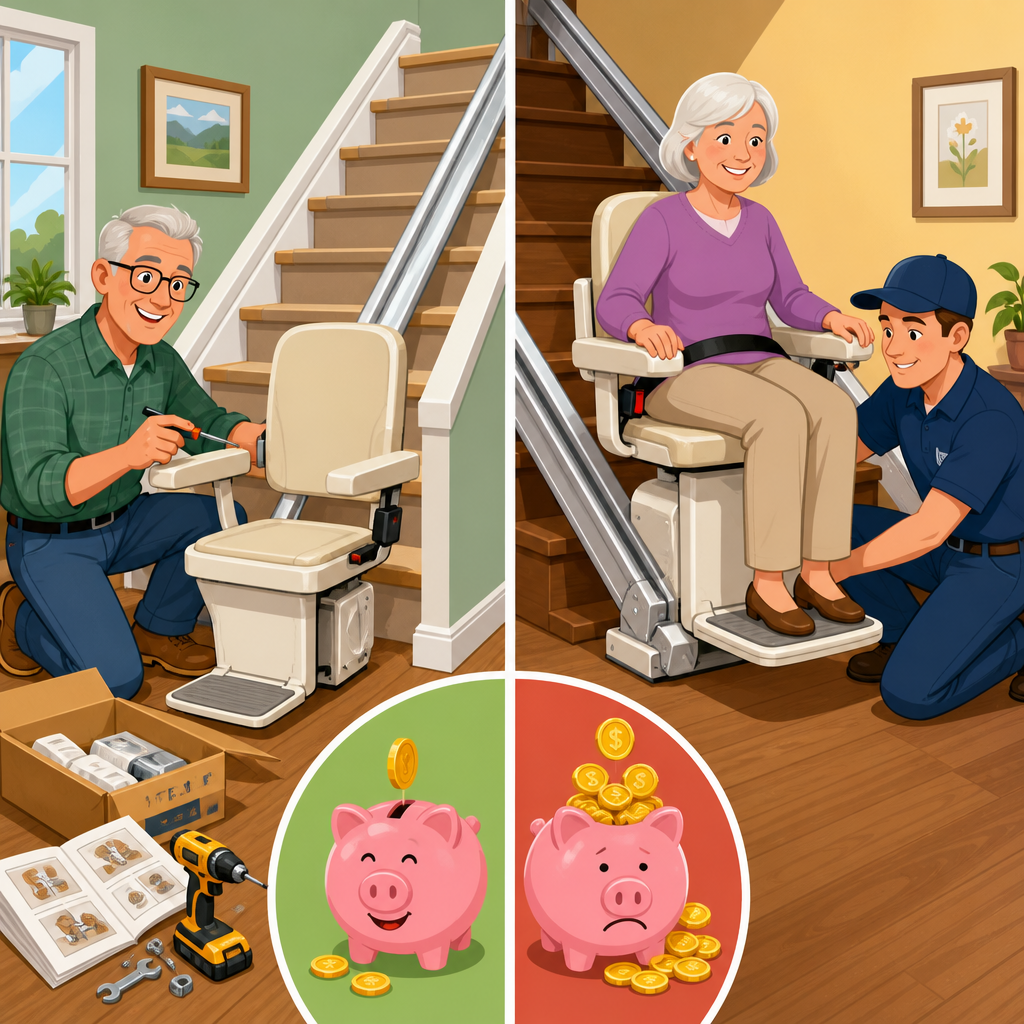
For a new straight stair lift, many U.S. buyers should expect a broad range of roughly $2,500 to $6,000 installed, with urgent scheduling, power options, seat upgrades, and folding rails pushing the total upward. Reconditioned straight units can cost less, often around $2,000 to $4,000 installed, depending on brand, warranty, and new-versus-reused components. Curved stair lifts commonly start around $10,000 and can exceed $20,000 when rail complexity, advanced controls, or premium finishes are involved. Those numbers vary by region and manufacturer, but the pattern is stable across the market: straight is faster and far less expensive; curved is custom and materially costlier.
Rush fees are not universal, but they are common when a dealer must rearrange schedules, dispatch after hours, or prioritize delivery over other booked work. Ask whether the quote includes assessment, standard installation labor, warranty, service call response, permit requirements if any, and removal if you are renting. Rentals can make sense when mobility loss is expected to improve, such as after joint replacement or fracture recovery. A typical straight-lift rental may include an installation fee plus monthly charges, and the rail is often reused while the carriage is reconditioned. Rentals are less common for curved lifts because the rail is custom to the staircase.
Insurance coverage is the area that causes the most confusion. Original Medicare generally does not cover stair lifts because they are considered home modifications rather than durable medical equipment under standard rules. Some Medicare Advantage plans, Medicaid waiver programs, workers’ compensation cases, Veterans benefits, state assistive technology programs, or nonprofit grants may help in specific circumstances. Hospital staff sometimes know local funding pathways, but families should verify directly and quickly because urgent installations rarely wait for reimbursement decisions. If payment is out of pocket, request a line-item quote and ask what happens if the patient’s condition changes before installation. Clear cancellation and restocking terms matter.
How to choose a provider quickly without making a bad decision
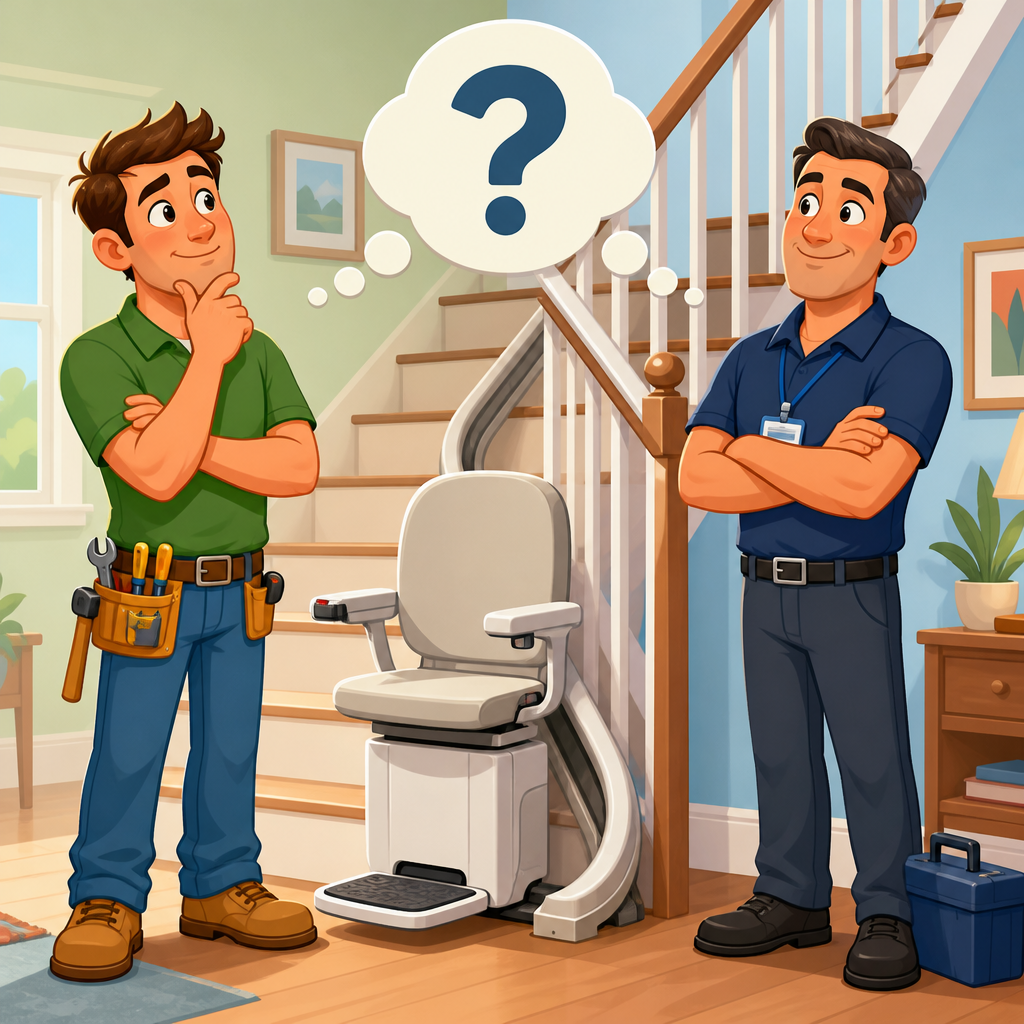
In urgent situations, families often call the first company they find. Speed matters, but screening matters too. Ask whether the company employs certified or factory-trained technicians, stocks straight units locally, services the brands it sells, and provides written warranties on parts, batteries, and labor. Established dealers should be comfortable discussing compliance with applicable stair lift safety standards, manufacturer maintenance intervals, and battery replacement expectations. They should also ask clinical questions about transfers and landing safety rather than simply pushing the cheapest unit. If the salesperson never asks who will help the patient on day one, that is a concern.
Reviews help, but focus on details that indicate competence: on-time installation, clear training, responsive service, and honest communication about fit. Request photos of similar installations when your staircase is narrow or unusual. Confirm whether the quote includes removal of an old lift, moving a handrail if needed, and post-installation support. I advise families to test the provider with one direct question: “If the patient is discharged Friday afternoon, what exactly can you do by then?” The best companies answer with a step-by-step plan, not vague reassurance. Precision is a reliable sign of operational maturity in this industry.
Preparing the home and reducing risk after installation
Even the best rush stair lift installation will underperform if the home setup is poor. Clear clutter from both landings, improve lighting, secure rugs, and decide where the walker or cane will be positioned before and after each ride. If the chair folds, practice folding and unfolding without rushing. If there are multiple users in the home, teach everyone how the call-send controls work so the patient is not tempted to navigate stairs without the lift because the chair is parked on the wrong floor. Battery units should remain on their charging points when not in use, or capacity will decline and service calls will follow.
Follow-up matters during the first week after discharge. Check whether the patient is leaning to one side, catching toes on the footrest, or struggling with the swivel at the top landing. Those are fixable issues, but only if reported. A home health therapist can reinforce safe transfers and recommend small adjustments such as seat height, positioning cues, or a different walking aid placement. The stair lift solves vertical access; it does not replace broader fall prevention. Handrails, bathroom grab bars, medication review, and supervised mobility remain part of the plan. If you are arranging a rush installation now, gather quotes, confirm timelines, and coordinate assessment today so the discharge home is safe, practical, and sustainable.
Frequently Asked Questions
1. What does a rush stair lift installation after hospital discharge actually involve?
A rush stair lift installation is an accelerated process designed for situations where someone is coming home from the hospital and cannot safely manage stairs. Instead of spreading the normal steps over several weeks, the provider compresses the home assessment, equipment recommendation, scheduling, delivery, and installation into a much shorter timeline—often just a few days, depending on stair configuration, product availability, and installer capacity. The goal is to make the home usable right away so the patient can reach essential areas such as a bedroom, bathroom, and main living spaces without risking a fall.
In most cases, the process begins with a fast consultation. The stair lift company will ask about the patient’s condition, discharge date, type of staircase, body size, ability to transfer in and out of a chair, and whether the lift needs to serve a straight or curved staircase. They may request photos, measurements, or a video walkthrough to speed up planning. For straight staircases, installation is often quicker because many providers stock standard rails and chairs. Curved staircases usually require custom rail manufacturing, which can take longer, although temporary alternatives may sometimes be discussed if immediate access is necessary.
Once the right model is selected, the company coordinates installation as quickly as possible. On installation day, technicians typically mount the rail to the staircase treads rather than the wall, fit the chair and controls, test charging points and safety sensors, and then walk the household through operation. They should also explain seat belts, swivel seats, footrests, call/send controls, battery backup, and safe transfer techniques. In a discharge situation, a reputable installer understands that speed matters, but so does proper setup. The lift should not just be installed quickly—it should be installed correctly, safely, and in a way that supports recovery at home.
2. How quickly can a stair lift usually be installed once discharge is planned?
The timeline depends mainly on the type of staircase and the availability of equipment, but many straight stair lifts can be installed within 24 to 72 hours in true urgent cases. Some companies can even provide next-day service if the assessment is completed quickly and the unit is in stock. This is why families are often encouraged to start the process as soon as discharge planning begins, even if the final hospital release date is not fully confirmed. Early communication gives the installer time to review the home setup, reserve equipment, and hold an installation slot.
Straight stair lifts are generally the fastest option because they use standardized rails that can be cut to fit on site. Curved stair lifts, by contrast, are more complex. They require a custom-made rail shaped to the exact turns, landings, and angles of the staircase. That means a curved lift usually cannot be turned around as quickly as a straight one unless there is a special stock solution or a short-term workaround available. If the staircase is unusually narrow, steep, or includes obstacles such as tight doorways at the top or bottom, the installer may need additional planning time to confirm safe clearance.
To keep the process moving, families should be ready to provide clear stair photos, basic dimensions, the discharge target date, and any medical information that affects seating or transfers. It also helps to confirm who will be home for installation and training. If urgency is extreme, ask the provider directly: Do you have a straight unit in stock? Can you assess remotely first? What is the soonest install date? Are there rental or reconditioned options available immediately? Those questions often make the difference between waiting and getting a practical solution in place before the patient arrives home.
3. What should families do before the installer arrives?
Preparation matters, especially when the installation is being coordinated around hospital discharge. First, clear the staircase and surrounding areas completely. Remove shoes, baskets, small furniture, rugs near the base, and any items sitting on steps or landings. The technicians need safe working access, and the patient will need an uncluttered path when using the lift afterward. If there is a handrail, do not remove it unless the installer specifically advises it. In many cases, existing handrails can remain in place.
Second, gather information the installer may need. Be ready to discuss the patient’s height, weight, balance, and whether they can sit down and stand up independently or will need assistance. Mention recent surgery, joint precautions, weakness on one side, oxygen tubing, or any concern that might affect how they use the chair. If the patient uses a walker or wheelchair, identify where those mobility aids will be positioned on each floor. The installation itself may be straightforward, but safe day-to-day use depends on thinking through the full routine, including transfers at the top and bottom of the stairs.
Third, make sure someone responsible can be present for the installation and demonstration. This is especially important if the patient may be tired, medicated, or overwhelmed after discharge. The installer should explain how to operate the controls, fold the seat and footrest if applicable, fasten the seat belt, and respond if the lift stops due to a safety sensor. Family members or caregivers should watch closely and ask questions. It is also wise to write down support numbers for service calls, battery issues, or troubleshooting.
Finally, use the pre-installation window to think beyond the lift itself. A stair lift solves vertical travel, but the return home may still require grab bars, raised toilet seating, shower safety equipment, better lighting, or temporary sleeping arrangements if upstairs access remains difficult in the first few days. A good discharge plan looks at the whole home, not just the stairs. The stair lift is a major part of safe recovery, but it works best when combined with a realistic setup for mobility, toileting, bathing, and rest.
4. Is a rush stair lift installation safe and reliable, or does speed increase the risk of problems?
A rush installation can be safe and reliable when it is handled by an experienced provider with proper assessment and installation protocols. Speed alone is not the problem; cutting corners is. Reputable stair lift companies know that post-hospital patients may be at high risk for falls, fatigue, pain, and limited strength, so they prioritize both urgency and precision. The safest providers will still verify staircase measurements carefully, check structural fit, test safety sensors, confirm charging function, and provide user instruction before considering the job complete.
Modern stair lifts include multiple safety features designed to support dependable operation. These often include a seat belt, obstruction sensors that stop the lift if something is on the stairs, a swivel seat for safer exit at the top landing, locking controls, battery-powered operation in case of a power outage, and call/send remotes. During installation, the technician should test the lift through full travel several times and make sure it stops and starts smoothly. If anything feels unstable, jerky, or unclear, families should ask for clarification before the technician leaves.
That said, no stair lift is a substitute for proper supervision when needed. A patient who is confused, heavily medicated, unable to sit upright safely, or medically restricted from certain movements may need assistance each time they use the lift. The installer can explain the equipment, but the medical team should guide decisions about whether the patient can ride independently. If there is any uncertainty, it is best to assume supervision is needed until a therapist, nurse, or physician confirms otherwise.
Reliability also depends on choosing the right company. Look for an installer with experience in urgent discharge cases, strong reviews, clear service support, and transparency about what can realistically be done on short notice. Ask whether the unit is new, rental, or reconditioned; what warranty or service coverage applies; and how emergency repairs are handled. A fast installation should still come with the same professionalism and accountability expected from any medical-mobility-related home modification.
5. How much does a rush stair lift installation cost, and are there short-term options after discharge?
Cost varies widely based on the staircase type, the model selected, and whether the lift is being purchased outright or rented. Straight stair lifts are usually the most affordable and the fastest to install. Curved stair lifts are more expensive because the rail is custom-built. In a rush situation, pricing may also be affected by expedited scheduling, urgent assessment visits, or limited stock availability, although not every provider charges a premium simply because the case is urgent. The best approach is to request a clear written quote that breaks down equipment, installation, delivery, and any ongoing service charges.
For families dealing with a short recovery period, rental can be an excellent option if the provider offers it. This is especially common for straight stair lifts. A rental can reduce upfront cost and make sense when the patient is expected to regain mobility after rehabilitation, orthopedic recovery, or a temporary decline. Reconditioned stair lifts may also provide savings while still offering dependable function when supplied and serviced by a reputable company. If the staircase is curved, rental options are often more limited because of the custom rail, but it is still worth asking about used inventory, temporary solutions, or buyback arrangements.
Insurance coverage is often one of the first questions families ask, and the answer depends on the policy. Many standard health insurance plans and Medicare arrangements do not routinely cover stair lifts as a home modification, though some private plans, long-term care policies, veterans’ benefits, workers’ compensation cases, or local assistance programs may help in certain circumstances