Installing a stair lift often raises one practical question before any brackets are fixed or measurements are taken: do you need a dedicated electrical circuit for a stair lift? In most homes, the answer is usually no for modern battery-powered models and often yes or strongly recommended for some non-battery or higher-demand configurations. The right answer depends on the lift type, charger design, local electrical code, the condition of the home’s wiring, and whether other loads already share the outlet the unit would use. Because this article sits within the broader Installation & Setup topic, it also serves as a hub for the wider question of modifying the home safely for accessibility equipment.
A dedicated electrical circuit is a branch circuit reserved for one appliance or one defined load. In plain terms, it means the breaker, wiring, and outlet are not also feeding lamps, televisions, vacuum cleaners, heaters, or other devices that can cause nuisance trips or voltage drop. For stair lifts, power matters because the rail, carriage, charger, call stations, and safety systems all depend on consistent electrical service. If the home loses power or the circuit is overloaded, the user may be stranded unless the lift has battery backup and the batteries are healthy.
In my experience coordinating stair lift installations with electricians and mobility dealers, the biggest mistakes happen when people assume every lift works like every other lift. They do not. A straight stair lift with a plug-in charger may sip power most of the day and only draw modest charging current, while an older AC-driven model can place more continuous demand on the circuit during travel. Curved lifts, heavy-duty models, outdoor units, and lifts with powered swivels or folding rails can also have different installation requirements. That is why blanket advice causes problems.
This topic matters for three reasons. First, safety: electrical faults, overloaded receptacles, and improvised extension-cord solutions are unacceptable around mobility devices. Second, reliability: a stair lift is not decorative; for many households it is the difference between independent movement and being confined to one floor. Third, cost control: knowing whether you need a new circuit before installation helps you budget for any panel work, receptacle relocation, or permit fees. The goal of this guide is to answer the core circuit question directly while also covering the home modifications that commonly surround a stair lift installation.
When a dedicated circuit is required, recommended, or unnecessary
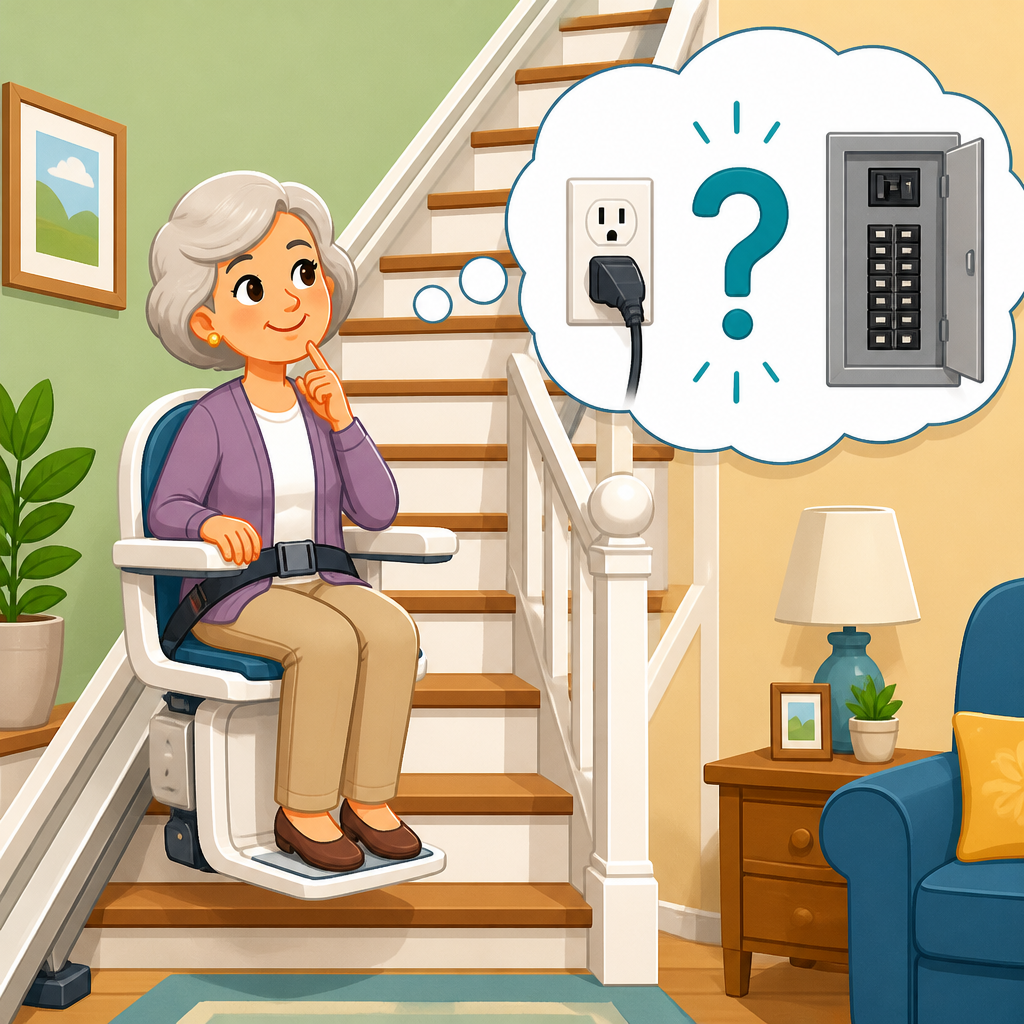
The fastest answer is this: most modern residential stair lifts sold today are battery-powered units that plug into a standard household outlet to keep onboard batteries charged. These commonly do not require a dedicated circuit by manufacturer minimums, but many installers still recommend one if the existing receptacle is old, shared with heavy loads, controlled by a wall switch, or inconveniently placed. The lift runs from the batteries during travel, not directly from the wall in the way an AC motor appliance does, so normal charging demand is usually low.
By contrast, a direct AC stair lift, which draws operating power from the house circuit while moving, is more likely to require a dedicated branch circuit or at least a properly rated circuit with no meaningful competing loads. Manufacturer instructions are the controlling document here. Under the National Electrical Code, listed equipment must be installed in accordance with its listing and labeling. If the manual specifies a dedicated 120-volt circuit, that is not optional. In many jurisdictions, the local authority having jurisdiction may also require permit review if a new receptacle or circuit is added.
Here is the practical rule I use with clients: if the stair lift has onboard batteries and a charger that plugs into a nearby unswitched outlet, a dedicated circuit is often not mandatory but may still be wise; if the lift is non-battery, commercial-grade, unusually long, or the manual calls for a dedicated line, plan on one. Also treat an outdoor stair lift more cautiously because weather-resistant receptacles, GFCI protection, and corrosion-resistant wiring methods may be needed depending on location and local rules.
Another detail many homeowners miss is charger location. Some stair lifts charge at the top landing, some at the bottom, and some at both ends or at charge points along the rail. That placement determines where a receptacle must exist. I have seen otherwise simple jobs delayed because the only nearby outlet was halfway up a hallway, switched with the foyer light, or blocked by trim. The circuit question is therefore not only about amperage; it is also about where power is available relative to the charging contacts.
How stair lifts use electricity in real homes
Understanding the power profile removes much of the confusion. A battery-powered stair lift typically contains sealed batteries in the carriage, a low-voltage control system, a motor and gearbox, and a charger connected to line voltage through a standard outlet. During normal use, the charger maintains the batteries. When the user presses the control, the lift travels on battery power, which is why these units usually continue operating for several trips during a utility outage. Depending on the model and battery condition, many manufacturers state a range of around 10 to 20 trips after a power failure, though that varies with user weight, stair length, and ambient temperature.
Because the charger load is often modest, homeowners are surprised that electrical issues can still affect performance. The common problems are not huge current draws; they are interrupted charging, poor receptacle placement, worn outlets that do not hold a plug securely, switched outlets that get turned off, and circuits already burdened by vacuums, space heaters, or dehumidifiers. If the lift parks away from its charging point or the outlet loses power for days, the batteries discharge and service calls follow.
Direct AC lifts work differently. They rely on line voltage to operate the drive system during movement. These units may be more sensitive to voltage quality and breaker sizing because operation and not just charging depends on the branch circuit. While they are less common in new residential installations than battery units, they still exist, especially in older equipment. If you are replacing an older stair lift, never assume the new one has the same electrical requirements as the old rail.
| Stair lift type | Typical power arrangement | Dedicated circuit need | Common home modification |
|---|---|---|---|
| Battery-powered straight lift | Standard outlet feeds charger; lift travels on batteries | Usually not required, but often recommended if outlet is shared or poorly located | Add or relocate unswitched receptacle near charge point |
| Battery-powered curved lift | Similar charger setup, sometimes more precise charge-point placement | Case by case based on manual and site conditions | New receptacle at top or bottom landing |
| Direct AC lift | Lift draws line power while operating | Often required or strongly recommended | New dedicated branch circuit from panel |
| Outdoor lift | Weather-protected power supply with charger or operating load | Frequently recommended; code conditions matter | GFCI-protected weather-resistant receptacle and approved wiring method |
Electrical code, manufacturer instructions, and permit considerations
Homeowners understandably ask whether there is one universal code rule for stair lifts. In practice, no single sentence in the code answers every product type. The governing principle is that listed equipment must be installed according to the manufacturer’s instructions, and branch circuits, receptacles, overcurrent protection, grounding, and GFCI requirements must meet the locally adopted electrical code. In the United States, that usually means some edition of the NEC, but states and cities adopt different versions and may add amendments.
Permits are triggered by the electrical work more often than by the lift itself. If an installer plugs a battery charger into an existing compliant receptacle and makes no wiring changes, a permit may not be required in some areas. If an electrician adds a receptacle, runs a new circuit, extends wiring, or modifies the service panel, permit and inspection are commonly required. In multifamily buildings or condos, building management may also require approval for penetrations, common-area work, or shutdowns.
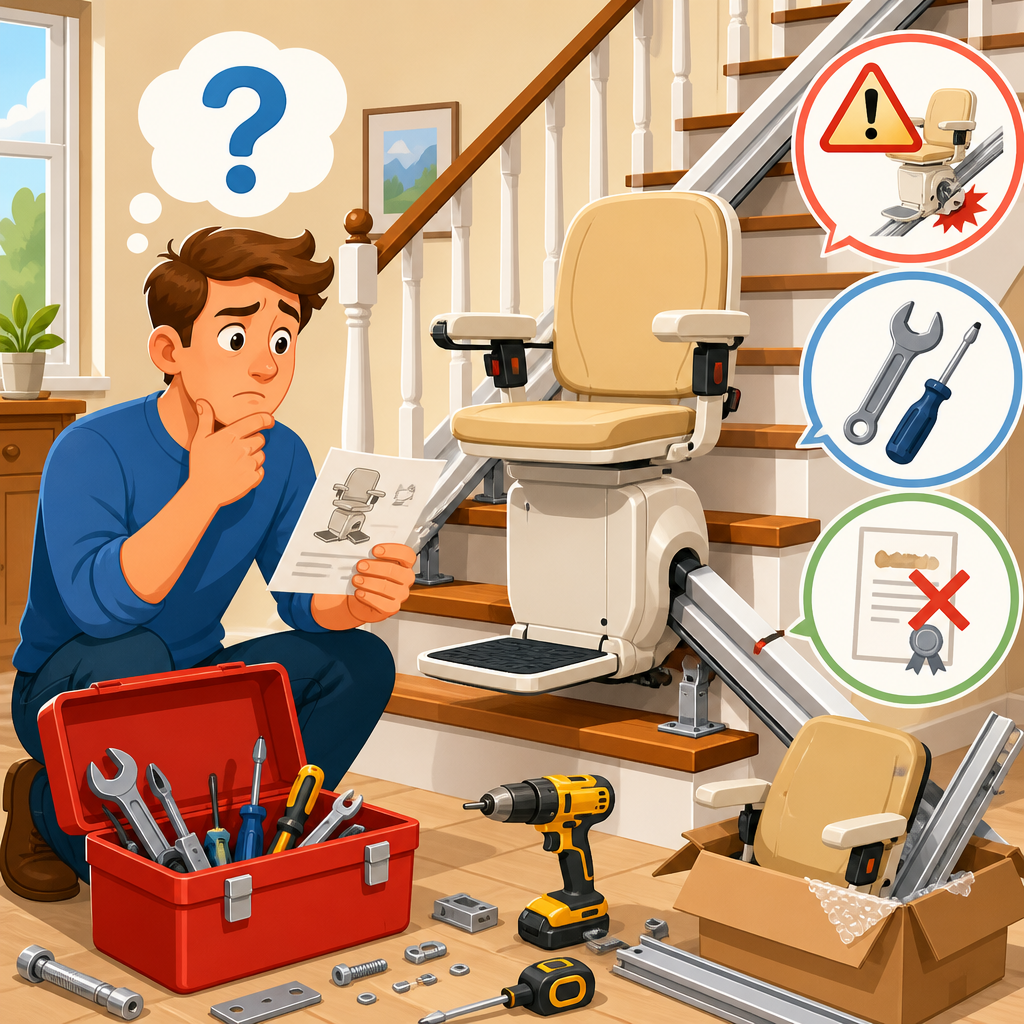
I advise clients to ask for three documents before installation day: the stair lift model’s electrical specification sheet, the installation manual page showing power requirements, and a written scope from the electrician if any wiring changes are proposed. Those documents eliminate guesswork. They also help if you need to coordinate with other Modifying the Home projects such as widening doors, adding transfer space at landings, or upgrading lighting on the stairs.
A final code-related point: extension cords and plug strips are not an acceptable permanent power solution for a stair lift. Even if a charger uses little power, a cord running across a landing creates a trip hazard and can be unplugged accidentally. Accessibility equipment should have a secure, permanent, code-compliant power source.
Modifying the home beyond the circuit: what this hub should cover
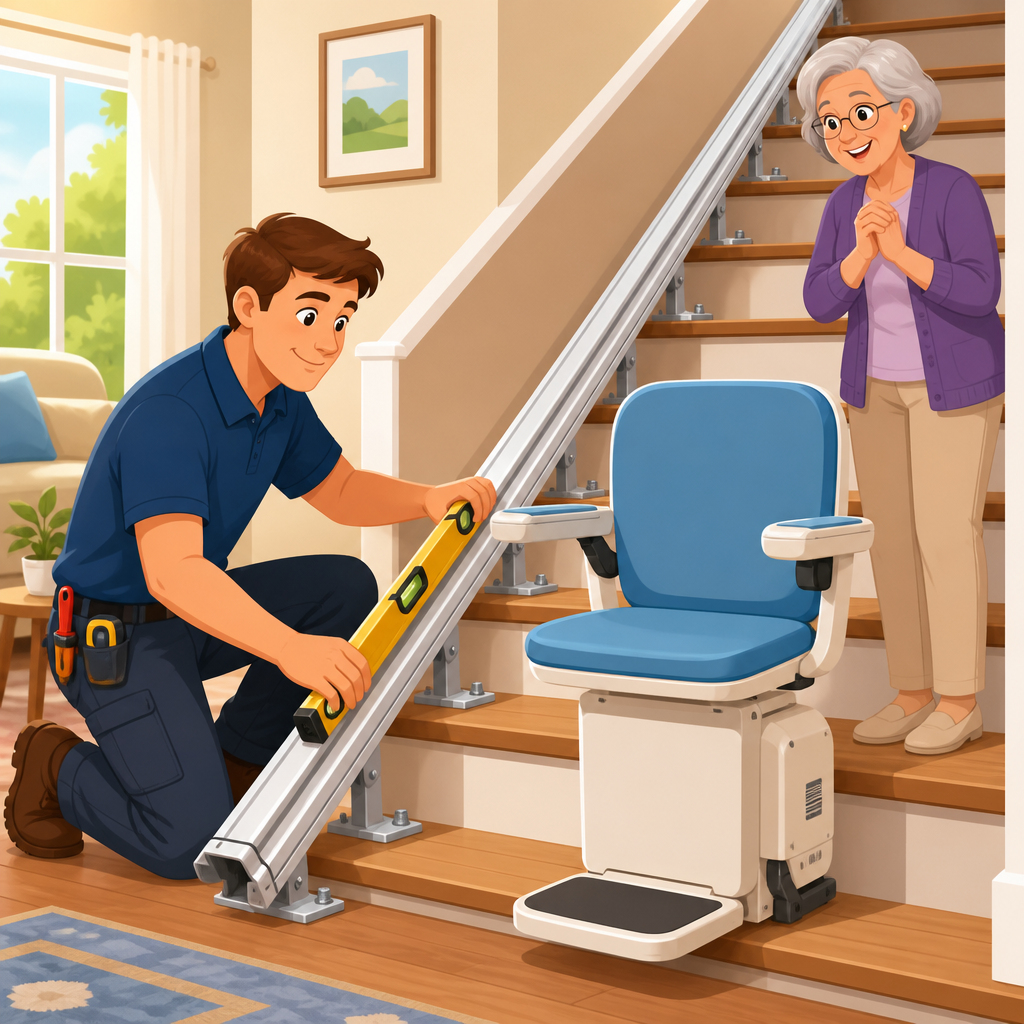
The electrical circuit question rarely stands alone. In well-run projects, we review the entire stair environment before the order is finalized. Measure stair width, top and bottom landing clearance, obstructions such as radiators or door swings, carpet condition, banister interference, lighting levels, and where the user will transfer on and off the seat. Straight lifts usually install on the stair treads, not the wall, which surprises many homeowners. That means the structural condition of the stairs matters more than whether the wall is plaster, drywall, or paneling.
As the hub page for Modifying the Home, this article should point readers to the related decisions they will face. Those include whether a folding rail is needed to avoid blocking a doorway, whether a powered swivel seat is worth the added cost for safer exits, whether parking points should be arranged to keep the chair out of the main living area, and whether a call-send control should be hardwired or wireless. In older homes, outlet placement, narrow stairs, and uneven nosings are often bigger installation challenges than the motorized unit itself.
Some modifications are minor and some are substantial. Minor changes include adding a receptacle, trimming baseboard at a bracket location, or relocating a picture frame or handrail end cap. More substantial changes may involve moving a doorway casing, correcting loose treads, or upgrading the electrical panel if no spare breaker spaces exist. If the staircase is exceptionally narrow, a stair lift may still fit, but you need exact measurements for folded width, seat height, armrest projection, and required walkway clearance.
Good planning also anticipates future needs. I have worked on homes where the immediate goal was helping one parent reach a second-floor bedroom, but the longer-term plan included bathroom accessibility upgrades and main-floor living options. Looking at the whole house reduces wasted spending. If you will already have an electrician onsite, it can make sense to add brighter LED stair lighting or a receptacle for future equipment at the same time.
How to assess your home before ordering a stair lift
Start with the panel and the path. At the electrical panel, check whether there is capacity for another breaker if a dedicated circuit becomes necessary. Capacity means more than an empty slot; the electrician should verify load calculations, panel condition, and compatibility with the breaker type. Federal Pacific and Zinsco panels, for example, are red flags in many homes because replacement parts and safety concerns complicate any new work. At the staircase, identify where the lift will park and where charging contacts sit.
Next, inspect nearby outlets. The best outlet for a stair lift charger is unswitched, grounded, in good condition, and close enough that the factory cord reaches without strain. Use a receptacle tester if you have one, but do not rely on a DIY check as the final word. Electricians also look for shared loads on the branch circuit, signs of backstabbed or loose devices, and whether AFCI or GFCI protection is required by current code in that location. These details affect reliability.
Then evaluate the physical environment. Confirm clear landing space for mounting and safe transfers. Measure the folded width against your minimum walking path. Look for doors at the top or bottom that may swing into the user or chair. If there is a radiator, shoe cabinet, or low window ledge near the rail line, have the dealer include that on the site survey. Curved lifts are especially unforgiving because the rail is custom built to the measured stair geometry; a missed obstruction can cause expensive revisions.
Finally, ask direct questions before signing: Is this unit battery-powered? Where exactly does it charge? What outlet type and circuit rating are required? Can the installer show me the manual language? If the batteries fail during an outage, how many trips are expected? Clear answers at this stage prevent the most common post-install surprises.
Common mistakes, costs, and the smartest path forward
The most common mistake is assuming any visible outlet will do. I have seen stair lifts plugged into switched hallway receptacles, outlets hidden behind furniture where plugs work loose, and circuits shared with high-draw cleaners that trip breakers at the worst time. Another mistake is postponing battery replacement. Battery-powered lifts are only as outage-resilient as their batteries are healthy. Most sealed batteries last roughly three to five years, though usage patterns and heat can shorten that range.
Cost varies widely by region, but electrical modifications for a stair lift are usually modest compared with the price of the lift itself unless the panel needs work. Adding a nearby receptacle may be a small service call, while installing a new dedicated circuit from a distant panel through finished walls can cost several hundred dollars or more. Panel upgrades cost far more. That is why the best path is a pre-install site survey by the dealer and a licensed electrician when the power situation is unclear.
The key takeaway is simple. Many modern stair lifts do not strictly need a dedicated electrical circuit, but every stair lift needs a reliable, code-compliant power source that matches the manufacturer’s instructions and your home’s real conditions. If you are planning a stair lift under the Installation & Setup umbrella, treat electrical planning as part of the broader Modifying the Home process, not an afterthought. Review the outlet location, circuit load, stair geometry, and transfer safety together. Then ask your dealer and electrician for written requirements before installation day. That one step protects safety, controls cost, and helps the lift work dependably from the first ride.
Frequently Asked Questions
Do stair lifts usually need a dedicated electrical circuit?
In many homes, a dedicated electrical circuit is not required for a modern battery-powered stair lift. Most newer stair lifts run on rechargeable batteries, and the household power supply is mainly used to keep those batteries charged when the chair is parked at a charging point. Because the charger typically draws a relatively small amount of electricity, it can often be connected to a standard household outlet without the need for a separate circuit. That said, “usually no” does not mean “always no.” The correct answer depends on the exact model, the manufacturer’s installation requirements, the way the charger is designed, and the condition of the existing electrical system.
A dedicated circuit becomes more likely when the stair lift is a non-battery-powered unit, a heavy-duty model, or part of a more specialized installation with higher electrical demands. In those cases, the lift may draw more power directly from the home’s wiring during operation, which can justify or require a separate circuit for safety and reliability. Even if a dedicated circuit is not strictly required, some installers may still recommend one if the nearby outlet is already shared with other appliances, if the wiring is older, or if nuisance tripping has been a problem in the home. The safest approach is to follow the manufacturer’s specifications and have a qualified installer or electrician confirm whether the existing circuit is suitable.
Why do battery-powered stair lifts often work without a separate circuit?
Battery-powered stair lifts are designed to be more flexible in typical residential settings. Instead of drawing significant power every time the chair travels up or down the stairs, these systems rely on onboard batteries to operate the motor. The electrical outlet supplies power to the charger, and the charger replenishes the batteries while the lift is parked. Because charging generally happens gradually and at a low electrical load, the demand on the home’s electrical system is much lower than many people expect. This is the main reason battery-powered stair lifts can often be installed using a nearby standard outlet rather than a dedicated line from the electrical panel.
Another advantage of battery-powered designs is that they usually continue to work during a power outage for a limited number of trips, depending on battery condition and model specifications. That feature improves both convenience and safety, especially for users who depend on the lift daily. Even so, the outlet used for charging still needs to be reliable, properly grounded, and located where the manufacturer recommends. If the charger shares a circuit with equipment that causes voltage fluctuations, repeated breaker trips, or interruptions in power, charging performance can suffer. Over time, inconsistent charging can reduce battery life and affect lift reliability. So while a separate circuit is often unnecessary, a stable and suitable power source is still very important.
When is a dedicated electrical circuit recommended or required for a stair lift?
A dedicated electrical circuit is commonly recommended or required when the stair lift has higher electrical demands than a standard battery charger setup. This often includes non-battery-powered stair lifts, some commercial or heavy-duty residential models, and lifts with specialized features that increase power consumption. In these situations, the lift may draw more current while operating, not just while charging, which increases the importance of having a circuit reserved specifically for that equipment. Manufacturers may specify a dedicated circuit in their installation instructions, and that requirement should be treated as essential rather than optional.
There are also practical situations where a dedicated circuit makes sense even if the lift could technically share an outlet. For example, if the nearest receptacle is on a circuit that already supports bathroom devices, space heaters, vacuum cleaners, or multiple electronics, adding a stair lift charger may not be ideal. Homes with older wiring, limited receptacles, frequent breaker trips, or uncertain electrical history may also benefit from a separate circuit to reduce the risk of interruptions. Local electrical code can play a role as well, especially if the installation involves new wiring, an outlet relocation, or other electrical upgrades. A licensed electrician can determine whether the existing circuit has enough capacity and whether a dedicated line is the better long-term solution for dependable operation.
Can I plug a stair lift into any outlet, or does the outlet need to meet specific requirements?
No, a stair lift should not simply be plugged into just any outlet without confirming that the outlet meets the manufacturer’s requirements. In many cases, the lift charger can use a standard household receptacle, but that outlet should be properly grounded, in good condition, and located where the stair lift can charge as intended. The exact charging point varies by model. Some stair lifts charge at the top landing, some at the bottom, and some at multiple points along the rail. The installer needs to ensure that the outlet placement matches the system design so the batteries receive consistent charging whenever the chair is parked.
It is also important to consider what else is on that circuit. An outlet that already shares power with high-draw devices or frequently used appliances may not be the best choice, even if it technically works. Extension cords and power strips are generally not appropriate for stair lifts because they can create safety risks and may violate installation instructions. If the existing outlet is ungrounded, loose, damaged, controlled by a wall switch, or otherwise unreliable, it should be corrected before installation. In some homes, the simple and safest fix is to have an electrician add a new receptacle near the charging location. That type of preparation helps ensure proper charging, reduces the chance of electrical issues, and supports trouble-free stair lift performance over time.
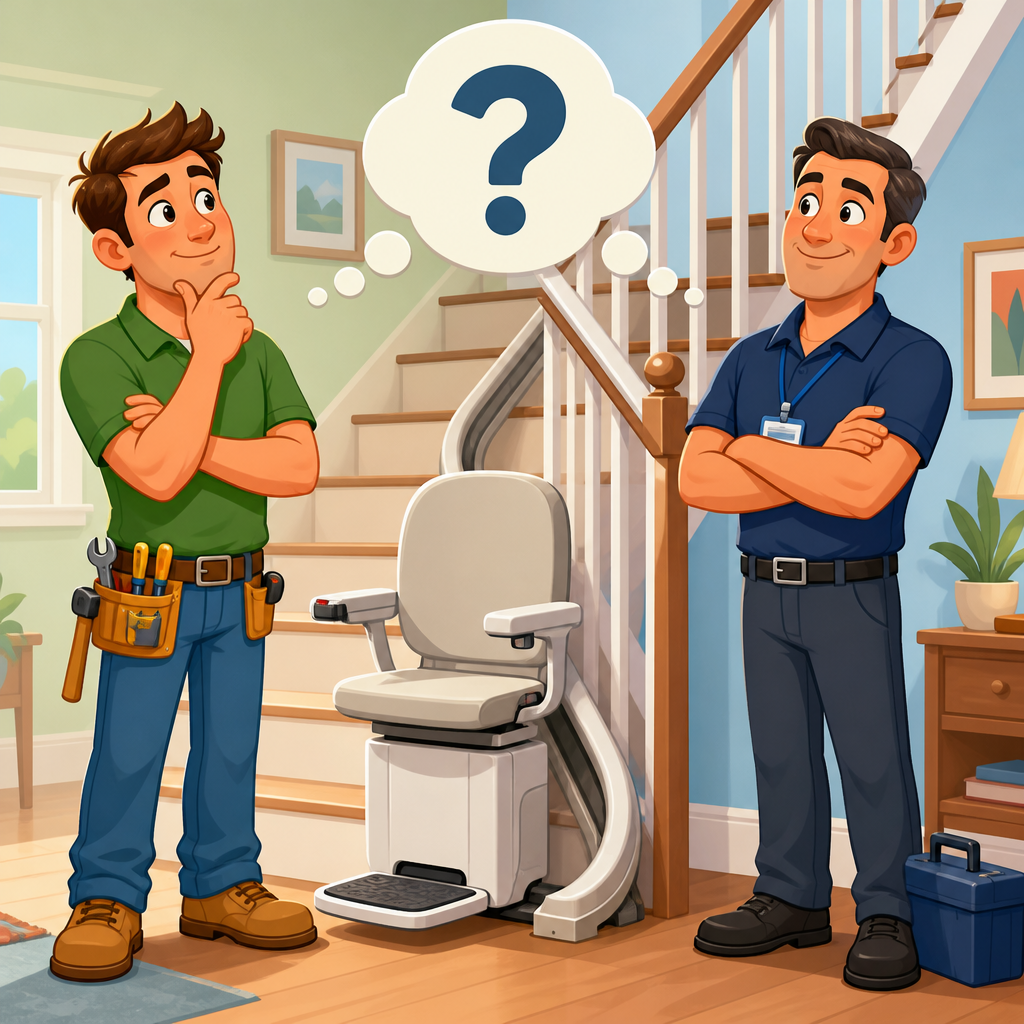
Who should decide whether a stair lift needs a dedicated circuit: the installer or an electrician?
Ideally, both play an important role. The stair lift installer understands the equipment itself, including the model’s power requirements, charger placement, manufacturer guidelines, and operational needs. A qualified installer can often identify whether the lift is the kind that normally plugs into a standard outlet or whether it is more likely to require dedicated electrical service. However, an installer may not always be the right person to assess the full condition and capacity of the home’s electrical system. That is where a licensed electrician becomes especially valuable.
An electrician can evaluate the existing circuit, confirm grounding and outlet condition, check for overload risks, review panel capacity, and make sure the installation complies with local code. This is particularly important in older homes, homes with previous DIY electrical work, or situations where there is any uncertainty about the wiring. In straightforward installations with a modern battery-powered lift and a suitable nearby outlet, the installer may determine that no electrical changes are needed. But if there is any doubt, involving an electrician is the best way to protect safety, avoid code problems, and prevent performance issues later. In short, the installer determines what the stair lift needs, and the electrician confirms whether the home can safely provide it.