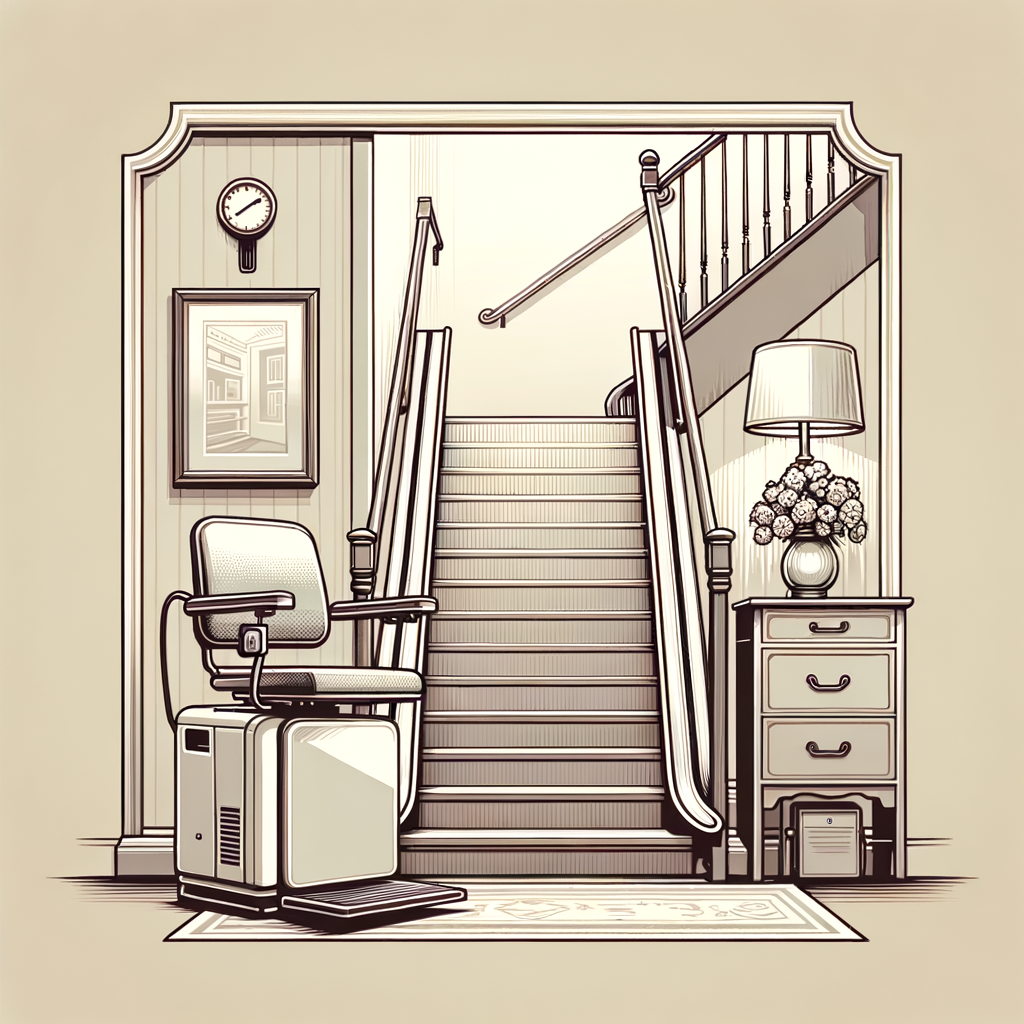
Space-saving stair lifts with slim rails and folding features solve one of the biggest worries homeowners raise during consultations: how to add safe mobility support without turning a staircase into an obstacle. In practical terms, a space-saving stair lift is a powered chair that travels along a narrow track fixed to stair treads, with a seat, arms, footrest, and rail designed to reduce the amount of space occupied when the unit is parked or folded. Slim rails sit close to the stair wall or balusters, folding seats and footrests collapse inward, and some models add powered hinges or parking options so hallways and doorways stay clear. For older adults, people recovering from surgery, and families planning to age in place, those design details matter because staircase width, landing clearance, and daily traffic often determine whether a lift is workable at all.
Within the broader world of chair lift types and designs, this category sits at the intersection of accessibility, home layout, and product engineering. Standard stair lifts can project farther into the staircase than many buyers expect, especially on narrow straight runs or curved stairs with tight turns near a front door. The best compact models reduce folded depth, keep the carriage tight to the rail, and offer features such as perch seats, slide tracks, or hinged rails to preserve walking space. After reviewing measurements, installation drawings, and field-fit issues across multiple homes, I have found that shoppers usually need more than a list of brands. They need a ranking framework: which stair lifts save the most space, which designs work best for narrow stairs, what tradeoffs come with ultra-compact seats, and how installation choices affect usability long after purchase.
This hub article covers those comparative questions comprehensively. It defines what “space-saving” should mean in measurable terms, ranks the main design approaches, and explains where leading manufacturers such as Handicare, Bruno, Stannah, Harmar, and Acorn typically fit. It also points readers toward the related comparison topics that matter next, including straight versus curved models, indoor versus outdoor designs, heavy-duty versus compact seats, and rental versus purchase decisions. If you are evaluating the best space-saving stair lifts with slim rails and folding features, the right goal is not simply buying the smallest unit. The goal is finding the lift that maintains code-friendly clearance, suits the user’s body and transfer needs, and fits the staircase without compromising safety.
What makes a stair lift truly space-saving
A stair lift deserves the “space-saving” label only when it reduces obstruction in everyday use, not just in marketing photography. The most important measurements are folded width from wall into the staircase, rail projection from the tread nosing, and lower-landing overrun or track extension. On many homes, a difference of even 2 to 4 inches in folded profile changes whether another person can walk past comfortably. The staircase itself also matters. A nominal 30-inch staircase can feel dramatically tighter than a 36-inch staircase once handrails, trim, and wall irregularities are accounted for. That is why reputable dealers measure at several points, not just one width reading.
Seat and footrest geometry often matter more than rail thickness alone. A genuinely compact design uses a narrow carriage, armrests that fold close, and a footrest that does not stick out when parked. Some premium lifts include linked folding, where the footrest rises automatically when the seat is folded, reducing effort for users with limited bending ability. Others use a perch-style seat, allowing the rider to remain in a near-standing position; this can be especially useful on steep staircases where a conventional seated posture would make knee clearance tighter. However, perch seats are not ideal for every user, particularly anyone with poor balance or limited leg strength.
Another overlooked factor is where the lift parks. A slim rail helps on the staircase, but a bulky bottom overrun can still block a doorway or hall. Space-efficient systems address this with hinged rails, slide tracks, or parking curves that move the chair away from the main traffic area. In my experience, the best installations are planned around the user’s transfer position first and the home’s circulation path second. When those two are aligned, the lift feels integrated rather than intrusive.
Best space-saving stair lift designs ranked by real-world usefulness
The strongest space-saving stair lift design is usually a slim straight rail with a folding seat and a powered hinged rail at the bottom. This setup works well because straight lifts are simpler, narrower, and less expensive than curved systems, while the hinged section prevents the rail from extending across a hallway or door swing. For many suburban homes with a straight flight ending near an entry door, this is the most practical compact solution. Models from Bruno and Harmar commonly appear in this category, and dealers often recommend them because they balance a tidy profile with dependable service access.
Second in most rankings is the ultra-tight curved stair lift with a custom rail that hugs the inside of the staircase. Curved lifts are more expensive, but when a home has turns, intermediate landings, or a staircase ending directly into open living space, a made-to-measure rail can actually save more usable room than trying to force a straight model into a poor parking arrangement. Stannah and Handicare have strong reputations here, particularly for tailored rail geometry and cleaner parking positions. The key limitation is cost: custom curved rails can run several times the price of straight models, and lead times are longer because the rail is fabricated to exact measurements.
Third is the perch-seat stair lift for very narrow or steep stairs. This design can be a lifesaver in older homes where there is simply not enough knee room for a conventional seated ride. The seat is smaller, the rider remains more upright, and the overall footprint is minimized. Still, this ranking is lower because user comfort and transfer confidence are critical. I recommend perch designs only after a live assessment confirms the rider can mount, remain stable, and dismount safely. Fourth is the retractable or slide-track approach, where the rail or carriage shifts to reduce obstruction at the landing. These systems are clever and often effective, but they add mechanical complexity and can narrow the field of service providers in some regions.
| Design type | Best use case | Main space-saving benefit | Primary tradeoff |
|---|---|---|---|
| Straight lift with hinged rail | Straight stairs ending near a doorway or hall | Keeps landing clear when parked | Only works on straight runs |
| Custom curved lift | Turns, landings, tight parking zones | Rail follows stair shape closely | Highest purchase price |
| Perch-seat lift | Steep or very narrow stairs | Reduces knee and seat clearance needs | Less comfortable for some users |
| Slide-track or retracting system | Bottom landing obstruction concerns | Minimizes fixed track intrusion | More moving parts |
Leading brands and models often chosen for narrow staircases
When buyers ask for the best stair lifts for narrow stairs, a few brands consistently enter the discussion because of rail design, folded dimensions, and installer support. Bruno is widely respected for build quality, straightforward controls, and strong dealer networks in North America. Its straight lifts are not always the absolute slimmest on paper, but they are frequently selected because the folded package is compact enough for many homes and the product is durable. Handicare is known for narrow rail options and specialty configurations, including models aimed at tight spaces and perch applications. In difficult stair geometry, that flexibility matters more than headline specifications.
Stannah earns attention for custom curved installations and refined ergonomics. On staircases where every inch counts at the top or bottom landing, a precise parking position can be more important than the rail’s midpoint dimensions. Stannah’s curved systems are often evaluated in those cases because the rail can be shaped to place the user in a safer transfer location while preserving floor area. Harmar offers practical straight and curved solutions, including models with folding rails and features tailored to common residential constraints. Acorn remains visible in consumer searches because of broad marketing reach and standardized offerings; depending on staircase layout and local dealer support, it can be a candidate, though fit and service quality should be checked carefully.
For this subtopic hub, the main lesson is that no single manufacturer wins every “best compact stair lift” comparison. The right comparison criteria are staircase width, landing obstruction, rider size, transfer ability, service coverage, and customization needs. Related pages under chair lift types and designs should drill into brand-versus-brand matchups, best straight stair lifts, best curved stair lifts, and best stair lifts for steep stairs. As a hub page, this article frames those comparisons so readers can move from general rankings into the exact design article that matches their staircase.
Features that matter most beyond the folded footprint
Buyers often focus first on the folded width, but a safe and satisfying purchase depends on several other features. Swivel seats are essential at the upper landing because they let the rider exit away from the staircase, reducing fall risk. Manual swivel seats are common, while powered swivels help users with limited trunk strength or arthritis. Safety sensors on the footrest and carriage stop the lift if it encounters an obstruction, an important feature in homes with pets, grandchildren, or items left on the stairs. Call-send controls also matter because they allow the chair to be parked away from the main living area, improving both space use and appearance.
Battery backup is another nonnegotiable feature. Most residential stair lifts charge from household power but run on onboard batteries, allowing operation during a power outage. From a practical standpoint, that means the user is not stranded between floors when utility service fails. Weight capacity should be evaluated honestly, not optimistically. A compact chair may save space, but if the user needs a wider seat, higher back support, or a heavy-duty frame, forcing a small model can create transfer problems and discomfort. In several home assessments, I have seen families prioritize visual neatness only to realize that the rider struggled to position safely on a too-narrow seat.
Noise, upholstery durability, remote diagnostics availability, and maintenance access also deserve attention. Slimmer designs can place components in tighter housings, and good engineering shows up in smooth starts, stable ride quality, and easy service. Ask whether replacement batteries, arm switches, and seat components are commonly stocked. A stair lift is not just furniture on a rail; it is a mobility device that should remain serviceable for years.
How to choose the right compact stair lift for your home
Start with staircase measurements and user needs, then narrow the product type. Measure clear width at the tightest point, note any doorways at the top or bottom, and identify whether the stairs are straight, curved, or split by landings. Next, consider how the user transfers: do they need a full seat, a perch position, a powered swivel, or room for a walker nearby? Once those basics are established, request quotes from dealers that include exact folded dimensions, rail projection, parking location drawings, and any building access concerns for installation day.
During comparisons, ask direct questions that expose real differences. What is the folded width? How far does the rail extend past the bottom step? Is a powered hinge available? How much wall clearance is needed for the knees and elbows? What is the turnaround time for service? Can the unit be removed without major stair repair if needs change later? For curved lifts, ask how the rail is surveyed, whether a photo-measurement or digital scan is used, and how revisions are handled if site conditions differ from the plan. Strong dealers answer these questions clearly and document the layout.
Finally, treat in-home assessment as mandatory, not optional. Online rankings help narrow choices, but they cannot replace a site-specific evaluation. The best space-saving stair lifts with slim rails and folding features succeed because they match a real staircase and a real rider. Use this hub as your starting point, then move to the related comparison articles on straight versus curved lifts, top stair lift brands, perch-seat designs, and folding-rail options. With accurate measurements, honest user assessment, and a dealer who can justify every clearance dimension, you can choose a compact stair lift that preserves space, supports safety, and makes daily movement through the home far easier.
Space-saving stair lifts are most effective when compact engineering, proper fit, and user safety are considered together. A slim rail alone does not make a staircase accessible if the seat blocks passage, the landing remains obstructed, or the rider cannot transfer comfortably. The strongest options usually combine a narrow rail, tightly folding seat components, and smart parking features such as hinged rails or custom curved endpoints. Straight lifts with folding rails often deliver the best value for simple staircases, while custom curved systems can preserve more usable room in complex layouts. Perch seats and retractable track designs fill important niche roles where standard chairs would take up too much space.
As the hub for comparative and ranking posts under chair lift types and designs, this page should help you ask better questions before you request estimates. Focus on measurable dimensions, transfer safety, service support, and how the chair behaves when folded and parked, not just how it looks in a brochure. The best stair lift for a narrow staircase is the one that leaves the home functional for everyone while giving the rider dependable access between floors. Review the related comparison articles next, shortlist two or three models that match your stair layout, and book an in-home assessment to confirm the clearances that matter most.
Frequently Asked Questions
What makes a stair lift “space-saving,” and how do slim rails and folding features actually help?
A space-saving stair lift is designed to provide safe, reliable mobility support while minimizing the amount of room the lift takes up on the staircase when it is in use, parked, or folded away. The main difference is in the engineering of the rail and chair components. Slim-rail designs keep the track mounted close to the stair treads and as near to the wall or banister side as possible, which helps preserve more open walking space on the stairs. This matters in homes where every inch counts, especially on narrow staircases, in hallways with doorways nearby, or in properties where multiple people still need to use the stairs on foot.
Folding features are equally important. On many of the best compact stair lift models, the seat, armrests, and footrest fold up when the lift is not being used. Some models even include a power-folding footrest, which means the user does not have to bend down manually. When folded, the chair projects less into the staircase, reducing the visual bulk and lowering the chance that the lift feels like an obstacle to other household members. In some layouts, a hinged rail or parking position at the top or bottom of the staircase can further improve clearance and prevent the rail from blocking a doorway or walkway.
In practical terms, “space-saving” does not mean sacrificing core safety or comfort. A quality compact stair lift should still include a stable seat, secure armrests, seat belt, smooth start-and-stop operation, obstruction sensors, and easy controls. The real benefit is that homeowners can add mobility support without making the staircase feel cramped or unusable for everyone else. That balance between accessibility and day-to-day convenience is exactly why slim rails and folding components are often the top priorities during stair lift consultations.
Are slim stair lifts suitable for narrow staircases, and how do I know if my stairs are wide enough?
In many cases, yes. Slim stair lifts are often specifically chosen for narrow or space-conscious staircases because they are built to occupy less room than bulkier traditional models. However, suitability depends on more than just the advertised “slim” profile. Installers look at the full staircase layout, including width, number of steps, landings, wall projections, handrails, door swings, and any turns or bends. They also consider whether the user can safely get on and off the chair at the top and bottom of the stairs without feeling cramped or unstable.
As a general rule, many straight stair lifts can be fitted on staircases that meet a minimum width requirement set by the manufacturer, but exact clearances vary by brand and model. What matters most is not only whether the lift can technically fit, but whether there will still be enough walking space remaining for others and enough room for safe transfers. On especially narrow stairs, features such as a tightly folded seat, a narrow carriage, a compact footrest, and a rail that hugs the edge of the treads can make a significant difference. Some lifts also offer a swivel seat at the landing to help users dismount in a more secure position away from the staircase edge.
The best way to know if your staircase is suitable is to schedule an in-home assessment. A professional stair lift company will measure the staircase, identify any pinch points, and recommend the most appropriate configuration. This step is essential because two staircases with the same width on paper may perform very differently depending on the shape of the landing, the location of walls and trim, or the presence of radiators, doors, or low obstructions. A proper survey ensures the lift is not only compact, but truly practical and safe for the home.
Do folding seats, arms, and footrests compromise comfort, durability, or safety?
No—when the stair lift is from a reputable manufacturer and professionally installed, folding components should not compromise comfort, durability, or safety. In fact, folding seats, armrests, and footrests are standard features on many premium stair lifts because they improve the usability of the staircase without changing the core support the lift provides while occupied. Once lowered into position for travel, these parts are designed to lock or sit securely in place so the user has a stable seat and a dependable riding position.
From a comfort standpoint, the key factors are seat size, back support, arm positioning, riding smoothness, and ease of getting in and out of the chair. A compact stair lift can still be very comfortable if it is properly matched to the user’s body size and mobility needs. Some slim models are intentionally contoured to save space, so it is important to test or review dimensions carefully if the user needs a wider seat, higher weight capacity, or extra support. Many homeowners are pleasantly surprised that a well-designed folding stair lift feels sturdy and supportive while still disappearing neatly when folded up.
Durability depends more on build quality and maintenance than on whether the parts fold. Heavy-duty hinges, robust seat frames, quality upholstery, and reliable drive systems are all signs of a long-lasting unit. Safety features should include a seat belt, swivel lock, obstruction sensors, pressure-sensitive safety edges, and battery backup so the lift can still operate during a power outage. If a user has limited hand strength or difficulty bending, power-folding footrests and easy-touch controls can make the lift safer and more convenient. In short, folding design is a smart space-saving advantage—not a drawback—when the stair lift is well-made and correctly specified for the user.
Can a space-saving stair lift be installed on curved stairs, or is it only for straight staircases?
Space-saving stair lifts are available for both straight and curved staircases, although the design approach is different for each. Straight stair lifts typically use a simpler rail that runs directly from the bottom to the top of the staircase, making them faster to install and generally more budget-friendly. Curved stair lifts, on the other hand, are custom-built to match stairs with turns, intermediate landings, spirals, or changes in angle. Even in these more complex layouts, manufacturers can often incorporate slim rails and folding chair features to keep the installation as compact as possible.
For curved stairs, customization is especially important. The rail is made to follow the exact contours of the staircase, which allows the lift to stay close to the stair edge and avoid taking up unnecessary space. Compact parking positions can sometimes be arranged at the top or bottom landing, or even around a corner, so the chair is stored out of the main traffic path when not in use. Folding seats, armrests, and footrests remain valuable in curved applications because they reduce the amount of projection into the stairway and help maintain better access for other people in the home.
That said, not every curved staircase offers the same opportunities for space-saving optimization. Tight corners, limited landings, nearby doors, and architectural details can affect what is possible. This is why professional assessment and precise measurement are critical. A qualified installer can explain whether a curved lift can be parked in a less obtrusive location, whether a hinged rail would help, and which model provides the best balance of slim design, ride quality, and safe access. So while straight staircases often offer the simplest path to a compact installation, curved staircases absolutely can benefit from space-saving stair lift solutions as well.
What should homeowners compare when choosing the best space-saving stair lift for their home?
Homeowners should look beyond the phrase “space-saving” and compare how each lift performs in real-life conditions. Start with the rail profile and overall folded dimensions. A lift with a genuinely slim rail and tightly folding seat, arms, and footrest will usually preserve more stair access than one that is only marketed as compact. Ask how far the chair extends into the staircase when folded and when in use, whether the rail sits close to the wall, and whether there are options for parking the lift away from the main walkway. If doorways or hallways are close to the staircase, find out whether a hinged rail or alternate stop position is available.
Next, evaluate user fit and everyday ease of operation. The best stair lift is one the user can confidently use every day without strain. Check seat height, seat width, arm spacing, swivel function, control style, and weight capacity. If bending is difficult, power-folding components may be a major advantage. If more than one person will use the lift, simple controls and call/send functionality can be very helpful. Homeowners should also pay attention to ride quality, battery operation, charging positions, noise level, and safety features such as seat belts, obstruction sensors, and emergency stop systems.
Finally, compare the quality of the installation company as closely as the equipment itself. A top-tier stair lift provider should perform a detailed survey, explain exactly how the unit will fit on the staircase, provide a clear quote, and discuss warranty coverage, servicing, and future support. Ask whether the installer has experience with narrow stairs and compact layouts, and request model-specific measurements rather than general claims. The best choice is usually the one that combines a proven safety record, strong aftercare, and a truly thoughtful design for limited stair space. When those factors come together, a slim, folding stair lift can deliver both freedom of movement and a staircase that still works well for the whole household.