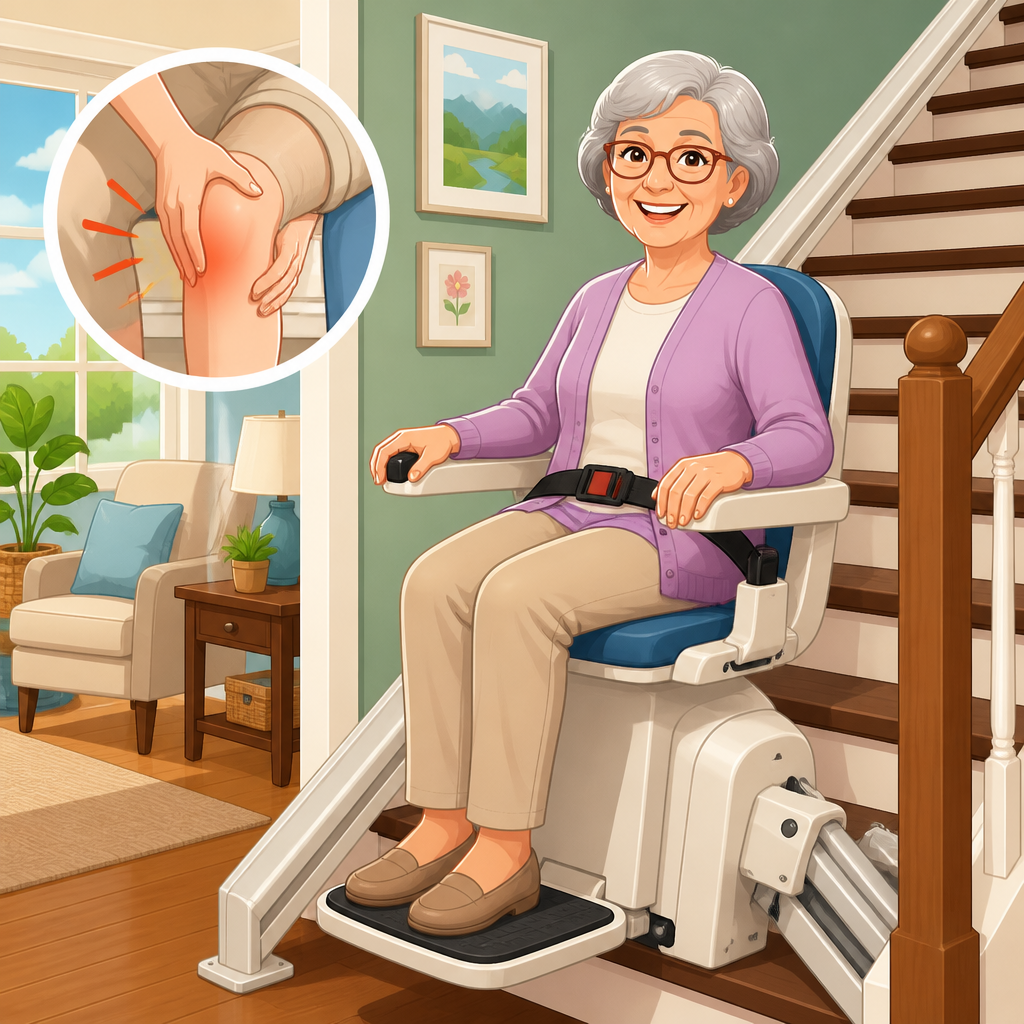
Choosing the best stair lifts for seniors with knee pain and limited flexion starts with one practical truth: the right chair lift is not just a mobility device, but a way to stay safely in a familiar home without forcing painful stair climbing every day. A stair lift, often called a chair lift for stairs, is a motorized seat that travels along a rail mounted to the staircase. For older adults with arthritis, post-surgical stiffness, meniscus damage, or reduced knee bend, it can remove one of the most physically demanding movements in the home.
I have worked with families comparing chair lifts after knee replacement, during osteoarthritis flare-ups, and when limited flexion made standard seats uncomfortable. The pattern is consistent. People do not only need a lift that moves up and down; they need one that fits restricted joint range, transfers safely, and works reliably over years of daily use. That makes this topic more nuanced than a simple list of brands.
Knee pain and limited flexion change what “best” means. A senior who cannot bend the knee past ninety degrees may struggle with low seat heights, tight footrest spacing, and swivel seats that require twisting. Someone with bilateral knee pain may also need a perch-style seat, higher armrests for push-off support, or a power footrest to avoid bending down. In other words, comfort and transfer mechanics matter as much as speed or price.
This guide is the hub for best chair lifts for seniors, with a specific focus on buyers dealing with painful knees and reduced range of motion. It explains which features actually help, how straight and curved stair lifts differ, what leading brands tend to do well, and where tradeoffs appear. It also points naturally toward related topics buyers usually research next, including stair lift costs, installation requirements, rental options, outdoor models, and alternatives such as home elevators or first-floor bedroom conversions.
If you are asking which stair lift is best for seniors with knee pain, the short answer is this: look for a model with a higher seat position, generous seat-to-footrest distance, easy swivel operation, obstruction sensors, and dependable dealer service. The longer answer depends on staircase shape, body dimensions, transfer ability, and whether the user’s limitation is pain, weakness, or true loss of flexion. That is what the rest of this guide covers in detail.
What Seniors With Knee Pain Need From a Chair Lift
The best chair lifts for seniors with knee pain reduce joint compression during sitting and standing. In practice, that means a seat that is not too low, armrests that can bear some push-off force, and a footrest position that does not force excessive knee bend. Many buyers focus first on weight capacity or upholstery, but transfer geometry is the real make-or-break factor for this group.
Start with seat height. A low stair lift seat increases knee flexion during boarding and makes standing harder, especially for users with quadriceps weakness or painful patellofemoral arthritis. A slightly taller perch reduces the bend angle and usually feels safer. Some brands offer adjustable seat heights, while others have a fixed design. When I compare models for clients, I always measure from floor to seat and then compare that number with the user’s preferred dining chair or recliner transfer height.
Next is the seat-to-footrest relationship. If the footrest sits too close, the rider’s knees remain sharply bent throughout the trip. For limited flexion, more open knee angle is usually more comfortable. This is why perch stair lifts can be useful: they support a semi-standing posture that minimizes deep knee bend. They are not ideal for every user, but they can solve a very specific problem.
Swivel function matters as much as ride comfort. At the top landing, the seat should rotate easily so the rider exits onto the landing instead of toward the stairwell. Manual swivel seats are common, but power swivel seats are often worth the upgrade for seniors who have pain when twisting through the knee or hip. The same logic applies to powered folding rails and power footrests. These features are not cosmetic conveniences; they can remove exactly the motions that trigger pain.
Safety systems should be non-negotiable. A quality chair lift should include a seat belt, overspeed governor, battery backup, obstruction sensors on the carriage and footrest, and lockable call/send controls if grandchildren are in the home. Most reputable lifts use battery-powered operation with charging points at one or both ends of the rail, which keeps the lift working during a power outage.
Straight, Curved, and Perch Stair Lifts: Which Type Fits Best?
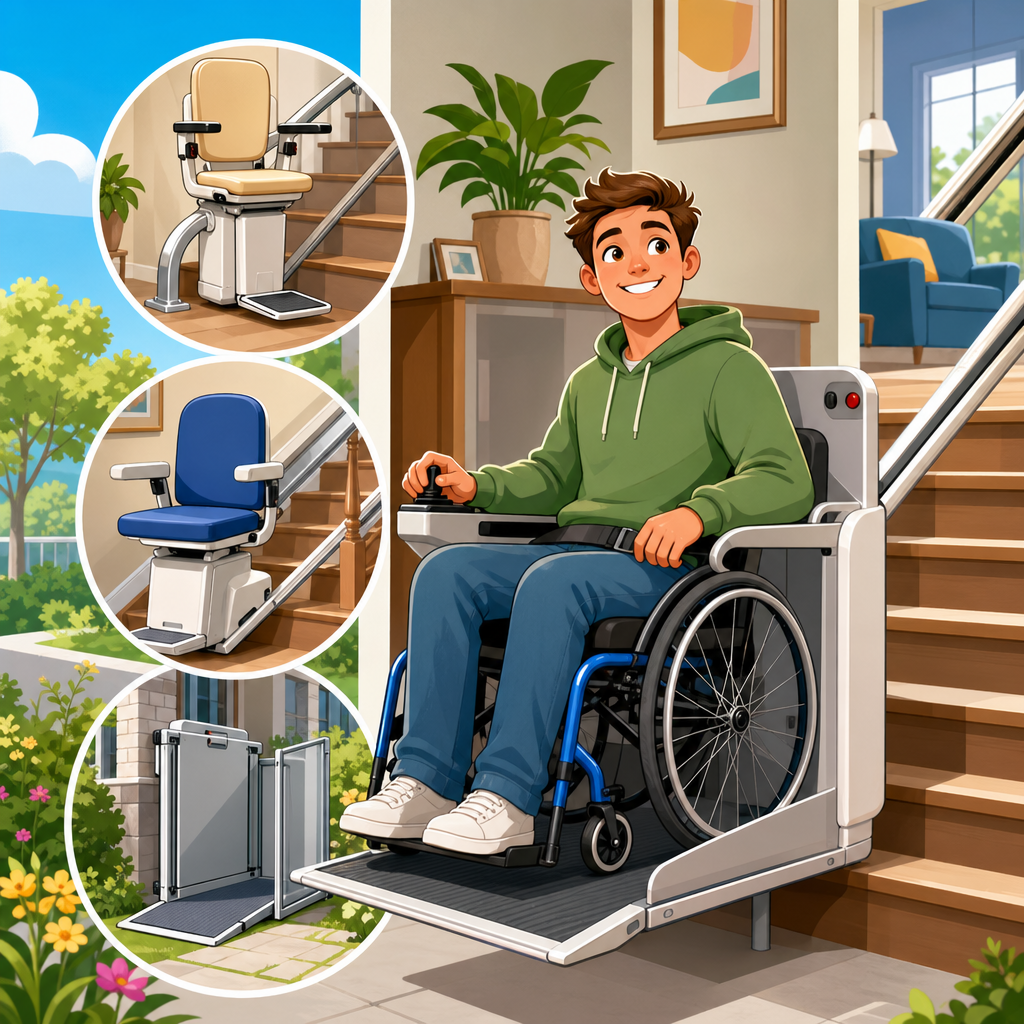
Straight stair lifts run on a standard rail for staircases without turns, intermediate landings, or changes in angle. They are the most affordable and fastest to install, often within a few hours once the unit is available. For many seniors with knee pain, a straight stair lift is the simplest answer because it solves the daily stair problem without major remodeling. Models from Bruno, Harmar, and Stannah commonly serve this category well.
Curved stair lifts are custom-built for stairs with turns, pie-shaped treads, or multiple landings. The rail is measured to fit the exact staircase, which raises both price and lead time. They are often the right choice in older homes where the primary bedroom is upstairs and the staircase wraps around a foyer. For users with limited flexion, a curved lift can still be excellent, but seat dimensions and transfer clearances matter even more because the parking position at the top or bottom may be tighter.
Perch stair lifts deserve special attention in this guide because they are often overlooked. A perch lift uses a smaller, higher seat or leaning support so the rider remains in a near-standing posture. This design is especially helpful for seniors who cannot comfortably bend the knee enough for a conventional seated lift. It is also useful on narrow staircases because the compact profile takes up less room. The tradeoff is that the user must tolerate partial weight-bearing and have enough balance to stay stable during travel.
| Type | Best For | Main Benefit for Knee Pain | Key Tradeoff |
|---|---|---|---|
| Straight stair lift | Single, uninterrupted staircase | Fast installation and lower cost | Works only on straight stairs |
| Curved stair lift | Turns, landings, complex layouts | Preserves access in multi-level homes | Higher price and custom lead time |
| Perch stair lift | Limited knee flexion, narrow stairs | Less knee bend during transfer and ride | Not ideal for users with poor balance |
Which type is best depends on both staircase design and body mechanics. If the staircase is straight and the user can sit comfortably at an appropriate height, a conventional straight stair lift is usually the best value. If the home has turns, custom curved units are necessary. If bending the knees to sit is the main barrier, ask specifically about perch options rather than assuming all stair lifts use the same seating position.
Features That Make a Stair Lift Better for Limited Flexion
The most important feature for limited flexion is a supportive seating system that does not require deep bending to enter or exit. In real evaluations, I prioritize six things: seat height, seat depth, armrest leverage, swivel ease, footrest design, and control simplicity. Marketing language varies by brand, but these physical characteristics determine day-to-day success.
Adjustable seat height is valuable because body proportions differ widely. A seat that feels comfortable for a five-foot-two rider may be too low for someone who is six feet tall with long femurs and stiff knees. Seat depth matters too. If the seat pan is too deep, the user may slide back and increase knee pressure. If too shallow, thigh support suffers. Better models strike a balance and sometimes offer seat pad shapes that reduce pressure points.
Power features often justify their added cost for this audience. A power swivel seat allows exit onto the landing with less rotation. A power footrest prevents the user from bending down to fold the platform. A powered hinge rail can keep a hallway or doorway clear without manual lifting. These are not luxury extras for many seniors; they directly reduce painful movements and lower fall risk.
Controls should be simple and tactile. Toggle switches on the armrest are generally easier for seniors than small membrane buttons, especially if hand arthritis is present along with knee pain. Remote call/send stations are useful in shared homes, letting one person send the lift away after use or call it back from another floor.
Ride quality is another overlooked issue. A smooth start and stop reduces jarring through the knees and spine. Rack-and-pinion drive systems are common, and quality differences show up in noise, vibration, and consistency. Better lifts feel stable rather than abrupt. That matters if the rider braces through sore joints during movement.
Best Stair Lift Brands and Models to Compare
Several established brands consistently appear in stair lift buying guides because they have broad dealer networks, proven safety systems, and parts availability. Bruno is frequently recommended for build quality and a solid dealer base in the United States. The Bruno Elan is a popular straight stair lift for basic needs, while the Bruno Elite line offers a more premium feel, higher capacities, and options that may better suit seniors who need a sturdier transfer surface.
Stannah has a strong reputation internationally and is known for comfortable seats, smooth operation, and extensive customization. For seniors with knee pain, Stannah’s seating ergonomics and powered options are often worth a close look. Harmar is another major player, with straight and curved products widely sold through local mobility dealers. Their offerings can be cost-competitive, and some models fit buyers looking for practical features without moving to the highest price tier.
Handicare is well known for tailored configurations, including some solutions for narrow stairs and unusual layouts. Access BDD and Acorn also appear often in the market. Acorn is widely recognized by consumers because of direct-response advertising, though actual satisfaction tends to depend heavily on local service quality, staircase fit, and realistic expectations about features.
There is no single best stair lift for every senior with knee pain. Bruno often stands out for durability and straightforward operation. Stannah commonly excels in comfort and customization. Harmar often lands in the value-focused middle. Perch-specific options may come from brands not at the top of general advertising lists, so a specialized local dealer can sometimes identify a better solution than a national ad campaign suggests.
When comparing brands, ask for exact numbers, not impressions. What is the installed seat height? What is the folded width? Is a power swivel available? What is the maximum angle of the staircase the model supports? How long is the parts warranty, and who performs service locally? Those details are more useful than broad claims about premium engineering.
Costs, Installation, and How to Shop With Confidence
For straight stair lifts, many buyers can expect pricing in the low thousands, while curved stair lifts commonly cost several times more because the rail is custom-fabricated. Outdoor stair lifts, heavy-duty models, and powered options raise the total further. Exact pricing varies by market, dealer, stair geometry, and promotions, so any serious buying process should involve an in-home assessment rather than a phone quote alone.
Installation usually does not require structural remodeling because the rail mounts to the stair treads, not the wall. That is an important point for homeowners worried about damage. A competent installer will measure tread depth, stair width, overrun requirements at the top and bottom landings, and any clearance conflicts with doors or radiators. In homes with very narrow stairs, code access and emergency egress need careful review.
Shopping confidently means testing transfer mechanics before buying. If possible, visit a showroom or ask whether the dealer has a demo model. Bring the actual user, not just a family member. Watch whether they can sit without forcing the knee into a painful angle, whether they can operate the controls, and whether standing from the seat feels stable. If they hesitate on the demo, that hesitation will become a daily issue at home.
Also ask about service response times, battery replacement schedules, and what happens if the lift stops midway. Good dealers answer these questions clearly. This hub article should also guide your next steps: compare straight versus curved stair lift pricing, review outdoor chair lift options, explore rental or reconditioned stair lifts for short-term recovery, and read model-specific reviews before signing a contract. The best result is not the flashiest unit. It is the chair lift that fits the staircase, respects limited knee flexion, and lets the user move through the home with less pain and more confidence.
Conclusion
The best stair lifts for seniors with knee pain and limited flexion are the ones that reduce painful bending, support safe transfers, and match the exact layout of the home. For most buyers, that means focusing on seat height, footrest spacing, swivel function, and smooth operation before comparing cosmetic details. Straight stair lifts offer the best value on simple staircases, curved lifts solve access in complex homes, and perch lifts can be the right answer when sitting deeply is the real problem.
Brand matters, but fit matters more. Bruno, Stannah, Harmar, Handicare, and other established manufacturers all make viable products, yet the right choice depends on body mechanics, staircase shape, and dealer support. A high-quality installation paired with the wrong seat geometry will still feel wrong every day. A properly fitted unit can immediately reduce strain, preserve independence, and make staying at home far more realistic.
Use this guide as your starting point for the broader best chair lifts for seniors research journey. Then move to the next decision pages: cost, curved versus straight models, outdoor units, rental options, and detailed brand comparisons. Schedule an in-home assessment, test the transfer, and choose the stair lift that makes daily movement safer and easier.
Frequently Asked Questions
What features matter most in a stair lift for seniors with knee pain and limited flexion?
The most important features are the ones that reduce how much the knees have to bend during sitting, riding, and standing up. A higher seat height is often one of the most helpful details because it makes transfers easier and limits the deep knee flexion that can trigger pain. A perch-style or partially standing seat can also help some users who cannot comfortably bend their knees into a traditional seated position. In addition, look for a spacious seat, supportive armrests, and a footrest that is easy to fold or powered, so the user does not have to lean down and strain painful joints.
Swivel seats are especially valuable at the top landing because they allow the rider to turn away from the staircase before standing, which improves safety and reduces twisting through the knees and hips. Seat belts, obstruction sensors, soft start and stop controls, and easy-to-use call/send remotes also matter because they create a smoother, more secure ride. For many seniors, the best stair lift is not simply the one with the lowest price, but the one that matches their range of motion, pain level, body size, and transfer ability. A proper in-home assessment is often the best way to identify which combination of seat height, seat style, and safety features will be most comfortable on a daily basis.
Is a standard seated stair lift better than a perch stair lift for someone with limited knee bend?
It depends on how limited the person’s knee flexion is and whether they can safely tolerate a seated position. A standard seated stair lift works well for many seniors with mild to moderate knee pain because it offers full back support, armrests, and a stable riding posture. However, if the user has difficulty bending the knees enough to sit down comfortably, or if getting up from a low seat causes sharp pain, a perch stair lift may be the better option. Perch models are designed so the rider remains in a more upright, semi-standing position, which reduces the amount of knee bend required.
That said, a perch lift is not automatically the right answer for every person with knee issues. It typically requires good balance, adequate leg strength, and the ability to tolerate weight bearing during the ride. Some seniors feel more secure in a full seated model, especially if they also have weakness, dizziness, or other mobility limitations. In practice, the best choice comes down to transfer safety and comfort. If someone can sit and stand with manageable discomfort using a properly sized standard seat, that may still be the preferred option. If deep knee flexion is the main barrier, a perch seat or a higher custom seat height may provide a much better fit.
Can a stair lift really make a home safer for seniors with arthritis, meniscus injuries, or post-surgical knee stiffness?
Yes, in many cases a stair lift can significantly improve safety because it removes repeated stair climbing, which is one of the most physically demanding and fall-prone activities in the home. For seniors with arthritis, meniscus damage, ligament problems, or stiffness after knee replacement or other surgery, each trip up or down the stairs can create pain, instability, and fatigue. Those issues often lead to compensating movements, such as turning sideways, pulling on railings, or leading with one leg, all of which can increase the risk of slipping or losing balance. A stair lift reduces that strain by transporting the person safely between floors while seated or perched in a controlled way.
It is also important to understand that safety depends on choosing the right lift and using it correctly. The stair lift should be professionally installed, properly sized, and matched to the user’s medical and mobility needs. Features such as a swivel seat, secure seat belt, footrest sensors, and smooth ride controls all contribute to safer transfers and operation. While a stair lift does not replace medical treatment or physical therapy, it can be an excellent practical solution for preserving independence and reducing daily pain exposure. For many older adults, it becomes the difference between avoiding the stairs entirely and being able to continue living comfortably in a multi-level home.
How do I know whether a senior needs a straight stair lift or a curved stair lift?
The answer depends entirely on the shape of the staircase. A straight stair lift is designed for stairs that run in one uninterrupted line without turns, curves, or intermediate landings. These are usually simpler to install, more widely available, and less expensive than curved models. A curved stair lift is required when the staircase includes bends, corners, spiral sections, or one or more landings that interrupt a straight path. Because the rail must be custom built to match the exact dimensions of the staircase, curved stair lifts typically involve more detailed measurements and a higher total cost.
For seniors with knee pain and limited flexion, the difference is not just about staircase shape but also about how easy and safe it is to get on and off at each landing. A curved stair lift can be designed to park in a more convenient position, reducing awkward transfers and minimizing twisting or overreaching. During an evaluation, a stair lift specialist should assess not only the stair layout, but also the user’s pain level, preferred leg position, and ability to stand and pivot safely. The best result comes from balancing the physical design of the staircase with the body mechanics of the person who will use the lift every day.
What should families ask during a stair lift consultation before buying?
Families should ask detailed questions about fit, comfort, and long-term usability, not just price. Start by asking whether the model can accommodate limited knee flexion with a higher seat, adjustable footrest position, or perch option. Confirm the seat height, weight capacity, seat width, and whether the swivel mechanism is manual or powered. It is also wise to ask how much space remains on the staircase when the lift is folded, especially in narrower homes where others still need to walk up and down safely. If the senior has significant pain on one side, ask whether the seat and controls can be configured to support easier transfers from that direction.
Beyond fit, families should ask about installation, maintenance, warranty coverage, battery backup, service response times, and whether the company offers in-home assessments by trained professionals. It is helpful to discuss the senior’s medical condition openly, including arthritis severity, recent surgeries, balance issues, and any use of walkers or canes. A good provider should explain which model is recommended and why, rather than pushing a one-size-fits-all solution. Finally, ask for a clear breakdown of total cost, including rail customization, power options, service plans, and removal if the lift is no longer needed. The more specific the consultation, the more likely the final stair lift will provide real relief, safer transfers, and dependable day-to-day use.