
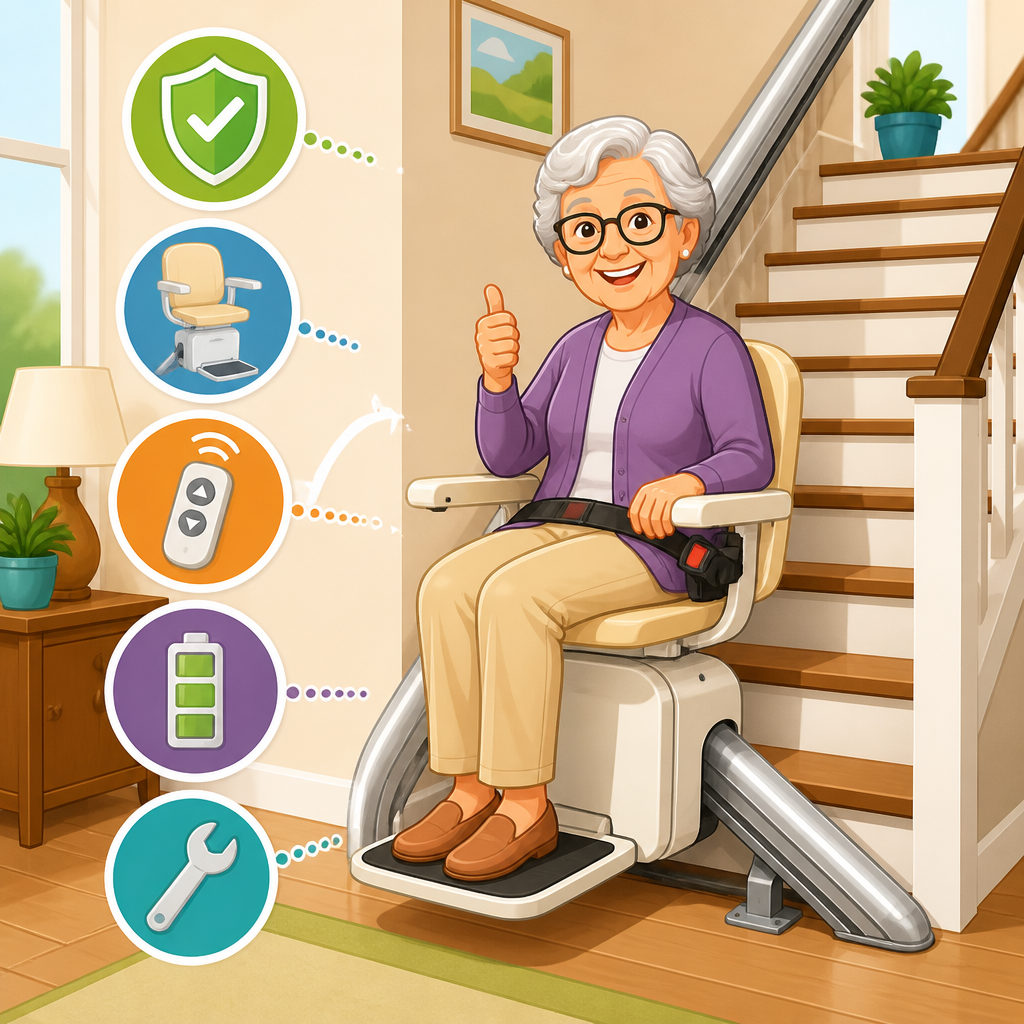
Buying a stair lift on a limited budget is not about finding the cheapest model; it is about choosing the features that protect safety, preserve reliability, and avoid expensive mistakes later. A stair lift is a motorized chair that travels on a rail attached to stair treads, helping people with reduced mobility move between floors without climbing steps. In budget planning, the most important distinction is between essential features, optional comfort upgrades, and structural requirements imposed by the staircase itself. I have helped families compare quotes, inspect home layouts, and narrow down configurations, and the same pattern appears every time: buyers save the most when they understand which features truly affect daily use.
This matters because stair lifts are a major accessibility purchase, yet many households are making the decision during a health change, after a fall, or while coordinating care for an aging parent. That pressure can lead to overspending on premium extras or, just as risky, underbuying a model that does not fit the user’s body, home, or transfer ability. A budget-friendly stair lift should reduce fall risk, support independent movement, and keep service costs predictable. The best value usually comes from matching the lift to the user and staircase with precision. Straight and curved stairs, indoor and outdoor placement, seat dimensions, battery backup, rail design, and maintenance coverage all affect total cost. Understanding those tradeoffs turns this purchase from a stressful guess into a practical buying decision.
Start with staircase type and installation constraints
The first feature to prioritize is not a seat style or color; it is compatibility with the staircase. Straight stair lifts are almost always the most affordable option because they use a standard rail and simpler installation. Curved stair lifts cost much more because the rail must be custom built to follow turns, landings, or intermediate bends. In real homes, this single factor changes the budget more than any advertised feature package. If your staircase is straight from top to bottom with no turns, focus your search on straight models first. If it has a curve, do not waste time comparing low-cost straight units that will never fit safely.
Installation details also shape affordability. Most residential stair lifts mount to the steps, not the wall, which means buyers usually do not need major structural remodeling. However, stair width still matters. Many manufacturers recommend at least about 28 to 30 inches for a standard straight lift, though exact minimums vary by brand and seat style. Narrow stairs may require a compact chair, a folding rail, or a perch-style unit, and each of those choices can affect price. Before requesting quotes, measure stair width, the number of steps, and landing clearance. Dealers use these dimensions to identify whether a standard rail will work or whether special brackets and overruns are needed.
Another important budget point is whether both landings allow safe entry and exit. A top overrun, which extends the rail beyond the last step, can improve safety by moving the rider away from the stair edge before standing up. It is not always mandatory, but in many homes it is worth prioritizing over cosmetic upgrades. If the user has poor balance or uses a walker, paying for a safer dismount zone is often smarter than paying for upgraded upholstery.
Put core safety features ahead of premium extras
When money is limited, every buyer should prioritize the features that directly reduce injury risk. A seat belt is nonnegotiable. So are obstruction sensors that stop the lift if it meets an object on the stairs, such as a dropped shoe or pet toy. Swivel seating at the top landing is another high-value feature because it lets the user exit facing away from the stairs instead of twisting near the edge. Some entry-level units make swivel operation manual, while premium versions offer powered swivel mechanisms. Manual swivel seats are usually sufficient if the user has adequate hand strength and trunk control.
Battery backup is also essential, not optional. Most modern stair lifts charge continuously when parked and run from batteries, allowing use during a power outage. This matters more than many buyers realize. In storm-prone regions or older homes with occasional electrical interruptions, a nonbattery system can leave the user stranded on one floor. Replacing batteries later is part of ownership, but the resilience they provide is worth the initial inclusion. I advise families to ask not just whether a lift has battery backup, but how many trips it can typically make during an outage and what the expected battery replacement interval is.
Foldability affects safety and practicality as well. A folding footrest, seat, and armrests keep the stairs more usable for other household members. In tighter homes, a hinged rail at the bottom may be necessary so the rail does not block a doorway or walkway. This can raise the price, but it may be the difference between a workable and unworkable installation. The key is to fund features that solve actual hazards or access barriers, not upgrades that only improve appearance.
Choose the right seat, weight capacity, and controls for the user
A stair lift that fits the staircase but not the person is not a bargain. Seat dimensions, armrest spacing, footrest height, and weight capacity strongly influence comfort and safe transfers. Standard-duty lifts often support around 250 to 350 pounds, while heavy-duty models may exceed that range and provide a wider seat. If the user is near the upper limit of a standard unit, choose more capacity than the minimum. Running equipment near its limit can reduce comfort and flexibility, and it may rule out winter clothing, a transfer belt, or weight changes over time.
Controls matter too. Most stair lifts use a simple rocker switch or joystick on the armrest, plus call/send remotes so the chair can be moved between floors. For households with more than one user or for caregivers who want to park the chair out of the main living area, call/send controls are worth prioritizing. They are practical, not luxury items. The easier the controls are to understand, the more likely the user is to operate the lift independently and consistently. People with arthritis, tremor, limited hand strength, or cognitive decline may need larger, simpler controls and clear indicator lights.
Seat height and transfer position deserve attention because they affect whether the user can stand up safely at the top and bottom. A slightly higher seat may help one person while making another feel unstable. If possible, request a demonstration and have the intended user sit, fasten the belt, operate the control, and practice the swivel transfer. A low purchase price means little if the person avoids the lift because the seat feels insecure or awkward.
Compare budget-friendly options by total cost, not sticker price
The best budget-friendly stair lift is the one with the lowest total cost of ownership for your situation. Buyers often focus on the advertised base price, yet installation, warranty terms, service call charges, and rail modifications can change the real number substantially. In my experience, three quotes usually reveal how differently dealers package the same project. One may include installation and a basic service warranty, another may charge separately for a powered hinge, and a third may discount the unit but charge more for long-term support.
| Option | Best for | Main cost advantage | Budget caution |
|---|---|---|---|
| New straight stair lift | Most standard indoor stairs | Lowest purchase and installation cost among new units | Check if warranty, remotes, and rail overrun are included |
| Reconditioned straight stair lift | Tight budgets with standard staircases | Lower upfront cost than new equipment | Verify refurbishment standards, battery age, and service coverage |
| Rental stair lift | Short-term recovery or hospice situations | Avoids full purchase price for temporary need | Monthly fees can exceed purchase value over longer periods |
| Curved stair lift | Stairs with turns or intermediate landings | Only safe custom-fit option for complex stairs | Highest upfront cost; used rails rarely transfer between homes |
Reconditioned units can be a smart choice when the staircase is straight and the dealer has a strong service department. Ask how the refurbishment is performed, whether worn components are replaced, and what warranty applies to parts, batteries, and labor. Rentals are useful when mobility limitations are temporary, such as after surgery, but they are not automatically the cheapest route if the need becomes long term. Curved lifts are usually custom enough that “used” savings are limited, especially because the rail is specific to one staircase.
Also ask about electrical requirements, annual maintenance expectations, and emergency repair response times. These practical details reveal whether a lower quote is truly better or simply incomplete.
Know which features usually deserve a lower priority
Limited budgets require tradeoffs, and some features can safely move down the list. Premium upholstery, designer color options, and highly customized trim packages rarely improve function. Powered footrests can be helpful for users who cannot bend easily, but if the user has enough flexibility and a caregiver is available when needed, a manual footrest may be an acceptable compromise. Powered swivel seats are convenient, yet many buyers can save money with a manual swivel if balance and upper-body control are adequate.
Remote diagnostics, app-based controls, and ultra-quiet premium drive systems sound attractive, but they are secondary to fit, safety, and dependable local service. A modest stair lift from a well-supported brand is generally a better investment than a feature-heavy model sold by a dealer with weak maintenance capacity. I have seen buyers regret paying for advanced options they never used, while basic issues such as difficult transfers or delayed repairs caused the real frustration.
That said, one person’s luxury feature can be another person’s necessity. For a user with severe arthritis, a powered footrest may prevent unsafe reaching. For a household with a doorway at the foot of the stairs, a powered hinge rail may be essential. The right approach is to classify every feature into one of three categories: must-have for safety, should-have for easier daily use, and nice-to-have for comfort or aesthetics. That framework keeps the budget aligned with real need.
Use funding sources, dealer questions, and timing to stretch your budget
Cost control does not stop at feature selection. Buyers should investigate funding and purchasing strategies that reduce out-of-pocket expense. Original Medicare generally does not cover stair lifts because they are commonly classified as home modifications rather than durable medical equipment covered under standard rules, but some Medicare Advantage plans may offer supplemental benefits. Medicaid waiver programs, state assistive technology programs, veterans’ benefits, Area Agencies on Aging, and nonprofit home-access grants may help in certain regions. Flexible spending accounts or health savings accounts may also be relevant if documentation supports medical necessity. Because programs vary widely, local verification is essential.
Dealer selection is just as important as product selection. Ask whether the company handles installation with trained technicians or subcontracts the work. Request a written quote listing equipment, rail type, overruns, hinge sections, warranty terms, and labor. Ask how quickly service calls are handled, whether loaner options exist, and how battery replacements are priced. A reputable dealer should answer these questions directly. Timing can help too. Some dealers discount floor models, overstock straight rails, or reconditioned inventory. If your need is not urgent, comparing several quotes over a few weeks often improves leverage and clarity.
The smartest limited-budget purchase prioritizes staircase compatibility, core safety, proper fit, and reliable service before comfort upgrades. Start by confirming whether you need a straight or curved unit, then focus on essentials like a seat belt, obstruction sensors, swivel seating, battery backup, and a weight capacity that gives the user room to operate comfortably. Compare total ownership cost, not just advertised price, and treat reconditioned or rental options as strategic tools rather than default bargains. Finally, ask detailed questions, document every quote, and explore local funding support. If you are building your buying shortlist now, use this hub as your starting point and compare each option against the features that truly protect independence at home.
Frequently Asked Questions
1. Which stair lift features should I treat as essential when my budget is limited?
When funds are tight, the smartest approach is to pay first for features that protect safety, dependable daily use, and long-term value. The essentials usually start with a properly sized rail and a model designed for your exact staircase, whether it is straight or curved. After that, prioritize core safety features such as a seat belt, obstruction sensors that stop the lift if something is in the way, a swivel seat for safer entry and exit at the top landing, and secure armrests and footrest support. These are not luxury extras; they directly reduce fall risk and help the user transfer on and off the chair more safely.
Battery backup is another feature that should usually stay in the “must-have” category. Many modern stair lifts run on batteries that recharge when parked, which means the lift can still work during a power outage. For someone who relies on the lift every day, losing access to an upstairs bedroom or downstairs exit because of a temporary outage can create a serious problem. Reliability also matters, so look for a unit from a reputable manufacturer with a strong service record, clear warranty terms, and local support availability. A lower upfront price can become expensive very quickly if repairs are frequent or parts are hard to obtain.
By contrast, many appearance and comfort options can be treated as secondary when you are controlling costs. Premium upholstery, custom colors, powered folding rails, or extra design finishes may be nice to have, but they do not matter as much as safe operation, proper fit, and dependable performance. In a limited-budget purchase, a good rule is simple: spend on safety, fit, and reliability first, then consider convenience upgrades only if money remains.
2. Is battery backup really necessary on a budget stair lift, or can I save money by skipping it?
In most cases, battery backup is worth prioritizing, even when every dollar matters. A stair lift is often purchased because using the stairs has already become difficult or unsafe. If the unit stops working during a power outage and the user is stranded on the wrong floor, the savings from skipping battery operation can quickly feel insignificant. A battery-powered system that charges automatically at a designated point on the rail gives the user a much more dependable way to move between levels, even if household electricity is temporarily unavailable.
Battery systems also tend to support smoother everyday use. Many modern stair lifts are built around this setup because it allows the chair to keep operating independently from the home’s immediate power supply. That can be especially important in areas with frequent storms, aging electrical systems, or occasional outages. It also adds peace of mind for both the user and family members, since they know the lift is more likely to remain usable when it is needed most.
That said, battery backup should not be looked at in isolation. Its value depends on overall system quality, charging reliability, and proper maintenance. Ask how many trips the lift can typically make during an outage, how long batteries usually last before replacement, and what replacement costs are likely to be. Even with those future costs, battery backup is usually one of the smartest features to keep in the budget because it protects access, safety, and the practical usefulness of the stair lift itself.
3. What safety features matter most if I cannot afford every available upgrade?
If you have to be selective, focus on safety features that actively prevent accidents and make transfers more secure. Obstruction sensors are high on that list. These sensors stop the lift if it detects something on the stairs or in the path of the footrest, which can help prevent damage, injury, or the chair pushing against an object. A seat belt is also essential, especially for users with balance limitations or anyone who may shift while riding. It is one of the most basic but most important protections on any stair lift.
A swivel seat is another feature that deserves strong consideration, particularly at the top of the stairs. Instead of standing up while facing the staircase, the user can rotate the seat toward the landing and get off in a more stable position. That can significantly reduce the chance of a misstep at one of the most dangerous points of transfer. A stable footrest, secure armrests, and easy-to-reach controls also belong in the practical safety category because they help the rider stay positioned correctly and operate the lift with confidence.
Some buyers are tempted to cut costs by minimizing features that seem small on paper, but stair lift safety is often about the combination of several basic protections working together. You do not necessarily need every premium convenience option, but you should be cautious about trimming any feature that affects safe boarding, riding, or exiting. If budget choices must be made, reduce spending on cosmetic and luxury add-ons before compromising on the features that lower fall risk and support consistent, safe operation.
4. How do I avoid spending too little upfront and ending up with expensive problems later?
The biggest mistake budget-conscious buyers make is focusing only on sticker price. A stair lift that costs less at installation can become the more expensive choice if it breaks down often, lacks nearby service support, uses hard-to-source parts, or is a poor fit for the staircase and user. To avoid that trap, evaluate total ownership value rather than just purchase cost. That includes manufacturer reputation, warranty coverage, expected maintenance needs, battery replacement costs, and how easy it is to get repairs completed quickly if the unit stops working.
It is also important to understand the difference between structural requirements and optional upgrades. Some costs are not “extras” at all. For example, the rail type must match the staircase, and the lift must be suited to the user’s weight, mobility, and transfer needs. If your home requires a curved rail, a hinge track, or other installation-specific accommodations, trying to force a cheaper setup can lead to unsafe use or a lift that simply does not work well in the space. Saving money by ignoring the home’s layout usually backfires.
Ask detailed questions before buying: What does the warranty actually cover? Is labor included? Are annual service visits recommended? How long has the dealer supported this brand? Is there emergency repair availability? A dependable stair lift with the right core features often delivers better financial value than a bare-bones model that causes repeated service calls or needs early replacement. Limited budgets require discipline, but they also require smart prioritization. The goal is not to buy the cheapest lift; it is to avoid costly mistakes while still meeting essential safety and mobility needs.
5. Are comfort and convenience features ever worth paying for when money is tight?
Sometimes yes, but only when they improve daily usability in a meaningful way. The key is to separate comfort features that are merely pleasant from those that help the user operate the stair lift more safely and consistently. For example, a powered swivel seat or powered footrest may sound optional, but for a user with limited hand strength, arthritis, or poor bending ability, those features can make the difference between a lift that is easy to use and one that becomes frustrating or physically difficult. In that situation, the added cost may be justified because it supports independence and reduces strain.
On the other hand, many upgrades are more about appearance or convenience than necessity. Premium fabric selections, designer finishes, or nonessential style options usually do not improve safety or reliability. If choosing those extras means sacrificing better warranty coverage, skipping battery backup, or settling for a less dependable model, they are rarely the right use of limited funds. Budget planning works best when you think in layers: first pay for correct installation and essential safety, then pay for reliability, and only after that look at user-specific convenience needs.
The best question to ask is not “Is this feature nice?” but “Does this feature solve a real problem for the person using the lift?” If the answer is yes—because it reduces pain, helps with transfers, improves control, or prevents the user from struggling—then it may deserve a place in the budget. If not, it is probably better treated as optional. A limited budget does not mean giving up on usability; it means choosing only the features that deliver practical, everyday benefit.





